


Homeowners facing temperature regulation problems often struggle to determine whether their thermostat or temperature sensor requires replacement, as both components produce similar symptoms but serve fundamentally different functions within heating and cooling systems. The thermostat acts as the control mechanism that regulates coolant flow and system activation, while the temperature sensor functions purely as a monitoring device that measures and reports temperature data to your vehicle’s computer or HVAC control unit. Understanding the seven diagnostic signs that distinguish thermostat failure from sensor malfunction empowers you to make cost-effective repair decisions and avoid replacing the wrong component.
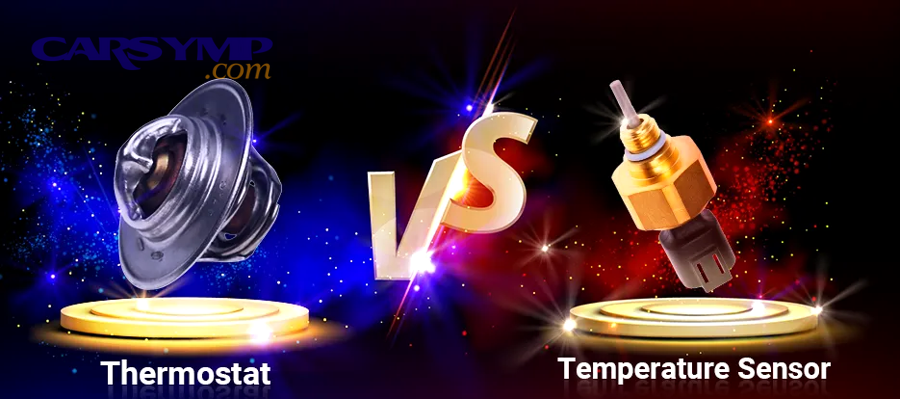
Recognizing the functional difference between these components represents the foundation for accurate diagnosis. A thermostat physically controls temperature by opening and closing valves based on thermal expansion, directly managing when your heating or cooling system activates and deactivates. In contrast, a temperature sensor passively detects temperature changes through resistance variations in its thermistor element, sending continuous data signals without any control capability. This fundamental distinction—active control versus passive measurement—determines which diagnostic approach you should use when troubleshooting temperature-related issues.
The diagnostic signs for thermostat versus sensor failure follow predictable patterns based on each component’s specific function. Thermostat problems manifest through control-related symptoms such as improper system cycling, failure to reach set temperatures, and mechanical response issues when adjusting settings. Temperature gauge fluctuations diagnosis reveals sensor-specific failures through erratic readings, inaccurate temperature displays, and warning light activations that indicate measurement errors rather than control failures. Heater performance changes from thermostat issues specifically include inconsistent cabin heating, delayed warm-up times, and temperature overshooting that point directly to valve control problems.
Testing procedures for each component differ significantly based on their operational principles, with thermostats requiring mechanical or thermal testing while sensors need electrical resistance measurements. Below, we’ll examine the precise diagnostic framework that enables homeowners to identify whether their temperature regulation problem stems from a faulty control mechanism or a defective monitoring device, including cost comparisons and replacement priority guidelines.
What Is the Difference Between a Thermostat and a Temperature Sensor?
A thermostat is a temperature control mechanism that physically regulates system operation by opening and closing mechanical or electrical switches, while a temperature sensor is a measurement device that detects temperature variations and transmits data signals without any control function. To better understand how these distinct components work together in your HVAC or automotive cooling system, examining their individual operational mechanisms reveals why their failure symptoms differ so dramatically.
How Does a Thermostat Control Temperature?
The thermostat functions as the primary regulatory component in temperature management systems through its ability to physically interrupt or complete electrical circuits based on thermal conditions. In mechanical thermostats, a wax pellet or bimetallic strip expands when heated, mechanically pushing a valve open to allow coolant circulation through the engine or activating your furnace blower. This physical action directly controls whether your heating or cooling system operates, making the thermostat an active participant in temperature regulation rather than just an observer.
Modern electronically-controlled thermostats use electrical heating elements to trigger the same mechanical valve action, with your vehicle’s engine control unit (ECU) or home HVAC controller determining when to energize the heating circuit. The thermostat responds by opening at predetermined temperatures—typically 180-195°F in automotive applications or when your home temperature drops below the setpoint on your HVAC system. When the thermostat malfunctions, it may stick open (causing overcooling and extended warm-up times), stick closed (leading to overheating), or fail to respond to control signals entirely.
The control signal path runs from your temperature setting or ECU programming through wiring harnesses to the thermostat’s electrical connector, where current flow heats the internal element and triggers valve operation. This direct mechanical intervention in coolant flow or system activation distinguishes thermostats from sensors that merely observe and report temperature without physically controlling anything. Understanding this active control role helps explain why thermostat stuck symptoms include system cycling problems and inability to maintain set temperatures rather than just incorrect readings.
How Does a Temperature Sensor Monitor Temperature?
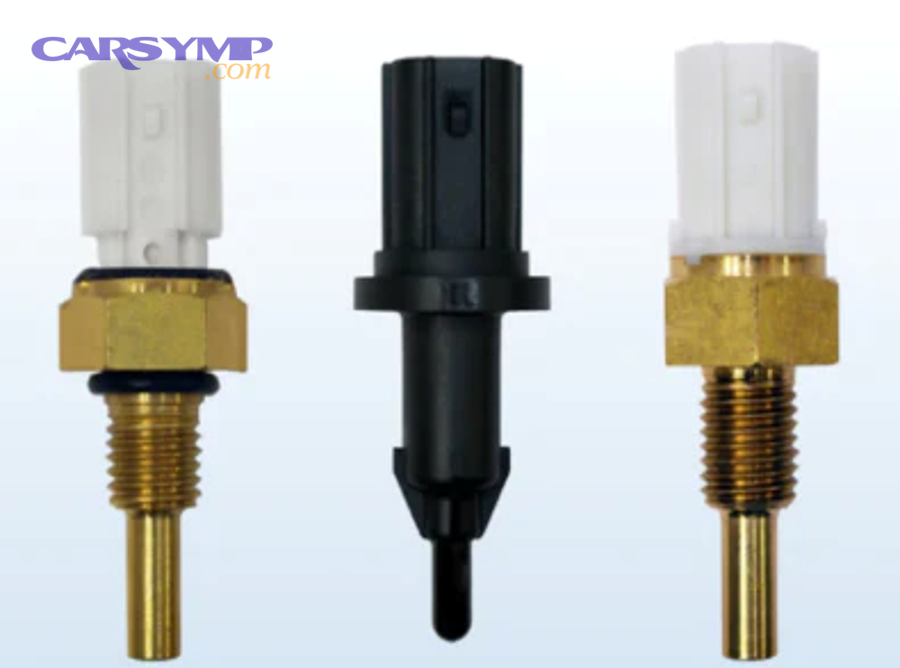
Temperature sensors operate on the principle of electrical resistance change in response to thermal variations, using a thermistor element whose conductivity increases or decreases predictably as temperature rises or falls. The sensor contains no moving parts and performs no control function—it simply reports temperature data to the ECU, HVAC controller, or dashboard gauge by varying the electrical resistance in its circuit. When engine coolant or room air contacts the sensor’s probe, the thermistor’s resistance changes proportionally, creating a voltage signal that the control unit interprets as a specific temperature reading.
In automotive applications, most engines use negative temperature coefficient (NTC) thermistors that decrease resistance as temperature increases, sending a higher voltage signal to the ECU when the engine warms up. The ECU reads this voltage, converts it to a temperature value using programmed lookup tables, and uses that information to adjust fuel injection timing, activate cooling fans, and display temperature on your gauge cluster. Home HVAC systems employ similar sensors in thermostats and at remote locations to monitor multi-zone temperatures, feeding data back to smart controllers that make operational decisions based on actual measured conditions versus setpoint targets.
The sensor’s passive monitoring role means it cannot cause your system to overheat, overcool, or fail to reach temperature—it can only report incorrect information that leads other components to make poor control decisions. A failing temperature sensor might send erratic signals causing your temperature gauge to fluctuate wildly, trigger false overheating warnings, or provide readings that don’t match actual thermal conditions measured with an infrared thermometer. These measurement errors differ fundamentally from thermostat failures because the system still attempts to control temperature—it simply operates based on false information about current conditions.
Can Both the Thermostat and Sensor Fail at the Same Time?
Yes, both the thermostat and temperature sensor can fail simultaneously, though this occurs infrequently because they function as independent components with different failure mechanisms—thermostats typically fail mechanically from valve degradation while sensors fail electrically from thermistor element deterioration. To understand when and why concurrent failures happen, examining the conditions that stress both components simultaneously reveals the scenarios where you might need to replace both parts together.
What Causes Simultaneous Thermostat and Sensor Failure?
System age represents the most common cause of simultaneous component failure, as both thermostats and sensors degrade over similar timeframes when exposed to the same thermal cycling and coolant chemistry. Automotive cooling systems typically experience thermostat and sensor problems after 10-12 years or 150,000 miles when the original factory components approach the end of their service life. Home HVAC thermostats similarly reach 10-year lifespans around the same time that temperature sensors in older systems begin experiencing thermistor drift and connector corrosion.
Coolant contamination accelerates failure in both components by introducing corrosive particles and chemical breakdown products that attack thermostat seals and sensor probe surfaces simultaneously. When coolant degrades beyond its service life—typically after 5 years without flushing—acidic compounds form that corrode the brass and copper elements in both thermostat housings and sensor probes. This contamination causes thermostats to stick due to corrosion buildup on valve seats while simultaneously degrading the protective coating on sensor thermistors, leading to erratic resistance readings.
Electrical system problems occasionally affect both components when voltage irregularities damage electronically-controlled thermostats and temperature sensors connected to the same electrical bus. A failing alternator producing voltage spikes above 16 volts can damage both the thermostat’s heating element and the sensor’s thermistor circuit, causing both to malfunction within days of each other. Similarly, corroded ground connections create voltage drops that prevent proper thermostat operation while simultaneously introducing noise into sensor signals, producing symptoms from both control and measurement failures.
How Do You Identify If One or Both Components Have Failed?
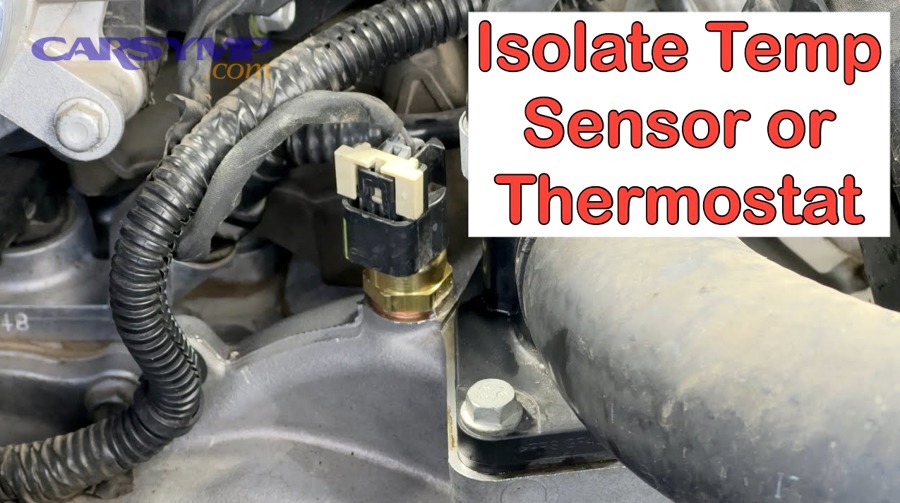
Sequential diagnostic testing reveals whether one or both components have failed by isolating control function from measurement accuracy through systematic verification steps. Start by checking your temperature gauge reading against an independent infrared thermometer measurement of your upper radiator hose or HVAC supply vent—if the gauge shows significantly different temperatures than your infrared reading, the sensor has failed regardless of thermostat condition. This initial test isolates measurement accuracy before evaluating control performance.
Next, assess control function by observing system behavior during a complete thermal cycle from cold start to full operating temperature. A properly functioning thermostat remains closed during warm-up (you should feel the upper radiator hose stay cool while the lower hose warms up), then opens relatively quickly once reaching temperature (the upper hose should warm within 30-60 seconds of the temperature gauge reaching normal). If the thermostat opens too early (gauge never reaches normal), too late (engine overheats before coolant circulates), or stays closed entirely (immediate overheating), the thermostat has failed independent of sensor condition.
Professional diagnostic tools provide definitive answers by reading live sensor data from your ECU through an OBD-II scanner while simultaneously monitoring actual coolant temperature with infrared measurements. When scanner data shows 180°F but your infrared thermometer reads 220°F at the thermostat housing, the sensor has failed. When scanner data matches infrared readings but the system fails to maintain proper temperature despite accurate measurements, the thermostat has failed. If both readings disagree with infrared measurements AND the system exhibits control problems, both components require replacement.
What Are the 7 Diagnostic Signs That Indicate Thermostat vs Sensor Replacement?
There are seven primary diagnostic signs that distinguish thermostat failure from sensor malfunction: three signs pointing specifically to thermostat problems (improper temperature control, stuck valve symptoms, and unresponsive system behavior), three signs indicating sensor failure (incorrect gauge readings, erratic temperature displays, and diagnostic trouble codes), plus one combination sign suggesting both components need replacement. Specifically, these diagnostic indicators follow predictable patterns based on whether the problem stems from control mechanism failure or measurement device malfunction.
Signs 1-3: When to Replace Your Thermostat
Sign 1: Improper Temperature Control with HVAC Cycling Issues
Short-cycling represents the most definitive indicator of thermostat failure, occurring when your heating or cooling system repeatedly turns on and off every 3-5 minutes without completing full temperature cycles. A thermostat stuck in a partially-open position allows continuous coolant circulation in automotive systems or triggers premature HVAC shutdowns in home systems, preventing your engine from reaching proper operating temperature or your home from maintaining comfortable setpoints. You’ll notice your vehicle’s temperature gauge hovering in the cold range even after 20 minutes of highway driving, or your furnace repeatedly firing for 2-3 minutes then shutting down before your home reaches the programmed temperature.
This cycling problem occurs because the partially-failed thermostat creates abnormal flow conditions that confuse the control system’s temperature management algorithms. In cars, coolant flowing prematurely through the radiator prevents heat accumulation in the engine block, causing the ECU to continuously inject extra fuel to compensate for what it perceives as cold-start conditions—reducing fuel economy by 10-15% and increasing emissions. Home HVAC systems experience similar inefficiency when a malfunctioning thermostat sends erroneous signals that trigger rapid on-off cycling, wasting energy through repeated startup surges that consume 3-5 times more electricity than steady operation.
The opposite condition—extended running without cycling—indicates a thermostat stuck closed or failing to open, forcing your engine into overheating conditions or your air conditioner to run continuously without cooling your home adequately. You’ll observe your temperature gauge climbing into the red zone during city driving or your AC compressor running constantly while room temperature remains above the setpoint. These thermostat stuck symptoms demand immediate replacement before overheating causes engine damage or continuous operation burns out your HVAC compressor.
Sign 2: Stuck Open or Closed Thermostat Preventing Temperature Goals
A thermostat stuck completely closed creates immediate overheating emergencies characterized by rapid temperature gauge increases within 10-15 minutes of operation, steam from under the hood, and boiling coolant overflow. This dangerous condition occurs when the thermostat’s wax pellet hardens or corrosion builds up on the valve seat, preventing the valve from opening even at temperatures 30-40°F above its rated opening point. Your engine continues generating heat through combustion without any coolant circulation to dissipate it, causing temperatures to spike toward 250-260°F where aluminum cylinder heads begin warping and head gaskets fail.
Conversely, a thermostat stuck fully open produces overcooling symptoms including extended warm-up periods exceeding 15-20 minutes, weak cabin heat output even at highway speeds, and fuel economy degradation from constant cold-running enrichment. The unrestricted coolant flow through your radiator prevents your engine from accumulating sufficient heat to reach the optimal 195-205°F operating range where combustion efficiency peaks and emissions controls function properly. You’ll experience poor fuel mileage (typically 2-4 MPG worse than normal), sluggish throttle response from cold-start fuel mapping remaining active, and weak heater performance that barely defrosts your windshield in winter conditions.
Temperature gauge fluctuations diagnosis becomes straightforward with stuck thermostat conditions because the gauge shows consistent patterns rather than erratic jumps. A stuck-closed thermostat produces a gauge that climbs steadily toward hot without stabilizing, while a stuck-open thermostat creates a gauge that never rises above the cold mark or barely reaches the lower third of the normal range. These predictable patterns distinguish thermostat mechanical failures from sensor electrical problems that cause random gauge movements unrelated to actual thermal conditions.
Sign 3: No System Response to Temperature Adjustments
Complete lack of response when adjusting thermostat settings indicates electrical failure in the thermostat’s control circuit, occurring when internal wiring connections corrode or the electromagnetic heating element burns out in electronically-controlled units. You’ll turn your home thermostat up or down and hear no clicking sound from the relay switching, observe no change in HVAC operation, and see the system continue running in its previous state regardless of your input. In automotive applications, the ECU may trigger thermostat-related diagnostic codes (P0128 “Coolant Temperature Below Thermostat Regulating Temperature”) while displaying proper sensor readings but showing no temperature changes despite the system commanding thermostat operation.
This unresponsive behavior differs fundamentally from sensor failures because the thermostat receives proper electrical signals but cannot execute the mechanical valve movements those signals should trigger. You can verify electrical delivery by measuring voltage at the thermostat connector while the system commands it to open—if voltage appears but the thermostat doesn’t respond with appropriate resistance changes or mechanical action, the internal heating element has failed. Home thermostats show similar symptoms when their relay contacts weld together or separate completely, leaving the HVAC system stuck in one operating mode regardless of temperature settings or schedule programming.
Heater performance changes from thermostat issues become particularly obvious when you lose the ability to control cabin temperature through HVAC adjustments in vehicles with electronically-controlled thermostats. The system may default to a fully-open position for safety, producing constant weak heat, or fail in a partially-closed position that causes intermittent overheating during stop-and-go traffic. Either condition requires immediate thermostat replacement since the engine management system cannot maintain proper thermal regulation without functioning valve control.
Signs 4-6: When to Replace Your Temperature Sensor
Sign 4: Incorrect Temperature Readings on Gauge Display
Temperature gauge readings that consistently differ from actual thermal conditions by more than 15-20°F indicate sensor thermistor failure, manifesting as a dashboard gauge showing cold when your infrared thermometer measures 200°F at the thermostat housing. This measurement discrepancy occurs when the sensor’s thermistor element degrades through thermal cycling fatigue, causing its resistance curve to drift away from factory specifications. Your ECU receives incorrect voltage signals that it interprets as temperatures far different from reality, displaying false information to your gauge cluster while potentially triggering inappropriate control responses from other systems.
The most common sensor failure mode produces readings stuck in the cold range (gauge permanently showing blue or below normal) even when independent temperature measurements confirm proper operating temperatures. This happens when thermistor resistance increases beyond normal range due to internal element fracturing or contamination of the semiconductor material with coolant chemicals. Your engine operates at correct temperature—verified by touching radiator hoses and observing proper warm-up behavior—but the gauge remains motionless because sensor resistance creates voltage signals the ECU interprets as 100°F or lower.
Less frequently, sensor failures produce readings stuck at hot positions where the gauge shows overheating conditions while actual temperatures remain normal. This occurs when thermistor resistance decreases abnormally or when the sensor’s ground connection degrades, sending low-resistance signals the ECU interprets as high temperatures. You’ll notice the gauge climbing toward red within minutes of starting a cold engine, accompanied by cooling fan activation and possible reduced engine power from thermal protection modes, despite no actual overheating occurring and no coolant odors or steam visible.
Sign 5: Erratic Temperature Fluctuations and Unstable Readings
Wild temperature gauge swings moving between cold and hot within seconds characterize sensor electrical intermittency, typically caused by corroded connector pins or internal thermistor cracks that create sporadic open circuits. Your gauge might read normal one moment then suddenly jump to full hot, drop back to cold, and return to normal within a 10-second span—behavior impossible from actual thermal conditions which change gradually over minutes. These erratic movements indicate the sensor loses and regains electrical continuity randomly, sending voltage spikes and dropouts that the ECU struggles to interpret coherently.
Connector corrosion represents the most common cause of erratic sensor behavior, especially in sensors mounted low on the engine where road spray and coolant leaks expose electrical connections to moisture. Green or white corrosion buildup on connector pins creates intermittent high-resistance connections that break and reconnect with engine vibration, producing rapid voltage fluctuations the ECU reads as temperature changes. You can often temporarily restore proper readings by wiggling the sensor connector—if gauge fluctuations stop when you manipulate the connector, corrosion rather than thermistor failure is the culprit, though sensor replacement still remains necessary since corrosion has compromised the connection permanently.
Internal thermistor cracks develop from thermal stress when sensors experience extreme temperature cycling during severe overheating episodes or rapid cooling from cold-start conditions in subzero weather. The hairline fractures in the thermistor element create intermittent opens that break the resistance path randomly, producing unpredictable voltage signals that translate to gauge readings jumping between temperature extremes. Unlike connector issues that respond to wiggling, thermistor cracks cannot be temporarily fixed and require complete sensor replacement to restore stable temperature monitoring.
Sign 6: Check Engine Lights with Temperature-Related Diagnostic Codes
Diagnostic trouble codes specifically referencing temperature sensor circuit problems (P0115-P0119 range) definitively confirm sensor failure rather than thermostat issues, as the ECU has detected electrical characteristics outside normal parameters. Code P0117 “Engine Coolant Temperature Sensor Circuit Low Input” triggers when sensor resistance drops below minimum specifications, while P0118 “Engine Coolant Temperature Sensor Circuit High Input” indicates resistance exceeding maximum values—both conditions impossible from thermostat failures that don’t affect sensor electrical properties. Modern vehicle computers continuously monitor sensor circuit voltage and flag any readings that fall outside the expected range for current operating conditions.
The ECU’s rationality testing detects sensor failures by comparing coolant temperature readings against other temperature inputs like intake air temperature and calculated thermal models based on runtime and load. When your coolant temperature sensor reports 60°F after 30 minutes of highway driving while intake temperature shows 90°F and the thermal model predicts 195°F, the ECU flags code P0128 “Coolant Thermostat Temperature Below Regulating Temperature” or P0125 “Insufficient Coolant Temperature for Closed Loop Fuel Control.” While these codes mention thermostat regulation, they often result from sensor failures providing incorrect temperature data rather than actual thermostat problems.
Freeze frame data stored with diagnostic codes reveals whether sensor or thermostat failure caused the code by showing the specific temperature values and operating conditions present when the code set. If freeze frame shows sensor reading 85°F with engine runtime 45 minutes and vehicle speed 65 MPH—conditions that should produce 195°F readings—the sensor has clearly failed. Conversely, if freeze frame shows sensor reading 195°F (correct) but code P0128 triggered anyway, the thermostat stuck open and prevented proper temperature accumulation despite accurate sensor measurement. This diagnostic data separates measurement problems from control problems definitively.
Sign 7: When Both Components May Need Replacement
Combined Symptoms Indicating Dual Failure
Simultaneous occurrence of gauge reading errors AND temperature control problems strongly suggests both sensor and thermostat have failed, requiring comprehensive diagnosis before parts replacement. You’ll observe erratic temperature gauge behavior showing random fluctuations between cold and hot readings while also experiencing actual temperature regulation issues such as overheating in traffic or extended warm-up times. This combination indicates the sensor cannot accurately report conditions while the thermostat cannot properly control them—two independent failures affecting the same system.
The diagnostic challenge with combined failures involves determining which component failed first and potentially caused the second failure through operational stress. A thermostat stuck closed can cause severe overheating that thermally damages the temperature sensor’s thermistor element through exposure to 250°F+ temperatures exceeding its design limits. Conversely, a failed sensor providing low temperature readings may cause the ECU to keep cooling fans inactive, leading to actual overheating that destroys thermostat seals and wax pellets. Understanding this cause-and-effect relationship helps prevent repeat failures by addressing root causes rather than just replacing damaged parts.
Age-based preventive replacement makes economic sense when either component fails in systems exceeding 10 years old or 150,000 miles, as the second component will likely fail within months anyway. The labor cost to access and replace a thermostat or sensor often exceeds the parts cost by 3-4 times, making simultaneous replacement of both components during a single repair visit far more cost-effective than paying for two separate labor charges when the second part fails weeks later. Professional mechanics typically recommend this approach when diagnosing 10+ year old cooling systems with confirmed failure of either component.
Preventive Replacement After Major Cooling System Repairs
Major cooling system work including radiator replacement, water pump service, or head gasket repairs creates the optimal opportunity for preventive thermostat and sensor replacement regardless of their current condition. The extensive disassembly required for these major repairs already involves draining coolant and accessing thermostat housings, eliminating most of the labor cost typically associated with thermostat and sensor service. Adding these components to a major cooling repair typically adds only $50-150 in parts costs while preventing future failures from aged components stressed by new system conditions.
Fresh coolant and new system seals change the chemical environment inside your cooling system, potentially accelerating deterioration of old thermostats and sensors adapted to previous coolant chemistry. The wax pellet in a 10-year-old thermostat may have chemically stabilized in aged coolant but could degrade rapidly in fresh coolant with different anticorrosive additive packages. Similarly, sensor probe coatings optimized for degraded coolant conditions may respond unpredictably to pristine new coolant, producing measurement drift within months of the cooling system refresh.
The thermal shock from system refilling after major repairs can crack marginal thermostat housings or sensor probe elements that were barely functional before the service. Introducing 50°F coolant into a 195°F engine during refilling creates thermal stress exceeding normal operating conditions, causing brittle plastic components to crack and weakened thermistor elements to fracture. Replacing these components before reassembly eliminates post-repair failures that force customers to return for additional service shortly after expensive major work.
How Do You Test Whether Your Thermostat or Sensor Is Faulty?
Testing thermostats requires thermal cycling methods to verify proper mechanical opening at rated temperatures, while sensor testing demands electrical resistance measurements confirming accurate thermistor response across temperature ranges—two completely different diagnostic approaches. More specifically, thermostat testing focuses on mechanical valve function through boiling water tests or visual observation of coolant circulation patterns, whereas sensor testing employs multimeters to measure resistance values and compares them against manufacturer specifications for current temperatures.
DIY Thermostat Testing Methods
The boiling water test represents the most reliable DIY method for verifying thermostat mechanical function, performed by suspending the thermostat in a pot of water with an accurate thermometer while heating on your stove. Place the thermostat in room-temperature water ensuring it doesn’t touch the pot bottom (use a wire to suspend it), insert your thermometer, and begin heating while watching for valve movement. A properly functioning 195°F thermostat should begin opening between 190-195°F—you’ll observe the valve center lifting away from the seat—and reach full open by 205-210°F with approximately 8-10mm of valve travel visible.
Failed thermostats reveal themselves through deviations from this expected behavior: a stuck-closed thermostat shows no valve movement even when water reaches boiling at 212°F, while a stuck-open thermostat displays a gap between valve and seat even in room-temperature water before heating begins. Partial failures produce delayed opening (valve movement starting above 210°F) or incomplete travel (valve lifting only 3-4mm instead of 8-10mm), both indicating internal wax pellet degradation that prevents proper thermal response. Document the exact temperature where opening begins and ends—variations exceeding 10°F from rated specifications indicate replacement is necessary.
Visual observation during engine warm-up provides a practical on-vehicle thermostat test by monitoring coolant circulation patterns through radiator hoses and overflow bottle activity. Start with a completely cold engine and feel both upper and lower radiator hoses immediately—both should feel cool. Start the engine and monitor the lower hose which should warm gradually as the water pump circulates coolant through the engine block while the thermostat remains closed. After 5-10 minutes, the upper radiator hose should suddenly become hot within 30-60 seconds when the thermostat opens, indicating proper valve operation at designed temperature.
DIY Temperature Sensor Testing Methods
Resistance testing with a digital multimeter provides definitive sensor diagnosis by comparing measured resistance values against manufacturer specifications at known temperatures. Remove the sensor from the engine (requiring coolant drainage from systems without drain valves below sensor level), connect multimeter leads to sensor terminals, and record resistance with the sensor at room temperature—typically 2,000-3,000 ohms at 70°F for most automotive sensors. Submerge the sensor in ice water (32°F) and verify resistance increases to approximately 5,000-7,000 ohms, then heat water to 200°F and confirm resistance drops to 200-400 ohms, following the negative temperature coefficient characteristic of NTC thermistors.
Sensors failing resistance tests show readings far outside specification ranges: open circuit sensors display infinite resistance (OL on your multimeter) at all temperatures, shorted sensors show near-zero resistance (below 50 ohms at room temperature), and degraded sensors demonstrate resistance values 30-50% away from specifications. For example, a sensor reading 1,000 ohms at 70°F when specifications call for 2,500 ohms has clearly degraded and will send incorrect temperature signals to your ECU. Create a simple comparison table matching your measurements against manufacturer specifications—most automotive service manuals include resistance-temperature curves for their specific sensors.
Infrared thermometer comparison testing allows in-vehicle sensor verification without removal by measuring actual surface temperatures and comparing them to gauge-displayed values. With the engine at full operating temperature, use your infrared thermometer to measure thermostat housing temperature (typically 190-200°F), then compare this reading to your dashboard gauge indication. Modern vehicles with digital temperature displays should match within ±5°F, while analog gauges showing “normal” mid-scale should correspond to actual temperatures between 185-205°F. Discrepancies exceeding 15°F indicate sensor failure even without electrical testing, as the thermistor is clearly not reporting actual thermal conditions accurately.
When Should You Hire a Professional for Diagnosis?
Complex electronically-controlled thermostats with integrated heating elements and ECU communication protocols require professional diagnosis because failure modes extend beyond simple mechanical valve function. These “smart thermostats” receive control signals from the engine computer commanding specific opening positions based on operating conditions, load demands, and emissions requirements—far more sophisticated than traditional wax-pellet thermostats that operate purely on thermal expansion. Diagnosing these systems requires scan tools capable of commanding thermostat operation while monitoring actual temperature response, identifying whether the thermostat’s heating element, control circuitry, or mechanical components have failed.
Safety concerns make professional diagnosis essential when dealing with potentially overheating engines or cooling systems operating under high pressure. Testing a suspect thermostat while it’s installed requires running the engine until full operating temperature—a procedure that risks catastrophic overheating if the thermostat is stuck closed, potentially warping cylinder heads or blowing head gaskets and causing thousands of dollars in engine damage. Professional technicians monitor live temperature data, coolant pressure, and have immediate shutdown capabilities if testing reveals dangerous conditions, minimizing risk of thermal damage during diagnostic procedures.
Warranty protection requirements often mandate professional diagnosis and installation of replacement parts to maintain coverage on new or recently repaired vehicles. Manufacturers void powertrain warranties when owners perform their own cooling system repairs without proper documentation, and extended warranty companies universally require ASE-certified technician diagnosis before authorizing parts coverage. The $100-150 diagnostic fee typically pays for itself through warranty claim approval and prevention of misdiagnosis where you replace a good thermostat when the actual problem was a failed sensor, or vice versa.
Which Component Should You Replace First: Thermostat or Sensor?
Replace the thermostat first when symptoms indicate control problems (improper cycling, stuck open/closed, temperature regulation failure), while sensor replacement takes priority when symptoms show measurement issues (incorrect gauge readings, erratic displays, temperature-related diagnostic codes). To make this determination systematically, evaluate whether your primary complaint involves the system’s inability to control temperature properly or its failure to display accurate temperature information—control problems point to thermostats while measurement problems indicate sensors.
Cost Comparison: Thermostat vs Sensor Replacement
Automotive thermostat replacement costs range from $150-400 including parts and labor, with the thermostat itself typically priced between $20-80 depending on whether you select standard mechanical units or electronically-controlled versions. Labor charges constitute the majority of this cost, averaging $100-250 depending on access difficulty—front-wheel-drive V6 engines with thermostats buried under intake manifolds can require 2-3 hours of labor, while inline-4 engines with easily accessible thermostats need only 0.5-1.0 hours. The replacement procedure involves draining coolant, disconnecting hoses, removing housing bolts, installing the new thermostat with a fresh gasket, refilling coolant, and bleeding air from the system.
Temperature sensor replacement proves less expensive at $80-200 total, with sensor parts costing $15-60 and labor averaging $50-100 for 0.5-1.0 hours of technician time. Sensors mount in accessible locations with single electrical connectors and threaded fittings requiring no gaskets or complex disassembly—simply disconnect the electrical connector, unscrew the old sensor, apply thread sealant to the new sensor, install to specified torque (typically 15-20 ft-lbs), and reconnect the electrical connector. Some vehicles require partial coolant draining if sensors mount below system high-points, adding 15-30 minutes to the procedure.
The table below compares typical replacement costs for both components:
| Component | Parts Cost | Labor Cost | Total Cost | Time Required |
|---|---|---|---|---|
| Thermostat (Easy Access) | $20-50 | $75-125 | $95-175 | 0.5-1.0 hours |
| Thermostat (Difficult Access) | $40-80 | $150-250 | $190-330 | 2.0-3.0 hours |
| Temperature Sensor (Standard) | $15-40 | $50-75 | $65-115 | 0.5 hours |
| Temperature Sensor (Multiple) | $30-60 | $75-125 | $105-185 | 1.0 hours |
This cost comparison demonstrates that sensor replacement generally costs 30-50% less than thermostat replacement in most vehicles, making it the economical first choice when symptoms could indicate either component. However, misdiagnosis costs far exceed these savings—replacing a $40 sensor when you needed a $60 thermostat means spending $150-200 total instead of the $150-250 you would have spent with correct initial diagnosis.
Replacement Priority Based on Diagnostic Results
Temperature control failures demand immediate thermostat replacement regardless of sensor condition because stuck-closed thermostats create overheating emergencies that can destroy your engine within minutes of highway driving. When your diagnostic testing reveals the thermostat isn’t opening at proper temperatures or your temperature gauge shows rapid climbing toward red during operation, replacing the thermostat becomes the critical first priority even if you suspect sensor problems. Operating an engine with a stuck-closed thermostat risks aluminum cylinder head warping occurring at temperatures above 240°F, head gasket failure from differential expansion between iron blocks and aluminum heads, and coolant boiling that creates steam pockets preventing proper cooling.
Conversely, inaccurate temperature readings without control problems make sensor replacement the logical first step since measurement errors don’t immediately damage your engine but can trigger inappropriate responses from other systems. A sensor reading 80°F when actual temperature is 195°F causes your ECU to run rich fuel mixtures reducing economy by 10-15%, prevents closed-loop emissions control from activating properly, and may keep cooling fans inactive when they should run. While these issues affect performance and efficiency, they won’t cause catastrophic engine damage in the short term, allowing you to schedule sensor replacement at your convenience rather than requiring emergency thermostat service.
Combined symptoms showing both control problems and measurement errors require professional diagnosis to determine primary versus secondary failures before replacement. The technician will typically replace the component showing the most severe diagnostic deviations first, then retest the system to determine if the second component has actually failed or was simply affected by the primary failure. For example, a severely stuck-open thermostat preventing proper warm-up might cause a marginal sensor to display erratic readings due to actual temperature instability—replacing just the thermostat could restore both proper control and stable gauge readings if the sensor wasn’t truly failed.
How Can You Prevent Thermostat and Sensor Failures?
Preventing thermostat and sensor failures requires implementing regular coolant maintenance schedules, protecting electrical connections from corrosion, and replacing aged components before complete failure occurs—three strategies that extend component lifespan by 30-50%. Moreover, understanding the specific maintenance requirements for each component type allows you to develop preventive schedules that address thermostats’ mechanical vulnerabilities and sensors’ electrical sensitivities through targeted interventions at appropriate intervals.

What Is the Recommended Replacement Schedule for Thermostats and Sensors?
HVAC thermostats in home heating and cooling systems require replacement every 10 years for mechanical and programmable models, while smart thermostats may need updating every 5-7 years as manufacturers discontinue software support for older models. The 10-year guideline reflects the service life of internal relay contacts that cycle millions of times during normal operation, gradually developing high-resistance oxidation that prevents reliable switching. You’ll notice approaching replacement time when your thermostat requires multiple button presses to change settings, displays become dim or unresponsive, or programmed schedules stop executing properly despite fresh batteries.
Automotive thermostats typically last 100,000-150,000 miles or approximately 10 years before mechanical deterioration requires replacement, with earlier replacement recommended at 75,000 miles in vehicles experiencing frequent overheating episodes or severe operating conditions. The wax pellet inside automotive thermostats gradually loses its thermal response characteristics through repeated expansion and contraction cycles, developing delayed opening response and incomplete travel that manifests as extended warm-up times and marginally low operating temperatures. Preventive replacement during major services like timing belt changes (typically performed at 90,000-100,000 miles) eliminates the labor cost component since coolant draining and front engine disassembly are already required for the primary service.
Temperature sensors demonstrate longer service lives of 150,000-200,000 miles when protected from coolant contamination and electrical corrosion, though harsh operating environments can reduce this to 100,000 miles in vehicles exposed to road salt, extreme temperature cycling, or coolant neglect. The thermistor elements inside temperature sensors degrade gradually through thermal fatigue and chemical exposure, producing progressive drift in resistance-temperature curves that initially causes minor reading errors (5-10°F off) before accelerating to complete failure. Monitoring your gauge readings over time reveals this drift—if your normal operating temperature gradually shifts from the center mark toward cold over several years, sensor degradation is occurring and preventive replacement prevents eventual failure.
Does Regular System Maintenance Extend Component Lifespan?
Coolant flush schedules directly impact thermostat and sensor longevity by removing corrosive contaminants and maintaining proper chemical balance in the cooling system. Fresh coolant contains corrosion inhibitors that protect thermostat housings from galvanic corrosion and sensor probe surfaces from chemical attack, extending component life by preventing the accelerated degradation that occurs in aged, acidic coolant. Manufacturers typically recommend coolant replacement every 30,000-50,000 miles for conventional green coolant or 100,000-150,000 miles for extended-life coolants, though severe service conditions (frequent towing, extreme climates, stop-and-go traffic) may warrant more frequent changes.
Testing coolant condition annually using pH test strips reveals chemical degradation before it damages components—coolant pH should remain between 8.5-11.0 for proper corrosion protection, with values below 8.0 indicating dangerously acidic conditions requiring immediate flushing. Acidic coolant containing pH values of 7.0 or lower actively corrodes aluminum thermostat housings and brass sensor fittings, creating pinhole leaks and electrical connection problems that lead to premature failure. The $15 cost of pH test strips and 5 minutes required for annual testing provides substantial insurance against the $300-500 expense of replacing thermostats and sensors damaged by neglected coolant chemistry.
Electrical connector maintenance prevents the most common sensor failure mode—corrosion-induced intermittent operation—through simple annual inspection and protective treatment procedures. Apply dielectric grease to sensor connector pins during routine services to exclude moisture and prevent the formation of copper oxide and copper sulfate corrosion products that increase contact resistance. Remove connectors, inspect for green or white corrosion, clean with electrical contact cleaner if contamination exists, then coat with dielectric grease before reconnection. This 10-minute preventive procedure during oil changes costs essentially nothing but extends sensor electrical life by preventing 70-80% of connector-related failures.
Are Smart Thermostats More Reliable Than Traditional Thermostats?
Smart thermostats demonstrate superior reliability in temperature sensing accuracy but introduce failure modes related to electronic components and wireless connectivity that traditional mechanical thermostats avoid entirely. The digital temperature sensors in smart thermostats typically provide ±0.5°F accuracy compared to ±3-5°F for mechanical thermostats using bimetallic strips, eliminating the temperature overshoot and undershoot that causes discomfort and energy waste. However, smart thermostats depend on microprocessors, LCD displays, WiFi radios, and software systems that can fail independently of temperature sensing, creating situations where perfectly functional sensors cannot control your HVAC because the user interface has frozen or network connectivity has failed.
Self-diagnostic capabilities in smart thermostats prevent many of the gradual performance degradations that affect mechanical thermostats without user awareness. Models from manufacturers like Nest and Ecobee continuously monitor their own operation, detecting relay contact deterioration before it causes control failures and alerting users to maintenance needs through smartphone notifications. These systems track how long relays take to close, monitor voltage drops across contacts, and predict failure typically 30-60 days before complete breakdown—allowing scheduled replacement during convenient times rather than emergency service calls during extreme weather.
Statistical reliability data from HVAC manufacturers indicates smart thermostats experience 15-20% higher overall failure rates than mechanical thermostats primarily due to added electronic complexity, but the failures typically cause convenience issues rather than complete HVAC system breakdowns. A failed microprocessor in a smart thermostat prevents remote control and schedule execution but usually defaults to basic heating/cooling functionality at manually-set temperatures, maintaining livability until replacement occurs. Conversely, a failed mechanical thermostat often sticks in one position creating either no heat or continuous operation without proper control, necessitating emergency service to restore basic comfort.
Should You Upgrade Both Components When Replacing Your HVAC System?
Upgrading both thermostat and temperature sensors during HVAC system replacement optimizes performance matching and eliminates compatibility issues between new equipment and aging control components. Modern high-efficiency furnaces and air conditioners communicate digitally with smart thermostats through protocols that older sensors and thermostats don’t support, limiting the new equipment to basic on/off operation without accessing variable-speed capabilities, zone control, or efficiency optimization features. Installing a new 96% AFUE modulating furnace while retaining a 15-year-old mechanical thermostat forces the furnace to operate in single-stage mode, sacrificing 5-10% of its potential efficiency and most of its comfort-enhancing features.
Cost savings from simultaneous component upgrades derive from consolidated labor charges and system-level optimization that reduces callbacks for compatibility problems. HVAC contractors already access electrical panels, run new control wiring, and configure system settings during equipment installation—adding thermostat and sensor upgrades requires minimal additional labor since the infrastructure work is already complete. Replacing all components together typically adds only $200-400 to a $4,000-8,000 HVAC installation (5-10% increase) while preventing the $300-500 service calls that occur when old thermostats prove incompatible with new equipment or aged sensors trigger fault codes in new control boards expecting modern sensor characteristics.
Performance optimization achieved through matched-age components delivers measurable efficiency improvements of 8-12% compared to mixing new HVAC equipment with old control components. Smart thermostats paired with compatible variable-speed equipment adjust blower speeds, modulate gas valves, and control outdoor unit operation based on precise temperature differentials measured by modern sensors, achieving ±0.5°F temperature control and minimal overshoot. This precise control reduces the temperature swing range from the ±3-4°F typical with mechanical thermostats to ±1°F, improving comfort while reducing the energy consumed through excessive cycling and temperature correction.
Understanding the diagnostic differences between thermostat and temperature sensor failures empowers homeowners to make informed repair decisions based on specific symptom patterns. Thermostats control temperature through mechanical valve operation, producing symptoms related to system cycling and temperature regulation when they fail, while temperature sensors measure thermal conditions through electrical resistance changes, creating measurement and display problems when they malfunction. The seven diagnostic signs outlined in this article—three thermostat-specific indicators, three sensor-specific symptoms, and one combination signal—provide a systematic framework for identifying which component requires replacement before spending money on parts and labor.
Cost-effective troubleshooting prioritizes thermostat replacement when control problems threaten engine safety through overheating risks, while sensor replacement takes precedence when measurement errors affect only gauge accuracy and fuel economy without immediate danger. Preventive maintenance through proper coolant chemistry maintenance, electrical connection protection, and age-based component replacement extends service life and prevents the inconvenient failures that occur when degraded components finally reach end-of-life during extreme weather or critical travel periods. Whether you choose DIY testing methods or professional diagnosis, applying the systematic approach detailed in this guide ensures you replace the correct component the first time, avoiding the wasted expense of misdiagnosis while maintaining reliable temperature control in your vehicle or home.