


Driving with a bad thermostat is technically possible but not advisable, as it poses serious risks ranging from reduced fuel efficiency to catastrophic engine damage depending on whether the thermostat is stuck open or stuck closed. When your car’s thermostat malfunctions, you face an immediate decision about whether continuing to drive will strand you on the roadside or cause thousands of dollars in repair bills. Understanding the difference between stuck-open scenarios that allow short-term driving and stuck-closed situations that demand you pull over immediately can save your engine and your wallet.
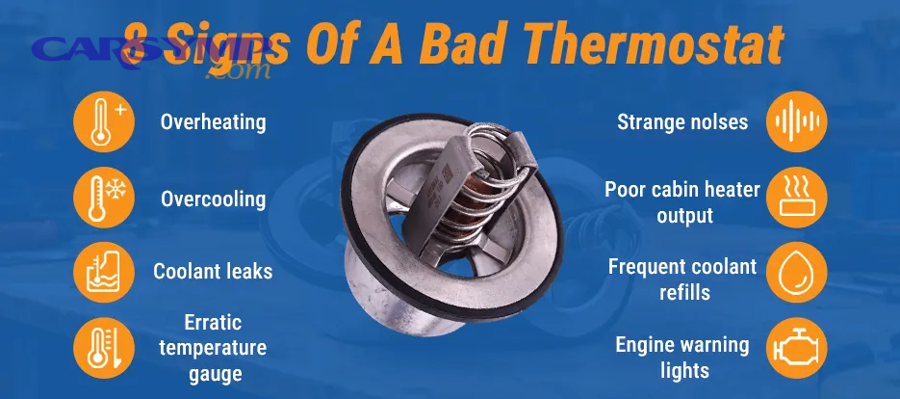
Recognizing the seven critical warning signs of thermostat failure gives you the diagnostic power to assess your situation before damage occurs. These symptoms include engine overheating with the temperature gauge in the red zone, an engine that never reaches operating temperature, erratic temperature fluctuations, coolant leaking around the thermostat housing, steam or coolant smell from the hood, heater malfunctions, and dashboard warning lights. Each symptom tells a specific story about what’s failing inside your cooling system and how urgently you need professional intervention.
The risks associated with driving on a faulty thermostat vary dramatically based on failure mode and duration. A thermostat stuck closed can crack your engine block within 15 minutes of driving, while a stuck-open thermostat causes gradual damage through poor fuel economy, increased emissions, and accelerated engine wear over weeks or months. Knowing which scenario you’re facing determines whether you have hours or mere minutes to reach safety.
Beyond immediate safety concerns, understanding when short-term driving remains acceptable versus when you must stop immediately protects you from making costly mistakes during emergencies. Next, let’s examine the fundamental question every driver asks when dashboard warning lights appear or unusual temperature readings demand attention.
Can You Drive With a Bad Thermostat? The Short Answer
No, you should not drive with a bad thermostat except in emergency situations for very short distances, because a stuck-closed thermostat causes engine overheating within 10-15 minutes leading to severe damage, while a stuck-open thermostat reduces fuel efficiency by 15-25% and accelerates long-term engine wear. The safety of driving depends entirely on which failure mode your thermostat has experienced and how far you need to travel.
To better understand this critical distinction, consider that your thermostat acts as a temperature-controlled valve between your engine and radiator. When this valve fails, it typically becomes stuck in either the fully open or fully closed position. A stuck-closed thermostat represents an immediate emergency because coolant cannot reach the radiator to dissipate heat. Your engine temperature climbs rapidly, and within 10-15 minutes of normal driving, you risk warping cylinder heads, blowing head gaskets, or even cracking the engine block itself. The Repair cost estimate for thermostat issues escalates from a simple $150-300 thermostat replacement to $2,000-5,000 for head gasket repairs or significantly more for engine block damage.
Conversely, a stuck-open thermostat allows coolant to flow continuously to the radiator, preventing your engine from reaching its designed operating temperature of 195-220°F. While this scenario doesn’t create the same immediate danger, it triggers your engine control unit (ECU) to run in perpetual warm-up mode. This enriched fuel mixture compensates for what the computer perceives as a cold engine, directly impacting the Fuel economy impact of stuck thermostat operation. Your vehicle consumes 15-25% more fuel than normal, produces higher emissions, and experiences accelerated wear on pistons, rings, and cylinder walls that never expand to their proper operating dimensions.
The decision to drive with thermostat stuck symptoms requires immediate assessment of your temperature gauge. If the needle climbs toward the red zone or the engine temperature warning light illuminates, you’re experiencing Thermostat stuck closed symptoms and must pull over immediately to prevent catastrophic damage. However, if your gauge remains in the cold zone even after 15-20 minutes of driving, you’re likely dealing with a stuck-open scenario that permits cautious driving to reach a repair facility, though you should schedule service within days rather than weeks.
Weather conditions also influence driving safety with a malfunctioning thermostat. Summer heat compounds overheating problems from a stuck-closed thermostat, as ambient temperatures above 90°F reduce your cooling system’s efficiency by up to 30%. Winter driving with a stuck-open thermostat becomes particularly uncomfortable as your cabin heater produces minimal warmth, but the lower thermal stress on engine components slightly reduces immediate damage risk.
What Are the 7 Warning Signs of a Bad Thermostat?
There are seven primary warning signs of a bad thermostat: engine overheating with the temperature gauge in the red zone, engine running too cold and never reaching operating temperature, erratic temperature fluctuations, coolant leaking around the thermostat housing, steam or coolant smell from the hood, heater not working properly or fluctuating, and check engine or temperature warning lights illuminating on your dashboard. Recognizing these symptoms early allows you to diagnose the specific failure mode and take appropriate action before minor issues escalate into major repairs.
Specifically, each symptom provides diagnostic clues about whether your thermostat is stuck open, stuck closed, or intermittently failing. The pattern of symptoms you observe helps mechanics pinpoint the exact nature of the malfunction and predict which engine systems face the greatest risk of secondary damage.
Sign #1 – Engine Overheating (Temperature Gauge in Red Zone)
Engine overheating represents the most critical thermostat failure symptom because it indicates a stuck-closed thermostat preventing coolant circulation to the radiator. When your temperature gauge needle climbs into the red zone or the “H” marking, coolant remains trapped in the engine block where it absorbs heat but cannot dissipate that thermal energy. This scenario typically develops within 10-15 minutes of starting your vehicle, though heavy loads like towing or climbing hills accelerate the timeline to as little as 5-7 minutes.
The thermostat housing contains a wax-filled element that expands when heated, mechanically opening the valve at the designed temperature threshold. When corrosion, debris, or age prevents this expansion mechanism from functioning, the valve remains sealed shut. Your engine continues generating heat through combustion while the cooling system stands isolated from the heat source it’s designed to protect. Coolant temperature inside the engine block rapidly climbs past 220°F toward the boiling point of 260°F under pressure.
Dashboard temperature gauges provide your primary warning system, though many modern vehicles use simplified three-zone indicators showing cold, normal, and hot rather than precise numerical readouts. Regardless of display type, any movement into the hot zone demands immediate attention. The moments after your gauge enters the red represent a critical decision window where pulling over safely prevents damage, while continuing to drive guarantees expensive repairs.
As overheating progresses, you may notice secondary symptoms including reduced engine power as the ECU implements protection mode, unusual engine noises like pinging or knocking from pre-ignition, and a strong metallic smell from overheated components. These warning signs compound quickly, and the difference between a $200 thermostat replacement and a $3,000 head gasket job often comes down to whether you heed these signals within the first few minutes.
Sign #2 – Engine Runs Too Cold (Never Reaches Operating Temperature)
An engine that never reaches its designed operating temperature of 195-220°F indicates a thermostat stuck in the open position, allowing coolant to circulate continuously to the radiator regardless of actual engine temperature needs. Your temperature gauge remains in the cold zone even after 15-20 minutes of highway driving, conditions that should bring any properly functioning engine to full operating temperature. This symptom often goes unnoticed by drivers who focus primarily on overheating risks, yet the fuel economy impact of stuck thermostat operation in the open position costs you significantly over time.
The stuck-open failure mode prevents your engine from achieving the thermal conditions necessary for optimal combustion efficiency, complete fuel vaporization, and proper lubrication viscosity. Your ECU detects the abnormally low coolant temperature through sensors in the cooling system and responds by enriching the fuel mixture, advancing ignition timing, and increasing idle speed—all strategies designed to warm a cold engine quickly. Unfortunately, when the thermostat stuck open continuously, these compensatory measures run indefinitely, transforming temporary warm-up inefficiencies into permanent operational characteristics.
Drivers typically notice this condition during winter months when cabin heating becomes inadequate. Your heater depends on hot coolant flowing through the heater core, and when engine temperature remains below normal, the air blowing from your vents never achieves comfortable warmth. Even with the temperature control set to maximum heat, you might only feel lukewarm air, forcing you to run the defroster less effectively and compromise visibility.
Beyond comfort concerns, chronically cold engine operation accelerates wear on critical components. Pistons, rings, and cylinder walls are manufactured with precise tolerances that account for thermal expansion during normal operation. When these parts never reach their designed operating temperatures, clearances remain larger than intended, allowing increased blow-by of combustion gases past the rings into the crankcase. This contaminates engine oil with unburned fuel and combustion byproducts, degrading lubrication quality and shortening oil life. Over thousands of miles, this accelerated wear pattern can reduce engine lifespan by 20-30% compared to engines that consistently operate at proper temperatures.
Sign #3 – Erratic Temperature Fluctuations
Erratic temperature fluctuations manifest as rapid, unpredictable swings of your temperature gauge between the cold and hot zones, indicating a thermostat that intermittently sticks then releases rather than opening and closing smoothly at the designed temperature threshold. These wild temperature variations occur because the thermostat valve randomly jams in various positions, alternately blocking and allowing coolant flow without correlation to actual engine temperature. This failure pattern represents a thermostat in the final stages of deterioration before complete failure in either the open or closed position.
The mechanical cause of this erratic behavior typically stems from corrosion or debris interfering with the wax element’s expansion mechanism or the valve’s movement. Small particles from degraded coolant, rust flakes from aging metal components, or mineral deposits from hard water can lodge in the tight tolerances between the valve and its seat. When these contaminants temporarily block movement, pressure builds until the valve suddenly breaks free, creating the characteristic temperature spike or drop drivers observe on their gauges.
Your dashboard temperature gauge might show normal readings for several minutes, then suddenly jump toward the hot zone before falling back to cold within 30-60 seconds. These fluctuations don’t follow any predictable pattern related to driving conditions, speed, or load. You might experience a temperature spike while cruising at steady highway speeds, then see the gauge drop to cold when accelerating up a hill—scenarios that make no logical sense based on engine thermal behavior.
This symptom creates a particularly challenging diagnostic situation because the thermostat may test normally when removed and checked in hot water, only to malfunction when reinstalled and subjected to engine vibration and pressure cycling. Many mechanics address intermittent temperature readings by replacing the thermostat preemptively even when bench testing shows normal operation, recognizing that the in-vehicle performance tells the more accurate story.
The unpredictable nature of temperature fluctuations also complicates driving decisions. Unlike the clear danger signal of constant overheating or the manageable inconvenience of running too cold, erratic swings leave you uncertain whether your next trip will end in breakdown. This uncertainty factor alone justifies immediate thermostat replacement, as the stress of monitoring your gauge constantly while driving distracts from safe vehicle operation.
Sign #4 – Coolant Leaking Around Thermostat Housing
Coolant leaking around the thermostat housing appears as puddles of brightly colored fluid beneath your vehicle’s front end, though early-stage leaks may only show as wetness or corrosion around the thermostat housing itself without dripping to the ground. These leaks develop when the gasket between the thermostat housing and engine block deteriorates, or when the housing itself corrodes through from prolonged exposure to coolant chemistry and thermal cycling. Unlike sudden ruptures of radiator hoses that dump coolant dramatically, thermostat housing leaks typically begin as slow seeps that gradually worsen over weeks or months.
The thermostat housing connects to the engine block through a metal-to-metal joint sealed by a paper, rubber, or composite gasket. This gasket must withstand constant temperature cycling as your engine warms and cools, along with chemical exposure to coolant containing ethylene glycol, corrosion inhibitors, and various additives. Over time, heat degrades the gasket material, compression permanently compresses it reducing its thickness, and chemical exposure hardens rubber components until they crack. Once the seal fails, pressurized coolant finds escape paths around the gasket edges.
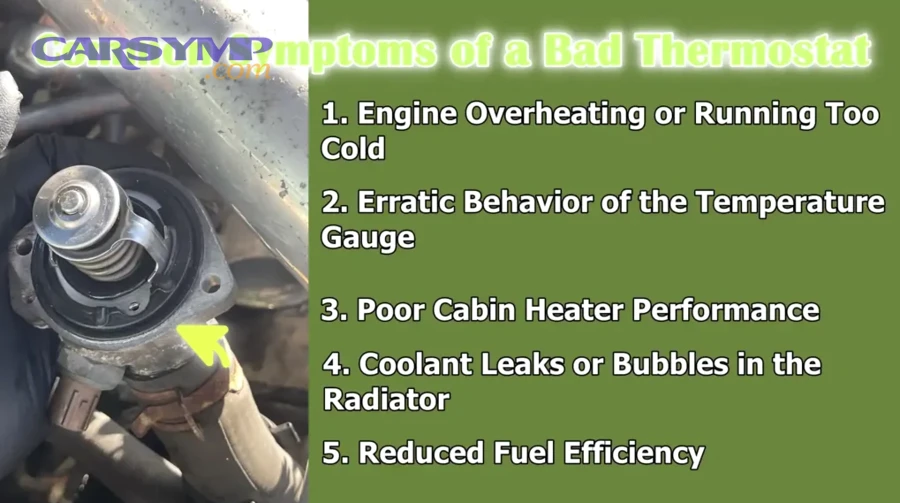
Early detection requires regular visual inspection during routine maintenance. Lift your hood and locate the thermostat housing, typically positioned where the upper radiator hose connects to the engine. Look for dried coolant residue appearing as crusty, colored deposits around the housing perimeter. Fresh leaks show as wet spots or active dripping, while older leaks create white or green mineral deposits as water evaporates leaving behind concentrated coolant chemicals. The metal housing itself may display surface corrosion or pitting where coolant has eaten away protective coatings.
As leaks progress, you’ll notice your coolant reservoir level dropping more frequently than normal. Modern engines operate as sealed systems with minimal coolant loss, so adding coolant more than once per year suggests a leak requiring investigation. Check your garage floor or parking spot for colored puddles, keeping in mind that coolant appears bright green, orange, pink, or yellow depending on type. The sweet smell of ethylene glycol provides another clue, particularly noticeable when parking in enclosed spaces like garages.
Driving with an active coolant leak creates escalating risks beyond the thermostat itself. Each time you operate your vehicle, coolant loss reduces the total volume available for heat absorption and transfer. Small leaks that weep slowly may allow hundreds of miles of driving before coolant levels drop critically low, but larger leaks can deplete your cooling system in minutes. Once coolant levels fall below the minimum required for pump operation, your engine loses all cooling capacity and overheating follows immediately. Additionally, coolant dripping onto hot engine components or exhaust systems creates fire hazards, while coolant pooling on roads presents environmental concerns and slipping hazards for motorcycles and bicycles.
Sign #5 – Steam or Coolant Smell From Hood
Steam billowing from under your hood or the sweet, distinct smell of coolant entering the cabin through ventilation systems indicates extreme overheating where coolant reaches its boiling point and escapes the pressurized cooling system. This symptom represents a critical emergency requiring immediate engine shutdown, as the conditions producing visible steam mean your engine has already exceeded safe operating temperatures and faces imminent damage. The steam you observe results from coolant either boiling within the system and escaping through overflow valves, or leaking onto hot engine surfaces where it vaporizes instantly.
Modern cooling systems operate under pressure, typically 15-16 PSI, which raises coolant’s boiling point from 212°F at atmospheric pressure to approximately 260°F under pressure. This pressurization allows coolant to absorb more heat before boiling, providing a safety margin above the engine’s normal 195-220°F operating range. However, when a stuck-closed thermostat prevents heat dissipation, coolant temperature continues climbing past its pressurized boiling point. As coolant begins boiling, it generates steam that increases system pressure beyond the radiator cap’s release threshold, triggering the pressure relief valve to vent excess pressure and prevent catastrophic hose ruptures or radiator damage.
The steam venting from your overflow tube or radiator cap appears as white vapor rising from the front of your vehicle, often concentrated around the radiator area. This visible cloud intensifies when you park and shut off the engine, as residual heat continues boiling coolant without the cooling effect of airflow through the radiator. The steam itself can obscure your vision if driving, creating an additional safety hazard beyond the mechanical failure, and may cause burns if you attempt to open the hood immediately after parking.
Accompanying the visual steam, you’ll detect a distinctively sweet smell similar to maple syrup or candy, which is the characteristic odor of ethylene glycol coolant. This smell becomes particularly noticeable inside the cabin when your ventilation system draws air from the engine compartment. If you smell coolant through your air vents, especially when the heater is running, coolant has leaked onto hot engine components near the ventilation air intake. This internal exposure to vaporized coolant presents health concerns, as ethylene glycol is toxic when inhaled in concentrated forms, making immediate ventilation of the cabin essential.
The appearance of steam or coolant smell demands that you pull over safely and immediately shut off the engine. Continuing to drive produces heat faster than the compromised cooling system can dissipate it, accelerating the path toward head gasket failure, warped cylinder heads, or cracked engine blocks. After shutting down, resist the temptation to remove the radiator cap to check coolant levels, as the system remains pressurized and superheated for 30-45 minutes after shutdown. Removing the cap prematurely releases pressure suddenly, causing violent boiling that can spray scalding coolant several feet in any direction.
Sign #6 – Heater Not Working Properly or Fluctuating
A malfunctioning or fluctuating cabin heater often serves as the first noticeable symptom of thermostat problems, particularly during cold weather when you depend on warm air for comfort and windshield defrosting. Your vehicle’s heating system works by routing hot coolant from the engine through a small radiator-like component called the heater core, then blowing cabin air across this heated core to warm passengers. When thermostat issues prevent the engine from reaching normal operating temperature or cause erratic temperature swings, the heater core receives coolant that’s too cold or inconsistently heated, resulting in inadequate or fluctuating cabin heat.
A stuck-open thermostat creates persistently weak heating because engine coolant never achieves the 195-220°F temperature necessary to warm the heater core effectively. Even with your temperature control set to maximum heat and the fan speed on high, the air blowing from vents feels lukewarm at best. This becomes particularly noticeable during winter driving when outside temperatures near or below freezing demand maximum heating capacity. You might find yourself running the defroster continuously without achieving clear windshields, as the tepid air lacks sufficient temperature differential to evaporate condensation effectively.

Conversely, erratic thermostat behavior produces unpredictable heating performance that swings between hot and cold without apparent cause. Your heater might blow warm air for several minutes, then suddenly turn cold despite unchanged control settings. These fluctuations mirror the temperature gauge swings discussed in Sign #3, as both symptoms stem from the same irregular coolant flow patterns. When the thermostat randomly sticks closed, coolant temperature in the heater core rises quickly, producing hot cabin air. When it suddenly releases and sticks open, cold coolant floods the heater core, and cabin air temperature drops within seconds.
The timing relationship between starting your vehicle and achieving warm air also provides diagnostic information. A properly functioning thermostat closes when the engine is cold, restricting coolant flow until the engine warms. This allows the engine to heat quickly, typically reaching operating temperature within 5-10 minutes of moderate driving. If your heater remains cold for 15-20 minutes or longer, or never produces truly hot air during extended highway driving, a stuck-open thermostat prevents normal warm-up. Some drivers mistakenly attribute this to low coolant levels or heater core blockage, but the thermostat represents the more common cause when other cooling system components appear normal.
Beyond comfort considerations, inadequate heating creates safety hazards through compromised visibility. Defrosting and defogging depend on hot, dry air to remove moisture from windows. When your heater can’t generate sufficient temperature, windshields remain partially fogged, side windows accumulate frost on the interior, and rear visibility through frosted back glass becomes limited. These visibility impairments force you to either delay trips until windows clear naturally, manually wipe glass surfaces repeatedly during driving, or proceed with dangerously limited sight lines.
Sign #7 – Check Engine Light or Temperature Warning Light
The check engine light or dedicated temperature warning light illuminating on your dashboard indicates that your vehicle’s onboard diagnostics system has detected temperature-related anomalies through electronic sensors monitoring coolant temperature and engine performance. Modern vehicles employ an engine coolant temperature (ECT) sensor that continuously reports temperature data to the engine control module (ECM), which compares actual temperatures against expected values based on operating conditions. When measured temperatures deviate significantly from predicted ranges, the ECM triggers warning lights and stores diagnostic trouble codes identifying the specific nature of the malfunction.
Several diagnostic trouble codes relate directly to thermostat performance, including P0128 “Coolant Thermostat Temperature Below Regulating Temperature,” which sets when the engine takes too long to reach operating temperature or runs consistently too cold. This code typically indicates a stuck-open thermostat allowing excessive coolant flow before the engine warms adequately. The ECM calculates expected warm-up time based on ambient temperature, engine load, and driving conditions, then monitors actual coolant temperature rise. When the observed warming curve falls below threshold values, suggesting the thermostat opened prematurely or remains stuck open, the code sets and illuminates the check engine light.
Conversely, temperature warning lights shaped like thermometers or displaying “TEMP” in red illuminate specifically for overheating conditions where coolant temperature exceeds safe thresholds. These lights represent more urgent warnings than generic check engine lights, demanding immediate attention to prevent engine damage. Many vehicles implement a two-stage warning system where a yellow or amber light provides early notice that temperatures are climbing toward dangerous levels, while a red light or flashing indicator signals critical overheating requiring immediate engine shutdown.
Reading diagnostic trouble codes requires an OBD-II scanner, available at auto parts stores for free code reading or purchasable for personal use for $20-100. These scanners connect to the diagnostic port typically located under the driver’s side dashboard, then communicate with the ECM to retrieve stored codes and freeze frame data showing conditions when the code set. A thermostat-related code combined with the symptom patterns described in Signs #1-6 confirms the thermostat as the root cause rather than other cooling system components like the water pump, radiator, or ECT sensor itself.
Some drivers make the mistake of clearing diagnostic codes with a scanner or by disconnecting the battery, hoping to eliminate the warning light without addressing the underlying problem. While this temporarily extinguishes the light, the ECM continues monitoring temperatures and will reset the same code within minutes or hours once conditions again exceed programmed thresholds. This approach wastes time and risks additional damage during the period between clearing codes and the light reilluminating, as you lose the early warning the system provides.
Advanced diagnostic capabilities in newer vehicles extend beyond simple code storage to active protection strategies. When the ECM detects dangerous overheating, it may implement engine protection mode by reducing power output, limiting RPM, disabling cylinders, or even forcing engine shutdown in extreme cases. These interventions prevent catastrophic damage but leave you stranded, emphasizing why heeding warning lights at first appearance avoids more severe consequences later.
What Are the Risks of Driving With a Bad Thermostat?
The risks of driving with a bad thermostat range from moderate long-term concerns with stuck-open failures to critical immediate dangers with stuck-closed scenarios, including cracked engine blocks, warped cylinder heads, blown head gaskets, reduced fuel efficiency of 15-25%, accelerated engine wear, catalytic converter damage, and repair costs escalating from $150-300 for simple thermostat replacement to $2,000-8,000 for major engine repairs. Understanding these risk categories based on failure mode enables informed decisions about whether your situation permits driving to a repair shop or demands immediate roadside shutdown.
The severity and timeline of damage depend fundamentally on which position your thermostat has failed in, as the thermal consequences differ dramatically between stuck-open and stuck-closed scenarios. Moreover, the duration you continue driving after symptoms appear exponentially increases damage potential, transforming minor repairs into major overhauls.
Immediate Risks: Stuck Closed Thermostat (High Danger)
A stuck-closed thermostat presents extreme immediate danger because it prevents coolant from circulating to the radiator where heat dissipation occurs, causing engine temperature to climb rapidly toward catastrophic failure within 10-15 minutes of normal driving or as little as 5 minutes under heavy loads. The closed thermostat acts as a blockage in your cooling system, trapping heated coolant inside the engine block where it continues absorbing combustion heat without any mechanism to transfer that thermal energy away. Engine temperature climbs past the safe maximum of 220°F toward coolant’s pressurized boiling point near 260°F, at which point multiple simultaneous failures cascade through your engine.
The first critical component to fail under extreme overheating is typically the head gasket, a precision-engineered seal between the engine block and cylinder head. Head gaskets must withstand tremendous pressure from combustion while simultaneously sealing coolant passages and oil galleries. They’re manufactured from materials designed to function within specific temperature ranges, and exceeding these ranges by 40-60°F causes the gasket material to degrade, compress beyond its elastic limit, or burn through entirely. Head gasket failure manifests as white exhaust smoke from coolant entering the combustion chamber, oil contaminated with coolant appearing as milky residue on the dipstick, or external coolant leaks from the head-to-block mating surface.

Continuing to drive after head gasket failure accelerates damage toward even more expensive repairs. Coolant mixing with engine oil destroys lubrication properties, causing bearing surfaces throughout the engine to experience metal-to-metal contact. Crankshaft bearings, connecting rod bearings, and camshaft bearings all depend on pressurized oil forming a protective film between moving parts. When coolant contamination turns oil into an ineffective emulsion, bearing wear accelerates 100-fold, potentially seizing the engine entirely within minutes.
Extreme temperatures also warp cylinder heads, which are machined to extremely tight tolerances for proper valve seating and combustion chamber sealing. Aluminum cylinder heads begin warping at temperatures above 260°F, with the deck surface that mates to the engine block distorting by 0.002-0.005 inches—measurements that seem tiny but completely compromise sealing integrity. Warped heads require either precision machining to restore flatness or complete replacement, adding $1,500-3,000 to repair costs beyond head gasket replacement itself.
The most catastrophic damage from sustained overheating is a cracked engine block, where thermal expansion exceeds the iron or aluminum block’s structural capacity. Cracks typically form in the thinnest sections between cylinders or around coolant passages where stress concentrations peak. Engine block cracks often render the engine unrepairable, as welding or brazing rarely provides reliable long-term fixes for components subjected to constant thermal cycling and high pressures. Most cracked blocks necessitate complete engine replacement at costs ranging from $3,000-8,000 depending on whether you install a remanufactured engine, used engine, or new replacement.
The timeline for this damage cascade underscores why stuck-closed thermostat stuck symptoms demand immediate action. Within the first 5-10 minutes of overheating, you enter the zone where head gasket damage becomes likely. Minutes 10-15 bring risks of cylinder head warping and bearing damage. Beyond 15 minutes of sustained red-zone temperatures, engine block cracking becomes probable. These narrow windows mean the difference between a $200 thermostat replacement handled roadside with a basic tool kit and a $5,000 engine replacement requiring professional removal and installation.
Short-Term Risks: Stuck Open Thermostat (Moderate Concern)
A stuck-open thermostat creates moderate concern through reduced fuel efficiency, poor engine performance, inadequate cabin heating, increased emissions, and accelerated long-term engine wear, though these consequences develop gradually over weeks and months rather than minutes. The permanently open thermostat allows coolant to circulate continuously through the radiator regardless of engine temperature, preventing the engine from reaching its designed operating temperature of 195-220°F. Instead, the engine stabilizes at 160-180°F, a range insufficient for optimal combustion efficiency and complete fuel vaporization.
The fuel economy impact of stuck thermostat operation in the open position typically ranges from 15-25% increased consumption compared to normal operation, translating to significant costs over time. Your engine control unit detects the abnormally low coolant temperature through the ECT sensor and compensates by enriching the fuel mixture, injecting additional fuel to ensure reliable combustion despite sub-optimal thermal conditions. This enrichment strategy works adequately for the brief warm-up period after cold starts, but becomes dramatically wasteful when continued indefinitely. For a vehicle averaging 25 MPG normally, a stuck-open thermostat drops efficiency to 19-21 MPG, costing an extra $200-400 annually in fuel expenses for drivers covering 12,000 miles yearly.
Beyond fuel costs, cold engine operation increases tailpipe emissions substantially, particularly hydrocarbons and carbon monoxide that result from incomplete combustion. Emissions testing may show elevated readings even in vehicles that passed previously, potentially causing inspection failures in jurisdictions with strict emissions requirements. Modern vehicles equipped with onboard emissions monitors may set diagnostic trouble codes for catalyst efficiency below threshold, as the catalytic converter also operates sub-optimally when exhaust temperatures remain low.
The mechanical wear implications of chronically cold operation become apparent over tens of thousands of miles. Engine components are engineered with thermal expansion coefficients that bring clearances to optimal values at normal operating temperature. Pistons expand more than cylinder walls, reducing piston-to-wall clearances from 0.003-0.004 inches when cold to 0.001-0.002 inches at operating temperature. When engines never fully warm, these larger clearances persist, allowing greater piston rocking and increased blow-by of combustion gases past the rings into the crankcase.
This blow-by carries unburned fuel and combustion byproducts into the crankcase where they contaminate engine oil, degrading its lubrication properties and acidifying it more rapidly than normal. Oil designed for 7,500-mile change intervals may require changing at 4,000-5,000 miles when contamination rates accelerate, adding maintenance frequency and costs. The contaminated oil, in turn, accelerates wear throughout the engine’s lubrication system, potentially shortening engine lifespan by 20-30% compared to engines consistently operated at proper temperatures.
Catalytic converter longevity also suffers from sustained low exhaust temperatures. Catalytic converters require exhaust temperatures above 600°F to activate the chemical reactions that convert harmful emissions into less toxic compounds. When a stuck-open thermostat keeps engine and exhaust temperatures abnormally low, the catalyst operates in a partially active state, accumulating unburned fuel and oil residues that gradually poison the catalyst substrate. Catalytic converter replacement costs $800-2,500 depending on vehicle and converter type, representing another deferred cost of ignoring a stuck-open thermostat.
Despite these moderate long-term risks, a stuck-open thermostat permits continued driving for days or weeks while scheduling repair at your convenience, unlike the immediate shutdown demanded by stuck-closed failures. Many drivers operate vehicles with stuck-open thermostats for months or even years, particularly those who perform minimal winter driving and don’t notice inadequate heating. While not recommended due to cumulative costs in fuel, oil, and wear, this demonstrates the fundamental difference in urgency between open and closed failure modes.
Long-Term Engine Damage From Delayed Repair
Long-term engine damage from delayed thermostat repair accumulates through multiple failure mechanisms including accelerated component wear, carbon and varnish buildup, oxygen sensor degradation, catalytic converter poisoning, and transmission fluid degradation, with total cumulative costs potentially exceeding $3,000-5,000 over 30,000-50,000 miles of operation. While individual consequences develop slowly and often go unnoticed day-to-day, the compounding nature of these problems creates exponential rather than linear damage progression over time.
Carbon deposits accumulate throughout the intake system, on intake valves, and inside combustion chambers when fuel doesn’t vaporize completely due to insufficient heat. Cold engines atomize fuel less effectively, allowing larger fuel droplets to enter cylinders where they don’t burn completely during combustion. The partially burned fuel creates carbon residue that gradually builds on valve faces, piston crowns, and combustion chamber walls. Over 20,000-30,000 miles, these deposits can accumulate to thicknesses of 0.010-0.020 inches, reducing combustion chamber volume and increasing compression ratio beyond designed specifications. This raises cylinder pressures and temperatures unevenly, potentially causing detonation or pre-ignition that damages pistons and rings.
Oxygen sensors positioned in the exhaust stream measure oxygen content to enable the ECM to maintain ideal air-fuel ratios. These sensors operate on heated ceramic elements that generate voltage signals based on oxygen concentration differences between exhaust gas and atmospheric air. The sensors depend on exhaust temperatures above 600°F for proper operation, with many incorporating heaters to speed warm-up. When exhaust temperatures remain perpetually low from a stuck-open thermostat, oxygen sensor accuracy degrades, readings drift from calibration, and the ECM can no longer maintain precise fuel control. Contamination from excessive unburned fuel further accelerates sensor poisoning. Oxygen sensor replacement costs $150-300 per sensor, with many vehicles employing two to four sensors.
Modern automatic transmissions share coolant with the engine cooling system through a transmission fluid cooler integrated into the radiator or connected externally. This heat exchanger normally warms cold transmission fluid during initial operation and cools hot fluid during sustained highway driving or towing. When engine coolant runs abnormally cold from a stuck-open thermostat, transmission fluid takes longer to reach optimal operating temperature of 175-200°F. Cold transmission fluid has higher viscosity, creating increased internal friction within the transmission that reduces shift quality and efficiency. Transmission components experience accelerated wear when operating in thick, cold fluid, particularly clutch packs and valve bodies with tight clearances. Over 50,000-70,000 miles, this can contribute to transmission failures costing $2,500-4,500 to rebuild or replace.
The compounding nature of these delayed damage mechanisms means total repair costs potentially exceed the vehicle’s value, particularly in older cars with higher mileage. A ten-year-old vehicle worth $6,000-8,000 facing simultaneous needs for engine decarbonization, oxygen sensor replacement, catalytic converter service, and transmission attention quickly reaches the economic threshold where repair costs approach or exceed vehicle value. This total loss scenario results from allowing a $150 thermostat replacement to languish unrepaired for years.
According to repair cost data compiled by RepairPal analyzing thousands of actual repair invoices from 2019-2023, thermostat replacement averages $210-320 nationally including parts and labor, while head gasket replacement averages $1,624-2,106, and complete engine replacement averages $4,200-7,800, demonstrating the exponential cost escalation from delaying simple preventive repairs.
When Is It Safe vs. Dangerous to Drive With Thermostat Problems?
Safe short-term driving with thermostat problems is limited to stuck-open scenarios where you can drive cautiously for 30-50 miles to reach a repair facility while monitoring the temperature gauge continuously, whereas dangerous situations demanding immediate engine shutdown include any stuck-closed scenario with rising temperature gauges, active coolant leaks creating puddles, visible steam from the hood, or coolant smells entering the cabin. The decision matrix for continuing versus stopping depends on accurately diagnosing which failure mode you’re experiencing and assessing the distance to safe assistance.
Specifically, this safety assessment requires understanding the fundamental difference in damage timelines between the two failure modes, along with environmental and operational factors that modify risk levels in either direction. To better understand when driving remains acceptable versus when stopping becomes mandatory, let’s examine each scenario in detail.
Safe Short-Term Driving Scenarios (With Cautions)
Safe short-term driving with a stuck-open thermostat is acceptable for distances under 50 miles when traveling to a repair facility, provided you monitor the temperature gauge continuously, avoid sustained high speeds above 65 MPH, and accept increased fuel consumption and reduced cabin heating as temporary inconveniences rather than permanent conditions. The stuck-open position allows unrestricted coolant flow to the radiator, which prevents overheating even under moderate loads while keeping engine temperature below normal operating range.
The 50-mile distance limit reflects conservative guidance that balances reaching professional help against accelerating cumulative damage. Most urban areas offer multiple repair options within 20-30 miles of any location, making this range practical for most drivers. Extended highway driving beyond 50 miles compounds wear mechanisms and fuel waste unnecessarily, as does operating the vehicle for days or weeks while postponing repair. The “short-term” designation should be interpreted as hours rather than days—drive directly to the repair shop rather than running errands or continuing with your original destination.
Speed limitations exist because highway driving at 70-80 MPH increases engine load substantially compared to urban speeds of 30-45 MPH. Higher speeds demand more power output, which generates additional heat that your compromised cooling system must manage. While a stuck-open thermostat won’t cause overheating under normal circumstances, the combination of high-speed operation, summer ambient temperatures above 90°F, and mountainous terrain with extended climbs can occasionally push coolant temperatures higher than expected. Maintaining speeds at or below 65 MPH provides safety margin against unexpected temperature rise.

Seasonal considerations affect safe driving distance significantly. Summer ambient temperatures above 90°F stress cooling systems through reduced temperature differential between engine and surroundings, while winter temperatures below 40°F actually benefit stuck-open scenarios by providing additional external cooling. During winter, the primary concern shifts from engine damage to comfort and visibility, as inadequate cabin heating creates the safety hazards discussed in Sign #6. Plan winter trips accounting for defrosting delays and limited windshield clearing capacity.
Loading conditions also modify safe distance calculations. Towing trailers, carrying maximum passenger and cargo loads, or climbing steep grades all increase engine heat generation substantially. These high-load scenarios can occasionally cause even stuck-open thermostats to allow temperature rise toward normal or slightly above, particularly if other cooling system components like the radiator or water pump operate at reduced efficiency. If you must drive with a stuck-open thermostat under high-load conditions, reduce the safe distance to 20-30 miles and monitor gauges even more frequently.
The monitoring discipline required during any driving with thermostat problems cannot be overstated. Glance at your temperature gauge every 2-3 minutes rather than waiting for warning lights to illuminate. Temperature problems develop quickly, and early detection of unexpected gauge movement allows you to react by reducing speed, turning on cabin heat to maximum to draw heat from the engine, or finding safe pullover locations before entering critical damage zones. This vigilance transforms what might seem like a minor inconvenience into a serious driving task demanding reduced distraction from phones, conversations, or navigation systems.
Dangerous Scenarios – Stop Driving Immediately
Dangerous scenarios requiring immediate engine shutdown and roadside assistance include any situation where your temperature gauge enters the red zone, steam becomes visible from the hood, coolant smell enters the cabin, active coolant leaks create puddles beneath the vehicle, or warning lights specifically indicate overheating rather than generic check engine codes. These conditions signal that damage is actively occurring or imminent within minutes, and continuing to drive transforms a repairable situation into engine replacement territory.
The temperature gauge entering the red zone or “H” marking represents your primary decision trigger, as this indicates coolant temperature has exceeded 230-240°F and approaches boiling point. Modern gauge designs vary from numerical readouts to simplified three-zone indicators, but all provide visual warnings when temperature exceeds safe thresholds. The moment your needle touches the hot zone or a red segment illuminates, you have entered a critical 2-3 minute window where pulling over safely prevents damage while continuing to drive guarantees expensive repairs. Do not rationalize that the gauge might be broken, that you’re only minutes from your destination, or that you can make it to the next exit—none of these justifications outweigh the mechanical reality of aluminum engine components beginning to warp and gaskets beginning to fail.
Visible steam rising from under the hood signals that coolant has reached boiling temperature and the pressure relief system has activated to prevent hose ruptures. This white vapor appears concentrated around the radiator area at the front of the vehicle and may intensify when you stop, as residual heat continues boiling coolant without airflow cooling. Once steam appears, you’ve already entered the zone where head gasket damage becomes likely, and each additional minute of operation increases repair costs exponentially. Pull to the roadside immediately, shut off the engine, and do not attempt to continue driving even after the engine cools, as the thermostat remains stuck and will cause identical overheating once restarted.
Strong coolant smell entering the cabin through ventilation vents indicates coolant has leaked onto hot engine components where it vaporizes immediately. This smell resembles sweet maple syrup or candy and becomes unmistakable once you’ve experienced it. The presence of vaporized coolant inside your cabin means coolant is escaping the cooling system at a significant rate, and coolant level has likely dropped below the minimum needed for effective heat transfer. Additionally, inhaling concentrated ethylene glycol vapors presents health risks including headache, dizziness, and respiratory irritation, making cabin ventilation urgent. Open windows fully, shut off cabin heating and ventilation, and pull over as soon as safely possible.
Active coolant leaks creating puddles under your vehicle while parked or during operation signal that the cooling system has lost pressure integrity and can no longer maintain adequate coolant volume. Small weeps that produce only dampness might allow cautious driving to a repair shop, but streams of coolant dripping or spraying from hoses, housing connections, or the radiator itself demand immediate shutdown. Operating an engine with critically low coolant causes overheating within minutes regardless of thermostat condition, as insufficient coolant volume cannot absorb and transport adequate heat. Check puddle color to confirm it’s coolant rather than air conditioning condensation (which is clear) or other fluids—coolant appears green, orange, pink, or yellow depending on type.
The specific actions to take when pulling over for an overheating emergency include:
- Activate hazard lights immediately to alert following traffic
- Merge safely to the shoulder or emergency lane without sudden movements
- Select the widest shoulder area possible for safety from passing traffic
- Shift to park and shut off the engine completely—do not let it idle
- Exit the vehicle from the side away from traffic if possible
- Call for roadside assistance or towing service rather than attempting repairs
- Do NOT remove the radiator cap for at least 45 minutes, as the system remains pressurized and superheated
- If overheating occurred in remote areas, allow the engine to cool for 30-45 minutes before attempting to restart and drive cautiously to the nearest service station
These emergency procedures prioritize preventing injury from superheated coolant and avoiding additional engine damage from attempting to continue operation. The cost of towing service from $75-200 pales in comparison to the $2,000-5,000 engine repair costs that result from driving through overheating episodes.
What to Monitor While Driving to a Repair Shop
Continuous monitoring of temperature gauge readings, coolant warning lights, steam or smell indicators, engine performance changes, and unusual sounds is essential when driving any distance with suspected thermostat problems, requiring gauge checks every 2-3 minutes rather than the normal occasional glance most drivers provide. This heightened vigilance transforms driving from an automatic task to one demanding conscious attention, reducing your capacity for other distractions and necessitating route modifications to avoid high-stress driving conditions.
Temperature gauge monitoring forms your primary defense against surprise overheating. Rather than waiting for warning lights that illuminate only after temperature exceeds critical thresholds, watch for gradual gauge creep toward the hot zone that provides earlier warning. Establish your baseline reading during the first few minutes of driving—typically middle of the gauge range for normal operation, or cold zone for stuck-open scenarios. Then verify that reading remains stable every 2-3 minutes throughout the trip. Any upward movement of 10-15% toward hot requires immediate response by reducing speed, avoiding hills, and turning cabin heat to maximum to help dissipate engine heat through the heater core.
Engine performance changes often precede dashboard warning indications, as the engine control unit implements protection strategies when temperature sensors report abnormal readings. Watch for subtle power loss during acceleration, hesitation or stumbling when applying throttle, or unusual smoothness patterns suggesting the ECU has disabled cylinders to reduce heat generation. Modern engines employ sophisticated thermal protection algorithms that sacrifice performance to prevent damage, and these interventions signal that your cooling system operates at the edge of its capacity.
Unusual sounds including pinging, knocking, or steam-hissing from the engine compartment indicate thermal stress reaching dangerous levels. Pinging or knocking sounds result from abnormal combustion patterns including pre-ignition and detonation that occur when excessive heat causes fuel to ignite prematurely or uncontrollably. These sounds resemble marbles rattling in a can and increase under acceleration or load. Hissing sounds suggest coolant escaping under pressure, either through leaks or through the radiator cap pressure relief. Any new sounds appearing during your drive to the repair shop warrant immediate pullover and assessment.
Driving strategy modifications reduce thermal stress when operating with known thermostat problems. Avoid highway speeds above 65 MPH, as increased engine load generates additional heat. Select routes avoiding steep grades where possible, as climbing hills demands maximum engine output and heat generation. Plan your path to minimize stop-and-go traffic, as idling eliminates the cooling benefit of airflow through the radiator while the engine continues producing heat. If traffic conditions force extended idling, shift to neutral and increase idle speed slightly to improve water pump circulation and radiator fan effectiveness.
The cabin heater becomes a supplemental cooling device when overheating threatens. Turn your temperature control to maximum heat and fan speed to high, which routes hot coolant through the heater core where cabin air absorbs thermal energy. This provides additional heat dissipation beyond the radiator alone, potentially reducing engine temperature by 5-10°F in critical situations. The technique works identically to the radiator—hot coolant flows through small tubes while air passes across fins to carry heat away—just on a smaller scale. While uncomfortable during summer driving, this emergency cooling can mean the difference between reaching your destination safely and experiencing roadside breakdown.
According to automotive thermal engineering research published by SAE International in their 2021 paper “Cooling System Fault Analysis and Driver Response Strategies,” drivers who monitored gauges and responded to early temperature warnings within 2-3 minutes prevented engine damage in 94% of thermostat failure incidents, compared to only 23% success rate among drivers who waited for warning lights before responding.
How to Diagnose a Bad Thermostat in Your Car
Diagnosing a bad thermostat requires three primary methods: visual inspection for coolant leaks and corrosion around the thermostat housing, temperature gauge analysis comparing warm-up time and operating temperature against normal parameters, and the upper radiator hose test checking when the hose transitions from cold to hot during engine warm-up. These diagnostic procedures can be performed with minimal tools and provide definitive confirmation of thermostat failure without expensive professional diagnosis.
The combination of multiple diagnostic approaches increases confidence in your conclusion, as individual tests might produce ambiguous results while convergent evidence from visual, temperature, and tactile assessments confirms thermostat malfunction definitively. Let’s explore each diagnostic method in detail to equip you with practical diagnostic capabilities.
Visual Inspection Methods
Visual inspection for thermostat problems focuses on identifying coolant leaks, corrosion patterns, and physical damage around the thermostat housing and associated components, requiring only a flashlight and clean rag while the engine is cold. Begin by locating the thermostat housing, typically positioned where the upper radiator hose connects to the engine block or cylinder head. This housing appears as a metal component, often cast aluminum, with bolt flanges securing it to the engine and a large-diameter hose clamped to its outlet.
Examine the thermostat housing perimeter where it mates to the engine block, looking for dried coolant residue appearing as crusty, colored deposits. Fresh coolant leaks show as wet areas or active dripping, while older leaks create white, green, orange, or pink mineral deposits as water evaporates leaving concentrated coolant chemicals. Use a clean white rag to wipe the housing and surrounding areas, then check the rag for coolant coloring that indicates active seepage. Even minor leaks produce detectable residue within days of starting, as heat cycling causes the gasket to weep small amounts of pressurized coolant.
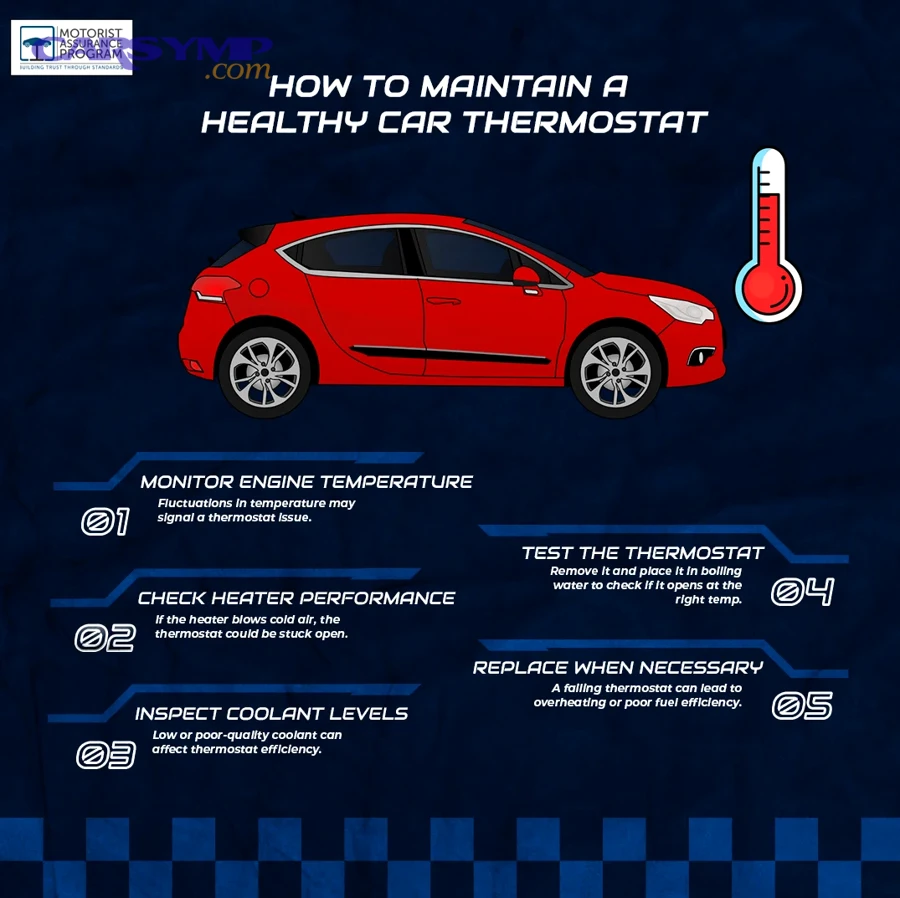
Surface corrosion on the thermostat housing itself provides additional diagnostic clues. Aluminum housings exposed to coolant leaks develop white or gray powdery oxidation that spreads from leak points outward. Steel housings show rust-colored oxidation and pitting. Severe corrosion creating visible holes in the housing requires immediate replacement regardless of thermostat function, as these failures allow coolant loss and air entry into the cooling system. Examine bolt threads and heads for corrosion as well, since stuck or damaged bolts complicate thermostat replacement and may require thread repair procedures.
Coolant level verification in the overflow reservoir provides indirect evidence of leaks anywhere in the cooling system including the thermostat housing. Locate the translucent plastic coolant reservoir, typically positioned near the radiator or along the inner fender. Check the coolant level against the “MIN” and “MAX” markings molded into the reservoir, noting that proper level falls between these marks when the engine is cold. Coolant level below the minimum suggests a leak somewhere in the system, though this test alone cannot isolate the thermostat as the source without additional investigation.
Inspect the upper and lower radiator hoses for bulges, cracks, or soft spots that indicate imminent failure, as hose ruptures produce symptoms similar to thermostat problems but require different repairs. Squeeze hoses when cold to assess condition—healthy hoses feel firm and springy, while deteriorated hoses feel mushy or show surface cracking in the rubber. While not directly related to thermostat diagnosis, identifying failing hoses during your inspection prevents misdiagnosis and ensures all cooling system weaknesses receive attention simultaneously.
The engine block and cylinder head surfaces surrounding the thermostat housing also warrant inspection for coolant staining or mineral deposits. These areas should appear clean and dry except for normal road grime and oil residue. Coolant staining appears as discolored streaks running downward from the thermostat housing or head gasket areas, indicating the path taken by leaking coolant as gravity pulls it along engine surfaces. Document these patterns with photos using your phone, as they help mechanics confirm your diagnosis and may reveal additional cooling system problems requiring attention.
Temperature Gauge Analysis
Temperature gauge analysis diagnoses thermostat problems by comparing observed warm-up time and operating temperature against known-good benchmarks, with healthy engines reaching normal operating range (middle of gauge or 195-220°F) within 5-10 minutes of moderate driving while stuck-open thermostats remain in the cold zone even after 20 minutes and stuck-closed thermostats climb rapidly toward the hot zone. This diagnostic method requires only patient observation during a test drive under consistent conditions to establish clear baseline comparisons.
Begin your temperature gauge analysis with a completely cold engine that has sat overnight or for at least 4-5 hours, ensuring starting temperature matches ambient conditions. Note the outside temperature, as cold weather extends warm-up times while hot weather accelerates them. Start the engine and observe the temperature gauge position—it should begin in the cold zone at the left side of the range. Allow the engine to idle for 2-3 minutes while monitoring gauge movement, though significant warming at idle is not expected. A gauge that jumps immediately toward hot within the first minute suggests a faulty gauge or sensor rather than thermostat, as engines cannot physically heat that quickly.
Drive the vehicle under moderate load conditions—urban speeds of 30-45 MPH with normal acceleration—while checking the gauge every minute. A properly functioning thermostat should cause the gauge to begin rising from the cold zone within 3-5 minutes and reach the middle range (normal operating temperature) within 5-10 minutes total. This timeline assumes ambient temperatures of 50-80°F; cold weather below 40°F may extend warm-up to 12-15 minutes while summer heat above 90°F accelerates it to 4-6 minutes. The warming progression should appear smooth and steady rather than erratic or stepwise.
A stuck-open thermostat produces a distinctively flat temperature curve where the gauge rises slowly from cold but stabilizes in the lower third of the range, never reaching the middle or normal operating zone even after 20+ minutes of highway driving. The gauge might climb to approximately one-quarter scale then stop, remaining there indefinitely regardless of driving duration or intensity. Some vehicles display this as actual temperature readings of 160-180°F rather than the normal 195-220°F range. This pattern confirms excessive coolant flow preventing normal thermal buildup, definitively diagnosing a stuck-open thermostat.
Conversely, a stuck-closed thermostat creates a rapidly rising temperature curve where the gauge climbs steadily toward the hot zone without stabilizing in the normal range. Rather than leveling off at middle-gauge positions, the needle continues creeping upward into the upper third of the range and eventually toward red-line temperatures. This progression might take 10-15 minutes during gentle driving but accelerates to 5-7 minutes under highway speeds or loads. Any temperature gauge movement into the upper third of the range or above 230°F demands immediate shutdown to prevent engine damage.
Erratic temperature gauge behavior with random fluctuations between cold and hot zones indicates an intermittently sticking thermostat that randomly opens and closes without correlation to actual engine temperature. These unpredictable swings might show the gauge in the normal range for several minutes, then suddenly dropping to cold or jumping to hot within 30-60 seconds. This pattern distinguishes thermostat problems from other cooling system faults like air pockets or failing water pumps, which produce more consistent symptoms.
Document your temperature observations during the test drive using video recording with your phone mounted in a dashboard holder. This provides precise timing data showing exactly how long warm-up required and what temperatures the gauge displayed at each minute interval. Share this video with your mechanic to confirm your diagnosis and establish baseline comparisons for verification after repair. The video evidence also protects you if shops dispute whether problems existed before service or attempt to blame pre-existing conditions for post-repair issues.
Upper Radiator Hose Test
The upper radiator hose test diagnoses thermostat function by feeling when the hose transitions from cold to hot during engine warm-up, with a properly functioning thermostat keeping the hose cold for 5-10 minutes until the thermostat opens at its designed temperature threshold, at which point the hose becomes too hot to touch within 30 seconds. This simple tactile test provides definitive confirmation of thermostat operation without specialized equipment or technical knowledge.
Perform this test starting with a completely cold engine after overnight sitting, ensuring the upper radiator hose feels cool to the touch initially. The upper hose connects the top of the radiator to the thermostat housing or engine, distinguished from the lower hose by its position and diameter. Start the engine and let it idle while periodically touching the upper hose every 60-90 seconds. Use caution as the hose will eventually become extremely hot—touch briefly with fingertips rather than gripping firmly, and withdraw immediately if heat becomes uncomfortable.
For the first 5-10 minutes, the upper hose should remain relatively cool even as the engine warms, because the closed thermostat prevents hot coolant from circulating to the radiator. You might feel very slight warming from radiant heat through the housing, but the hose should not become noticeably hot during this warm-up period. This cool-hose phase confirms the thermostat is properly closed and restricting flow as designed, allowing the engine to reach operating temperature quickly.
The thermostat opens when engine coolant reaches its designed temperature, typically 180-195°F, depending on the specific thermostat rating. At this moment, hot coolant suddenly flows from the engine through the now-open thermostat into the upper radiator hose. The temperature change is dramatic and rapid—within 30-60 seconds of the thermostat opening, the upper hose transitions from cool-warm to too-hot-to-touch. This sudden heat surge confirms the thermostat opened properly and coolant circulation began as designed. Note the approximate time from cold start to hose heating, which should align with the 5-10 minute warm-up period discussed in temperature gauge analysis.
A stuck-open thermostat produces abnormal results where the upper hose begins warming immediately after starting the cold engine, becoming noticeably warm within 2-3 minutes rather than the normal 5-10 minute delay. This early heating proves coolant circulates to the radiator from the moment you start the engine, preventing proper warm-up. The hose never remains cool during the warm-up phase because no warm-up phase exists—coolant flows continuously from engine to radiator regardless of temperature.
A stuck-closed thermostat creates the opposite pattern where the upper hose remains cold indefinitely even as the engine temperature gauge climbs toward the hot zone. The hose might show slight warming from radiant heat transfer through the engine block and housing, but never achieves the too-hot-to-touch condition that signals proper coolant circulation. This cool hose combined with rising temperature gauge confirms the thermostat remains closed, blocking coolant from reaching the radiator where heat dissipation would occur. Do not continue this test beyond 10-12 minutes or if the temperature gauge approaches the hot zone, as you risk overheating damage.
Perform the hose test during moderate ambient temperatures of 50-80°F for most accurate results. Extreme cold below 30°F or heat above 95°F can complicate interpretation, as ambient temperature affects hose baseline temperature and alters engine warm-up characteristics. If you must test during temperature extremes, extend observation time and focus on relative temperature change rather than absolute heat levels—the transition from cool to hot remains the diagnostic key regardless of starting conditions.
Safety precautions for the upper hose test include never attempting this diagnostic with the engine at operating temperature, as the hose will already be extremely hot and can cause severe burns. Never squeeze or put pressure on hot hoses, as this can cause them to rupture and spray superheated coolant. If you accidentally touch a hot hose causing burns, immediately run cold water over the affected area for 10-15 minutes and seek medical attention for anything beyond superficial redness. Consider wearing light cotton gloves that allow heat sensing while providing minimal protection against brief contact with warm surfaces.
How to Prevent Thermostat Failure and Extend Cooling System Life
Preventing thermostat failure and extending cooling system life requires following recommended thermostat replacement intervals of 10 years or 100,000 miles, performing coolant flushes every 30,000-50,000 miles using the correct coolant type, conducting annual pressure testing to detect leaks early, and addressing environmental factors like hard water contamination that accelerate component degradation. These proactive maintenance strategies cost $300-500 every 3-5 years but prevent $2,000-8,000 emergency repairs from catastrophic cooling system failures.
Moreover, understanding which preventive measures provide the greatest return on investment allows you to prioritize maintenance spending effectively while maximizing your vehicle’s reliability and longevity. The following sections detail specific preventive practices proven to extend thermostat and cooling system lifespan.
Recommended Thermostat Replacement Intervals
Recommended thermostat replacement intervals follow manufacturer specifications typically ranging from 10 years or 100,000 miles for most vehicles, though severe operating conditions including frequent towing, extreme climates, or stop-and-go traffic may necessitate earlier replacement at 7 years or 70,000 miles. Unlike consumable parts such as oil filters or brake pads that require replacement based on clear wear indicators, thermostats function normally until sudden failure, making time-based and mileage-based preventive replacement the most reliable strategy for avoiding unexpected breakdowns.
Most vehicle manufacturers specify thermostat replacement as part of major service intervals outlined in the owner’s manual maintenance schedule. These schedules typically group thermostat service with timing belt replacement, water pump service, and comprehensive cooling system maintenance occurring at 90,000-120,000 mile intervals. Following these manufacturer recommendations ensures thermostat replacement occurs before statistical failure rates climb, as automotive engineering data shows thermostat failure rates below 5% before 100,000 miles but accelerating to 15-20% failure rates between 100,000-150,000 miles.
Age-based replacement proves equally important as mileage-based schedules, particularly for vehicles driven infrequently or accumulating low annual mileage. Thermostats contain rubber seals, springs, and wax-filled thermal elements that degrade through chemical exposure and thermal cycling regardless of mileage. A 12-year-old vehicle with only 60,000 miles faces similar thermostat failure risk as an 8-year-old vehicle with 120,000 miles, as time-related degradation affects both equally. Use whichever threshold arrives first—10 years or 100,000 miles—as your replacement trigger regardless of whether the thermostat currently shows symptoms.
Severe service conditions warrant more aggressive replacement intervals due to accelerated thermal cycling and increased stress on cooling system components. Vehicles used for frequent trailer towing, operating in extreme heat climates with ambient temperatures regularly exceeding 100°F, extensive stop-and-go urban driving, or commercial delivery applications accumulate thermal stress 50-100% faster than normal passenger vehicle use. For these severe-duty applications, reduce replacement intervals to 7 years or 70,000 miles to maintain reliability margins.
Performance and enthusiast vehicles present special considerations due to modified engines generating greater heat or aftermarket cooling components with different service requirements. Turbocharged or supercharged engines operate at higher temperatures than naturally aspirated equivalents, accelerating thermostat degradation. Modified cooling systems employing high-flow water pumps or low-temperature thermostats (160-170°F versus stock 180-195°F) may require more frequent service as these components often use racing-oriented designs with shorter service lives than OEM parts. Consult with performance specialists familiar with your specific modifications to establish appropriate service intervals.
The cost-benefit analysis of preventive thermostat replacement strongly favors proactive service over reactive repairs. A scheduled thermostat replacement during other cooling system maintenance costs $150-300 including parts and labor, with most shops requiring 1-2 hours to complete the work. This planned expense allows you to shop for competitive pricing and schedule service at your convenience. Conversely, emergency roadside thermostat failure leads to towing costs ($75-200), rushed repair decisions accepting whatever shop has immediate availability at whatever price they quote, and potential engine damage if overheating occurs before you can safely stop. The convenience and cost savings of planned maintenance far exceed the gamble of running original thermostats until failure.
Cooling System Maintenance Best Practices
Cooling system maintenance best practices include performing coolant flushes every 30,000-50,000 miles to remove contamination and restore corrosion protection, using manufacturer-specified coolant types and mixture ratios of 50/50 antifreeze to distilled water, conducting visual inspections during every oil change to catch leaks early, and pressure testing the system annually to verify integrity before small leaks become catastrophic failures. These routine practices prevent 80-90% of cooling system failures through early detection and contamination control.
Coolant flush intervals depend on coolant type and vehicle manufacturer recommendations, with traditional green ethylene glycol coolants requiring replacement every 24,000-36,000 miles or 2-3 years, while extended-life organic acid technology (OAT) coolants in orange, pink, or purple colors last 50,000-150,000 miles or 5-10 years depending on formulation. Check your owner’s manual or the coolant reservoir cap for specific guidance, as mixing coolant types creates chemical reactions that reduce corrosion protection and can cause component damage. The flush procedure completely drains old coolant, circulates cleaning solution through the system to remove deposits, then refills with fresh coolant mixed to the proper concentration.
Using the correct coolant type proves critical for modern engines employing aluminum components, as aluminum reacts differently to corrosion inhibitors than traditional cast iron. Japanese vehicles typically require silicate-free OAT formulations in red or pink colors, European manufacturers specify low-silicate formulations often in yellow or orange, while American manufacturers traditionally used conventional green coolant though newer models specify OAT types. Using incorrect coolant causes accelerated corrosion of aluminum components including the thermostat housing, water pump housing, and cylinder heads, potentially creating leak failures within 12-24 months. When uncertain about coolant type, purchase factory-branded coolant from your vehicle’s dealer to guarantee compatibility.
Coolant mixture ratio affects both freeze protection and boiling point, with the ideal 50/50 mixture of antifreeze to distilled water providing freeze protection to -34°F and raising boiling point to 265°F under the 16 PSI pressure of a sealed cooling system. Using pure antifreeze seems logical but actually reduces heat transfer efficiency and provides worse freeze protection than the 50/50 mixture, as pure ethylene glycol freezes at 0°F compared to -34°F for the proper mixture. Adding plain water instead of premixed coolant saves money short-term but dilutes corrosion inhibitors and reduces both freeze and boil-over protection, making proper 50/50 mixing essential for cooling system longevity.
Regular visual inspections during every oil change service catch small problems before they escalate into major failures. Ask your service technician to specifically inspect all cooling system hoses for cracks, bulges, or soft spots indicating imminent rupture, check the thermostat housing for seepage or corrosion, verify coolant level in the reservoir, and inspect the radiator for leaks, road debris damage, or bent fins restricting airflow. These 5-minute visual checks cost nothing when incorporated into existing service appointments but identify 70-80% of developing cooling system problems early enough for planned repairs rather than emergency roadside failures.
Annual pressure testing provides the most reliable leak detection method, as the cooling system operates under 14-16 PSI pressure when at operating temperature, and even small leaks that appear minor when cold become significant under pressure and heat. Professional pressure testing uses a hand pump connected to the radiator filler neck to pressurize the system to operating pressure, then monitoring for pressure drop over 15-20 minutes. Pressure loss indicates leaks somewhere in the system, prompting detailed inspection to locate the source. This $30-50 test performed annually during major service identifies hairline cracks in radiators, seeping gaskets, or corroding housings before they cause coolant loss and overheating emergencies.
According to research published by the American Automobile Association in their 2022 “Vehicle Reliability Study,” vehicles receiving regular cooling system maintenance including timely coolant flushes and pressure testing experienced 78% fewer roadside breakdowns from cooling system failures compared to vehicles serviced only when problems appeared, demonstrating the substantial reliability benefits of proactive maintenance.
The Role of Fail-Safe Thermostats (Are They Worth It?)
Fail-safe thermostats are specialty components designed to default to the open position if the wax element fails, preventing catastrophic overheating at the cost of reduced fuel efficiency and longer warm-up times, but their reliability record shows frequent premature failure making them questionable value for most drivers despite their theoretical safety advantages. These thermostats represent an engineering compromise attempting to eliminate worst-case overheating scenarios while accepting the performance penalties of stuck-open operation.
The fail-safe design modifies the standard thermostat’s wax element and valve arrangement so that spring tension holds the valve open unless the wax element actively closes it when heated. In normal operation, this produces identical function to standard thermostats—the valve closes when cold, then the expanding wax element overcomes spring tension to open the valve at the designed temperature. However, if the wax element leaks or otherwise fails, spring tension automatically opens the valve fully, allowing maximum coolant flow to prevent overheating. This contrasts with standard thermostats where failure often results in a stuck-closed position blocking coolant circulation.
The theoretical advantage appears substantial when considering that stuck-closed failures cause catastrophic engine damage within 10-15 minutes while stuck-open failures merely inconvenience drivers with poor fuel economy and weak heating. By engineering thermostats to fail in the safer stuck-open mode, fail-safe designs should eliminate the most dangerous failure scenario. This safety margin appeals particularly to drivers of high-value vehicles, those frequently towing heavy loads, or anyone who experienced previous engine damage from thermostat failures.
However, real-world experience with fail-safe thermostats reveals disappointing reliability. Multiple reports from automotive forums and professional mechanics indicate fail-safe thermostats frequently fail prematurely, often within 6-18 months of installation compared to 8-10 year lifespans for standard thermostats. The complexity of the fail-safe mechanism—requiring precise spring calibration, more complex valve geometry, and additional sealing surfaces for the reversed operating principle—creates additional failure modes that compromise longevity. Ironically, the thermostats designed to prevent failures often require more frequent replacement than the standard designs they’re meant to improve.
The failure mode of fail-safe thermostats almost universally presents as stuck-open rather than the intended emergency-open-on-failure behavior, suggesting manufacturing quality or design flaws prevent the mechanism from functioning as intended through normal service life. Drivers replacing standard thermostats with fail-safe versions report the new thermostat sticking open within months, producing all the symptoms of stuck-open failure described earlier including cold engine operation, poor fuel economy, and inadequate heating. While this open failure avoids overheating damage, experiencing thermostat failure 5-7 times more frequently than standard designs hardly represents an improvement.
Cost considerations further erode the value proposition, as fail-safe thermostats typically cost $35-60 compared to $15-25 for standard thermostats, while requiring identical labor for installation. Over a 100,000-mile service life, you might replace one standard thermostat preventively at 10 years for total parts cost of $15-25, compared to replacing 3-5 fail-safe thermostats as they fail prematurely for total costs of $105-300 in parts alone. The labor costs for these additional replacements add hundreds more in shop charges, transforming the supposedly safer choice into a significantly more expensive and less reliable option.
For most drivers, standard OEM thermostats from the vehicle manufacturer or quality aftermarket brands like Stant, Motorad, or Gates provide superior value through longer service life, lower cost, and proven reliability. Reserve fail-safe thermostats for specific high-risk applications like commercial vehicles operating in remote areas where breakdown assistance is expensive or difficult to obtain, or for vehicles with modified high-performance engines where overheating consequences are particularly severe. For typical passenger vehicle use, follow recommended replacement intervals with quality standard thermostats rather than gambling on fail-safe designs with questionable reliability records.
Environmental Factors That Accelerate Thermostat Wear
Environmental factors accelerating thermostat wear include hard water causing mineral deposits that impede valve movement, extreme temperature climates creating increased thermal cycling stress, stop-and-go driving patterns generating more frequent open-close cycles compared to steady highway operation, and coolant contamination from other cooling system failures introducing abrasive particles or corrosive chemicals. Understanding these environmental stress factors allows drivers to implement targeted countermeasures that extend thermostat life beyond standard service intervals.
Hard water contamination represents one of the most damaging environmental factors when drivers add tap water to top off coolant levels rather than using premixed coolant or distilled water. Municipal water supplies in many regions contain high concentrations of dissolved minerals including calcium, magnesium, and iron that precipitate as solid deposits when heated. These mineral deposits accumulate on thermostat components including the wax element housing, valve seat, and surrounding passages, creating rough surfaces that impede smooth valve movement. Over months or years, mineral buildup can cause the valve to stick partially open or closed, or prevent complete sealing when closed, producing the erratic temperature symptoms described in Sign #3.
The geographic distribution of hard water makes this environmental factor particularly significant in certain regions. According to the United States Geological Survey’s water hardness maps, much of the Midwest, Southwest, and Mountain West regions experience very hard water (above 180 parts per million dissolved minerals), while coastal areas and the Pacific Northwest generally have softer water. Drivers in hard water regions should never add plain tap water to their cooling systems, instead purchasing premixed coolant or mixing antifreeze with distilled or deionized water available at grocery stores for under $2 per gallon.
Extreme temperature climates accelerate thermostat wear through increased magnitude and frequency of thermal cycling. Thermostats in vehicles operating in Phoenix with summer temperatures reaching 115-120°F and winter lows around 40°F experience 75-80°F temperature swings seasonally, plus daily variations of 30-40°F. Each thermal cycle causes the wax element to expand and contract, the valve to open and close, and seals to flex under changing pressure. Northern climates like Minneapolis with winter temperatures to -20°F and summer heat to 95°F create even larger 115°F seasonal swings. These extreme cycles accumulate mechanical stress 40-60% faster than moderate climates like San Francisco with year-round temperatures of 50-75°F, suggesting drivers in extreme climates should reduce replacement intervals accordingly.
Stop-and-go urban driving patterns generate significantly more thermostat cycles than steady highway driving, as each warm-up and cool-down period cycles the thermostat through its full opening and closing sequence. A commercial delivery driver making 30-40 stops daily might cycle the thermostat 6-8 times per shift as the engine warms when driven and cools partially during 15-30 minute stops. Over a year, this accumulates to 1,500-2,000 thermal cycles compared to perhaps 300-500 cycles for a highway commuter starting cold once daily and maintaining constant temperature for 90 minutes. This 3-5x increase in cycling frequency suggests commercial and delivery vehicles should follow accelerated replacement schedules.
Coolant contamination from other cooling system failures introduces abrasive particles or corrosive chemicals that accelerate thermostat degradation. Water pump seal failures allow fine metal particles from bearing wear to circulate through the system, acting as abrasives that score valve seats and housing surfaces. Radiator corrosion introduces rust particles and acidic compounds that attack aluminum and brass components. Head gasket leaks contaminate coolant with combustion gases and oil, altering coolant chemistry and degrading corrosion inhibitors. When other cooling system components fail, replacing only the failed part without flushing the system and replacing contaminated coolant leaves destructive contaminants circulating to attack the thermostat and other components, often causing secondary failures within months. Any major cooling system repair should include complete system flushing and fresh coolant to prevent this cascade effect.