


A coolant leak at the weep hole usually means the water pump’s internal seal is wearing out or has already failed, so the leak should be treated as an early warning rather than a harmless drip. In most vehicles, that small hole exists to let escaping coolant show up outside the pump before the bearing or the pump body suffers more severe damage. ([knowhow.napaonline.com](https://knowhow.napaonline.com/bad-water-pump-symptoms/?))
The next question is what the weep hole actually does and why coolant comes out there instead of somewhere more obvious. That matters because many car owners see coolant under the front of the engine and immediately blame a hose, radiator, or thermostat housing, when the real source may be the water pump itself. ([knowhow.napaonline.com](https://knowhow.napaonline.com/bad-water-pump-symptoms/?))
Another part of the diagnosis is recognizing the cluster of water pump failure symptoms that tends to appear with a weep-hole leak. Low coolant, overheating, whining or grinding sounds, and crusty residue around the pump often strengthen the diagnosis and help separate a pump problem from other cooling-system faults. ([knowhow.napaonline.com](https://knowhow.napaonline.com/bad-water-pump-symptoms/?))
A final concern is urgency: even a small leak can become an overheating event if coolant loss accelerates or the pump bearing fails. Introduce a new idea: the sections below walk from definition to diagnosis, symptom grouping, risk, repair decisions, and the broader Water pump vs thermostat vs radiator diagnosis that many drivers need before approving a repair.
What does a coolant leak at the weep hole usually mean?
A coolant leak at the weep hole usually means the water pump seal is failing, coolant is bypassing the seal, and the pump is moving from early wear toward replacement.
To better understand that diagnosis, it helps to separate the weep hole’s function from the leak itself, because the hole is not the failure; it is the warning point.
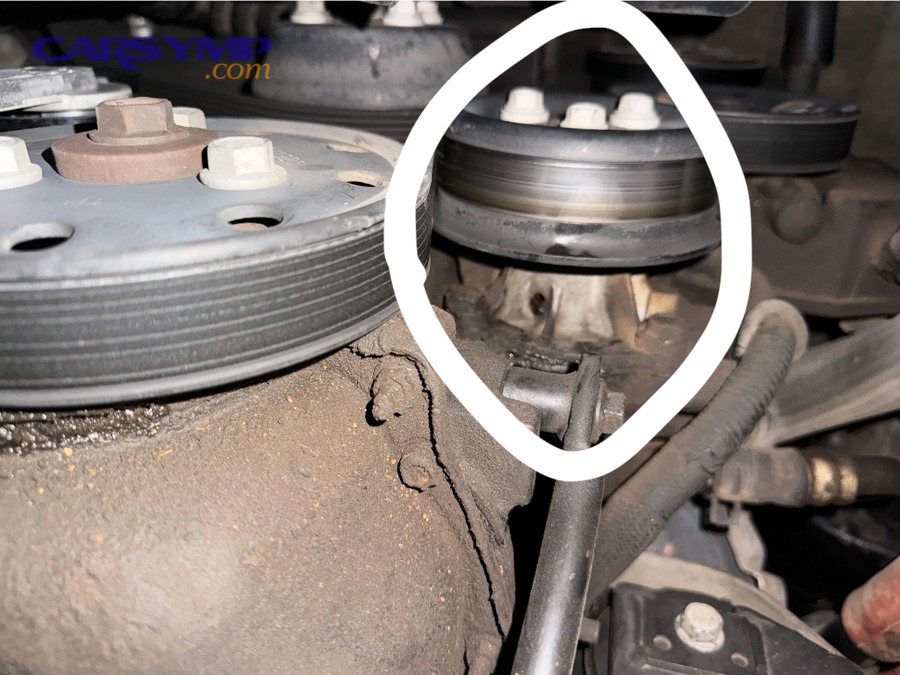
What is the weep hole on a water pump?
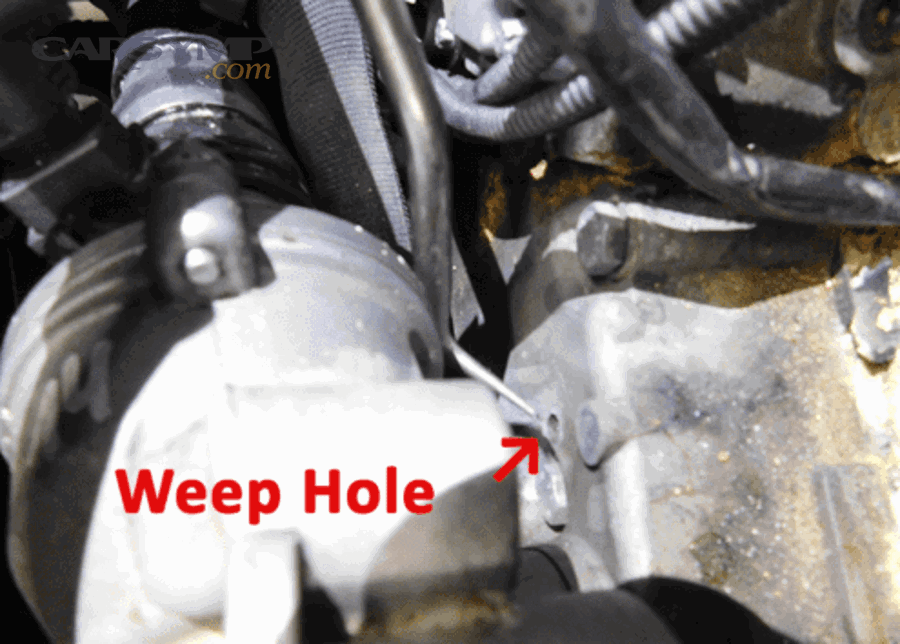
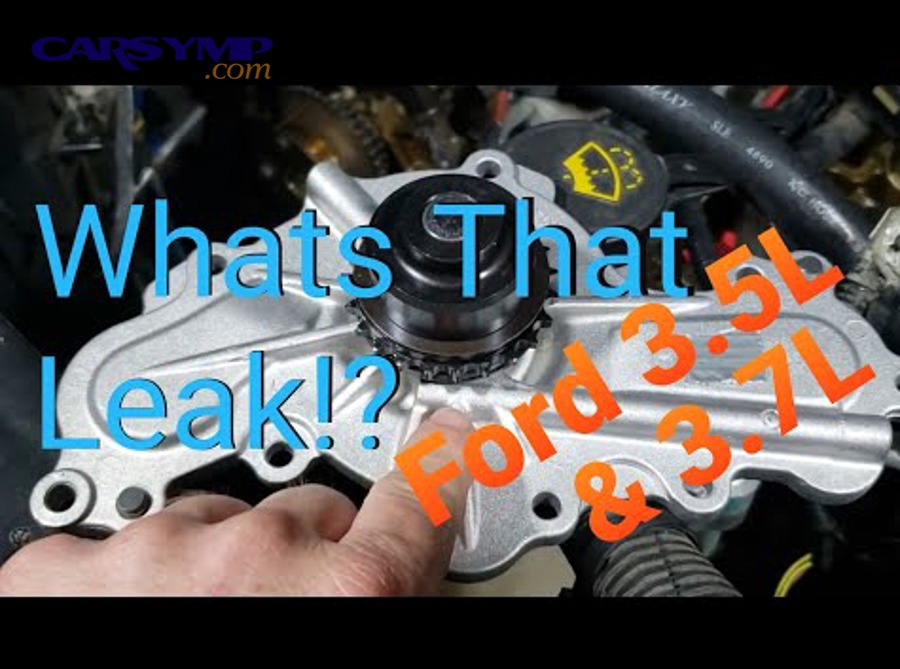
The weep hole is a small outlet built into the water pump housing that allows coolant escaping past the internal seal to drain outward instead of contaminating the bearing assembly.
Specifically, the weep hole serves as a controlled escape path. A healthy pump keeps that opening dry because the shaft seal holds coolant inside the pump where the impeller circulates it through the engine and radiator. Once the seal begins to wear, coolant can move past it and appear at the hole as dampness, residue, or dripping. That is why mechanics treat the hole as a diagnostic window into seal condition rather than as a separate leaking component.
This is also why terminology matters. When drivers say the weep hole is leaking, the real issue is not the hole itself but the seal behind it. In semantic terms, the hole is a part of the water pump assembly, while the leak is evidence that the sealing surfaces are no longer fully containing coolant.
Does coolant leaking from the weep hole mean the water pump is bad?
Yes, coolant leaking from the weep hole usually means the water pump is bad because the internal seal has degraded, coolant is escaping through the warning outlet, and bearing damage may follow if the condition continues.
More specifically, a persistent leak is the key word here. A light stain from an old event is different from fresh wetness or active dripping. When the area stays damp, leaves crusty coolant residue, or creates a puddle after parking, the pump has generally moved beyond routine observation and into replacement territory. The problem becomes more urgent when the leak is paired with low coolant, overheating, or noise from the pump bearing.
For car owners, the practical takeaway is simple: a weep-hole leak is not a cosmetic issue. It is a mechanical symptom that often appears before full pump failure, which is exactly why it deserves prompt inspection.
According to current NAPA guidance, one of the most common bad water pump symptoms is coolant leaking from the pump’s weep hole after the shaft seal fails, and that leak can then harm the pump bearings if left unresolved. ([knowhow.napaonline.com](https://knowhow.napaonline.com/bad-water-pump-symptoms/?))
How can you diagnose a coolant leak at the weep hole correctly?
The best way to diagnose a coolant leak at the weep hole is to inspect the pump area, verify fresh coolant at the hole, rule out nearby leak sources, and confirm the pattern under pressure or after operation.
Next, diagnosis becomes more reliable when you use a sequence instead of guessing from one puddle on the ground.
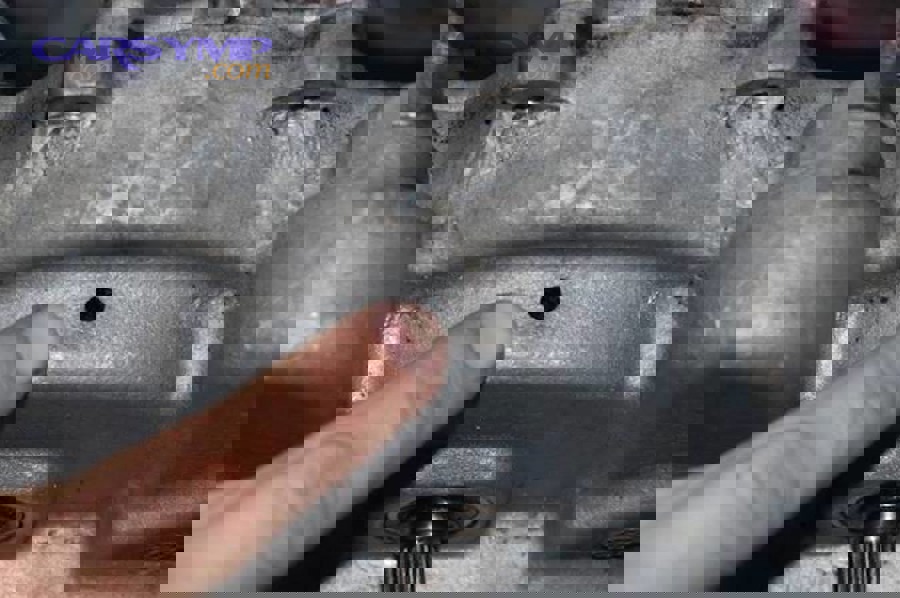
What should you check first when diagnosing a weep hole coolant leak?
You should first check coolant level, fresh wetness around the pump, dried residue trails, and any puddle location under the parked vehicle.
To illustrate, start with a cold engine. Open the hood and inspect the water pump area with a light. Look for pink, orange, green, or blue staining depending on coolant type. Fresh coolant usually appears glossy or wet, while older leakage dries into chalky, crust-like deposits. Then check the coolant reservoir level. A weep-hole leak often leaves both visible residue and gradual coolant loss.
After that, look beneath the engine after the car has sat overnight. If the drip point is near the front-center area of the engine, that strengthens suspicion, but it does not confirm the pump by itself because coolant can run along brackets, covers, or splash shields before it falls.
Also pay attention to smell. The sweet odor of hot coolant can support the diagnosis, especially when no major hose rupture is visible. Many drivers notice smell before they notice a puddle.
How do you confirm the leak is coming from the weep hole and not another part?
You confirm the leak source by tracing coolant upward to the highest wet point, checking hoses and housing seams, and comparing leak patterns before blaming the water pump.
More specifically, coolant often fools people because gravity carries it downward and airflow moves it rearward while driving. A leaking upper hose, thermostat housing, bypass hose, or radiator neck can leave moisture in the same region as the pump. The correct method is to identify the first wet point, not the lowest drip point.
A pressure test helps here. When the system is pressurized with the engine off, a true weep-hole leak often reappears directly at the pump opening or from the underside of the pump snout. By contrast, hose and housing leaks show at clamps, seams, or plastic-to-metal joints. This distinction is critical in any Water pump vs thermostat vs radiator diagnosis because several cooling-system failures can produce the same symptom: disappearing coolant.
For hidden pumps, the job becomes harder. Some engines place the water pump behind the timing cover, which means leakage may be internal or may contaminate oil rather than appear clearly outside. In those cases, diagnosis relies more on pressure testing, oil condition, and model-specific service knowledge.
According to NAPA’s technical guidance, a failed pump seal commonly allows coolant to seep from the weep hole, while other cooling-system leaks can mimic pump failure if coolant travels before dripping. ([knowhow.napaonline.com](https://knowhow.napaonline.com/bad-water-pump-symptoms/?))
What signs of water pump failure should car owners look for with a weep hole leak?
There are four main water pump failure symptoms that matter most with a weep-hole leak: coolant loss, overheating, abnormal noise, and visible residue or wobble around the pump.
Let’s explore those symptoms as a group, because diagnosis becomes stronger when multiple signs appear together instead of in isolation.
What symptoms usually appear with a failing water pump?
There are four common groups of symptoms: leaking coolant, heat-related symptoms, sound-related symptoms, and mechanical wear signs around the pump or belt path.
The first group is coolant evidence. This includes a wet weep hole, crusted deposits around the pump, coolant spots on the driveway, repeated reservoir top-offs, and the sweet smell of antifreeze after a drive. These are often the earliest clues.
The second group is temperature-related. If the pump cannot move coolant properly, the engine may begin running hotter than normal, especially in traffic, on climbs, or with the air conditioner on. Severe cases trigger steam, a hot warning light, or a gauge spike. This matters because a pump can fail mechanically even before it dumps a large amount of coolant.
The third group is sound. When the pump bearing wears, drivers may hear whining, growling, grinding, or a rough rotating sound from the front of the engine. However, belts and tensioners can make similar noises, so sound alone should never be the only diagnosis.
The fourth group is mechanical instability. A loose pulley, belt misalignment, or visible wobble at the pump area suggests bearing wear. That typically means the failure is beyond the seal stage and closer to complete pump breakdown.
This grouped view helps readers who search shorthand phrases like Car Symp or symptom lists, because the leak rarely exists as a standalone story; it usually belongs to a wider failure pattern.
Which symptoms matter most: coolant leak, overheating, or water pump noise?
A coolant leak is the strongest early clue, overheating is the most urgent danger sign, and bearing noise is the clearest sign that the pump’s moving parts are already deteriorating.
However, the most meaningful diagnosis combines them. A small leak without heat may still allow brief local driving to a shop, but a leak plus overheating means the cooling system is no longer protecting the engine properly. A leak plus grinding noise is also high risk because the pump could seize or wobble badly enough to affect the belt drive.
The comparison below shows how these symptoms usually rank in diagnosis and urgency.
| Symptom | What it usually suggests | Diagnostic value | Urgency |
|---|---|---|---|
| Weep-hole coolant leak | Internal seal wear/failure | High | Medium to high |
| Repeated coolant loss | Ongoing external or internal leak | High | High |
| Overheating | Poor coolant circulation or low coolant volume | High | Very high |
| Whining/grinding noise | Bearing or pulley wear | Medium to high | High |
| Steam under hood | Active overheating | Very high | Immediate stop |
This table summarizes how drivers should interpret the most common symptom combinations. The key point is that overheating threatens the engine fastest, while a weep-hole leak usually gives the earliest visible warning.
According to the Car Care Council, cooling-system failure is a leading cause of vehicle breakdowns, which is why persistent leak and temperature symptoms should be addressed before they escalate into engine damage. ([carcare.org](https://www.carcare.org/vehicle-systems-overview/?))
Is it safe to keep driving with coolant leaking from the weep hole?
No, it is not truly safe to keep driving with coolant leaking from the weep hole because coolant loss can worsen suddenly, overheating can damage the engine, and the pump bearing can fail without much warning.
In addition, the real danger is not the size of the current drip but the unpredictability of the next stage of failure.
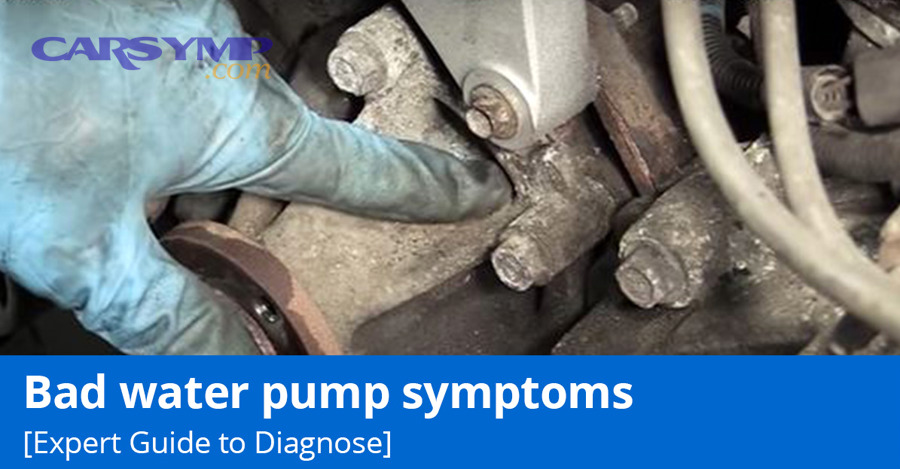
Can you drive with a small coolant leak at the weep hole?
Yes, some drivers may be able to drive a short distance with a small leak, but that does not make it safe because coolant can drop quickly, the pump can deteriorate further, and overheating can begin before the trip ends.
More specifically, a short trip to a nearby repair shop is very different from normal daily driving, highway travel, towing, or stop-and-go traffic in hot weather. A vehicle with a small leak may stay within temperature range one day and overheat the next. Once that happens, damage can expand from a pump job to warped heads, gasket failure, or other costly repairs.
So the better question is not “Can it move?” but “Can it do so without risking engine damage?” In most cases, the right answer is to minimize driving, monitor coolant closely, and schedule diagnosis immediately.
When does a coolant leak at the weep hole mean the water pump should be replaced immediately?
Immediate replacement is warranted when the leak is active, coolant level keeps dropping, the engine overheats, the pump makes noise, or the pulley shows looseness or wobble.
More importantly, these signs mean the failure is not only visible but functionally affecting the pump’s ability to circulate coolant or stay mechanically stable. At that point, waiting rarely saves money. It usually increases labor risk, towing risk, or engine-damage risk.
If you see fresh dripping after nearly every drive, if the reservoir needs frequent topping off, or if the temperature gauge is no longer steady, the pump has moved out of observation mode. A shop should inspect it without delay.
According to NAPA’s repair guidance, once a bad water pump is diagnosed, it should be replaced immediately because continued operation risks severe overheating and engine damage. ([knowhow.napaonline.com](https://knowhow.napaonline.com/bad-water-pump-symptoms/?))
What is the difference between a normal seep and a serious weep hole leak?
A normal-looking condition is usually old residue or brief dampness after a prior event, while a serious weep-hole leak shows fresh wetness, repeat dripping, continuing coolant loss, or escalation into overheating and noise.
To better understand that difference, you need to judge the leak by pattern, not by one glance.
Is a little moisture around the weep hole normal?
Yes, a trace of old residue may be seen around the area, but fresh recurring moisture is not normal because the weep hole is supposed to stay dry when the internal seal is healthy.
Specifically, an old stain can remain after a previous coolant spill, sloppy fill, or earlier repair. That kind of evidence should be cleaned and rechecked. If the area stays dry afterward, the pump may not be the active source. But if the area becomes wet again after a heat cycle or a short drive, the leak is active and the seal is no longer holding as intended.
This distinction matters because many owners either overreact to an old stain or underreact to a live leak. Cleaning the area and reinspecting after operation is one of the simplest ways to separate the two.
How do temporary seepage and active coolant dripping compare?
Temporary seepage appears as minor residue or intermittent dampness with no ongoing loss, while active dripping produces fresh coolant, repeated wetness, and measurable coolant loss between checks.
The comparison below helps define that threshold more clearly.
| Leak pattern | What it looks like | What it usually means | Typical action |
|---|---|---|---|
| Old residue only | Dry crust or stain | Past event, not necessarily active | Clean and monitor |
| Light intermittent dampness | Slight moisture after heat cycle | Early seal wear or uncertain source | Recheck soon, inspect closely |
| Fresh wetness after each drive | Visible coolant around weep hole | Active seal leak | Plan repair promptly |
| Dripping or puddling | Drops on ground, low reservoir | Advanced seal failure | Replace pump urgently |
This table shows why “it’s only a small leak” is not always reassuring. A weep-hole leak often begins quietly and then transitions into more obvious failure with little benefit from delay.
According to GMB’s water pump guidance, the weep hole is intended to warn of seal failure, and ongoing leakage at that point indicates the pump is approaching the end of its useful service life. ([knowhow.napaonline.com](https://knowhow.napaonline.com/bad-water-pump-symptoms/?))
What should you do after diagnosing a coolant leak at the weep hole?
After diagnosis, you should confirm the source, limit driving, replace the water pump in most cases, and inspect related cooling-system parts that may affect labor efficiency or repeat failure.
Then the decision becomes less about whether the pump is leaking and more about how to repair the system correctly the first time.
Should you repair the seal or replace the entire water pump?
You should usually replace the entire water pump because the seal is integrated into the assembly, bearing wear may already be developing, and labor duplication makes partial repair impractical on most passenger vehicles.
More specifically, modern pump service is assembly-based. Shops generally replace the full pump, gasket or O-ring, and coolant. Depending on the engine layout, they may also recommend a drive belt, tensioner inspection, or timing-belt-related components if those parts must come off anyway. This is one reason why repair planning matters as much as diagnosis.
Typical repair cost range for water pump issues varies widely by engine design. RepairPal’s January 2026 estimator places the average water pump replacement at about $857 to $1,106, while Kelley Blue Book notes that easier-access designs may fall closer to roughly $375 to $787 and more labor-intensive layouts can run much higher. ([repairpal.com](https://repairpal.com/estimator/water-pump-replacement-cost?))
What should car owners ask a mechanic before approving water pump replacement?
Car owners should ask the mechanic to confirm the leak source, explain any related parts being recommended, outline labor overlap, state coolant type used, and clarify warranty coverage on both parts and labor.
For example, these questions improve repair quality and reduce surprise costs:
- Did you confirm the leak at the weep hole, or is another cooling component leaking onto the pump area?
- Is the pump belt-driven or timing-driven on this engine?
- Are the gasket, coolant, belt, thermostat, or tensioner being replaced at the same time, and why?
- Does this engine have any model-specific issues with internal water pump leaks?
- What warranty applies to the repair?
These questions also help with budgeting. A basic external pump replacement may be straightforward, but timing-cover access, cramped engine bays, and integrated service steps can change the quote dramatically.
According to current cost estimators, labor can account for a large share of the total water pump job, which is why related-part recommendations should be tied to access and evidence rather than sold as automatic add-ons. ([repairpal.com](https://repairpal.com/estimator/water-pump-replacement-cost?))
What other cooling system problems can look like a weep hole coolant leak?
Three common problems can look like a weep-hole leak: hose or clamp leaks, thermostat housing leaks, and radiator or radiator-tank leaks that let coolant travel before it drips.
Besides the pump itself, these lookalike failures are exactly why a broader Water pump vs thermostat vs radiator diagnosis prevents wrong-part replacement.
Can a hose, thermostat housing, or radiator leak mimic a water pump weep hole leak?
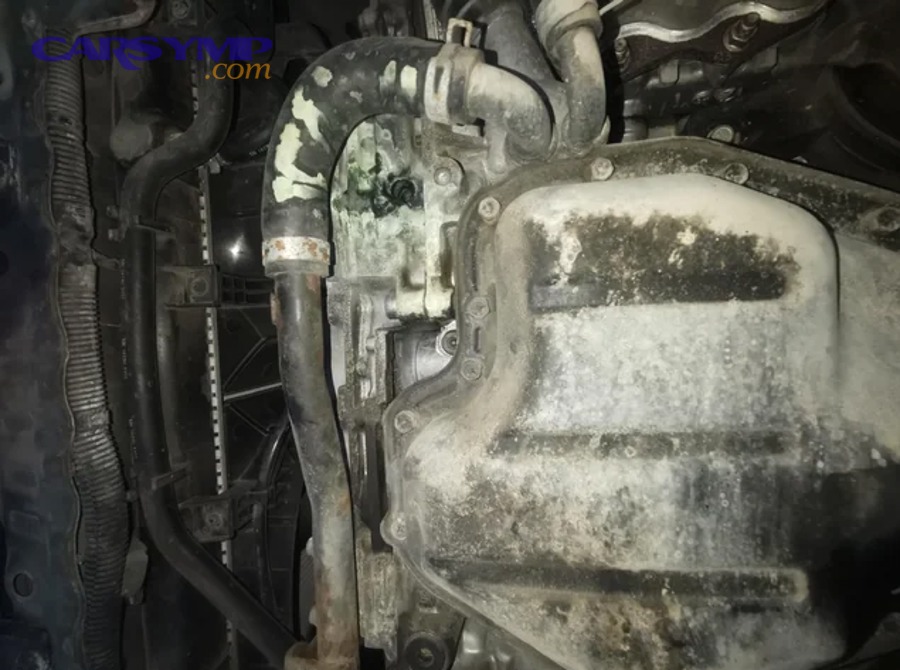
Yes, those leaks can mimic a water pump leak because coolant often runs along surfaces, collects on lower components, and drips from a place far from the true source.
More specifically, hose leaks usually show around clamp points or rubber cracks. Thermostat housing leaks appear near the housing seam, especially on plastic housings that warp or crack. Radiator leaks may show at end tanks, seams, or hose necks. In all three cases, airflow and gravity can carry coolant toward the pump region, which is why a driver may incorrectly blame the weep hole.
This is also where pattern recognition matters. A true pump leak often appears centered at the pump body or beneath the pulley area. A thermostat leak often leaves evidence higher on the engine. A radiator leak tends to be more forward and may leave wider spray or seep patterns.
How does a pressure test help compare a water pump leak with other coolant leaks?
A pressure test helps by pressurizing the cooling system without engine motion, making fresh coolant appear at the actual failure point instead of after airflow has moved it around.
That makes the test especially useful when comparing pump, thermostat, and radiator faults. If coolant emerges at the pump snout or weep hole, the diagnosis strengthens. If it appears around a housing seam, hose connection, or radiator tank, the pump may be innocent.
In shops, pressure testing is often the dividing line between assumption and confirmation. It is one of the most practical ways to reduce misdiagnosis on modern crowded engine bays.
Can coolant type, contamination, or poor maintenance damage the water pump seal faster?
Yes, contaminated coolant, neglected service intervals, and corrosion-promoting conditions can accelerate wear on the seal and impeller, shortening pump life.
For example, degraded coolant loses some of its corrosion inhibitors and lubricating properties. Contaminants can erode internal surfaces, while cavitation can wear the impeller and related surfaces over time. That means poor cooling-system maintenance does not just make leaks more likely; it can also make circulation problems appear earlier.
This explains why some failing pumps show both leakage and poor coolant flow. The seal may be worn, but the impeller may also be eroded enough to weaken circulation, which raises overheating risk.
Are belt-driven and timing-driven water pump leaks diagnosed differently?
Yes, the symptoms can overlap, but diagnosis differs because belt-driven pumps are easier to inspect externally, while timing-driven or internally mounted pumps may leak less visibly and sometimes contaminate oil.
On externally mounted pumps, you can often inspect the weep hole, pulley, and surrounding residue directly. On timing-cover-mounted designs, visual access may be limited. In some engines, coolant can leak internally and create a milky oil condition or unusual rise in oil level. That is why model-specific context matters whenever the pump is not plainly visible.
For repair planning, this difference also affects cost. An easy-access pump may stay within a moderate repair range, while a timing-driven pump can move the estimate much higher because labor rises sharply.
According to NAPA’s technical explanations, some water pumps leak externally through the weep hole while others, depending on engine design, can create less obvious or internal symptoms, which is why leak-source confirmation is essential before parts replacement. ([knowhow.napaonline.com](https://knowhow.napaonline.com/bad-water-pump-symptoms/?))
In short, a coolant leak at the weep hole is usually a diagnosis of water pump seal failure in progress, not a harmless quirk. The most reliable approach is to confirm the source, read the full symptom pattern, avoid unnecessary driving, and compare the pump against thermostat and radiator leak paths before approving the repair.