


Diagnosing water pump vs thermostat vs radiator problems starts with one key idea: each part fails in a different way, even though all three can make an engine run hot. A water pump usually points to circulation loss, a thermostat often causes temperature-control problems, and a radiator typically shows heat-dissipation trouble. Knowing that difference helps drivers avoid replacing the wrong part first. (carparts.com)
The first step in that diagnosis is understanding what each component actually does in the cooling system. The water pump moves coolant, the thermostat regulates when coolant begins flowing through the radiator, and the radiator releases heat into the air. When readers understand that flow path, the symptom patterns make far more sense. (carparts.com)
The next step is comparing visible and behavioral clues. water pump failure symptoms often include coolant residue, noise, and weak circulation. Thermostat issues often show up as sudden overheating, poor heater output, or an engine that runs too cool. Radiator problems more often involve leaks, clogged passages, damaged fins, sludge, or overheating that becomes worse when the car cannot shed heat efficiently. (autozone.com)
Overheating patterns linked to water pump issues, thermostat faults, and radiator restrictions can also overlap with air pockets, low coolant, or cooling-fan problems. Introduce a new idea: the main content below walks through the parts, the differences, the checks to perform first, and the common look-alike problems that can confuse even experienced drivers. (uti.edu)
What do water pump, thermostat, and radiator each do in your car’s cooling system?
Water pump, thermostat, and radiator are three linked cooling-system components: the pump circulates coolant, the thermostat controls when flow opens to the radiator, and the radiator removes heat from the coolant. (carparts.com)
To better understand diagnosis, it helps to connect each part to a specific job rather than treating them as interchangeable causes of overheating.
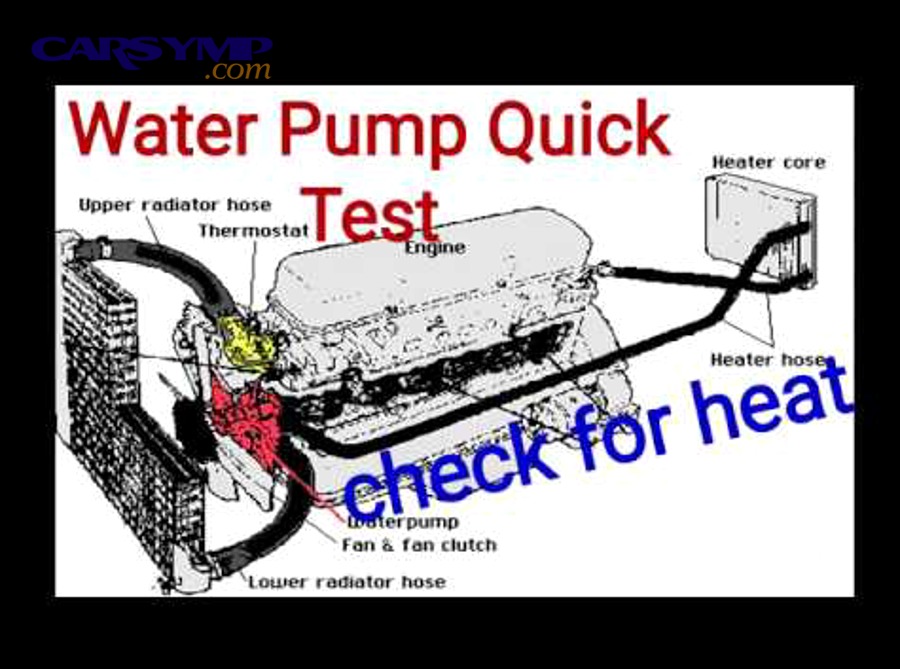
Is the water pump responsible for moving coolant through the engine and radiator?
Yes, the water pump is the part that circulates coolant through the engine, heater core, hoses, and radiator, and that circulation is what carries heat away from the engine. (carparts.com)
Specifically, the pump creates the movement that lets hot coolant leave the engine and reach the radiator, where the heat can be released. When the pump works properly, coolant keeps moving in a loop. When the pump begins to fail, flow weakens or stops, and the engine may overheat because the coolant is no longer transferring heat efficiently.
That is why water pump failure symptoms often include a rising temperature gauge, coolant leakage near the front of the engine, whining or squealing noise, and poor cabin heat when circulation becomes inconsistent. A damaged bearing, wobbling shaft, or eroded impeller can all reduce pump performance. Some failed pumps leak visibly from the weep hole, while others mainly create noise or poor coolant movement before a major leak appears. (autozone.com)
In practical terms, the water pump is the force behind coolant motion. If coolant cannot move, even a good thermostat and a clean radiator cannot do their jobs well.
What is the thermostat and how does it control coolant temperature?
The thermostat is a temperature-sensitive valve that stays closed during warm-up and opens when coolant reaches operating temperature, allowing flow toward the radiator. (carparts.com)
More specifically, the thermostat controls timing, not pumping. During a cold start, it helps the engine warm up quickly by limiting flow to the radiator. Once the engine reaches its designed operating range, the thermostat opens and allows hot coolant to move through the radiator for cooling.
This behavior explains why a thermostat can fail in two very different ways. A thermostat stuck closed restricts coolant movement to the radiator and can cause rapid overheating. A thermostat stuck open can make the engine run too cool, reduce heater performance, and hurt fuel efficiency because the engine takes too long to reach proper temperature. Temperature fluctuation and poor coolant flow clues often point drivers toward the thermostat when the gauge rises and falls unexpectedly or the heater output changes with no obvious external leak. (autozone.com)
Is the radiator the part that removes heat from coolant?
Yes, the radiator is the heat exchanger that cools hot coolant by exposing it to airflow through thin tubes and fins. (carparts.com)
For example, coolant arrives at the radiator carrying engine heat. The radiator then transfers that heat to outside air, especially when the vehicle is moving or when the cooling fan pulls air across the fins. If the radiator is clogged internally, blocked externally, leaking, or damaged, the system loses its ability to shed heat.
That failure pattern is different from a bad thermostat or water pump. A restricted radiator may still allow some coolant movement, but not enough heat transfer. That is why radiator problems often show overheating under load, overheating in traffic, coolant leaks, sludge, bent fins, or cold spots across the core that reveal uneven flow. According to Universal Technical Institute, signs of a failing radiator can include leaking coolant, discolored coolant or sludge, overheating, and bent or damaged fins. (uti.edu)
How can you tell whether the problem is the water pump, thermostat, or radiator?
Water pump wins as the most likely cause when noise, wobble, or pump-area leakage appears; thermostat is best matched to sudden temperature-control problems; radiator is most associated with weak heat rejection, clogging, or core leaks. (autozone.com)
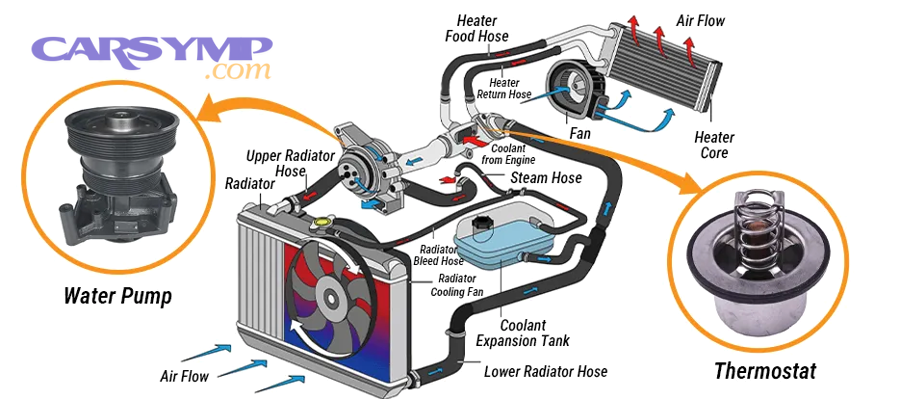
However, because all three can trigger overheating, the best diagnosis comes from comparing the symptom pattern rather than reacting to one sign alone.
What symptoms usually point to a bad water pump?
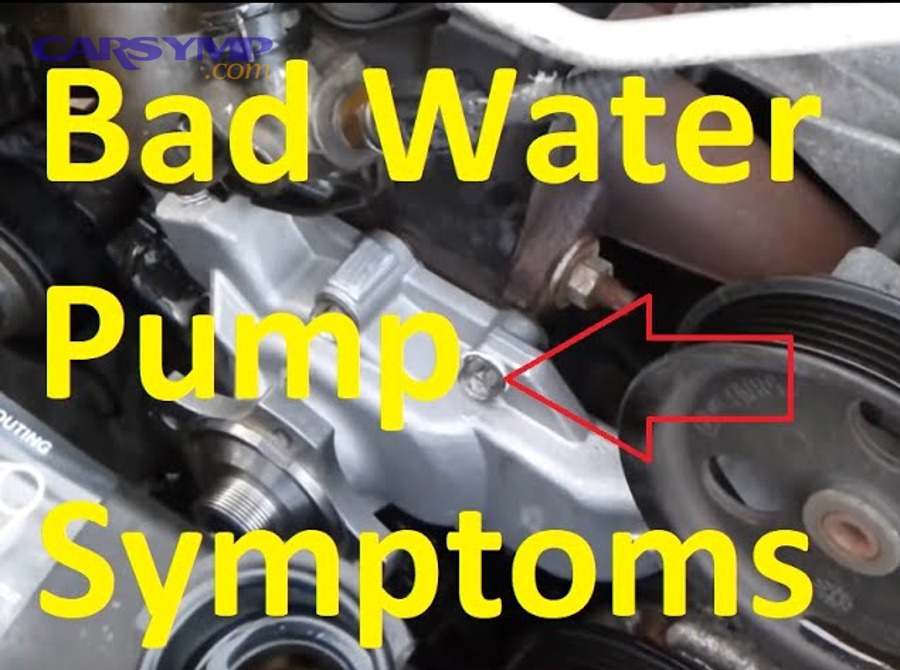
Bad water pump symptoms usually include pump-area coolant leakage, whining or squealing noise, engine overheating, and weak coolant circulation through the system. (autozone.com)
More specifically, the strongest clue is often coolant residue near the water pump body or around the weep hole. That leak happens because the internal seal begins to fail. The next strong clue is mechanical noise. A failing pump bearing can whine, chirp, grind, or squeal as the shaft loses smooth operation. If the impeller is damaged or corroded, coolant may not move fast enough, so the engine runs hot even if the thermostat can still open.
Drivers may also notice poor heater performance because weak circulation reduces hot coolant flow to the heater core. In some cases, overheating patterns linked to water pump issues become worse at higher engine demand because the engine is producing more heat than the weakened pump can manage. On vehicles with timing-belt-driven pumps, this diagnosis matters even more because delayed repair can affect both the cooling system and scheduled belt service. (autozone.com)
What symptoms usually point to a bad thermostat?
Bad thermostat symptoms usually include rapid overheating, erratic gauge readings, poor heater output, or an engine that runs too cool for too long. (autozone.com)
Meanwhile, the thermostat gives away its failure mode through temperature behavior. If it sticks closed, coolant cannot reach the radiator properly, so temperature rises quickly and the engine may overheat soon after start-up or during normal driving. If it sticks open, the engine may struggle to warm up, the heater may blow lukewarm air, and fuel economy may suffer because the engine stays below optimal temperature.
This is where temperature fluctuation and poor coolant flow clues become useful. A thermostat that opens late or inconsistently can make the gauge surge upward, then drop after flow finally starts. That cycle can mislead drivers into thinking the radiator is clogged or the pump is weak when the real problem is delayed valve operation. AutoZone notes that overheating, poor heater output, and poor mileage are common signs of thermostat trouble.
What symptoms usually point to a bad radiator?
Bad radiator symptoms usually include coolant leaks, sludge or contamination, bent fins, overheating in traffic or heat, and poor cooling caused by restricted or inefficient heat transfer. (uti.edu)
On the other hand, the radiator usually fails as a heat exchanger rather than as a moving part. That means the symptoms are often tied to how well the system sheds heat instead of how well it circulates coolant. External leaks from the tanks or core reduce coolant level. Internal clogging or scale buildup reduces flow through the core. Bent fins or blocked airflow reduce the radiator’s ability to release heat.
That pattern often shows up when the car overheats in stop-and-go driving, hot weather, or long uphill pulls. In those situations, the engine generates high heat, but the radiator cannot keep up. If the lower sections of the radiator stay cooler than expected or the core has obvious cold spots, internal restriction becomes more likely. Universal Technical Institute identifies leaking coolant, sludge, overheating, and damaged fins as common radiator warning signs. (uti.edu)
Which overheating patterns help compare water pump vs thermostat vs radiator failure?
Water pump often causes overheating with circulation clues, thermostat often causes fast or unstable temperature changes, and radiator often causes overheating when heat rejection becomes hardest, especially in traffic, heat, or load. (autozone.com)
Let’s explore those patterns carefully, because overheating behavior is often the fastest way to separate one cooling-system fault from another.
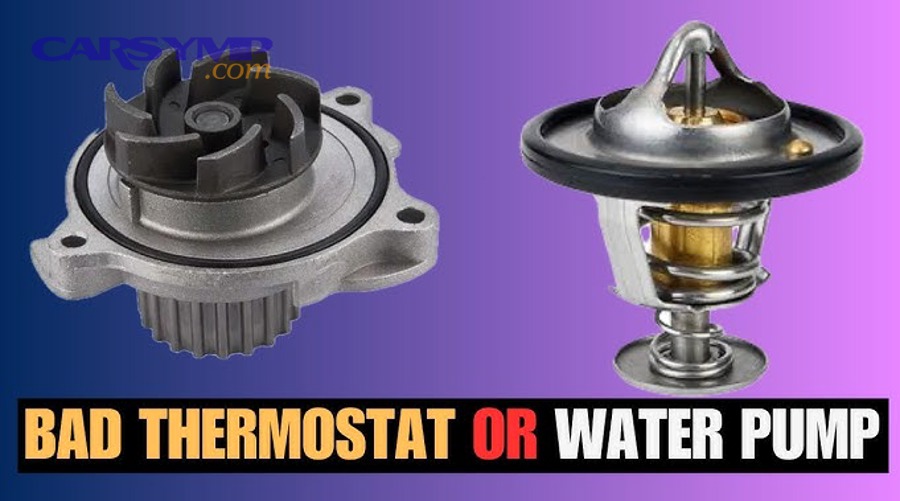
Does the engine overheat quickly, gradually, or only in certain driving conditions?
Yes, the rate and timing of overheating help narrow the fault because thermostat issues tend to spike quickly, radiator problems often build gradually, and water pump issues can appear as circulation weakens under real operating demand. (autozone.com)
Specifically, a thermostat stuck closed often creates fast overheating because coolant flow to the radiator stays blocked. The gauge can climb sharply after the engine reaches a certain point. A radiator restriction usually creates a more gradual pattern. The vehicle may seem fine at first, then run hotter as heat continues to build and the radiator fails to release enough of it.
Water pump issues can fall between those two patterns. If the impeller is slipping, corroded, or broken, the vehicle may warm normally at first but then overheat as engine speed, load, or heat output increase. That is why overheating patterns linked to water pump issues frequently include inconsistency: the car may behave acceptably one day and overheat the next under similar conditions.
Is overheating worse at idle, highway speed, or under load?
Yes, the driving condition matters because idle-heavy overheating often points to airflow or radiator-related weakness, while broad overheating under many conditions can suggest severe thermostat restriction or poor pump circulation. (uti.edu)
More specifically, if the engine runs hotter in stop-and-go traffic but improves at road speed, the radiator and fan side of the system deserve close attention. The vehicle depends heavily on airflow at idle, so weak fan performance or poor radiator heat transfer becomes more obvious there. If the engine overheats both at idle and at highway speed, a thermostat stuck closed or major water pump failure becomes more likely because the problem is not just airflow.
Under towing, climbing, or hot-weather load, a weak water pump or restricted radiator often reveals itself faster because both faults limit the system’s ability to handle extra heat. That is why diagnosis should always include the exact condition in which the overheating happens rather than the fact of overheating alone.
Can poor cabin heat help identify the failing component?
Yes, weak or inconsistent cabin heat is a useful clue because the heater core depends on proper coolant flow and temperature. (uti.edu)
Especially in colder weather, heater output becomes a practical diagnostic tool. If the thermostat is stuck open, the engine may never get hot enough to provide strong cabin heat. If the water pump is not circulating coolant well, heater performance may fluctuate or weaken as flow drops. If low coolant or air pockets are present, the heater may blow cold air intermittently because hot coolant does not reach the heater core consistently.
This clue does not diagnose the radiator by itself, but it helps confirm whether the problem is more about flow and temperature regulation than pure external leakage. Universal Technical Institute notes that internal heating-system problems can accompany cooling-system issues such as low coolant or air in the system. (uti.edu)
What should drivers check first when diagnosing water pump, thermostat, and radiator issues?
Drivers should begin with four checks: coolant level, visible leaks, temperature behavior, and circulation clues, because those steps narrow the likely fault before parts are replaced. (autozone.com)
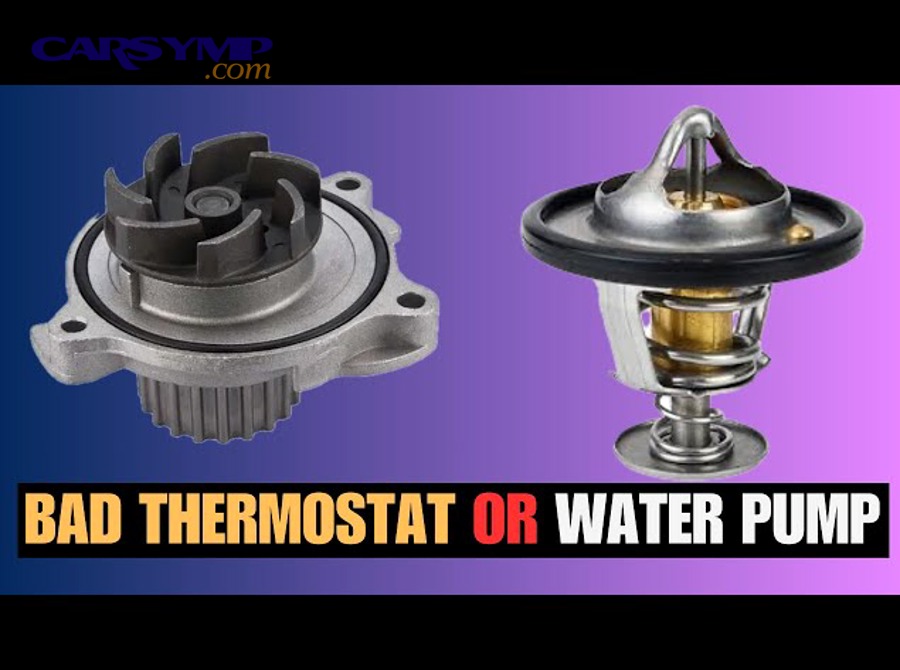
Below, those checks are organized in the order that usually provides the clearest diagnosis with the least guesswork.
What visible checks can you do before replacing any cooling-system part?
The first visible checks are coolant level, dried residue, active leaks, damaged fins, hose condition, and staining around the water pump area. (autozone.com)
To begin, inspect the coolant reservoir and radiator level only when the engine is cold and safe to open. Low coolant does not automatically prove which part failed, but it tells you the system has already lost cooling capacity. Then inspect the ground and the engine bay for coolant tracks, pink or green residue, crusted deposits, or wet spots.
At the water pump, look for staining around the housing or weep hole. At the radiator, inspect the seams, tanks, core, and hose connections. Bent or clogged fins matter because airflow is part of radiator performance. Hoses should not be split, swollen, or heavily collapsed. These visible checks do not replace a full pressure test, but they often tell you whether the fault is likely a leak, a circulation problem, or a heat-exchange problem.
How do hose temperature, coolant movement, and leak location help diagnosis?
Hose temperature, visible coolant movement, and leak location help because they connect symptoms to function: flow, regulation, and heat rejection. (carparts.com)
For example, an upper hose that becomes very hot while the radiator stays relatively cool may suggest poor flow through the thermostat or radiator. A strong leak at the pump area points toward the water pump. A leak at the side tanks or core points more toward the radiator. In vehicles where safe inspection is possible, lack of expected coolant movement after warm-up can also support a flow-related diagnosis.
The table below summarizes the most useful first-pass clues.
| Symptom or clue | Water pump more likely | Thermostat more likely | Radiator more likely |
|---|---|---|---|
| Pump-area coolant leak | Yes | No | No |
| Whining, grinding, squealing near pump | Yes | No | No |
| Fast overheating after warm-up | Sometimes | Yes | Sometimes |
| Engine runs too cool | No | Yes, stuck open | No |
| Overheats in traffic or heat | Sometimes | Sometimes | Yes |
| Bent fins, sludge, cold spots | No | No | Yes |
| Poor heater output | Sometimes | Yes | Sometimes |
| Fluctuating gauge | Sometimes | Yes | Sometimes |
This table contains quick diagnostic comparisons between the three most common cooling-system fault sources. It is meant to help readers match symptom patterns before moving to deeper testing.
Should you replace the water pump, thermostat, or radiator without confirming the failure?
No, drivers should not replace cooling-system parts blindly because overheating symptoms overlap and misdiagnosis raises cost, labor, and repeat breakdown risk. (uti.edu)
More importantly, replacing the thermostat when the radiator is restricted, or replacing the radiator when the pump is failing, often leaves the main problem unresolved. Cooling systems work as a chain. When one link fails, other symptoms can appear and create false confidence. A low coolant condition can also make a healthy thermostat or heater core appear defective.
That is why a simple diagnostic sequence matters more than guessing. Start with visible evidence, then compare overheating behavior, heater performance, leak location, and noise. If the pump is timing-belt-driven, this is also the right time to ask When to replace timing belt with water pump. Gates states that timing-belt-driven water pumps should always be replaced at the same time as the timing belt to preserve long-term system performance. (gates.com)
Water pump vs thermostat vs radiator: what are the key differences drivers should remember?
Water pump is the circulation part, thermostat is the temperature-control valve, and radiator is the heat-dissipation core; remembering those roles makes symptom comparison faster and more accurate. (carparts.com)
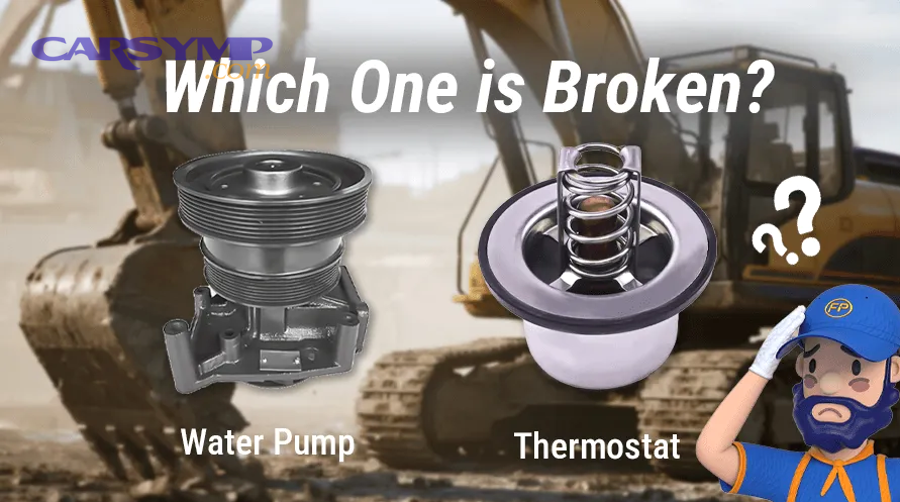
In short, the biggest diagnostic win comes from tying every symptom back to one of those three jobs.
Which part is most associated with leaks, flow problems, or heat-dissipation failure?
Water pump is most associated with pump-area leaks and circulation loss, thermostat with temperature-regulation failure, and radiator with heat-dissipation weakness or core leakage. (autozone.com)
Specifically, think in categories. If the problem is mechanical noise and seepage from the pump area, the water pump moves to the top of the list. If the issue is abrupt overheating or running too cool, the thermostat becomes the prime suspect. If the issue is heat buildup in traffic, visible radiator damage, or internal clogging signs, the radiator deserves the most attention.
This memory shortcut works because each part has a distinct system role. Flow problems favor the pump. Timing-of-flow problems favor the thermostat. Heat-release problems favor the radiator.
Which signs overlap, and which signs are most distinctive?
Overheating overlaps across all three, but the most distinctive signs are pump noise or weep-hole leakage, thermostat stuck-open or stuck-closed behavior, and radiator fin damage, sludge, or cold spots. (autozone.com)
However, overlap is what makes diagnosis tricky. All three can raise engine temperature. Both pump and thermostat issues can reduce heater output. Both radiator and water pump problems can appear worse under high heat or load. The goal is to look for the clue that does not fit the others.
A whining front-engine noise does not usually come from the radiator. An engine that runs too cool is rarely caused by the radiator. Bent fins and core blockage are not thermostat traits. Once drivers separate those distinctive clues from the shared symptom of overheating, diagnosis becomes much more accurate.
What other issues can be mistaken for water pump, thermostat, or radiator failure?
Air pockets, cooling-fan faults, damaged pump impellers, and hidden radiator restrictions can all mimic water pump, thermostat, or radiator failure and lead to an incorrect repair decision. (uti.edu)
Besides the main three parts, these look-alike issues explain why some vehicles still overheat after one part has already been replaced.
Can air pockets in the cooling system mimic thermostat or water pump symptoms?
Yes, air in the cooling system can mimic thermostat or water pump trouble because trapped air disrupts stable coolant flow and creates temperature fluctuation and poor coolant flow clues. (uti.edu)
For example, an air pocket can prevent coolant from circulating smoothly through the heater core or around the thermostat. The result may be a fluctuating gauge, intermittent overheating, or cabin heat that comes and goes. Those signs can look like a sticking thermostat or weak water pump even though the real problem is incomplete bleeding after a repair or coolant service.
Universal Technical Institute notes that air in the cooling system commonly causes rises or frequent fluctuations in temperature and is a major contributor to overheating. (uti.edu)
Can a cooling fan problem look like a bad radiator?
Yes, a cooling-fan problem can look like a bad radiator because both faults reduce cooling performance most noticeably at idle and low vehicle speed. (uti.edu)
Meanwhile, the difference is that a radiator problem is usually about restricted heat transfer, while a fan problem is about missing airflow. If the car runs hot in traffic but cools down once it reaches highway speed, the fan and radiator should both be checked before either part is blamed alone.
A faulty fan motor, relay, fuse, or control circuit can cause overheating that seems radiator-related. That is why idle-only overheating should never be assigned to the radiator without verifying airflow.
Can a damaged impeller cause water pump failure without a major external leak?
Yes, a damaged or corroded impeller can cause water pump failure without a large visible leak because the pump may lose circulation efficiency before the seal fully fails. (autozone.com)
More specifically, contaminated coolant or corrosion can damage the impeller blades inside the pump. When that happens, the pump may still spin, but it cannot move coolant effectively. Drivers then notice overheating, weak heater output, or inconsistent cooling even though the pump exterior does not show a dramatic leak.
That failure mode explains why some water pump issues are diagnosed more by behavior than by puddles on the ground.
Can radiator cold spots or internal blockage cause repeat overheating after other parts are replaced?
Yes, radiator cold spots or internal blockage can cause repeat overheating after other parts are replaced because the system may still circulate some coolant while the radiator core remains partially restricted. (uti.edu)
To sum up, that is one of the most common reasons a thermostat replacement fails to solve a persistent overheating complaint. The thermostat may have been old, but the deeper restriction remained inside the radiator. Likewise, replacing the pump alone will not restore heat rejection if the radiator core cannot pass coolant evenly.
When repeat overheating happens after a partial repair, the diagnosis should move back to fundamentals: coolant level, flow path, heat rejection, airflow, and pressure integrity. That disciplined approach is what separates a quick guess from a correct repair the first time.