Recognize Water Pump Failure Symptoms in Cars for Drivers: Leaks, Overheating, and Noise Signs
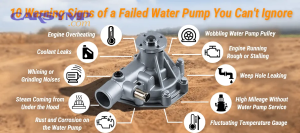
A failing water pump usually shows itself through a small group of repeat symptoms: coolant loss, car overheating, temperature instability, and mechanical noise from the front of the engine. In practical terms, drivers should pay attention when the temperature gauge climbs higher than normal, coolant appears under the vehicle, or a new grinding or whining sound develops near the belt drive. To begin, this article explains the core Water pump failure signs in a direct, driver-friendly way so you can connect symptoms to the most likely cooling-system problem.
Those basic signs become more useful when you know how to interpret them. A leak around the pump area, a damp weep hole, dried coolant residue, or a change in engine temperature during idling and traffic can narrow the diagnosis much faster than overheating alone. Next, the article breaks down which signs point more strongly to the pump itself and which ones can overlap with other cooling components.
Severity also matters. A weak water pump can start with subtle clues, but a fast coolant leak, steam, or a red temperature warning can turn into engine damage if ignored. Then, the article explains whether you can drive with a failing water pump, which symptoms are urgent, and how to think about Typical repair cost range for water pump issues before the problem gets worse.
Finally, many drivers want more than a symptom list. They want to know how a pump problem differs from thermostat or radiator trouble, what to inspect first, and how Preventing water pump failure fits into long-term maintenance. Below, the main content answers the central diagnostic questions first, then expands into deeper supporting details after the contextual border.
What are the most common water pump failure symptoms in a car?
The most common water pump failure symptoms in a car are coolant leakage, car overheating, temperature fluctuation, steam, and a grinding or whining noise from the pump area. More specifically, these signs appear because the pump can no longer move coolant efficiently or hold coolant inside the system.
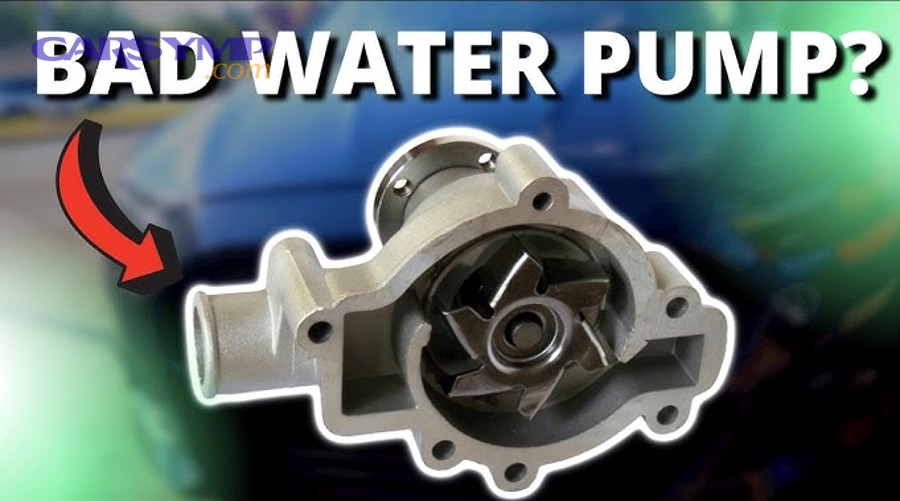
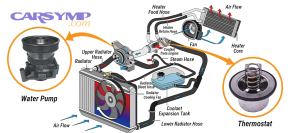
When drivers search for Water pump failure signs, they are usually trying to answer one urgent question: is the cooling system still doing its job? The water pump circulates coolant between the engine and radiator. Once that circulation weakens, heat builds inside the engine, and the symptoms start linking together. A leak can lead to low coolant. Low coolant can lead to poor circulation. Poor circulation can lead to Temperature fluctuation and poor coolant flow clues that become visible on the gauge.
Is coolant leaking one of the first signs of water pump failure?
Yes, coolant leaking is often one of the first clear signs of water pump failure because the pump seal can wear out, the housing can corrode, and the weep hole can begin to release coolant. Specifically, a small leak often appears before full overheating begins, which makes it one of the best early warnings.
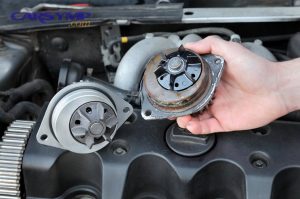
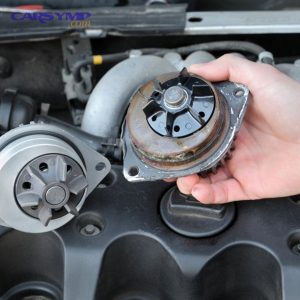
A water pump leak does not always create a dramatic puddle. In many cases, the first clue is dried coolant residue around the pump body, beneath the pulley area, or on nearby engine parts. The residue may look white, green, orange, or pink depending on the coolant type. Some drivers notice a sweet smell after parking, while others find a damp area under the front of the engine.
Coolant leak at weep hole diagnosis is especially important because the weep hole exists to let escaping coolant show that the internal seal is failing. When that hole stays dry, the seal may still be intact. When it becomes wet or crusted with dried coolant, the pump is often moving from early wear into active failure. That does not always mean immediate breakdown, but it does mean the component is no longer fully healthy.
A leak also matters because coolant level and pump performance are connected. Once enough coolant escapes, the system loses its ability to carry heat away from the engine. That turns a simple leak into the first stage of a more serious overheating problem.
Does a failing water pump cause overheating or unstable engine temperature?
Yes, a failing water pump can cause overheating or unstable engine temperature because poor impeller performance reduces coolant flow and weakens heat transfer through the radiator. To illustrate, the gauge may stay normal at first, then climb during traffic, idling, or hot weather.
Car overheating related to the pump often follows a pattern rather than happening randomly. Overheating patterns linked to water pump issues often include normal temperature during short trips, higher temperature in stop-and-go driving, or a gauge that swings instead of staying steady. That pattern matters because it suggests coolant is moving inconsistently rather than circulating strongly all the time.
When the pump is weak, coolant may not move through the engine passages fast enough. The engine produces heat continuously, especially under load, while the cooling system depends on consistent circulation to remove it. If circulation drops, heat pockets develop. The temperature gauge responds to those changes, and the driver sees fluctuation rather than calm, predictable operation.
This is where Temperature fluctuation and poor coolant flow clues become more useful than a single overheated reading. A one-time high reading can come from many causes. Repeated fluctuation tied to operating conditions gives a stronger diagnostic clue that coolant movement is the core issue.
What noises can a bad water pump make?
A bad water pump can make whining, squealing, chirping, or grinding noises because the pump bearings, shaft, or pulley can wear and begin to move under load. However, the exact sound depends on how the internal damage has developed.
Grinding/whining noise from water pump bearings is one of the most useful mechanical clues because bearing wear produces a noise that many drivers can distinguish from normal engine sound. A whining sound often suggests rotating friction and bearing wear that is still progressing. A grinding sound often suggests more advanced wear, where the bearing has lost smooth movement and is creating rough metal-on-metal contact.
The belt system can amplify these noises. Because the water pump is often driven by the serpentine belt or timing belt, wear inside the pump can create tension changes, pulley wobble, or belt noise. That is why a squeal should not automatically be blamed on the belt alone. Sometimes the belt is only reacting to a pump that no longer spins correctly.
Noise should always be interpreted with the other symptoms in mind. If a whining sound appears together with coolant loss or a rising gauge, the pump becomes a much stronger suspect than it would be on noise alone.
How can you tell whether the symptom really points to the water pump?
You can tell whether the symptom really points to the water pump by looking for pump-area leaks, weep hole moisture, pulley play, repeat overheating patterns, and signs of reduced coolant flow. To better understand the issue, you need to connect location, timing, and symptom combinations rather than judging one sign in isolation.
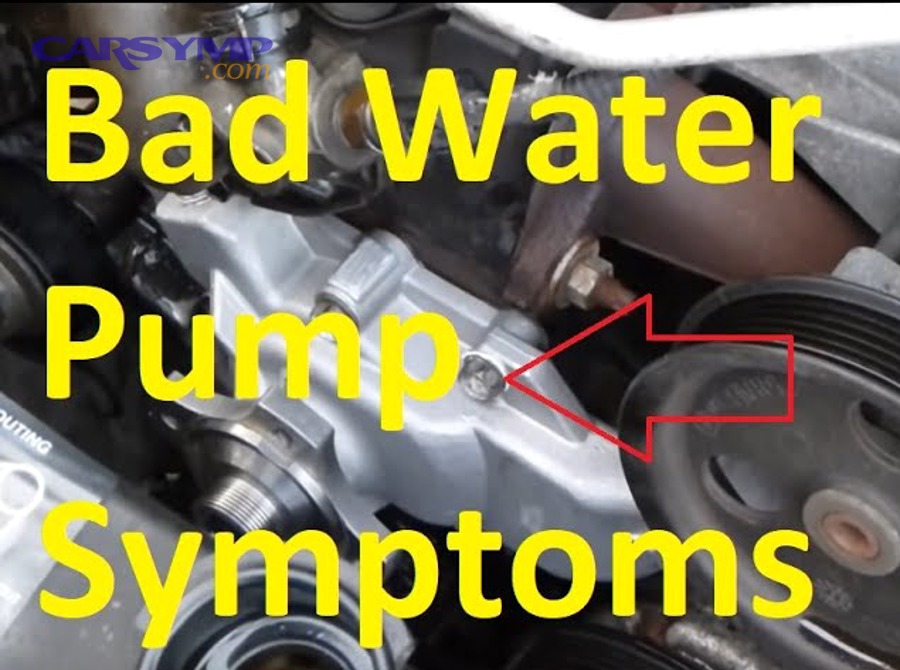
Many cooling-system problems produce similar surface symptoms. A car can overheat because of a thermostat, radiator, cooling fan, hose leak, air in the system, or water pump problem. The pump becomes the leading suspect when the evidence clusters around it physically and mechanically. That is why drivers should not stop at “the car runs hot.” They should ask where the leak appears, when the gauge rises, and whether the engine makes new noise.
What visible signs around the pump help confirm the diagnosis?
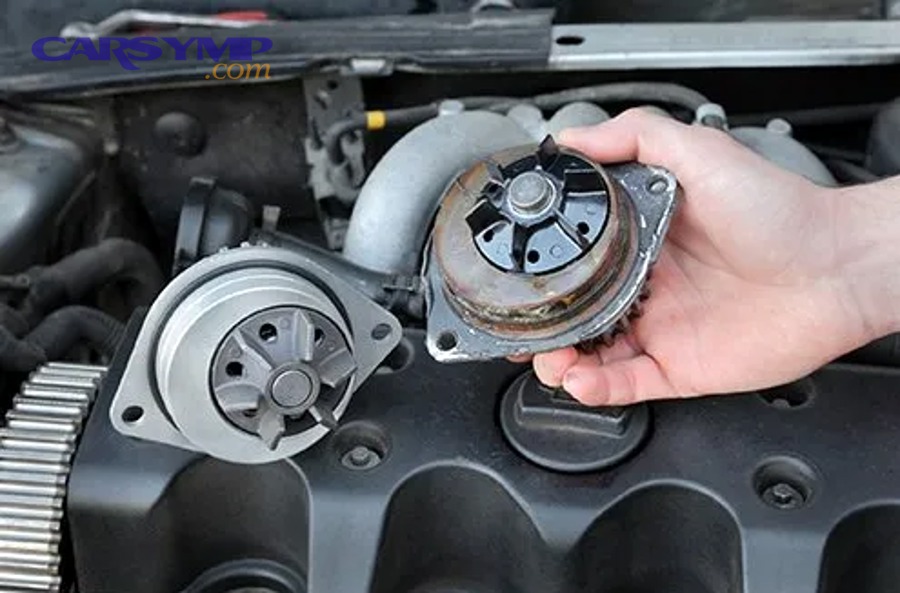
The visible signs that best confirm a water pump diagnosis are coolant at the weep hole, dried residue on the pump housing, corrosion around the shaft area, and pulley wobble. More importantly, those signs are localized, which makes them more specific than general overheating alone.
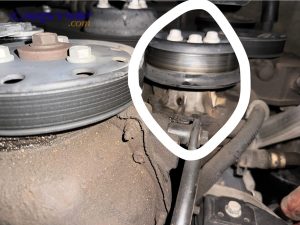
A clean, dry pump body usually weakens the case for external seal failure. A stained, damp, or crusted pump body strengthens it. If the residue sits directly below the pump shaft or around the vent hole, it often indicates that the internal seal is no longer keeping coolant contained. This pattern is more useful than a random puddle farther away, because coolant can travel and drip from unexpected spots.
Pulley wobble is another strong confirmation clue. If the pulley does not rotate in a true, steady line, the shaft or bearing may be worn. That type of movement can also damage the belt and accelerate failure. A mechanic often checks for bearing looseness during inspection, but even drivers may notice visible movement or hear a rough rotating sound.
Are symptoms worse at idle, during traffic, or at highway speed?
Symptoms from a weak water pump are often worse at idle or in stop-and-go traffic because the engine still generates heat while airflow and circulation demands become more noticeable. Meanwhile, highway driving may temporarily hide the problem because vehicle speed improves radiator airflow.
This is why drivers often describe a puzzling pattern: the gauge looks acceptable on open roads, then starts climbing in town, at traffic lights, or while waiting in a drive-through line. That does not prove the pump by itself, but it fits the larger picture of limited cooling capacity. When the system loses margin, the hardest operating conditions reveal it first.
The timing of the symptom matters as much as the symptom itself. If overheating appears only during hard traffic and is paired with low coolant or pump-area leakage, the pump deserves careful inspection. If overheating appears immediately from startup regardless of conditions, another problem such as thermostat behavior may be higher on the list.
Can a water pump fail without a major external coolant leak?
Yes, a water pump can fail without a major external coolant leak because the impeller can erode, slip, or lose efficiency internally while the housing remains mostly dry. In addition, early bearing or shaft problems can reduce performance before a visible leak becomes obvious.
This failure pattern matters because many drivers expect a dramatic puddle before they believe the pump is bad. In reality, internal damage can reduce coolant flow enough to create overheating and unstable temperature without leaving much evidence on the ground. Some pumps weaken gradually, and the symptoms build in layers: temperature inconsistency first, mild noise second, leakage last.
That is one reason professional diagnosis often combines visual inspection, cooling-system pressure testing, belt and pulley checks, and temperature behavior during operation. The pump’s job is movement, so loss of performance can show itself through heat management even before it shows itself through fluid loss.
What symptoms should drivers treat as urgent or unsafe?
Drivers should treat steam, rapid overheating, severe coolant loss, loud grinding noise, and a red temperature warning as urgent or unsafe symptoms because they can quickly lead to engine damage. More importantly, these signs suggest the cooling system may no longer protect the engine under normal driving conditions.
A water pump problem becomes dangerous when the engine temperature rises faster than the system can control it. At that point, continuing to drive risks warped components, damaged gaskets, and in extreme cases complete engine failure. The question is no longer whether the pump is worn; the question becomes whether the car can safely continue moving without causing a much larger repair.
Is it safe to drive with water pump failure symptoms?
No, it is usually not safe to drive with water pump failure symptoms when overheating, steam, or active coolant leakage is present because the engine can overheat rapidly, lose coolant suddenly, and suffer expensive internal damage. In short, Can you drive with a failing water pump depends on symptom severity, but the safe answer becomes no once heat control is unstable.
A minor early symptom, such as faint residue or a very small leak with normal temperature, may allow a short trip to a repair facility if the coolant level is confirmed and the engine remains stable. However, that is not the same as normal driving. The margin for error is small. A small leak can become a large leak, and a stable gauge can change quickly in traffic or hot weather.
The safest approach is to stop driving when the temperature climbs beyond normal, steam appears, or the coolant warning becomes active. Modern engines do not tolerate overheating well. Drivers sometimes try to “make it home,” but that decision can turn a water pump replacement into a far more expensive engine repair.
Which warning signs mean you should stop driving immediately?
You should stop driving immediately when the temperature gauge reaches the hot zone, steam rises from the engine bay, coolant pours out, or the pump makes a harsh grinding sound. More specifically, any combination of heat warning and coolant loss means the system may fail completely at any moment.
Steam is one of the clearest emergency signs because it means coolant is already escaping or boiling. A red temperature warning or an overheated gauge means the engine has gone beyond its normal operating control range. A loud grinding sound can mean the bearing is close to seizing, which may also affect belt operation.
Drivers should also pay attention to secondary emergency clues: a strong sweet coolant smell inside or outside the vehicle, a heater that suddenly blows cold air during overheating, or visible wetness spreading quickly under the car. These signals show that coolant circulation and volume are both under stress.
If any of these signs appear, the correct move is to stop in a safe place, shut the engine off, and avoid opening a hot cooling system. Let the engine cool fully before inspection. That protects both the vehicle and the driver.
What is the difference between water pump symptoms and other cooling-system problems?
Water pump symptoms win in leak location and bearing noise, thermostat problems are strongest in temperature-control faults, and radiator issues are most obvious through external core leaks or blocked heat exchange. However, Water pump vs thermostat vs radiator diagnosis works best when you compare symptom patterns instead of chasing a single clue.
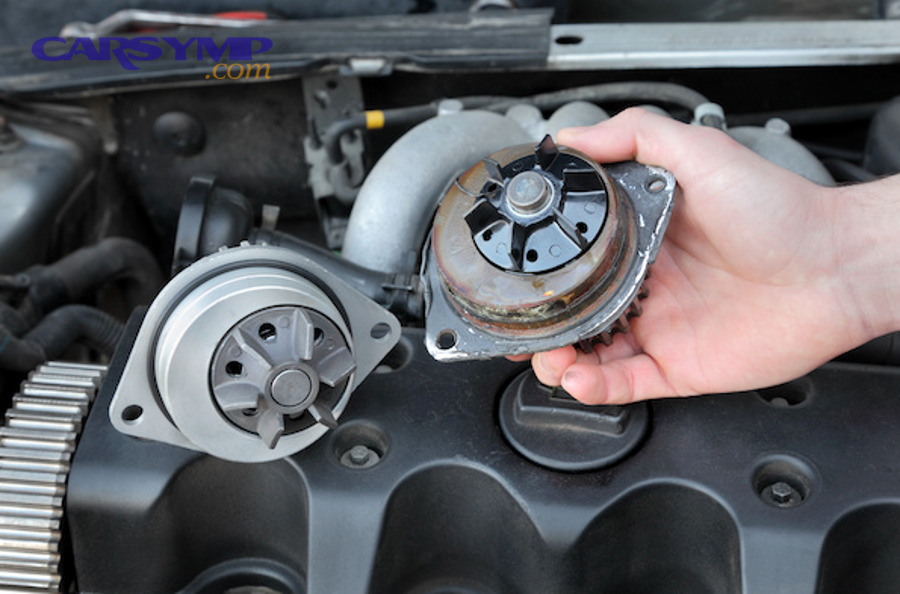
This comparison matters because overheating alone is not enough to name the failed part. Many drivers replace a thermostat because the gauge climbs, only to discover that the real problem was poor coolant movement from a weak pump. Others blame the pump for every leak, even when the radiator or a hose is clearly the source. The better method is to compare where the leak appears, how the engine behaves, and whether mechanical noise is present.
| Problem | Most common clues | What often makes it different |
|---|---|---|
| Water pump | Pump-area leak, weep hole moisture, whining or grinding, overheating in traffic | Localized leak near pump plus mechanical noise or pulley play |
| Thermostat | Rapid overheating, poor cabin heat, unstable warm-up behavior | Usually no pump bearing noise and no weep hole leak |
| Radiator | Coolant loss from core, seams, or tanks; overheating under load | Leak is often at the radiator itself, not the pump area |
The table above compares the most common symptom patterns that help separate pump, thermostat, and radiator faults in real-world driving.
How are water pump symptoms different from thermostat failure symptoms?
Water pump symptoms usually include coolant leakage or mechanical noise, while thermostat failure symptoms center more on incorrect temperature regulation. Specifically, a thermostat that sticks closed can cause fast overheating, but it does not normally create a grinding bearing sound or a pump-area leak.
A thermostat controls when coolant begins flowing through the radiator. If it stays closed, the engine can overheat quickly because hot coolant never circulates properly to the radiator. If it sticks open, the engine may warm slowly and cabin heat may be weak. Those patterns differ from a worn pump, where flow quality degrades because the pump cannot move coolant strongly enough or hold it inside the system.
The overlap comes from temperature behavior. Both problems can create overheating or fluctuation. The separation comes from mechanical evidence. Noise, shaft movement, and Coolant leak at weep hole diagnosis all point much more directly to the pump.
How are water pump symptoms different from radiator or hose problems?
Water pump symptoms differ from radiator or hose problems mainly by leak location and associated mechanical clues. For example, a hose leak often shows cracking, swelling, or seepage at a connection point, while a radiator leak appears at the core, tank, or seam rather than near the pump shaft.
Radiator failures often show external wet spots on the radiator face, side tanks, or lower corners. Hose problems may leave coolant around clamps or on a visibly aged hose. These issues can absolutely cause overheating, but they do not usually create a whining or grinding sound from a rotating component.
A pump failure may still be confused with these issues because coolant moves and drips. That is why tracing residue upward to its highest wet point matters. The first wet point often reveals the real source better than the puddle on the ground.
How are water pump symptoms different from head gasket symptoms?
Water pump symptoms differ from head gasket symptoms because a pump problem usually creates external leakage, circulation loss, or bearing noise, while a head gasket problem often creates combustion-related signs such as white exhaust smoke, pressure buildup, fluid contamination, or misfire. More importantly, the consequences can overlap, but the mechanism is different.
A head gasket leak can force combustion gases into the cooling system or allow coolant into the combustion chamber. That creates symptoms such as bubbling in the reservoir, unexplained coolant loss, rough running, or milky oil in some cases. A water pump problem, by contrast, usually stays within the cooling-system hardware itself.
The comparison matters because both conditions can involve overheating and coolant loss. Yet the supporting clues point in different directions. If overheating is paired with exhaust smoke and engine running issues, the diagnosis should expand beyond the pump.
What should a driver check first when they suspect water pump failure?
A driver should first check coolant level, pump-area leakage, temperature behavior, front-engine noise, and belt-driven pulley condition because these five observations reveal whether the cooling system has lost fluid, circulation, or mechanical stability. Next, those observations should be organized before any repair decision is made.
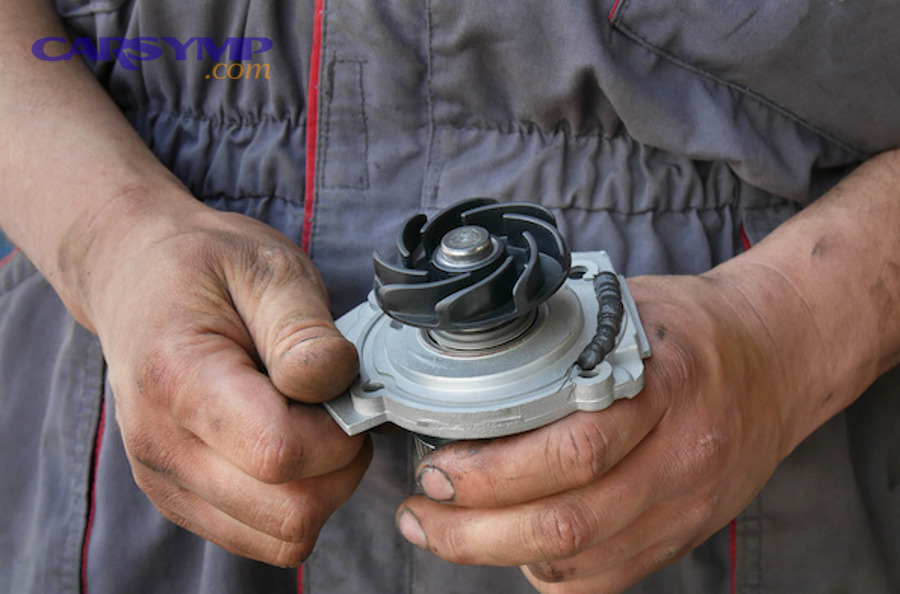
This first-check process is not meant to replace professional diagnosis. It is meant to help drivers gather useful evidence without guessing. Good observation saves time, improves communication with the repair shop, and reduces the risk of replacing the wrong part.
What visual and sound checks can be done safely at home?
The safest at-home checks are a visual search for coolant residue, a look beneath the car for fresh fluid, a review of gauge behavior, and a careful listen for grinding or whining near the belt area. Specifically, these checks work best with the engine cool and the vehicle parked safely.
Start by looking around the front of the engine for dried coolant marks. Then check the ground after parking overnight. Note whether the fluid seems fresh or old and whether it consistently appears in the same place. Observe the dashboard temperature pattern during normal driving rather than after severe overheating has already started.
Listen for new sounds during startup and idle. A water pump bearing may create a rough rotational sound that changes with engine speed. Do not place hands near moving belts or pulleys. Safe observation matters more than aggressive inspection.
If the vehicle uses a timing belt to drive the pump, remember that pump service may be linked to timing belt service. That is why many owners ask, When to replace timing belt with water pump? In general, if the pump is driven by the timing belt and the belt service interval is due, replacing both together often makes economic sense because labor overlaps heavily.
What information should drivers record before visiting a mechanic?
Drivers should record when the overheating occurs, where the leak appears, what the noise sounds like, how often coolant must be added, and whether the symptoms change with traffic or highway speed. In addition, this record helps the mechanic recreate the failure pattern more accurately.
A useful symptom log can be simple:
- Temperature gauge normal, high, or fluctuating
- Leak only after parking or while running
- Noise type: whining, chirping, squealing, grinding
- Coolant smell present or absent
- Overheating only in traffic or also at speed
- Heater output normal or suddenly weak
This kind of record turns vague concern into diagnostic information. It also helps with repair planning, because the mechanic can connect symptom timing to likely failure mode.
Typical repair cost range for water pump issues depends on the vehicle, engine layout, parts quality, and whether related components are replaced at the same time. A basic external-belt-driven pump may cost far less than a pump buried behind timing components. Labor often shapes the final price more than the pump itself.
What related warning signs and failure patterns can broaden your understanding of water pump problems?
The related warning signs and failure patterns that broaden your understanding of water pump problems include weep hole leakage, pulley play, internal impeller wear, and symptom overlap with thermostat, fan, and head gasket faults. Besides the main diagnosis, these patterns help explain why pump problems can seem obvious in one car and confusing in another.
This final section moves beyond the core “what are the symptoms?” question and into the finer details that improve semantic depth and real-world usefulness. It is also where long-term thinking begins, because deeper understanding supports better maintenance decisions and stronger repair timing.
What is a weep hole leak and why does it matter?
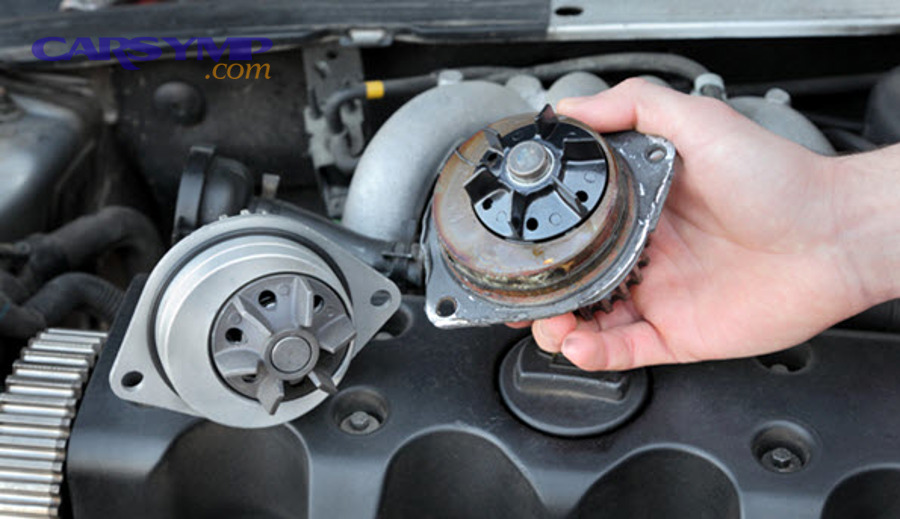
A weep hole leak is coolant escaping from a small vent opening in the water pump, and it matters because it often signals that the internal seal is wearing out. More specifically, this feature turns hidden seal failure into a visible early warning.
The weep hole exists by design. Without it, coolant escaping past the seal could stay trapped and conceal the problem longer. When coolant begins to appear there, drivers and technicians get an important clue: the seal has started losing its ability to contain pressurized coolant around the shaft.
A damp weep hole does not always mean the pump will fail completely today, but it does mean the part has moved into a wear stage that deserves planning. The leak may stay minor for a short time, or it may worsen quickly. That uncertainty is why the symptom deserves attention even before severe overheating appears.
How can pulley wobble or bearing play signal a failing water pump?
Pulley wobble or bearing play can signal a failing water pump because the rotating shaft no longer stays centered and smooth under belt load. As a result, the pump may become noisy, leak more easily, and eventually seize or throw the belt off alignment.
The bearing supports the shaft that spins the impeller. When that support weakens, movement becomes rough. That roughness can produce the exact Grinding/whining noise from water pump bearings that drivers notice first. Over time, the extra movement also stresses the seal, which can increase leakage.
This is why water pump diagnosis should not stop at fluid alone. A dry pump with obvious shaft movement can still be failing. In the same way, a noisy pump may be close to leaking even if the leak has not yet become dramatic.
Can internal impeller damage reduce coolant flow without obvious leakage?
Yes, internal impeller damage can reduce coolant flow without obvious leakage because the pump can lose its ability to move coolant effectively even while the outside of the housing appears mostly dry. Specifically, the engine may run hot or unstable because circulation weakens before fluid escapes externally.
Some impellers wear, corrode, or lose efficiency over time. In certain designs, the impeller can slip or become less effective under load. This creates one of the more confusing diagnostic patterns: overheating with little visible leakage. The driver sees heat symptoms but cannot find a large puddle, so the pump seems innocent at first.
That is why Overheating patterns linked to water pump issues deserve close attention. A pattern of repeated temperature fluctuation, worsening heat in traffic, and weak circulation clues may be the only visible trail pointing toward internal pump failure.
Why are water pump symptoms sometimes confused with thermostat, fan, or head gasket issues?
Water pump symptoms are sometimes confused with thermostat, fan, or head gasket issues because all of those problems can create overheating, coolant loss, or unstable temperature behavior. However, the overlap becomes manageable when each symptom is tied back to its physical cause.
A thermostat changes flow timing, a radiator fan changes airflow, a head gasket changes pressure and sealing between engine passages, and the water pump changes coolant movement itself. The driver sees similar results on the dashboard, but the underlying mechanism differs. That is why symptom context matters so much.
This broader view also helps with Preventing water pump failure. Good maintenance reduces confusion later. Regular coolant service, correct belt tension, timely replacement of worn components, and attention to small leaks all reduce the chance that a minor pump problem will grow into severe overheating. When the pump is timing-belt-driven, planned service is even more important because When to replace timing belt with water pump becomes a cost-control decision as much as a reliability decision.
In short, Car Symp related to the water pump become easier to understand when you follow a clear chain: leak, noise, temperature behavior, urgency, comparison, then maintenance. That chain turns scattered clues into a logical diagnosis. For drivers, that is the real goal of symptom-based content: recognizing when the pump is only aging, when it is actively failing, and when immediate repair is the only safe choice.