


Typical water pump repair cost usually means water pump replacement cost, and for most car owners the common real-world range falls between about $400 and $1,100, with some simple jobs landing lower and some complex engines climbing well above that range. The biggest reasons for that spread are labor difficulty, vehicle design, and whether the quote includes related cooling-system parts. ([kbb.com](https://www.kbb.com/water-pump-replacement/?))
Parts and labor shape the total bill in very different ways. In some vehicles, the pump itself is moderate in price but the mechanic must remove multiple components to reach it, so labor becomes the dominant cost. In other cases, the bill rises because the quote also includes coolant, seals, belts, or timing-system work. ([repairpal.com](https://repairpal.com/estimator/water-pump-replacement-cost?))
Cost alone, however, is not enough to judge the repair. Car owners also need to understand water pump failure symptoms, common Water pump failure signs, and the difference between a fair quote and an inflated one. Warning signs often include coolant leaks, overheating, irregular temperature readings, and a Grinding/whining noise from water pump bearings. ([kbb.com](https://www.kbb.com/car-advice/does-my-car-need-a-new-water-pump/?))
Some jobs become more expensive because the water pump is tied to the timing belt, uses an electric design, or sits inside a crowded engine bay. Introduce a new idea: the sections below explain the typical price range, the parts-and-labor breakdown, the biggest cost drivers, and the special cases that push a water pump bill beyond the normal range. ([consumeraffairs.com](https://www.consumeraffairs.com/automotive/water-pump-replacement-cost.html?))
What Is the Typical Water Pump Repair Cost Range for Car Owners?
Typical water pump repair cost for car owners usually falls into three bands: low-cost jobs around $400 to $650, average jobs around $650 to $1,100, and high-cost jobs above that when labor or related repairs increase complexity.
To better understand that range, it helps to separate the job into what most drivers are actually buying: not a simple repair of the old unit, but the removal of a worn pump and installation of a new one, followed by coolant service and leak verification.
Is water pump repair usually a replacement rather than a minor fix?
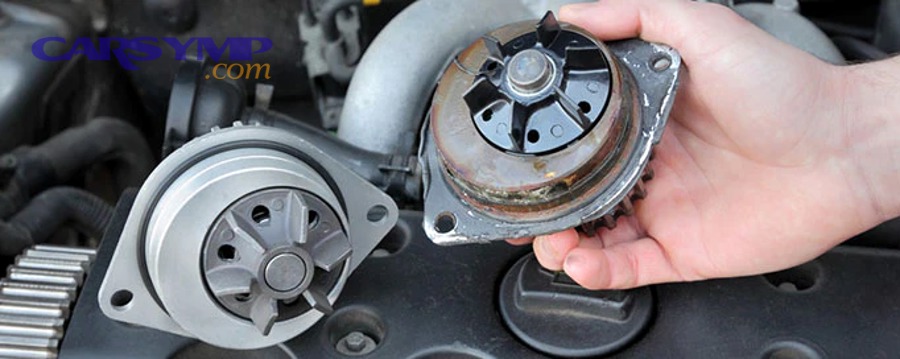
Yes, water pump repair is usually a replacement rather than a minor fix because internal seals wear out, bearings develop play, and the labor to remove the pump is too significant to justify patching an old part.
More specifically, a modern automotive water pump is a wear component. Once the seal fails, coolant can leak through the weep hole. Once the bearing wears, the shaft can wobble, the pulley can run out of alignment, and the unit can begin making noise. At that stage, resealing the pump rarely makes economic sense for a customer paying labor by the hour. A shop can install a complete new assembly, refill the cooling system, and verify operation with much less comeback risk.
That practical reality is why many shops use “repair” and “replacement” almost interchangeably in estimates. For the car owner, the useful question is not whether the pump can theoretically be repaired, but whether the installed cost of a dependable fix makes sense. In most cases, replacement wins because it restores coolant circulation and reduces the chance of repeated labor charges.
This is also why water pump failure symptoms matter early. If a driver notices a small leak, rising temperature, or one of the common Water pump failure signs before the engine overheats severely, the repair usually stays limited to the pump and related service items rather than escalating into head-gasket or engine damage. ([kbb.com](https://www.kbb.com/car-advice/does-my-car-need-a-new-water-pump/?))
According to Kelley Blue Book, water pump replacement commonly costs between $400 and $800, and the pump itself is a critical cooling-system component that prevents overheating by circulating coolant through the engine. ([kbb.com](https://www.kbb.com/water-pump-replacement/?))
What price ranges are considered low, average, and high for water pump work?
There are three main price tiers for water pump work: low-cost jobs, average jobs, and high-cost jobs, based on labor access, vehicle complexity, and whether the estimate includes related components.
Specifically, low-cost jobs usually involve engines with easier front-end access, an external pump, and fewer bundled parts. These estimates may fall around the lower end of the national range, especially at an independent shop with a straightforward belt-driven setup. Average jobs are the most common and often cover the new pump, coolant, seals or gasket, and the labor needed to remove surrounding components.
High-cost jobs appear when the engine packaging is tight, the pump is driven by or packaged with the timing system, or the vehicle is a luxury, hybrid, or performance model. In those cases, the mechanic may need many more labor hours, specialized tools, and additional replacement items. That is why one quote may land around $500 while another exceeds $1,500 for a different vehicle.
The table below summarizes what the typical pricing bands usually reflect.
| Price band | Typical range | What usually drives the cost |
|---|---|---|
| Low | $400–$650 | Easy access, independent shop, few add-on parts |
| Average | $650–$1,100 | Standard replacement with coolant and seals |
| High | $1,100+ | Tight engine bay, timing-system work, luxury or complex models |
A fair reading of the table is that “typical” does not mean “universal.” The same repair category can vary sharply by model. A Nissan Altima estimate can sit far below a Ford Explorer estimate because engine layout and labor hours are different. ([repairpal.com](https://repairpal.com/estimator/ford/explorer/water-pump-replacement-cost?))
According to RepairPal’s January 2026 estimator, the average cost for water pump replacement is between $857 and $1,106, but vehicle-specific estimates can differ significantly by model and labor time. ([repairpal.com](https://repairpal.com/estimator/water-pump-replacement-cost?))
What Do Parts and Labor Include in a Water Pump Repair Estimate?
A water pump repair estimate usually includes the pump, sealing components, coolant service, and the labor needed to remove and reinstall surrounding parts safely.
Next, the most useful way to read an estimate is to understand which line items are essential, which ones are optional, and which ones are bundled because the mechanic is already deep into the same area of the engine.
What parts are usually included in a water pump replacement quote?
There are five common categories in a water pump replacement quote: the pump assembly, gasket or seal, coolant, hardware if needed, and nearby wear parts that are practical to replace at the same time.
For example, the core parts list usually starts with the replacement pump itself. Many quotes then include a gasket, O-ring, or sealant specified by the manufacturer. Coolant is another normal charge because the system must be drained and refilled, and some vehicles require a precise coolant type or bleeding procedure.
In addition, shops often inspect or quote related items such as the serpentine belt, pulley, thermostat, hose clamps, and sometimes the timing belt depending on the engine design. That does not always mean every related part must be replaced, but it does mean the estimate may include preventive work that saves labor later. This is especially relevant in discussions about When to replace timing belt with water pump, because overlapping labor can make the bundled job more efficient than paying twice to access the same area.
Drivers should also watch for small but legitimate charges such as shop supplies, cooling-system pressure testing, or disposal fees for used coolant. Those are not the main cost drivers, yet they do affect the total number on the estimate. )
According to CarParts, replacement jobs often involve not just the pump but also water pump gaskets, pulleys, O-rings, and seals, which helps explain why the final bill exceeds the part price alone. )
How does labor compare with parts in the final repair bill?
Labor often has a greater impact than parts in the final repair bill when the pump is difficult to access, while parts matter more when the vehicle uses a costly OEM or specialized pump.
More specifically, many car owners expect the pump itself to be the expensive part. Sometimes it is. Yet in plenty of real-world estimates, labor becomes the bigger variable because the mechanic must remove belts, covers, mounts, pulleys, or timing components before the old pump can even come out. That is why two pumps with similar retail prices can produce very different installed totals.
A good example is the difference between a simple external pump and an internal or timing-driven design. In the simple case, labor may stay modest and the pump may represent a larger share of the total. In a harder job, labor hours dominate. This is also why a dealership quote may look much higher than the bare pump price a driver sees online.
That distinction matters when evaluating whether an estimate is reasonable. A cheap-looking part does not automatically make the quote unfair if the job requires extensive disassembly, coolant bleeding, and verification to avoid overheating after reassembly. ([kbb.com](https://www.kbb.com/water-pump-replacement/?))
According to RepairPal, labor for an average water pump replacement is estimated at $358 to $525 while parts are estimated at $499 to $581, showing that both categories matter and that labor can become even more dominant on difficult vehicles. ([repairpal.com](https://repairpal.com/estimator/water-pump-replacement-cost?))
What Factors Make Water Pump Repair Costs Go Up or Down?
Water pump repair costs rise or fall mainly because of vehicle design, labor access, part quality, bundled repairs, and the shop’s labor rate.
To better understand the estimate, it helps to separate fixed costs from variable costs. The pump is only one piece of the story; access difficulty and related service needs are often the bigger reason the quote changes.
Does vehicle type or engine layout significantly affect water pump cost?
Yes, vehicle type and engine layout significantly affect water pump cost because they change labor time, access difficulty, required tools, and the number of surrounding parts that must be removed.
For example, a transverse engine in a tight front-wheel-drive bay can create cramped access that lengthens labor. Some SUVs and trucks place the pump in ways that still require significant disassembly. Certain engines use chain- or belt-related packaging that turns a routine cooling-system job into a much larger service event. Luxury and European vehicles can add another layer of cost through part prices and model-specific procedures.
This is why national averages are only starting points. One vehicle may need a relatively direct front-of-engine swap, while another may require engine support, mount removal, or timing-cover access. The difference shows up immediately in labor hours and final invoice totals. That is also why browsing a universal “average cost” without checking model-specific estimates can mislead owners about what is fair for their car.
The same point applies to water pump failure signs. A vehicle that keeps overheating, shows coolant loss, or develops a Grinding/whining noise from water pump bearings may need fast attention, but the repair bill will still depend heavily on where that pump sits and how much the technician must remove to reach it. ([repairpal.com](https://repairpal.com/estimator/ford/explorer/water-pump-replacement-cost?))
According to ConsumerAffairs, replacing a water pump alone typically costs about $600 to $1,100 for most car models, and the total varies by vehicle as well as whether the work is done at an independent shop or dealership. ([consumeraffairs.com](https://www.consumeraffairs.com/automotive/water-pump-replacement-cost.html?))
Which pricing factors have the biggest impact on a water pump estimate?
There are five major pricing factors in a water pump estimate: labor hours, engine accessibility, part type, related repairs, and shop labor rate.
Specifically, labor hours come first because time-intensive jobs raise the invoice quickly. Engine accessibility follows because it determines those hours. Part type matters next because OEM, performance, or electric pumps can cost more than common aftermarket units. Related repairs also change the total, especially if the estimate includes belts, coolant, thermostat replacement, or timing-system service. Finally, shop labor rate varies by region and by whether the repair is done at a dealership or independent garage.
These factors often interact. A high labor-rate shop working on a cramped engine with an OEM pump and bundled timing-belt service can produce a quote far above the national average. On the other hand, an independent shop replacing an accessible external pump with a quality aftermarket part may come in near the low end.
For the car owner, the practical lesson is simple: ask which factor is causing the quote to rise. If the answer is “the pump is expensive,” that points to parts. If the answer is “we have to remove a lot to get to it,” that points to labor. If the answer is “you are already here, so now is the time to do the belt and coolant,” that points to bundled value rather than overcharging. ([kbb.com](https://www.kbb.com/water-pump-replacement/?))
According to Kelley Blue Book’s repair guidance, labor cost increases as more of the engine must be disassembled to access the water pump, which is why the same service can differ sharply from one model to another. ([kbb.com](https://www.kbb.com/honda/civic/2026/water-pump-replacement/?))
How Does Water Pump Replacement Compare with Related Cooling-System Repairs?
Water pump replacement usually costs more than a thermostat job, can overlap with radiator-related cooling repairs, and becomes most expensive when bundled with timing-system work.
However, comparison matters because many drivers do not shop for a water pump in isolation. They shop because the car overheats, leaks coolant, or shows a temperature fluctuation problem, and they want to know which repair category they are likely facing.
How does water pump cost compare with thermostat or radiator repair?
Water pump replacement usually sits above thermostat replacement in cost and can be lower or higher than radiator work depending on the vehicle and how much labor the repair requires.
More specifically, thermostat jobs are often simpler because the component is smaller and easier to access. Radiator repairs vary widely because the radiator itself can be costly, but labor may be more straightforward on some vehicles. Water pump work often lands in the middle or upper-middle of cooling-system repairs because the part is not always cheap and the labor can become intensive.
This comparison is useful when a car has overlapping symptoms. Engine overheating can point to a thermostat, radiator, low coolant, fan issue, or water pump. But if the car also shows coolant leaking from the front of the engine, abnormal pump noise, or one of the more specific water pump failure symptoms, the odds shift more strongly toward the pump. In that case, the owner should compare the quote to the correct repair category, not to the cost of a thermostat alone.
A driver should also remember that coolant-system problems sometimes cascade. A neglected pump can lead to repeated overheating, and overheating can stress other parts of the system. Comparing repairs therefore helps with budget planning, but diagnosis still comes first. ([kbb.com](https://www.kbb.com/car-advice/does-my-car-need-a-new-water-pump/?))
According to Firestone’s cooling-system guidance, overheating, visible coolant leaks, low coolant, and steam under the hood are major warning signs, which is why symptom overlap often requires a full cooling-system diagnosis rather than a single-part assumption. ([firestonecompleteautocare.com](https://www.firestonecompleteautocare.com/maintain/radiator/?))
When does replacing related parts save money overall?
Replacing related parts saves money overall when the mechanic must already remove the same components to access the water pump, because doing bundled work prevents paying duplicate labor later.
Especially important is the question of When to replace timing belt with water pump. The answer is not “always” in every car, but it is often smart when the water pump is driven by or located behind the timing belt and both components have similar service timing. If the belt is due soon, combining the jobs usually reduces the total long-term cost because the labor overlap is substantial.
The same logic can apply to the thermostat, coolant, serpentine belt, tensioner, and certain seals. If these parts are already worn or near end of life, the owner may save money by replacing them during the same visit. The key is relevance: bundled work should make sense because of wear, access, or scheduled maintenance, not because the shop is stacking unnecessary extras.
This is one of the clearest signs of a transparent shop. A good advisor explains why a related part is worth doing now, shows the overlap in labor, and tells the customer what can safely wait. That is much more useful than simply presenting a larger estimate without context. ([carparts.com](https://www.carparts.com/blog/why-should-you-replace-the-timing-belt-and-water-pump-together/?srsltid=AfmBOoojLgpA90fQkDnvBbibp6eZ9nRDwTKIwSaYfET883KHRHvj5g6g&))
According to CarParts, replacing the timing belt and water pump together can reduce total labor compared with doing them separately, because the same area of the engine often has to be opened twice if the jobs are split. ([carparts.com](https://www.carparts.com/blog/why-should-you-replace-the-timing-belt-and-water-pump-together/?srsltid=AfmBOoojLgpA90fQkDnvBbibp6eZ9nRDwTKIwSaYfET883KHRHvj5g6g&))
How Can Car Owners Tell Whether a Water Pump Quote Is Fair?
A water pump quote is fair when it clearly lists the pump, labor, coolant-related service, warranty terms, and the real reason the job costs what it does for that specific vehicle.
In addition, a fair estimate should be understandable to a non-mechanic. If the advisor cannot explain the quote in plain language, the customer has not been given enough information to judge it properly.
What should a fair water pump estimate include?
A fair water pump estimate should include the replacement pump, labor hours, coolant service, sealing components, taxes or shop fees, and a written parts-and-labor warranty.
More specifically, the estimate should identify whether the pump is OEM or aftermarket, whether coolant is included, and whether extra items like the thermostat, belt, or timing components are necessary now or merely recommended. The customer should also be told whether the quote reflects diagnosis only, full replacement, or replacement plus related preventive work.
That detail matters because fairness is not about the lowest number. A very low quote can omit coolant, warranty strength, or related parts the engine genuinely needs. A higher quote may still be fair if it uses better parts, includes system bleeding, offers stronger warranty coverage, and reflects the real labor involved.
For owners comparing estimates, three questions usually reveal whether the quote is solid: What part brand are you using? How many labor hours does this model require? What exactly is included in the total? When a shop answers those clearly, it becomes much easier to separate a well-built estimate from a vague one. ([repairpal.com](https://repairpal.com/estimator/water-pump-replacement-cost?))
According to ConsumerAffairs, water pump replacement without warranty can cost hundreds or even well over $1,000 depending on the vehicle, so written warranty terms and complete line-item details matter when comparing quotes. ([consumeraffairs.com](https://www.consumeraffairs.com/automotive/is-a-water-pump-covered-under-warranty.html?))
Should you compare dealership, independent shop, and mobile mechanic quotes?
Yes, you should compare dealership, independent shop, and mobile mechanic quotes because price, warranty strength, convenience, and model-specific expertise differ across those options.
Meanwhile, each option serves a different kind of customer. Dealerships often have the strongest manufacturer familiarity and easy access to OEM parts, but they may charge higher labor rates. Independent shops often provide the best value for mainstream vehicles and can still offer high technical skill. Mobile mechanics can be convenient and cost-effective for accessible jobs, but complex cooling-system work may still be better handled in a full shop with pressure-testing and bleeding equipment.
The smartest comparison is not simply “Who is cheapest?” It is “Who is giving me the most complete and credible repair for my vehicle?” If the dealership quote is higher because it includes OEM parts and a stronger warranty, that may be worth it to some owners. If the independent shop explains the same repair more clearly and offers a good warranty at a lower labor rate, that may be the better decision.
This is also the stage where symptom clarity matters. If the vehicle shows a persistent coolant leak, temperature spikes, or Grinding/whining noise from water pump bearings, compare quotes promptly rather than continuing to drive and risking overheating damage. ([knowhow.napaonline.com](https://knowhow.napaonline.com/6-signs-you-may-have-a-bad-water-pump-on-your-hands/?))
According to Kelley Blue Book and ConsumerAffairs, water pump replacement pricing changes with shop type, and dealership repairs often cost more than independent-shop repairs for the same basic service category. ([kbb.com](https://www.kbb.com/water-pump-replacement/?))
What Special Cases Can Change Water Pump Repair Costs Beyond the Normal Range?
Special cases that change water pump repair costs beyond the normal range include timing-belt-driven pumps, electric pumps, warranty coverage issues, and complex luxury, European, or hybrid vehicles.
Besides the normal parts-and-labor logic, these cases matter because they explain why some owners see a quote that looks ordinary while others face a much larger repair bill for what sounds like the same component.

How does a timing belt-driven water pump change the total repair cost?
A timing belt-driven water pump usually increases the immediate repair total but can improve long-term value because the overlapping labor makes bundled service more efficient.
Specifically, this design often requires the mechanic to access the timing area, which adds labor complexity compared with a simple external pump. If the timing belt is already due, replacing both together often saves money overall because the engine only needs to be opened once. If the belt is still relatively new, the decision becomes more nuanced and depends on the engine design, mileage, and service interval.
This is the exact context behind the question When to replace timing belt with water pump. The best answer is to consider the manufacturer interval, the current mileage, and whether the pump sits in the same labor zone as the belt. If those variables line up, bundling the jobs is usually the most economical choice.
Owners should still ask for a breakdown. A large estimate is not automatically inflated if it includes major timing-system labor. What matters is whether the quote clearly explains the overlap and the value of doing the job once instead of twice. ([consumeraffairs.com](https://www.consumeraffairs.com/automotive/timing-belt-replacement-cost.html?))
According to ConsumerAffairs, total timing belt replacement commonly lands around $860 to $1,260, which shows why adding timing-related labor can materially change the price of a water pump job on engines where the components are serviced together. ([consumeraffairs.com](https://www.consumeraffairs.com/automotive/timing-belt-replacement-cost.html?))
Are electric water pumps more expensive to replace than belt-driven pumps?
Electric water pumps are often more expensive to replace than belt-driven pumps because the part itself can cost more and diagnostics can be more model-specific.
More specifically, an electric pump removes the traditional belt-driven arrangement but introduces electronics, control logic, and model-specific packaging. That can raise both the part price and the diagnostic burden. In some cases, the labor may be easier than with a timing-driven mechanical pump. In other cases, the cost rises because the pump is specialized and less interchangeable.
This is why owners should avoid broad assumptions. “Electric” does not automatically mean harder to access, but it often means the part is less generic and the diagnosis is less straightforward. If the quote mentions control faults, electric auxiliary pump circuits, or cooling-system module behavior, the job may involve more than a mechanical swap.
For drivers, the practical takeaway is to compare like with like. An electric pump quote should be judged against other electric-pump jobs, not against the low-end price for a simple external mechanical pump. ([carparts.com](https://www.carparts.com/auxiliary-water-pump?srsltid=AfmBOor9PV-7OvEnQNDsfBLsvzLqYOrjgX_lNhBlQweySGmg7ILxZqop&))
Can a warranty or service contract reduce water pump replacement costs?
Yes, a warranty or service contract can reduce water pump replacement costs, but coverage depends on the warranty type, vehicle age, mileage, exclusions, and whether the failure is treated as a covered defect or maintenance item.
More importantly, the owner should confirm whether the policy covers the water pump itself, diagnostic time, coolant, and related seals or only the major component. Factory warranties may help on newer vehicles, and some vehicle service contracts may cover cooling-system parts, but preventive replacements and wear items can be excluded.
That distinction matters because a partially covered job can still leave the customer paying for coolant, shop supplies, or related components. It is also why written approval matters before the repair starts. If the owner assumes coverage and the contract excludes that exact situation, the final bill can still be substantial.
A fair shop will help the owner document the failure, communicate with the warranty provider when needed, and separate covered items from customer-pay items on the estimate. ([consumeraffairs.com](https://www.consumeraffairs.com/automotive/is-a-water-pump-covered-under-warranty.html?))
According to ConsumerAffairs, replacing a water pump can cost roughly $486 to $1,736 or more without warranty, which is why checking coverage terms can materially affect the out-of-pocket total. ([consumeraffairs.com](https://www.consumeraffairs.com/automotive/is-a-water-pump-covered-under-warranty.html?))
Why do luxury, European, or hybrid vehicles often have higher water pump repair bills?
Luxury, European, and hybrid vehicles often have higher water pump repair bills because they combine specialized parts, tighter packaging, more complex procedures, and higher labor rates.
To illustrate, a premium vehicle may use a more expensive OEM pump, demand specific coolant and bleeding procedures, or place the pump in a crowded area that takes longer to access. Hybrid systems can add extra service precautions and model-specific cooling layouts. European vehicles can increase parts cost and labor time through packaging density and specialized procedures.
This is why a broad national average is less useful for these vehicles than a model-specific estimate. The job title may still say “water pump replacement,” but the actual service path is different enough that the cost sits in another category. Owners of these vehicles should therefore place more emphasis on technician familiarity, correct parts selection, and warranty clarity than on chasing the lowest possible number.
In short, the normal range gives car owners a strong starting point, but the real fairness of a water pump estimate always depends on the vehicle, the labor path, the parts used, and whether the quote clearly explains why the cost lands where it does. Water pump failure symptoms, Water pump failure signs, and a Grinding/whining noise from water pump bearings should never be ignored, because delayed repair can turn a manageable cooling-system job into severe overheating damage. ([repairpal.com](https://repairpal.com/estimator/ford/explorer/water-pump-replacement-cost?))