Most repair shops don’t charge you “just to plug in a scanner”—they charge for the time and expertise it takes to confirm the real cause of a problem and recommend a repair that actually fixes it. In practice, shops apply that charge in a few predictable ways: they may credit it toward the final repair, they may keep it separate, or they may waive it only when certain conditions are met.
Next, this topic gets confusing because “estimate,” “inspection,” and “diagnosis” sound similar but mean different things. A price estimate is a quote for a proposed repair, while diagnosis is the work required to decide what repair is truly needed—and those are billed differently.
Then, the most useful thing a car owner can do is learn the billing patterns shops use (credit vs. non-credit, flat vs. hourly, waived vs. added) and the policy triggers behind them. That knowledge helps you ask better questions before authorizing work, so you don’t get surprised later.
Introduce a new idea: once you understand the billing logic, you can avoid paying twice for the same investigative time—while still getting an accurate fix and protecting your warranty options.
Is the diagnostic fee usually credited toward the repair bill?
Yes—often it is credited, but only if you approve the repair at the same shop, the repair matches the diagnosed issue, and the shop’s policy defines the credit clearly (amount, timeframe, and exclusions).

Next, the key is understanding that crediting is a policy choice, not a universal rule, so the “usual” outcome depends on how the shop structures its workflow and how you proceed after diagnosis.
When do shops commonly credit it?
Shops commonly credit it when diagnosis is treated as the “front end” of the repair job—meaning they count that time as part of the total labor once you commit. This is especially common in these situations:
- You authorize the repair immediately after results are explained. Many shops will apply the charge like a deposit.
- The repair is performed at the same location and on the same visit. Credits often expire if you leave and return later.
- The diagnosed cause maps directly to the repair line item. If the diagnosis identifies a failed part or test-confirmed condition, it’s easier to attach the credit.
A practical way to think about it: some shops use diagnosis to reduce “shopping around” behavior and to ensure they’re paid for real investigative work even if you decline the repair.
When is it not credited?
It’s commonly not credited when the shop’s policy treats diagnosis as its own paid service—especially if the shop invests significant time before any repair is possible. Non-credit outcomes often happen when:
- You decline the repair (you’re paying for the answer, not the fix).
- The repair you choose doesn’t match the diagnosis (for example, you ask for a part swap the shop doesn’t recommend).
- The issue is intermittent or multi-layered, and the shop can’t reliably tie diagnostic time to one repair.
- You only requested a quote, and the shop had to disassemble/test to provide it.
Consumer guidance from the FTC notes that shops may charge for diagnostic time and encourages customers to ask about charges before authorizing work. (consumer.ftc.gov)
What exactly is a diagnostic fee ?
A diagnostic fee is a charge for structured troubleshooting—testing, interpreting data, and confirming root cause—while an estimate is a price quote for a proposed repair once the needed work is identified.
Then, once you separate “finding the cause” from “pricing the fix,” the billing choices shops make start to look much more logical.
What a diagnostic fee covers at a repair shop
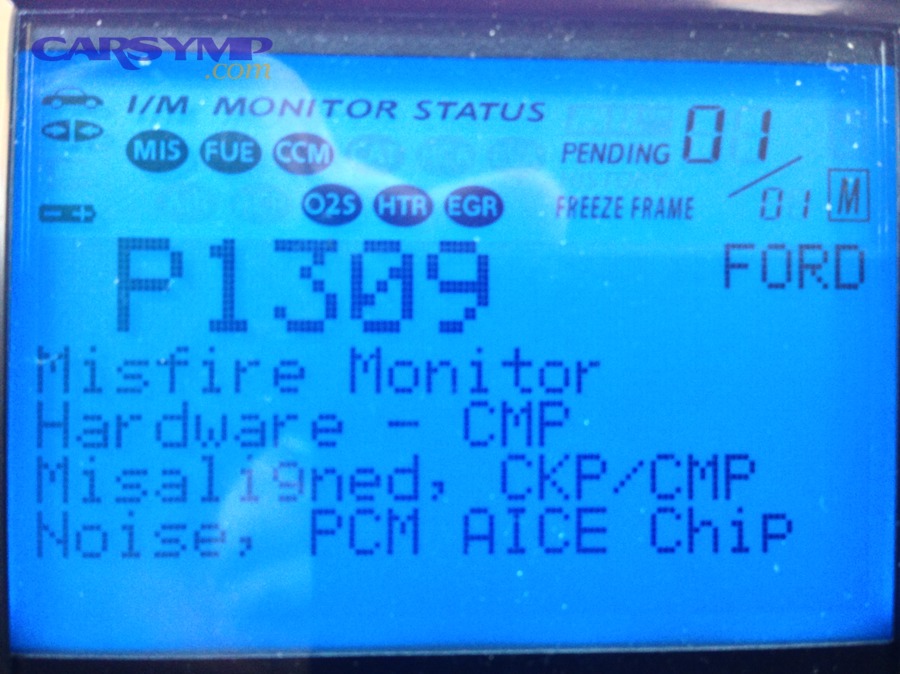
What a diagnostic fee covers at a repair shop is usually more than a scan. It often includes a mix of time, tools, and decision-making, such as:
- Interview + symptom verification (when it happens, what conditions trigger it)
- Scan tool work (reading codes, freeze-frame, monitor status)
- Targeted testing (smoke test for EVAP, fuel pressure test, charging system test, compression/leak-down, circuit checks)
- Service information lookups (wiring diagrams, OEM procedures, technical bulletins where applicable)
- A documented recommendation (what failed, why, and what repair path is justified)
Even when a shop bills a flat amount, what you’re really buying is a confident path to a correct repair, not a guess.
What an estimate does (and does not) include
An estimate typically covers the cost outline of a repair plan: parts, labor, shop supplies, and taxes/fees—based on the best available information. The FTC explains that a written estimate should identify the condition to be repaired, parts needed, and anticipated labor charge, and it should state the shop will contact you before exceeding an agreed threshold. (consumer.ftc.gov)
However, an estimate often does not include the investigative work required to determine the exact cause—especially when multiple causes can create the same symptom.
Quick comparison: scan-only vs full diagnosis
Many disagreements come from confusing a “scan” with diagnosis. A scan reads codes and data; diagnosis proves the cause. Here’s the simplest comparison:
- Scan-only: fast data pull; may suggest likely areas; can still be wrong if interpreted as “replace this part.”
- Full diagnosis: tests + verification; identifies the failure mechanism; reduces repeat visits and wasted parts.
To anchor this in real market behavior: a large-scale field experiment by researchers at Northwestern University’s Kellogg School of Management collected quotes from thousands of repair shops, illustrating how pricing and information gaps affect what customers are told and charged. (nber.org)
How do shops apply diagnostic fees to repairs in real-world billing?
Shops apply diagnostic fees in three main ways—credit-as-deposit, separate line-item, or blended into labor—based on how they schedule bays, protect technician time, and reduce “no-fix” comebacks.
Next, seeing the billing models side-by-side makes it easier to predict your invoice before you ever sign an authorization.
Model A: “Credit it if you fix it here”
In this model, the shop charges up front for diagnosis, then applies that amount toward the final repair if you approve the repair at that shop.
Why shops like it
- It filters out “free diagnosis shopping.”
- It ensures technician time is paid even if you decline repairs.
- It keeps pricing fair for customers who actually repair.
What to watch
- Whether the credit applies to labor only or total invoice
- Whether it expires after a set number of days
- Whether it applies if the repair changes after tear-down
Model B: Separate line item, always
Here, diagnosis is treated as a professional service—like an electrician’s troubleshooting fee—so it stays on the invoice even if you proceed with repairs.
Why shops use it
- Complex modern systems can take real time to confirm.
- It discourages “parts cannon” guessing.
- It protects profitability when repairs are declined or postponed.
What to watch
- Ask what deliverable you receive (notes, test results, codes, printouts).
- Ask whether further diagnostic time is billed if the first hour doesn’t isolate the cause.
Model C: Blended into labor
Some shops don’t show a separate diagnostic line. Instead, they bill a higher labor amount on the repair line, effectively bundling troubleshooting into the job.
Why it happens
- The shop has standardized labor packages.
- The service advisor wants one simplified number.
- The shop uses menu pricing for common repairs.
What to watch
- Ask whether troubleshooting is included before authorizing.
- Confirm what happens if the repair doesn’t solve the symptom.
A simple table of what your invoice might look like
Below is a quick example of how the same problem can be billed under each model, so you can recognize which pattern a shop is using.
| Billing model | What you pay up front | What happens if you approve repair | What happens if you decline repair |
|---|---|---|---|
| Credit-as-deposit | $120 | $120 credited toward repair total | You pay $120 and leave with results |
| Separate line item | $120 | You pay $120 + repair cost | You pay $120 and leave with results |
| Blended into labor | $0 shown | Repair labor is higher (includes troubleshooting) | You may still owe minimum inspection/authorization amount |
What common shop policies determine whether the diagnostic fee is waived vs added?
There are four common policy levers—authorization scope, repair approval timing, complexity/tear-down needs, and warranty/guarantee rules—that determine whether the charge is waived, credited, or added separately.

Then, once you know the levers, you can ask targeted questions that force clarity before the car ever goes on a lift.
Minimum time blocks and authorization language
Many shops use minimum diagnostic blocks (for example, “one hour to start”) because troubleshooting can’t always be predicted. That policy is often tied to the authorization form you sign—what you are allowing them to do (inspect, test drive, disassemble, scan, smoke test).
Government consumer guidance emphasizes getting written authorization and understanding charges before inspection/diagnosis begins. For example, the Texas Attorney General advises consumers to get written authorization to inspect, test drive, diagnose, or disassemble for purposes of estimating repair costs, including the charges and what actions will be taken. (texasattorneygeneral.gov)
“Waived if repaired today” rules
Some shops waive or credit the charge only if:
- You approve the repair the same day
- The repair exceeds a minimum labor amount (e.g., “credited on repairs over $X”)
- The parts are sourced through the shop (not customer-supplied)
This policy isn’t inherently bad—it just needs to be disclosed clearly.
Tear-down requirements (and why they change everything)
If a shop must disassemble parts to confirm a failure (oil pan inspection, timing cover removal, internal engine inspection), the charge is less likely to be waived because:
- The work consumes real labor time.
- The car may become undrivable during inspection.
- Reassembly may be required even if you decline repair.
This is why shops often ask for explicit authorization before tear-down.
Disclosure and “surprise charge” risk
Disclosure rules vary by state, and even where disclosure is not strictly required, shops still must follow their own stated policies. Georgia’s consumer guidance notes there is no Georgia law requiring businesses to disclose diagnostic charges before providing auto repair estimates, and it recommends asking about charges before getting an estimate. (consumered.georgia.gov)
How can car owners avoid unnecessary diagnostic charges and still get accurate repairs?
Use a five-step approach—document the symptom, define the authorization scope, require a deliverable, confirm credit/waiver terms, and approve only after test-based reasoning—to reduce wasted charges while improving repair accuracy.
Next, think of this as buying clarity before you buy parts and labor.
Ask these questions before you authorize anything
To support Avoiding unnecessary diagnostic charges, ask these questions at drop-off (or on the phone) and get the answers in writing when possible:
- What is the starting diagnostic amount (or time block)?
- What tests are included at that price? (scan, smoke test, electrical checks, pressure testing, etc.)
- Will any portion be credited to the repair if I proceed? If yes, credited to what (labor only vs total)?
- What results will I receive? (codes, notes, printout, recommended repair steps)
- What happens if the first round doesn’t isolate the cause? (additional time authorization threshold)
The FTC’s guidance on auto repair encourages consumers to ask for a written estimate and understand how the shop will handle approvals for additional costs. (consumer.ftc.gov)
Don’t pay twice for the same investigative time
Paying twice usually happens when:
- Shop A diagnoses, then Shop B repeats diagnosis because they don’t trust Shop A’s conclusion.
- A customer asks Shop B to “just replace the part Shop A said,” but Shop B insists on confirming cause first.
To reduce duplication:
- Ask Shop A for documented results (codes + test findings, not just “needs X”).
- Ask Shop B if they will review Shop A’s documentation and reduce repeated testing (some will; many won’t).
Know when a second opinion is worth it
A second opinion is most worth it when:
- The repair estimate is very high.
- Diagnosis is based on probabilities (“might be”) rather than confirmed tests.
- The symptom is intermittent and not reproduced.
- The shop recommends major component replacement without clear evidence.
If you do seek a second opinion, be transparent: share the documents and ask what they would verify versus redo.
Use “symptom-focused authorization”
Instead of authorizing “find anything wrong,” authorize:
- “Diagnose the cause of X symptom.”
- “Call me before any additional diagnostic time.”
- “No tear-down without separate approval.”
This keeps the work targeted, speeds decisions, and reduces surprise charges.
What edge cases change how diagnostic fees are applied (comebacks, warranties, and multi-issue visits)?
Edge cases change billing because responsibility changes: comebacks shift cost back to the shop, warranties shift cost to a provider/manufacturer, and multi-issue visits split diagnostic time across multiple concerns rather than one repair.
Then, if you know which edge case you’re in, you can predict whether you’ll be charged again—or not.
Comebacks: when the same symptom returns
A “comeback” is when the vehicle returns shortly after a repair with the same symptom. Billing depends on whether:
- The shop fixed the correct root cause but a related part failed later.
- The shop’s repair did not address the actual cause.
- The customer’s concern is new but feels similar.
Many reputable shops will recheck at low/no charge within a stated window, but they may charge again if the new cause is unrelated or the vehicle condition changed.
Warranty repairs and extended service contracts
Warranty coverage can change what you pay, but it doesn’t erase the need for diagnosis. Two common realities:
- Manufacturer warranty: diagnosis may be covered if the failure is warrantable and verified under the warranty process.
- Service contract (extended coverage): the provider may require diagnostics documentation and pre-authorization before approving payment.
FTC guidance explains the differences between warranties and service contracts and notes that warranty terms determine what’s covered and under what conditions. (consumer.ftc.gov)
Multi-issue visits: one fee or multiple?
If you bring multiple concerns (“check engine light” + “brake noise” + “battery drain”), shops may:
- Charge one starting amount and then authorize additional time as needed, or
- Split diagnostic time by system and bill separately.
A smart approach is to rank your concerns:
- safety-critical,
- drivability,
- convenience items.
That helps the shop focus diagnostic time where it matters.
Evidence (if any)
According to a study by Northwestern University from the Kellogg School of Management, in 2013, researchers collected auto-repair price quotes from 2,778 shops and found that shops quoted higher prices to callers who mentioned an upward-biased expected price, and that gender differences in quotes depended on how informed callers appeared. (nber.org)