


Big engine repair quotes can be accurate—or wildly premature—so you should avoid approving them until the diagnosis is proven with test results, documented findings, and a clear root cause rather than a guess based on symptoms.
Next, you’ll learn when a “needs a new engine” quote is trustworthy and when it’s smarter to pause, because the cost of the wrong repair is usually higher than the cost of validating the diagnosis first.
Then, you’ll see what “accurate engine diagnosis” actually means in practical terms—what evidence should exist, what tests should be run, and how to tell the difference between a symptom and the true failure.
Introduce a new idea: once you know what proof looks like, you can spot misdiagnosis red flags and follow a simple verification process before you sign off on major engine work.
Should you trust a “needs a new engine” quote right away?
No—you should not trust a “needs a new engine” quote right away because (1) many symptoms have multiple causes, (2) quick code-based conclusions miss mechanical evidence, and (3) a correct diagnosis should come with measurable test results and documentation, not just a recommendation.
To begin, the risk isn’t only the money—it’s the chain reaction: once an engine is replaced or torn down, you can’t easily “undo” a wrong call, so the smartest move is to require proof before approval.
Is an OBD code enough to approve major engine work?
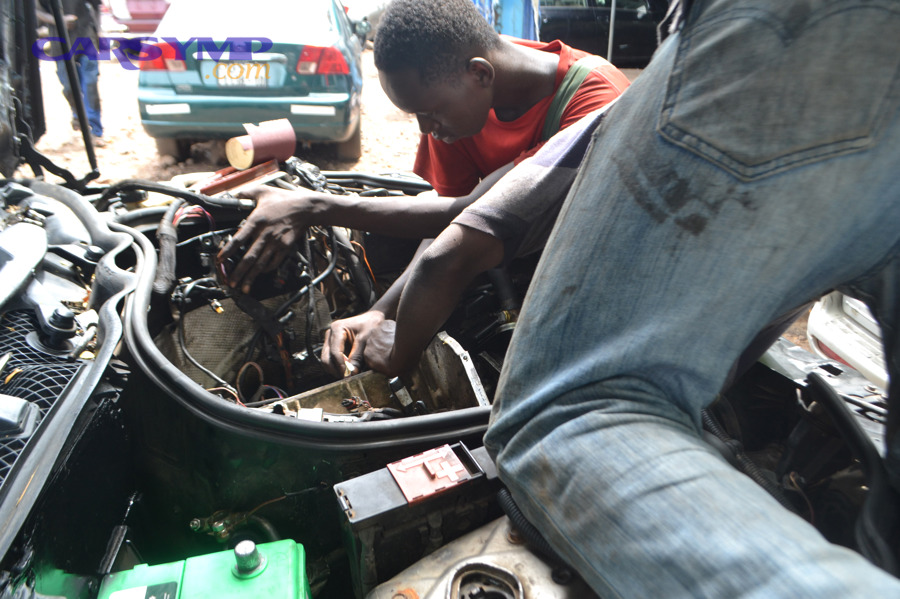
No—an OBD code is not enough to approve major engine work because codes describe what the computer noticed, not why it happened, (2) the same code can be triggered by wiring, sensors, fuel/air issues, or mechanical faults, and (3) internal engine damage requires mechanical confirmation like compression/leak-down or borescope evidence.
Next, treat codes as a starting point, not a verdict. A misfire code, for example, can come from ignition coils, plugs, injectors, vacuum leaks, low fuel pressure, timing issues, or low compression—so approving a rebuild from a code alone is like replacing a roof because you saw a wet spot on the ceiling.
A practical standard is this: if the shop can’t explain the test that separated “sensor/air/fuel” from “mechanical failure,” then the quote is still in the “hypothesis” stage.
Should a shop show test results before quoting?
Yes—a shop should show test results before quoting because (1) test results make the diagnosis falsifiable (it can be proven right or wrong), (2) they let you compare quotes fairly, and (3) they protect you from paying for repairs that don’t solve the root cause.
Then, ask for the results in a format you can keep: a printed work order note, photos, scan tool screenshots, or a measurement log. If the issue is “internal,” you should see numbers (compression/leak-down), images (borescope), or physical findings (coolant in oil, metal in filter) tied to a specific failure mode.
As a baseline reality check, even paying for proper diagnostics is often cheaper than gambling on a major repair: RepairPal estimates a general diagnosis commonly runs $122–$179 (labor only, varies by location), which is tiny compared to a major engine quote. (repairpal.com)
What does “accurate engine diagnosis” mean before you approve a big quote?
Accurate engine diagnosis means identifying the root cause of the engine complaint using testable evidence, tracing the failure path (what failed → why it failed → what it damaged), and documenting results that justify the recommended repair—not just labeling the symptom.
Next, the fastest way to reduce misdiagnosis is to insist on a “proof chain”: symptom → tests → measurements → conclusion → repair plan.
What’s the difference between a symptom and a root cause?
A symptom is the visible or measurable problem (noise, smoke, misfire, low power), while a root cause is the underlying failure that created it (loss of compression, bearing wear, coolant intrusion, timing jump, fuel delivery fault)—and confusing them is how big quotes get approved for the wrong reason.
For example, “engine shaking” is a symptom. The root cause could be a failed ignition coil, a vacuum leak, an injector fault, low compression in one cylinder, or a slipped timing component. The correct repair depends on which root cause is proven, not on how dramatic the symptom feels.
A good shop will speak in cause-and-effect language: “Cylinder 3 misfires because compression is 60 psi and leak-down is 45% through the exhaust valve,” rather than “It misfires a lot so it needs an engine.”
What proof should a diagnosis include for internal engine damage?
Proof for internal engine damage should include at least three evidence types—measured cylinder sealing (compression and/or leak-down), visual confirmation (borescope or tear-down photos), and supporting indicators (fluid cross-contamination or metal debris)—so the conclusion isn’t guesswork.
More specifically, here’s what “real proof” usually looks like in everyday shop terms:
- Compression test results for all cylinders (not just one “bad” cylinder)
- Leak-down test results that show where the air is escaping (intake, exhaust, crankcase, cooling system)
- Borescope photos/video of cylinder walls, piston tops, valves (when accessible)
- Oil/coolant evidence (milky oil, coolant loss with no external leak, combustion gases in coolant)
- Filter/plug inspection (metal in oil filter media; plug condition patterns across cylinders)
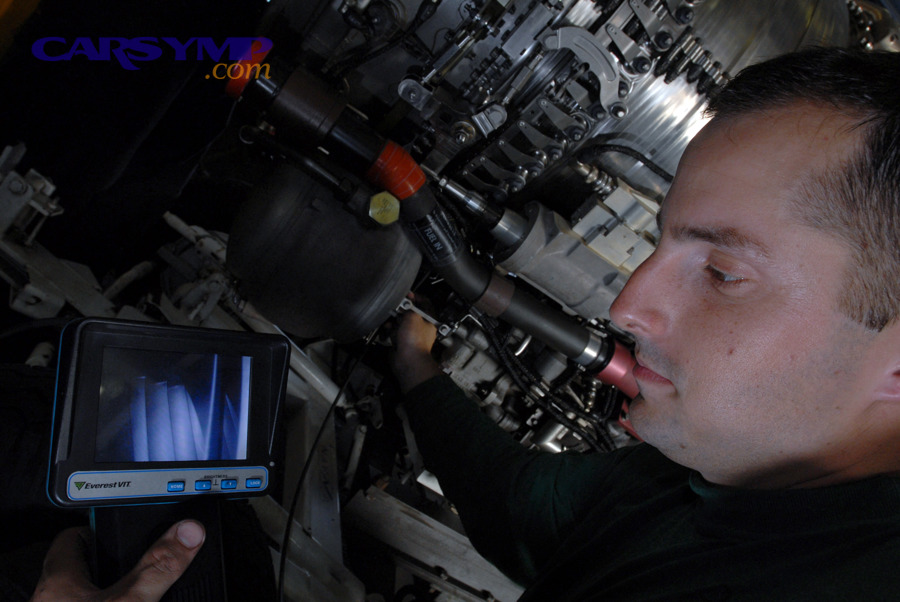
The key is consistency: internal damage claims should be supported by both measurement and observation, not one or the other.
Which red flags suggest your engine problem is being misdiagnosed?
There are 3 main groups of red flags that suggest misdiagnosis: (1) symptom-to-solution leaps (no testing), (2) behavior red flags (pressure, vagueness, refusal to document), and (3) paperwork gaps (no measurements, no parts list, no scope clarity).
Next, once you can classify the red flag, you can respond with the right counter-move—ask for specific tests, request documentation, or get a second opinion.
What are the most common misdiagnosis patterns with engine noises, smoke, and misfires?
The most common misdiagnosis patterns are treating noises/smoke/misfires as “engine is done” without isolating the subsystem (lubrication, cooling, ignition, fuel, air, timing, mechanical sealing).
Typical patterns to watch for:
- Noise → “needs engine” without oil pressure testing, stethoscope localization, or inspection of accessory drives (a failing pulley/tensioner can mimic internal knock).
- Smoke → “rings are bad” without checking PCV function, turbo seals (if equipped), or valve stem seals (blue smoke patterns matter).
- Misfire → “compression is low” without swapping coils/injectors, checking vacuum leaks, verifying fuel pressure, or confirming timing integrity.
- Overheating → “head gasket” without pressure testing the cooling system, checking for external leaks, verifying fan operation, and testing for combustion gases in coolant.
You don’t need to be a mechanic to challenge these—you just need to ask, “What test ruled out the other causes?”
Which shop behaviors signal guesswork or upselling?
Shop behaviors that signal guesswork or upselling include refusing to share results, speaking only in absolutes without numbers, using urgency pressure, and skipping diagnostic steps while pushing the biggest-ticket repair.
Watch for lines like:
- “We’ve seen this before—trust us” (with no evidence shown)
- “It’s definitely the engine” (but no compression/leak-down numbers)
- “If you don’t do it today, it’ll blow up tomorrow” (pressure tactic)
- “Diagnostics cost extra, but the engine replacement will fix it anyway” (logic gap)
A healthy shop-client relationship is transparent. Even AAA notes that getting a second opinion can save drivers significant money in many cases, especially when large repair decisions are on the table. (cluballiance.aaa.com)
What paperwork gaps make a quote risky?
Paperwork gaps that make a quote risky include missing labor lines, vague parts descriptions, no diagnostic notes, no “scope” boundaries, and no explanation of what happens if the repair doesn’t fix the symptom.
Before you approve a big quote, you should be able to answer:
- What exact repair is being performed (replace vs rebuild vs used engine)?
- What’s included and excluded (fluids, gaskets, programming, calibration, taxes/fees)?
- What additional parts might be required once disassembled?
- What’s the warranty and what voids it?
- What is the diagnostic basis written on the work order?
If the paperwork can’t explain the plan, the plan usually isn’t solid.
How do you verify an engine diagnosis step-by-step without wasting money?
Verify an engine diagnosis by following 3 steps—(1) force a test-based explanation with targeted questions, (2) confirm internal damage with the right tests, and (3) compare quotes using the same scope and evidence—so you can approve repairs with confidence instead of hope.
Then, this process works because it turns the situation from “trust the shop” into “verify the claim,” which is exactly how you avoid misdiagnosis on big engine quotes.
What questions should you ask to force a test-based explanation?
Ask questions that require measurements, comparisons, and ruled-out alternatives—because vague answers can’t survive specific prompts.
Use this exact script (and pause after each question):
- “What test result proves this is internal engine damage?”
- “What were the compression readings on all cylinders?”
- “Did you perform a leak-down test—what percentage and where is it leaking?”
- “What did the borescope show—do you have photos?”
- “What else could cause these symptoms, and what test ruled those out?”
- “If I approve this repair, what symptom should be 100% resolved?”
If they answer clearly, that’s a good sign. If they dodge, you’ve found your friction point.
Which tests confirm or rule out internal damage?
Internal damage is confirmed or ruled out best by compression testing, leak-down testing, oil pressure verification, and borescope inspection—because these tests directly measure cylinder sealing, mechanical health, and visible damage.
Here’s how to interpret them at a high level:
- Compression test: Looks for cylinder-to-cylinder imbalance and overall sealing strength. One low cylinder suggests a localized issue; multiple lows may suggest timing, wear, or a broader problem.
- Leak-down test: Explains where compression is escaping—intake valve, exhaust valve, rings/crankcase, or head gasket/cooling system.
- Oil pressure test: Helps confirm bearing/lubrication issues vs sensor/reading errors.
- Borescope: Shows scoring, melting, valve damage, carbon patterns, and sometimes coolant wash.
If a shop claims catastrophic failure but can’t show at least two of these (especially compression/leak-down), treat the quote as unproven.
How do you compare two quotes apples-to-apples?
Compare two quotes by aligning the scope (what’s included), the evidence (tests performed), and the risk handling (what changes if hidden damage is found)—because the cheapest quote can be the most expensive if it’s incomplete.
Below is a simple table that helps you line up two “big engine” quotes so you can see which one is truly safer and more complete.
| Comparison Item | Quote A | Quote B | Why It Matters |
|---|---|---|---|
| Diagnosis proof included (numbers/photos) | Prevents paying for the wrong repair | ||
| Repair type (replace, rebuild, used engine) | Changes reliability and warranty reality | ||
| Parts included (gaskets, pumps, sensors) | Missing items become surprise charges | ||
| Labor included (R&R, teardown, programming) | Labor scope drives total cost | ||
| “While you’re in there” items | Can be smart—or padding—depending on evidence | ||
| Warranty terms in writing | Protects you after the check clears | ||
| Total engine repair cost (out-the-door) | True decision number, not the teaser line | ||
| Timeline + what could delay it | Helps set expectations and avoid pressure |
When you fill this out, one quote usually becomes obviously stronger—even if it isn’t the lowest number.
When should you get a second opinion or specialist inspection?
You should get a second opinion when the quote is large, the diagnosis isn’t backed by measurements, symptoms don’t match the recommended repair, or the shop can’t clearly explain alternatives—because the cost of verification is small compared to the cost of a wrong engine job.

Next, the goal of a second opinion isn’t to “catch” a shop—it’s to confirm the failure mode and validate the repair plan so your money actually fixes the problem.
Is a dealership diagnosis always better than an independent shop?
No—a dealership diagnosis isn’t always better because (1) dealerships vary by technician and workload, (2) independents may have deeper experience with specific engine families, and (3) the best diagnosis depends on process and proof, not the building logo.
However, a dealership can be advantageous when:
- Your vehicle has complex manufacturer-specific systems
- You need software updates, programming, or TSB-driven diagnostic paths
- You want OEM documentation that may support warranty or goodwill claims
An independent can be advantageous when:
- You need mechanical testing depth (compression/leak-down/teardown logic)
- The shop specializes in your make/model or engine platform
- You want flexibility on parts sourcing and rebuild options
The decision is not “dealer vs indie,” it’s “proof-first vs assumption-first.”
Should you use a mobile mechanic, specialty engine builder, or machine shop?
Yes—sometimes a mobile mechanic, specialty engine builder, or machine shop is the best choice because (1) mobile mechanics can perform confirmatory tests quickly, (2) engine builders can interpret internal damage patterns accurately, and (3) machine shops can validate rebuild feasibility with measurements.
Use them strategically:
- Mobile mechanic: Best for second-opinion testing at your location (compression/leak-down, scan review).
- Specialty engine builder: Best when a rebuild is on the table and you want failure-mode certainty.
- Machine shop: Best when heads/block machining, cracks, warpage, or precision measurements decide the outcome.
If the first quote feels like a leap, a specialist often brings it back to measurable reality.
What documentation, warranties, and financing details matter after you confirm the diagnosis?
After you confirm the diagnosis, the decision quality depends on documentation, warranty clarity, and financing structure—because even a correct repair can become a bad deal if the paperwork is weak or the risk isn’t managed.

Besides, this is where many people lose money: they finally validate the problem, then sign a quote that doesn’t protect them if the fix doesn’t hold.
What warranty options for major engine work should be in writing?
Warranty options for major engine work should be in writing and should specify coverage length, covered components, labor coverage, exclusions, and required maintenance proof—because verbal warranties tend to shrink when problems appear.
At minimum, the document should state:
- Duration (months/miles) and whichever comes first
- What is covered (long block, head gasket, valve train, seals, labor)
- What is excluded (overheating events, oil starvation, modifications)
- Required maintenance (oil change intervals, coolant service evidence)
- What happens if the same symptom returns
This is where “Warranty options for major engine work” becomes more than a phrase—it’s your protection plan.
How do financing and insurance considerations affect your repair decision?
Financing and insurance considerations affect your repair decision by changing your true cost of ownership, your monthly burden, and your risk if the repair doesn’t last—so you should evaluate them before authorizing large work.
Key angles to check:
- Financing terms: APR, fees, payoff timeline, and whether the repair value exceeds the vehicle’s market value.
- Insurance: Mechanical failures usually aren’t covered, but some breakdown-related towing/rental benefits may apply depending on your policy and add-ons.
- Opportunity cost: A large financed repair can delay replacing the vehicle if reliability remains uncertain.
This is the practical meaning of “Financing and insurance considerations”: it’s not just whether you can pay, but whether the structure makes the outcome sensible.
Also, remember that many households are stretched—AAA reported that 64 million U.S. drivers in its survey could not pay for an unexpected repair without going into debt, and it cited an average repair bill in the $500–$600 range. (newsroom.aaa.com)
What are signs engine repair is worth it versus replacing the vehicle?
Signs engine repair is worth it include a verified diagnosis, a repair plan with warranty protection, a vehicle with strong overall condition, and a total engine repair cost that is meaningfully below the cost of replacing the car with a reliable alternative.
Use this decision filter:
- The rest of the car is solid (transmission, suspension, rust, electronics)
- The diagnosis is proven (tests + documentation)
- The repair includes prevention of repeat failure (root cause addressed, not patched)
- Warranty is written and meaningful
- The out-the-door number fits your budget without trapping you in bad debt
- The repaired car will meet your reliability needs for at least 2–3 years
This is exactly what “Signs engine repair is worth it” should look like in real life: proof + protection + realistic economics.
If you want an external reference point while you compare scenarios, you can also sanity-check typical pricing ranges and diagnostic baselines on resources like carsymp.com, then cross-verify with your local shop quotes so you’re comparing like-for-like rather than anchoring on one number.
How do you record evidence and communicate with shops effectively?
Record evidence and communicate effectively by collecting test results, photos, and written scope notes, then confirming decisions in writing—because miscommunication is a common reason good repairs turn into disputes.
A simple system that works:
- Ask for printed or emailed test results (compression/leak-down numbers, scan summaries)
- Request photos/videos of findings (borescope images, damaged parts)
- Write a one-paragraph recap email/text: “Approving X because tests showed Y; quote includes Z; warranty terms are A”
- Keep all invoices and maintenance receipts (oil changes especially)
According to a study by Northwestern University from the Kellogg School of Management, in 2012 (published as NBER Working Paper 19154 in 2013), callers who stated an expected market price received quotes about $25–$35 lower than those who did not—showing that documented price knowledge can materially change repair outcomes. (edmunds.com)