


If you just jump-started a dead battery, you should keep the engine running long enough to restore “restart-ready” charge—for most drivers, that means at least 30 minutes of engine-on time, ideally with some steady driving rather than just sitting in place.
Next, the real decision is idle vs drive: both can recharge the battery, but driving usually refills the battery faster and more reliably because the alternator tends to produce more usable output at higher engine speeds.
Then, the “right” run time changes based on battery health, weather, and electrical load—a weak or older battery, heavy accessory use, and cold temperatures can all make “30 minutes” feel like it wasn’t enough.
Introduce a new idea: the most helpful way to think about this topic is to stop chasing a single magic number and instead follow a simple recharge-and-verify approach that reduces repeat no-starts without creating new spark risks or safety mistakes.
What does “how long to let your car run after a jump start” actually mean for battery recharge?
“How long to let your car run after a jump start” means the time needed for the alternator to restore enough battery charge for reliable restarting, not the time needed to fully recharge the battery to 100%. Next, that “restart-ready” goal is what makes the advice practical—because a battery can start the car once, yet still be too low to restart later the same day.
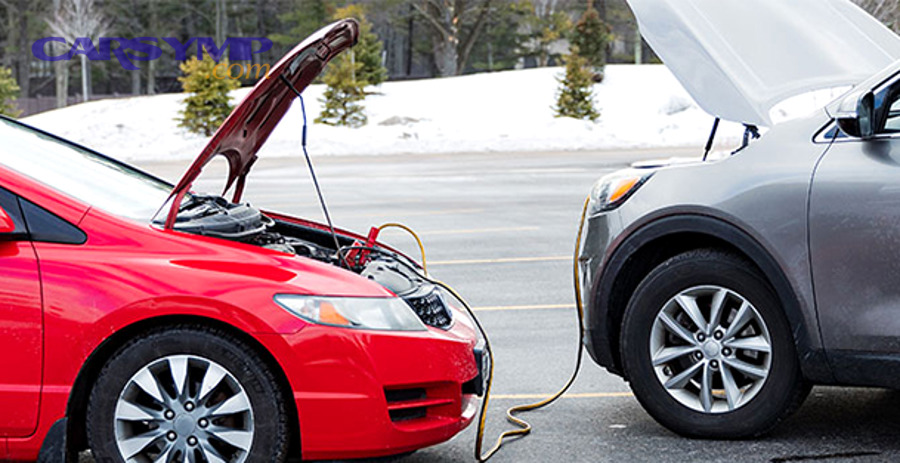
A jump start gives your starter motor the burst of power it needs to spin the engine, but it does not magically refill the battery. Once the engine is running, the alternator becomes the main source of electrical power, feeding the vehicle’s electrical system and pushing current back into the battery.
That’s why this question is really two questions in disguise:
- How long until the battery can restart the engine again? (Restart-ready)
- How long until the battery is fully charged? (Much longer than most people think)
Most drivers only need #1 in the moment, but understanding #2 helps you avoid repeating the same problem tomorrow morning.
Is the battery being “charged” immediately after the engine starts?
Yes—after the engine starts, the battery begins charging immediately, for at least three reasons: the alternator starts producing current, the voltage regulator maintains charging voltage, and the battery naturally accepts charge when its state of charge is low. Then, the key is that “charging immediately” doesn’t mean “charging quickly enough” to fix every situation in a few minutes.
Right after a jump, your battery is often at a low state of charge, so it can accept current relatively well. But the charging speed depends on what the alternator can spare after powering:
- ignition and engine control systems
- fuel pump and sensors
- headlights, blower motor, defroster, heated seats
- infotainment, phone chargers, accessories
If you turn on everything at once, you’re asking the alternator to feed a bigger “house load,” leaving less to refill the battery.
According to a study by Universiti Teknikal Malaysia Melaka (Faculty of Mechanical Engineering) from 2017, higher alternator speed increased charging performance, and the measured battery voltage after running at idle (750 RPM) was lower than at cruise-speed conditions, showing charging effectiveness depends strongly on operating speed.
What’s the difference between ‘restart-ready’ and ‘fully recharged’?
Restart-ready means the battery has enough charge to crank the engine again, while fully recharged means the battery has returned near its optimal state of charge and can support repeated starts and normal loads without gradually falling behind. More specifically, confusing these two goals is why a car can start after a jump, drive a short distance, and still refuse to start later.
A battery can be “restart-ready” with only a partial refill, because the next start may only require a brief, high-current burst. But full recharge is different:
- Lead-acid batteries typically charge in phases: a faster bulk phase followed by a slower topping phase.
- The closer a battery gets to full, the slower charging becomes—especially if the vehicle only runs for short periods.
- A battery that never reaches full charge repeatedly can lose capacity over time (a common pattern for short-trip drivers).
The takeaway: you can do everything “right” after a jump and still need a proper charger later if the battery was deeply discharged or is aging.
According to a study by the University of Warwick (Warwick Manufacturing Group) from 2024, lead-acid charging time and charge acceptance can be highly variable under partial-state-of-charge use, and manufacturer “single-cycle” charge time assumptions may not reflect real operating conditions in vehicles.
How long should you let the car run after a jump start in typical scenarios?
There are 3 main “typical” run-time scenarios after a jump start—quick recovery, moderate recovery, and deep-discharge recovery—based on how depleted the battery was and how confidently you want to avoid a repeat no-start. Then, instead of guessing, you can match your situation to the closest scenario and use simple checks to confirm you’re safe to shut off.
Here’s a practical framework you can apply immediately:
- Scenario A: Quick recovery (battery was only slightly low)
Engine started quickly after connecting cables or a jump pack. You likely need 15–30 minutes of engine-on time, preferably with some driving. - Scenario B: Moderate recovery (battery clearly weak)
It cranked slowly, lights were dim, or it took a few tries. Plan for 30–45 minutes of engine-on time, preferably driving. - Scenario C: Deep-discharge recovery (battery was “very dead”)
No dome light, rapid clicking, jump took a while to “take,” or it died recently after sitting. You may need 45–60 minutes driving and still benefit from a proper battery charge later.
A simple rule that fits most drivers in most conditions: aim for at least 30 minutes after a successful jump start.
If your car started quickly after the jump, is a short run time enough?
Yes—if your car started quickly after the jump, a shorter run time can be enough for at least three reasons: the battery likely wasn’t deeply discharged, the alternator can refill a smaller deficit faster, and the starter demand is brief compared to continuous accessory loads. However, “short run time” still works best when you reduce load and avoid repeated restarts.
If the car fires up immediately, treat it as a warning sign rather than a full fix:
- Keep electrical loads light for a bit (especially high-draw heaters and defrosters).
- Avoid shutting off immediately at the first stop.
- If you must park soon, plan to restart-test once (safely) before leaving the area.
A quick-start scenario often happens after:
- leaving a light on briefly
- not driving the car for a couple weeks
- cold morning + borderline battery that still has some life
If the battery was very dead, how long should you run it to reduce no-start risk?
A very dead battery usually needs a longer recovery window—often 45–60 minutes of driving—because deep discharge reduces available cranking reserve, charging slows as voltage rises, and accessory loads can consume most alternator output at idle. Moreover, a deeply discharged battery can be “revived” enough to start today but still be unreliable tomorrow without a longer recharge.
If your battery was extremely dead, the best jump start guide mindset is:
- Get it started safely.
- Drive to restore a meaningful reserve.
- Plan a proper charge or test later if the battery is older or the incident repeats.
In deep-discharge cases, even a long drive may not fully restore the battery because:
- the alternator is designed primarily to maintain charge, not recover a severely depleted battery quickly
- the battery may have reduced capacity from age, sulfation, or repeated partial charging
What are the signs you’ve run it long enough to safely shut off?
There are 5 practical signs you’ve likely run it long enough: stable idle and normal electrical behavior, no charging-system warning lights, improved cranking speed on a restart test, headlights that don’t dim at idle, and a normal idle voltage reading if you have a meter. Then, when you see these signs together, you reduce the chance of an immediate repeat jump.
A simple “recharge confirmation” checklist:
- Dashboard check: Battery/charging light is off and stays off.
- Electrical stability: Headlights don’t pulse or dim dramatically at idle.
- Restart test (optional): After 30+ minutes, shut off and restart once—only if you’re in a safe place and confident your connections are removed properly.
- Voltage quick check (optional): If you have a multimeter, many healthy systems show around 14V while idling when charging normally.
According to a study by Universiti Teknikal Malaysia Melaka (Faculty of Mechanical Engineering) from 2017, measured charging outcomes improved at higher operating speeds, supporting the practical observation that a vehicle may not restore battery voltage as effectively at idle as it does under higher RPM conditions.
Is idling or driving better after jump-starting a car?
Driving wins for recharging speed, idling is best for immediate stabilization and safety checks, and using a proper charger is optimal for deep recovery—because alternator output, battery acceptance, and electrical load behave differently across these conditions. However, you don’t need to choose one forever—you can combine them: brief idle for safety, then a steady drive for recharge.

This is the key comparison your title promises: Idle vs Drive.
- Idling: safer to monitor, slower to recharge, more sensitive to heavy accessory loads.
- Driving: typically faster to recharge, better alternator performance, but you must be confident the car is stable and safe to operate.
- Battery charger: best for bringing a deeply discharged or older battery back up properly.
Is idling after a jump start good enough?
Yes—idling after a jump start can be good enough for at least three reasons: the alternator still charges at idle, you can stabilize the engine and electrical system, and you can reduce spark risk by avoiding immediate movement while cables or jump pack procedures finish. But, on the other hand, idling alone can be too slow if the battery is weak or accessories are pulling hard.
Idling is especially useful for the first few minutes because it lets you:
- confirm the car runs smoothly
- remove jumper cables in a controlled way
- check for warning lights
- avoid rushing while your attention is split
That said, idling can backfire if you:
- run HVAC on high, rear defroster, heated seats, and headlights all at once
- idle for a long time in very cold weather
- have a charging system that produces limited output at low RPM
Why does driving usually recharge faster than idling?
Driving usually recharges faster because alternator output is speed-dependent, higher engine RPM often allows more usable current, and steady cruising reduces the “low-output, high-load” trap that can happen at idle. Specifically, the alternator is mechanically linked to the engine, so operating speed changes what the charging system can deliver.
In plain language: when you drive, the alternator usually spins faster and has more opportunity to supply both:
- the vehicle’s live electrical demand
- the battery’s refill demand
When you idle—especially in modern cars with big electrical loads—the alternator may spend most of its effort powering current demand, leaving less “extra” to refill the battery quickly.
According to a study by Universiti Teknikal Malaysia Melaka (Faculty of Mechanical Engineering) from 2017, alternator speed increases charging capability, and the study measured different engine speeds (including idle and cruising speeds), confirming that higher speed conditions improve charging performance.
What’s the safest way to ‘drive to recharge’ right after a jump?
Driving to recharge is safest when you follow a 4-step method: stabilize at idle, remove equipment correctly, choose a low-risk route, and manage electrical load—so you recharge efficiently while minimizing Spark and safety hazards to avoid. Then, this approach reduces both battery risk and roadside risk.
Use this practical sequence:
- Stabilize (1–3 minutes)
Let the engine idle, confirm smooth operation, and check the dash. - Disconnect safely
Remove cables in the correct order and keep clamps from touching. Avoid leaning directly over the battery. - Choose a steady route
Prefer a loop of 20–40 minutes with fewer stops (a highway or steady suburban road). - Load management
Keep high loads moderate if possible (blower low/medium, turn off heated seats if not needed).
One mistake to avoid: revving aggressively while stationary. Gentle, steady driving usually does more good than random high RPM spikes.
What factors change how long you should run the car after a jump start?
There are 5 major factors that change the ideal run time after a jump start: battery age/health, depth of discharge, ambient temperature, electrical accessory load, and alternator performance. More importantly, these factors explain why two drivers can both “run it 30 minutes” and get totally different results.
Think of run time as a sliding scale:
- Strong battery + mild discharge + warm weather + low load → shorter time works
- Weak battery + deep discharge + cold weather + high load → longer time needed
Does cold weather mean you need to run it longer?
Yes—cold weather usually means you need to run it longer for at least three reasons: cold reduces battery chemical activity, increases cranking demand, and often increases accessory loads like defrosters and cabin heat. Then, even if the engine starts, the battery may be operating with less effective capacity.
Cold impacts you in two directions:
- Starting requires more: thicker oil and higher engine resistance demand more cranking power.
- Battery gives less: battery chemistry slows, reducing available current.
That’s why cold-weather jump starts often lead to repeat problems unless you extend run time and reduce load.
According to a study by the University of Michigan (Mechanical and Materials Science Engineering) from 2025, cold temperatures slow battery-related chemical processes, which reduces power availability and slows charging behavior in cold conditions.
How do accessories (defroster, heated seats, headlights) affect recharge time?
Driving with low accessory load wins for faster recharge, heavy accessory use is best for safety/visibility but slows recovery, and minimizing peak loads is optimal for reaching restart-ready charge sooner. However, you should never compromise visibility or safety just to “charge faster.”
High-draw accessories matter because alternator output is not infinite. Common high draws include:
- rear defroster
- cabin blower on high
- heated seats/steering wheel
- high-beam headlights and fog lights
- aftermarket amps, inverters, or fridge coolers
Smart approach:
- Keep necessary loads on (lights at night, defrost when needed).
- Reduce optional loads until the battery recovers.
- If you must use heavy loads (snowy night, high fan), extend your drive time.
Can a weak alternator make the timing advice useless?
Yes—a weak alternator can make time-based advice unreliable for at least three reasons: it may not maintain proper charging voltage, it may not supply enough current under load, and it can cause the battery to discharge even while the engine runs. Moreover, when the alternator is failing, “drive longer” can turn into “get stranded farther away.”
Warning signs of alternator trouble after a jump:
- battery/charging warning light on the dash
- headlights dimming noticeably with RPM changes
- electronics flickering or resetting
- burning smell, whining noise, or belt squeal
- battery repeatedly dying despite driving
This is where an Alternator check after a jump start becomes practical rather than optional. If you have a multimeter, a quick check can reveal whether the charging system is behaving normally.
According to a study by Universiti Teknikal Malaysia Melaka (Faculty of Mechanical Engineering) from 2017, charging system performance is strongly dependent on alternator speed and load; when the alternator cannot meet demand, the battery can be pulled down rather than replenished—supporting the real-world pattern of “engine running but battery not recovering.”
What should you do if it starts after a jump but won’t start again later?
If your car starts after a jump but won’t start again later, you should treat it as a battery-health or charging-system problem and follow a 3-part plan: recharge properly, test battery/alternator, and fix the underlying drain—because repeating jump starts without diagnosis increases failure risk. In addition, this is the moment to shift from “get going” to Preventing future dead battery situations.

If the car dies again, one of these is usually true:
- The battery is old or sulfated and can’t hold charge.
- The alternator isn’t charging correctly.
- Something is draining the battery when parked (parasitic draw).
- The original discharge was so deep that alternator-only recovery was insufficient.
Should you try another jump, or use a battery charger instead?
A battery charger is the better choice for recovery, a second jump is best for immediate mobility, and a jump pack is optimal for emergencies—because chargers restore deeper capacity while jumps only supply starting power. Then, if you want reliability tomorrow, prioritize a proper recharge.
Use this comparison to decide fast:
- Need to leave now: jump start (donor car or jump pack), then drive long enough to stabilize.
- Want the best fix: connect a proper charger and let it fully charge.
- Recurring problem: charge + test battery + alternator diagnosis.
A charger helps because a deeply depleted lead-acid battery typically needs hours, not minutes, to return to a high state of charge.
According to a study by the University of Warwick (Warwick Manufacturing Group) from 2024, lead-acid charging time can be long and variable under partial-state-of-charge use, supporting the practical recommendation that alternator-only recovery may not fully restore a deeply discharged battery.
How can you quickly tell if the battery is failing vs just discharged?
There are 6 common indicators the battery is failing rather than merely discharged: advanced age, repeated jump-start dependence, slow crank even after driving, voltage that drops quickly after shutoff, visible leakage/swelling, and heavy terminal corrosion that returns quickly. Especially, repeated failure is the loudest signal—healthy batteries don’t need frequent rescues.
Quick screening questions:
- How old is the battery? Many car batteries decline significantly after several years.
- Did it die after a normal drive? That can point to alternator issues.
- Does it crank slowly even after 30–60 minutes of driving? That suggests weak reserve.
- Do lights dim dramatically when cranking? Classic weak battery symptom.
- Is there corrosion on terminals? Corrosion increases resistance and reduces effective charging.
If you can get a battery test at an auto parts store or garage, it’s often the fastest way to confirm capacity and starting performance.
When is it unsafe to keep running or driving and you should stop?
Yes—there are times it’s unsafe to continue, for at least three reasons: battery damage can vent explosive gas, electrical faults can cause overheating or fire, and charging-system failures can strand you in high-risk traffic locations. Thus, safety beats convenience every time.
Stop and get help if you notice:
- rotten-egg smell (possible battery venting)
- smoke, melting insulation, or hot cables
- sparking that doesn’t stop during connection/disconnection
- battery case swelling, cracking, or leaking
- charging warning light stays on while driving
- severe misfire, stalling, or unstable engine behavior
Also, treat jump-starting as an operation with real Spark and safety hazards to avoid:
- Never let clamps touch each other once connected.
- Connect negative to a safe ground point when appropriate (not directly to the dead battery’s negative post in many common procedures).
- Keep sparks away from the battery area.
- Wear eye protection if possible.
At this point you know the practical run-time guidance and whether to idle or drive. Next are edge cases and deeper checks that help in specific vehicles or repeated-failure situations.
What special cases can change post–jump start run-time advice?
Special cases that can change your post–jump start run-time advice include hybrids/start-stop systems, AGM batteries, parasitic drains, and charging-system verification by voltage—because these conditions alter how the battery accepts charge and how the vehicle manages charging. Next, these micro-details matter most when you’ve done the “normal” advice and the problem still returns.
Do hybrids, EVs, or start-stop systems follow the same ‘idle vs drive’ rule?
Hybrids and start-stop vehicles often follow the same practical principle—higher operating activity usually improves charging opportunity—but the system design can change what “charging” means and when it happens.
Key differences to respect:
- Hybrid systems may use a high-voltage battery and DC-DC conversion to maintain the 12V system. The engine may not run continuously even if the car is “on.”
- Start-stop systems may intentionally manage charging and battery state to support frequent restarts.
- Some vehicles require specific modes or behaviors to ensure the 12V battery is being maintained properly.
Practical takeaway: if you have a hybrid or start-stop car and repeat dead 12V battery events, prioritize a system-specific diagnosis rather than only extending run time.
Does an AGM battery change the recommendation after a jump start?
AGM batteries can still be jump-started and recharged, but they often benefit more from proper charging and correct voltage control, especially after deep discharge.
What changes in practice:
- AGM batteries can be more sensitive to incorrect charging profiles.
- Deep discharge can reduce lifespan faster if not recovered properly.
- A charger that supports AGM mode can restore the battery more completely than alternator-only recovery.
If your vehicle uses AGM (common in many start-stop vehicles), and the battery was very dead, consider a proper AGM-capable charger after you get home.
Can parasitic drain cause repeat jump-starts even if you drive long enough?
Yes—parasitic drain can cause repeat jump-starts even if you drive long enough, for at least three reasons: abnormal current draw continues after shutdown, the battery never recovers to full state of charge, and overnight drain can exceed the battery’s reduced capacity in aging batteries. Moreover, parasitic draw is the classic “I drove it for an hour and it still died” scenario.
Common parasitic drain causes include:
- glove box or trunk light staying on
- aftermarket alarm or remote-start wiring issues
- stuck relays (fans, pumps)
- infotainment modules not going to sleep
- phone chargers or accessories left plugged in
A simple behavioral clue: if the car starts fine after a long drive but is dead the next morning, suspect drain while parked.
According to a study by American Automotive Maintenance University from 2015, parasitic draw rules of thumb highlight that abnormal milliamps-level current over time can drain enough amp-hours to create a no-start condition—supporting the diagnosis path for repeated overnight failures.
What quick voltage numbers suggest the alternator is (or isn’t) charging?
A quick voltage check helps you confirm whether your run-time plan is actually working.
Practical checkpoints many drivers use:
- Engine off, rested battery: often around the low-to-mid 12V range for a healthy battery
- Engine running at idle: typically around the mid-13V to mid-14V range in many healthy charging systems
- Engine running with heavy loads: voltage may dip, but persistent low readings can indicate a problem
If the voltage doesn’t rise meaningfully when the engine runs, the alternator, belt, or regulator may be failing—meaning you can drive for an hour and still end up stranded.
According to a study by Universiti Teknikal Malaysia Melaka (Faculty of Mechanical Engineering) from 2017, battery voltage and charging behavior changed across engine speeds and loads, reinforcing that charging effectiveness can be validated through voltage behavior rather than guessing by time alone.