


If your car won’t start, the fastest correct decision is simple: jump-start (boost) only when the battery is temporarily discharged, and replace the battery when it’s aged, repeatedly fails, or can’t pass a basic test. This guide gives you a quick decision tree so you don’t waste time—or end up stranded again.
To make that decision confidently, you also need clear symptoms and quick tests: what a slow crank really means, what “good voltage but still dead” looks like, and which results point to “recharge” versus “replace today.” Below, you’ll get a practical test-first approach you can do in minutes.
You’ll also learn what to do immediately after a jump, because “it started” is not the same as “it’s fixed.” The post-jump steps (and an alternator check) are where most people either confirm the battery is fine—or find the real problem.
Introduce a new idea: the most reliable way to avoid repeat no-starts is to treat a jump as a temporary boost and a diagnostic clue, then follow the decision tree in the main content.
Should you jump-start (boost) or replace your car battery right now? (Decision Tree)
Yes—you can decide right now whether to jump-start or replace your car battery by checking safety first, then symptoms, then battery age and repeat failures. Next, use that sequence to avoid the two common mistakes: replacing a battery that’s merely discharged—or repeatedly boosting a battery that’s already failing.
Is it unsafe to jump-start this battery (swollen case, leaking, burning smell)?
Yes, it can be unsafe to jump-start a car battery if you see swelling, leakage, or smell something burning—because those signs suggest internal damage and higher risk of arcing or venting. Next, treat these as “stop now” indicators and choose replacement/tow/help instead of boosting.
Here’s the quick safety screen before you even touch cables:
- Swollen/bulging battery case: Heat damage, overcharging, or internal failure can warp the case. Don’t jump it.
- Wet spots, crusty wetness, or active leaking: Acid exposure risk and compromised internals—skip the jump.
- Rotten egg smell (sulfur) or hot plastic/electrical smell: Possible venting/overheating—avoid sparks.
- Cracked terminals, broken posts, or loose internal posts: High chance of arcing or instant failure.
- Battery recently frozen (very cold climates): A frozen battery can crack and leak when charged quickly.
These are exactly the kind of Spark and safety hazards to avoid because a jump-start creates a high-current circuit and can produce visible arcing if something is wrong. A university safety sheet from the University of Oregon Environmental Health and Safety, published in 2025, highlights that portable jump starters and vehicle batteries have associated hazards and should be handled with caution and appropriate safety practices. (safety.uoregon.edu)
Which quick symptoms point to “jump start is enough” vs “replace now”?
There are 2 main symptom groups for a car battery decision: “temporary discharge” symptoms (jump-start is enough) and “battery failure” symptoms (replace now), based on repeatability and how the car behaves after it starts. Then, use the grouping below as your fast filter.
Group A: Jump-start is often enough (temporary discharge likely)
- You left lights/interior light on or a door ajar overnight (clear cause).
- The car cranks slowly once, then improves after a short drive.
- The battery is relatively new and this is the first no-start.
- After a jump, the car restarts later the same day without hesitation.
Group B: Replace now (battery health likely failing)
- You needed multiple jumps in a short period (days/weeks).
- The engine cranks weakly even after driving.
- The car starts after a jump, but struggles again quickly (same day/next morning).
- Accessories reset, lights flicker heavily, or the battery warning appears repeatedly.
- Battery is 3–5+ years old and symptoms are consistent.
A jump is not a cure—it’s a clue. If symptoms keep repeating, treat the battery as suspect and move to testing (covered below).
How does battery age change the decision (under 3 years vs 3–5+ years)?
Jump-starting wins for newer batteries (under ~3 years) when there’s an obvious discharge cause, while replacement is usually best for older batteries (3–5+ years) with repeat no-starts. Next, use age as a probability lever—not a rule carved in stone.
Use this practical age framework:
| Battery Age | If this is the first failure + clear cause | If there are repeat failures / unclear cause |
|---|---|---|
| Under ~3 years | Jump-start + recharge + test soon | Test immediately; replacement only if it fails |
| ~3–5 years | Jump-start is okay once, but test promptly | Replacement becomes likely; confirm with load test |
| 5+ years | Jump-start only to get moving | Replace is usually the smartest decision |
Heat accelerates wear in lead-acid batteries; guidance often cites that higher operating temperatures reduce service life significantly.
Have you needed more than one jump in the last 1–2 weeks?
Yes—if you’ve needed more than one jump in 1–2 weeks, you should strongly lean toward replacing the car battery because repeat failure suggests loss of capacity, not just a one-time discharge. Next, treat repeat boosts as a red flag for reliability.
Why repeat jumps matter (3 concrete reasons):
- Capacity has dropped: The battery can’t store enough energy to crank consistently.
- Cranking amps may be weak: Voltage can look “okay” but the battery can’t deliver starting current.
- Underlying issues show up repeatedly: Even if the battery is fine, repeated discharge can indicate drain or charging problems—still requiring action.
At this point, don’t guess—test. The next section shows the fastest way to confirm the correct choice.
What does “jump-start (boost)” actually do, and what doesn’t it fix?
A jump-start is a temporary boost that supplies starting power from another battery or jump pack, but it does not restore battery health or fix charging/drain problems. Next, understand what the boost is (and isn’t) so you don’t mistake “it started” for “it’s solved.”
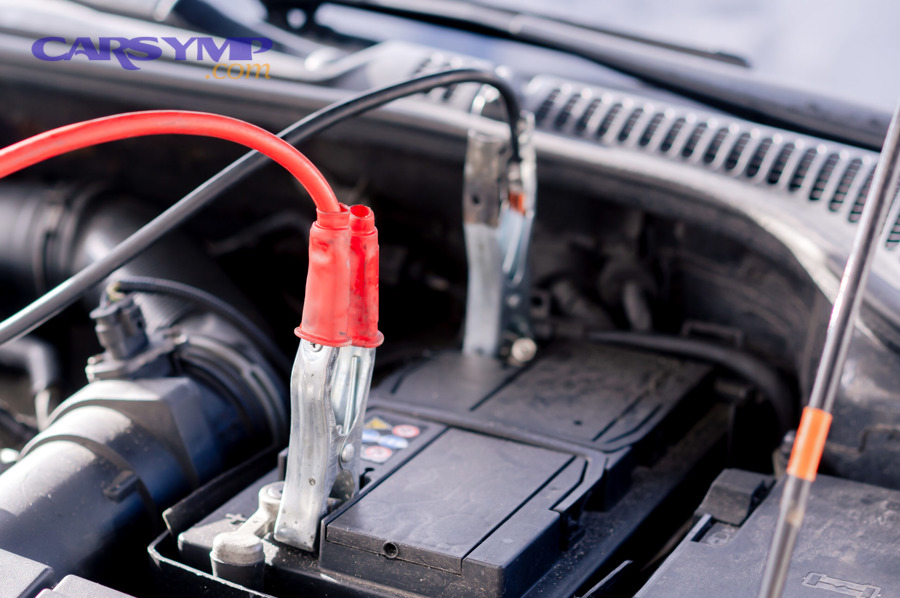
What is a jump start/boost in plain English?
A jump start is a short-term transfer of electrical power that helps your starter motor crank the engine when your battery can’t deliver enough current on its own. Next, think of it as borrowing energy to start the car—nothing more.
A basic jump-start does three things:
- Provides extra current to spin the starter motor.
- Raises system voltage enough for the engine computer and fuel system to run.
- Buys time to diagnose whether the battery was merely discharged or is failing.
But it does not:
- Repair internal plate damage or sulfation.
- Guarantee your alternator is charging correctly.
- Prevent the next no-start if you have drain or a failing battery.
That’s why any good jump start guide always pairs the procedure with a follow-up decision step: recharge/test/replace.
Jump-start vs charging: which is better for confirming battery health?
Charging is better for confirming battery health, while a jump-start is better for getting you moving quickly. Next, use charging (or a proper test) to learn whether the battery can hold energy.
- Jump-start: gets the engine running now, but can hide a weak battery temporarily.
- Charging: restores state of charge slowly and lets you see if the battery holds that charge overnight.
- Load/CCA testing: reveals whether the battery can deliver real cranking current (often the deciding factor).
If you only jump and drive, you might end up with a battery that seems “fine” for an hour and fails again tomorrow—because the root problem wasn’t solved.
What does “battery replacement” solve that a jump start cannot?
Battery replacement solves capacity loss and current-delivery failure, which a jump-start cannot fix because a boost doesn’t rebuild worn internal components. Next, use replacement as the “reliability reset” when the battery is proven weak.
Replacement typically fixes:
- Weak cold cranking performance
- Short reserve capacity
- Internal shorts or plate deterioration
- Repeated no-start cycles linked to battery age/condition
However, replacement does not fix a bad alternator or parasitic drain—so testing still matters.
Which tests confirm the right choice (replace vs recharge) in under 10 minutes?
You can confirm “replace vs recharge” in under 10 minutes with 3 checks: resting battery voltage, a load/CCA test, and a charging-system voltage check. Then, combine the results with battery age and repeat failures for a confident call.
What resting voltage numbers suggest “recharge” vs “replace”?
Resting voltage can suggest “recharge” or “replace,” but it’s not definitive because voltage can look normal even when cranking power is weak. Next, use voltage as a first clue, not the final verdict.
A practical quick read (after the car has been off for a while):
- Around 12.6V: typically near fully charged for a healthy lead-acid battery.
- Around 12.2V: roughly half charged; may still start, but is vulnerable.
- Around 12.0V or lower: deeply discharged; needs charging and investigation.
If you’re checking right after driving, the reading can be misleading due to surface charge. So if voltage looks “okay” but the car still struggles, move to the load test.
Does the battery pass a load/CCA test?
No—if the battery fails a load/CCA test, replacement is the correct decision because the battery can’t deliver the current needed to crank reliably. Next, treat a failed load test as the most decisive “replace now” signal.
Why CCA matters: cold cranking amps describes a battery’s ability to start an engine in cold temperatures and is a key industry rating for starter batteries. (sciencedirect.com)
Where to get the test:
- Many auto parts stores offer quick testing.
- A repair shop can test with professional equipment.
- Some battery chargers include a test function (less definitive than a real load test).
How to interpret outcomes:
- Pass + first failure + clear cause → recharge/monitor.
- Marginal + older battery → replace soon to avoid being stranded.
- Fail → replace.
Is your alternator charging correctly after the jump?
Yes—your alternator is typically charging correctly if system voltage with the engine running is in the normal range, which helps you decide whether the battery was the only issue. Next, do an Alternator check after a jump start before you trust the fix.
A practical guideline: a healthy charging system often shows roughly 14.0–14.5 volts at the battery with the engine running, depending on load and vehicle design.
Red flags after you start the engine:
- Voltage stays close to the resting battery voltage (charging is weak).
- Voltage spikes abnormally high (regulator/overcharge risk).
- Battery warning light remains on.
- Headlights brighten/dim dramatically with RPM changes.
If the alternator is not charging, a brand-new battery will still die—just more slowly.
What results mean you should replace today vs monitor and recharge?
There are 3 main result paths: replace today if the battery fails load/CCA, monitor and recharge if it passes and the cause is clear, and diagnose further if charging or drain issues appear. Next, use this outcome matrix to finalize the decision.
Here’s a simple matrix you can apply:
| Test Outcome | Battery Age | Best Next Step |
|---|---|---|
| Load/CCA FAIL | Any | Replace today |
| Load/CCA PASS + Resting voltage low | Under ~3 years | Recharge fully, then retest and monitor |
| Load/CCA PASS + Repeat no-starts | Any | Diagnose drain/charging; battery may still be weak |
| Charging voltage abnormal | Any | Diagnose alternator/charging system before trusting battery |
Evidence (cold-related performance): According to a study by University of Alaska Fairbanks from the Alaska Center for Energy and Power, in 2021, low temperatures increase battery internal resistance and reduce available power, which can contribute to starting issues. (uaf.edu)
What should you do right after a jump start to avoid getting stranded again?
After a jump start, you should stabilize the electrical system, confirm charging, and verify restart reliability—because the first successful start doesn’t prove the battery will start the car again later. Next, follow a short post-jump checklist that turns a boost into a confirmed fix.

Should you drive immediately after a jump start (or let it idle)?
Yes—you should usually drive (safely) after a jump start because driving typically recharges the battery more effectively than idling, especially if the battery was deeply discharged. Next, keep the plan practical: your goal is to restore charge and then test, not just keep the engine running.
A sensible approach:
- Let it idle briefly to stabilize (30–120 seconds).
- Drive for a reasonable time if possible (avoiding heavy electrical loads).
- If you have a charger, a proper recharge is even better than relying on the alternator alone.
Key caution: if the battery is severely discharged or failing, the alternator can be stressed trying to refill it quickly—another reason testing matters.
What “after-jump” signs mean the battery is still failing?
There are 4 common after-jump signs that mean the battery is still failing: weak restart, rapid voltage drop, flickering/unstable electronics, and repeated no-start within 24–48 hours. Next, treat these as “replace/test now” signals, not inconveniences.
Watch for:
- Hard restart after a short stop (gas station test): if it struggles, the battery likely can’t hold charge.
- Lights flicker at idle or electronics reset (clock/radio).
- Battery warning persists or returns.
- Click-no-crank returns quickly (same day/next morning).
If you see these, skip the “hope it’s fine” phase and move to a load test and charging check.
Is repeated jump-starting worse than replacing (time, risk, reliability)?
Yes—repeated jump-starting is worse than replacing because it increases the risk of being stranded, wastes time, and can mask the real cause while you keep resetting the symptom. Next, compare the two choices using the criteria drivers actually care about.
Jump-starting repeatedly wins only on one metric: immediate cost (often $0). But replacement usually wins on:
- Reliability (fewer surprise no-starts)
- Time (less troubleshooting and waiting)
- Risk (less roadside stress and fewer “won’t restart” moments)
If your battery is old or failing tests, replacement is the smarter “one-and-done” move.
What other problems look like a dead battery (and change the decision)?
A “dead battery” symptom can actually be caused by a weak starter, charging failure, bad connections, or parasitic drain—so you should check these when jumps repeat or tests don’t match symptoms. Next, use quick differentiation so you don’t replace parts blindly.
Dead battery vs bad starter vs bad alternator: how can you tell quickly?
A dead battery usually shows dim lights and weak cranking, a bad starter often shows a single click with strong lights, and a bad alternator often shows the car dying after the jump or charging voltage staying abnormal. Next, use quick signs to decide what to test first.
Fast tells:
- Dead/weak battery: lights dim heavily when cranking; jump helps; fails load test.
- Bad starter: dash lights stay bright, but you hear a click and no crank; jump may not help.
- Bad alternator: starts with a jump but then dies; battery light on; charging voltage off-range.
Which connection problems mimic battery failure (terminals, ground, corrosion)?
There are 3 main connection problems that mimic battery failure: corroded terminals, loose clamps, and poor ground connections, because they restrict current flow even when the battery is good. Next, handle these first because they’re cheap, common, and highly misleading.
What to check:
- Terminal corrosion (blue/white crust): can add resistance and reduce cranking power.
- Loose terminal clamps: the battery can’t deliver starter current reliably.
- Chassis/engine ground strap issues: current can’t return efficiently to the battery.
Quick fix mindset:
- Clean corrosion with appropriate safety gear.
- Tighten connections to spec.
- Retest cranking behavior after cleaning.
What is parasitic drain, and when should you suspect it?
Parasitic drain is ongoing electrical draw while the car is off, and you should suspect it when the battery repeatedly dies overnight or after sitting, even after being fully charged or replaced. Next, use pattern recognition before you pay for deeper diagnosis.
Common patterns:
- Battery fine if driven daily, dead after 1–3 days parked.
- New battery still goes flat.
- A specific accessory correlates (aftermarket electronics, glovebox light, etc.).
If you suspect drain, professional testing (or careful DIY measurement) can confirm whether the draw is normal or excessive.
What special cases can change the jump-start vs replace decision (AGM, start-stop, and hidden drains)?
AGM and start-stop systems can change the decision because they require the correct battery type and sometimes special reset/registration steps, while hidden drains can make even a new battery fail. Next, use these edge cases to avoid “wrong battery, right symptoms” confusion.

How do AGM and start-stop batteries change testing and replacement rules?
There are 2 main battery-type paths—flooded lead-acid and AGM—and start-stop vehicles often require the correct type because the system demands higher cycling capability. Next, match the replacement to the vehicle’s requirements to avoid premature failure.
Practical implications:
- AGM batteries often tolerate deeper cycling better than conventional flooded types in certain applications.
- Start-stop systems place higher demands on the battery; the wrong type can wear quickly.
- Testing should still include load/CCA, but interpret results in context of the battery tech and vehicle requirements.
What is a battery management system (BMS), and do you need a reset after replacement?
A battery management system (BMS) is a vehicle system that monitors charging and battery condition, and some vehicles do need a reset/registration after battery replacement to charge correctly. Next, treat this as a “vehicle-specific” step: check your owner’s manual or trusted repair data.
Why it matters:
- The car may undercharge or overcharge without correct adaptation.
- Some vehicles track battery age/health and adjust charging strategy.
If you replace the battery and problems persist immediately, BMS-related steps become more likely.
Why can voltage look “normal” but the battery still needs replacement (CCA loss, sulfation)?
Voltage can look normal while the battery still needs replacement because cranking ability depends on current delivery (CCA), not just surface voltage, and internal degradation can reduce current dramatically. Next, use this to explain the classic “12.6V but won’t start” mystery.
Common reasons:
- CCA loss: battery can’t supply high current under load (starter demand).
- Sulfation: reduces effective plate area and performance (often after deep discharge cycles).
- High internal resistance: worsens in cold and with age; weak performance appears first during starting.
That’s why load testing is the tie-breaker when voltage and symptoms don’t align. (sciencedirect.com)
If the battery is new but keeps dying, is parasitic draw the most likely cause?
Yes—if the battery is new and the alternator tests normal, parasitic draw becomes one of the most likely causes because something is consuming power while the car is off. Next, treat “new battery, same problem” as a strong signal to measure off-key draw and inspect common culprits.
High-probability culprits include:
- Aftermarket alarms, remote starters, dash cams
- Stuck relays
- Glovebox/trunk lights staying on
- Infotainment modules not going to sleep
If you’re stuck in this loop, the fastest path is: confirm charging voltage, confirm battery load test, then measure parasitic draw with a proper process.
Evidence (if any)
According to a study by University of Alaska Fairbanks from the Alaska Center for Energy and Power, in 2021, low temperatures increase battery internal resistance and reduce available power, which can contribute to no-start conditions. (uaf.edu)

According to a safety sheet by the University of Oregon from Environmental Health and Safety, published in 2025, portable jump starters and vehicle batteries carry hazards that require careful handling and safety practices. (safety.uoregon.edu)