


A dead (flat) car battery is preventable most of the time if you control three things: battery health, charging health, and battery drain. This guide gives you a future-proof checklist you can repeat every week and every season so you stop getting stranded.
Next, you’ll learn why “my battery keeps dying” is usually not random bad luck—it’s a pattern you can spot by matching symptoms (overnight drain, slow crank, short-trip driving) to the most likely cause and fix.
Then, you’ll get a simple plan for the two hardest real-life situations: cars that sit and cars that only do short trips. Those situations quietly keep the battery undercharged until one cold morning it finally won’t start.
Introduce a new idea: the best prevention is not one “big repair”—it’s a chain of small actions that lock together, from quick checks to testing thresholds, so let’s start with what “dead/flat” actually means and why it repeats.
What does “dead (flat) car battery” mean, and why does it keep happening?
A “dead (flat) car battery” means the battery voltage and usable capacity have dropped too low to crank the engine reliably, usually because it wasn’t recharged enough, it’s being drained, or it’s worn out.
More specifically, the reason it “keeps happening” becomes obvious when you separate one-time discharge from ongoing weakness, because they lead to different fixes.
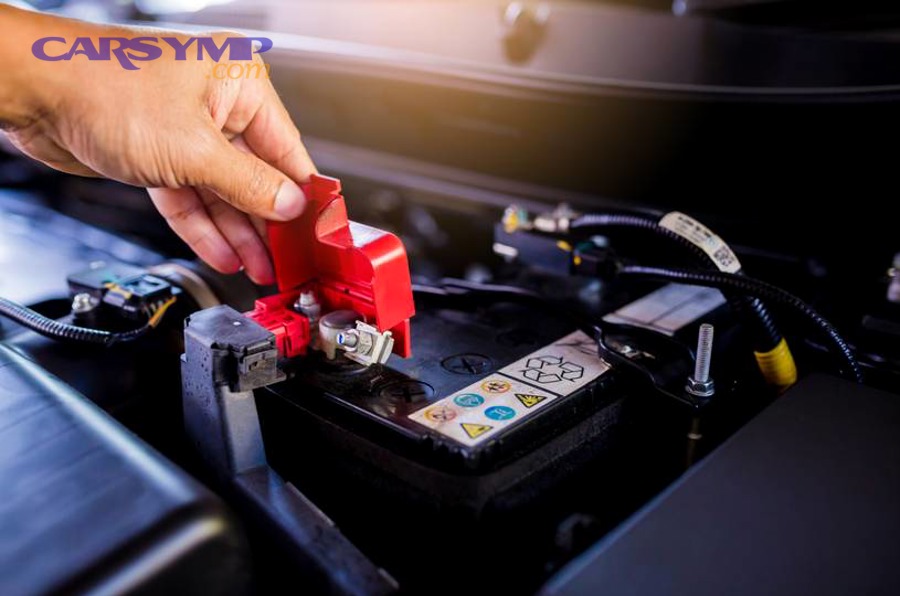
Is a dead battery always a bad battery?
No, a dead (flat) car battery is not always a bad battery because (1) a healthy battery can be drained by a load left on, (2) a good battery can be undercharged by repeated short trips, and (3) a good battery can be “starved” by a charging-system problem.
However, a battery that goes flat repeatedly is often becoming a bad battery because repeated deep discharges accelerate sulfation and reduce capacity.
To turn that into a practical rule, treat the first dead-battery event as a diagnostic clue, not a replacement decision. If the battery returns to normal after a proper recharge and the car holds charge for days, it may be fine. If it goes flat again quickly, the system (drain/charge/connection) is the problem—not your luck.
Use this fast “pattern check” right away:
- Overnight dead after normal driving yesterday → think parasitic drain, light/accessory left on, or poor connection.
- Dead after sitting a week → think normal standby draw + aging battery or infrequent-use undercharge.
- Slow crank for weeks then dead → think aging battery, corrosion/loose terminals, or weak alternator output.
What are the most common reasons a car battery goes flat overnight or in a few days?
There are 6 main types of causes of a dead (flat) car battery: (1) accidental loads, (2) parasitic drain, (3) undercharging, (4) connection losses, (5) aging battery capacity loss, and (6) temperature stress, based on where the energy is going and whether it’s replaced.
Then, once you know the type, you can choose the correct fix instead of guessing.
1) Accidental loads (the obvious stuff)
Interior lights, headlights, trunk light, glovebox light, hazards, accessory mode, a door not fully latched—these can drain a battery fast.
2) Parasitic drain (the sneaky stuff)
Modern cars draw a small amount of power at rest to keep memory and security alive. The issue is when a module stays awake or an accessory pulls too much current. Sources often describe “normal” parasitic draw as small and “problem” draw as significantly higher. (optimabatteries.com)
3) Undercharging (short trips and low RPM life)
Short drives can leave the battery slightly undercharged every day until it eventually can’t crank. (batteriesplus.com)
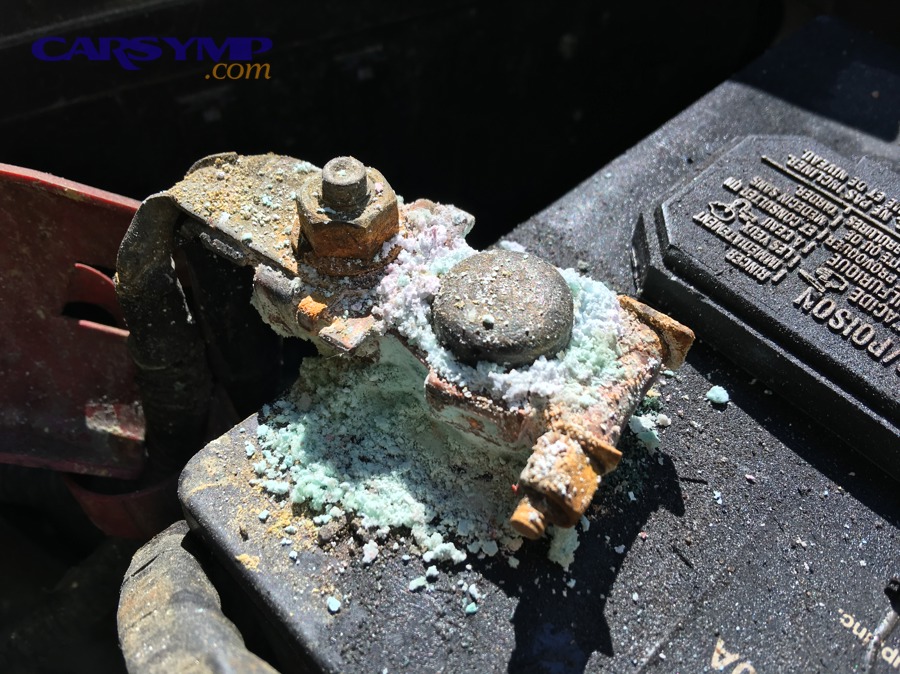
4) Connection losses (corrosion and looseness)
Corroded or loose terminals can block charging current and reduce starting current even when the battery itself is okay.
5) Aging battery (capacity fade)
A battery can show “12+ volts” yet have too little usable capacity under load. That’s why load testing matters.
6) Temperature stress (especially cold cranking)
Cold increases internal resistance and reduces effective capacity, making a marginal battery fail suddenly. A commonly cited benchmark is that capacity can drop dramatically near freezing or below. (batteryuniversity.com)
What’s the difference between a battery problem and an alternator/charging problem?
Battery wins in “holds charge when fully charged”, alternator/charging is best identified by “voltage while running”, and parasitic drain is optimal to suspect when the car dies only while parked, because each scenario creates a distinct timeline and symptom pattern.
Meanwhile, the cleanest way to separate them is to test when the car is off and when it’s on.
- Battery problem: starts fine after charging, but capacity fades quickly; slow crank appears even after long drives; battery age is high; load test fails.
- Charging problem (alternator/belt/wiring): battery keeps going flat even after long drives; lights dim with RPM changes; charging voltage stays low or unstable.
- Drain problem: battery is fine after charging, but dies mostly while parked; repeat pattern overnight/after 2–3 days.
A simple voltage check can guide you, but don’t over-trust it: voltage is a snapshot, while capacity is the real “fuel tank” for starting.
What is the future-proof checklist to prevent a dead car battery again?
The future-proof checklist is a repeatable routine that prevents a dead (flat) car battery by (1) reducing drain, (2) improving charging and connections, and (3) testing battery health early, so you fix small problems before they strand you.
To better understand why it works, treat prevention like a loop: observe → correct → verify → repeat.

Should you change daily driving habits to prevent battery drain?
Yes, changing daily habits prevents future dead battery situations because (1) it stops accidental drains, (2) it reduces repeated undercharging from short drives, and (3) it lowers electrical load stress on a battery that’s already aging.
Next, you’ll see that “tiny” habits are powerful because they happen every day.
- Exit routine: headlights off (if not automatic), cabin lights off, doors fully shut, trunk closed, nothing plugged into always-on ports.
- Accessory discipline: avoid long “ACC mode” sessions with the engine off (music, charging devices, sitting in the car).
- Short-trip strategy: if your driving is mostly short trips, add one longer drive weekly or use a maintainer (more on this later). BatteriesPlus notes repeated short drives can keep a battery from fully recharging over time. (batteriesplus.com)
What quick checks can you do in 5 minutes to prevent a dead battery?
There are 7 quick checks you can do in 5 minutes: (1) terminal tightness, (2) corrosion scan, (3) cable/ground visual check, (4) battery hold-down check, (5) quick voltage glance, (6) warning-light review, and (7) “slow crank” listen test, based on most common failure points.
Then, these checks become your weekly “seatbelt”—fast enough to actually do.
- Terminal tightness & corrosion scan: Wiggle the clamp gently (no tools yet). If it moves, it’s too loose. Look for white/blue-green crust.
- Cable and ground strap check: Follow the negative cable to body/engine ground. If you see fraying, looseness, or heavy corrosion, you’ve found a common culprit.
- Battery hold-down: A battery that moves can damage internal plates and accelerate failure.
- Voltage glance (optional but powerful): A simple plug-in voltmeter (or a multimeter) gives quick trend awareness. Don’t chase one reading—watch the pattern.
- Warning-light review: A battery or charging light while driving is never “nothing.” It’s the system telling you it’s not charging properly.
- Slow crank listen test: If cranking speed is slower than usual, the battery may be undercharged or weakened.
- After-market check: Dash cams, alarms, remote starters, audio amps—verify they are wired correctly and not staying on.
Which maintenance steps reduce repeat battery failures the most?
There are 5 maintenance steps that reduce repeat dead-battery events the most: (1) clean and protect terminals, (2) secure grounds, (3) verify charging voltage behavior, (4) keep the battery fully charged periodically, and (5) replace batteries before they become unpredictable, based on failure frequency and impact.
Moreover, these steps work because they address the top three root causes: resistance, undercharge, and capacity loss.
- Clean terminals: remove corrosion and restore metal-to-metal contact.
- Protect terminals: use terminal protectant or dielectric grease appropriately on cleaned connections (follow product guidance).
- Secure and inspect grounds: a weak ground mimics a weak battery.
- Check charging behavior: if you can measure voltage at the battery with the engine running, do it periodically.
- Recharge properly: batteries hate living partially charged; a proper charger/maintainer can prevent slow decline.
How do you prevent a dead battery when the car sits or you drive short trips?
You prevent a dead battery in storage or short-trip use by choosing one of three strategies—maintain charge, reduce draw, or both—then verifying the battery stays above a healthy state of charge over time.
Especially with infrequent use, prevention succeeds when you stop the battery from slowly drifting downward week after week.

Do you need a battery maintainer if you don’t drive often?
Yes, you often need a battery maintainer if you don’t drive often because (1) normal standby drain continues 24/7, (2) short drives may not restore full charge, and (3) batteries age faster when they spend long periods undercharged.
Then, the maintainer becomes your “automatic routine” when your driving routine can’t do the job.
- The car sits more than 1–2 weeks regularly.
- You mostly drive short trips (errands, school runs).
- You’ve had two dead-battery incidents in the last year.
- You live in cold winters and the car sits outside.
BatteriesPlus notes that repeated short trips can keep the battery from fully recharging over time. (batteriesplus.com)
What are the best options for storage: maintainer, trickle charger, or disconnecting the battery?
A maintainer wins in safety and long-term charge management, a trickle charger is best only when it is smart/regulated, and disconnecting is optimal for very long storage when you can tolerate memory resets, because each option trades convenience against control.
However, the wrong choice can cause either continued drain or overcharging, so match the tool to the situation.
- Battery maintainer (smart float/maintenance mode): best for weeks-to-months of sitting and seasonal vehicles.
- Trickle charger (old-school constant low current): best only when it’s actually a smart charger; otherwise it can overcharge.
- Disconnect negative terminal / battery cutoff switch: best for long-term storage and drain troubleshooting, with tradeoffs like memory resets.
What are the most common hidden drains, and how do you stop them?
There are 6 common hidden drains: (1) dash cams, (2) aftermarket alarms/remote starts, (3) phone chargers left plugged in, (4) keyless entry systems constantly “listening,” (5) infotainment modules not sleeping, and (6) trunk/glovebox lights misbehaving, based on what can draw power while parked.
Next, you’ll stop them by forcing a clear “off” state.
- Unplug accessories first to confirm whether the drain disappears.
- Change dash cam settings so parking mode is voltage-limited if used.
- Check lights at night for cabin/trunk glow.
- Move keys away if proximity wakes the vehicle.
- If drain persists, perform a proper parasitic draw test.
How can you tell when prevention isn’t enough and the battery should be tested or replaced?
You can tell prevention isn’t enough when repeated dead-battery events continue after you fix drains and charging basics, or when testing shows low capacity under load, meaning the battery can no longer reliably do its job.
In addition, a clear threshold approach stops you from replacing too early or too late.
Should you replace a battery after multiple jump starts?
Yes, you should often replace a battery after multiple jump starts because (1) repeated deep discharges reduce usable capacity, (2) the battery becomes unreliable even if it “recovers,” and (3) future no-start risk rises sharply in cold weather.
However, the smarter approach is the Jump start vs battery replacement decision: you replace when the battery fails a capacity/health test or repeats failure despite a verified healthy charging system.
- Jump-start only if it’s the first event and you can fully recharge and test afterward.
- Replace soon if it’s the second event in a short time window, especially if the battery is older or slow-cranking.
- Replace now if the battery cannot hold charge after a full recharge, fails a load/conductance test, or shows physical damage.
What battery health tests actually predict another dead battery?
There are 5 tests that predict another dead (flat) car battery: (1) resting voltage trend, (2) cranking voltage drop, (3) charging voltage check, (4) load test, and (5) conductance test, based on how the battery behaves at rest, under stress, and while charging.
Then, you can choose the simplest test that still answers your question.
- Resting voltage trend: useful as a trend, not a verdict.
- Cranking voltage drop: a collapse during cranking suggests weakness or high resistance.
- Charging voltage check: low or unstable running voltage suggests charging-system issues.
- Load test: simulates real demand and is highly predictive for starting reliability.
- Conductance test: fast internal-condition indicator used by many service centers.
If you only do one thing: get a real load or conductance test after a full recharge. Battery University explains capacity is a key health indicator and that measuring it directly is more reliable than guessing from voltage alone.
Which is better for prevention: AGM or flooded lead-acid batteries?
AGM wins in vibration resistance and partial-state-of-charge performance, flooded lead-acid is best for lower upfront cost and easier availability, and upgrading is optimal for start-stop or high accessory loads, because prevention depends on how your vehicle is used.
Meanwhile, the battery type only helps if your charging system and habits support it.
- AGM advantages: better vibration resistance and often better partial-state-of-charge tolerance.
- Flooded advantages: lower cost and broad availability.
Evidence supports that performance differs under partial state-of-charge cycling: a study comparing AGM and flooded lead-acid under partial state-of-charge cycling reported markedly better cycling performance for AGM in that test context. (ascelibrary.org)
What should you do immediately after a dead battery to prevent the next one?
Immediately after a dead battery, you should recharge properly, inspect connections, and verify why it went dead, because a jump start alone only gets you moving—it does not restore the battery’s health or fix the cause.
Next, you’ll follow a post-incident routine that turns a breakdown into a prevention win.

Is it enough to let the car idle to “recharge” the battery?
No, idling alone is usually not enough to recharge a dead (flat) car battery because (1) alternator output at idle may be limited, (2) modern electrical loads consume part of the charging current, and (3) a deeply discharged battery often needs a controlled recharge to recover safely.
Then, the real question becomes: How long to idle after jump starting? The safest answer is: idle only long enough to stabilize the car, then drive or charge properly.
Use a more reliable approach:
- After the jump, let the engine run a few minutes to stabilize.
- Drive at road speeds if possible (higher alternator output).
- If you want the best outcome, use a smart charger to fully recharge at home.
AAA emphasizes correct jump-start procedure and cautions about battery condition (like avoiding jump-starting a frozen battery).
What steps should you follow in the first 24 hours after a jump start?
There are 7 steps to follow in the first 24 hours after a jump start: (1) perform the jump safely, (2) drive or charge to restore energy, (3) inspect terminals, (4) test the battery, (5) verify charging behavior, (6) review recent drain events, and (7) set a prevention plan, based on restoring capacity and finding the root cause.
Below is a compact jump start guide that also prevents the repeat event.
Step 1: Jump-start safely (order matters)
Follow a safe connection sequence and use a solid grounding point when instructed.
Step 2: Restore charge properly
A jump start is not a recharge. Plan for a longer drive or use a smart charger.
Step 3: Inspect terminals and clamps
If you see corrosion or movement, fix it now. A loose clamp can create “phantom dead battery” symptoms.
Step 4: Decide: recharge-and-test vs replace
This is the Jump start vs battery replacement decision:
- Recharge + test if it’s the first event and the battery is not old or damaged.
- Replace if it’s repeated, fails testing, or shows physical issues.
Step 5: Verify charging behavior
If the charging system is weak, the battery will keep dying no matter what you replace.
Step 6: Look for the drain trigger
Ask: lights left on? accessory mode? dash cam parking mode? door not shut?
Step 7: Lock in prevention
If the car sits, add a maintainer. If the car does short trips, schedule one weekly longer drive or maintenance charging.
Hybrid and EV jump start precautions
If you drive a hybrid, most jump-start procedures target the 12V system, and the under-hood jump terminal and grounding point may be specific to the vehicle. Lexus explicitly advises following model-specific procedures and references jump-start guidance for hybrid vehicles.
For hybrids and EVs, avoid touching high-voltage components and follow the owner’s manual exactly; the 12V system is still critical for vehicle “wake-up” functions.
Contextual Border
Now that you have a complete checklist to prevent a dead/flat battery in everyday driving and storage scenarios, the next section covers deeper, less-common situations—like parasitic draw measurement, smart charging behavior, and edge cases that can surprise even careful drivers.
What rare and vehicle-specific issues can still cause a dead (flat) battery even after you follow the checklist?
There are 4 rare, vehicle-specific causes that can still create dead-battery symptoms: (1) abnormal parasitic draw from a module that won’t sleep, (2) smart alternator/start-stop charging behavior confusing basic tests, (3) battery registration/coding requirements after replacement, and (4) overcharging events that damage a battery over time, based on electronics complexity and charging control.
More importantly, these are the cases where “I did everything” is true—and you need a deeper diagnostic.
How do you measure parasitic draw properly, and what counts as “too much”?
Parasitic draw measurement is a current test (amps/milliamps) that checks how much power the car consumes while fully asleep, and “too much” is defined as a draw significantly above typical resting levels after modules time out.
Specifically, the key is to measure after the car enters sleep mode; otherwise you measure wake-up current and get false alarms.
- Fully charge the battery (so results aren’t distorted).
- Turn off the car, remove keys, close doors (use latch tricks if needed).
- Wait for modules to sleep (often 15–45 minutes).
- Measure current draw correctly (with proper tools and safety).
- If draw is high, isolate by pulling fuses one at a time and watching the draw drop.
Training/technical materials and battery experts commonly describe “normal” parasitic current draw in the tens of milliamps range and note higher levels as a diagnostic concern. (aamcouniversity.com)
Can smart alternators, start-stop systems, or software updates affect battery charging?
Yes, smart alternators, start-stop systems, and software updates can affect charging because (1) charging voltage may vary intentionally, (2) the vehicle may manage state-of-charge dynamically for efficiency, and (3) battery type and coding can change charging targets.
Then, a “normal” system can look abnormal if you expect constant old-school voltage behavior.
- Use the right battery type specified for the vehicle.
- Confirm the vehicle’s charging strategy before concluding the alternator is weak.
- If you see repeated undercharging symptoms, test with tools designed for modern charging systems.
Do you need battery registration/coding after replacement on some cars?
Yes, some cars need battery registration/coding after replacement because (1) the car’s charging strategy is calibrated to battery type/capacity, (2) it tracks battery age to manage charging, and (3) incorrect registration can lead to chronic undercharge or overcharge behavior.
However, this is vehicle-dependent, so you should verify it for your make/model before assuming it applies.
A well-known example is certain European vehicles that manage charging aggressively; forums and service resources often discuss registration steps and why they matter. (g30.bimmerpost.com)
What’s the opposite of “battery drain”—and why can overcharging also ruin a battery?
Overcharging is the opposite risk to battery drain, and it can ruin a battery because (1) excessive voltage accelerates water loss and plate damage (in flooded designs), (2) it increases heat and internal stress, and (3) it shortens lifespan even if the car seems to start fine.
In short, “always charging” is not safer than “never charging”—the goal is correct charging.
Researchers studying optimal charging for lead-acid systems note that charging strategy affects charging efficiency and outcomes, reinforcing why regulated charging matters rather than uncontrolled charging. (sites.udmercy.edu)