


A bad coolant temperature sensor can make your engine act like it’s freezing cold, boiling hot, or switching between both—so the fastest way to identify it is to connect the symptoms you feel (hard starts, rough idle, poor MPG, fan chaos, Check Engine Light) to what the computer thinks the coolant temperature is.
Next, you’ll learn what the coolant temperature sensor (often called the ECT sensor) actually controls so the warning signs make sense instead of feeling random—because the same sensor influences fueling, idle strategy, and when the radiator fans are commanded.
Then, you’ll get a practical confirmation path you can use before spending money: quick scan-tool plausibility checks, simple visual inspection, and a few basic electrical sanity tests to separate a bad sensor from a wiring or cooling-system problem.
Introduce a new idea: once you can spot the pattern and confirm the fault, the rest of the article helps you avoid the most common look-alikes (thermostat, low coolant, fan relay) so you fix the right part the first time.
What is a coolant temperature (ECT) sensor and what does it control?
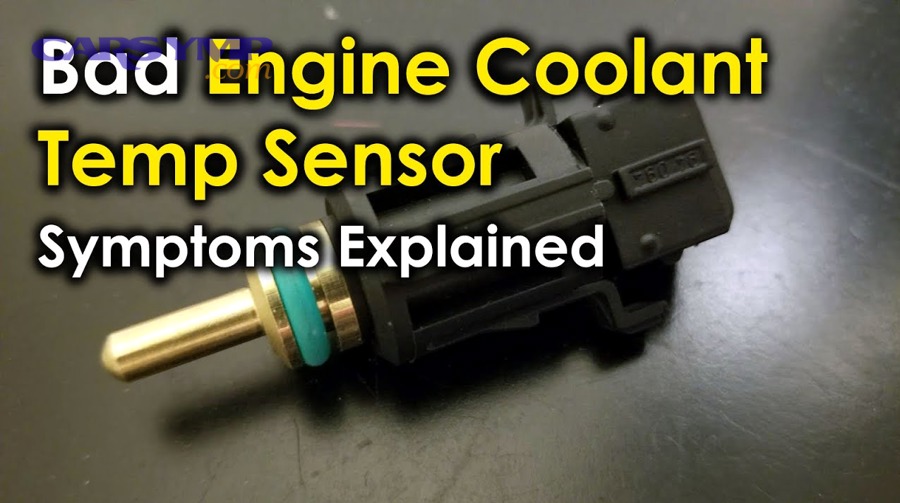
A coolant temperature (ECT) sensor is a temperature-sensing thermistor mounted in the engine’s coolant stream that converts heat into an electrical signal, and its standout feature is that it directly influences fueling, fan control, and warm-up strategy through the ECU.
To better understand why symptoms show up the way they do, it helps to follow the ECT signal from the coolant passage to the computer decisions that change how the engine runs.
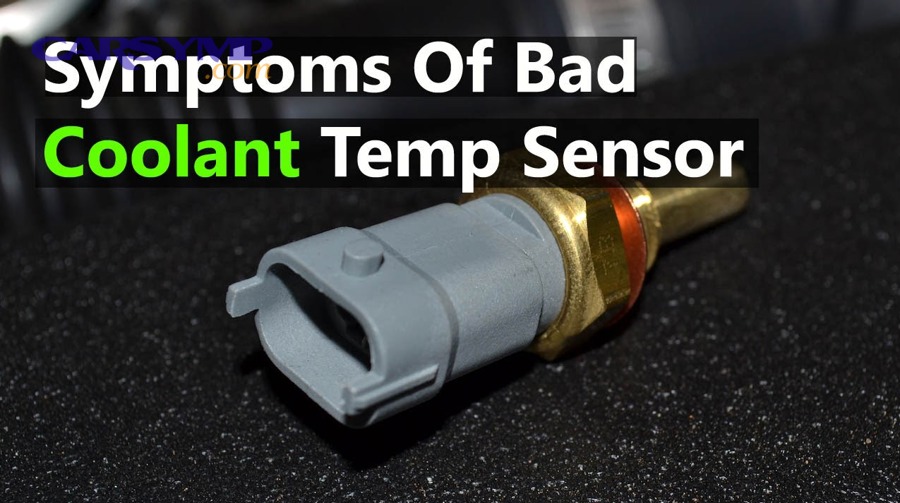
At a basic level, your engine computer has two jobs during warm-up: keep the engine stable (no stalling, no misfires) and reduce emissions as quickly as possible. The ECT sensor is the computer’s “thermometer,” so when its signal is wrong, the computer makes the wrong choices—often consistently if the reading is stuck, or chaotically if the signal drops out intermittently.
Here’s what the ECT sensor typically influences in modern vehicles:
- Fuel mixture during cold start and warm-up: The ECU enriches the mixture when it believes the engine is cold to prevent hesitation and misfires.
- Idle speed and idle stability: Many vehicles use temperature-based idle targets; colder targets are usually higher.
- Radiator fan strategy: The ECU uses coolant temperature to command low/high fan speeds (sometimes through relays or a fan control module).
- Closed-loop entry and emissions strategy: Temperature affects when the ECU trusts oxygen sensor feedback and how aggressively it heats catalysts.
- Dashboard temperature behavior (in some cars): Depending on design, the gauge may use the same sensor signal or a separate sender.
Does the ECT sensor directly cause the temperature gauge to read wrong?
Yes—an ECT sensor can directly cause a wrong temperature gauge reading because (1) many vehicles route gauge data from the ECU using the ECT signal, (2) a biased sensor can make the ECU “believe” a false temperature and display it, and (3) intermittent wiring faults can create sudden gauge jumps even if the coolant is steady.
Next, the key is separating a display issue from an engine-control issue so you don’t chase the wrong problem.
In practice, you’ll see three common gauge patterns with ECT-related faults:
- Stuck cold: Gauge barely rises even after driving, especially noticeable in cooler weather.
- Stuck hot / sudden hot spike: Gauge climbs quickly or jumps into the hot zone without matching real heat.
- Erratic movement: Gauge bounces or drops suddenly, often when hitting bumps (classic for connector/wiring intermittence).
Important nuance: some vehicles use a separate sender purely for the gauge, while the ECU uses a different ECT sensor. In those cases, the gauge may look “normal” even though the ECU is seeing bad temperature data—so symptoms like poor fuel economy or fan problems can still be ECT-related even if the gauge seems fine.
What does a “bad” ECT reading look like in real driving conditions?
A “bad” ECT reading is a temperature signal that doesn’t match reality—typically stuck low, stuck high, or changing in sudden jumps—and its standout feature is that it breaks the smooth, predictable warm-up curve you should see after a cold start.
Then, once you know what “normal” looks like, you can recognize the “wrong” patterns quickly.
A healthy system usually shows:
- Cold start: ECT near ambient temperature (roughly close to outside air after an overnight soak).
- Warm-up: steady climb as the engine heats, often leveling when the thermostat opens.
- Stabilization: ECT sits in a stable operating range with small changes under load or with fans cycling.
A failing ECT pattern often looks like:
- Too cold all the time: reading stays unrealistically low; warm-up logic never ends.
- Too hot too early: reading rises too quickly or starts high when the engine is cold.
- Dropouts / spikes: reading jumps 20–60°F (or 10–30°C) instantly—something real coolant temperature can’t do.
What are the most common bad coolant temp sensor symptoms drivers notice?
There are 7 main bad coolant temp sensor symptoms—Check Engine Light, overheating warning behavior, cooling fans running wrong, hard starting, rough idle/stalling, poor fuel economy, and black smoke or fuel smell—based on whether the ECU is over-fueling, mismanaging fans, or misreading warm-up state.
To illustrate how these symptoms connect to one signal, you’ll get better results if you treat them as “clusters” rather than one-off weird events.
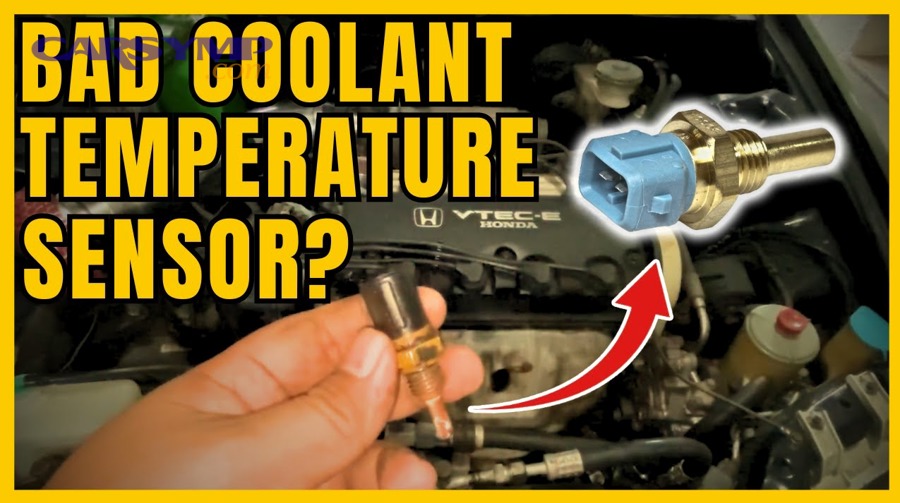
Which dashboard warnings and codes usually show up with ECT problems?
There are 4 common dashboard/OBD signals tied to ECT issues—Check Engine Light, temperature warning messages, implausible temperature gauge behavior, and stored temperature-circuit fault codes—based on whether the ECU detects a range/performance problem or a circuit high/low input.
Next, use the light/code as a direction, not a conclusion.
Common driver-facing clues include:
- Check Engine Light (MIL): often the first sign, especially if the failure is electrical (open/short).
- Temperature warning message or icon: may appear if the ECU believes overheating is present or if it enters a protective strategy.
- Gauge anomalies: stuck cold or erratic gauge (depending on design).
- Stored DTCs: many vehicles use a family of coolant temp circuit and plausibility codes (often in the P011x range).
Can a bad ECT sensor cause overheating or fans that run constantly?
Yes—a bad ECT sensor can cause overheating or fans that run constantly because (1) a false “hot” reading may command fans full-time, (2) a false “cold” reading can delay fan activation or reduce cooling response, and (3) intermittent signals can make fan control unpredictable, especially at idle.
However, the most useful next step is to note when the symptom happens—idle, highway, right after start, or only with A/C—because that timing points to the real cause.
Typical scenarios:
- Fans run constantly (even cold): common fail-safe behavior when the ECU sees a temperature circuit fault or implausible reading.
- Overheats mainly at idle: can happen if fans don’t command correctly, but it can also be a relay, fan motor, or airflow issue.
- Overheats on the highway: less likely to be ECT-only; often points to thermostat, coolant level, radiator restriction, or water pump.
Can a bad ECT sensor cause hard starting, rough idle, or stalling?
Yes—a bad ECT sensor can cause hard starting, rough idle, or stalling because (1) the ECU uses coolant temperature to decide cold-start enrichment, (2) idle targets and spark strategies change with temperature, and (3) intermittent signals can abruptly shift fueling, which destabilizes idle.
Next, focus on the “cold start vs hot restart” difference—because ECT failures often show their worst behavior when the engine is cold.
What drivers often report:
- Hard start when cold: engine cranks longer or starts and immediately runs rough.
- Rough idle that improves after a few minutes: warm-up strategy is wrong early, then becomes “good enough” once the engine is truly warm.
- Occasional stall at stoplights: especially if the ECT signal drops out and the ECU briefly enriches or leans incorrectly.
Can a bad ECT sensor cause poor fuel economy or black smoke?
Yes—a bad ECT sensor can cause poor fuel economy or black smoke because (1) a “stuck cold” reading keeps the engine in enrichment longer than needed, (2) excess fuel can reduce combustion efficiency and increase soot, and (3) the ECU may delay optimal closed-loop fueling corrections if it believes the engine isn’t warm.
More specifically, this is where the Effects on fuel economy and starting become obvious: the same “too cold” signal that makes cold starts smoother also makes the ECU burn extra fuel when it doesn’t need to.
A quick symptom checkpoint:
- MPG drops without obvious leaks: especially noticeable in city driving and short trips.
- Fuel smell or dark tailpipe soot: not guaranteed, but possible if enrichment is significant.
- Spark plug fouling tendencies: in severe cases with extended rich running.
Before moving on, it helps to connect symptoms to signal direction. The table below shows how common symptoms map to “too cold,” “too hot,” or “intermittent” ECT behavior.
| Symptom cluster | ECT reads too cold | ECT reads too hot | ECT intermittent/dropout |
|---|---|---|---|
| Cold start behavior | Long crank, rich, rough then improves | May start “leaner” than ideal, stumble | Unpredictable starts |
| Fuel economy | Often worse | Can vary | Often worse due to instability |
| Fans | May come on late or behave oddly | Often run early/constantly | Random cycling |
| Gauge (if shared) | Stays low | Reads high/spikes | Jumps around |
Evidence (symptom impact context): According to a study by Utah State University’s Utah Water Research Laboratory (with testing at Weber State University’s NCAST), in May 2017, hot-start emissions averaged about 5–10% of typical cold-start emissions, reinforcing how strongly temperature state changes engine control outcomes during the first minutes after start-up. (apps.weber.edu)
Why do these symptoms happen when the ECT sensor goes bad?
These symptoms happen because the ECT sensor’s signal is the ECU’s primary input for warm-up decisions, and its standout feature is that a single wrong temperature value can simultaneously distort fueling, idle control, fan commands, and emissions strategy.
Next, you’ll get the cause-and-effect chain in plain terms so you can predict what a “too cold” or “too hot” reading will do.
The ECU generally asks: Is the engine cold, warming, or at operating temperature? The ECT sensor answers that question. If the answer is wrong, these processes go wrong:
- Fueling: cold engines need enrichment; warm engines don’t.
- Combustion stability: cold conditions increase misfire risk, so strategies change.
- Catalyst and emissions: systems warm up and switch modes based on temperature.
- Cooling control: fans and sometimes electric pumps respond to temperature thresholds.
What happens when the sensor reads “too cold” all the time?
A “too cold” ECT reading wins in causing rich-running symptoms, while normal operation is best for stable closed-loop fueling, because the ECU keeps acting like the engine is still warming up even when it isn’t.
Then, once you know this pattern, you can spot it from the driver seat without tools.
Compared with normal:
- Fuel mixture stays richer longer: increases fuel use and can cause a fuel smell.
- Idle may stay higher: engine acts like it’s still in a cold-start routine.
- Closed-loop timing can shift: depending on vehicle logic, the ECU may delay or modify normal corrections.
Evidence (fuel-use relationship): According to a study published in 2023 in Energies examining thermal state during start-up, specific fuel consumption decreased by about 10% as coolant temperature rose from 25°C to 60°C during cold start conditions, highlighting why false “cold” readings can translate into real fuel penalties. (mdpi.com)
What happens when the sensor reads “too hot” all the time?
A “too hot” ECT reading wins in triggering fan-heavy or protective behavior, while normal operation is best for balanced cooling control, because the ECU may assume overheating risk and respond aggressively even when the engine is not actually hot.
Next, watch for the mismatch between what you feel and what the car is “reacting” to.
Compared with normal:
- Fans may run early or constantly: sometimes immediately after start.
- Power management may change (vehicle-dependent): some systems reduce performance under perceived overheat.
- Gauge may climb rapidly (if shared): even if hoses and radiator don’t feel abnormally hot.
What happens when the signal is intermittent (cuts in and out)?
An intermittent ECT signal is a temperature input that drops out or spikes suddenly due to wiring/connector issues, and its standout feature is that it causes abrupt strategy flips—rich/lean shifts, idle swings, and fan cycling—that feel random to the driver.
In addition, intermittent faults are the most likely to waste your time if you don’t confirm them with data.
Common real-world triggers:
- Heat soak: connector plastics expand, pin tension changes, signal becomes unstable.
- Vibration or bumps: harness moves and briefly opens the circuit.
- Coolant wicking or corrosion: increased resistance creates unstable readings.
How can you confirm an ECT sensor problem before replacing parts?
You can confirm an ECT sensor problem by performing three checks—scan-tool plausibility, visual connector/harness inspection, and basic circuit testing—to reach a clear “sensor vs wiring vs cooling system” conclusion before spending money.
Next, you’ll follow a quick confirmation workflow that’s safe, realistic, and designed to prevent unnecessary coolant temperature sensor replacement.
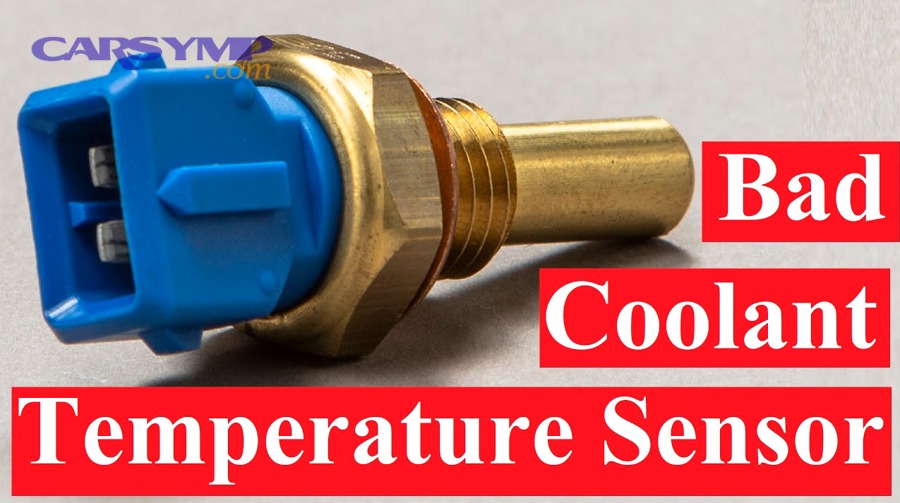
Start with the lowest-effort, highest-confidence checks:
- Cold-start plausibility: After the car sits overnight, ECT should be close to ambient temperature.
- Warm-up curve: ECT should rise smoothly; sudden jumps are suspicious.
- Load response: Under heavy load or long idle, ECT changes should be gradual, not instant spikes.
Then move to physical checks:
- Connector security: is the clip intact? does it lock firmly?
- Pin condition: bent pins, green corrosion, coolant residue.
- Harness routing: rubbing on brackets, tight bends near hot components.
Finally, if you can test electrically, you separate parts from wiring:
- Reference voltage and ground integrity: verify the circuit is alive.
- Sensor response: confirm resistance/voltage changes with temperature.
What scan-tool checks confirm a bad coolant temp sensor?
There are 5 scan-tool checks that confirm ECT trouble—cold-start ambient match, smooth warm-up curve, comparison to intake air temperature (IAT), freeze-frame consistency, and wiggle-test stability—based on whether the signal is plausible and stable.
Then, you use these checks to decide whether the sensor is lying or the circuit is failing.
Practical scan steps:
- Overnight soak test: ECT should be close to ambient when the engine is truly cold.
- Warm-up trend: watch ECT rise steadily; the curve should not teleport upward or downward.
- ECT vs IAT comparison: at cold start, both should be in the same neighborhood; a huge gap is suspicious.
- Freeze-frame review: if a code was set, see what temperature the ECU recorded at that moment.
- Wiggle test (carefully): if the ECT reading jumps when you gently move the harness, suspect wiring/connector.
Can a simple visual inspection catch common ECT failures?
Yes—a simple visual inspection can catch common ECT failures because (1) many faults come from loose connectors or broken clips, (2) corrosion or coolant contamination can be visible at the pins, and (3) harness damage near hot parts can create intermittent opens without any “sensor” failure.
Next, treat the connector like a wear item: most “mystery” ECT problems live here.
Look for:
- Broken locking tab: plug is seated but not locked, so vibration breaks contact.
- Coolant residue: dried crust or wetness near the connector (can indicate seepage or spill).
- Pin corrosion: green/white buildup increases resistance and distorts readings.
- Brittle insulation: heat damage near the head or thermostat housing.
What basic electrical tests help verify the sensor vs the wiring?
There are 3 basic electrical tests—reference voltage check, ground/return integrity check, and sensor resistance/response check—based on whether the circuit can supply a stable signal and whether the sensor changes predictably with temperature.
In short, the goal is not to become an electrical engineer—it’s to answer one question: is the sensor wrong, or is the signal path wrong?
Basic approach (high-level, vehicle-agnostic):
- Reference voltage present: many systems supply a stable reference to the sensor circuit.
- Ground path solid: a weak ground can mimic a bad sensor by shifting the signal.
- Sensor response: the sensor should change in a predictable direction as temperature changes (many are NTC thermistors—resistance drops as temperature rises).
If your confirmation points to the sensor itself, that’s when coolant temperature sensor replacement becomes logical—not as a guess, but as a verified fix. After replacement, finish the job with Clearing codes and verifying repair: clear stored codes, re-check live ECT readings from cold start through warm-up, and confirm fans, idle, and fuel trims behave normally.
Is it definitely the ECT sensor—or something else that looks similar?
The ECT sensor wins as the likely culprit when symptoms cluster around implausible temperature behavior and strategy flips, while thermostat and coolant-level issues are best matches for consistent thermal problems, because many cooling faults overlap but follow different timing patterns.
Next, you’ll compare ECT failure signatures to the most common look-alikes so you don’t replace a sensor when the real issue is mechanical.
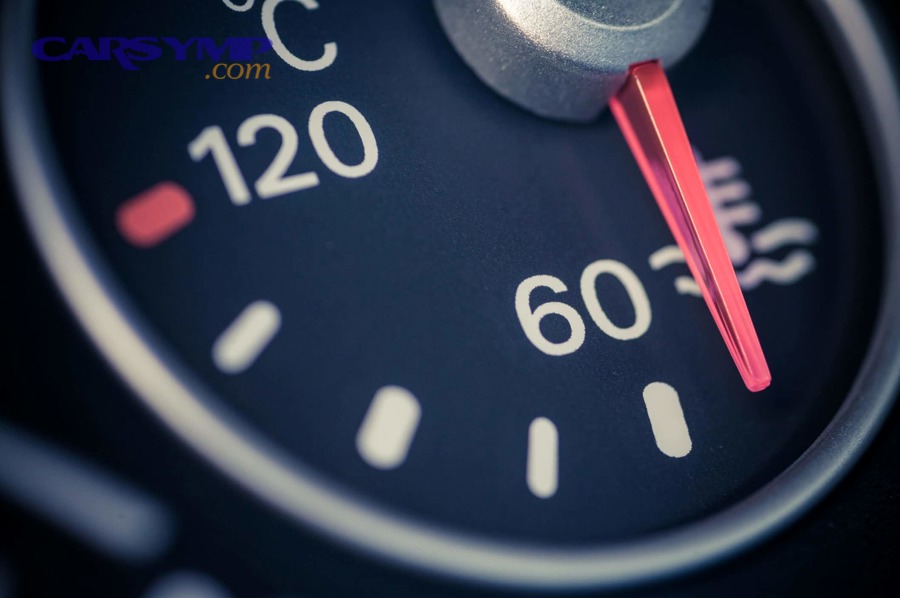
How do bad ECT symptoms compare to a stuck thermostat?
ECT faults win in erratic or implausible readings, a stuck-open thermostat is best for slow warm-up and weak heater, and a stuck-closed thermostat is optimal for true overheating, because each problem produces a different warm-up curve and heater behavior.
Then, you can use simple observations to separate them:
- Stuck-open thermostat: long time to reach operating temp; heater may be weak; temperature may drop on the highway.
- Stuck-closed thermostat: engine truly overheats; upper hose may stay cool then suddenly get very hot; pressure builds fast.
- Bad ECT sensor: gauge or scan readings may not match reality; symptoms may come and go; fans may behave oddly even when coolant isn’t hot.
How do bad ECT symptoms compare to low coolant or air in the system?
ECT issues win in electronic inconsistency, while low coolant/air is best for fluctuating heat output and real temperature swings, because air pockets create real thermal instability that sensors faithfully report.
Next, ask: Is the engine truly changing temperature, or is the reading lying?
Low coolant/air pocket clues:
- Heater output fluctuates: heat goes hot/cold as coolant flow changes.
- Gurgling sounds: air moving through the heater core.
- Overheating under load: uphill or high RPM causes real temp rise.
How do bad ECT symptoms compare to a radiator fan relay or fuse problem?
ECT faults win in wrong fan commands, a relay/fuse problem is best for fans not responding at all, and a fan motor problem is optimal for consistent overheating at idle, because the ECU can command fans correctly but the hardware may not deliver.
Then, the easiest clue is whether the fans behave normally when A/C is turned on (vehicle-dependent, but common).
- Relay/fuse issue: fans may not run even when commanded; overheating at idle is common.
- Bad fan motor: relay clicks/commands happen but the fan doesn’t spin or spins weakly.
- ECT issue: fans run at the wrong times, or run constantly, or cycle unpredictably.
When do symptoms suggest a more serious issue than the sensor?
Yes—sometimes symptoms suggest a more serious issue than the ECT sensor because (1) repeated true overheating can damage gaskets and warping surfaces, (2) coolant loss indicates a leak or internal consumption, and (3) contamination signs (oil/coolant mixing) point to mechanical failure beyond a sensor.
More importantly, treat these as stop-and-check signals:
- Coolant level dropping repeatedly
- White exhaust smoke with sweet smell
- Milky oil or oily coolant
- Overheating that returns immediately after cooling down
What related codes, edge cases, and vehicle-specific factors can affect ECT diagnosis?
Related codes, edge cases, and vehicle-specific factors matter because ECT faults often come from circuit behavior (high/low/intermittent) and system design (dual sensors, separate gauge senders), and their standout feature is that they change how you interpret scan data and choose the fastest verification path.
Next, you’ll use code “type,” plausibility logic, and design clues to avoid misdiagnosis—especially when symptoms come and go.
Which OBD-II code patterns commonly point to ECT circuit issues (and what do they usually mean)?
There are 3 main ECT code patterns—range/performance, circuit high/low input, and intermittent—based on whether the ECU sees an implausible temperature, an electrical short/open, or a signal dropout.
Then, you can map the pattern to the most likely cause:
- Range/performance: reading doesn’t match expected warm-up behavior (often sensor drift or cooling-system behavior mismatch).
- High/low input: often electrical (short to ground, short to power, open circuit).
- Intermittent: wiring/connector movement, heat soak, corrosion, pin fitment issues.
How do you use freeze-frame and “ECT vs IAT” plausibility to spot rationality faults?
Freeze-frame and ECT-vs-IAT plausibility is a diagnostic method that compares recorded sensor values at the moment a code set, and its standout feature is that it catches “impossible” temperature combinations that reveal a lying sensor or broken circuit.
In addition, it helps you diagnose intermittent faults that refuse to show themselves during a quick driveway test.
A practical way to use it:
- After overnight soak: ECT and IAT should be close (both started near ambient).
- If freeze-frame shows ECT far from ambient at start: suspect sensor bias or circuit fault.
- If ECT jumps but IAT stays stable: suspect ECT wiring/connector rather than real temperature change.
Do some vehicles have multiple coolant temp sensors or separate gauge senders—and why does that matter?
Yes—some vehicles have multiple coolant temp sensors or separate gauge senders because (1) one sensor may feed the ECU while another feeds the dash gauge, (2) some engines monitor temperature at multiple points (head vs radiator outlet) for control accuracy, and (3) packaging changes (thermostat housing designs) can create separate sensing locations.
Next, this design detail explains a confusing real-world situation: the gauge looks normal, but the engine runs rich and throws ECT codes.
What it changes in diagnosis:
- You can’t rely on gauge behavior alone.
- You should trust scan data for ECU decisions.
- A “normal” dash reading does not eliminate ECT-related drivability issues.
What rare conditions make ECT symptoms come and go (heat soak, connector expansion, coolant wicking)?
Rare intermittent ECT conditions are faults triggered by temperature and movement—like heat soak expansion, connector pin relaxation, or coolant wicking into wiring—and their standout feature is that they create “only after driving” or “only on cold mornings” symptoms that vanish during inspection.
To begin catching these, you need to reproduce the conditions that trigger them:
- Heat soak test: drive until warm, shut off briefly, restart, and monitor ECT stability.
- Harness movement test: gently move wiring while watching live data (no yanking).
- Connector inspection under bright light: look for dampness, residue, or damaged seals.
Evidence (why temperature state matters): According to a study by Utah State University’s Utah Water Research Laboratory (with supporting work at Weber State University’s NCAST), in May 2017, cold-start emissions peaked quickly and hot-start emissions were far lower—often around 5–10% of cold-start levels—which is consistent with why a faulty temperature input can disproportionately affect drivability and efficiency around start-up. (apps.weber.edu)