


A radiator fan replacement involves removing the old cooling fan assembly and installing a new unit, typically costing between $200-$1,144 for professional service or $50-$400 for DIY replacement, with the process taking 1-3 hours depending on vehicle complexity and whether you replace just the motor or the entire assembly. This comprehensive guide covers everything car owners need to know about radiator fan replacement, from identifying failure symptoms to executing a successful installation and choosing between professional and DIY approaches.
Understanding when to replace your radiator fan is critical for preventing engine damage. Common warning signs include engine overheating, unusual noises like clicking or grinding, broken fan blades, check engine lights related to cooling system failures, and fans that either don’t spin or run continuously. Recognizing these symptoms early allows you to address the problem before it escalates into expensive engine repairs, making proper diagnosis an essential skill for every vehicle owner.
The step-by-step DIY replacement process requires basic mechanical skills, common tools like screwdrivers and socket wrenches, and careful attention to safety procedures including battery disconnection and allowing the engine to cool completely. By following a systematic approach—from accessing the fan assembly and disconnecting electrical connections to installing the new unit and verifying proper operation—most car owners can complete this repair independently and save hundreds of dollars in labor costs.
Cost considerations play a major role in replacement decisions, with significant price variations between OEM and aftermarket parts, professional versus DIY installation, and motor-only versus complete assembly replacement. Below, we’ll explore each aspect of radiator fan replacement in detail, helping you make informed decisions about maintaining your vehicle’s cooling system.
What is a Radiator Fan and Why Does It Need Replacement?
A radiator fan is an engine cooling component that circulates air through the radiator to dissipate heat from the coolant, preventing engine overheating, and it requires replacement when the motor fails, blades become damaged, or electrical components malfunction after prolonged exposure to extreme temperatures and mechanical wear.
To better understand radiator fan functionality, let’s examine how this critical component integrates with your vehicle’s cooling system.
How Does a Radiator Fan Work in Your Vehicle’s Cooling System?
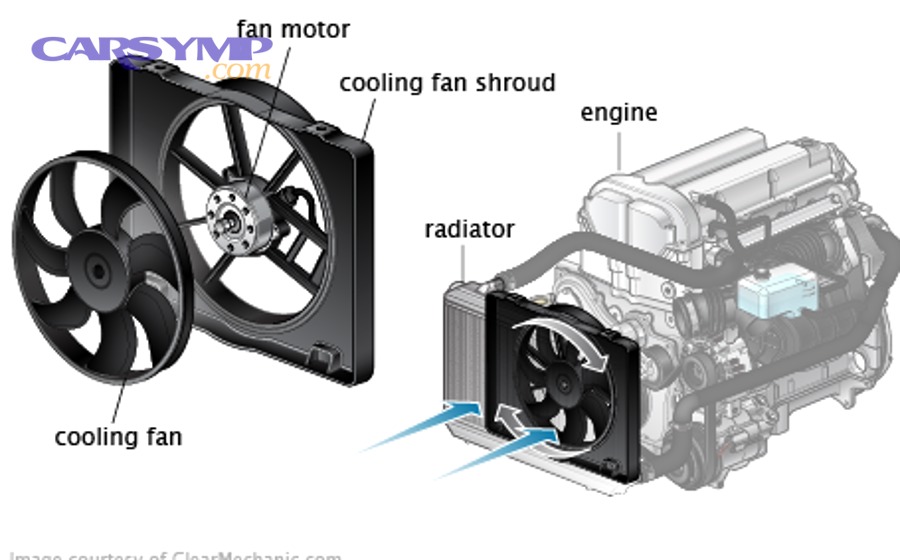
The radiator fan operates as part of a coordinated cooling system where hot coolant flows from the engine into the radiator, releases heat through the radiator’s metal fins, and returns cooled to the engine to absorb more heat. The fan activates when coolant temperature reaches a predetermined threshold—typically between 195-220°F (90-105°C)—or when you turn on the air conditioning system, which places additional heat load on the cooling system. Modern electric fans receive signals from the engine control module (ECM) based on temperature sensor readings, while older mechanical fans connect directly to the engine’s crankshaft via a temperature-sensitive clutch.
When the engine control module detects elevated coolant temperature, it sends an electrical signal through the fan relay to energize the fan motor, causing the blades to spin and draw ambient air through the radiator’s cooling fins. This airflow accelerates heat transfer from the hot coolant to the surrounding air, maintaining optimal engine operating temperature. Without proper fan operation, coolant temperature rises rapidly, especially during idle or low-speed driving when natural airflow through the grille is insufficient. The fan also plays a crucial role in air conditioning performance, as it must cool both the engine coolant and the refrigerant passing through the condenser mounted in front of the radiator.
Fan activation patterns vary by vehicle design and driving conditions. During highway driving at speeds above 40-50 mph, natural airflow often provides sufficient cooling without fan activation. However, during city driving, stop-and-go traffic, or when towing heavy loads, the fan cycles on frequently to prevent overheating. Air conditioning operation typically triggers immediate fan activation regardless of coolant temperature, as the condenser requires constant airflow to maintain refrigerant pressure within acceptable limits.
What Components Make Up a Radiator Fan Assembly?
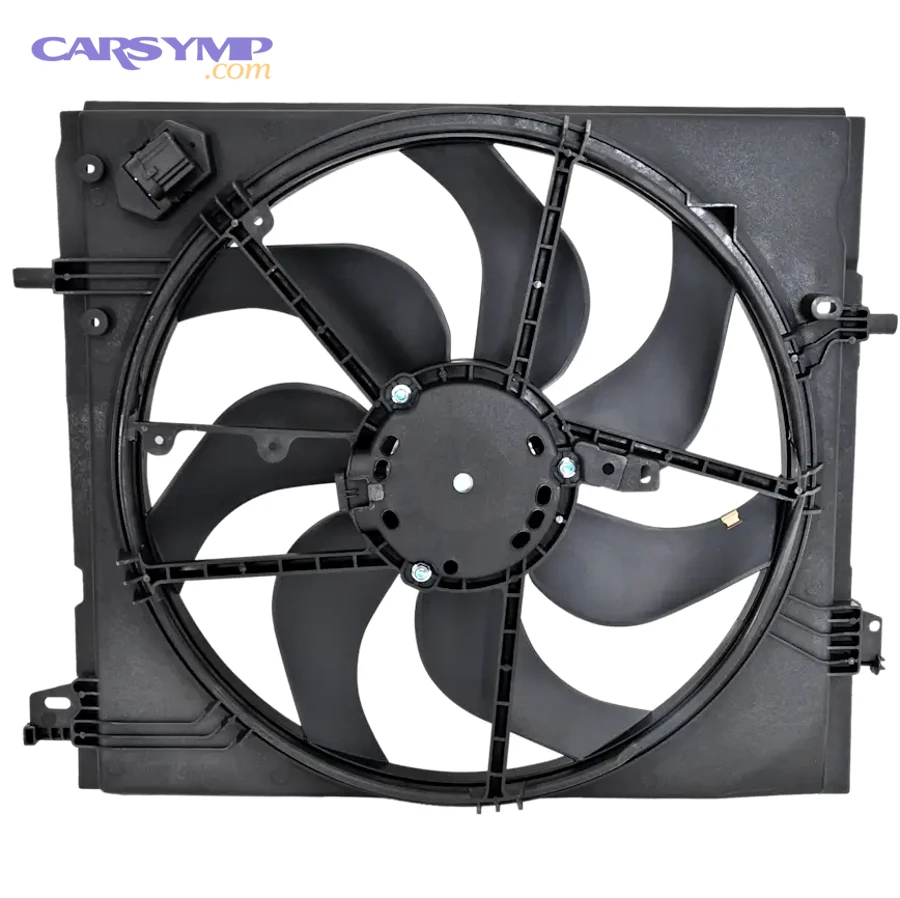
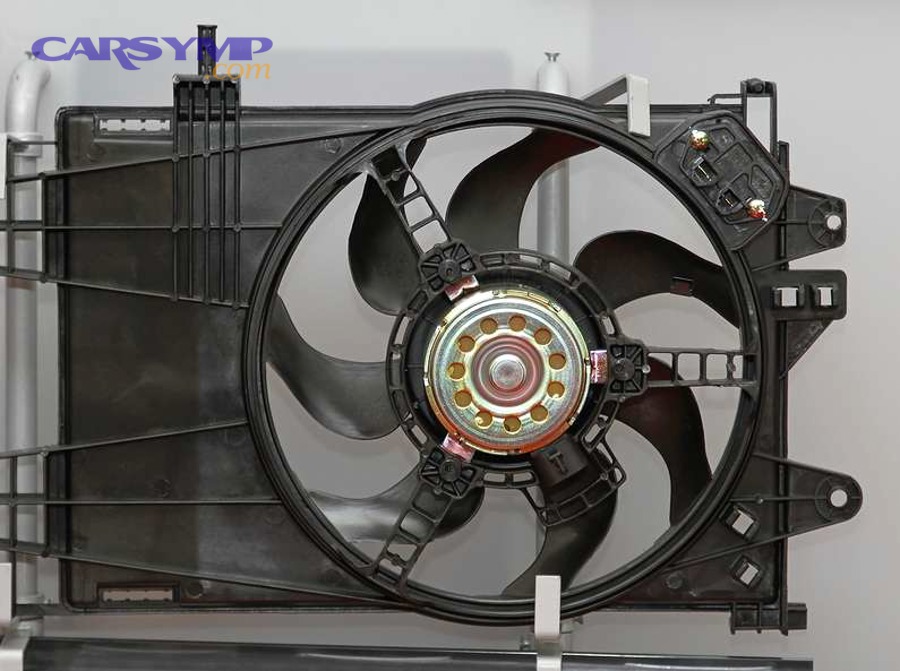
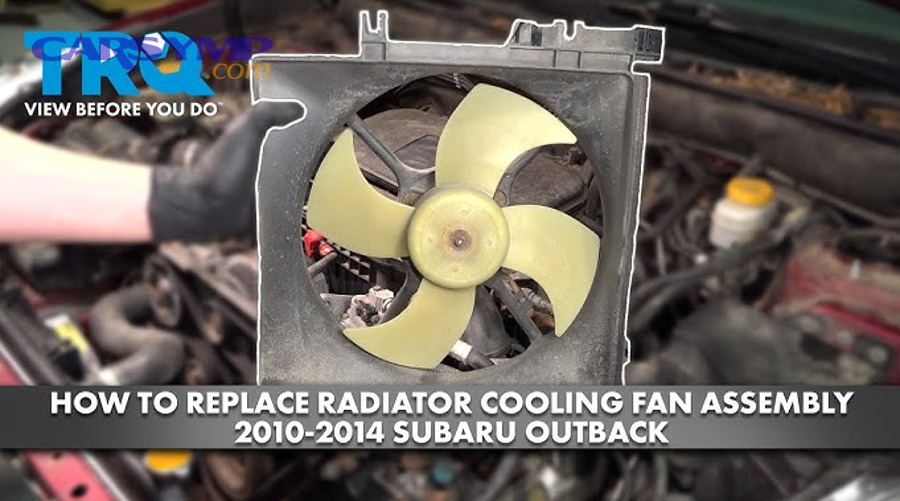
The radiator fan assembly consists of several integrated components working together to provide engine cooling. The fan motor serves as the primary power source, converting electrical energy into rotational force that spins the fan blades. These blades—typically made from rigid plastic or reinforced nylon—are precisely angled to maximize airflow while minimizing noise and power consumption. The fan shroud or housing surrounds the blades, directing airflow through the radiator core and preventing air from escaping around the sides, which would reduce cooling efficiency.
Electrical components include the wiring harness with connectors that link the fan motor to the vehicle’s electrical system, the fan relay that switches high current to the motor based on low-current signals from the ECM, and protective fuses that prevent electrical damage in case of motor failure or short circuits. Mounting brackets secure the entire assembly to the radiator or core support, using rubber isolators to minimize vibration transfer to the vehicle structure.
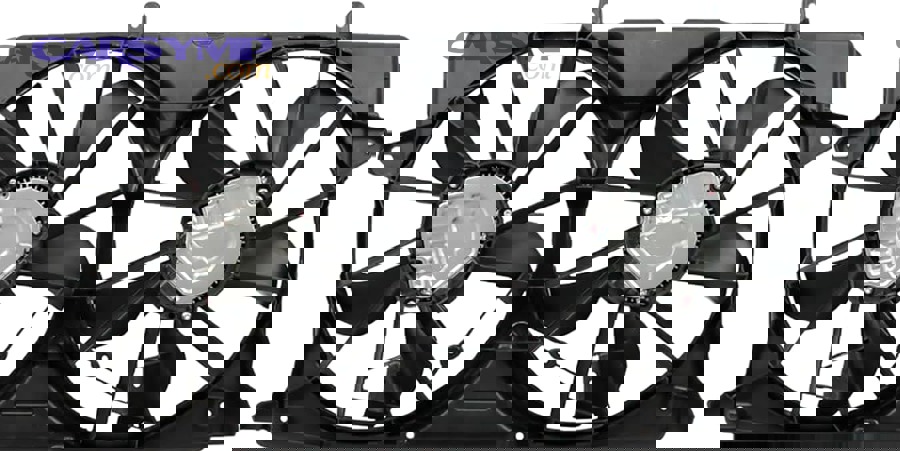
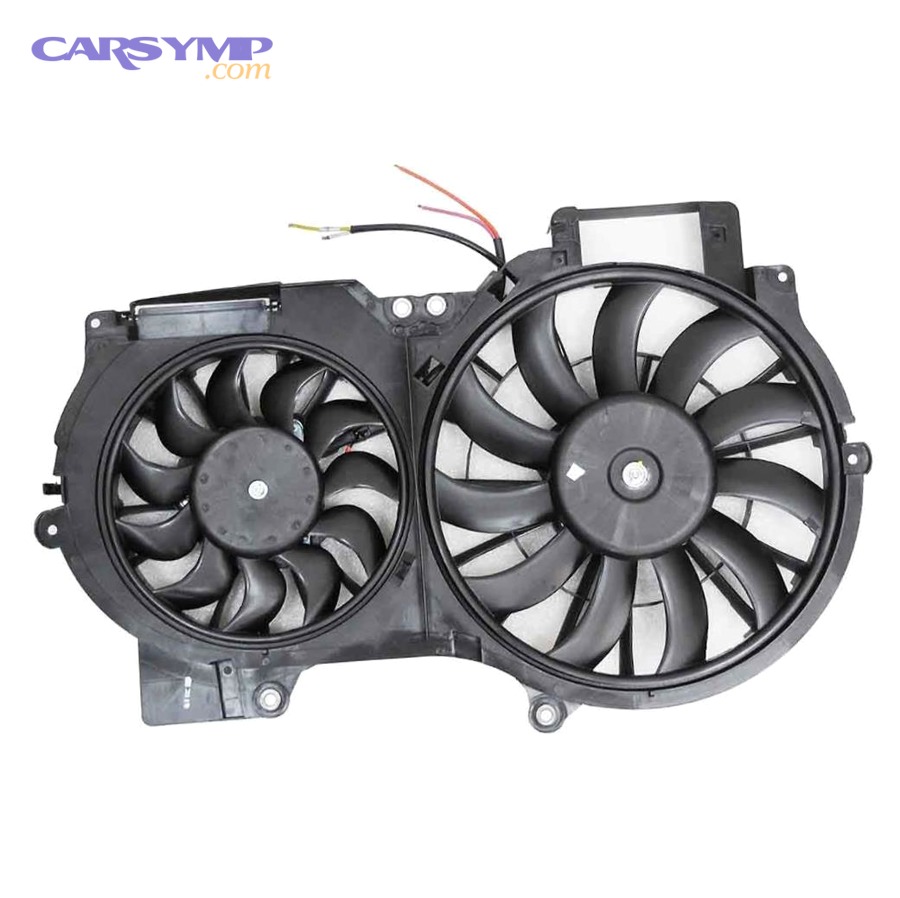
Modern vehicles often feature dual fan assemblies with two separate motors and blade sets operating independently or in tandem depending on cooling demands. Single fan assemblies typically use one larger motor and blade set sufficient for the vehicle’s cooling requirements. The fan control module, present in some vehicles, manages variable fan speeds rather than simple on-off operation, improving efficiency and reducing noise. Mechanical fans, found in older vehicles and some heavy-duty trucks, replace the electric motor with a viscous fan clutch that engages based on temperature, connecting the fan directly to the engine’s accessory belt system.
When Should You Replace Your Radiator Fan?
You should replace your radiator fan when you notice engine overheating, broken or damaged fan blades, unusual noises from the fan area, continuous fan operation, or complete failure to activate, as these symptoms indicate motor failure, electrical problems, or physical damage requiring immediate attention to prevent engine damage.
Recognizing the warning signs of radiator fan failure early can save you from expensive engine repairs and roadside breakdowns.
What Are the Warning Signs of a Failing Radiator Fan?
Engine overheating represents the most critical warning sign of radiator fan failure. When your temperature gauge climbs into the red zone during idle or low-speed driving but returns to normal at highway speeds, the fan likely isn’t activating properly. You’ll notice this pattern especially in traffic jams or when using air conditioning, situations where the fan should run continuously. The check engine light may illuminate with diagnostic trouble codes related to cooling system performance, fan circuit malfunctions, or engine temperature sensor readings outside normal parameters.
Physical damage to fan blades creates obvious visual evidence of failure. Cracked, broken, or missing blade sections reduce airflow efficiency and create dangerous imbalances. Even minor blade damage can escalate quickly as centrifugal forces during rotation cause cracks to propagate, potentially leading to complete blade separation. Inspect your fan blades regularly for stress cracks, chips along the leading edges, or warping from heat exposure.
Unusual noises provide clear auditory warnings of impending fan failure. A clicking sound often indicates broken blade tips striking the shroud or other components as they rotate. Grinding noises suggest worn motor bearings that cannot properly support the fan shaft, causing metal-to-metal contact. Squealing sounds typically point to electrical problems within the motor, such as worn brushes or damaged commutator segments. These noises usually worsen as the fan continues operating, progressing from intermittent to constant.
Fan behavior abnormalities signal electrical or control system problems. A fan that runs continuously even with a cold engine indicates a stuck relay, failed temperature sensor, or short circuit in the control wiring. Conversely, a fan that never activates despite high coolant temperatures suggests relay failure, blown fuses, faulty wiring connections, or a completely dead motor. Air conditioning that works poorly or not at all while the engine runs normally may indicate fan failure, as the condenser requires constant airflow to function properly.
According to automotive repair data compiled by RepairPal, radiator fan assemblies typically last 80,000 to 150,000 miles before requiring replacement, though exposure to extreme temperatures, front-end collisions, and debris impact can significantly shorten this lifespan.
Can You Drive with a Broken Radiator Fan?
No, you should not drive with a broken radiator fan because doing so risks severe engine overheating within minutes during idle or low-speed conditions, potentially causing cylinder head warping, head gasket failure, or complete engine seizure that can cost $3,000-$8,000 to repair.
However, understanding the specific risks helps you make informed decisions in emergency situations where limited driving may be necessary.
If you must drive with a broken radiator fan to reach a repair facility, maintain highway speeds above 45-50 mph where natural airflow through the radiator provides adequate cooling, avoid using air conditioning which places additional heat load on the system, and monitor your temperature gauge constantly. Pull over immediately if the gauge enters the warning zone, turn off the engine, and allow it to cool for at least 30 minutes before attempting to continue. Never remove the radiator cap while the engine is hot, as pressurized coolant can explosively spray and cause severe burns.
Short-term driving without a functional fan causes progressive damage even if the engine doesn’t immediately overheat. Elevated operating temperatures degrade engine oil faster, reducing its lubricating properties and accelerating wear on internal components. Coolant system pressure increases beyond design specifications, stressing hoses, gaskets, and the radiator itself, potentially causing leaks. The engine control module may enter “limp mode,” limiting power output to reduce heat generation, which severely compromises vehicle performance and safety.
Long-term operation with fan failure guarantees catastrophic engine damage. Repeated overheating cycles cause aluminum cylinder heads to warp, creating compression leaks and coolant passages into combustion chambers. Head gaskets fail under thermal stress, allowing coolant and oil to mix—a condition requiring complete engine disassembly to repair. In extreme cases, overheating causes pistons to expand beyond clearance tolerances, seizing against cylinder walls and destroying the engine block. The cost of radiator fan replacement, even with professional installation, represents a fraction of engine replacement expenses, making immediate repair the only financially sensible option.
How Much Does Radiator Fan Replacement Cost?
Radiator fan replacement costs range from $200-$1,144 for professional installation or $50-$400 for DIY replacement, with price variations depending on whether you replace just the motor or the complete assembly, choose OEM or aftermarket parts, and account for your vehicle’s make, model, and fan configuration.
To better understand these cost ranges, let’s break down the specific factors affecting radiator fan replacement expenses.
What is the Average Cost for Professional Radiator Fan Replacement?
Professional radiator fan replacement typically costs between $200-$1,144, with labor charges accounting for $100-$460 of the total expense depending on installation complexity and regional labor rates. Parts costs vary significantly based on vehicle specifications, ranging from $50 for basic single-fan assemblies to over $700 for dual-fan systems with integrated control modules found in luxury vehicles and high-performance models.
Labor costs depend primarily on accessibility and installation complexity. Simple installations on vehicles with easily accessible fan assemblies take 1-1.5 hours, while complex installations requiring removal of the radiator, air conditioning condenser, or front bumper assembly can extend to 3-4 hours. Shops typically charge $80-$150 per hour for this work, with dealerships at the higher end and independent mechanics at the lower end. The mechanic must safely disconnect the battery, remove any obstructing components, extract the old fan assembly, install the new unit, reconnect all electrical connections, and verify proper operation through testing procedures.
Parts pricing varies dramatically across vehicle categories. Economy cars using simple single-fan assemblies with basic motors typically cost $50-$150 for aftermarket parts or $100-$300 for OEM units. Mid-size sedans and SUVs with dual-fan configurations range from $150-$400 for aftermarket assemblies or $300-$600 for OEM parts. Luxury vehicles, performance cars, and heavy-duty trucks with specialized cooling systems, variable-speed fans, or integrated control modules can exceed $700 for OEM assemblies, though aftermarket alternatives often cost 30-50% less.
Vehicle-specific factors significantly influence total replacement costs. European luxury vehicles like BMW, Mercedes-Benz, and Audi typically feature complex cooling systems with expensive proprietary components, pushing total replacement costs toward $800-$1,144. Japanese vehicles from Toyota, Honda, and Nissan generally offer more affordable replacement options, with total costs frequently falling in the $300-$600 range. Domestic trucks and SUVs from Ford, Chevrolet, and Dodge occupy middle ground at $400-$700 for professional replacement.
According to data from RepairPal analyzing thousands of radiator fan replacement jobs across the United States, the national average cost settles at $526, with parts averaging $326 and labor averaging $200 for a typical installation requiring 1.5-2 hours of shop time.
How Much Can You Save by Replacing the Radiator Fan Yourself?
DIY radiator fan replacement costs only $50-$400 for parts, eliminating labor charges entirely and saving $100-$460 compared to professional installation, representing potential savings of 40-70% of the total professional repair cost depending on your vehicle and chosen parts.
Calculating your actual DIY savings requires considering both monetary and time investments. A straightforward radiator fan replacement on an accessible vehicle takes 1-2 hours for someone with basic mechanical skills and appropriate tools. More complex installations involving removal of multiple obstructing components can extend to 3-4 hours for first-time DIYers. Value your time appropriately—if you earn $50 per hour at work and the job takes 3 hours, your time investment equals $150, reducing net savings from the $200-$300 labor cost professional shops charge.
Tool requirements for radiator fan replacement typically include items most home mechanics already own: basic screwdriver sets (Phillips and flathead), socket wrench sets (metric and SAE), combination wrench sets, and potentially Torx or specialized fastener tools depending on your vehicle. If you lack these tools, initial investment ranges from $50-$150 for adequate quality equipment that serves numerous future repairs. Specialized tools rarely prove necessary, though some vehicles may require specific fan clutch removal tools for mechanical fans or trim panel removal tools for accessing electrical connections.
Additional expenses beyond the replacement fan itself rarely exceed $20-$30. You may need electrical contact cleaner for corroded connections, thread locker for mounting bolts, or zip ties for securing wiring harnesses. Consider purchasing a repair manual specific to your vehicle ($25-$40) or accessing online repair databases ($30-$50 annual subscription) for detailed instructions and torque specifications, though free resources like YouTube tutorials often provide adequate guidance for straightforward replacements.
Cost-benefit analysis strongly favors DIY replacement for mechanically inclined car owners. Someone replacing a radiator fan on a common vehicle like a Honda Accord or Toyota Camry might spend $120 for an aftermarket assembly and 2 hours of time, compared to $450 for professional replacement. The $330 savings justify the effort for most budgets. However, owners of complex vehicles requiring extensive disassembly should carefully weigh the increased time investment and potential for mistakes against the monetary savings.
OEM vs. Aftermarket Radiator Fans: Which Should You Choose?
OEM radiator fans excel in guaranteed fitment and reliability but cost 40-100% more than aftermarket alternatives, while quality aftermarket fans from reputable manufacturers offer comparable performance at lower prices but require careful verification of compatibility and may have shorter warranties.
More specifically, understanding the trade-offs between OEM and aftermarket options helps you make the best choice for your situation and budget.
OEM (Original Equipment Manufacturer) radiator fans represent the exact components installed during vehicle production, manufactured by the same suppliers automakers use for factory installation. These fans guarantee perfect fitment with all mounting holes, electrical connectors, and clearances matching factory specifications exactly. OEM fans typically include comprehensive warranties ranging from 12 months to 36 months depending on whether purchased from the dealership or an OEM parts retailer. Quality control meets automaker standards, ensuring consistent materials, manufacturing processes, and performance characteristics. However, OEM fans command premium pricing—often 2-3 times the cost of aftermarket alternatives—and availability may be limited for older vehicles or less common models.
Aftermarket radiator fans come from third-party manufacturers who design replacement parts reverse-engineered from OEM specifications. Premium aftermarket brands like TYC, Dorman, Four Seasons, and Replacement offer excellent quality control, extensive vehicle coverage, and warranties comparable to OEM parts while maintaining prices 30-50% lower. These manufacturers often produce parts for multiple vehicle makes and models, achieving economies of scale that reduce costs. Mid-tier aftermarket brands provide acceptable quality for budget-conscious consumers, though warranty periods may be shorter (90 days to 12 months) and quality control less consistent. Budget aftermarket fans, often sold as universal or generic applications, risk fitment issues, lower-quality motors, and inferior materials that reduce longevity.
Quality and reliability differences between OEM and premium aftermarket fans have narrowed significantly in recent years. Premium aftermarket manufacturers invest heavily in engineering and testing to ensure their products meet or exceed OEM specifications. Many aftermarket fans feature improvements over OEM designs, such as upgraded motor bearings, reinforced blade materials, or enhanced corrosion resistance. However, budget aftermarket products may use inferior materials—thinner plastic shrouds, weaker motor magnets, or lower-grade electrical connections—that compromise durability and performance.
Warranty considerations significantly impact long-term value. OEM fans typically include 12-36 month warranties covering both parts and labor if installed by authorized service centers, providing comprehensive protection against defects. Premium aftermarket manufacturers offer similar warranty periods but may limit coverage to parts-only, requiring you to pay labor costs for warranty replacements. Budget aftermarket brands frequently provide minimal 90-day to 6-month warranties with numerous exclusions, offering little protection against premature failure.
Compatibility and fitment represent the most critical factors in the OEM versus aftermarket decision. OEM fans guarantee compatibility by design, eliminating concerns about connector mismatches, clearance problems, or mounting point variations. Premium aftermarket manufacturers maintain extensive vehicle application databases and provide fitment guarantees, though verifying compatibility through VIN lookup or consultation with parts specialists remains essential. Budget aftermarket products marketed as “universal fit” frequently require modifications, adapter harnesses, or custom mounting solutions that increase installation complexity and time.
How Do You Replace a Radiator Fan? (Step-by-Step DIY Guide)
Replacing a radiator fan involves disconnecting the battery for safety, removing obstructing components to access the fan assembly, disconnecting electrical connectors and mounting hardware, extracting the old fan, installing the new assembly with proper alignment, reconnecting all electrical and mechanical connections, and testing operation—a process taking 1-3 hours depending on vehicle accessibility.
To successfully complete this repair, let’s examine each phase of the replacement process in detail, starting with proper preparation.
What Tools and Materials Do You Need for Radiator Fan Replacement?
Essential tools for radiator fan replacement include socket wrench sets in both metric (8mm-14mm) and SAE sizes for mounting bolts, combination wrench sets for hard-to-reach fasteners, screwdriver sets with Phillips and flathead options for clips and electrical connections, and pliers for removing stubborn connectors and hose clamps. Most radiator fan installations require 10mm and 12mm sockets as primary sizes, though vehicle-specific requirements vary. A ratchet with extensions (6-inch and 12-inch) helps reach recessed fasteners behind the radiator or near the engine block.
Safety equipment protects you from injury during the replacement process. Wear mechanic’s gloves to prevent cuts from sharp metal edges on the fan shroud or radiator fins, and safety glasses to protect your eyes from falling debris, coolant splashes, or battery acid if working near the battery. Work on a completely cooled engine to avoid burns from hot surfaces—wait at least 2 hours after driving before beginning work. Keep a fire extinguisher nearby when working with electrical systems, and ensure adequate workspace ventilation if working in a garage.
Optional tools that simplify installation include trim panel removal tools for gently prying plastic fasteners without damage, a magnetic parts tray for organizing small bolts and clips, a flashlight or work light for illuminating the engine compartment, and a digital multimeter for testing electrical connections if diagnosing fan problems before replacement. Some vehicles require specialty tools like Torx bits (T20, T25, T30), or fan clutch wrenches for mechanical fans, though these needs are vehicle-specific.
Selecting the right replacement fan requires knowing your vehicle’s year, make, model, engine size, and whether your vehicle has single or dual fan configuration. Use your VIN (Vehicle Identification Number) when ordering parts online to ensure exact fitment matching. Verify that the replacement fan includes all necessary mounting hardware, electrical connectors compatible with your vehicle’s harness, and installation instructions specific to your application. Premium aftermarket manufacturers typically provide these items, while budget products may require separate hardware purchases.
Additional supplies for a professional-quality installation include electrical contact cleaner spray for removing corrosion from connectors before reassembly, dielectric grease to protect electrical connections from moisture and corrosion, thread locker (blue, medium-strength) for securing mounting bolts against vibration loosening, and zip ties or wire loom for securing relocated wiring harnesses. Keep shop towels handy for cleaning spilled coolant and wiping dirty components, and have a drain pan available in case coolant drains during fan removal on vehicles where the fan mounts directly to the radiator.
What is the Complete Step-by-Step Replacement Process?
The radiator fan replacement process follows a systematic sequence ensuring safety and proper installation. Begin by parking the vehicle on level ground, engaging the parking brake, and allowing the engine to cool completely—at least 2 hours after driving to prevent burns from hot coolant or engine components. Open the hood and secure it with the hood prop rod, ensuring stable access to the engine compartment throughout the replacement procedure.
Step 1: Disconnect the Battery
Locate your vehicle’s battery, typically positioned in the engine compartment’s front corner or sometimes in the trunk on certain models. Using the appropriate socket or wrench, loosen the negative (-) terminal clamp bolt and carefully lift the cable away from the battery post. Secure the disconnected cable away from the battery using a zip tie or by tucking it aside to prevent accidental reconnection. This critical safety step prevents electrical shorts, accidental fan activation during handling, and potential injury from unexpected fan motor engagement. Never skip battery disconnection when working with electrical components or near rotating machinery.
Step 2: Access the Fan Assembly
Identify all components obstructing clear access to the radiator fan assembly. Common obstructions include air intake ducts connecting the air filter housing to the throttle body, engine covers or plastic shrouds protecting wiring and hoses, coolant reservoir tanks, and on some vehicles, portions of the front bumper cover or grille assembly. Remove these components systematically, placing fasteners in labeled containers or arranging them in the order removed to simplify reassembly. Take photos with your smartphone before disconnecting complex wiring or hose arrangements to ensure correct reconnection later. Most air intake ducts detach using simple worm-gear clamps loosened with a flathead screwdriver or push-to-release clips.
Step 3: Disconnect Electrical Connections
Locate the electrical connector linking the fan motor to the vehicle’s wiring harness, typically positioned on the fan shroud or near the motor itself. This connector usually features a locking tab or clip securing the connection—press the release tab while gently pulling the connector halves apart. If the connector resists separation due to corrosion or age, carefully work it back and forth while maintaining pressure on the release tab rather than forcing it, which could break the connector housing. On dual-fan assemblies, disconnect both fan motor connectors. Note the exact routing of wiring harnesses and any securing clips holding wires to the fan shroud or radiator, as you’ll need to replicate this routing during installation.
Step 4: Remove Mounting Hardware
Radiator fan assemblies typically mount to the radiator or vehicle’s core support using 2-6 bolts or clips. Common mounting configurations include upper bolts accessible from above the radiator (usually 10mm), lower bolts requiring reaching underneath from below (often 10mm or 12mm), and plastic clips that twist or pull straight out. Some vehicles use a combination of upper bolts and lower clips. Remove upper mounting hardware first, supporting the fan assembly with one hand to prevent it from falling. Then, carefully reach underneath to access lower fasteners. If working from underneath the vehicle, safely support it on jack stands—never work under a vehicle supported only by a hydraulic jack.
Step 5: Extract the Old Fan Assembly
With all mounting hardware and electrical connections removed, carefully lift the fan assembly upward and out of the engine compartment. The assembly may require angling or tilting to clear obstructions like coolant hoses, transmission cooler lines, or air conditioning components. Handle the assembly gently to avoid damaging the radiator’s thin cooling fins, which bend easily and reduce cooling efficiency when damaged. If the assembly binds or resists removal, stop and verify all mounting points are disconnected—forcing removal risks breaking clips, cracking the fan shroud, or damaging the radiator. Some vehicles require removing the upper radiator hose or coolant overflow tank to create adequate clearance for fan assembly extraction.
Step 6: Compare Old and New Assemblies
Before installation, verify that the replacement fan matches the original in all critical dimensions and specifications. Check that motor mounting holes align exactly with positions on the new fan shroud, electrical connectors match in style and pin configuration, overall dimensions match within millimeters, blade diameter and pitch appear identical, and all mounting tabs or clips correspond to the original design. If the replacement fan differs significantly, verify with your parts supplier that you received the correct application before attempting installation. Some vehicles underwent mid-year design changes requiring specific fan assembly versions.
Step 7: Install the New Fan Motor and Blades (if separate)
If your replacement includes a separate motor and fan blade requiring assembly, install the motor into the fan shroud first, securing it with the provided hardware and tightening bolts in a star pattern to ensure even pressure distribution. Then, slide the fan blade onto the motor shaft, aligning any drive flats or keyways to ensure proper engagement. Secure the blade using the retaining clip, nut, or other fastener provided, following manufacturer torque specifications if available. Some fan blade designs press-fit onto the shaft and require gentle tapping with a soft-faced hammer—protect the motor shaft from damage by supporting the motor housing during this process.
Step 8: Install the Fan Assembly
Lower the new fan assembly into position, reversing the removal process. Angle the assembly as necessary to clear obstructions while being extremely careful not to contact the radiator fins. Align mounting holes or clip positions with their corresponding mounting points on the radiator or core support. Thread upper mounting bolts or engage upper clips first while supporting the assembly weight, then secure lower mounting points. Tighten all fasteners finger-tight initially, then torque to specifications using a torque wrench if specifications are available (typically 6-10 ft-lbs for fan mounting bolts). Over-tightening can crack plastic fan shrouds or strip mounting threads in the radiator’s plastic end tanks.
Step 9: Reconnect Electrical and Verify Routing
Connect the fan motor electrical connector to the vehicle’s wiring harness, ensuring it clicks firmly into place indicating the locking tab engaged properly. Gently tug on the connection to verify it’s secure—a properly connected harness requires deliberate pressure on the release tab to disconnect. Secure any wiring harness clips to the fan shroud or nearby mounting points, following the routing observed during disassembly or shown in installation photos. Ensure wires don’t contact moving components like drive belts or hot surfaces like exhaust manifolds. On dual-fan assemblies, connect both motor connectors and verify each harness routes to its correct motor.
Step 10: Testing and Final Verification
Reconnect the battery by attaching the negative (-) cable to the battery post and tightening the clamp bolt securely. Start the engine and allow it to warm up to normal operating temperature while monitoring the temperature gauge. The fan should activate automatically when coolant temperature reaches the specified threshold or immediately when you turn on the air conditioning. Listen for unusual noises like grinding, clicking, or rattling that might indicate blade contact with the shroud or motor problems. Verify smooth, quiet operation and watch for any vibration that could suggest improper mounting or blade imbalance. Turn off the engine, check for proper fan blade clearance by manually rotating the fan (engine off) to ensure it spins freely without contacting any components, and verify all mounting hardware remains tight after the heat cycle.
According to technical service bulletins from major automakers, proper torque on radiator fan mounting hardware prevents 90% of post-installation vibration and noise problems, making adherence to specified torque values critical for long-term reliability.
How Do You Test the New Radiator Fan After Installation?
Testing the new radiator fan requires starting the engine and monitoring both automatic activation at normal operating temperature and immediate activation when engaging the air conditioning system, while listening for abnormal noises and verifying smooth operation without vibration.
Specifically, conducting thorough post-installation testing prevents future problems and confirms successful replacement.
Begin cold engine testing by starting the vehicle and observing initial fan behavior. The fan should remain off with a cold engine, as cooling isn’t necessary until operating temperature approaches normal ranges. Allow the engine to idle for 5-10 minutes, monitoring the temperature gauge’s progression from cold toward normal operating temperature. Watch for the precise moment the fan activates—this typically occurs when the gauge reaches approximately three-quarters toward the hot mark, varying by vehicle. Note whether the fan starts smoothly without hesitation or grinding sounds that might indicate motor problems.
Air conditioning activation testing provides immediate verification of fan operation without waiting for engine warm-up. With the engine running at idle, turn the air conditioning controls to maximum cooling with the fan speed set to any position except off. The radiator fan should activate within 2-3 seconds, as the air conditioning system requires immediate condenser cooling for proper refrigerant pressure regulation. Listen carefully for the characteristic whoosh of air movement as the fan spins up to speed. If the fan doesn’t activate immediately with air conditioning engagement, shut off the engine and verify electrical connections are properly seated, check fuses in the fan circuit, and examine the fan relay for proper operation.
Noise evaluation identifies potential installation issues requiring correction before they cause damage. Normal fan operation produces a smooth, consistent whooshing sound as air moves through the radiator. Abnormal sounds requiring investigation include clicking or ticking noises suggesting fan blades contact the shroud or nearby components due to improper mounting or assembly misalignment, grinding sounds indicating worn or damaged motor bearings that may have been pre-existing in the new fan or damaged during installation, rattling or buzzing suggesting loose mounting hardware that needs re-tightening, or squealing noises pointing to electrical problems within the motor such as worn brushes or damaged commutator segments. Address any unusual sounds immediately to prevent progressive damage.
Vibration assessment ensures proper balance and mounting security. With the fan operating, observe the engine compartment for excessive shaking or visible vibration of the fan assembly. Minor vibration is normal, but pronounced shaking indicates improper mounting, imbalanced fan blades, or a defective motor. Check that all mounting bolts remain tight and that the fan shroud seats properly against its mounting surfaces. Ensure the fan blade is correctly centered within the shroud with equal clearance on all sides—uneven clearance suggests the fan assembly isn’t properly aligned with its mounting points.
Temperature regulation verification confirms the cooling system functions properly with the new fan installed. Monitor the temperature gauge during a 15-20 minute test drive including various operating conditions: highway speed driving where natural airflow provides cooling, idle periods where the fan must handle all cooling duties, and air conditioning operation placing maximum demand on the system. The temperature gauge should remain stable in the normal range throughout all conditions. If temperature creeps upward during idle but decreases during highway driving, the fan may be underperforming despite operating, suggesting insufficient motor power or wrong fan blade design. If temperature remains stable throughout testing, the replacement succeeded.
Final visual inspection after the test drive catches any issues that emerged during operation. Turn off the engine, allow it to cool for a few minutes, and visually inspect all mounting points for loosening, all electrical connections for signs of overheating or arcing, the fan blades for stress cracks or damage from contact with other components, and the surrounding area for coolant leaks that might have developed from disturbing hoses or connections during the replacement process. Address any discovered issues before returning the vehicle to regular service.
Should You Replace Just the Motor or the Entire Fan Assembly?
Replacing the entire fan assembly typically offers better value than motor-only replacement because complete assemblies cost only $20-$80 more than motors alone while providing new blades, shroud, and mounting hardware, reducing installation time by 30-50%, and including comprehensive warranties, though motor-only replacement makes sense when the fan shroud remains in perfect condition and you possess advanced mechanical skills.
To make the best decision for your situation, let’s examine the specific advantages and disadvantages of each approach.
What Are the Pros and Cons of Replacing Only the Fan Motor?
Motor-only replacement saves $20-$80 in parts costs compared to complete assembly replacement and reduces environmental waste by reusing functional components, but requires advanced mechanical skills for motor extraction from the shroud, takes 30-50% longer due to additional disassembly, and risks compatibility issues if the replacement motor doesn’t precisely match the original specifications.
More specifically, several practical considerations determine whether motor-only replacement suits your situation.
Cost savings from motor-only replacement appear attractive initially but diminish upon closer examination. A replacement fan motor alone costs $30-$150 depending on vehicle application, while complete assemblies range from $50-$400—a difference of only $20-$80 in most cases. However, motor replacement requires purchasing additional components if yours are damaged: fan blades cost $15-$40 separately, fan shrouds run $25-$60, and mounting clips or hardware add another $10-$20. If you discover during disassembly that your fan blade has developed micro-cracks or your shroud has brittle mounting tabs, you’ll ultimately spend more piece-mealing components than purchasing a complete assembly initially.
Labor complexity increases significantly with motor-only replacement. You must first remove the fan assembly from the vehicle using the standard procedure, then disassemble the fan blade from the motor shaft—often requiring specialized tools or techniques to avoid damaging components. Next, remove the motor from the shroud by extracting mounting screws or clips, some of which may have corroded in place after years of exposure to engine heat and road salt. Installing the new motor reverses this process but introduces alignment challenges, as the motor must seat perfectly within the shroud to prevent vibration and noise. Total time investment for motor-only replacement typically reaches 2-4 hours for experienced DIYers, compared to 1-2 hours for complete assembly replacement.
Compatibility challenges plague motor-only replacements more frequently than complete assembly swaps. Motors from different manufacturers use varying shaft diameters, lengths, and mounting hole patterns that may not exactly match your existing fan blade and shroud even if marketed for your vehicle. A motor shaft that’s 1-2mm different in diameter may not properly grip your fan blade, causing blade wobble or complete separation during operation. Mounting holes offset by even 3-5mm prevent proper motor installation or create stress points that crack the shroud. Complete assemblies arrive pre-assembled with matched components from a single manufacturer, eliminating these compatibility concerns.
Warranty considerations favor complete assembly replacement. Motors sold separately typically carry 90-day to 12-month warranties covering only the motor itself, while complete assemblies include 12-36 month warranties protecting all components. If your reused fan blade fails three months after motor replacement, you’ll purchase a new blade separately and invest another hour removing and reinstalling the assembly. If any component fails within the warranty period on a complete assembly, you receive an entire new unit.
Motor-only replacement makes practical sense in specific scenarios: when the fan shroud and blades are less than three years old and in perfect condition, when you possess advanced mechanical skills and specialized tools, when you’re working on a rare or vintage vehicle where complete assemblies aren’t available, or when the motor failed prematurely due to a specific electrical problem you’ve corrected. Outside these situations, complete assembly replacement delivers better value.
When is Complete Fan Assembly Replacement the Better Choice?
Complete fan assembly replacement proves superior in most situations because it guarantees component compatibility, reduces installation time by 30-50%, provides comprehensive warranty coverage on all parts, and costs only marginally more than purchasing motor and blade components separately while eliminating risks of mixing incompatible parts from different manufacturers.
Especially when considering long-term reliability and convenience, several factors make complete assembly replacement the optimal choice.
Guaranteed compatibility represents the primary advantage of complete assembly replacement. Manufacturers pre-assemble motors, blades, shrouds, and mounting hardware as matched sets, ensuring perfect fitment and balanced operation. The motor shaft diameter precisely matches the fan blade hub, preventing wobble or blade separation. Mounting holes align perfectly with motor housing, eliminating stress points that could crack the shroud. Electrical connectors match the motor specifications exactly, providing reliable power delivery. This factory-matched integration prevents the trial-and-error often required when sourcing individual components from different suppliers.
Installation simplicity saves substantial time and frustration. Complete assembly replacement follows a straightforward remove-and-replace procedure: extract the old assembly from the vehicle, verify fitment of the new assembly, and install the new unit. No additional disassembly of individual components is required, no special tools for separating blades from motor shafts, no alignment challenges installing motors into shrouds, and no concerns about torque specifications for motor-to-shroud mounting. Most DIYers complete assembly replacement in 1-2 hours, while motor-only replacement extends to 2-4 hours including the additional disassembly and reassembly steps.
Warranty protection with complete assemblies covers every component under a single warranty period, typically 12-36 months depending on manufacturer and whether you choose OEM or aftermarket. If the motor fails, the blades crack, or the shroud develops stress cracks, the entire assembly qualifies for warranty replacement. This comprehensive coverage contrasts sharply with motor-only replacement where the warranty covers only the motor while your reused blade and shroud remain unprotected. The peace of mind knowing all cooling fan components are warrantied together justifies the modest additional investment.
Long-term reliability improves with complete assembly replacement because all components age uniformly. A fan assembly with 100,000 miles of service has aged blades, a used shroud potentially weakened by heat exposure, and mounting hardware that may have lost clamping force. Installing a new motor into this aged assembly means one new component working alongside several worn parts, creating performance imbalances. The new motor’s full power may stress old, brittle blades beyond their remaining fatigue life. Conversely, a complete new assembly provides fresh components designed to work together for the next 80,000-150,000 miles.
Ease of installation benefits beginners and experienced mechanics alike. Complete assemblies arrive with detailed installation instructions specific to the exact configuration, reducing guesswork about proper orientation or connection sequences. Pre-assembled units eliminate questions about correct blade positioning on the motor shaft, proper torque for blade retention hardware, or correct motor orientation within the shroud. This simplicity reduces the chance of installation errors that could cause immediate failure or long-term problems.
Situations clearly favoring complete assembly replacement include vehicles with fan assemblies exceeding 80,000 miles or five years of service where all components have experienced substantial wear, radiator fan repair situations where the original failure cause remains unclear—replacing everything eliminates diagnosis challenges, first-time DIY mechanics lacking experience with component-level repairs, and time-constrained repairs where vehicle downtime must be minimized. These scenarios represent the majority of radiator fan replacement situations, explaining why complete assemblies dominate the replacement market.
| Comparison Factor | Motor-Only Replacement | Complete Assembly Replacement |
|---|---|---|
| Parts Cost | $30-$150 | $50-$400 |
| Installation Time | 2-4 hours | 1-2 hours |
| Skill Level Required | Advanced | Basic to Intermediate |
| Warranty Coverage | Motor only (90 days-12 months) | All components (12-36 months) |
| Compatibility Risk | Moderate to High | Minimal |
| Long-term Reliability | Depends on condition of reused parts | Optimal – all new components |
| Best For | Near-new shrouds, experienced mechanics | Most replacement situations |
This comparison table illustrates why complete assembly replacement serves most vehicle owners better, despite the slightly higher initial parts investment.
How Can You Prevent Radiator Fan Failure and Extend Its Lifespan?
Preventing radiator fan failure requires regular cooling system maintenance including coolant replacement every 25,000-40,000 miles, periodic visual inspections for blade damage and debris accumulation, electrical system checks of relays and connections, and addressing cooling system problems immediately before they stress the fan motor, extending average fan lifespan from 80,000 miles to potentially 150,000+ miles.
To maximize your radiator fan’s operational life, let’s examine specific maintenance practices and failure prevention strategies.
What Maintenance Tasks Help Prevent Fan Motor Failure?
Regular cooling system maintenance prevents many conditions that cause premature fan motor failure. Replacing engine coolant according to manufacturer specifications—typically every 25,000-40,000 miles or every 2-3 years—prevents corrosion and mineral deposits that reduce radiator efficiency and force the fan to work harder and run longer to achieve adequate cooling. Fresh coolant maintains proper heat transfer properties and corrosion inhibitors that protect the entire cooling system including the radiator, water pump, and thermostat, reducing thermal stress on the fan motor.
Visual inspections during routine oil changes catch developing problems before they cause failures. When to replace fan shroud assembly becomes apparent when you notice cracks in mounting tabs, brittleness in the shroud material that crumbles when pressed, warping from excessive heat exposure that prevents proper fan blade clearance, or missing sections broken off by impact with road debris. Inspect fan blades for stress cracks radiating from the hub where centrifugal forces concentrate, chips or gouges along leading edges from impact with debris, warping that creates imbalance and vibration, or discoloration indicating heat damage that weakens the plastic material. Catch these issues early through regular inspection rather than waiting for complete failure.
Electrical system maintenance prevents many fan motor failures. Fan control module diagnosis becomes necessary when experiencing intermittent fan operation, fans running at incorrect speeds, or fans that don’t respond properly to temperature or air conditioning inputs. Modern vehicles use pulse-width modulated fan control modules that vary fan speed for efficiency—these modules can fail, causing fans to run constantly at full speed, not run at all, or operate erratically. Checking fan relays every 50,000 miles by swapping them with identical relays elsewhere in the vehicle (like fuel pump relays if they share specifications) identifies failing relays before they strand you with an overheated engine.
Cleaning debris from the fan area extends motor life by reducing resistance and preventing damage. Road debris including leaves, plastic bags, insects, and dirt accumulate between the radiator and condenser, blocking airflow and forcing the fan motor to work harder. Remove the fan assembly annually and clean both the radiator face and the condenser with low-pressure water spray (never high-pressure that damages fins), working from the engine side outward to avoid forcing debris deeper into the cooling stack. Inspect the fan shroud and surrounding areas for accumulated debris that might contact rotating fan blades.
Monitoring fan operation provides early warning of developing problems. During normal driving, listen for changes in fan noise patterns—a fan that previously operated silently but now produces slight clicking or humming may have developing bearing wear addressable before complete failure. Note if the fan runs more frequently or longer than previously observed, suggesting declining cooling system efficiency from a failing water pump, clogged radiator, or thermostat opening late. Address these underlying problems promptly to prevent forcing the fan to compensate through extended operation that accelerates motor wear.
What Are the Common Causes of Premature Radiator Fan Failure?
Excessive heat exposure in the engine compartment accelerates fan motor deterioration by breaking down motor winding insulation, degrading plastic shroud materials, and weakening fan blade structural integrity, with under-hood temperatures frequently exceeding 200°F (93°C) during hot weather operation placing continuous thermal stress on components designed for intermittent duty cycles.
More specifically, understanding the mechanisms behind premature failure helps you implement targeted prevention strategies.
Thermal degradation affects both mechanical and electrical fan components progressively over time. Fan motors contain copper windings wrapped in insulation that prevents electrical shorts between wire layers—excessive heat causes this insulation to become brittle and crack, eventually allowing wire contact that shorts the motor. Magnet strength in permanent-magnet motors decreases with repeated exposure to temperatures exceeding 250°F (121°C), reducing motor torque and efficiency. Plastic fan blades and shrouds undergo similar degradation as heat causes polymer chains to break down, increasing brittleness and susceptibility to cracking. Vehicles operated in extreme climates like desert regions or those frequently stuck in heavy traffic experience accelerated thermal aging compared to vehicles driven primarily in moderate climates with good airflow.
Front-end collision damage destroys radiator fans even in relatively minor impacts. A 15-20 mph collision that appears to cause only bumper cover damage often pushes the condenser backward into the radiator fan, bending blades, cracking the shroud, or damaging the motor housing. Impact forces may not immediately destroy the fan but create stress cracks that propagate during subsequent operation, causing failure weeks or months after the collision. Always inspect the radiator fan assembly thoroughly after any front-end impact and consider replacing it even if damage isn’t immediately apparent, as hidden structural compromises significantly reduce remaining service life.
Electrical system problems cause fan motor failures through several mechanisms. Voltage spikes from failing alternators or jump-starting procedures can damage sensitive motor electronics in modern variable-speed fans. Corroded electrical connections increase resistance, causing excessive current flow that overheats motor windings and potentially melts connector housings. Failed fan relays can weld closed, forcing the motor to run continuously rather than cycling on and off based on cooling needs—this continuous operation generates excessive heat and accelerates bearing wear. Fan relay and resistor repair options include replacing corroded connectors with new connector assemblies, installing new relays at first signs of sticking or slow engagement, and replacing fan speed resistors or control modules showing signs of overheating such as discolored housings or burnt connector pins.
Debris impact damages fan blades and creates imbalance that destroys motor bearings. A stone kicked up from the road or a bolt dropped during previous service work can penetrate the fan shroud and strike rotating blades at thousands of RPM, chipping or cracking the blade material. Even minor blade damage creates imbalance—the fan assembly rotating at 2,000-3,000 RPM generates substantial centrifugal forces, and imbalance from a 5-gram chip missing from one blade creates vibration that rapidly destroys motor bearings designed for balanced operation. Installing aftermarket grille screens or skid plates reduces debris impact risk, particularly valuable for vehicles frequently driven on unpaved roads or in construction areas.
Manufacturing defects occasionally cause premature failures despite quality control efforts. Defects include improperly balanced fan blades that vibrate from initial installation, motors with inadequate bearing lubrication that fail within 20,000-30,000 miles, shrouds molded from inferior plastic formulations that crack prematurely, and electrical connections using inadequate crimp force or corrosion-prone materials. Premium manufacturers offer extended warranties partially as confidence in their quality control, making warranty coverage an important consideration when selecting replacement fans. Manufacturing defect failures typically occur within the first 12-24 months of service, emphasizing the value of comprehensive warranty protection.
According to research published by the Society of Automotive Engineers, radiator fan motors operating in ambient temperatures above 110°F (43°C) experience lifespan reductions of approximately 30-40% compared to operation in moderate 70-80°F (21-27°C) conditions, highlighting the significant impact of thermal stress on component longevity.
How Does Fan Type Affect Longevity (Electric vs. Mechanical)?
Electric radiator fans typically last 80,000-150,000 miles with proper maintenance because sealed motors protect bearings from contamination and electronic controls prevent over-speed conditions, while mechanical fans with viscous clutches generally achieve 60,000-100,000 miles before clutch fluid degradation causes slippage or bearing failures, though mechanical fans prove more durable in severe-duty applications like towing or extreme off-road use.
Specifically, understanding the durability characteristics of each fan type helps you maintain them appropriately and anticipate replacement needs.
Electric fan longevity depends primarily on motor bearing quality and thermal management. Premium electric fans use sealed ball bearings or sleeve bearings with lifetime lubrication that operates maintenance-free throughout the motor’s service life. These bearings remain protected from water intrusion, road salt, and debris that could cause premature wear. The motor housing shields internal components from direct heat exposure, though prolonged operation in high under-hood temperatures gradually degrades motor winding insulation. Electronic control modules in modern vehicles cycle electric fans on and off based on precise temperature readings, preventing continuous operation except during extreme conditions, which extends motor bearing life compared to constant-speed operation. However, electric fans face failure risks from electrical system problems including voltage spikes, corrosion in connectors, and control module failures that mechanical fans don’t experience.
Mechanical fan clutch durability centers on the viscous fluid that provides temperature-activated coupling between the fan and engine-driven pulley. This silicone-based fluid undergoes thermal cycling as the clutch repeatedly engages and disengages based on temperature, gradually degrading its viscosity properties. After 60,000-80,000 miles, the fluid typically loses sufficient viscosity to properly engage the fan, causing inadequate cooling. The clutch bearing that supports the fan assembly on the drive shaft experiences continuous rotation whenever the engine runs, unlike electric fan motors that operate intermittently, accelerating bearing wear. However, mechanical fan clutches contain no complex electronics to fail, making them more tolerant of electrical system problems and electromagnetic interference. The direct mechanical connection also provides more reliable operation in extreme cold where battery voltage drops could prevent electric fan operation.
Environmental factors affect each fan type differently. Electric fans mounted ahead of the radiator endure direct exposure to road spray, salt, and debris that cause connector corrosion and motor housing degradation, though modern designs incorporate weather-sealed connectors and corrosion-resistant housings. Mechanical fans mount closer to the engine, protecting them from road debris but exposing them to higher sustained temperatures from proximity to the exhaust manifold and lack of airflow when the vehicle is parked. Vehicles operated in coastal areas with salt air experience more severe corrosion on electric fan connections, while those in desert climates with extreme heat face accelerated mechanical clutch fluid breakdown.
Performance characteristics throughout the service life differ significantly between fan types. Electric fans maintain consistent cooling performance from installation until motor failure—they either work properly or fail completely with little gradual degradation. This characteristic makes electric fan problems easier to diagnose, as partial failure rarely occurs. Mechanical fan clutches gradually lose effectiveness as viscous fluid degrades, creating a progressive decline in cooling capacity that may go unnoticed until overheating occurs during demanding conditions. This gradual decline makes mechanical fan problems harder to diagnose, as the fan appears to spin but doesn’t generate adequate airflow.
Maintenance requirements vary between fan types. Electric fans require occasional inspection of electrical connections for corrosion, verification of relay operation, and checking mounting hardware for loosening from vibration. No internal maintenance is possible or necessary on sealed motor designs. Mechanical fan clutches benefit from periodic visual inspection for fluid leakage visible as oily residue on the clutch housing or fan blades, listening for bearing noise indicating wear, and verifying proper engagement by observing fan speed increase when blipping the throttle with a warm engine. Some mechanical clutches allow rebuilding by installing new bearings and fresh viscous fluid, potentially extending life beyond 100,000 miles, though replacement typically proves more cost-effective than rebuilding.
Are High-Performance or Heavy-Duty Cooling Fans Worth the Investment?
High-performance radiator fans provide 20-40% greater airflow than stock fans and justify their $150-$400 premium cost when you’ve modified your engine for increased power output, regularly tow heavy loads approaching vehicle capacity, operate in extreme ambient temperatures above 100°F (38°C), or participate in track days and performance driving requiring sustained high-speed operation.
However, for unmodified vehicles driven normally, stock replacement fans deliver adequate cooling at lower cost.
Performance fan benefits center on increased cooling capacity through higher airflow volume. High-performance electric fans utilize more powerful motors drawing 25-40 amps compared to 15-25 amps for stock fans, spinning larger diameter blades at higher RPM to move 3,000-4,500 cubic feet per minute (CFM) of air versus 2,000-3,000 CFM for standard fans. This increased airflow provides greater cooling capacity, lowering coolant temperatures 10-20°F during demanding operation. Performance fans typically feature aluminum shrouds instead of plastic for better heat dissipation and structural rigidity, heavy-duty motors with upgraded bearings designed for continuous operation, and more aggressive blade designs with increased pitch angles that move more air per revolution.
Modified engines require cooling capacity beyond stock specifications. Adding a turbocharger or supercharger increases heat generation 30-50% compared to naturally aspirated operation, overwhelming stock cooling systems during aggressive driving. Engine power increases from modifications like performance camshafts, increased compression ratios, or nitrous oxide systems similarly elevate heat production. A performance fan becomes essential in these applications to prevent detonation from excessive cylinder temperatures or oil breakdown from elevated operating temperatures. The $200-$400 investment in a high-performance fan proves minimal compared to $5,000-$20,000 spent on engine modifications, making adequate cooling capacity a logical supporting upgrade.
Heavy-duty cooling applications benefit from fans designed for continuous operation at high output. Towing loads approaching maximum vehicle capacity generates sustained high heat loads as the engine works hard to maintain speed on inclines while the transmission repeatedly shifts under load, heating both transmission fluid and engine coolant. Stock fans designed for intermittent duty cycles may overheat their motors during extended operation, or they may cycle on and off so frequently that cooling proves inadequate. Heavy-duty fans rated for continuous operation prevent these issues. Vehicles with transmission coolers, oil coolers, and power steering coolers stacked in front of the radiator require high-airflow fans to pull air through multiple heat exchangers effectively.
Extreme ambient temperatures challenge stock cooling systems. Operating in Death Valley, Arizona summers, or Middle Eastern climates where ambient temperatures reach 115-125°F (46-52°C) means the cooling system must dissipate engine heat into air already above normal operating temperature. Stock fans designed for temperate climates may prove marginally adequate or completely inadequate in these conditions. Performance fans with 30-40% greater airflow capacity maintain acceptable coolant temperatures where stock fans fail, preventing overheating and related problems.
ROI analysis for performance fan upgrades depends on your specific usage pattern. Track day participants and performance driving enthusiasts who regularly operate at sustained high speeds or in competitive environments immediately realize value from cooler operating temperatures that prevent power loss from heat soak and enable more aggressive driving without overheating concerns. Weekend autocross competitors or occasional track day participants might find adequate cooling from stock fans with proper maintenance. Daily drivers with unmodified engines rarely benefit from performance fans unless operating in extreme climates or towing regularly. The decision should balance upgrade cost against your specific cooling demands and risk tolerance for overheating-related engine damage.
Standard replacement fans adequately serve the majority of vehicle applications. Modern OEM cooling systems are engineered with adequate capacity for the vehicle’s stock configuration and typical operating conditions. Replacing a failed stock fan with an equivalent stock replacement restores original cooling capacity at the lowest cost, typically $50-$250 for quality aftermarket units. This approach makes sense for unmodified vehicles driven normally in temperate climates without extreme duty cycles. Investing in premium stock replacements from manufacturers like Mishimoto, Flex-a-lite, or Spal provides reliability improvements over budget aftermarket units without the cost premium of full performance upgrades.
| Application | Stock Replacement | Performance/Heavy-Duty |
|---|---|---|
| Unmodified engine, normal driving | Optimal choice | Unnecessary expense |
| Modified engine (+50+ HP) | May be inadequate | Recommended |
| Regular towing near capacity | Marginal | Strongly recommended |
| Extreme climate operation (>105°F) | Adequate with caution | Recommended |
| Track days/performance driving | May overheat | Required for reliability |
| Cost-effectiveness | Best for most users | Worthwhile for specific needs |
This application guide helps determine whether performance fan investment makes sense for your specific situation, balancing cost against cooling requirements.