


A P0420 or P0430 code doesn’t automatically mean you need a new catalytic converter—most “O2 sensor and catalytic converter code pitfalls” come from skipping a simple proof-first workflow and buying parts before you confirm the root cause.
Many drivers also misunderstand what the ECU is actually testing: it’s not “measuring the catalytic converter directly,” but comparing upstream and downstream sensor behavior under specific conditions—so you need to know what the code is (and isn’t) telling you before you act.
Then you need a step-by-step process that starts with the cheapest, most revealing checks (freeze-frame and fuel trims) and escalates to higher-confidence tests (live data patterns, monitor completion, and targeted inspections) so you can diagnose check engine light problems without guessing.
Introduce a new idea: once you understand the meaning, the pitfalls, and the workflow, you can decide whether you’re dealing with an O2 sensor issue, a catalytic converter efficiency failure, or a separate upstream problem that only looks like one.
What do P0420 and P0430 actually mean, and what are they not telling you?
P0420/P0430 is a catalyst-efficiency diagnostic code category that originates from OBD-II monitor logic, and its standout feature is that it flags a pattern mismatch between upstream and downstream oxygen-sensor behavior—not a guaranteed “bad catalytic converter” verdict. (carparts.com)
Then, to better understand why misdiagnosis happens so often, you have to separate what the ECU can infer (efficiency trend) from what it cannot prove (which part is “bad” without context).
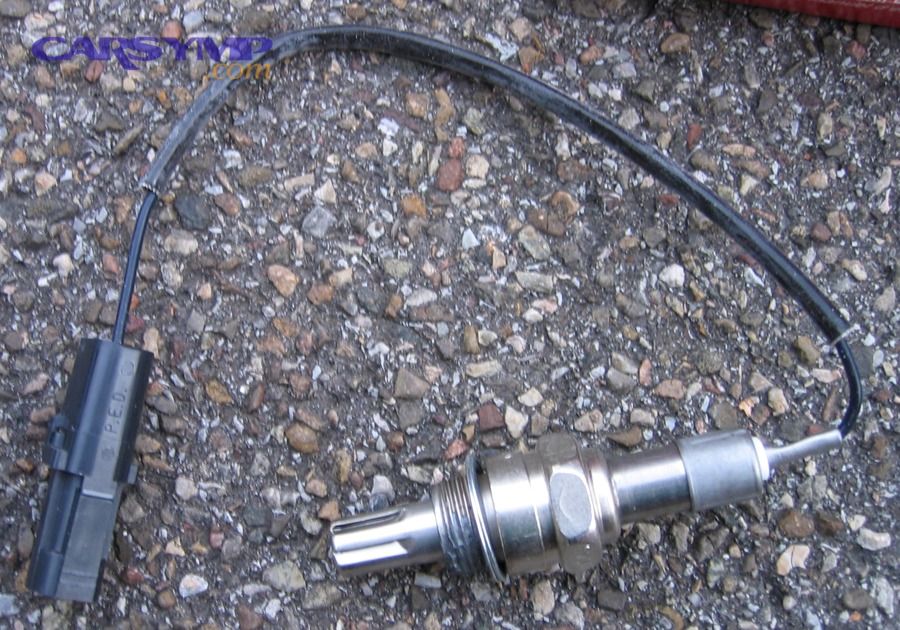
Is P0420/P0430 an automatic “replace the catalytic converter” diagnosis?
No—P0420/P0430 is not an automatic catalytic converter replacement diagnosis for at least three reasons: (1) exhaust leaks can skew sensor signals, (2) fuel-control issues can alter oxygen storage behavior, and (3) aging or slow sensors can mimic efficiency loss without the converter being the first cause. (rohnertparktransmission.com)
However, the most common “pitfall” is treating the code as a parts order instead of a hypothesis. The ECU sets P0420/P0430 after the catalyst monitor decides the converter is storing and releasing oxygen differently than expected for the vehicle’s calibration. That decision can be influenced by:
- Sensor signal integrity (wiring damage, heater faults, contamination, slow response)
- True exhaust composition (misfire, rich/lean running, unmetered air, fuel trim extremes)
- False oxygen intrusion (exhaust leaks upstream of the downstream sensor)
- Monitor conditions not being stable (short trips, incomplete readiness, inconsistent load)
If you want to avoid the biggest waste of money in this repair category, make this your rule: don’t buy a catalytic converter until you can explain why the downstream signal changed and prove the upstream causes are under control.
What is the difference between P0420 and P0430 (and Bank 1 vs Bank 2)?
P0420 and P0430 are the same problem type—catalyst efficiency below threshold—but P0420 typically refers to Bank 1 and P0430 to Bank 2, so the practical difference is which side of the engine (or which converter) the ECU believes is underperforming. (carparts.com)
Meanwhile, “Bank” mistakes create their own pitfall: you replace the wrong converter or sensor because you guessed the engine layout. Use these quick anchors:
- Inline engines usually have only Bank 1
- V engines have Bank 1 and Bank 2
- Bank numbering is vehicle-specific, but Bank 1 contains cylinder #1 (service info confirms location)
If you’re unsure, confirm Bank 1/2 orientation before you touch hardware. A correct diagnosis on the wrong bank still becomes the wrong repair.
Which related codes commonly appear with P0420/P0430, and how should you group them by cause?
There are 4 main groups of codes that commonly appear with P0420/P0430—fuel control, misfire, oxygen-sensor circuit/heater, and air/exhaust integrity—based on the system that changes exhaust oxygen content or sensor credibility. (carparts.com)
Specifically, this is the “Common codes by symptom mapping” lens that keeps you from tunnel-vision:
- Fuel control / mixture codes (lean/rich, trim-related)
- Why it matters: fuel mixture changes oxygen availability and catalyst oxygen storage behavior.
- Misfire codes
- Why it matters: unburned oxygen and fuel can overload or confuse catalyst monitoring.
- O2 sensor circuit/heater codes
- Why it matters: the monitor depends on trustworthy sensor response.
- Air/exhaust leaks (intake leaks or exhaust leaks)
- Why it matters: outside oxygen changes the downstream signal without a true efficiency change.
If you’re learning How to read OBD2 codes correctly, this grouping is the key move: you stop reading codes as “parts” and start reading them as “systems that change exhaust chemistry.”
Evidence (if any): According to an in-use data summary in an EPA report on oxygen sensor durability, many oxygen sensors in use still perform satisfactorily into higher mileages around the 80,000-mile range, which supports the idea that a code is not proof of immediate sensor failure. (nepis.epa.gov)
What are the most common misdiagnosis pitfalls with O2 sensor vs catalytic converter codes?
There are 6 main types of O2 sensor and catalytic converter code pitfalls—exhaust leaks, mixture problems, misfires, sensor aging/slow response, wiring/heater faults, and low-quality aftermarket converters—based on whether they change real exhaust oxygen or the sensors’ ability to report it. (rohnertparktransmission.com)
Next, let’s explore how each pitfall tricks you, and what the fastest “proof” check looks like so you can stop swapping parts.

Can an exhaust leak trigger P0420/P0430 even if the catalytic converter is fine?
Yes—an exhaust leak can trigger P0420/P0430 because it can pull outside oxygen into the exhaust stream, making the downstream sensor report a leaner, more “switchy” signal that resembles low catalyst oxygen storage performance.
More specifically, leaks become high-risk when they are:
- Upstream of the downstream sensor (or at flanges/joins before the sensor)
- Near the converter where pulses can draw air in during decel or load changes
- Intermittent (heat expansion opens/closes a crack)
A fast DIY confirmation is a cold start inspection plus a careful listen/feel for pulses at joints (without touching hot components), and a visual check for soot tracks around flanges and welds.
Evidence (if any): According to a study by the Federal University of Technology (Mechanical/engineering researchers), in 2013, experimental results showed fuel consumption increased with exhaust leakage diameter, supporting that exhaust leaks measurably alter engine/exhaust behavior and are not “harmless” when diagnosing emissions-related faults. (researchgate.net)
How do misfires, rich/lean conditions, and fuel trims create “false” catalyst efficiency failures?
Misfires and mixture extremes create “false” catalyst failures by changing the oxygen and fuel content entering the converter, which disrupts the converter’s oxygen storage and conversion behavior and can make the downstream sensor resemble upstream activity even when the converter isn’t the first broken part. (carparts.com)
In addition, this is why catalyst codes often show up after “unrelated” drivability problems:
- Lean running (unmetered air) raises oxygen in exhaust → downstream looks leaner/more active.
- Rich running pushes extra fuel into the converter → temperature spikes and storage behavior changes.
- Misfire sends oxygen and fuel through unreacted → catalytic reactions become unstable and the monitor gets noisy.
Your practical takeaway: if your fuel trims are extreme, your catalyst code is often a victim code, not the starting point. Fix mixture stability first, then re-check.
Which O2 sensor problems mimic a bad catalytic converter, and how can you tell them apart?
O2 sensor faults can mimic a bad catalytic converter because a slow or biased sensor can distort the “upstream vs downstream” comparison, but you can tell them apart by checking heater/circuit status, response speed, and whether the downstream signal behavior changes logically with controlled conditions. (nepis.epa.gov)
To illustrate the difference, focus on these “tell” patterns:
- Heater/circuit faults: the sensor may stay cold/slow; the monitor becomes unreliable.
- Slow response: the sensor moves, but too late or too lazily to match reality.
- Bias: the sensor reads consistently lean/rich compared to what trims and upstream behavior suggest.
- Connector/wiring corrosion: produces intermittent drops, noise, or flatlines that look like converter weirdness.
If your scan tool supports it, compare sensor behavior during steady cruise vs light decel. A real converter issue tends to be more consistent under the same operating conditions; wiring/sensor issues often show random discontinuities.
What is the step-by-step diagnostic workflow to confirm the real cause before buying parts?
Use a scan-tool-first workflow in 7 steps—pull codes, capture freeze-frame, review trims, inspect for leaks/wiring, analyze live O2 data, confirm monitor behavior, and retest after fixes—to confirm the root cause of P0420/P0430 and avoid unnecessary sensor or catalytic converter replacement. (carparts.com)
Then, below is the practical method that mirrors a good EVAP leak code troubleshooting approach: start with data capture, prove the basics, and only then move to deeper testing—because the monitor logic can’t be interpreted correctly without context.
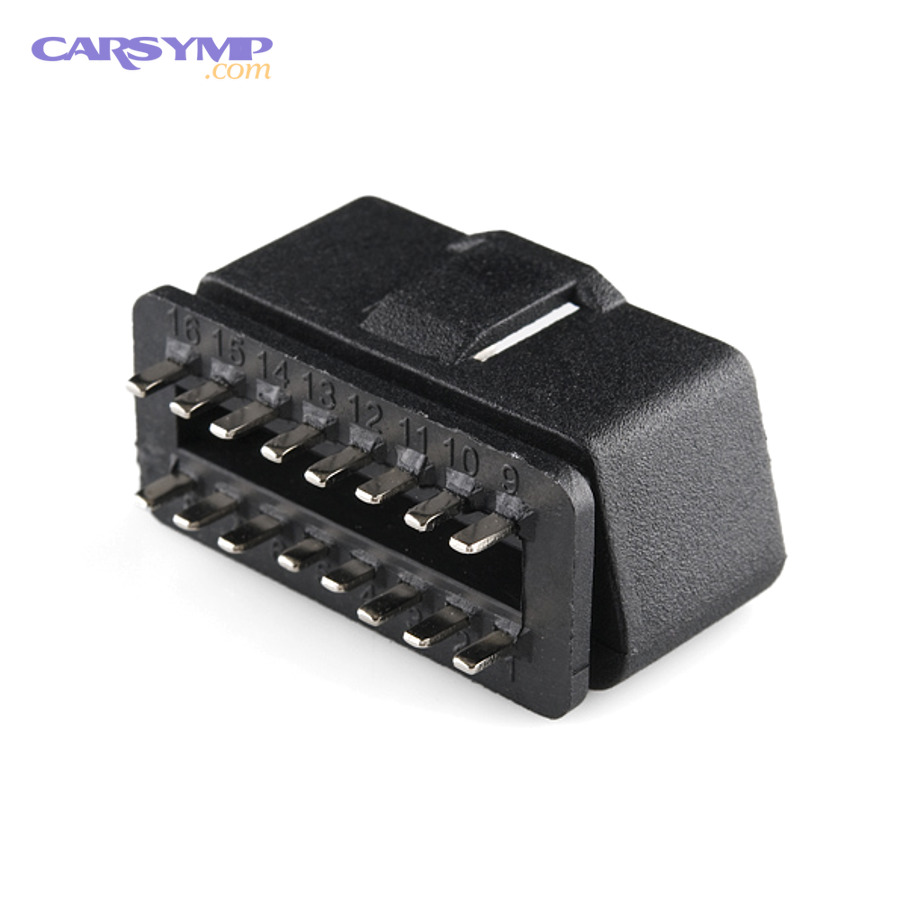
Here’s the workflow you can follow with a basic scan tool that reads live data:
- Pull stored + pending codes (don’t clear anything yet)
- Save freeze-frame for P0420/P0430 (screenshots help)
- Check readiness and drive pattern (short trips can delay/alter monitors)
- Review fuel trims (STFT/LTFT at idle and at 2,500 rpm steady)
- Look for exhaust leaks and wiring issues (especially near sensors/connectors)
- Analyze live upstream vs downstream signals under steady conditions
- Fix what you can prove, clear codes, and retest until the catalyst monitor completes
To make this easy to execute, the next H3 sections tell you what “red flags” look like at each checkpoint.
What freeze-frame data should you check first, and what “red flags” point away from the catalytic converter?
There are 6 freeze-frame fields you should check first—coolant temp, RPM, load, speed, short-term trim, and long-term trim—because they reveal whether the catalyst monitor ran under stable conditions and whether mixture control issues are likely driving the fault. (carparts.com)
More specifically, use this quick interpretation:
- Coolant temperature: If the engine wasn’t fully warm, don’t trust the monitor result yet.
- RPM + load: Catalyst monitors typically require steady cruise-like conditions; random load spikes reduce confidence.
- Vehicle speed: Helps confirm whether it occurred during cruise, decel, or acceleration.
- STFT/LTFT at time of fault:
- Large positive trims → likely lean/unmetered air/fuel delivery issue
- Large negative trims → likely rich/leaking injector/fuel pressure issue
Red flags that point away from “replace the converter now”:
- Big trims (+/-) at the time of set
- Misfire history or unstable idle at time of set
- Repeated heater or circuit codes (even if “past”)
- A code that returns immediately after clearing without completing readiness
If you capture freeze-frame before clearing, you’re already doing something most misdiagnoses skip.
How should upstream vs downstream O2 sensor live data look on a healthy system?
A healthy system typically shows an upstream sensor that switches rapidly with mixture control and a downstream sensor that changes more slowly and smoothly, because an effective converter stores and releases oxygen so the downstream signal does not mirror upstream switching under steady conditions. (rohnertparktransmission.com)
However, don’t reduce this to a single “shape.” Use the operating condition:
- Warm engine, steady cruise: best time to compare patterns.
- Light decel: can introduce oxygen and change signals; interpret carefully.
- Aggressive throttle changes: create transitions that can temporarily resemble mirroring.
If the downstream behaves almost like a duplicate of the upstream during stable cruise, your suspicion increases—but you still need to rule out leaks, trims, and sensor integrity first.
What is the quickest “cheap-first” checklist before doing advanced tests?
There are 8 cheap-first checks you should do—gas cap/obvious leaks, exhaust leak inspection, intake leak clues, misfire symptoms, oil/coolant consumption signs, sensor connector condition, wiring routing/heat damage, and recent repair history—because they eliminate the highest-frequency false causes before you chase advanced data.
Specifically, run this checklist in order:
- Recent repair history: Did the code start after exhaust work, a sensor replacement, or a tune-up?
- Exhaust joints and flex pipe: Look for soot trails, ticking sounds, loose hardware.
- Sensor connectors: Check for broken locks, green corrosion, oil intrusion.
- Wiring routing: Ensure it’s not melted against the exhaust.
- Misfire clues: Rough idle, hesitation, raw fuel smell, misfire counters if available.
- Oil/coolant clues: Blue smoke (oil), white smoke (coolant), unexplained loss.
- Fuel trims: A quick read at idle and steady 2,500 rpm can save hours.
If you approach catalyst codes the way you’d handle an EVAP leak code troubleshooting approach—start with high-probability basics—you dramatically cut the odds of buying the wrong part.
How do you compare test evidence to decide: O2 sensor, catalytic converter, or something else?
O2 sensor problems win as the diagnosis when signal integrity and response are compromised, catalytic converters win when oxygen storage performance is consistently low after upstream issues are corrected, and “something else” wins when mixture, misfire, or leak evidence explains the downstream pattern better than converter failure. (carparts.com)
Next, let’s explore the comparison the way a good troubleshooter thinks: evidence first, parts last—because this is where most O2 sensor and catalytic converter code pitfalls live.

Before you decide, it helps to see the decision logic in one place. The table below summarizes the most common evidence patterns and what they usually point to.
| Evidence pattern you observe | What it most often points to | Why it matters |
|---|---|---|
| Downstream mirrors upstream during steady cruise and trims are normal | Converter efficiency is genuinely low or exhaust leak near converter | Pattern suggests low oxygen storage buffering |
| Trims strongly positive at idle or cruise | Lean condition / unmetered air / fuel delivery | Converter monitor becomes unreliable under unstable mixture |
| O2 heater/circuit codes present (even intermittent) | Sensor integrity problem | Bad data creates bad conclusions |
| Random signal dropouts/noise on one sensor | Wiring/connector issue | Intermittent faults mimic “efficiency swings” |
| Code returns quickly without readiness completing | Underlying fault still present or monitor conditions not met | “Instant return” is not the same as a confirmed monitor fail |
If the downstream O2 sensor waveform mirrors the upstream, does that prove the catalytic converter is bad?
No—downstream mirroring does not prove a bad catalytic converter because at least three other conditions can create similar traces: (1) an exhaust leak introducing oxygen, (2) mixture control problems that destabilize oxygen storage behavior, and (3) sensor faults that distort switching behavior. (rohnertparktransmission.com)
However, mirroring is still meaningful evidence when you add context. Treat it as a high-suspicion flag that becomes a high-confidence conclusion only after:
- Fuel trims are reasonable and stable
- Misfires are not present
- No upstream air/exhaust leaks are found
- Sensor wiring/connector integrity checks out
- The condition is repeatable at steady cruise
In other words, mirroring is a clue—your job is to prove why it’s happening.
What evidence suggests an O2 sensor is the culprit rather than the catalytic converter?
There are 5 main evidence groups that suggest the O2 sensor is the culprit—heater/circuit faults, slow response, implausible readings vs trims, intermittent dropouts, and post-repair correlation—because they point to signal credibility failure rather than oxygen storage failure. (nepis.epa.gov)
Specifically, look for:
- Heater/circuit codes tied to the same bank/sensor
- Sluggish transitions (signal reacts late to throttle changes)
- Readings that contradict trims (e.g., sensor suggests lean but trims are strongly negative)
- Flatlines and noise that track bumps/heat/connector movement
- A “fix” that doesn’t behave logically (new converter but sensor data still chaotic)
A practical trick: if you wiggle the harness (safely, engine off, key on for electrical checks) and see unstable readings, you’re closer to wiring than to converter chemistry.
What evidence suggests the catalytic converter is truly failing?
There are 4 main evidence clusters that suggest a true catalytic converter failure—repeatable monitor failure after upstream fixes, consistent downstream mirroring under stable cruise, bank-specific recurrence, and signs of long-term contamination or thermal damage—because they align with declining oxygen storage capacity and conversion performance. (carparts.com)
More specifically, a true failure becomes likely when:
- You corrected mixture problems and misfires and trims are now stable
- Exhaust leaks are ruled out (especially pre-downstream sensor)
- Sensor wiring/heaters test good
- The catalyst monitor repeatedly fails under the same stable conditions
Evidence (if any): According to a study by Clemson University (Clemson-ICAR / automotive research collaborators) in 2016, experimental testing on catalysts of different ages showed oxygen storage capacity decreases with aging, which supports the diagnostic principle that aging converters lose buffering ability that OBD monitoring can detect through upstream/downstream signal comparison. (researchgate.net)
When should you clear codes and retest, and how do you avoid “fixed for a day” outcomes?
Clear codes only after you record freeze-frame and fix a proven cause, then retest by completing readiness and monitoring trims and O2 patterns—because P0420/P0430 is a monitor-driven code that can look “gone” temporarily until the catalyst monitor runs again. (carparts.com)
Then, to keep your repair from becoming a one-day placebo, treat retesting like a mini-experiment: same conditions, clean data, and a clear pass/fail definition.
Should you clear P0420/P0430 immediately after replacing an O2 sensor or fixing a leak?
Yes, but only after you’ve captured the data and verified the fix is real for at least three reasons: (1) clearing resets evidence you may need, (2) readiness monitors reset and can mask the issue temporarily, and (3) the catalyst monitor may require specific driving conditions to rerun and confirm success. (obdautodoctor.com)
However, the safe sequence is:
- Save codes and freeze-frame
- Make the repair (leak fix, wiring repair, sensor replacement, mixture correction)
- Do a brief live-data sanity check (trims stable, sensors not flatlined)
- Clear codes
- Drive to complete readiness (or at least allow the catalyst monitor to run)
- Re-scan for pending codes and monitor status
This approach mirrors how pros reduce false confidence: you don’t celebrate a blank dashboard until the monitor has had a fair chance to test the system again.
How long should you drive before trusting the fix, and what should you monitor on a scan tool?
Trust the fix after the catalyst monitor completes and stays complete with normal trims and stable O2 behavior across several steady driving cycles, because the true “pass” condition is monitor completion without code recurrence—not just the absence of a light immediately after clearing. (obdautodoctor.com)
Specifically, monitor:
- Readiness: catalyst monitor status (complete vs incomplete)
- Pending codes: a pending P0420/P0430 is an early warning
- Fuel trims: stable, not drifting toward extremes
- O2 signals: repeatable under similar conditions
If you’re using a basic scan tool, this is the simplest pro-level retest: “monitor complete + no pending code + trims stable.”
At this point, you have the complete data-first method to avoid misdiagnosis pitfalls and choose the right repair path before spending money. The next section expands into advanced, less-common factors that can still affect P0420/P0430 outcomes after you’ve followed the core workflow.
What advanced or less-common factors can influence P0420/P0430 diagnosis and repair outcomes?
Advanced factors that influence P0420/P0430 include Mode $06 thresholds, sensor type differences (narrowband vs wideband A/F), aftermarket converter calibration mismatch, and contamination-driven degradation—because each one changes how the monitor evaluates oxygen storage and how trustworthy the sensor comparisons are. (alldata.com)
Next, let’s explore these edge cases so you don’t get stuck in the frustrating loop where everything “looks fine,” but the code still comes back.
How do Mode $06 results (if available) help confirm catalyst efficiency issues?
Mode $06 helps confirm catalyst efficiency issues by showing the monitor’s internal test results and margins (pass/fail “grades”), which lets you see whether the catalyst monitor is barely passing, borderline, or consistently failing even before a code becomes permanent. (alldata.com)
More specifically, Mode $06 can help you:
- Identify a component that is near failure (borderline values)
- Separate “monitor hasn’t run” from “monitor ran and failed”
- Compare bank-specific results in a way a simple code list can’t
This is especially helpful when you’re trying to avoid the biggest pitfall of all: replacing expensive parts when the data says the failure is marginal and could be driven by another condition.
What’s the difference between narrowband O2 sensors and wideband A/F sensors in troubleshooting?
Narrowband O2 sensors win for simple switching-pattern interpretation, wideband A/F sensors are best for precise mixture control data, and downstream sensors are optimal for catalyst-monitor comparison—so the “right” data depends on whether you’re validating mixture, response, or efficiency. (link.springer.com)
However, many DIY misreads happen when someone expects a wideband A/F sensor PID to behave like a narrowband voltage switch. Practical guidance:
- Upstream wideband/A/F often reports AFR or lambda (not a simple 0.1–0.9V switch)
- Downstream may still be narrowband and used primarily for catalyst monitoring
- The scan tool may label PIDs differently depending on manufacturer
If your “upstream O2 voltage” looks weird, confirm whether it’s actually an A/F sensor and use the appropriate PID (lambda/AFR) instead of forcing a narrowband interpretation.
Can aftermarket catalytic converters cause recurring P0420/P0430 even when everything else is fine?
Yes—aftermarket catalytic converters can cause recurring P0420/P0430 because some units don’t match the vehicle’s required oxygen storage and conversion performance closely enough to satisfy the ECU’s calibrated threshold, especially on vehicles with sensitive monitoring logic. (carparts.com)
More specifically, this risk increases when:
- The converter is a low-cost “universal” fit
- The vehicle’s monitor threshold is aggressive
- The engine has minor oil consumption or mixture quirks that a weaker converter can’t buffer
This doesn’t mean “aftermarket never works.” It means you should treat converter choice as part of the diagnostic plan—especially if the rest of the system is healthy and the code still persists.
Which “contamination” problems slowly kill cats and skew O2 readings (oil burning, coolant, silicone)?
There are 4 common contamination pathways—oil burning, coolant ingestion, silicone sealant vapors, and fuel additives/lead exposure—that slowly degrade catalyst surfaces and oxygen storage behavior, causing persistent P0420/P0430 and confusing O2 patterns even after sensors are replaced. (researchgate.net)
To illustrate why this matters, contamination creates the classic “it passed for a week” trap: a new converter temporarily masks the issue until poisoning builds again. Look for:
- Oil burning: blue smoke, oily tailpipe deposits, rising oil consumption
- Coolant ingestion: sweet smell, white smoke, unexplained coolant loss
- Silicone exposure: recent gasket/sealant work using non-sensor-safe products
- Chronic rich running: soot, fuel odor, negative trims over time
Evidence (if any): According to a study by Clemson University researchers in 2016 on three-way catalyst aging and oxygen storage dynamics, aging reduces oxygen storage capacity—supporting the real-world observation that long-term degradation and contamination-related aging can push converters below monitor thresholds even if the car still “runs okay.” (researchgate.net)