


Title & outline analysis (Step 1)
– Main keyword (focus): sidewall damage and blowout risks
– Predicate (main action): assess
– Relations lexical used: Meronymy (tire → sidewall as a part of the whole; the title deliberately anchors the “sidewall” as the critical sub-entity inside the broader “tire”)
– Search-intent question types present in the outline: Definition, Boolean, Grouping, Comparison, How-to
– Primary intent: assess sidewall damage to understand blowout risk and decide when replacement is necessary
– Secondary intent 1: safety decision (is it safe to drive / should you stop immediately)
– Secondary intent 2: identify signs (bulges, cuts, cracks + driving symptoms)
– Secondary intent 3: prevention and next steps (inspection, documentation, reducing future risk)
– Answering-formula map:
• H2 #1 Definition → “X is…” + standout features + use/risk
• H2 #2 Boolean → “Yes/No” + 3 reasons + safety triage
• H2 #3 Grouping → “There are N main types…” based on severity criteria
• H2 #4 Definition → causes explained with cause→symptom mapping
• H2 #5 Comparison → “X wins in…” + repair vs replace decision criteria
• H2 #6 How-to → steps + expected outcome (accurate assessment + better shop decision)
• H2 #7 How-to/Prevention → steps + habits that reduce recurrence
A damaged tire sidewall is risky because the sidewall is the tire’s flexible load-carrying zone, and even “small-looking” damage can weaken internal cords and lead to sudden air loss—so the safest approach is to assess severity fast and treat certain signs (especially bulges) as immediate replacement situations.
Next, drivers usually want a clear yes/no answer to the real-world question: “Can I keep driving?”—and that decision depends on what the damage looks like, whether pressure is stable, and whether the tire is showing structural failure signs that predict blowout risk.
Then, you need a simple way to recognize the biggest danger signals (bulges, deep cuts, cracking that reaches cords, separation) and connect them to what you feel on the road (thumping, vibration, steering instability), so you don’t mistake a blowout-prone sidewall for harmless cosmetic wear.
Introduce a new idea: once you’ve identified risk and made the drive/no-drive call, you can move into practical inspection steps, repair-versus-replace decisions, and prevention habits that reduce the chance you’ll face the same sidewall failure again.
What is tire sidewall damage, and why does it increase blowout risk?
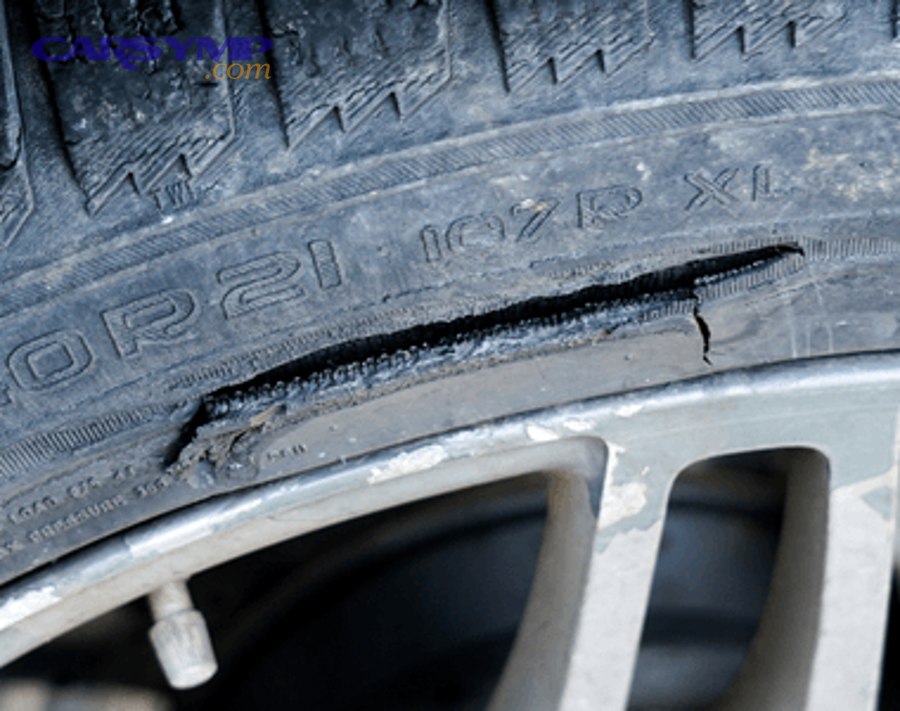
Tire sidewall damage is any cut, crack, bulge, abrasion, or separation on the tire’s sidewall that compromises (or may compromise) the internal cords and rubber structure, and it increases blowout risk because the sidewall flexes constantly and cannot safely “contain” weakness the way the tread area can.
To better understand the risk, it helps to connect the sidewall’s job to what happens when it’s injured.
The tire’s sidewall is not just a “wall.” It is a layered, flexible structure that supports the vehicle load, stabilizes the tire shape, and protects internal carcass cords. Every rotation, the sidewall bends—especially at highway speeds, during cornering, and under load. That constant flex is exactly why sidewall injuries can escalate fast: a weak spot flexes more, heats up more, and can fail suddenly.
Sidewall damage is also difficult to “judge by looks” because some of the most dangerous failures start inside the tire. A curb strike can break cords internally and produce a bubble later. A tire that was driven underinflated can have heat-damaged cords even after you inflate it back to normal. In both cases, the outside may look “mostly fine,” but the structure is not.
What counts as sidewall damage vs normal wear?
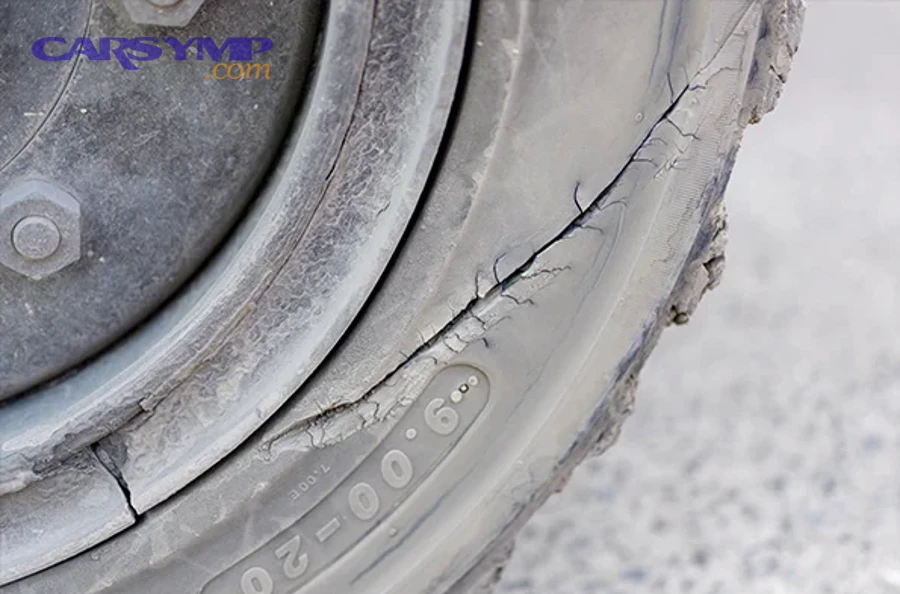
Sidewall damage includes bulges/bubbles, deep gashes, cracks that reach into the rubber layers, exposed cords, or visible separation, while normal wear usually means light scuffing or superficial “checking” that does not penetrate toward cords and does not change tire shape.
A quick practical rule is to separate cosmetic surface marks from structural red flags:
- Often cosmetic (still inspect): light curb scuffs, small superficial abrasions, mild surface checking on older tires that doesn’t deepen when you flex the rubber.
- Structural red flags: any bulge/bubble, cord/fabric showing, deep cut with jagged edges, cracks that look like “splits,” or a sidewall area that looks wavy or deformed.
If you’re unsure, assume risk and get it inspected. A sidewall is not forgiving when the structure is compromised.
Why is the sidewall considered the tire’s most vulnerable “meronymy” part?
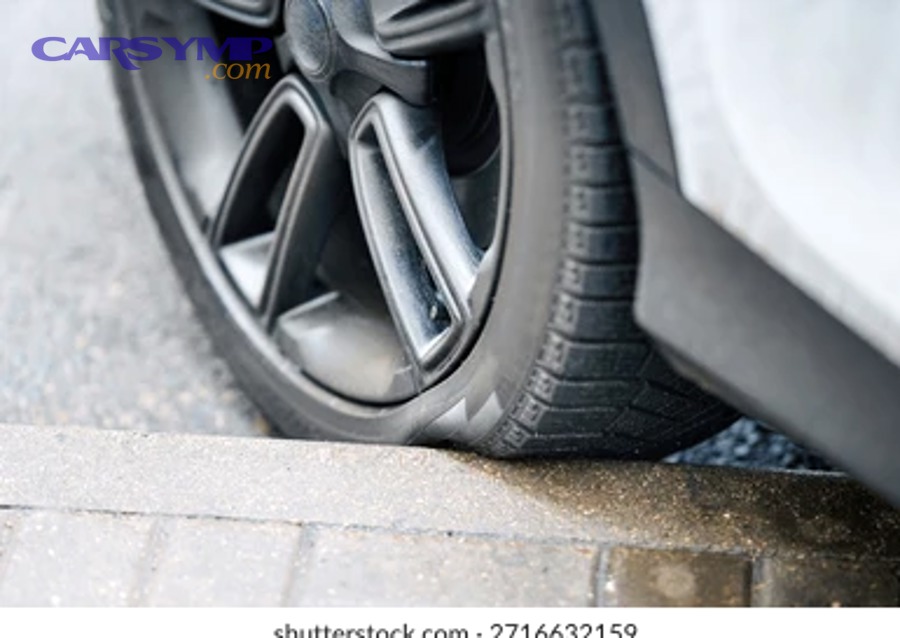
The sidewall is the tire’s most vulnerable part of the whole tire because it is thinner than the tread zone, flexes continuously, and relies on internal cords that can be damaged without obvious external clues.
This “part-to-whole” relationship matters for safety: you can sometimes repair tread-area punctures because the tread is reinforced and does not flex like the sidewall. But the sidewall is a moving hinge. Repairs don’t “hold” the same way, and a weakened sidewall can rupture with little warning—especially under heat, speed, and load.
Is it safe to drive with sidewall damage?
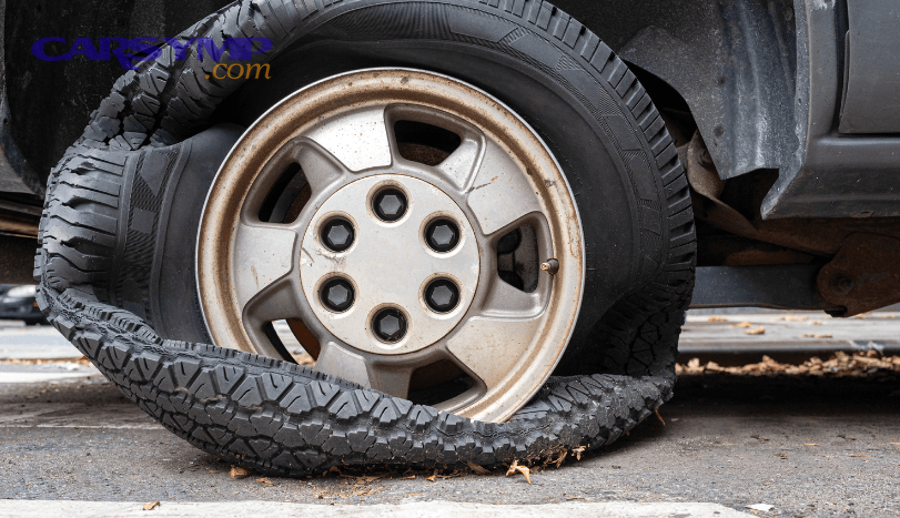
No—driving with sidewall damage is generally not safe, because (1) the sidewall can fail suddenly without warning, (2) heat and speed amplify weakness into rupture, and (3) loss of pressure at speed can cause rapid instability and loss of control.
Next, the safest way to use that “No” is to apply a severity filter so you can decide whether to stop immediately, limp slowly to help, or call for a tow.
Here’s a simple triage mindset: bulge = stop. Cord showing = stop. Deep cut = stop. Everything else gets judged by shape change, pressure stability, and symptoms.
Should you stop driving immediately if you see a bubble/bulge on the sidewall?
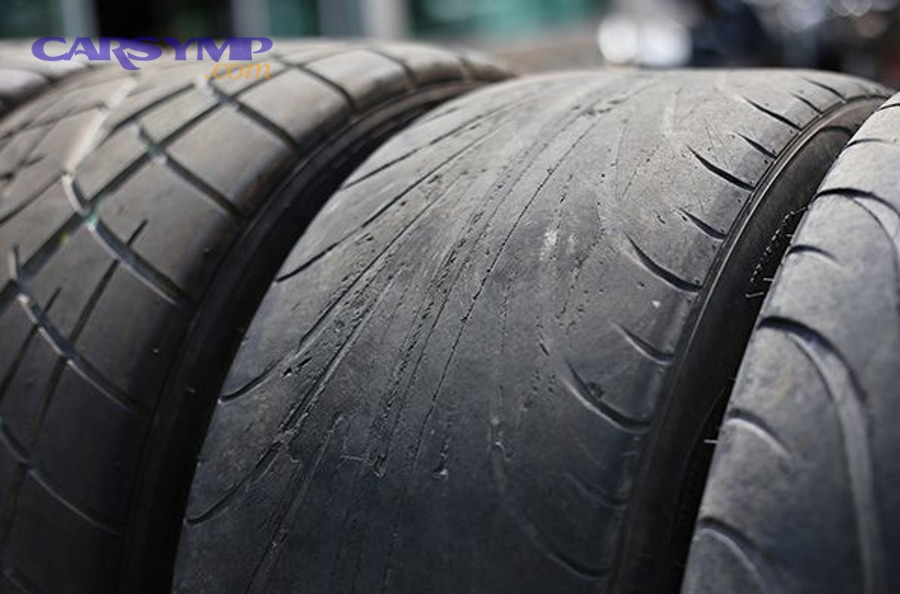
Yes—stop driving if you see a sidewall bubble/bulge, because (1) a bulge usually means broken internal cords, (2) the bulge indicates the tire is already deforming under pressure, and (3) continued driving increases heat and flexing that can trigger a blowout.
Then, treat a bulge like a “structural failure indicator,” not a cosmetic issue. A bubble forms when the tire’s internal structure can no longer hold pressure evenly. The rubber may look intact, but the strength layer beneath is compromised.
Practical actions:
- Pull over using Flat tire safety steps on the road: signal early, hazards on, move to a safe shoulder or parking lot, and keep yourself out of traffic.
- Avoid highway speed “just to make it home.” If you must move the vehicle, do it at crawling speed to a safer spot—then arrange help.
Can you drive with a cut or crack in the sidewall?
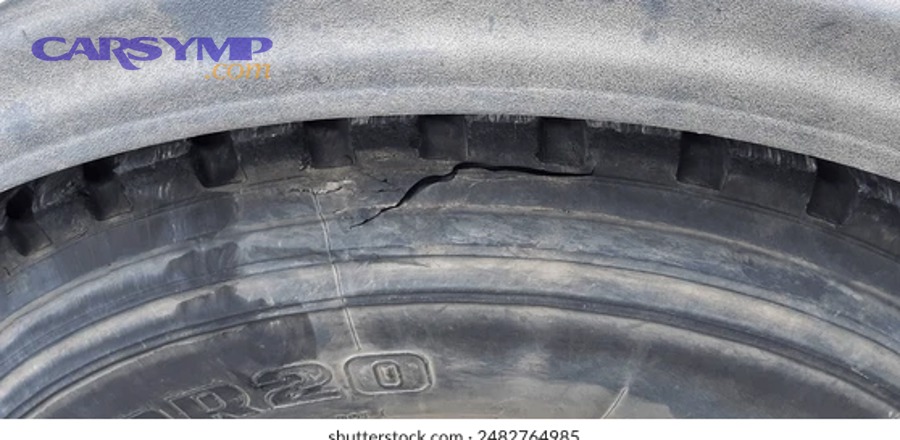
No, you should not drive with a sidewall cut or crack if it is deep or spreading, because (1) deep damage may reach cords, (2) sidewall flexing can tear it wider, and (3) a crack/cut can become a sudden air-leak or rupture under load.
However, not every crack is equal. Some older tires show surface “checking” from age and ozone exposure that looks like tiny lines. The risk rises sharply when:
- the crack looks like a split you can “open” when you flex the rubber,
- the cut has depth and jagged edges,
- you can see fabric, cords, or a different-colored layer beneath.
If you can’t confidently call it superficial, treat it as unsafe and get professional evaluation.
Is it ever okay to drive a short distance to a tire shop?
Yes, but only in limited cases: you may drive a short distance at low speed if (1) the damage is superficial scuffing only, (2) tire pressure remains stable, and (3) you feel no vibration, wobble, or pulling.
More importantly, “short distance” is not a license to drive at normal speed. If you choose this option:
- Keep speed low and avoid highways.
- Reduce load (remove heavy cargo).
- Recheck pressure frequently.
- Stop immediately if the tire shape changes or the steering feels unstable.
When a tire is losing air, your priority becomes fix flat tire safety: stop, stabilize, and decide between spare, roadside assistance, or towing—rather than gambling on “one more mile.”
What are the main signs of sidewall damage that predict blowout risk?
There are 4 main severity groups of sidewall damage—Critical, High Risk, Moderate Concern, and Low Concern—based on the criteria of shape deformation, depth into structural layers, air-loss behavior, and driving symptoms.
Next, use these groups like a checklist so you can make a fast replacement decision.
To make this easy to scan, the table below summarizes what each group usually looks like and what action it implies.
Table context: This table classifies common sidewall damage signs by severity and the safest recommended action.
| Severity group | What you see | What you feel | Safest action |
|---|---|---|---|
| Critical | Bulge/bubble, cords showing, split/separation | Wobble, thump, instability | Stop driving; replace tire |
| High risk | Deep gash, cracking that opens, localized swelling | Vibration, pull, intermittent thump | Avoid driving; tow or slow to shop if stable |
| Moderate | Noticeable abrasion, small cut not deep, aging cracks unclear | Usually none | Inspect closely; shop evaluation soon |
| Low concern | Light scuffing, superficial marks | None | Monitor; avoid curbs; recheck often |
Which sidewall damage signs are “replace now” red flags?
There are 5 common “replace now” red flags: (1) bulge/bubble, (2) exposed cords/fabric, (3) deep gash reaching inner layers, (4) visible separation or cracking that looks like a split, and (5) rapid pressure loss or repeated reinflation needs.
Then, treat these as non-negotiable because they point to structural failure, not surface wear.
Details that matter:
- Bulge/bubble: internal cord failure is likely.
- Cord showing: the strength layer is already exposed and vulnerable.
- Separation: the tire’s layers are no longer bonded properly.
- Rapid air loss: the tire is actively failing, and heat builds quickly at low pressure.
Which signs suggest “high risk soon” even if the tire holds air?
There are 4 “high risk soon” signs: (1) cracks that are spreading and deepening, (2) a bruised-looking spot after impact, (3) recurring TPMS alerts after you inflate, and (4) any sidewall area that looks wavy or uneven compared to the rest.
Next, the key is to respect “holds air” as a weak comfort signal. A tire can hold air and still be structurally damaged.
Common scenarios:
- After a pothole hit, you see no leak—but a bubble appears days later.
- After driving low on air, the tire inflates—but internal heat damage remains.
- The tire looks “OK” until the next long, hot highway drive pushes it past the failure threshold.
What symptoms can you feel while driving that may indicate sidewall failure?
There are 3 major driving symptoms that can indicate sidewall failure: (1) rhythmic thumping or wobble that changes with speed, (2) steering pull or instability, and (3) sudden vibration paired with a TPMS warning or pressure drop.
Then, treat these symptoms as a reason to stop and inspect immediately, because they can reflect a tire deforming under load.
If you feel a new thump after a curb strike, do not assume it’s “just balance.” A damaged sidewall can create a lumpy contact patch that gets worse as speed and heat rise.
What causes sidewall damage and blowouts?
Sidewall damage and blowouts are most commonly caused by impact damage, underinflation heat buildup, overloading, aging/UV/ozone exposure, and sustained high-temperature operation, and each cause leaves a typical pattern you can learn to recognize.
Next, mapping cause → pattern helps you predict whether the damage is structural (dangerous) or superficial (monitorable).
The sidewall fails when stress exceeds strength. Stress rises with speed, heat, load, and flexing. Strength falls with cord damage, deep cuts, aging rubber, and separation.
How do potholes and curb strikes create sidewall bubbles?
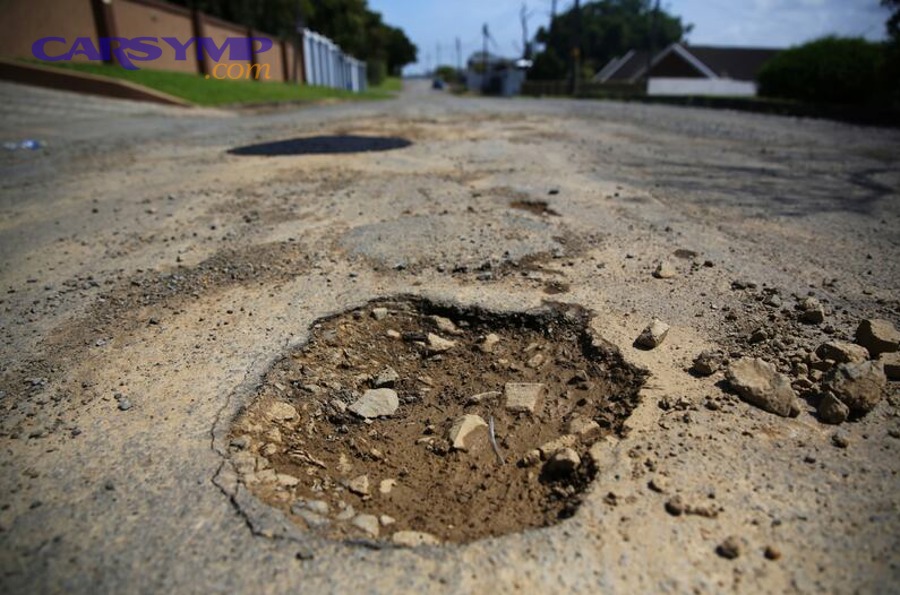
Potholes and curb strikes create sidewall bubbles by pinching and shocking the tire, which can break internal cords even when the outer rubber looks intact.
Then, the bubble is basically pressure pushing outward where the internal “net” has torn.
Why bubbles may appear later:
- The impact damages cords internally.
- The tire continues flexing and heating.
- The weakened area gradually deforms until the bubble becomes visible.
This is why a bubble is treated as an urgent replacement sign: it often represents internal structural failure that has already progressed.
How does underinflation lead to overheating and blowout risk?
Underinflation increases blowout risk by forcing the sidewall to flex more, which generates heat, accelerates wear, and can weaken internal components until the tire fails.
More specifically, low pressure changes the tire’s shape, increasing sidewall bending. That bending turns into heat. Heat weakens rubber and cord bonding. Eventually, the structure cannot hold pressure and load.
This is also where people get misled during a Finding the leak with soapy water test: you may find a slow leak, inflate the tire, and think you solved it. But if you drove underinflated for long enough, the tire may have internal heat damage even after the leak is fixed. A professional inspection matters if the tire ran low at speed.
Evidence: According to a study by the National Highway Traffic Safety Administration’s National Center for Statistics and Analysis, in 2012, tires underinflated by 25% or more were about 3 times as likely to be cited in vehicles that experienced tire problems in the pre-crash phase, compared with correctly inflated tires.
How do tire age and UV exposure change sidewall cracking severity?
Age and UV/ozone exposure change sidewall cracking severity by hardening the rubber and reducing flexibility, which makes cracks deepen and increases the chance that small surface checking turns into structural weakness.
Then, the key is to separate “age marks” from “danger cracks”:
- Surface checking: fine lines, often uniform, not opening into deep splits.
- Structural cracking: deeper, irregular, can open when flexed, may indicate material degradation.
Older tires can look “fine” in tread depth and still be risky in sidewalls—especially if stored in sun, heat, or harsh environments.
When should you replace vs repair a tire with sidewall damage?
Repair wins for tread-area punctures in the safe repair zone, replacement is best for sidewall damage, and “drive-and-monitor” is only reasonable for superficial scuffing with stable pressure and no symptoms.
Next, this is where many drivers make a costly and dangerous mistake: they assume a plug kit can solve everything.
A plug kit can be useful for an emergency tread puncture, but sidewall injuries are different because the sidewall flexes and the structure is critical. A repair that might survive in the tread may fail in the sidewall.
Why can’t sidewall punctures be safely plugged or patched like tread punctures?
Sidewall punctures usually cannot be safely plugged or patched because the sidewall flexes continuously, the puncture may damage cords, and repairs are stressed in a way that increases the chance of sudden failure.
More specifically:
- A plug relies on compression and stability to seal; sidewall flex works against that seal.
- A patch relies on bonding; repeated flex and heat can weaken the bond.
- A compromised sidewall can rupture even if it “seems sealed.”
This is why the repair conversation often becomes a Plug kit vs patch vs replace comparison:
- Plug kit: emergency, typically tread only, temporary mindset.
- Patch/plug combo (professional): best practice for many tread punctures.
- Replace: the standard answer for structural sidewall damage, bubbles, cords, and separation.
How do you tell the difference between shoulder damage and true sidewall damage?
Shoulder damage is at the edge of the tread where rubber is thicker and more reinforced, while true sidewall damage is on the vertical side where the tire flexes most and repairs are typically unsafe.
Then, use physical cues:
- The shoulder is close to tread grooves and has a more “tread-like” texture.
- The sidewall is smoother, marked with tire specs, and curves toward the rim.
If the injury sits on the sidewall where tire specs are printed, treat it as sidewall damage and elevate the risk level.
Should you replace one tire or two on the same axle?
Replace one tire when the other tire on the axle has similar wear and the vehicle manufacturer allows it, but replace two on the same axle when tread depth differences or traction balance could affect handling—especially in wet conditions or on vehicles sensitive to mismatched rolling diameter.
More importantly, stable handling is part of safety. A new tire paired with a heavily worn tire can create uneven grip and braking behavior. On AWD vehicles, mismatched circumference can also stress the drivetrain, so checking the owner’s manual is smart.
Evidence: According to a study by the University of Michigan Transportation Research Institute (UMTRI) from its Center for National Truck Statistics, in 2000, crash-record analysis in a blowout-resistant tire report noted a significant linkage between fatalities involving tire blowouts and front-tire involvement, highlighting how blowout location and vehicle dynamics can amplify crash risk.
How do you inspect and document sidewall damage correctly?
A correct sidewall inspection is a 6-step method—secure the vehicle, clean and visually scan, check shape, check pressure behavior, check for symptoms, and document findings—so you can accurately assess blowout risk and make the safest repair-or-replace decision.
Next, this inspection approach protects you from two common mistakes: ignoring hidden structural damage and overreacting to harmless scuffs.
Step-by-step inspection (practical and driver-friendly):
- Park safely on level ground; set the parking brake; keep hazards on if roadside.
- Clean the area with a damp cloth so you can see the true edges of cracks or cuts.
- Scan the full sidewall by rolling the car slightly (or moving a few feet) to see the portion that was on the ground.
- Check tire shape from multiple angles—look for bulges, waviness, or uneven “shadow lines.”
- Measure and monitor: note cut length, crack depth appearance, and whether pressure drops over time.
- Decide action: replace/stop if red flags appear; otherwise schedule a shop inspection.
What quick inspection steps should drivers follow on the roadside?
Roadside inspection should follow three priorities: safety first, fast triage, and minimal exposure to traffic.
Then, apply these Flat tire safety steps on the road before you focus on the tire:
- Pull as far from traffic as possible on a firm surface.
- Turn on hazards and set reflective triangles if available.
- Stand on the non-traffic side of the vehicle whenever possible.
Quick triage checklist:
- Look for bulge/bubble (stop driving if present).
- Look for cord exposure or deep gash (stop driving).
- Listen for hissing (active leak).
- Check the tire’s “squat” or deformation compared to others.
If the tire is clearly unsafe, do not attempt to “limp it.” Use a spare, call roadside help, or tow.
What should you record (photos, DOT date, pressure, location of damage) before visiting a shop?
Record five items so a technician can make a faster and more accurate call: (1) photos from multiple angles, (2) location on tire (outer/inner sidewall), (3) pressure reading and whether it holds, (4) DOT date code and tire size/specs, and (5) what event likely caused it (curb strike, pothole, underinflation).
More specifically:
- Take one photo that shows the whole tire and wheel for context.
- Take close-ups with a coin or ruler for scale.
- Note whether the damage appeared immediately after an impact or later.
This documentation also helps if you’re dealing with road-hazard coverage or warranty discussions.
Evidence: According to a study by the National Highway Traffic Safety Administration’s National Center for Statistics and Analysis, in 2012, tire-related data from national crash causation surveys showed that a meaningful share of crashes involved tire problems in the pre-crash phase, reinforcing why consistent inspection and tire-condition awareness can reduce risk.
How can you reduce future sidewall damage and blowout risks?
You can reduce future sidewall damage and blowout risks with 4 prevention pillars—maintain correct pressure, avoid impact habits, manage load and heat, and catch aging early—so the tire’s sidewall stays within its designed flex and temperature limits.
Next, prevention works best when you target the most common failure multipliers: low pressure + heat + impact.
How do proper inflation and TPMS checks prevent sidewall failures (and what can TPMS miss)?
Proper inflation and TPMS checks prevent sidewall failures because (1) correct pressure reduces excess sidewall flex and heat, (2) pressure stability protects internal cord bonding, and (3) early alerts help you avoid driving underinflated for long periods—while TPMS can miss slow losses or may not warn until pressure is significantly low.
More specifically:
- TPMS is a warning tool, not a precision instrument.
- A monthly manual gauge check often catches gradual losses before TPMS triggers.
- Pressure should be checked cold (before driving) for accuracy.
If you’re frequently topping up a tire, don’t guess—do Finding the leak with soapy water test around the valve stem, bead area, and tread punctures, and then confirm the fix with a recheck. That reduces repeated low-pressure driving that can quietly damage sidewalls.
Do run-flat tires change sidewall damage risk or replacement rules?
Run-flat tires can reduce immediate immobilization after a pressure loss, but they do not eliminate sidewall risk, and they can still require replacement after being driven underinflated because internal sidewall support structures may be heat-damaged.
Then, follow the manufacturer’s limits on distance and speed after a loss of pressure. Driving beyond those limits increases heat and can destroy the tire’s internal structure even if the outside looks acceptable.
Practical takeaway:
- Run-flat is a mobility feature, not a “repairable sidewall” feature.
- If a run-flat was driven at low pressure, treat it as a high suspicion tire and get it inspected or replaced per guidance.
What does the DOT date code tell you about sidewall cracking risk?
The DOT date code tells you the tire’s manufacture week and year, which helps you estimate age-related cracking risk because rubber properties degrade over time from heat cycles, ozone, and UV exposure.
More specifically, older tires are more likely to show sidewall checking and reduced elasticity. Even with good tread depth, age can raise failure risk in the sidewall—especially if the tire has been stored outdoors or exposed to intense sun.
A practical habit is to pair age awareness with inspection frequency:
- Newer tires: routine checks.
- Older tires: more frequent sidewall crack monitoring, especially before long trips.
What is a “zipper rupture,” and why does heat damage after low pressure matter?
A zipper rupture is a type of rapid tire failure associated with weakened cords that can occur after a tire has been operated underinflated and heat-damaged, and it matters because reinflating the tire does not reverse internal cord degradation.
Then, the prevention lesson is simple: don’t treat underinflation as a “temporary inconvenience.” If you drove on a tire that was noticeably low—especially at highway speed—assume internal damage is possible and inspect carefully.
Evidence: According to a study by the University of Michigan Transportation Research Institute (UMTRI) from its Engineering Research Division, in 2000, technical observations in blowout-focused reporting emphasized how tire failure dynamics and operating conditions can influence crash outcomes, supporting the practical safety rule that preventing heat and structural damage is more effective than relying on emergency recovery.
Evidence (if any)
According to a study by the National Highway Traffic Safety Administration’s National Center for Statistics and Analysis, in 2012, tires underinflated by 25% or more were reported as about 3 times as likely to be associated with tire problems in the pre-crash phase compared with correctly inflated tires, reinforcing the safety value of correct pressure and early intervention.