


Preventing future flats and punctures comes down to one repeatable system: keep tires properly inflated, keep tread and sidewalls healthy, avoid impact damage, and catch slow leaks early before they become full flats. This guide turns that system into a practical routine you can actually follow.
Next, you’ll get a simple checklist (tools + inspection timing) that makes flat prevention automatic, not a once-a-year “I should do that” task that slips away.
Then, you’ll learn how the biggest flat triggers—wrong PSI, temperature swings, worn tread, road hazards, and neglected rotation/alignment—quietly stack the odds against you, and exactly what to do to reverse that.
Introduce a new idea: sometimes the smartest “prevention” is knowing what happens after damage—When a puncture can’t be repaired, how to choose patch vs plug vs replacement, and which products (sealants, run-flats, tire types) genuinely reduce repeat flats—so you’re prepared either way.
What is the simplest checklist to prevent future flats and punctures?
The simplest checklist is a 5-minute monthly tire routine plus two smart habits (drive-impact avoidance and quick leak checks) that prevent most flats by catching pressure loss, tread damage, and embedded objects early.
To begin, the reason this works is simple: most flats are not instant “blowouts”—they start as small pressure loss, small punctures, or impact damage that grows until the tire can’t hold air anymore.
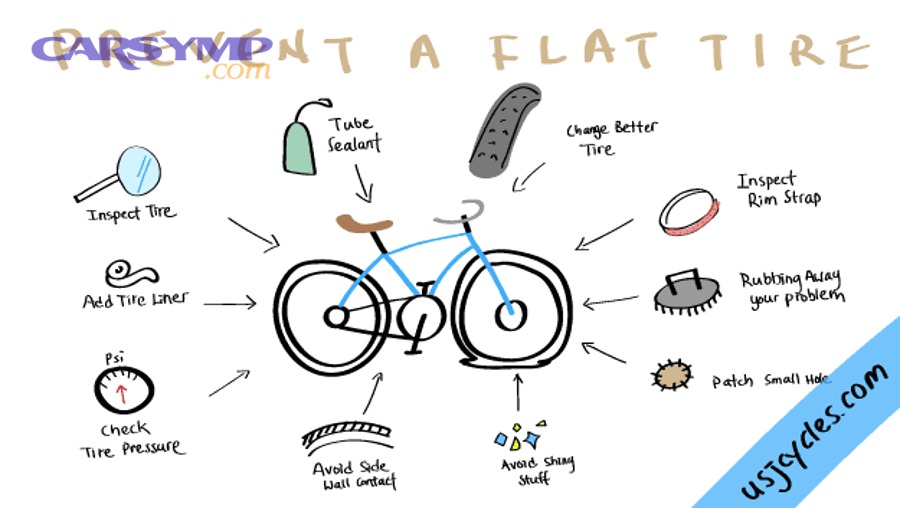
Which tools should you keep in the car to prevent and handle flats?
You should keep a pressure gauge, portable inflator, tread depth gauge (or coin), valve caps/cores, and a basic plug kit so you can prevent pressure-related failures and safely stabilize a tire if you get caught far from help.
More specifically, the best “prevention” tools are the ones that help you measure and correct small problems before they turn into a roadside event:
- Digital tire pressure gauge (or a quality pencil gauge): lets you confirm PSI rather than guessing from a TPMS light.
- 12V portable inflator: turns “low pressure” into a 3-minute fix instead of a slow leak that destroys the tire.
- Tread depth gauge (cheap, accurate) or a coin test: helps you spot “still holding air but unsafe” tires.
- Valve caps + spare valve cores (optional but useful): tiny parts that can cause slow leaks if missing or damaged.
- Plug kit (emergency use): can temporarily stabilize a tread puncture so you can drive to a shop.
- Soapy water in a small spray bottle (or a travel soap + water mix): perfect for finding leaks at home after a suspicious pressure drop.
- Gloves + small flashlight: because sharp debris and dark wheel wells are a bad combo.
If you ever need to fix flat tire on the road, those tools also reduce panic—because you’re solving a known problem with a known kit, not improvising.
How often should you inspect tires to catch punctures early?
You should inspect tires once a month, before long trips, and immediately after you hit a pothole hard or drive through debris—because early punctures and sidewall damage are easiest to fix when they’re small.
In addition, use a simple cadence that’s easy to remember:
- Monthly (5 minutes): check PSI, quick tread/sidewall scan, look for nails/screws.
- Every fuel fill (30 seconds): quick visual walk-around for a tire that “looks lower” than the others.
- After a hard impact: inspect the sidewall and inner shoulder (where damage hides).
- Season changes: temperature swings often trigger low-pressure events; be proactive.
According to a safety brochure by the U.S. National Highway Traffic Safety Administration, drivers should check tire pressure at least once a month and inspect tires for damage and foreign objects as part of a regular checklist.
Does correct tire pressure really prevent flats and punctures?
Yes—correct tire pressure prevents flats and punctures because it reduces heat buildup, sidewall flex, pinch damage, and uneven tread stress, all of which make punctures more likely and failures more sudden.
Then, the key is knowing which number matters and why “close enough” becomes expensive over time.
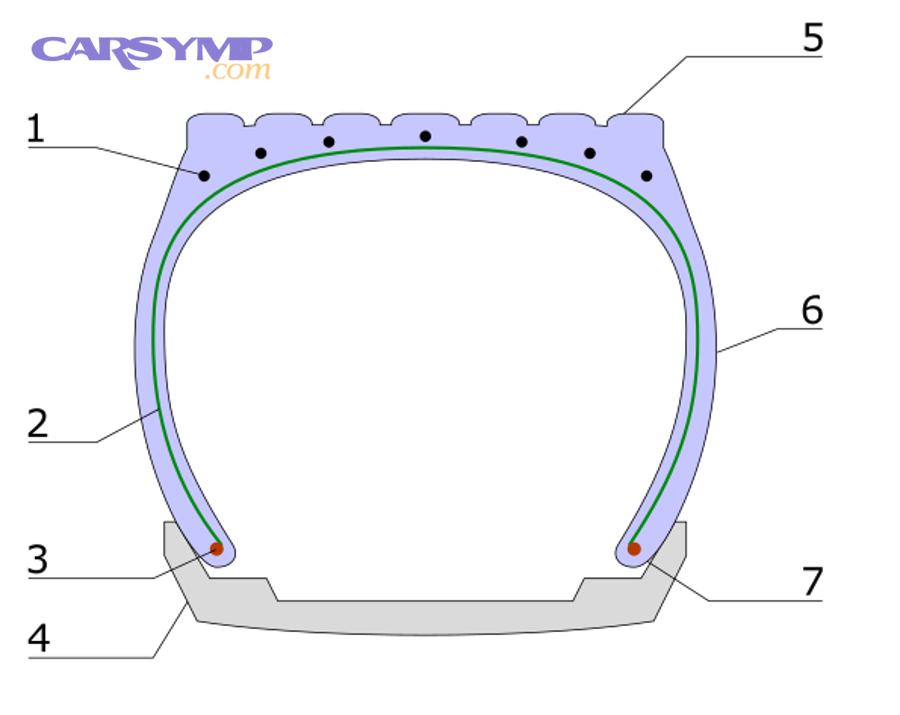
What PSI should you use (door placard vs sidewall maximum)?
You should use the vehicle manufacturer’s recommended PSI on the door placard, not the tire sidewall maximum, because the placard PSI is tuned for your vehicle’s weight, handling, and load balance.
Specifically, treat the two numbers like this:
- Door placard PSI = target operating pressure (what you set your tires to when cold).
- Sidewall PSI = maximum the tire can safely hold (not a recommendation for your car).
A simple way to get it right every time:
- Check PSI when tires are cold (parked for ~3 hours or more).
- Inflate to the door placard PSI (front/rear may differ).
- Recheck after adding air—small inflators can overshoot.
According to a U.S. National Highway Traffic Safety Administration summer driving tips bulletin, drivers should inflate to the vehicle manufacturer’s recommended pressure on the placard and avoid using the tire sidewall number, which is the maximum pressure, not the recommended setting.
How do temperature changes cause low pressure and slow leaks?
Temperature changes cause low pressure because air contracts in cold weather, lowering PSI, and that lower PSI increases flex and stress—making small leaks worse and turning minor punctures into repeat flats.
Moreover, temperature swings also reveal weak points:
- A borderline valve core may leak more when rubber stiffens in cold conditions.
- A bead seal (where tire meets wheel) may leak if corrosion is present and contraction opens micro-gaps.
- A slow puncture may drop pressure faster when PSI starts lower.
Practical prevention moves:
- Add “PSI check” to the first cold week of each season.
- If one tire repeatedly drops more than the others, do the soapy water test and don’t just top it off forever.
How does tread depth and tire condition reduce puncture risk?
Tread depth and tire condition reduce puncture risk by improving how the tire absorbs debris and sheds water, while a healthy casing (no cracks, bulges, or exposed cords) prevents small damage from becoming a sudden loss of air.
Next, think of tire health as two layers: what you can measure (tread depth) and what you must visually verify (structural condition).
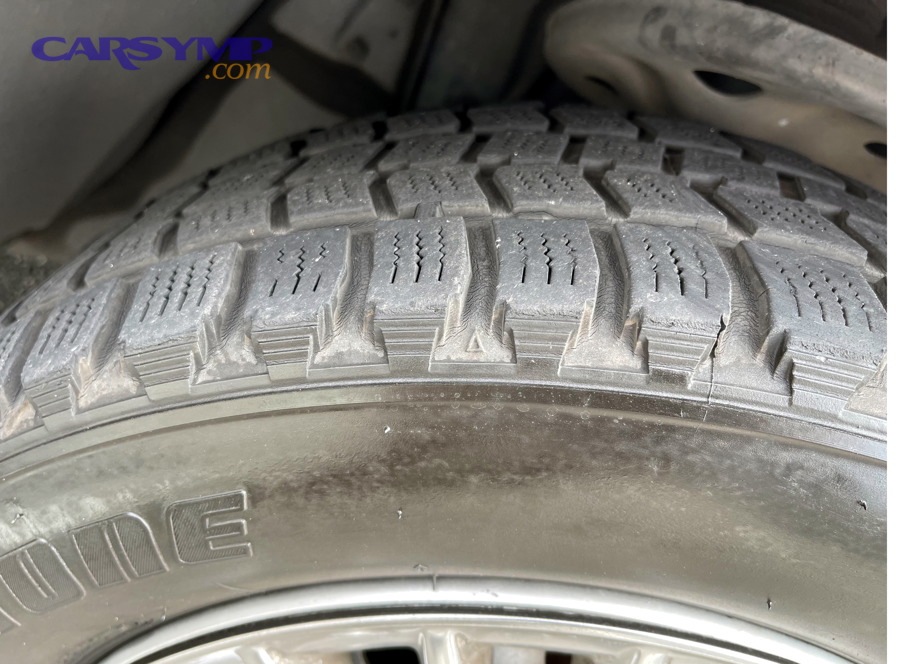
How do you measure tread depth accurately at home?
You can measure tread depth accurately at home using a tread depth gauge (best) or a coin test (quick) to confirm you still have enough tread to grip and resist hydroplaning—especially in rain.
To illustrate, here’s a reliable at-home method:
- Measure three spots across the tread (inner, center, outer).
- Measure at multiple points around the tire (front, back, both sides).
- Compare results:
- Big differences across the tread often indicate alignment issues.
- Front vs rear differences often indicate a need for rotation.
What numbers matter most for safety:
- 2/32″ is widely treated as a minimum replacement threshold (legal minimum in many places), but wet traction and stopping distances degrade before that.
- Many safety-focused drivers start shopping around 4/32″ for rain performance.
According to a U.S. National Highway Traffic Safety Administration bulletin, tread should be at least 2/32 inch, and drivers can use wear bars or the penny test (Lincoln’s head) to know when replacement is needed.
What visual signs indicate a tire is unsafe even if it holds air?
A tire can be unsafe even if it holds air when you see sidewall bulges, deep cracks, exposed cords, uneven wear patterns, or repeated puncture damage, because those signs point to structural weakness—not just air loss.
However, many drivers miss danger because they focus only on “does it go flat?” Watch for these high-risk signs:
- Bulge/blister on sidewall: often indicates internal damage from impact; this can fail suddenly.
- Cuts, gouges, or chunking: especially on the sidewall or shoulder.
- Cracking/dry rot: rubber degradation that can cause leaks and separation.
- Cupping/scalloping: often suspension/balance issues that weaken the tire over time.
- One-edge wear: a strong hint your alignment is off (increases puncture risk and shortens tire life).
- Objects embedded in tread: screws/nails can be slow leaks for weeks.
If you find any of these, prevention means escalation: stop “monitoring” and start diagnosing (or get a shop inspection), because “still holding air” is not the same as “still safe.”
Can road hazards and driving habits increase puncture frequency?
Yes—road hazards and driving habits increase puncture frequency because impacts and sharp debris cause pinch cuts, sidewall damage, tread punctures, and bead leaks, even when the tire looks fine at first glance.
To better understand why repeat flats happen, you have to look beyond the tire itself and include what the tire is being asked to survive every day.
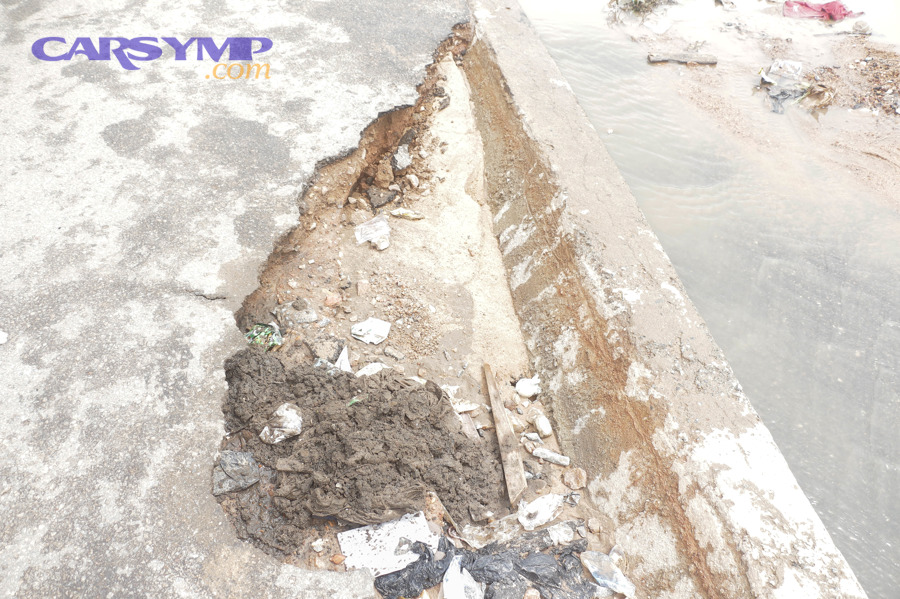
Which road hazards most commonly cause punctures and sidewall damage?
The most common road hazards are nails/screws, broken glass/metal, potholes, sharp curbs, and construction debris, because they either pierce the tread or crush the tire against the wheel, damaging the sidewall and bead seal.
Specifically, here’s how each hazard creates a different “flat pattern”:
- Nails/screws (tread area): often a slow leak; repairable if located in the safe repair zone.
- Potholes: can create a pinch impact that damages the sidewall internally (bulge later) or bends a rim (slow leak).
- Curbs: can scuff or cut the sidewall; repeated curb contact can weaken the casing.
- Debris fields: industrial zones, highway shoulders, and construction routes often have “puncture clusters.”
- Road seams / broken pavement edges: act like a blade against a low-pressure tire.
According to a U.S. National Highway Traffic Safety Administration tire safety brochure, drivers should slow down for potholes and avoid striking curbs, because impacts can damage tires and contribute to failures.
How should you drive to avoid pothole cuts and pinch flats?
You should drive to avoid pothole cuts and pinch flats by slowing before impact, avoiding hard braking into the hole, keeping safe following distance, and not swerving late, because last-second maneuvers often cause worse wheel-and-sidewall damage.
Meanwhile, a few driving habits dramatically reduce your odds of impact flats:
- Scan 10–12 seconds ahead in city driving (look for patched asphalt, puddles hiding holes, construction zones).
- Don’t tailgate—you need time to see debris the car in front of you blocks.
- Slow down before the pothole (braking during impact loads the front tires heavily).
- Avoid “curb kisses” when parking; approach slowly and straighten the wheel before contact.
- If you must hit it: keep steering straight and roll through gently rather than turning mid-impact.
If you’re frequently in pothole territory, consider prevention through selection: slightly taller sidewalls (not ultra-low-profile) and strong all-season touring tires often survive city impacts better than thin-wall performance tires.
What maintenance actions prevent repeat flats over time?
The maintenance actions that prevent repeat flats are regular rotation, balancing, alignment checks, and periodic replacement of small sealing parts (valve stems/TPMS seals), because most “mystery flats” are either uneven wear problems or slow leaks from aging components.
Besides daily driving, tire reliability is built in the shop and in your driveway—through routine maintenance that keeps the tire wearing evenly and sealing properly.
How do tire rotation, balancing, and alignment prevent uneven wear?
Rotation, balancing, and alignment prevent uneven wear by keeping tread depth more uniform across all tires, reducing thin spots and edge wear that invite punctures, vibration, and early replacement.
Specifically:
- Rotation spreads workload so one tire doesn’t become the “thin link.”
- Balancing reduces vibration that can contribute to irregular wear and stress.
- Alignment ensures the tire rolls straight instead of being dragged across the road at a slight angle (which can wear shoulders quickly).
A practical schedule that works for many drivers:
- Rotate every 5,000–7,500 miles (or per manual / tire shop recommendation).
- Balance when you feel vibration, after repairs, or when mounting tires.
- Check alignment when you notice pulling, after pothole impacts, or when installing new tires.
AAA notes that tires perform best and wear safely when air pressure, tread depth, balance, and wheel alignment are all kept in spec, and that monthly inspections make small problems easier to catch early.
When should you replace valve stems, TPMS seals, or wheel components?
You should replace valve stems, TPMS seals, or related wheel sealing parts when you see recurring slow leaks, cracked rubber, corrosion around the stem, or after tire replacement, because aging rubber and worn seals are common leak sources that won’t be solved by reinflating.
Especially important details:
- Rubber valve stems age and crack—sun, heat, and ozone accelerate this.
- TPMS sensors often use service kits (seals/grommets/cores) that should be refreshed during tire service (especially if leaks appear).
- Bent wheels or bead corrosion can cause “mystery” PSI loss that mimics punctures.
If one tire repeatedly loses pressure and you’ve already ruled out a tread puncture, treat the valve stem/TPMS area as a top suspect—not an afterthought.
When a puncture can’t be repaired, what should you do next?
When a puncture can’t be repaired, you should stop relying on temporary fixes, replace the tire (or the pair when required), and verify the wheel and sealing surfaces, because driving on non-repairable damage risks sudden failure and repeat flats.
More importantly, knowing When a puncture can’t be repaired is a prevention skill—because it prevents you from trusting a tire that shouldn’t be trusted.
Which puncture locations are non-repairable (sidewall, shoulder, large holes)?
Non-repairable punctures typically include damage in the sidewall, the shoulder/edge of the tread, large holes, and damage with internal structural compromise, because those areas flex heavily and repairs can’t restore safe casing strength.
To illustrate a safe mental model, think “repair zone” vs “no-repair zone”:
- Repair zone: central tread area (not near the sidewall/shoulder).
- No-repair zone: shoulder + sidewall (flex + stress make repairs unreliable).
Also treat these as red flags:
- Multiple punctures close together
- Run-flat on zero pressure beyond safe distance (may be structurally damaged)
- Visible cords or a bulge
- Long gashes or torn rubber
A major tire retailer notes that repairability depends on location and size, and that only certain tread-area punctures qualify for safe repair after inspection.
How to choose between patch, plug, or tire replacement safely?
Patch wins for long-term safety, a plug can be a short-term emergency stabilizer, and replacement is the only safe option when the damage is outside the repair zone or the tire structure is compromised.
On the other hand, many drivers hear “plug kit” and assume it’s the permanent solution. Use this simple comparison:
1) Plug (external, from the outside)
- Best for: emergency tread puncture stabilization.
- Limits: doesn’t inspect the inside; can miss secondary damage.
- Use case: get you safely to a tire shop, not “forever.”
2) Patch (internal patch) or patch-plug combo
- Best for: professional repair of a repairable tread puncture.
- Strength: seals from inside, allows internal inspection, more durable.
3) Replace
- Best for: sidewall/shoulder damage, large holes, structural issues, repeated repairs, or very low tread.
- Safety benefit: removes uncertainty.
Tire repair cost estimate (typical ranges)
The table below summarizes typical price ranges for common tire-related services so you can plan costs and avoid repeated “cheap fixes” that lead to bigger bills.
| Service | What it usually includes | Typical price range |
|---|---|---|
| Basic puncture repair (patch/plug) | Repair + recheck | ~$20–$50 in many areas |
| Tire repair (average) | Varies by region/vehicle | ~$54–$64 average estimate |
| Rotation | Rotate positions | ~$60–$72 average estimate |
| Rotation + balance | Rotate + balance | ~$112–$132 average estimate |
Kelley Blue Book’s service estimates list average price ranges for tire repair and rotation services, reflecting typical market pricing that varies by vehicle and location.
Which products and upgrades actually help prevent future flats?
The products and upgrades that actually help prevent future flats are quality tires matched to your roads, proper inflation tools, and (in some cases) run-flat or self-sealing options, while gimmicky add-ons usually fail because they don’t address the real causes: pressure loss, impact damage, and wear.
Next, the goal is to separate “sounds useful” from “reduces repeat flats in real driving.”
Are tire sealants and run-flat tires worth it (pros/cons)?
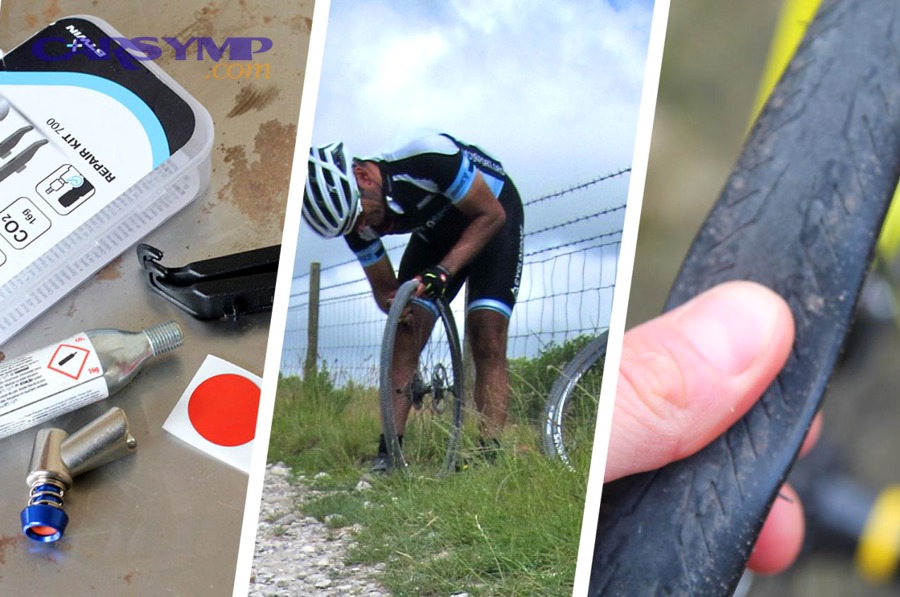
Sealants can be worth it for certain tread punctures, run-flats can be worth it for drivers who prioritize mobility after a puncture, and both have trade-offs that matter for safety, repairability, and cost.
Specifically:
Tire sealant / inflator kits
- Pros: fast roadside recovery from small tread punctures; may prevent being stranded.
- Cons: not for sidewall damage; may complicate some repairs; some sealants are messy and temporary.
- Best for: commuters, vehicles without a spare, drivers in low-shoulder areas.
Run-flat tires
- Pros: can drive limited distance after pressure loss (mobility and safety).
- Cons: stiffer ride, often higher cost, may be non-repairable after being driven flat, fewer options in some sizes.
- Best for: drivers who value “keep moving” more than comfort and cost.
If you ever need to use sealant, use it correctly—because misuse turns a minor puncture into a ruined tire. Here’s a reputable how-to video from an automaker showing proper kit use:
And here’s the safety checklist embedded in the phrase you asked for: How to use a tire inflator and sealant safely:
- Park safely, hazard lights on, and keep the vehicle stable.
- Confirm the puncture is in the tread (not the sidewall) and the tire isn’t shredded.
- Follow the kit’s order (sealant first vs compressor first depends on the kit).
- Inflate to the door placard PSI and drive slowly to distribute sealant.
- Treat it as temporary—get professional inspection and repair ASAP.
AAA also explains that many vehicles now come with inflator/sealant kits and describes the typical procedure (pump + sealant) as a way to address certain punctures when no spare is provided.
What tire type should you buy for your roads (all-season vs touring vs LT)?
All-season tires are best for mixed everyday conditions, touring tires are best for comfort and long wear on paved roads, and LT (light truck) tires are best for heavy loads, rough surfaces, and work use—so the right choice depends on the roads that keep puncturing your tires.
Meanwhile, here’s a simple “match your reality” guide:
- City potholes + curb risks: prioritize stronger construction and reasonable sidewall height; touring/all-season with good durability ratings often performs well.
- Construction zones / debris routes: look for tougher tread compounds, good puncture resistance reputation, and avoid ultra-low-profile sizes if you have a choice.
- Gravel, rural, work sites: LT tires (or robust all-terrain options) can reduce puncture frequency, especially for trucks/SUVs.
- Wet climates: prioritize wet traction and adequate tread depth; don’t run tires down to the minimum.
If repeat flats happen on the same route, changing tire type alone might not solve everything—but pairing the right tire with good PSI discipline often does.
Introduce a new idea: once you’ve nailed the prevention routine and the right tire choices, the next level is diagnosing why some vehicles still suffer “mystery” slow leaks that keep coming back.
Why do some cars keep getting slow leaks even after repairs?
Cars keep getting slow leaks even after repairs because the leak may not be in the tread puncture at all—it’s often in the valve system, bead seal, rim condition, or TPMS hardware, which can leak intermittently and mimic a puncture.
Then, the fastest way to stop repeat flats is to stop guessing and isolate the leak source systematically.
Is a leaking valve core or valve stem the real cause?
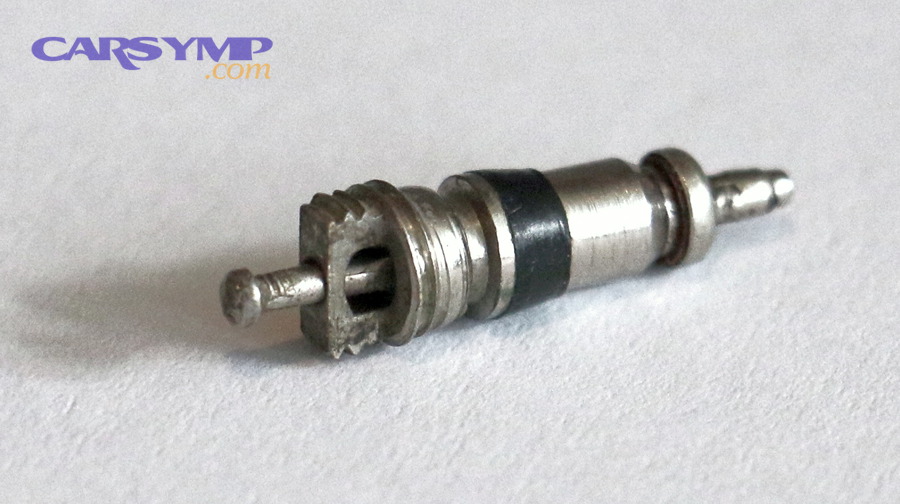
Yes, a leaking valve core or valve stem is often the real cause of slow leaks because tiny seal failures let air escape gradually—especially after temperature changes or after adding air at a public pump.
Specifically, check these:
- Missing valve cap (caps help keep dirt/water out)
- Hissing at the valve when you spray soapy water
- Cracked rubber around the stem (rubber stems)
- Loose or damaged valve core
If the leak appears “random,” the valve is a top suspect because it can leak only under certain positions or pressures.
Can corrosion on the wheel bead cause repeated pressure loss?
Yes, corrosion on the wheel bead can cause repeated pressure loss because it prevents an airtight seal where the tire sits against the wheel, creating micro-channels that leak slowly.
However, this usually shows up as:
- Slow leak that persists despite “no nail found”
- Leak that worsens with temperature changes
- Bubbles around the bead when sprayed with soapy water
A shop can often clean and reseal the bead, but severe corrosion may require wheel repair or replacement.
Could a damaged rim or TPMS sensor cause intermittent leaks?
Yes, a damaged rim or TPMS sensor can cause intermittent leaks because bends and sealing surface defects leak under load, and TPMS grommets/seals can seep air slowly—especially after tire service if parts weren’t refreshed.
To illustrate:
- A slightly bent rim may seal “okay” at rest but leak when driving flexes the tire/wheel interface.
- TPMS seals can harden over time and leak subtly.
- A hard pothole impact can create both rim bend and internal tire damage, causing a “double problem.”
If you’ve had repeated repairs on the same wheel position, prioritize inspecting the wheel and sensor hardware, not just the tire.
When should you get a professional leak diagnosis?
You should get a professional leak diagnosis when a tire loses pressure repeatedly, when you can’t find the leak with soapy water, when the leak is near the bead/valve/TPMS area, or when there are safety signs like bulges or vibration.
In short, prevention isn’t just “avoid flats”—it’s eliminate the root cause so you stop paying the same problem over and over again.