


Changing a spare tire is a repeatable, beginner-friendly process: secure the scene, gather the right tools, loosen lug nuts, lift at the correct jack points, swap the wheel, then tighten and recheck so you can drive to a repair shop safely.
Next, the safest tire change always starts with visibility and stability—where you stop, how you position the car, and how you protect yourself from traffic matter as much as the wrench work, especially during unexpected breakdowns. ([stories.tamu.edu](https://stories.tamu.edu/news/2021/05/06/study-identifies-risk-factors-for-standard-motorist-injuries-deaths/))
Then, you’ll prevent the most common mistakes by understanding two “micro-skills” beginners struggle with: identifying the right jack points quickly and tightening lug nuts in a reliable pattern so the wheel seats evenly.
Introduce a new idea: once the spare is on, your job isn’t finished—pressure checks, re-tightening, and donut-spare limits decide whether you truly fixed the problem or just delayed it in an unsafe way.
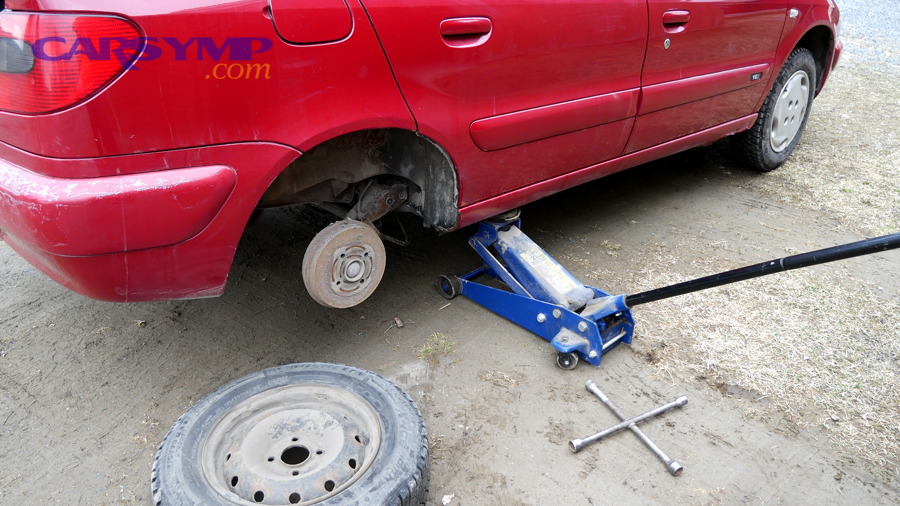
What tools do you need to change a spare tire step-by-step?
There are 3 main tool groups you need to change a spare tire step-by-step—lifting tools, fastener tools, and safety/support items—based on what each tool does during the wheel swap.
To better understand why beginners succeed or struggle, it helps to treat your trunk kit like a short checklist instead of a pile of metal.
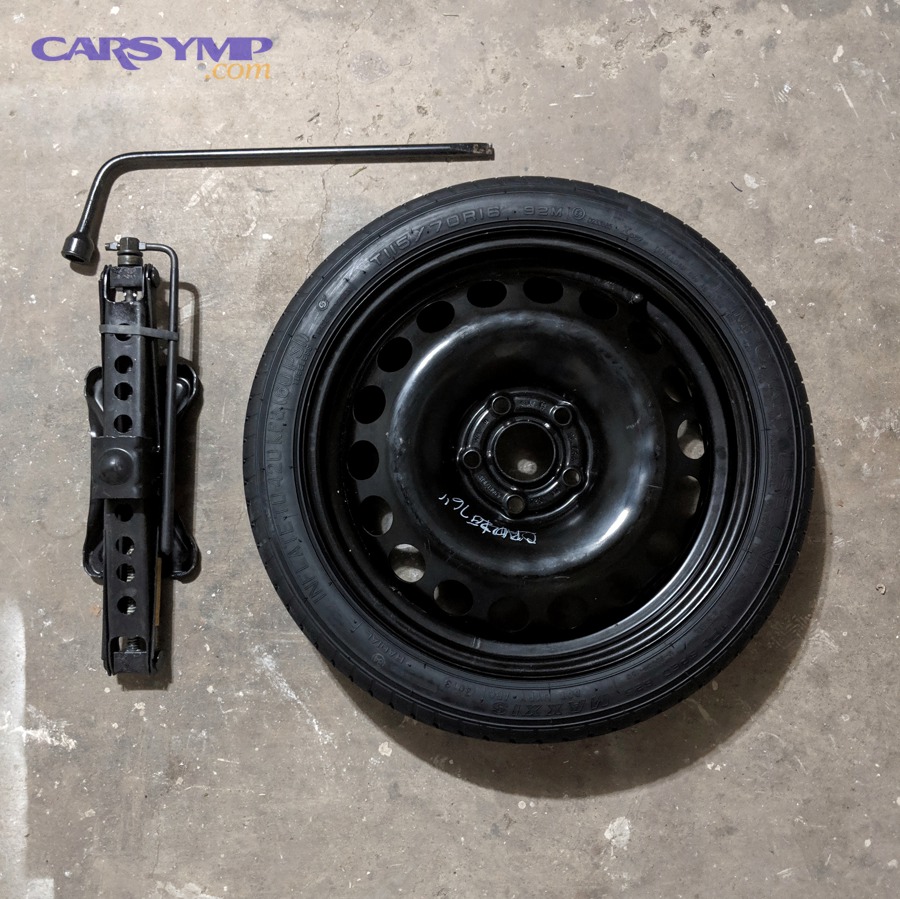
Do you have everything before you start (jack, lug wrench, spare, wheel lock key)?
Yes—before you start a spare tire change, confirm you have the jack, lug wrench, and any wheel-lock key or adapters, because missing any one can strand you longer, increase roadside exposure, and push you into unsafe improvisation.
Next, do a fast “30-second inventory” while you’re still seated and calm:
- Spare tire: confirm it exists and looks usable (no visible sidewall cracks, no obvious deflation).
- Jack: confirm it’s the correct jack for your vehicle and the handle pieces are present.
- Lug wrench / tire iron: confirm it fits the lug nuts (some cars use a specific size).
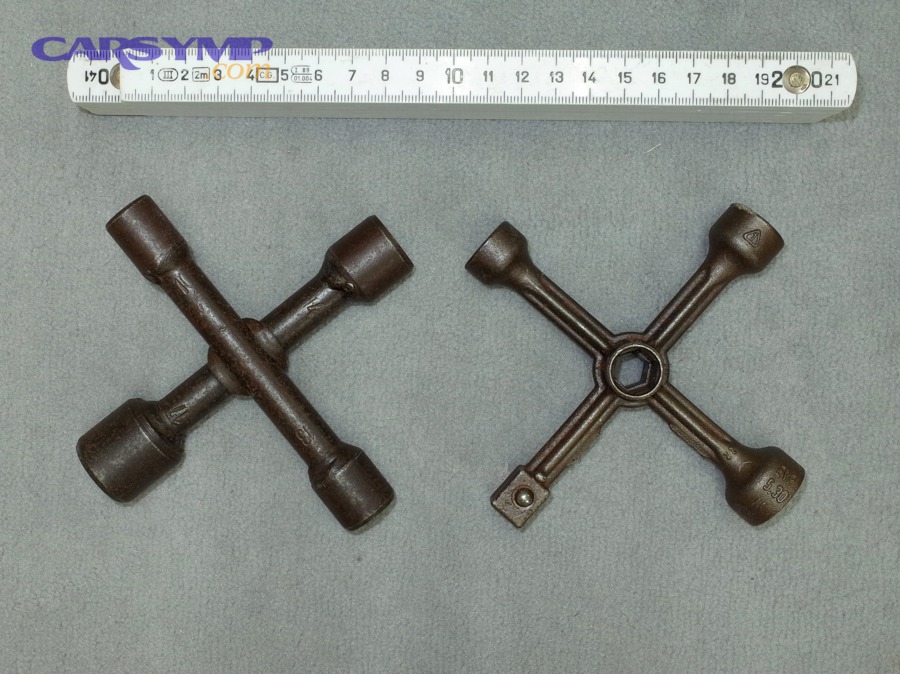
- Wheel lock key (if applicable): look for a small patterned socket, often in a pouch near the jack.
- Owner’s manual shortcut: locate the “Changing a tire” page so jack-point diagrams are easy to reference.
If one critical item is missing—especially the wheel-lock key—pause the DIY plan. Calling roadside assistance is often safer than fighting lug nuts while exposed to traffic.
What does each tool do during a spare tire change?
Each tool in a spare tire kit is a dedicated device that either lifts the vehicle, loosens/tightens lug nuts, or keeps you stable and visible while you work.
Then, map tools to the exact moment you’ll use them so the process stays smooth:
- Jack (scissor or bottle jack): raises the car so the flat tire can clear the ground.
- Jack handle / crank: turns the jack mechanism; missing pieces stop the job.
- Lug wrench / tire iron: breaks lug nuts loose and snug-tightens them before final tightening.
- Wheel chock (or substitute): blocks the opposite wheel to prevent rolling; a rock or wood block can work in a pinch.
- Flashlight/headlamp: improves visibility and reduces fumbling—especially at night.
- Gloves and a kneeling pad: keep hands clean and improve grip so you apply force safely.
- Tire pressure gauge / inflator: confirms the spare’s PSI is actually usable before driving away.
In short, your tools don’t just “help”—they reduce your time in a risky place, which is why the next section focuses on where and how to stop safely. ([stories.tamu.edu](https://stories.tamu.edu/news/2021/05/06/study-identifies-risk-factors-for-standard-motorist-injuries-deaths/))
Where should you stop, and how do you secure the car before changing the tire?
The safest place to change a tire is a flat, firm surface away from traffic, and the safest setup is hazards on, parking brake set, and wheels secured so the car cannot roll while you lift it.
More importantly, tire-changing skill is useless if you choose a dangerous shoulder and rush the setup—so treat these as your Flat tire safety steps on the road.
Is it safe to change a tire on the roadside right now?
No—it is not safe to change a tire roadside if you’re on a narrow shoulder, low-visibility curve, soft ground, or high-speed traffic area, because you may be struck by passing vehicles, the jack may sink or slip, and your time outside the car may increase secondary-crash risk. ([stories.tamu.edu](https://stories.tamu.edu/news/2021/05/06/study-identifies-risk-factors-for-standard-motorist-injuries-deaths/))
Then, use simple “stop/go” rules:
- Stop/Call for help if: shoulder is too narrow, rain/snow reduces visibility, you’re on a bridge, or traffic is flying by within arm’s reach.
- Go ahead if: you can reach a parking lot, wide shoulder, driveway, or flat turnout—even if it means slowly rolling on the flat for a short distance at very low speed.
Texas A&M University researchers analyzing stranded-motorist cases highlight how injuries often occur when people are outside their vehicle near moving traffic, reinforcing why minimizing exposure time matters. ([stories.tamu.edu](https://stories.tamu.edu/news/2021/05/06/study-identifies-risk-factors-for-standard-motorist-injuries-deaths/))
What are the safest “first 60 seconds” steps before touching the jack?
There are 6 first-60-second safety steps before touching the jack: slow down smoothly, stop on firm flat ground, turn on hazards, set the parking brake, position passengers safely, and place a wheel chock based on preventing roll and reducing traffic exposure.
Next, connect each action to a specific risk it prevents:
- Hazards on: makes you more noticeable early, not after you’re already kneeling.
- Parking brake: reduces rolling risk when the car lifts and weight shifts.
- Wheel chock: acts as a physical “stop” if the car creeps.
- Passengers out of the work zone: keep people on the far side of the guardrail or well away from traffic if exiting is safer.
- Tools staged: reduces back-and-forth trips around the vehicle.
To sum up, once the scene is stable, the next critical variable is lifting correctly—because the “right spot” for the jack is not wherever the metal looks convenient.
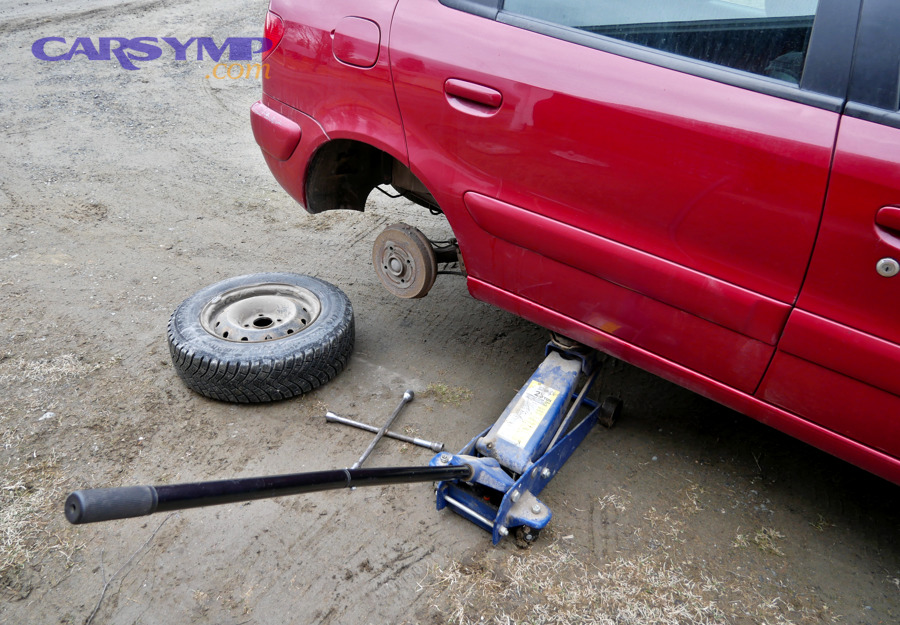
Where are the correct jack points, and how do you lift the car safely?
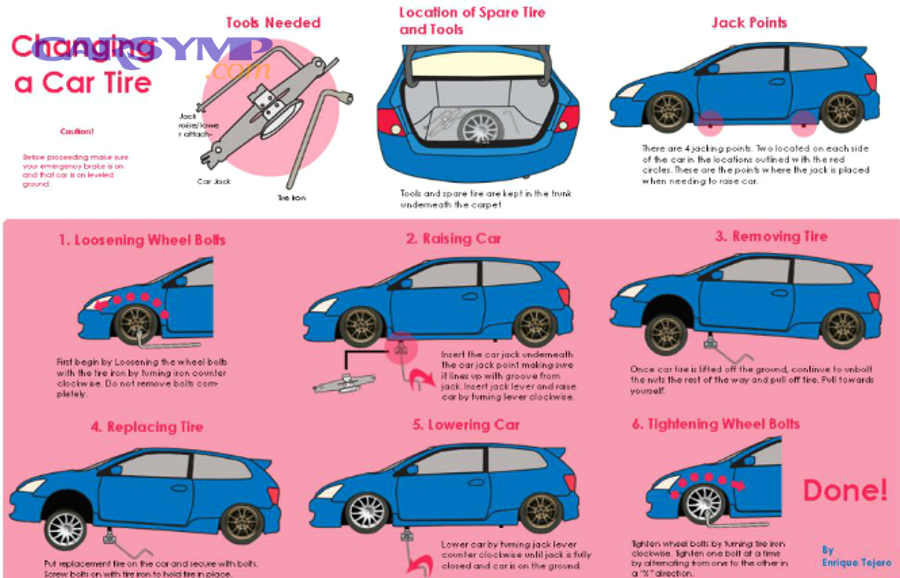
Correct jack points are reinforced lifting areas—often near the frame or pinch welds—where the jack can safely carry vehicle weight, and lifting safely means placing the jack squarely, raising the car steadily, and keeping your body out from under the vehicle.
Then, instead of guessing, treat jack-point location as a “find once, use forever” skill you can practice at home in daylight.
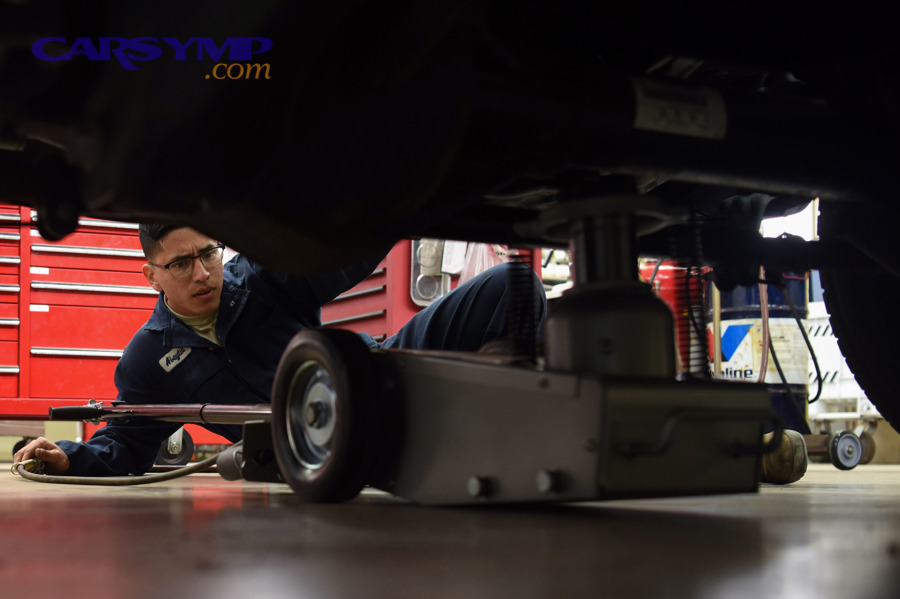
Where are your car’s jack points and how do you identify them quickly?
Jack points are the vehicle’s designated lifting zones—usually marked in the owner’s manual and located behind the front wheels and in front of the rear wheels—designed to prevent slipping and structural damage while you raise the car.
Next, use a consistent method to find them fast:
- Check the manual diagram: many cars show small arrows or shaded “lift here” zones.
- Look for reinforced metal: thicker seams or notches along the rocker panel/pinch weld.
- Avoid fragile areas: plastic skirts, thin sheet metal, and suspension arms unless your manual explicitly allows it.
If the ground is soft, the jack may sink; placing a flat, strong board under the jack base can improve stability, but only if the board can’t slide.
Should you loosen lug nuts before jacking the car up?
Yes—you should loosen lug nuts before jacking up the car because the tire on the ground provides counter-rotation resistance, it reduces the chance the car rocks off the jack, and it helps you avoid overexerting while the vehicle is unstable.
Then, use the “break loose, don’t remove” rule:
- Remove the hubcap (if present) to access lug nuts.
- Turn each lug nut about a quarter-turn to half-turn counterclockwise—just enough to break it free.
- Stop if a nut won’t budge; jumping on the wrench can be unsafe on a shoulder.
In short, once lug nuts are cracked loose, the physical swap becomes straightforward—so the next section turns the process into a clear, beginner-proof sequence.
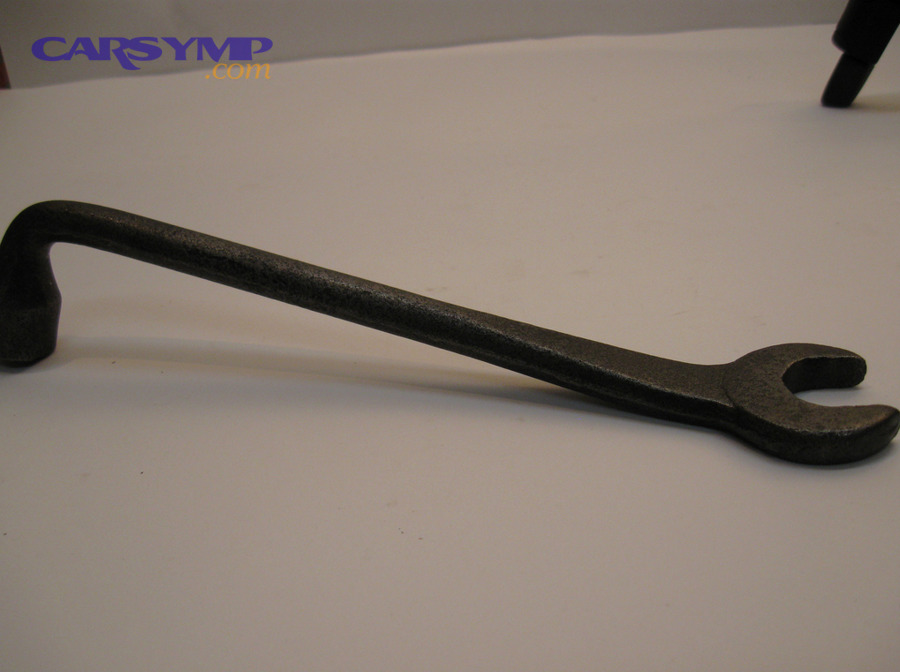
How do you remove a flat tire and install the spare correctly?
To remove a flat tire and install the spare correctly, follow a 7-step method—loosen, lift, remove, mount, hand-thread, snug, and lower—so the spare seats evenly and you can drive away without wheel wobble.
Next, keep your hands and body positioned for control: you want steady force, not sudden jerks that shift the car on the jack.
What are the exact steps to remove the wheel and put the spare on?
There are 7 main steps to remove the wheel and put the spare on: finish loosening, lift, remove, mount, hand-thread, snug-tighten, then lower and finish-tighten based on keeping the wheel centered and the car stable.
Then, follow the sequence exactly:
- Finish loosening lug nuts: with the car still low, loosen each nut further, but keep them on the studs.
- Jack the car up: raise until the flat tire is slightly off the ground.
- Remove lug nuts completely: place them somewhere they won’t roll into traffic.
- Remove the wheel: pull straight toward you; if it’s stuck, rock gently—don’t kick hard near traffic.
- Mount the spare: align holes with studs and push the wheel flush to the hub.
- Hand-thread lug nuts: start each nut by hand to avoid cross-threading.
- Snug-tighten in a star pattern: tighten until snug while the tire is still off the ground.
After that, lower the vehicle until the spare just touches the ground enough to resist spinning, then do your first “firm tighten” pass—saving full force for the final step after the jack is fully lowered.
How tight should lug nuts be, and what tightening pattern should you use?
Lug nuts should be tightened to the manufacturer’s torque specification using a star (crisscross) pattern, because that pattern centers the wheel evenly, reduces brake-rotor warping risk, and helps prevent vibration after the spare tire change.
Then, use this beginner-friendly approach even if you don’t have a torque wrench:
- Snug pass (wheel in the air): use the star pattern until each nut feels equally snug.
- Ground pass (tire touching): tighten in the same star pattern with controlled, firm pressure.
- Final pass (car fully down): tighten again in a star pattern; if you have a torque wrench, set it to the manual’s spec.
If you only remember one safety habit here, remember this: uneven tightening can feel “fine” at first and still create wobble later, so the next section focuses on the checks that confirm your work is truly roadworthy.

What checks should you do after the spare is on (pressure, re-tighten, warning lights)?
There are 4 must-do checks after the spare is on: verify tire pressure, re-tighten/retorque lug nuts, confirm warning lights behavior, and stow the flat and tools securely based on preventing a second incident miles later.
More specifically, this is where many drivers think they “fix flat tire” problems—yet skip the steps that keep the fix from failing on the way to a shop.
Do you need to re-tighten lug nuts after driving a short distance?
Yes—you should re-tighten lug nuts after driving a short distance because the wheel can settle against the hub, initial tightening can equalize under load, and catching looseness early prevents vibration or wheel loss risk.
Then, use a simple rule: after you’ve driven a short, safe distance (often around tens of miles), pull into a parking lot and tighten again in the same star pattern.
Evidence matters here: Continental’s tire-safety guidance notes that lug nuts should be checked and retorqued after about 50 km of driving on newly mounted wheels. ([continental-tires.com](https://www.continental-tires.com/tire-knowledge/retorquing-wheels/?))
What should you do if the spare tire is low on air or won’t hold pressure?
No—you should not drive on a spare tire that is low on air or losing pressure because it can overheat and fail, it compromises steering and braking, and it may damage the wheel or tire carcass, turning a simple fix into a larger repair.
Then, choose the safest next move:
- If you have an inflator: inflate to the PSI listed on the door jamb sticker or the spare’s sidewall (temporary spares often specify higher PSI).
- If it won’t hold air: stop the DIY plan and call for towing or assistance.
- If you must roll slightly: move only to get out of danger, at very low speed, and only if the tire isn’t visibly collapsing.
To make these checks easier, here is a quick table of what to confirm before you merge back into traffic:
| Check | What “Good” Looks Like | What to Do If It’s Not Good |
|---|---|---|
| Spare tire pressure | Matches label/sidewall spec | Inflate; if it won’t hold, call for help |
| Lug nuts | Evenly tight in star pattern | Re-tighten; schedule recheck after short drive |
| Jack/tools stowed | Nothing loose in cargo area | Secure items to avoid damage/injury during braking |
| Dashboard lights | No new critical warnings | If TPMS lights, proceed cautiously and verify pressure |
According to a study by Williams College from its Sustainability research work, in 2010, only 1 out of 66 campus vehicles tested had correct overall tire pressure, showing why a quick pressure check after a spare swap is more than a “nice-to-have.” ([sustainability.williams.edu](https://sustainability.williams.edu/files/2010/09/TirepressureBaldwin.pdf))
In short, once checks are complete, your next decision is about the type of spare you installed—because a donut spare changes what “safe driving” means.
How is a donut spare different from a full-size spare (speed, distance, handling)?
A donut spare wins for space and weight, a full-size spare is best for normal driving behavior, and a tire repair/replace solution is optimal for long-term safety, because each option serves a different distance, speed, and handling need.
However, the practical takeaway is simple: a donut spare is a temporary mobility tool, not a permanent replacement.
Is a donut spare only a temporary fix, and how far can you drive on it?
Yes—a donut spare is only a temporary fix because it typically has lower durability, reduced traction, and strict speed/distance limits, so you should use it only to reach a tire shop to fix flat tire damage properly.
Then, follow the simplest guideline: read the tire’s sidewall and your owner’s manual, but expect common limits like “keep under 50 mph” and “drive short distances.” AAA’s guidance summarizes this as a practical rule of thumb for donut spares: no more than about 50 miles and 50 mph when possible. )
Once you arrive somewhere safe, you can start planning the repair decision, including a realistic Tire repair cost estimate (patch vs. plug vs. replacement) based on the location and type of damage.
Donut spare vs full-size spare: what changes in driving behavior?
A donut spare demands gentler steering, longer braking margins, and lower speeds, while a full-size spare behaves closer to your normal tire because its width and construction better match your vehicle’s handling and load requirements.
Meanwhile, your driving habits should change immediately after installing a donut spare:
- Accelerate smoothly: sudden torque can overwhelm the smaller contact patch.
- Brake earlier: you want fewer hard stops while traction is reduced.
- Avoid sharp lane changes: the car can feel “twitchier,” especially in rain.
- Skip high-speed highways if you can: lower speed environments reduce risk.
If your car is AWD/4WD, you should be extra cautious with mismatched tire sizes; the next section covers that and other edge cases that can stop a tire change in its tracks.
What problems can prevent a spare tire change, and how do you handle them safely?
There are 4 common problems that prevent a spare tire change—missing wheel-lock keys, seized lug nuts or stuck wheels, AWD/4WD limitations, and “no spare/unsafe jack” scenarios—and the safest response is to reduce time exposed to traffic while choosing the right escalation.
Next, instead of forcing a solution, treat these issues as decision points: either solve quickly and safely, or stop and get help before risk spikes.
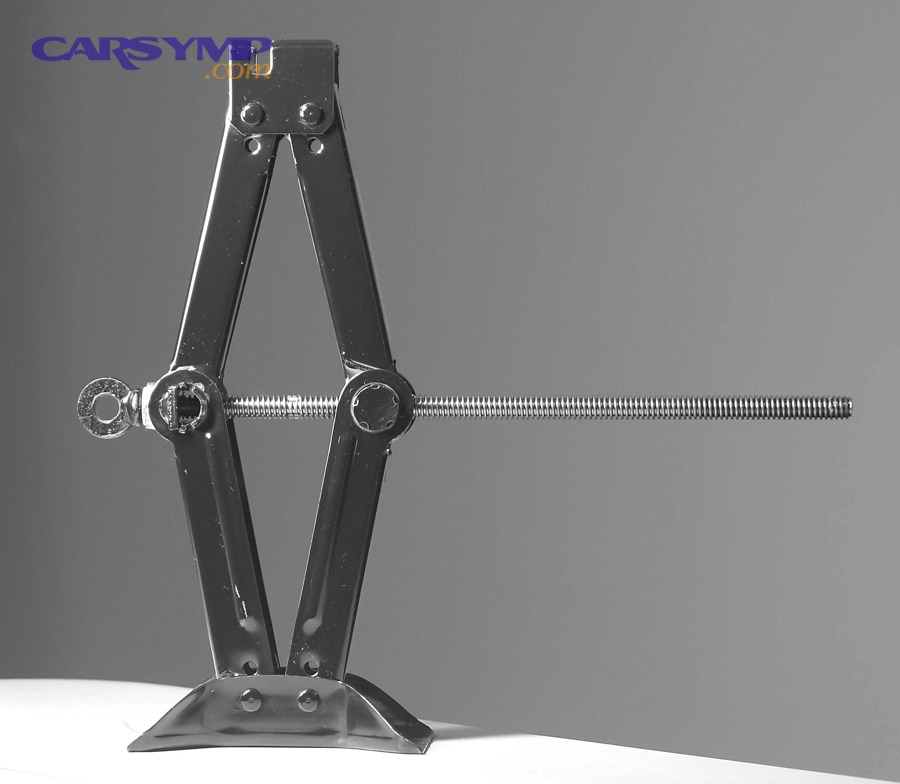
What should you do if you have locking lug nuts but can’t find the key?
No—you cannot complete a spare tire change without the locking-lug key because the lug nut will not match standard sockets, forcing the wheel can damage studs, and prolonged roadside searching increases safety risk.
Then, search only the most likely places for 1–2 minutes:
- Jack/tool compartment in trunk or under cargo floor
- Glove box or center console pouch
- Spare-tire well near the hold-down bolt
If it’s not there, the safest next step is roadside assistance or a tow—because a shop can remove locking lugs with specialized tools without risking injury on the shoulder.
How do you remove a stuck wheel or rust-seized lug nuts without breaking tools?
A stuck wheel or rust-seized lug nuts are a friction-and-corrosion problem, and the safest fix is to increase controlled leverage gradually, reduce corrosion with penetrant when possible, and avoid sudden impacts that can slip the wrench or destabilize the car.
Then, use safer tactics in order:
- Stabilize first: hazards on, parking brake set, chock in place.
- Use body positioning: push with your legs and keep your face away from the wrench path.
- Increase leverage safely: if you have a longer wrench, use it; avoid bouncing or jumping roadside.
- If the wheel is stuck to the hub: after lug nuts are removed, pull evenly; gentle rocking can break the bond.
Once you’re safe at home, you can diagnose why the tire went down. For example, Finding the leak with soapy water test often reveals a nail hole or a bead leak by showing growing bubbles around the puncture or rim edge.
Can you use a donut spare on AWD/4WD vehicles without causing damage?
No—you should not assume a donut spare is safe on AWD/4WD because mismatched tire diameter can stress driveline components, it can change traction behavior, and it may violate manufacturer limits that protect the system.
Then, follow a conservative rule: consult your owner’s manual; if it warns against a temporary spare on AWD, choose towing over “trying it anyway.” If the manual allows it, drive the shortest distance possible at reduced speed to reach service.
What should you do if there’s no spare (run-flat kit, inflator, sealant) or the jack is unsafe?
A spare-less scenario is best handled by choosing the option that restores safe mobility fastest: an inflator wins if the tire holds air, sealant is a last resort if the puncture is small, and towing is optimal when damage is severe or the jack is unsafe.
Then, decide using clear “safe vs. unsafe” boundaries:
- Inflator-only (best first try): works if the leak is slow and the sidewall isn’t damaged.
- Sealant (last resort): use only to reach a shop; it can complicate repairs and cleanup on some tires.
- Towing (safest for severe issues): choose this if the tire is shredded, the wheel is bent, or you’re in a dangerous location.
According to a study by Texas A&M University from the College of Nursing, in 2021, analysis of stranded-motorist incidents reported that over 77% of victims were outside the vehicle at the time of injury—one more reason to minimize roadside time and escalate to help when conditions are unsafe. ([stories.tamu.edu](https://stories.tamu.edu/news/2021/05/06/study-identifies-risk-factors-for-standard-motorist-injuries-deaths/))
To sum up, a spare tire change is not just a mechanical task—it’s a safety-first sequence. If you follow the tool checklist, the roadside setup, correct jack points, and post-install checks, you’ll get back on the road confidently and reach a shop for a proper repair.