


If your TPMS light is still on after you’ve repaired the tire and set the pressure correctly, you can usually clear it by following a simple reset/relearn process that matches your vehicle’s TPMS design—most often a short drive cycle, a reset button routine, or an on-screen “Initialize/Calibrate” command.
Next, you’ll learn how to choose the right reset path for your car by recognizing whether your system is “reset-only” (calibration) or a true “relearn” system that must re-identify sensors and their positions after certain changes.
Then, you’ll get a troubleshooting playbook for the cases where the warning won’t go away—like a slow leak, a damaged sensor, or a fault state that a reset cannot fix.
Introduce a new idea: the fastest way to “win” with TPMS is to treat it like a system—pressure accuracy first, then the correct reset method, and only after that, deeper checks for edge cases and hardware issues.
Do you need to reset (relearn) TPMS after fixing a flat tire?
Yes—many drivers need a TPMS reset/relearn after fixing a flat tire because (1) the system may require a calibration event to accept the new pressures, (2) some vehicles only clear the light after a completed drive cycle, and (3) a fault or sensor mismatch can keep the warning active even when the tire is fine.
To better understand why the warning behaves this way, it helps to separate “pressure problems” from “system problems,” and then pick the least invasive reset method first.

Will the TPMS light turn off by itself after you inflate the tire to the correct PSI?
Yes, the TPMS light can turn off by itself after you inflate to the correct PSI because (1) many systems auto-refresh while driving, (2) the vehicle may re-check pressure at speed rather than at idle, and (3) the warning logic typically clears only after readings stay stable for a period of time.
Then, the key is to make sure you’re feeding the system the right pressure input—because the “correct PSI” is not the maximum printed on the tire sidewall.
What “self-clear” usually requires (in plain English):
- Set cold pressure to the door-jamb placard (not the tire sidewall max).
- Drive steadily (often 10–20 minutes) so the system can re-sample and confirm stability.
- Avoid stop-and-go only if you can; some systems need consistent speed to update.
Why the light sometimes stays on even with correct PSI:
TPMS is designed to warn you when pressure is meaningfully low, but the vehicle still needs time (or a manual trigger) to confirm the condition is truly corrected. The idea is similar to how an engine light doesn’t always clear the moment you fix the cause—it often clears after a verified cycle.
Practical takeaway: If you fixed the leak and inflated correctly, your first attempt should usually be a safe, steady drive—because it costs nothing and solves a large share of cases. (starlingbuickgmcstuart.com)
Is “TPMS reset” the same as “TPMS relearn/initialize”?
TPMS reset is a calibration action that tells the car to accept current pressures as normal, while TPMS relearn/initialize is a pairing and positioning process that helps the vehicle identify sensors (and sometimes their locations) after changes.
More specifically, drivers say “reset” for almost everything, but the vehicle may be doing something more complex in the background.
Use these definitions to stay consistent:
- Reset (calibrate): You’re telling the car, “These pressures are the new baseline.” This is common on indirect systems and some menu-based designs.
- Relearn (register/pair): The car re-identifies sensor IDs (and sometimes wheel positions). This matters after sensor replacement, wheel swaps, or certain rotations.
Why it matters for your next step:
If your vehicle expects a relearn, a simple reset button might not work. On the other hand, if your vehicle expects a calibration, a scan tool “relearn” is unnecessary effort and cost.
Does direct TPMS behave differently from indirect TPMS after a flat repair?
Direct TPMS wins for real-time pressure accuracy, indirect TPMS is best for simpler calibration workflows, and mixed/menu-based systems are optimal for drivers who want guided on-screen prompts.
However, the “best” behavior after a flat depends on what your car uses to decide a tire is low.
Direct TPMS (sensor in the wheel):
- Reads pressure inside each tire (often shows individual PSI on the dash).
- After a repair, it may clear after stable readings—or may stay on if the system flags a sensor communication issue. (en.wikipedia.org)
Indirect TPMS (ABS/wheel-speed based):
- Doesn’t measure PSI; it infers a low tire by changes in wheel speed/rolling radius.
- Often needs a calibration/reset after you inflate or rotate, because the system must re-learn what “normal” looks like. (static.nhtsa.gov)
The bottom line: If you don’t see PSI values anywhere, your car may be more likely to require a calibration reset after you set pressures—especially after a noticeable pressure change.
What should you do before resetting TPMS after repairing a flat?
There are 6 main pre-reset steps you should do before resetting TPMS after repairing a flat: verify the repair holds air, set cold PSI to the placard spec, check all four tires, check the spare (if monitored), confirm the warning type (solid vs flashing), and inspect for damage that makes repair unsafe.
Next, these steps prevent “false resets” where the light returns because the real cause was never fixed.
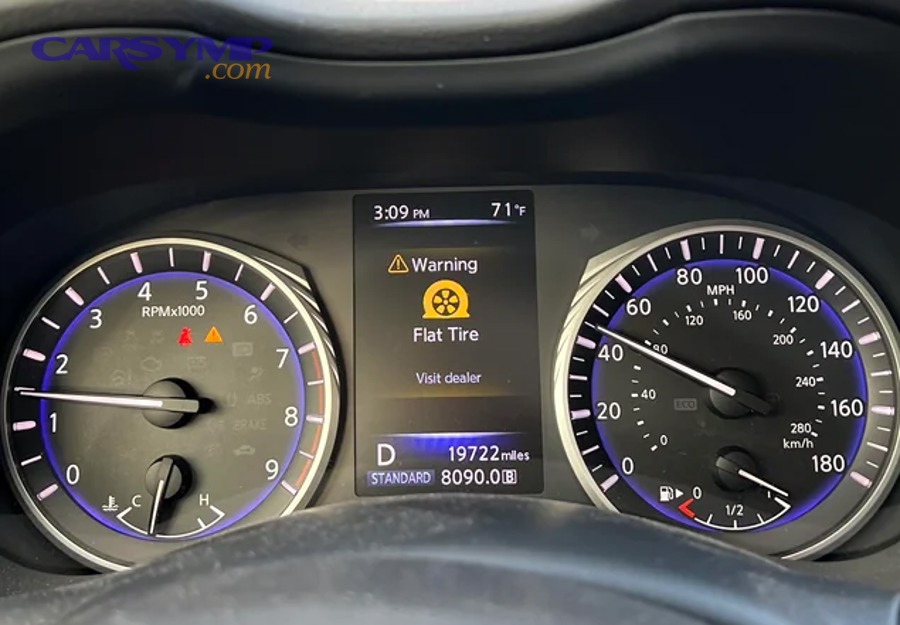
What are the must-check items before you attempt a TPMS reset?
There are 7 must-check items: (1) cold PSI matches the door placard, (2) all four tires are checked—not just the repaired one, (3) valve cap and valve core aren’t leaking, (4) the repaired tire holds pressure over time, (5) no visible bulges or cord exposure, (6) the TPMS warning is solid (pressure) rather than flashing (fault), and (7) you didn’t accidentally set pressure to the tire’s sidewall max.
To illustrate why this matters: TPMS doesn’t care which tire you “meant” to fix; it cares which tire is still reporting abnormal pressure or abnormal sensor behavior.
A quick DIY checklist (2 minutes):
- Check each tire with a gauge (front-left → front-right → rear-right → rear-left).
- Match each tire to the placard PSI (cold).
- Re-check the repaired tire after a short wait to see if it drops.
- Make sure the valve cap is on (it’s a secondary seal against dirt and slow leaks).
Safety gate: If you see a sidewall bubble, deep gash, or cords, do not attempt to “reset and drive.” That’s where Sidewall damage and blowout risks become real, because the structure can fail under heat and load. (pmc.ncbi.nlm.nih.gov)
How do you confirm the flat is truly fixed before blaming TPMS?
You confirm a flat is truly fixed by verifying the tire holds the correct cold PSI over time, shows no audible leak at the valve area, and does not lose pressure after a short drive-and-rest cycle—because a real fix produces stable pressure, not a temporary rebound.
Specifically, TPMS is very good at exposing “almost fixed” tires that still bleed air slowly.
A practical confirm-and-control routine:
- Inflate to placard PSI (cold).
- Record the PSI (note it in your phone).
- Drive 10–15 minutes.
- Park and let the tire cool back toward ambient.
- Re-check PSI later the same day or next morning.
If pressure drops noticeably, you’re not dealing with a “TPMS problem.” You’re dealing with a leak, a valve issue, or damage.
Where “fix” becomes “replace”:
This is also the moment to recognize When a puncture can’t be repaired—for example, damage in the sidewall/shoulder area, a large cut, or structural harm that a plug/patch cannot restore safely.
When does the TPMS light indicate a fault instead of low pressure?
The TPMS light indicates a system fault (not low pressure) when it flashes at startup and then stays on because (1) a sensor may not be communicating, (2) a sensor battery may be dead, or (3) the vehicle detects an incompatible or missing sensor.
In addition, a fault-state TPMS light won’t reliably clear with inflation alone, because the system is telling you it can’t trust the sensor data.
A common pattern described in service guidance is “flash for 60–90 seconds, then remain solid,” which points to a malfunction rather than simple low pressure. (redi-sensor.com)
What you do differently when it’s a fault:
- You still confirm PSI (because safety first).
- Then you move sooner to scanning/diagnosis steps (later sections cover this).
How do you reset TPMS after fixing a flat tire?
To reset TPMS after fixing a flat tire, use one of 3 proven methods—drive-cycle auto recalibration, a reset-button procedure, or an infotainment “initialize/calibrate” command—so the system accepts stable pressures and turns the warning off.
Below, you’ll start with the least invasive method and move toward the more vehicle-specific options.
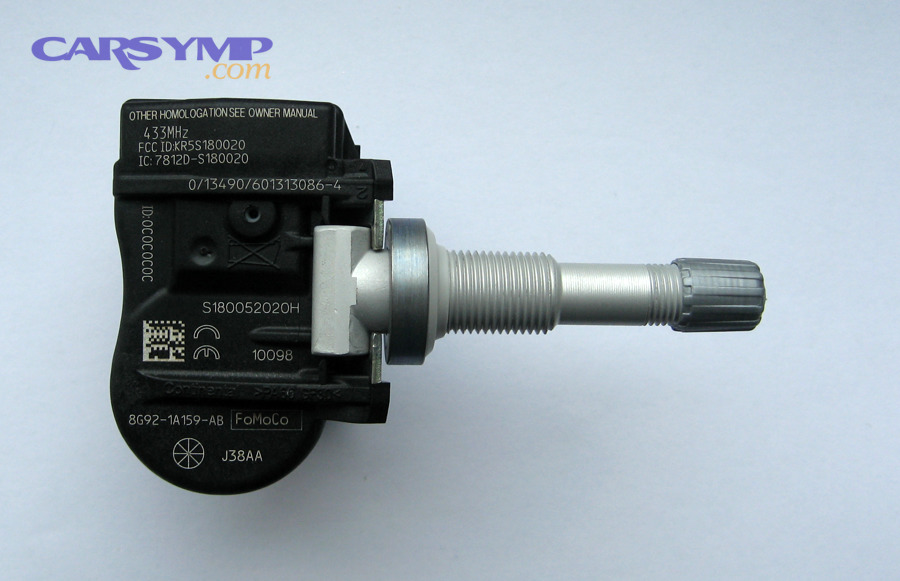
How do you reset TPMS by driving (auto-relearn method)?
Drive-cycle reset works in 4 steps—set correct cold PSI, start the vehicle, drive steadily long enough for a fresh sensor update, and verify the light stays off—because the system clears once it sees stable readings.
Then, keep the drive safe and predictable so the TPMS algorithm gets clean inputs.
Step-by-step:
- Inflate to placard PSI (cold).
- Start the car and confirm the warning state (solid vs flashing).
- Drive at a steady speed on a safe road (often 10–20 minutes).
- Shut off and restart to confirm the light remains off.
Notes that prevent repeat failures:
- Don’t over-correct pressure (big swings can keep the system “unsettled”).
- If you repaired the tire, make sure the repaired tire is the correct size/spec for the vehicle (mismatched circumference can confuse some systems).
- If the light comes back the next morning, suspect a slow leak first.
How do you reset TPMS using the reset button?
Reset-button TPMS calibration works because holding the button triggers a baseline update, and it typically succeeds when (1) pressures are correct, (2) the system is not in fault mode, and (3) you follow the ignition-on timing the vehicle expects.
More importantly, the button method is “simple but strict”—timing matters.
Typical reset-button pattern (common across many vehicles):
- Park safely and set the parking brake.
- Turn ignition to ON (engine off on many cars).
- Locate the TPMS reset button (often under dash, near steering column, glovebox, or center console).
- Press and hold until the TPMS light blinks (or a message confirms calibration).
- Start the engine and drive briefly to finalize.
Dealer-style and fleet guidance commonly describes “press/hold until the light blinks, then drive for several minutes,” which reflects how the system enters and completes calibration.
How do you reset TPMS using the infotainment/menu “Initialize/Calibrate” option?
Menu-based TPMS reset succeeds because the vehicle’s interface triggers a calibration routine that treats your current pressures as normal, and it works best when you run it immediately after setting correct cold PSI.
Next, expect the exact menu labels to vary, but the logic is the same.
What to look for in the menu:
- “TPMS Calibration”
- “Initialize”
- “Set Tire Pressure”
- “Relearn” (sometimes used loosely even for calibration)
Best practice:
- Inflate first, then run the menu command.
- Follow on-screen prompts and complete any requested drive.
Which TPMS reset method should you use for your situation?
Driving reset wins for “I fixed the leak and set PSI,” the reset button is best for “my car has a dedicated calibration control,” and infotainment initialize is optimal for vehicles that require a menu-triggered baseline—especially indirect TPMS designs.
However, the fastest method is the one that matches what you changed: repair-only, rotation, wheel swap, or sensor replacement.

Before the table, here’s what it contains: a quick decision guide that maps your situation to the most likely successful reset path and what to try next if it fails.
| Your situation after the flat | Most likely method to try first | If it doesn’t work, try next | Why this order works |
|---|---|---|---|
| Repaired tire + set PSI correctly | Drive-cycle reset | Reset button / Menu initialize | Auto refresh is common and cost-free |
| Inflated tires after pressure drop (no repair) | Drive-cycle reset | Menu initialize | Many systems clear after stable readings |
| Rotated tires (especially indirect TPMS) | Menu initialize | Drive-cycle reset | Calibration is often required after rotation |
| Changed a wheel/tire set (same sensors) | Relearn (if required by vehicle) | Scan tool at shop | Some cars must re-locate sensors |
| Replaced a TPMS sensor | Relearn with tool (often) | Shop programming | New sensor ID may need registration |
If you only repaired a puncture and corrected PSI, which method works best?
Driving reset wins for speed and simplicity, a reset button is best when your car supports it, and menu initialize is optimal when your vehicle uses indirect TPMS or explicitly asks for calibration.
Specifically, most “I just repaired it” cases should start with: inflate → drive.
Your best-first sequence (repair-only case):
- Inflate to placard PSI (cold).
- Drive steadily.
- If the light stays on, attempt the reset button or menu option.
- If it still persists, move to troubleshooting (next H2s).
Reality check: A repaired tire that still leaks will defeat every reset method, because TPMS will simply detect the next pressure drop and warn you again.
If you rotated tires or changed a wheel, do you need a relearn instead of a reset?
Yes, you may need a relearn instead of a reset because (1) some direct TPMS systems store sensor IDs by wheel position, (2) certain vehicles require a position update after rotation, and (3) a wheel change can introduce sensor-ID mismatches that calibration alone cannot resolve.
Meanwhile, many vehicles do not need this—so the goal is to detect when you’re in the “needs relearn” group.
When rotation triggers relearn most often:
- Your dash shows specific tire locations (FL/FR/RL/RR) with PSI.
- The car displays a “relearn required” message.
- You installed a different set of wheels (even if the tire size matches).
If your vehicle uses a straightforward calibration system, a menu-based initialize may be enough. If it’s a sensor-position system, you may need a relearn process (covered in the shop/tool section).
If the TPMS light stays on, what should you try next (in order)?
There are 6 best next steps in order: confirm correct cold PSI, re-check for slow leaks, check the spare (if monitored), confirm solid vs flashing (fault), perform the correct reset method again, and finally scan for sensor/TPMS faults.
More importantly, this order keeps you from paying for programming when the problem is actually a leak.
A simple escalation ladder:
- PSI audit: all four tires match the placard.
- Leak logic: repaired tire holds pressure overnight.
- Spare check: spare isn’t low (some vehicles monitor it).
- Warning type: flashing suggests a fault. (redi-sensor.com)
- Correct reset attempt: button or menu method, then drive.
- Scan: check sensor communication, battery, ID mismatch.
Why won’t the TPMS light turn off after fixing a flat?
A TPMS light won’t turn off after fixing a flat because the vehicle is still detecting either (1) unstable pressure from a slow leak, (2) a TPMS system fault like a dead sensor battery, or (3) a missing/mismatched sensor signal that requires relearn or replacement.
In addition, the “fixed tire” and the “fixed warning” are two separate outcomes—one is physical, the other is electronic verification.
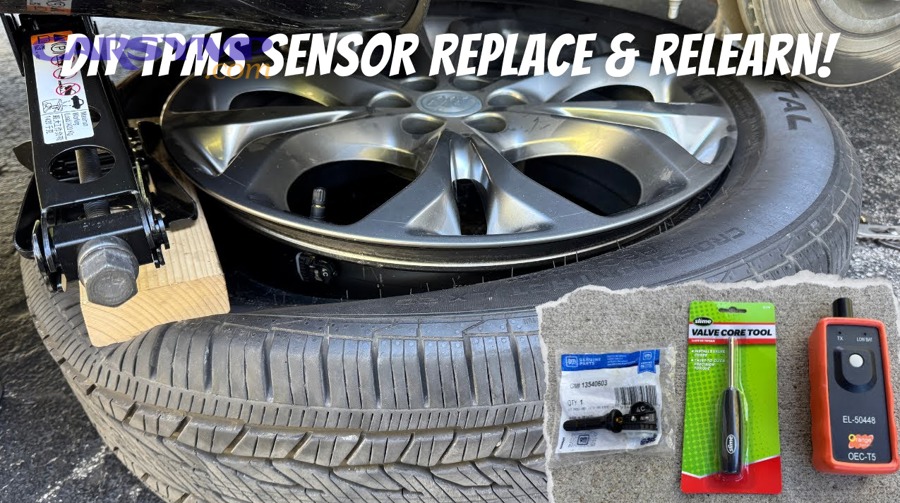
Could the tire still have a slow leak even after repair?
Yes, the tire can still have a slow leak because (1) the puncture may be outside the safe repair zone, (2) the valve core or stem may leak, and (3) internal structural damage can cause pressure loss that a simple repair cannot stop.
Then, the easiest way to prove it is to measure pressure stability over time.
Common slow-leak causes after a repair:
- Plug-only repair that doesn’t seal cleanly.
- A nail hole that re-opens under load.
- Bead leak (seal between tire and rim).
- Valve core not tightened or contaminated.
Tie-in to safety: If the damage is near the sidewall or shoulder, you’re approaching When a puncture can’t be repaired safely, and continuing to drive can amplify heat and stress inside the tire—exactly the conditions that increase structural failure risk. (pmc.ncbi.nlm.nih.gov)
Can a damaged or dead TPMS sensor prevent resetting?
Yes, a damaged or dead TPMS sensor can prevent resetting because (1) the vehicle can’t receive valid pressure data, (2) the system may enter a fault mode (often flashing first), and (3) incorrect sensors or missing sensors can block relearn completion.
However, this is a “system can’t hear the sensor” problem—not a “press the button longer” problem.
What you’ll typically see:
- Flashing TPMS indicator at startup, then solid. (redi-sensor.com)
- A dash message like “TPMS malfunction.”
- No PSI readout for one wheel (on vehicles that show PSI).
What to do:
Confirm PSI for safety, then plan on diagnostic scanning. A reset is unlikely to fix a hardware failure.
Can the spare tire (or missing spare sensor) keep the warning light on?
Yes, the spare tire can keep the TPMS light on because (1) some vehicles monitor the spare’s pressure, (2) a low spare can trigger the same warning logic, and (3) a missing or incompatible spare sensor can look like a system fault on some designs.
Next, the spare is often overlooked because it “isn’t on the ground,” but the system may still treat it as part of the monitored set.
Quick spare check:
- If your vehicle has a full-size spare, check its PSI too.
- If you recently mounted the spare after the flat, understand that the car may take time (or require a relearn) to recognize the new wheel position.
When do you need a TPMS relearn tool or a shop reset?
Yes, you sometimes need a TPMS relearn tool or shop reset because (1) new sensors often require ID registration, (2) wheel swaps can require position relearn, and (3) a fault-state TPMS system may need scanning to identify which sensor isn’t communicating.
Besides, using a tool is not “overkill” when the vehicle truly expects a sensor ID update.
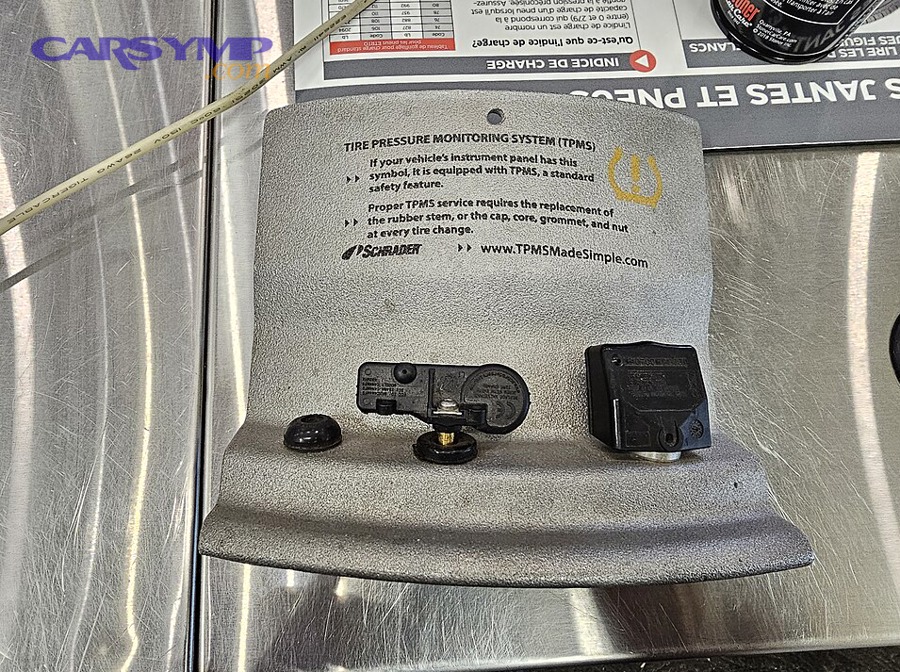
Do you need a relearn tool after installing a new TPMS sensor?
Yes, you often need a relearn tool after installing a new TPMS sensor because (1) the vehicle must recognize the new sensor’s unique ID, (2) many systems won’t accept an unknown transmitter without registration, and (3) the TPMS light may remain on until the ID is learned.
To better understand the “why,” think of it like pairing a new key fob—the car won’t respond until it knows the device belongs to it.
Some guidance describes relearn as the process of connecting a new sensor to the vehicle so it can identify sensor IDs and confirm communication. (foxwelltpms.com)
Do aftermarket wheels/sensors increase the chance you’ll need programming?
Yes, aftermarket wheels/sensors can increase the chance you’ll need programming because (1) sensor frequency and protocol must match the vehicle, (2) “universal” sensors may still require cloning/ID writing, and (3) incorrect sensors can trigger a communication fault that calibration cannot fix.
However, this does not mean aftermarket automatically equals trouble—it means compatibility must be verified.
Signs you’re in the “programming needed” group:
- TPMS fault light pattern (flash then solid). (redi-sensor.com)
- The car shows no pressure reading for one or more wheels.
- The warning persists through correct pressure and multiple reset attempts.
What should you tell the tire shop to do if you can’t reset it yourself?
You should tell the tire shop to scan the TPMS system, identify non-communicating sensors, perform the correct relearn procedure for your vehicle, and confirm the repaired tire holds pressure—because the shop can verify both the electronic and physical causes in one visit.
More specifically, you’re asking for a diagnosis + fix, not just “turn the light off.”
A clear script you can use:
- “Please scan TPMS to see which sensor is not communicating.”
- “Confirm all four tires (and spare if monitored) match the placard PSI.”
- “Run the proper relearn/initialize procedure for this model.”
- “Check the repaired tire for a slow leak and confirm it holds pressure.”
This keeps you from paying for repeated resets that don’t address the root cause.
Evidence (why pressure accuracy matters beyond the light):
According to a study by San José State University from the Mineta Transportation Institute, in 2021, underinflated tires increase rolling resistance and can contribute to higher fuel consumption because the vehicle must overcome greater deformation-related losses. (transweb.sjsu.edu)
What are the uncommon TPMS edge cases after fixing a flat tire?
There are 4 uncommon TPMS edge cases after fixing a flat tire: sealant-related sensor issues, temperature/altitude-driven repeat warnings, “temporary clear vs truly fixed” confusion, and sensor compatibility mismatches—each of which can keep the light cycling even when the repair seems fine.
Next, these are “micro” problems that appear less often, but they explain the stubborn cases that feel random.
Can tire sealant cause TPMS sensor problems or false readings?
Yes, tire sealant can cause TPMS sensor problems or false readings because (1) sealant can coat internal components, (2) it can interfere with valve cores and slow-leak behavior, and (3) cleanup varies by sensor design and how long the sealant remains inside.
Then, the practical lesson is to treat sealant as a temporary mobility solution—not the final repair.
What to do if you used sealant:
- Get the tire dismounted and cleaned if the warning persists.
- Replace valve components if they’re contaminated.
- Expect that some shops will recommend sensor inspection if readings are unstable.
Can weather, altitude, or seasonal temperature swings trigger the TPMS light again?
Yes, weather, altitude, and seasonal temperature swings can trigger the TPMS light again because (1) air pressure changes with temperature, (2) a borderline tire can drop below the warning threshold overnight, and (3) a repaired tire with a micro-leak will show the problem more in cold snaps.
In short, a light that returns only on cold mornings is often telling you “pressure is marginal,” not “TPMS is broken.”
How to prevent repeat alerts:
- Check pressures monthly and before road trips.
- Inflate when tires are cold.
- Fix slow leaks instead of topping off repeatedly.
Is there a difference between clearing the warning temporarily vs actually fixing the cause?
Temporary clearing wins for getting you back on the road quickly, actually fixing the cause is best for long-term safety, and a combined approach is optimal: fix the leak and set correct PSI first, then reset so the system verifies stability.
However, if you “reset first,” you can mask a problem long enough to forget it—until it becomes a bigger one.
The antonym that matters here:
- Temporary off = the light is quiet right now.
- Stable off = the tire holds pressure over time and the system stays satisfied.
This is where fix flat tire thinking should stay grounded: the goal isn’t just a dark dashboard; it’s stable pressure and predictable handling.
Can mismatched aftermarket sensors (frequency/IDs) cause repeat TPMS issues?
Yes, mismatched aftermarket sensors can cause repeat TPMS issues because (1) the vehicle may reject incompatible frequency/protocol, (2) incorrect IDs can fail relearn, and (3) intermittent communication can trigger cycling warnings that look like “random” failures.
More importantly, these problems often show up after wheel swaps—especially when mixing sensor types.
If you suspect mismatch:
- Ask the shop to confirm sensor compatibility for your model year.
- Have them scan each wheel to verify sensor ID and signal.
- If needed, replace with known-compatible sensors and perform a proper relearn.
Evidence (if any)
According to a survey-based report by the National Highway Traffic Safety Administration analyzing model year 2004–2011 vehicles, TPMS-equipped vehicles had a lower share of severely underinflated tires than vehicles without TPMS, indicating TPMS can improve inflation outcomes in real-world use. (crashstats.nhtsa.dot.gov)