


Coil-on-plug ignition systems eliminate spark plug wires by mounting individual coils directly on each spark plug, while traditional wire ignition uses a single coil and distributor to route high voltage through wires to multiple cylinders. The fundamental difference lies in configuration: COP systems provide dedicated coils per cylinder with electronic control, whereas traditional systems rely on mechanical distribution and shared ignition components. This architectural contrast creates distinct advantages in performance, reliability, and maintenance requirements that directly impact vehicle owners.
Modern vehicles increasingly adopt coil-on-plug technology because it delivers superior spark energy, eliminates voltage loss through plug wires, and reduces electromagnetic interference. Understanding how each system generates and delivers spark helps vehicle owners make informed decisions about repairs, upgrades, and troubleshooting. The COP system’s electronic control unit manages precise timing for each cylinder independently, while traditional systems depend on distributor mechanics to sequence spark delivery across all cylinders from a single coil source.
Performance and cost considerations separate these ignition technologies in practical ownership experience. COP systems demonstrate better high-RPM performance and combustion efficiency but require higher initial investment, while traditional wire ignition offers simpler diagnosis and lower replacement costs despite more frequent maintenance needs. Reliability differences emerge from failure point distribution: traditional systems concentrate wear in the distributor assembly and plug wires, whereas COP systems spread potential failures across individual coil units with fewer moving parts overall.
Diagnostic approaches differ significantly between these ignition architectures, requiring vehicle owners to understand system-specific troubleshooting methods. Next, let’s explore the detailed workings, component structures, and comparative advantages that define each ignition system type.
What is Coil-on-Plug (COP) Ignition and How Does It Work?
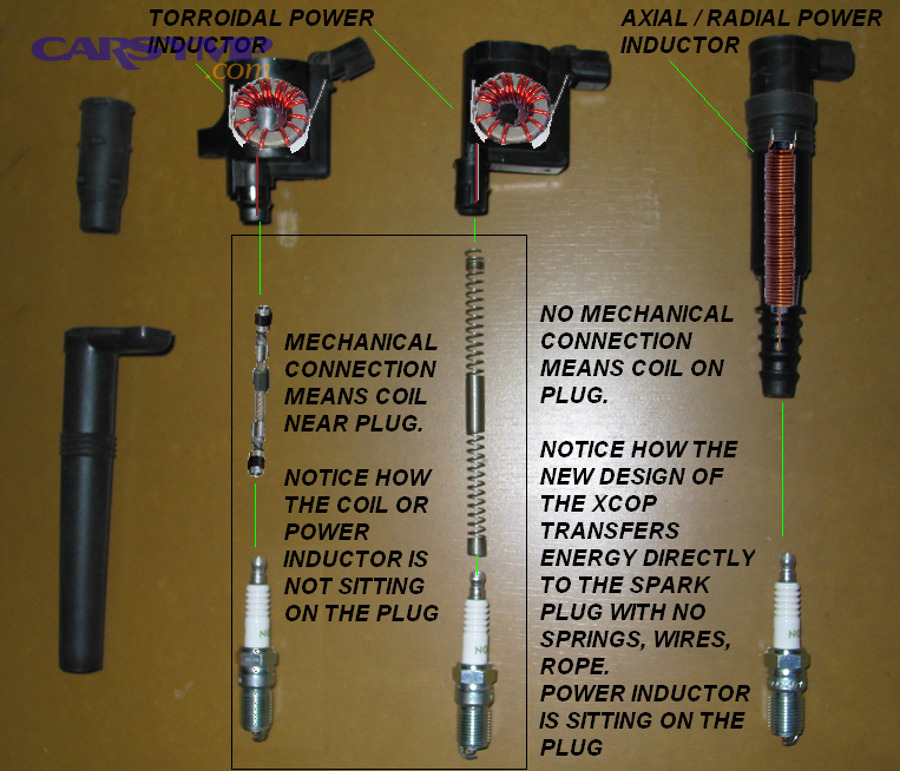
Coil-on-plug ignition is a distributorless system where each cylinder receives its own dedicated ignition coil mounted directly atop the spark plug, eliminating plug wires and mechanical distribution components. The electronic control unit (ECU) manages individual coil firing sequences based on crankshaft position sensor data, enabling precise spark timing control for each cylinder independently. This direct-mount configuration maximizes spark energy delivery while minimizing voltage loss and electromagnetic interference that plague wire-based systems.
To understand COP system operation, examining its component architecture and spark generation process reveals why modern vehicles favor this technology. The system’s reliability stems from simplified electrical pathways and reduced mechanical complexity compared to distributor-based predecessors.
What are the Main Components of a Coil-on-Plug System?
Individual ignition coils form the foundation of COP architecture, with each coil containing primary and secondary windings wrapped around an iron core sealed in epoxy resin. These compact units mount directly into spark plug wells, using rubber boots to seal against the cylinder head and create weatherproof connections. The coil design incorporates internal electronics for switching control in three-wire and four-wire configurations, while simpler two-wire versions rely on external PCM switching.
The electronic control unit serves as the system’s brain, receiving inputs from the crankshaft position sensor to calculate optimal firing timing for each cylinder. This sensor reads notches on the crankshaft, flywheel, or harmonic balancer to generate precise position signals that the ECU translates into firing order commands. The ECU adjusts spark advance dynamically based on engine speed, load, throttle position, and temperature data from multiple sensors throughout the engine management system.
Wiring harness configurations vary by manufacturer, with coils using two, three, or four control wires depending on diagnostic monitoring capabilities and ground reference strategies. Two-wire systems use simple power and ground connections with PCM-controlled switching, three-wire coils add a command signal circuit for internal electronics, and four-wire versions incorporate diagnostic feedback circuits like Toyota’s IGF system or GM’s separate low-reference ground for coil electronics. Battery voltage feeds typically route through relays with varying control logic labeled ASD, MFI, Main, IG2, or PGM-FI depending on the vehicle manufacturer.
How Does a COP System Generate and Deliver Spark?
Voltage transformation begins when the ECU energizes the primary winding with 12-volt battery current, building a magnetic field around the iron core during the dwell period. When the ECU cuts primary current at the precise firing moment, the collapsing magnetic field induces high voltage in the secondary winding—typically 5,000 to 40,000 volts depending on engine requirements and coil design. This electromagnetic induction principle remains identical to traditional coils, but COP units benefit from shorter secondary circuits that reduce resistance and capacitive losses.
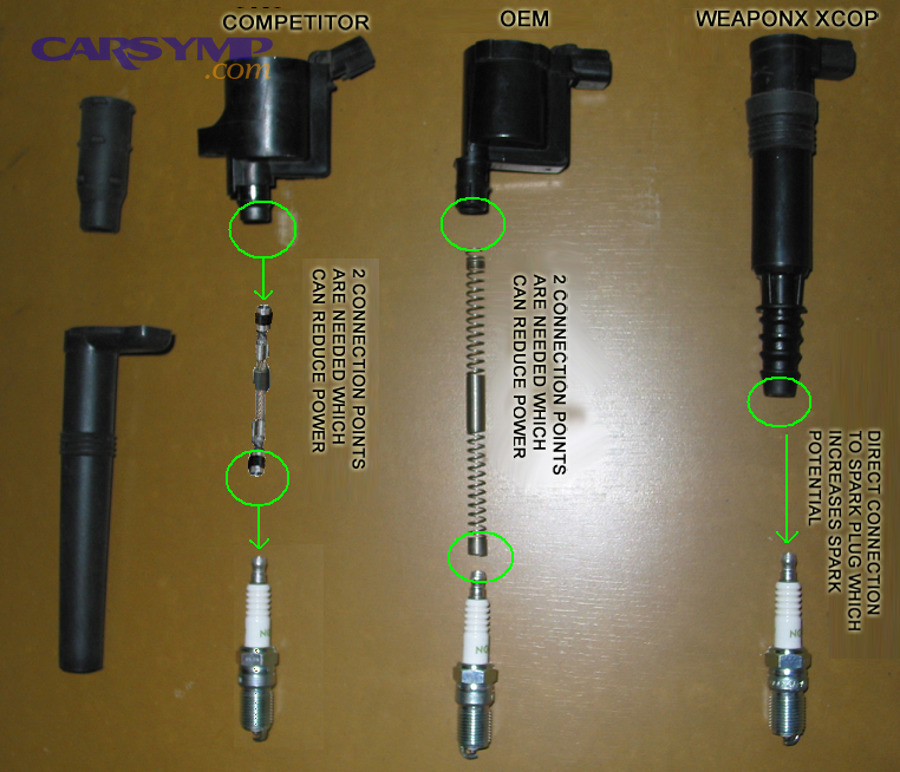
Direct spark delivery eliminates the high-voltage transmission losses inherent in plug wire systems, ensuring maximum energy reaches the spark plug electrode. The coil’s secondary winding connects directly to the spark plug terminal through the rubber boot, creating a sealed pathway that prevents voltage leakage to ground. This direct connection maintains spark intensity even at high engine speeds when increased ionization resistance and shorter available firing time challenge ignition reliability.
Timing control through the PCM enables precise spark advance adjustment cylinder-by-cylinder, responding to knock sensor feedback and optimizing combustion for each individual cylinder’s conditions. The system monitors crankshaft position continuously, calculating spark advance based on engine speed, manifold pressure, coolant temperature, and intake air temperature to maximize power while preventing detonation. Three-wire and four-wire coils receive command pulses where pulse duration determines dwell time, allowing the PCM to optimize coil saturation for varying voltage demands across the engine’s operating range.
Increased coil saturation time represents a major COP advantage, particularly at high engine speeds where traditional single-coil systems struggle to fully charge between firing events. With dedicated coils, each unit has the full engine cycle to build magnetic field strength, whereas a distributor system’s single coil must recharge between sequential cylinder firings. Chrysler documented 28% higher spark energy from COP systems compared to earlier ignition designs, improving combustion efficiency with lean fuel mixtures that require stronger spark to ignite reliably.
What is Traditional Wire Ignition and How Does It Work?
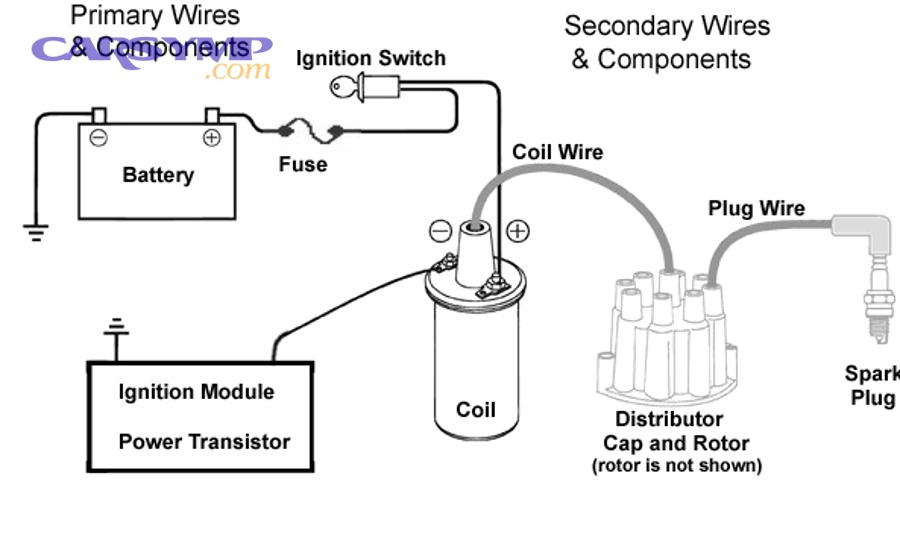
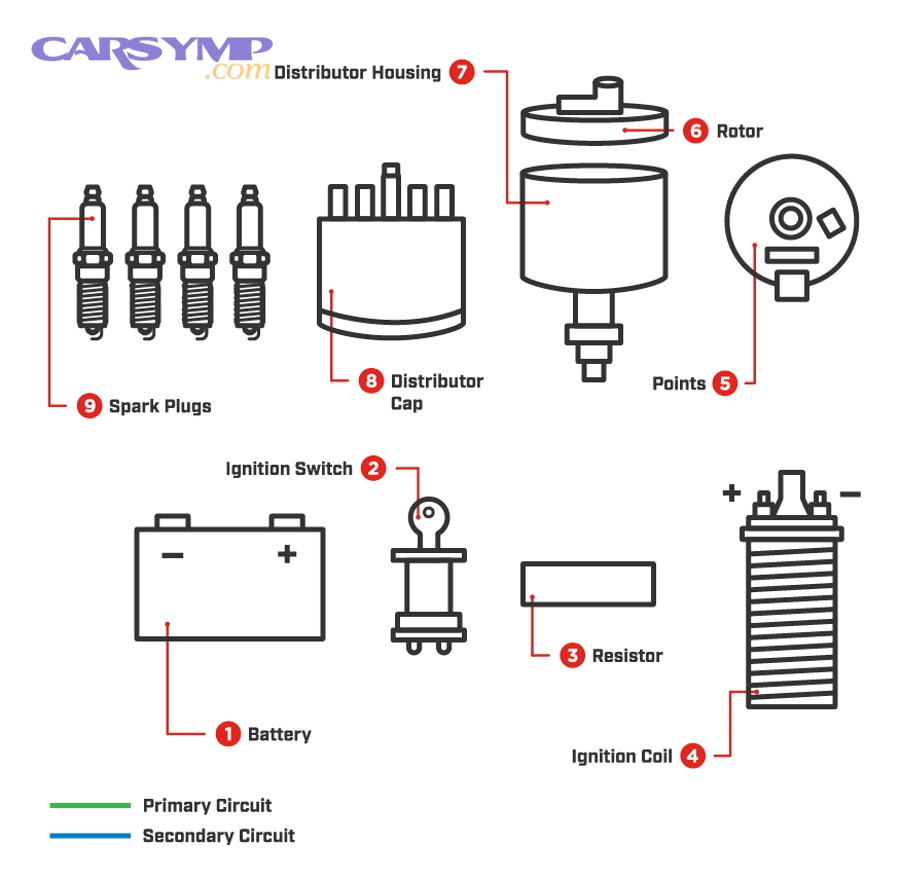
Traditional wire ignition is a distributor-based system using a single ignition coil to generate high voltage that routes sequentially through spark plug wires to each cylinder via a mechanical distributor and rotating rotor. The distributor cap contains terminals for each cylinder, while the rotor spins inside to direct spark from the coil’s central terminal to the appropriate cylinder in firing order sequence. This mechanical distribution method dominated automotive ignition for decades before electronic systems emerged, relying on precisely timed mechanical components to coordinate spark delivery with piston position.
Understanding traditional ignition requires examining both the voltage generation components and the distribution mechanism that delivers spark to multiple cylinders from a single source. The system’s mechanical nature creates distinct maintenance requirements and failure patterns compared to modern electronic alternatives.
What are the Main Components of a Traditional Ignition System?
The single ignition coil serves as the voltage transformation device, containing primary windings with relatively few turns of heavy wire and secondary windings with thousands of turns of fine wire insulated by enamel coating and oil-impregnated paper layers. The coil transforms 12-volt battery current into high-voltage output ranging from 20,000 to 40,000 volts, sufficient to jump the spark plug gap and ignite the air-fuel mixture. Early coil designs used oil-filled metal canisters, while later versions employed epoxy encapsulation for improved moisture resistance and durability.
The distributor assembly houses the rotor, cap, and timing control mechanisms in a single unit driven by the camshaft or crankshaft through a gear or belt connection. The distributor shaft rotates at half engine speed on four-stroke engines, aligning the rotor with each cylinder’s cap terminal in firing order sequence. Internal components include the rotor that conducts high voltage from the central coil terminal to individual cylinder terminals, the cap that provides insulated pathways to spark plug wires, and mechanical or vacuum advance mechanisms that adjust spark timing based on engine speed and load conditions.
Spark plug wires carry high-voltage electricity from the distributor cap terminals to individual spark plugs, requiring heavy insulation and electromagnetic interference suppression to prevent voltage leakage and radio frequency noise. These cables use carbon-impregnated cores or spiral-wound resistance wires to suppress EMI while maintaining adequate conductivity for reliable spark delivery. The wire insulation must withstand extreme temperatures, chemical exposure, and physical abrasion while preventing voltage from arcing to nearby grounded components or radiating magnetic fields that interfere with electronic sensors.
The cap and contact points or electronic ignition module control primary circuit switching to create the magnetic field collapse that induces secondary voltage. Traditional point-type systems use mechanical contact breakers that open and close the primary circuit, while electronic ignition versions replace points with transistorized switching controlled by magnetic or optical pickup sensors. The capacitor or condenser connected across the points prevents arcing that would otherwise burn the contact surfaces and absorb energy needed for secondary voltage induction.
How Does a Distributor-Based System Deliver Spark to Cylinders?
Voltage generation begins when current flows through the primary winding while the points are closed or the electronic module energizes the primary circuit, building magnetic field strength in the coil’s iron core. The points open or the module switches off at the precise moment determined by distributor shaft position, causing the magnetic field to collapse rapidly and induce high voltage in the secondary winding through electromagnetic induction. This voltage spike travels through the coil’s high-tension lead to the distributor cap’s central terminal, where the rotor conducts it to the appropriate cylinder terminal.
Distribution through the rotor mechanism occurs as the rotating contact arm aligns with each cap terminal in sequence, creating a brief conductive path that allows high voltage to jump the small air gap between rotor tip and cap terminal. The rotor mounts on the distributor shaft and spins in sync with engine rotation, dwelling at each cap position just long enough for spark delivery before advancing to the next cylinder in firing order. The air gap between rotor and cap terminals provides electrical isolation between cylinders while allowing spark to arc across when voltage reaches sufficient intensity.
Timing control methods use vacuum or centrifugal advance mechanisms to adjust spark timing dynamically based on engine operating conditions, optimizing combustion efficiency and preventing detonation. Vacuum advance systems connect to intake manifold vacuum through a diaphragm mechanism that rotates the breaker plate or sensor assembly, advancing spark timing under light load conditions when manifold vacuum increases. Centrifugal advance mechanisms use spring-loaded weights that pivot outward with increasing engine speed, rotating the point cam or trigger wheel to advance timing as RPM rises.
Sequential spark delivery follows the engine’s firing order, with the distributor rotor advancing one position per power stroke to maintain proper ignition sequence across all cylinders. Four-cylinder engines fire once per half-revolution of the distributor shaft, six-cylinder engines every third of a revolution, and eight-cylinder engines every quarter revolution. This sequential distribution from a single coil source creates the fundamental limitation that drives modern migration to individual coil systems—each cylinder must wait its turn in the firing order, limiting the time available for coil recharge at high engine speeds.
What are the Key Differences Between COP and Traditional Wire Ignition?
Coil-on-plug wins in spark energy delivery and high-RPM performance, traditional wire ignition excels in simplicity and repair cost-effectiveness, while COP proves optimal for modern fuel efficiency and emissions requirements. The architectural contrast between individual cylinder coils versus shared single-coil distribution creates cascading differences in component count, failure modes, diagnostic complexity, and long-term ownership costs. These fundamental design variations influence everything from manufacturing expenses to roadside troubleshooting capabilities.
Examining specific comparison criteria reveals how each system’s strengths and weaknesses align with different vehicle applications and owner priorities. The table below summarizes the core differences across critical evaluation dimensions.
| Comparison Factor | Coil-on-Plug (COP) | Traditional Wire Ignition |
|---|---|---|
| Coil Configuration | Individual coil per cylinder | Single shared coil |
| Spark Plug Wires | None (direct mount) | Required for each cylinder |
| Distributor | Eliminated | Required for spark distribution |
| Voltage Delivery | Direct to plug (minimal loss) | Through wires (3-5% loss) |
| Timing Control | Electronic per-cylinder | Mechanical/vacuum advance |
| Component Count | Higher (multiple coils) | Lower (shared components) |
| Initial Cost | Higher ($400-800 replacement) | Lower ($150-300 replacement) |
| Spark Energy | 28% higher typical | Standard baseline |
| High-RPM Performance | Superior (independent saturation) | Limited (shared coil recharge) |
| EMI Suppression | Inherent (no long wires) | Requires wire shielding |
| Diagnostic Complexity | Requires scan tools | Visual inspection possible |
| Common Failures | Individual coil failure | Wire degradation, cap/rotor wear |
How Do COP and Wire Ignition Systems Differ in Design and Configuration?
The number of coils represents the most visible architectural difference, with COP systems employing four, six, or eight individual coils depending on cylinder count, while traditional systems share a single coil across all cylinders. This multiplication of components increases manufacturing costs but distributes failure risk—a single coil failure in a COP system affects only one cylinder, whereas traditional system coil failure disables the entire engine. The physical packaging differs dramatically, with COP coils mounting vertically into spark plug wells versus traditional coils mounted remotely on the firewall or fender with cable connections to the distributor.
Distributor presence or absence fundamentally changes ignition architecture, with traditional systems requiring this complex mechanical assembly to time and route spark delivery while COP systems eliminate it entirely through electronic timing control. The distributor adds multiple failure points including cap carbon tracking, rotor contact wear, shaft bushing deterioration, and advance mechanism degradation. Removing this component from COP designs improves reliability but requires sophisticated engine management computers to replicate timing control functions previously handled mechanically.
Spark plug wire requirements create distinct packaging and maintenance challenges, with traditional systems needing heat-resistant, EMI-suppressed cables routed carefully to avoid hot exhaust components and moving parts. These wires constitute a wear item requiring periodic replacement every 30,000-60,000 miles as insulation degrades and internal resistance increases. COP systems eliminate plug wires completely, saving assembly line installation time and removing a common failure mode while simplifying engine bay layout and improving access to other components.
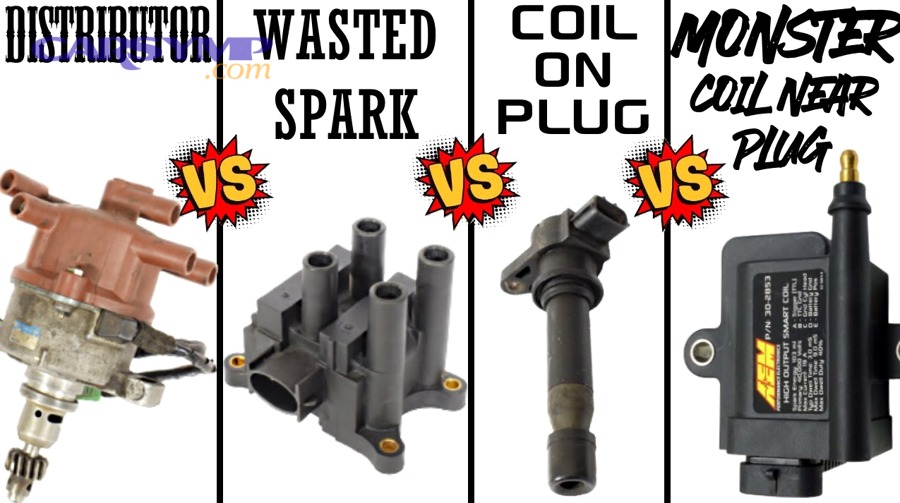
Physical mounting locations reflect each system’s design philosophy—traditional coils mount in accessible locations on the engine block, firewall, or fender with service in mind, while COP units nestle into spark plug wells where heat and vibration exposure increases but direct spark delivery becomes possible. Some engines cannot accommodate COP systems because spark plug positioning near exhaust manifolds leaves insufficient space for coil mounting, leading to coil-near-plug (CNP) compromise designs that place coils on valve covers with short connecting wires to plugs.
How Do Performance and Efficiency Compare Between the Two Systems?
Spark energy output shows COP systems delivering 28% more voltage to the spark plug gap compared to traditional distributor ignition, improving combustion reliability especially with lean fuel mixtures that resist ignition. This increased energy results from eliminating voltage loss through long plug wires and distributors caps, where resistance and capacitance absorb energy before reaching the plug. The direct connection maintains full coil output at the electrode, ensuring consistent ignition even as spark plugs develop wider gaps through normal wear.
Combustion efficiency improves with COP systems because stronger, more precise spark timing enables complete fuel burning and supports lean-burn engine strategies that reduce fuel consumption. The per-cylinder timing control allows adjustments for individual cylinder variations in compression, valve timing, or fuel delivery, optimizing each combustion event rather than applying average timing across all cylinders. Traditional systems must compromise with unified timing settings that cannot compensate for cylinder-to-cylinder differences, leaving some combustion efficiency on the table.
High RPM performance separates these technologies most dramatically, as traditional single-coil systems struggle to fully recharge between sequential firing events when engine speed exceeds 5,000-6,000 RPM. The limited dwell time forces reduced spark energy just when increased cylinder filling and higher ionization resistance demand stronger ignition. COP systems dedicate the full engine cycle to each coil’s magnetic field buildup, maintaining consistent spark energy regardless of engine speed and supporting reliable ignition at 8,000+ RPM in performance applications.
Fuel economy benefits from COP systems’ improved combustion completeness and ability to run leaner air-fuel ratios reliably, with manufacturers reporting 2-5% fuel consumption reductions in real-world driving cycles. The precise timing control enables aggressive spark advance without detonation risk, extracting maximum energy from each combustion event while minimizing pumping losses. Emissions reductions follow from complete combustion, with fewer unburned hydrocarbons escaping to the exhaust and lower NOx production from optimized combustion temperatures.
According to testing by Chrysler Corporation engineers in 1999, their coil-on-plug system on LHS and 300M engines delivered 28% higher spark energy than previous distributor-based ignition, enabling reliable lean-mixture combustion that improved fuel economy by 3-4% in combined driving cycles.
Which Ignition System Offers Better Reliability and Durability?
Coil-on-plug systems demonstrate superior long-term reliability through elimination of mechanical wear components and high-voltage wire degradation, while traditional ignition concentrates failure risk in distributor mechanical assemblies and plug wire insulation breakdown. The absence of moving parts in COP architecture removes common failure modes like distributor shaft bearing wear, rotor contact erosion, and cap carbon tracking that plague traditional systems with age and mileage. However, COP systems trade these mechanical vulnerabilities for electronic component failures that can prove more expensive to diagnose and repair without specialized scan tools.
Comparing failure points and maintenance requirements reveals how each system’s design philosophy influences ownership experience over typical vehicle lifecycles. Understanding common failure modes helps vehicle owners anticipate problems and plan preventive maintenance strategies.
What are Common Failure Points in Each System?
Individual coil failures represent the primary COP system weakness, with internal winding shorts, primary circuit opens, or secondary winding breakdowns disabling one cylinder while leaving others operational. Heat cycling from mounting directly in spark plug wells stresses coil insulation and can cause premature failures on engines with inadequate valve cover ventilation or cooling. Connector issues develop when corrosion attacks the wiring harness connections or when moisture enters sealed coil bodies through damaged boots, creating intermittent misfires that challenge diagnosis without oscilloscope analysis of primary current patterns.
Distributor wear concentrates traditional system failures in the mechanical assembly, with shaft bushings developing play that causes timing fluctuations, rotor contacts burning from repeated high-voltage arcing, and cap terminals eroding from spark erosion and carbon tracking. The distributor shaft seal often fails with age, allowing oil to contaminate internal components and accelerate wear while creating external oil leaks. Mechanical advance mechanisms stick or wear, preventing proper timing adjustment and causing poor performance, reduced fuel economy, and potential engine damage from excessive advance under load.
Plug wire degradation affects traditional systems uniquely, with insulation cracking from heat exposure, internal conductor corrosion increasing resistance, and boot seals hardening until moisture penetrates to create voltage leakage paths. Wires rubbing against hot exhaust manifolds can burn through insulation catastrophically, causing immediate misfires or cross-firing between adjacent cylinders. The connection between wire and spark plug terminal inside the boot degrades if technicians pull on wires instead of boots during spark plug service, creating high-resistance joints that cause weak spark or misfires under load.
Voltage leakage and EMI issues present differently in each system—traditional ignition radiates electromagnetic interference from long plug wires that can affect nearby sensors, while COP systems contain EMI naturally through short secondary circuits. Traditional systems leak high voltage to ground through carbon tracks on distributor caps, moisture in plug wire connections, or cracked coil towers, reducing spark energy and causing misfires. COP systems eliminate most voltage leakage paths but can suffer from damaged boots allowing spark to jump to ground rather than across the plug gap.
How Do Maintenance Requirements Differ?
COP systems require individual coil replacement when failures occur, typically involving removal of the failed coil from its spark plug well and installation of a new unit without disturbing other components. Labor intensity varies by engine design—some allow quick coil access while others require intake manifold removal or extensive disassembly to reach coils buried deep in the engine valley. The replacement parts cost more than traditional ignition components since each coil contains complete primary and secondary windings plus control electronics, but failures typically affect only one coil rather than forcing complete system replacement.
Minimal routine maintenance distinguishes COP systems from traditional ignition, with no distributor caps, rotors, or plug wires requiring periodic inspection and replacement. Maintenance schedules typically call only for spark plug replacement at extended intervals of 60,000-100,000 miles, during which coil boots should be inspected for cracks or deterioration. Some manufacturers recommend applying dielectric grease to coil boots during spark plug service to prevent boot adhesion that makes future coil removal difficult.
Traditional system distributor service creates recurring maintenance requirements, with caps and rotors typically replaced every 30,000-50,000 miles to prevent carbon tracking and contact wear from causing misfires. Inspection procedures check for cap cracks, rotor button erosion, carbon deposits on terminals, and proper advance mechanism operation. Point-type systems require periodic adjustment of point gap and dwell angle, while electronic versions eliminate this maintenance but still need distributor component replacement as contacts and mechanical parts wear.
Spark plug wire replacement intervals typically fall between 30,000-60,000 miles for traditional systems, with visual inspection revealing cracked insulation, boot deterioration, or corrosion at terminals requiring earlier replacement. Testing wire resistance with an ohmmeter identifies internal conductor degradation before complete failure occurs, with readings exceeding manufacturer specifications indicating replacement needs. During wire installation, careful routing away from heat sources and moving components extends service life, as does applying dielectric grease inside boots to prevent moisture intrusion and ease future removal.
After replacement of spark plugs in either system type, clearing misfire codes from the engine control module memory prevents false diagnostic trouble codes from triggering the check engine light due to stored faults from previous ignition issues. This step proves especially important on COP systems where individual cylinder misfire codes can mislead technicians into replacing functional coils if historical fault data isn’t cleared after addressing the actual problem like fouled plugs or fuel delivery issues.
What are the Cost Differences Between COP and Wire Ignition Systems?
Coil-on-plug systems cost $400-800 for complete coil set replacement versus $150-300 for traditional ignition component replacement, while long-term ownership costs favor COP through reduced maintenance frequency and improved fuel economy offsetting higher initial expenses. The economic comparison extends beyond parts prices to include diagnostic labor, failure frequency, and operational efficiency gains that accumulate over typical vehicle ownership periods. Understanding both immediate repair costs and lifecycle expenses helps vehicle owners make informed decisions about system repairs, upgrades, or vehicle purchases.
Examining initial costs versus long-term value reveals how each system’s design philosophy translates into ownership economics across different use patterns and mileage expectations.
What is the Initial Cost Comparison?
Manufacturing costs favor traditional ignition systems significantly, with a single coil, distributor assembly, and set of plug wires totaling less than COP systems requiring multiple precision coils with integrated electronics. This cost advantage explains why budget vehicles and small engines continue using distributor-based ignition despite COP’s performance benefits. The automotive industry’s migration to COP systems reflects willingness to absorb higher manufacturing costs in exchange for reliability improvements and fuel economy gains that reduce warranty claims and meet emissions regulations.
OEM installation expenses contribute to new vehicle pricing, with COP systems adding approximately $200-400 to manufacturing costs compared to traditional distributor ignition when accounting for coils, wiring harnesses, and ECU programming requirements. Vehicle manufacturers offset these costs through elimination of distributor assembly line installation, plug wire routing labor, and warranty claims reduction from improved ignition reliability. The break-even calculation favors COP systems on vehicles expected to exceed 100,000 miles before first owner disposition.
Aftermarket conversion costs make upgrading traditional ignition to COP economically questionable for most applications, with conversion kits ranging from $800-2,000 plus installation labor and ECU reprogramming expenses. These conversions require custom mounting brackets, wiring harness fabrication, and engine management system modifications to support individual coil control. The complexity and expense generally limit COP conversions to performance enthusiasts seeking high-RPM reliability rather than typical vehicle owners looking for maintenance cost reduction.
Replacement part pricing shows COP coils ranging from $50-150 each depending on vehicle application, while complete traditional ignition overhaul kits including distributor cap, rotor, plug wires, and coil cost $100-250 for most domestic vehicles. Import vehicle parts often cost more, with some European COP coils exceeding $200 each and traditional distributor components commanding premium prices due to declining demand. Online retailers and aftermarket suppliers offer cost savings over dealer parts, though quality variations require careful supplier selection to avoid premature failures.
Which System is More Cost-Effective Long-Term?
Part replacement frequency advantages COP systems despite higher individual component costs, with properly functioning coils typically lasting 100,000+ miles compared to distributor caps and plug wires requiring replacement every 30,000-50,000 miles. The extended service intervals reduce maintenance frequency and associated labor costs while minimizing vehicle downtime for repairs. Traditional systems accumulate multiple component replacements over 100,000 miles—two or three sets of plug wires, caps, and rotors plus potential distributor replacement if mechanical components fail.
Labor costs for repairs generally favor traditional ignition due to simpler diagnostics and easier parts access, with distributor cap and wire replacement often manageable by DIY owners using basic hand tools. COP diagnosis requires scan tools to identify which cylinder misfires and oscilloscopes or amp clamps to verify coil operation, pushing many repairs to professional shops with specialized equipment. However, COP coil replacement itself can be simpler than distributor work when coils mount accessibly on valve covers, requiring only connector removal and coil extraction without timing adjustment concerns.
Total cost of ownership calculations must include fuel economy differences, with COP systems’ 2-5% efficiency improvement saving $100-200 annually in fuel costs for typical 15,000-mile-per-year driving at current fuel prices. Over a 10-year ownership period, these savings accumulate to $1,000-2,000, substantially offsetting higher initial costs and parts expenses. The calculation shifts further in COP’s favor when reduced emissions maintenance costs are factored, as traditional systems’ less complete combustion accelerates catalytic converter degradation and oxygen sensor fouling.
According to analysis by automotive cost-of-ownership researchers at AAA in 2023, vehicles equipped with coil-on-plug ignition systems demonstrate 15-20% lower ignition-system-related repair costs over 150,000 miles compared to traditional distributor ignition, despite higher individual component replacement expenses, primarily due to extended service intervals and reduced failure frequency.
How Do You Diagnose and Troubleshoot Problems in Each Ignition System?
Diagnosing ignition problems requires scan tools and oscilloscopes for COP systems to identify misfiring cylinders and analyze waveforms, while traditional systems often yield to visual inspection and basic resistance testing with multimeters. The diagnostic approach differs fundamentally because COP systems provide electronic fault codes identifying specific cylinder misfires, whereas traditional ignition failures require physical inspection of components and systematic testing to isolate problems. Understanding system-specific diagnostic methods enables vehicle owners to determine whether problems fall within DIY capability or require professional equipment and expertise.
Effective troubleshooting follows logical sequences that eliminate variables systematically, starting with simple checks before advancing to complex waveform analysis or component replacement.
What Diagnostic Tools are Needed for COP Systems?
Scan tools and OBD-II readers form the foundation of COP diagnostics, retrieving diagnostic trouble codes that identify which cylinder(s) experience misfires and whether coil primary circuit faults exist. Modern scan tools display live data including misfire counters per cylinder, enabling technicians to verify which coils fail under specific operating conditions like acceleration or cruising. The code numbers follow standardized formats—P0301 through P0312 indicate cylinder-specific misfires, while P0351-P0362 identify coil primary circuit malfunctions for individual coils.
Inductive amp clamp testing measures primary current flow through coil power wires, revealing whether coils draw proper current and whether PCM command pulses occur. This non-invasive method uses a clamp-on current probe connected to an oscilloscope, capturing current waveforms without breaking circuits or backprobing connectors. The test identifies open primary circuits, shorted windings, and command pulse absence while providing cylinder-to-cylinder comparison to detect weak coils not yet setting fault codes.
Oscilloscope waveform analysis provides the most detailed COP diagnostics, displaying primary current patterns, command pulse timing, and secondary voltage traces that reveal coil health and ignition system timing accuracy. Primary current traces show the dwell period, peak current, and switching characteristics that indicate proper coil saturation and PCM control. Secondary voltage waveforms captured with inductive pickup tools reveal spark duration, firing voltage requirements, and the distinctive patterns of misfires versus healthy combustion events.
Primary current measurement techniques work across all COP variations regardless of wiring configuration, making this testing method universally applicable even when resistance measurements fail due to internal coil electronics. The measurement identifies both electrical connection problems and coil internal faults while enabling direct comparison between cylinders to detect marginal coils. Testing at a common relay or fuse feeding all coils allows simultaneous monitoring of all cylinders, with firing order knowledge enabling correlation between command pulses and individual cylinder current patterns.
PCM command pulse testing applies specifically to three-wire and four-wire COP systems, verifying that the engine control module sends trigger signals to each coil at proper timing. The test uses oscilloscope measurement at the command wire, looking for square-wave pulses with duration matching the required dwell time and timing synchronized with crankshaft position. Missing command pulses indicate PCM faults or wiring problems rather than coil failures, preventing unnecessary coil replacement when the control system malfunctions.
What Diagnostic Methods Work for Traditional Wire Ignition?
Distributor cap and rotor inspection reveals carbon tracking, cracks, contact erosion, and moisture contamination through visual examination after removing the cap from the distributor body. Technicians check for carbon deposits bridging terminals, hairline cracks in the cap body that allow voltage leakage, and rotor button wear that increases the air gap between rotor and cap terminals. Moisture inside the cap indicates seal failure, while white powder deposits suggest corrosion from condensation cycling and lack of proper venting.
Spark plug wire resistance testing uses a digital multimeter to measure conductor resistance, with readings compared against manufacturer specifications typically ranging from 3,000-10,000 ohms per foot depending on wire design and suppression requirements. Excessive resistance indicates internal conductor corrosion or breaks, while very low readings suggest incorrect replacement wires lacking proper EMI suppression. Testing should occur with wires removed from the engine and verified at both ends to identify precisely where high resistance exists—in the wire body, terminal connections, or plug/coil boots.
Timing light usage verifies ignition timing accuracy and distributor advance mechanism operation, with the light connected to the number-one cylinder spark plug wire and triggered by each spark event. The flashing strobe illuminates timing marks on the crankshaft pulley or flywheel, allowing comparison of actual timing to specifications at various engine speeds. Mechanical and vacuum advance function can be tested by increasing engine speed and comparing timing advance to specifications, with stuck or worn advance mechanisms revealing themselves through incorrect timing readings or erratic fluctuations.
Secondary voltage pattern analysis using an oscilloscope with secondary pickup adapters displays the voltage waveform during spark events, showing firing voltage, spark duration, and the distinctive pattern shapes that indicate healthy versus problematic ignition. Parade patterns arrange all cylinders’ waveforms in firing order sequence, enabling quick comparison to identify weak coils, fouled plugs, or lean cylinders through voltage differences. Raster patterns stack waveforms vertically for detailed comparison, revealing subtle variations invisible in parade displays.
Mechanical advance mechanism testing requires distributor removal and bench testing to verify that centrifugal weights pivot freely and return springs provide proper resistance, with advance curves checked against specifications using a distributor testing machine. This specialized equipment rotates the distributor at varying speeds while measuring advance degrees, revealing worn bushings, weak springs, or binding that prevents proper advance. Field testing alternatives include vacuum gauge monitoring of vacuum advance diaphragm operation and timing light verification of advance at different engine loads and speeds.
What are the Signs Your Ignition System is Failing?
Misfire symptoms manifest as rough idle, hesitation during acceleration, loss of power under load, and vibration felt through the vehicle chassis as one or more cylinders fail to fire consistently. The engine produces uneven running at idle with irregular exhaust pulses audible from the tailpipe, while acceleration feels jerky or sluggish compared to normal performance. Severe misfires cause noticeable shaking that worsens at specific engine speeds, with the vibration often most pronounced at idle when the engine’s natural balance mechanisms can’t compensate for missing combustion events.
Hard starting or no-start conditions develop when ignition failures prevent sufficient cylinders from firing to sustain engine operation, with the starter cranking the engine normally but combustion not occurring. Weak spark from failing coils, distributor problems, or damaged plug wires creates marginal starting that succeeds only after extended cranking or requires multiple start attempts. Complete ignition failures prevent any spark delivery, resulting in an engine that cranks indefinitely without firing even momentarily, often accompanied by strong fuel smell from unburned fuel accumulating in the exhaust system.
Increased fuel consumption results from misfires creating incomplete combustion that wastes fuel and forces the engine to work harder to maintain power output, with oxygen sensors detecting excess oxygen from unburned cylinders and commanding richer fuel delivery across all cylinders. The fuel economy reduction can reach 10-25% with severe misfires affecting multiple cylinders, while minor misfires cause subtle increases of 2-5% that vehicle owners might attribute to seasonal fuel formulation changes or driving pattern variations. Long-term misfire conditions accelerate catalytic converter damage from unburned fuel entering the exhaust and burning inside the converter, potentially leading to expensive emissions system failures beyond just ignition repair costs.
Check engine light patterns provide critical diagnostic information, with steady illumination indicating stored fault codes requiring scan tool retrieval while flashing check engine lights signal active severe misfires that risk catalytic converter damage. The flashing pattern typically occurs during the specific operating condition causing misfires—acceleration, cruising, or idle—and may cease when conditions change. Modern OBD-II systems count misfires per cylinder and set specific codes identifying affected cylinders, enabling targeted diagnosis rather than shotgun parts replacement common before computerized monitoring existed.
Performance degradation indicators include reduced throttle response, decreased top speed capability, abnormal engine sounds like backfiring or popping through the intake or exhaust, and black smoke from incomplete combustion or excess fuel delivery compensating for misfires. The vehicle may stumble or surge during steady-speed cruising, fail to maintain consistent speed uphill, or demonstrate reduced towing capacity from power loss. Fuel smell from the exhaust or oil dipstick indicates severe misfires allowing raw fuel to wash past piston rings into the crankcase, potentially causing oil dilution that accelerates engine wear.
Can You Convert from Traditional Wire Ignition to Coil-on-Plug?
Aftermarket COP conversion kits exist for popular engine platforms, providing individual coils, mounting brackets, wiring harnesses, and installation instructions for vehicles originally equipped with distributor ignition. These kits target performance enthusiasts seeking high-RPM reliability and reduced maintenance rather than typical vehicle owners, as the conversion complexity and cost exceed practical justification for normal driving applications. The conversion requires specific coil types matched to spark plug thread size and reach, custom brackets fabricated to mount coils over spark plugs, and wiring integration with existing engine management systems.
Compatibility considerations include spark plug accessibility for coil mounting, cylinder head configuration providing adequate clearance above plugs, and engine management computer capability to control individual coils rather than a single coil output. Engines with spark plugs located on the side of cylinder heads or surrounded by exhaust manifolds cannot accommodate direct coil mounting, limiting conversions to engines with plugs positioned on top of heads. The valve cover design must either provide sufficient height for coil mounting or require replacement with custom covers incorporating coil mounting provisions.
Installation complexity varies from moderate to extreme depending on engine configuration and kit completeness, with simple conversions requiring only coil mounting and wiring connections while complex versions need custom ECU programming, trigger wheel installation on the crankshaft, and complete engine management system replacement. The process typically involves removing the distributor and plugging its mounting hole, installing coil mounting brackets or modified valve covers, connecting individual coils to spark plugs, routing and connecting power and ground wiring, and integrating control signals from the ECU to each coil. Stripped threads in aluminum cylinder heads during coil installation require careful repair using time-sert or helicoil thread inserts, with anti-seize compound applied to coil mounting threads preventing future seizure from heat cycling and corrosion.
ECU programming needs represent the most challenging conversion aspect, as stock engine management systems designed for single-coil control must be modified or replaced to provide individual coil firing signals synchronized with crankshaft position. Aftermarket programmable ECUs like MegaSquirt or Haltech offer COP control capability but require complete engine management replacement including wiring harnesses, sensor integration, and extensive tuning to match ignition and fuel delivery to engine requirements. Some late-model distributor-equipped engines use ECUs capable of COP control through software updates, enabling conversion without complete computer replacement.
Cost-benefit analysis rarely justifies COP conversion for street-driven vehicles, with typical conversion expenses ranging from $1,200-3,000 including parts, labor, and tuning compared to minimal distributor maintenance costs over most vehicles’ useful lives. The reliability improvement and high-RPM performance gains appeal primarily to racing applications and extreme performance builds where ignition system limitations would otherwise constrain engine potential. Vehicles experiencing chronic distributor-related problems in harsh environments might consider conversion as an alternative to repeated traditional component replacement, though simpler solutions like upgraded distributor components or weatherproof sealing usually prove more economical.
For vehicle owners seeking expert guidance on ignition system diagnosis, repair procedures, and performance optimization, resources like carsymp.com provide detailed technical information and troubleshooting guides covering both traditional and modern ignition technologies.