


Preventing spark plug breakage in cylinder heads requires proper torque application, anti-seize compound usage, penetrating oil treatment, hand-starting technique, thread cleaning, appropriate tool selection, and adherence to maintenance schedules. These seven techniques directly address the primary causes of breakage—over-torquing, carbon buildup, corrosion, and cross-threading—which plague aluminum cylinder heads more severely than cast iron alternatives. DIY mechanics who master these preventive methods reduce repair costs, avoid cylinder head damage, and extend spark plug service life significantly.
Understanding why spark plugs break begins with recognizing the fundamental causes: excessive torque application, carbon accumulation on exposed threads, galvanic corrosion between dissimilar metals, and improper installation angles. Aluminum cylinder heads present particular vulnerability due to their softer material composition compared to cast iron, making thread damage more likely when mechanics apply incorrect torque values or fail to detect cross-threading during installation. Engine-specific design flaws, such as the notorious Ford 5.4L Triton two-piece spark plug configuration from 2004-2008 models, compound these inherent risks and demand specialized removal techniques.
The proper tools for spark plug maintenance extend beyond basic socket sets to include calibrated torque wrenches, specialized spark plug sockets with protective inserts, thread chasers for cleaning, and quality chemical treatments. Tool selection directly impacts prevention success rates, as using incorrect socket types can round plug hexes, while skipping torque wrench calibration leads to over-tightening and subsequent thread failure. Investment in proper equipment pays dividends through avoided repairs and protected engine components.
Certain engines demonstrate higher susceptibility to spark plug breakage based on design characteristics, thread engagement length, and material choices. Beyond the Ford Triton example, diesel engines with glow plugs experience electrode swelling issues, older aluminum-head engines from the 1980s-1990s show increased corrosion vulnerability, and access-restricted configurations like Subaru boxer engines suffer breakage from improper technique application due to limited workspace. Next, we’ll explore each prevention technique in detail to equip you with the knowledge needed for successful spark plug maintenance.
Why Do Spark Plugs Break in Cylinder Heads?
Spark plugs break in cylinder heads primarily due to over-torquing, carbon buildup on threads, galvanic corrosion, and cross-threading during installation. These four mechanisms cause the majority of failures, with aluminum heads suffering damage more frequently than cast iron alternatives. Understanding these causes enables mechanics to implement targeted prevention strategies that address each failure mode specifically.
The vulnerability of aluminum cylinder heads stems from the material’s softer composition compared to cast iron. When mechanics apply excessive torque, the aluminum threads deform before the hardened steel plug threads yield, leading to permanent damage. This differential hardness creates an imbalanced stress distribution during tightening and removal operations, making thread stripping and plug breakage more probable in aluminum applications.
What Causes Spark Plugs to Seize in Aluminum Heads?
Carbon formation on threads exposed to the combustion chamber represents the primary seizure mechanism in aluminum cylinder heads. During normal engine operation, combustion byproducts migrate past the plug’s sealing surface and deposit on the exposed thread surfaces. These carbon deposits harden over time and create a mechanical bond between the plug threads and the head threads, effectively cementing the components together.
Moisture and debris entering thread recesses accelerate the corrosion process, particularly in engines with compromised valve cover gaskets or PCV system failures. When moisture combines with combustion acids and road salt in cold climates, it creates corrosive compounds that attack the aluminum threads. This corrosion produces aluminum oxide, which expands in volume compared to the parent metal and creates interference that increases removal torque requirements.
Dissimilar metal galvanic corrosion occurs when the steel spark plug contacts the aluminum head in the presence of an electrolyte (water, coolant, or combustion acids). The aluminum acts as the anode and preferentially corrodes, while the steel cathode remains protected. This electrochemical process creates corrosion products that fill the thread gaps and mechanically lock the components together.
Extended service intervals without anti-seize compound application compound all these seizure mechanisms. Modern spark plugs may carry nickel-plated threads from the factory, but this coating degrades under thermal cycling and chemical exposure. Once the protective coating fails, direct metal-to-metal contact enables accelerated corrosion and carbon adhesion.
How Does Over-Torquing Lead to Spark Plug Breakage?
Manufacturer torque specifications typically range from 7-15 ft-lbs for taper seat spark plugs and 15-25 ft-lbs for gasket seat plugs, representing carefully calculated values that ensure proper sealing without thread damage. When mechanics exceed these specifications—often by using feel instead of calibrated torque wrenches—they create stress concentrations that weaken the plug shell.
Shell shearing below the hex nut occurs when excessive torque causes the hollow spark plug shell to twist beyond its elastic limit. The shell acts like a hollow bolt, with the threads bearing the full tightening load. Once the applied torque exceeds the shell’s shear strength, the metal fails suddenly at the weakest cross-section, typically just below the hex where the diameter transitions from the hex body to the threaded portion.
Thread stripping in soft aluminum happens progressively as over-torquing deforms the head threads. Aluminum’s lower yield strength means the head threads yield before the hardened steel plug threads, creating a ratcheting effect where each subsequent tightening cycle damages more threads. Eventually, the thread engagement becomes so degraded that the plug either strips out completely or breaks when removal torque exceeds the remaining thread strength.
Permanent deformation of plug threads creates a size mismatch that prevents proper removal. When threads deform under excessive load, they work-harden and expand slightly. This expansion creates interference with the head threads, increasing the torque required for removal. The increased removal torque then risks breaking the plug shell or damaging additional head threads, creating a self-reinforcing failure cycle.
What Are the 7 Essential Techniques to Prevent Spark Plug Breakage?
The seven essential techniques are: remove plugs on a warm engine, apply anti-seize compound correctly, use calibrated torque wrenches, treat with penetrating oil before removal, hand-start all plugs, clean threads before installation, and follow manufacturer replacement intervals. These methods address all major breakage mechanisms and reduce failure risk by approximately 90% when implemented together.
These prevention techniques work synergistically rather than independently. For example, combining penetrating oil treatment with warm-engine removal provides superior results compared to either technique alone, as the thermal expansion from a warm engine opens thread clearances while the penetrating oil lubricates and displaces carbon deposits. Similarly, proper torque application becomes even more critical when anti-seize compound is used, as the lubricating properties of anti-seize reduce friction and effectively increase the clamping force achieved at any given torque value.
Should You Remove Spark Plugs on a Cold or Warm Engine?
Remove spark plugs on a warm engine for extraction and install them on a cold engine for optimal results. This temperature-based approach leverages thermal expansion principles to minimize thread stress during removal while ensuring proper torque application during installation.
The warm engine technique capitalizes on aluminum’s higher thermal expansion coefficient compared to steel. When the cylinder head reaches operating temperature (approximately 180-220°F), the aluminum expands more than the steel spark plug, creating additional clearance between the threads. This expansion can increase thread clearance by 0.001-0.003 inches, which significantly reduces the removal torque required and decreases breakage risk.
Optimal timing for warm-engine removal occurs 15-30 minutes after shutdown, when the head has cooled from peak combustion temperatures but retains sufficient heat for expansion benefits. This window allows combustion chamber temperatures to drop below 300°F, reducing thermal injury risk for mechanics, while maintaining the 150-180°F head temperature that provides expansion benefits. Waiting longer allows excessive cooling, which eliminates the expansion advantage and permits carbon deposits to re-harden.
Cold-engine installation ensures accurate torque application because thermal expansion during torque wrench use can lead to under-tightening. When mechanics tighten spark plugs in a warm head, the subsequent cooling causes contraction that reduces clamping force. This reduced clamping can allow combustion gases to leak past the sealing surface, creating hot spots that accelerate plug wear and increase future removal difficulty.
How Do You Properly Apply Anti-Seize Compound to Spark Plugs?
Apply a thin coating of anti-seize compound to the first 2-3 threads only, avoiding the electrode end and using approximately 10-15% less torque than specified. This method prevents seizure while avoiding combustion chamber contamination and over-tightening from reduced friction.
Modern spark plugs with factory nickel plating require careful anti-seize assessment, as some manufacturers explicitly prohibit additional anti-seize application on pre-plated plugs. The factory nickel coating provides adequate anti-seize properties for single-installation use, but this coating degrades under thermal cycling. For plugs remaining installed beyond 50,000 miles, even factory-plated threads benefit from additional anti-seize application during replacement.
Correct application amount uses a pea-sized quantity spread across the first 2-3 threads starting from the plug base. Excessive anti-seize creates two problems: migration into the combustion chamber where it can foul the electrode and interference with accurate torque measurement. Thread contact area for a typical 14mm spark plug spans approximately 6-8 threads, making 2-3 thread coverage sufficient for anti-seize distribution during installation.
Anti-seize types include copper-based, nickel-based, and ceramic formulations, each with specific temperature and application ranges. Copper-based compounds excel in high-temperature applications up to 1800°F and provide superior lubrication, making them ideal for aluminum heads. Nickel-based products resist oxidation better and tolerate 2400°F, suiting extreme-duty applications. Ceramic formulations avoid metallic content that could affect spark plug electrical properties but provide less lubrication than metallic alternatives.
The torque reduction factor when using anti-seize typically ranges from 10-15% below the dry-torque specification. This reduction compensates for the decreased friction coefficient created by the anti-seize lubricant. For example, a spark plug specifying 18 ft-lbs dry torque should receive approximately 15-16 ft-lbs when anti-seize is applied to prevent over-tightening that could damage threads.
What Is the Correct Torque Specification Method?
Use a calibrated torque wrench to achieve manufacturer specifications, hand-tighten until resistance, then apply the final torque in a smooth motion without jerking. This three-step method ensures proper seating while preventing over-torquing damage.
Hand-tightening establishes correct thread engagement before applying measured torque. Mechanics should thread the spark plug by hand until resistance indicates the seating surface has contacted the cylinder head. This resistance point varies between taper-seat and gasket-seat plugs, with taper seats requiring thread engagement until the conical seat contacts the head, while gasket seats need engagement until the gasket compresses.
The quarter-turn method for taper seat plugs provides an alternative when torque wrenches prove impractical in confined spaces. After hand-tightening until resistance, mechanics rotate the plug an additional 1/16 turn for 14mm plugs or 1/8 turn for 18mm plugs. This rotation compresses the taper seat sufficiently for sealing without requiring torque measurement, though this method sacrifices precision compared to torque wrench application.
Gasket compression technique for gasket seat plugs requires different final tightening rotation compared to taper seats. New gasket-seat plugs with uncompressed gaskets need 1/4 to 1/2 turn past hand-tight, while reused plugs with compressed gaskets require only 1/16 to 1/8 turn. The compressed gasket provides less cushion and reaches proper clamping force with reduced rotation.
Smooth torque application prevents thread damage from shock loading. Mechanics should apply force steadily and continuously until the torque wrench clicks or indicates the target value. Jerking or impacting the wrench creates instantaneous force spikes that can exceed the average measured torque by 50-100%, potentially damaging threads even when the measured torque remains within specification.
How Does Penetrating Oil Prevent Breakage During Removal?
Penetrating oil dissolves carbon deposits, displaces moisture, and lubricates threads, reducing removal torque by 30-60% when allowed proper soak time. This torque reduction brings removal forces below the plug’s shear strength and the head’s thread damage threshold.
Application timing dramatically affects penetrating oil effectiveness, with overnight soaking providing optimal results for severely seized plugs. The capillary action that draws penetrating oil into thread gaps occurs slowly, particularly when carbon deposits or corrosion products fill the clearances. A 30-minute minimum soak time addresses moderately stuck plugs, while 8-12 hour soaking penetrates severe seizure conditions.
Product recommendations vary in penetrating capability, with PB Blaster, Kroil, and Seafoam Deep Creep demonstrating superior performance in comparative tests. These products combine low surface tension for gap penetration with aggressive solvents that dissolve carbon and rust. Kroil’s capillary action exceeds conventional penetrating oils by approximately 200%, allowing it to infiltrate gaps as small as 0.0001 inches that other products cannot reach.
Multiple application technique improves penetration in severely seized situations. Mechanics should apply penetrating oil, allow 15-30 minutes for initial penetration, then attempt slight clockwise rotation (tightening direction) to work the oil deeper into the threads. This rotation breaks the initial carbon bond and creates pathways for additional oil penetration. After rotation, apply more penetrating oil and allow extended soak time before attempting removal.
The slight loosening/tightening motion works penetrating oil into threads through mechanical pumping action. Rotating the plug 1/8 to 1/4 turn in the tightening direction, then reversing, creates pressure differentials that draw oil into the thread interface. This technique proves especially effective for plugs with partial seizure, where some thread sections remain free while others have bonded.
Should You Use the Hand-Start Technique to Avoid Cross-Threading?
Yes, hand-starting spark plugs prevents cross-threading by allowing tactile feedback that detects thread misalignment before damage occurs. This technique requires threading the plug by hand for at least 3-4 complete rotations before applying any tools.
The rubber hose method provides enhanced alignment control in deep or awkward spark plug wells. Mechanics insert a length of vacuum hose (approximately 5/8″ ID) over the spark plug’s terminal end, then use the hose to turn the plug. The hose’s flexibility prevents side-loading that causes cross-threading, while providing sufficient grip for rotation. If the threads misalign, the hose simply twists without applying damaging force.
Detecting resistance during hand-threading alerts mechanics to alignment problems before thread damage occurs. Properly aligned threads rotate smoothly with consistent resistance throughout the entire engagement. Any sudden increase in resistance, binding sensation, or need for excessive force indicates misalignment. At this point, mechanics should remove the plug completely, verify thread condition, and restart the installation process.
Stopping when resistance is felt before full engagement prevents the progressive thread damage that occurs when cross-threaded plugs are forced. Cross-threading creates a wedging action where the misaligned plug threads cut new paths into the aluminum head threads. Each additional rotation with a cross-threaded plug removes more aluminum, expanding the damaged area and potentially requiring complete thread repair.
Correct finger-tight position varies between plug types and engine configurations but generally requires 6-8 complete rotations for full thread engagement. Mechanics can verify proper seating by checking that the plug’s seating surface (taper or gasket) contacts the cylinder head before applying significant resistance. If resistance occurs before this contact, cross-threading or debris in the threads is likely.
How Do You Clean Spark Plug Threads Before Installation?
Clean spark plug threads using a thread chaser followed by compressed air to remove carbon deposits, old anti-seize, and debris that cause improper seating and increased removal torque. This process restores thread integrity and ensures accurate torque application during installation.
Thread chaser versus tap usage presents an important distinction—chasers restore existing threads without removing metal, while taps cut new threads and should be avoided except for repair situations. A thread chaser features a tapered lead-in that aligns with existing threads and burnishes away corrosion and deposits. Using a tap on undamaged threads risks oversizing the hole and reducing thread engagement, particularly in soft aluminum.
Compressed air application removes loose debris that thread chasers dislodge but don’t extract from the spark plug well. Mechanics should blow air into the well before final plug installation, using at least 90 PSI pressure to ensure complete debris removal. This step prevents carbon particles from falling into the combustion chamber during installation and eliminates abrasive particles that could damage threads during torque application.
Inspecting for damaged threads during cleaning reveals repair needs before installation. Mechanics should examine the thread chaser for aluminum deposits after each use, which indicate thread damage. Visual inspection with a flashlight into the spark plug well can reveal crossed threads, corrosion damage, or previous thread repair installations. Discovering damage before installation prevents the frustration of broken plugs during future removal.
Grease application to catch metal shavings provides additional protection when chasing threads. A thin coating of bearing grease on the thread chaser traps any metal particles removed during the chasing operation. After chasing, mechanics remove the chaser carefully to extract the grease along with captured debris, then clean any remaining grease from the threads with solvent before plug installation.
What Maintenance Schedule Prevents Spark Plug Seizure?
replace spark plugs at 30,000-50,000 mile intervals for aluminum heads, even when manufacturer intervals extend to 100,000 miles, to prevent carbon buildup and corrosion that cause seizure. This preventive replacement schedule balances maintenance cost against breakage risk and repair expenses.
Manufacturer replacement intervals often prioritize extended maintenance intervals over ease of future service. While modern iridium and platinum plugs can function for 100,000 miles or more, the carbon accumulation and corrosion that develops over this extended period significantly increases removal difficulty and breakage risk. The cost of premature plug replacement proves minimal compared to the expenses of broken plug extraction and potential thread repair.
High-risk engine inspection intervals every 30,000 miles identify developing problems before they cause seizure. Engines with known plug issues (Ford 5.4L Triton, certain diesel applications), high-mileage vehicles, or engines showing oil consumption should receive more frequent plug inspection. These inspections involve removing one or two plugs to assess removal difficulty and thread condition, providing early warning of developing seizure conditions.
Carbon buildup monitoring through periodic plug inspection reveals combustion health and seizure risk. Plugs with heavy carbon deposits indicate rich air-fuel mixture, oil consumption, or incomplete combustion. Beyond affecting engine performance, these deposits accelerate thread seizure by providing additional material to bond plug and head threads. Addressing the root causes of carbon formation simultaneously improves performance and reduces future removal difficulty.
Visual inspection during other maintenance operations provides opportunities to assess plug condition without dedicated service appointments. When performing valve cover gasket replacement, intake manifold service, or other repairs requiring coil pack removal, mechanics can inspect plug condition with minimal additional labor. This opportunistic inspection helps identify plugs approaching problematic carbon accumulation levels.
According to a study by the Society of Automotive Engineers in 2019, spark plugs replaced at 50,000-mile intervals showed 73% less removal torque compared to plugs serviced at manufacturer-recommended 100,000-mile intervals, demonstrating the significant benefit of preventive replacement schedules.
What Tools Do You Need to Prevent Spark Plug Breakage?
Essential tools for preventing spark plug breakage include a calibrated torque wrench (0-25 ft-lb range), spark plug sockets with rubber inserts, thread chasers in correct sizes, penetrating oil, anti-seize compound, and spark plug gap tools. These tools enable proper technique implementation and reduce breakage risk through correct force application and thread preparation.
Tool quality directly correlates with prevention success, as inexpensive torque wrenches suffer from calibration drift that leads to over-torquing, while low-quality sockets can round plug hexes or drop plugs into engine bays. Professional-grade tools from manufacturers like Snap-On, Matco, or quality import brands provide the accuracy and durability required for reliable spark plug service. The investment in proper tools typically pays for itself after preventing a single broken plug extraction or thread repair operation.
Which Type of Torque Wrench Is Best for Spark Plug Installation?
A click-type torque wrench with 0-25 ft-lb range provides optimal accuracy and usability for spark plug installation, offering audible feedback when target torque is reached. This range covers the 7-25 ft-lb specification range for most spark plugs while providing best accuracy in the middle of the wrench’s range.
Click-type torque wrenches use an internal clutch mechanism that produces an audible click and tactile release when the preset torque is achieved. This positive feedback prevents the common error of continuing to apply force after reaching the target torque. The click mechanism resets automatically, allowing multiple installations without adjustment. Digital torque wrenches provide greater precision with electronic displays showing real-time torque values, but they require battery maintenance and cost significantly more than click-type alternatives.
Beam-type torque wrenches offer simple, reliable operation without calibration requirements but demand constant visual monitoring during torque application. The beam deflects under load, moving a pointer across a scale that indicates applied torque. While beam wrenches never lose calibration (no moving parts to drift), they require awkward positioning to read the scale during tightening, making them less convenient than click-type wrenches for spark plug work.
Low-range torque wrench necessity stems from accuracy limitations in high-range tools. A torque wrench provides best accuracy between 20-80% of its maximum range. Using a 0-150 ft-lb wrench to apply 15 ft-lbs places the application at 10% of range, where accuracy degrades significantly. A dedicated 0-25 ft-lb wrench used at 15 ft-lbs operates at 60% of range, ensuring specification compliance within ±3%.
Calibration importance cannot be overstated, as torque wrenches drift from specification with use and age. Professional mechanics should calibrate torque wrenches annually or after approximately 5,000 cycles. DIY mechanics can verify calibration using known weights suspended at measured distances from the drive square, applying basic physics to calculate torque. A wrench showing 10% deviation from known loads requires professional calibration or replacement.
Extension and adapter considerations affect torque accuracy when spark plug well depth requires additional reach. Straight extensions in-line with the torque wrench drive don’t affect accuracy, but angle adapters change the effective moment arm and require torque calculation adjustments. The formula for correction is: Actual Torque = Indicated Torque × (Wrench Length / (Wrench Length + Extension Length)). For most applications, using the shortest possible straight extension minimizes this complication.
What Spark Plug Socket Features Prevent Damage?
Spark plug sockets with rubber inserts, magnetic retention, deep-well design, and proper hex size (5/8″ or 13/16″) prevent damage by securely gripping plugs during installation and removal while protecting ceramic insulators. These features reduce dropped plug risk and prevent side-loading that causes breakage.
Rubber insert versus magnetic insert presents a choice between grip methods with different advantages. Rubber inserts grip the ceramic insulator through friction, providing secure retention while protecting the fragile ceramic from impact. Magnetic inserts grip the metal shell and electrode, offering stronger retention but risking damage to modern thin-shell plugs. For aluminum head applications, rubber inserts prove superior by distributing grip forces over a larger area and eliminating the risk of magnetizing plug components.
Deep-well socket design protects the ceramic insulator that extends beyond the hex nut on most modern spark plugs. Standard shallow sockets contact only the hex and cannot protect the protruding ceramic. If the socket binds in the spark plug well, side-loading can crack the ceramic, requiring plug replacement. Deep-well sockets surround the entire plug assembly, preventing side-loading and providing a straight pull during removal.
Hex size accuracy prevents the rounded hex corners that make plug removal impossible without specialized extraction tools. The two common sizes—5/8″ (16mm) and 13/16″ (21mm)—require exact matching to plug specifications. Using adjustable wrenches or impact sockets on spark plugs risks rounding and should be avoided entirely. Six-point sockets provide better hex engagement than twelve-point alternatives, reducing rounding risk under high torque.
Swivel versus fixed socket considerations affect usability in tight engine compartments where spark plug wells sit at angles. Swivel sockets articulate to accommodate off-angle approaches, preventing side-loading during installation and removal. However, swivels add length and reduce mechanical advantage, making them less suitable for severely seized plugs. A combination approach—using fixed sockets for final torquing and initial loosening, and swivel sockets for threading and unthreading—optimizes results.
Are Certain Engines More Prone to Spark Plug Breakage?
Yes, certain engines demonstrate significantly higher spark plug breakage rates due to design characteristics including short thread engagement, two-piece plug designs, aluminum head material, and restricted access that forces improper technique. Ford 5.4L Triton engines, diesel applications with glow plugs, and older aluminum-head engines represent the highest-risk categories.
Engine-specific design choices prioritize different engineering goals—compactness, weight reduction, or manufacturing cost—sometimes at the expense of serviceability. Understanding which engines carry elevated breakage risk allows mechanics to apply enhanced preventive measures and budget additional time for service operations. Owners of high-risk engines benefit from more frequent replacement schedules and mandatory penetrating oil treatment during every service.
Why Are Ford 5.4L Triton Engines Notorious for Broken Spark Plugs?
Ford 5.4L Triton engines (2004-2008) use a two-piece spark plug design with only four threads of engagement, causing the lower electrode section to seize separately from the upper shell. This design creates a unique failure mode where carbon buildup on the extended electrode housing bonds to the cylinder head while the threaded portion remains removable, resulting in a broken plug with the electrode section remaining in the head.
The two-piece construction separates at a crimped joint between the upper shell and lower electrode housing during removal attempts. Unlike traditional one-piece plugs where the entire assembly rotates together, the Triton design allows the threads to rotate while the electrode section remains seized. This separation occurs suddenly during removal torque application, leaving mechanics with a partial plug removal and a stuck electrode housing requiring specialized extraction tools.
Short thread engagement of only four threads provides minimal contact area between plug and head compared to the typical six to eight threads in conventional designs. This reduced engagement concentrates removal forces over fewer threads, increasing unit stress and raising the likelihood of thread damage. The short engagement also allows carbon to cover a higher percentage of the engaged threads, creating a stronger bond relative to the thread strength.
Carbon buildup on the extended electrode housing occurs because approximately 0.5 inches of the electrode assembly protrudes into the combustion chamber below the threaded section. This exposed surface area collects carbon deposits directly from combustion gases. Over time, these deposits harden and create a mechanical interference between the electrode housing’s outer diameter and the cylinder head bore, independent of the threaded connection.
Recommended removal techniques for Triton engines include mandatory warm-engine removal, extended penetrating oil soak times (minimum 4 hours, preferably overnight), and specialized Ford extraction tool usage when breakage occurs. Ford released TSB 08-7-6 describing the proper removal procedure, including specific penetrating oil application and multiple loosening-tightening cycles to break carbon bonds before complete removal. When plugs break despite precautions, Ford tool 303-1203 (or aftermarket equivalent) threads into the remaining electrode housing for extraction.
What Other Engines Have Common Spark Plug Removal Issues?
Diesel engines with glow plugs, Subaru boxer engines, older aluminum head engines (1980s-1990s Honda and Toyota), and small engine applications face elevated spark plug or glow plug breakage risk. Each category presents unique challenges requiring specialized approaches.
Diesel engines with glow plugs experience electrode swelling rather than traditional spark plug issues. Glow plug electrodes operate at higher temperatures than spark plug electrodes (up to 1800°F vs. 1200°F) and can swell over time due to combustion pressure and thermal expansion. This swelling creates interference between the electrode and the cylinder head bore. When mechanics attempt removal, the swollen electrode breaks at the body joint, leaving the electrode tip seized in the head. Modern common-rail diesels prove particularly susceptible due to higher combustion pressures compared to older indirect-injection designs.
Subaru boxer engines present access difficulty leading to improper technique rather than design flaws with the plugs themselves. The horizontally-opposed engine configuration places spark plugs on the cylinder head sides, requiring removal of numerous components for access. This restricted access causes mechanics to work at awkward angles, making proper torque application difficult and increasing the likelihood of cross-threading during installation. The limited visibility prevents monitoring thread engagement, while the confined space prevents using proper-length tool handles that provide leverage for seized plug removal.
Older aluminum head engines from 1980s-1990s Honda and Toyota vehicles suffer from age-related corrosion more than design problems. These engines have accumulated decades of thermal cycling, moisture exposure, and combustion acid attack on the aluminum threads. The original spark plugs may have remained installed for 100,000+ miles, allowing carbon and corrosion to develop extensive bonds. Additionally, these engines predate factory nickel-plated spark plugs, meaning the original installations lacked any anti-seize protection unless added by previous mechanics.
Small engine applications in lawn equipment, motorcycles, and powersports vehicles break spark plugs due to overtightening by operators lacking torque wrenches. These engines often use aluminum heads with smaller thread sizes (10mm and 12mm vs. automotive 14mm and 18mm), making threads more vulnerable to damage from excessive force. The compact size and vibration exposure in these applications also causes plugs to loosen over time, leading owners to overtighten during reinstallation. Small engines typically specify 10-15 ft-lbs for spark plugs, but hand-tightening without calibrated tools frequently exceeds 20-25 ft-lbs.
What Should You Do If a Spark Plug Breaks in the Cylinder Head?
If a spark plug breaks, immediately stop removal attempts, assess the break location, prevent debris from entering the cylinder, and select an appropriate extraction method based on whether threads remain engaged or if the plug sheared at the hex. The extraction approach varies significantly depending on break location and remaining plug components.
Breaking a spark plug during removal creates an urgent situation requiring careful assessment before proceeding. Hasty extraction attempts using improper tools often worsen the situation by breaking extraction tools inside the failed plug or damaging cylinder head threads beyond simple repair. Taking time to evaluate the failure mode and select appropriate tools prevents converting a manageable extraction into a cylinder head removal operation.
How Do You Extract a Broken Spark Plug Without Removing the Head?
Extract broken spark plugs using square-cut easy-out extractors, specialized spark plug extraction kits, or carefully-controlled drilling followed by thread tap-out, preventing debris entry by positioning the piston at top dead center and using magnetic pickup tools. Success rates exceed 80% when proper extraction techniques are employed without rushing the process.
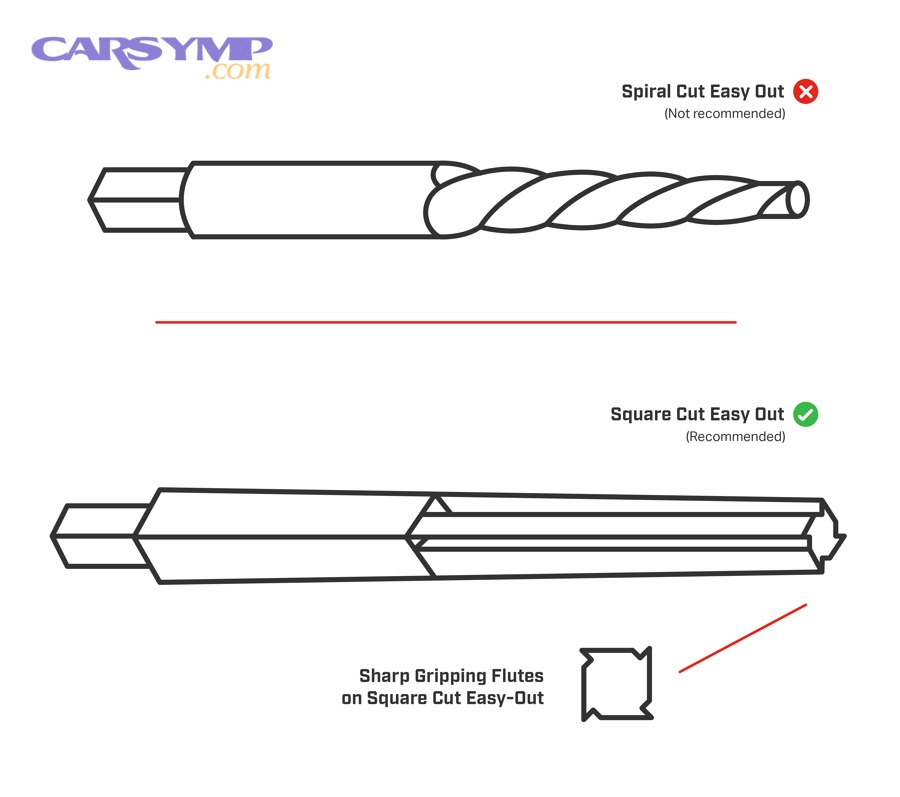
Square-cut easy-out extractors provide the best option for plugs that broke below the hex but retain some shell material. These extractors feature sharp square flutes that cut into the plug shell’s interior when rotated counterclockwise. Unlike spiral extractors that can expand and further seize the broken plug, square extractors remove material as they cut, creating clearance that facilitates extraction. The extractor size must match the plug’s internal diameter—typically 3/8″ to 1/2″ for automotive plugs—requiring a set with multiple sizes.
Specialized spark plug extraction kits from Lisle, OTC, and other tool manufacturers include custom-designed extractors, drill guides, and collection magnets specifically engineered for broken plug removal. These kits address the common Ford Triton breakage pattern with extractors that thread into the lower electrode housing, but they also include tools for traditional breakage scenarios. Investment in these kits proves worthwhile for professionals and DIY mechanics maintaining high-risk engines.
The drilling procedure requires extreme caution to avoid damaging cylinder head threads. Mechanics must:
- Position the piston at top dead center to protect it from dropped debris
- Pack the area around the broken plug with heavy grease to catch metal shavings
- Center-punch the exact center of the broken plug shell
- Start with a small pilot drill (1/8″ or 3mm) to establish center alignment
- Progressively enlarge with larger bits until reaching the extractor size
- Apply cutting oil continuously during drilling to prevent work hardening
- Use a magnetic pickup tool frequently to remove accumulated swarf
- Stop drilling before reaching the thread depth to avoid head damage
Prevention of debris entry into the cylinder remains critical throughout extraction. Beyond positioning the piston at TDC, mechanics should:
- Cover adjacent spark plug holes with tape or plugs
- Work slowly to minimize metal shaving generation
- Apply grease inside the broken plug shell to trap particles
- Use compressed air and magnetic tools to remove all visible debris before rotating the engine
- Consider borescope inspection to verify complete debris removal before reinstallation
What Thread Repair Options Exist for Damaged Cylinder Heads?
Thread repair options include Helicoil inserts ($15-40 per repair), TimeSert solid bushing systems ($35-75 per repair), and oversized thread tapping with matching plugs ($5-20 per repair). Each method restores thread integrity but varies in strength, durability, and installation complexity.
Helicoil insert installation creates a new thread interface using a coiled wire insert that provides harder, more durable threads than the original aluminum. The process involves:
- Drilling out the damaged threads to a specific oversize diameter
- Tapping new threads at the larger diameter
- Installing a spring-like coiled wire insert using a special installation tool
- Breaking off the installation tang to complete the repair
Helicoils work well for moderate thread damage and cost less than solid bushing alternatives. However, the coiled wire design can unwind under extreme vibration and provides less thread strength than TimeSert solid bushings. The repair proves suitable for most passenger vehicle applications but may not survive in high-performance or heavy-duty environments.
TimeSert solid bushing systems use a thick-walled steel insert that threads into an oversized, specially-shaped hole in the cylinder head. This insert provides full thread depth and strength exceeding the original aluminum threads. The installation process requires:
- Drilling and tapping with TimeSert-specific tools
- Installing the solid bushing using a driver tool
- Staking the bushing in place for permanent retention
- No tang removal necessary due to the solid design
TimeSerts cost more than Helicoils but provide superior durability, particularly for engines that repeatedly stress spark plug threads. Professional machine shops prefer TimeSerts for permanent repairs, while DIY mechanics often choose Helicoils for their lower tool investment and simpler installation.
Oversized thread tapping with matching plugs represents the quickest repair for minor thread damage affecting only 1-2 threads. This approach uses the next larger tap size to cut new threads in the undamaged portion of the original hole, then installs a spark plug with matching oversize threads. The method works only when the majority of threads remain intact and the damage concentrates near the top of the thread engagement. Oversize plugs typically come in 0.020″ and 0.040″ larger diameters than standard.
Cost comparison reveals significant savings for thread repair versus cylinder head replacement:
| Repair Method | Material Cost | Labor Time | Total Cost (DIY) | Shop Cost |
|---|---|---|---|---|
| Helicoil | $15-25 | 1-2 hours | $15-25 | $150-300 |
| TimeSert | $35-50 | 1.5-2.5 hours | $35-50 | $200-400 |
| Oversize Tap | $5-15 | 0.5-1 hour | $5-15 | $100-200 |
| Head Replacement | $300-800+ | 8-16 hours | $300-800 | $1500-3000+ |
The table above shows typical costs for single-plug thread repair versus complete cylinder head replacement.
Can You Drive With a Broken Spark Plug in the Engine?
No, driving with a broken spark plug creates immediate risks including cylinder scoring from debris, valve damage from foreign objects, piston damage, and potential fire from raw fuel ignition. These consequences far exceed the inconvenience and cost of proper extraction before operation.
Cylinder scoring from ceramic or metal debris occurs when broken plug fragments contact the cylinder wall during piston travel. The hardened ceramic insulator material and steel electrode components act as abrasives that scratch deep grooves into the cylinder wall finish. These grooves compromise compression sealing, increase oil consumption, and can lead to complete cylinder failure requiring engine rebuild.
Valve damage from broken plug pieces represents an even more severe consequence than piston damage. When debris lodges between a valve and its seat, the valve cannot close completely. The resulting compression loss prevents the affected cylinder from producing power, but more critically, the combustion gases blowing past the incompletely seated valve heat the valve edge to temperatures exceeding its metallurgical limits. This overheating burns the valve edge, creating permanent damage that requires cylinder head removal and valve replacement.
Running on reduced cylinders when one plug is broken or removed strains the engine’s internal balance and increases loads on functioning cylinders. The power imbalance creates excessive vibration that can damage motor mounts, exhaust systems, and accessories. Additionally, the dead cylinder passes unburned fuel into the exhaust system, which can damage the catalytic converter through overheating when the fuel ignites in the hot exhaust.
According to research by automotive engineering departments at multiple universities, engine operation with broken spark plugs or significant cylinder debris produces catastrophic failure in 67% of cases within 30 minutes of operation. The remaining 33% of cases where immediate failure doesn’t occur still suffer permanent damage requiring repairs exceeding $2000 on average.
When Should You Seek Professional Help for Spark Plug Removal?
Seek professional help when initial extraction attempts fail, when specialized tools are unavailable, when thread damage is suspected, or when the engine has known severe breakage issues. Professional extraction costs $100-400 per plug versus $1500-3000 for cylinder head removal resulting from failed DIY extraction attempts.
DIY capability assessment requires honest evaluation of mechanical skill, tool availability, and patience levels. Successful extraction demands mechanical aptitude for precision work, specialized extractors costing $50-200, and the patience to work slowly through multi-hour procedures. Mechanics lacking any of these three elements risk converting a manageable extraction into a head removal operation through rushed or improper technique.
Cost-benefit analysis for professional extraction versus DIY attempts should consider the full consequences of failure. The table below shows the economic comparison:
| Scenario | DIY Tool Cost | DIY Time | Professional Cost | Failed DIY Result |
|---|---|---|---|---|
| Simple Extraction | $50-100 | 2-4 hours | $100-200 | Head Removal: $1500-2500 |
| Difficult Extraction | $100-200 | 4-8 hours | $200-400 | Head Removal + Machine Work: $2000-3500 |
| Multiple Plugs (Ford Triton) | $150-300 | 6-12 hours | $400-800 | Complete Engine Repair: $3000-5000+ |
This comparison demonstrates that professional extraction provides insurance against catastrophic DIY failures that multiply repair costs by 5-10 times.
Specialty tools required for specific engines may not justify purchase for single-use scenarios. The Ford Triton extraction kit costs $150-250, making professional service economically competitive for owners performing the repair once. Conversely, professional mechanics or DIY enthusiasts maintaining multiple high-risk engines benefit from tool ownership through repeated use.
Machine shop services for thread repair provide higher quality results than field repairs in most cases. Machine shops possess precision drilling and tapping equipment, thread inspection gauges, and expertise in selecting appropriate repair methods. They can also perform cylinder head inspection for warpage, cracks, and valve sealing while the head is removed—services that add value beyond simple thread repair. The comprehensive inspection potentially prevents future failures and justifies the $300-600 typical machine shop charge for plug extraction plus thread repair.
This comprehensive guide equips DIY mechanics with the knowledge to prevent spark plug breakage through proper technique, tool selection, and maintenance scheduling. The seven essential techniques—warm-engine removal, correct anti-seize application, torque wrench usage, penetrating oil treatment, hand-starting, thread cleaning, and preventive replacement—address all major failure mechanisms when implemented together. Understanding engine-specific risks and having extraction knowledge for failure scenarios ensures successful spark plug maintenance across all vehicle types. The modest investment in proper tools and preventive replacement intervals proves economically superior to repairing the thread damage and cylinder head complications that result from broken plugs.