


A DPF differential pressure sensor issue is best solved by diagnosing the pressure signal path first (hoses → ports → wiring → sensor), confirming the fault with live data, then fixing the verified cause—because many “bad sensor” codes are actually hose leaks, soot-blocked lines, or a DPF restriction.
Next, you’ll also learn what the sensor measures and why the ECU depends on it to schedule regeneration and protect the diesel particulate filter—so you can spot when readings are plausible versus misleading.
Then, we’ll cover the fault codes (DTCs) and live-data patterns that separate a true sensor failure from a clogged filter, a wiring problem, or a reversed/melted hose.
Introduce a new idea: below is a step-by-step, technician-style workflow that moves from definition → symptoms → codes → testing → causes → repairs → verification, so you fix the problem once and prove it’s gone.
What is a DPF differential pressure sensor, and what does it measure?
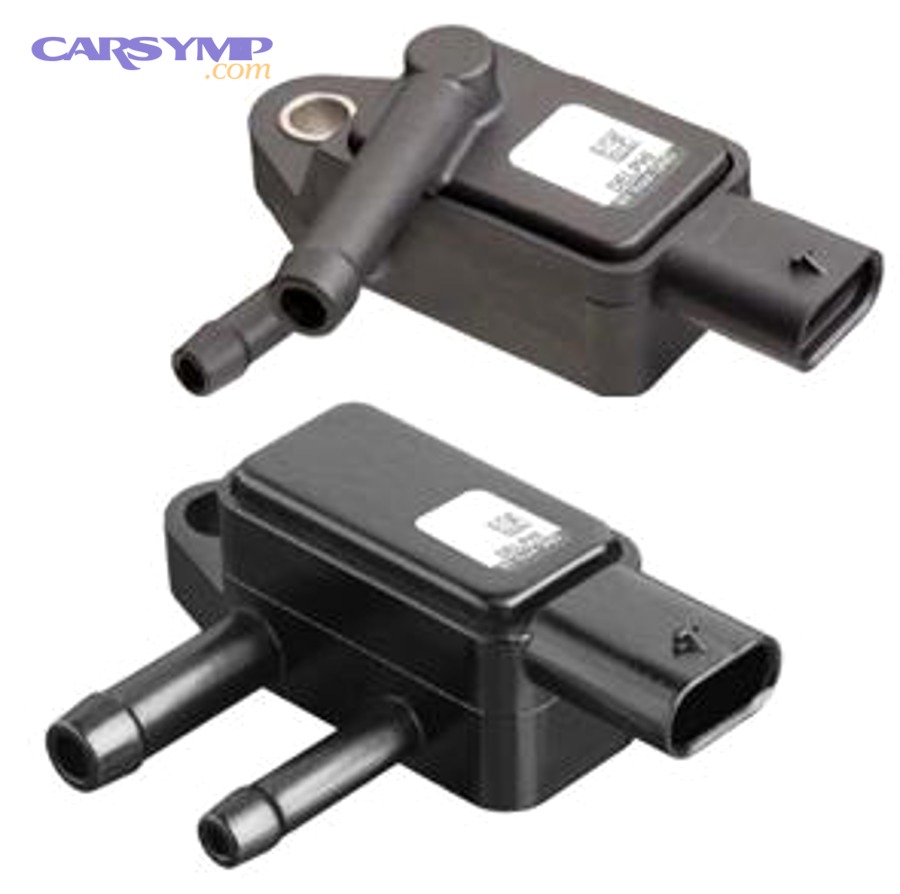
A DPF differential pressure sensor is an emissions feedback sensor that compares exhaust pressure before and after the diesel particulate filter to estimate restriction (backpressure) and help the ECU decide when regeneration is needed. (delphiautoparts.com)
To better understand why the same symptom can point to different causes, start by locking in the terminology and the measurement concept.

Is “DPF differential pressure sensor” the same as a “DPF pressure sensor”?
Yes—in most service literature and parts catalogs, DPF differential pressure sensor and DPF pressure sensor refer to the same component because (1) it measures a difference between two points, (2) the ECU uses that delta to infer restriction, and (3) the sensor is typically plumbed with two hoses/ports (upstream and downstream) rather than one absolute-pressure port. (delphiautoparts.com)
Next, the practical takeaway is that the name rarely matters; what matters is whether your scan tool shows a delta-pressure value that changes smoothly with flow and load.
In real-world diagnosis, you’ll see labels like:
- “DPF Differential Pressure”
- “Exhaust Differential Pressure”
- “DPF Pressure”
- “DPF ΔP / DPF dP”
Those labels are interchangeable only if the PID is actually the DPF delta-pressure channel—not an EGR pressure sensor or turbo/exhaust backpressure sensor on some platforms.
What does “pressure before vs after the DPF” mean in practical terms?
“Pressure before vs after the DPF” means the sensor is comparing upstream pressure (higher when flow is restricted) to downstream pressure (closer to tailpipe pressure); the difference rises as soot/ash loads the filter and falls after regeneration or cleaning. (delphiautoparts.com)
Below is the key idea for troubleshooting: flow drives pressure drop. At idle, exhaust flow is low, so delta-pressure should usually be low. Under load (accelerating, towing, climbing), flow increases and delta-pressure should rise—but it should rise in a stable, believable way, not spike randomly or stick at a fixed number.
That “believable behavior” becomes your anchor later when you compare:
- Normal: smooth increase with RPM/load; stable at steady cruise
- Hose/port issues: noisy, jumpy, or “stuck at zero”
- DPF restriction: consistently higher-than-normal delta-pressure that tracks load
What are the most common symptoms of DPF differential pressure sensor issues?
There are 4 main groups of symptoms of DPF differential pressure sensor issues—regen behavior changes, warning lights/DTCs, drivability limits, and fuel/soot side effects—because the ECU uses the sensor for both emissions control and engine protection decisions. (delphiautoparts.com)
Next, focus on patterns, not single symptoms, because the same dashboard light can be triggered by very different failure modes.
Can a bad DPF pressure sensor cause frequent regens or failed regens?
Yes, a bad DPF pressure sensor can cause frequent or failed regenerations because (1) a biased/high signal makes the ECU “think” the filter is loaded, (2) a biased/low signal can delay regen until soot modeling triggers a fault, and (3) an unstable/noisy signal can fail plausibility checks and disable normal regen logic to protect hardware. (delphiautoparts.com)
Then, the most useful “hook” is how regen changes show up in daily driving:
- Frequent regens: fans running often, hot smell, higher idle, more fuel use, regen counters rising quickly
- Failed regens: repeated attempts with no completion, increasing soot load estimate, escalating DTCs, limp mode
- No regens (or inhibited): soot load rises until the system forces derate/limp or requests service
This is where people confuse sensor faults with DPF clogging symptoms. A clogged DPF can also cause frequent regens—but the key difference is consistency: restriction-driven issues usually scale predictably with load, while sensor/line faults often look erratic.
Which symptoms usually indicate a hose/line problem rather than a failed sensor?
There are 3 common symptom patterns that point to a hose/line problem rather than a failed sensor: implausible jumps, “stuck” readings, and heat/vibration sensitivity, because hoses and ports are exposed to soot buildup, cracking, and heat damage.
Moreover, these are the practical “tells” you can verify quickly:
- Sudden spikes or drops in delta-pressure with no matching change in RPM/load (often condensation/soot plug shifting)
- Stuck at zero or a fixed low value even under load (disconnected hose, split hose, missing port, blocked port)
- Reading changes when you touch/route hoses or when the engine bay heats up (softened hose collapsing, cracked hose opening)
When hoses are the root cause, replacing the sensor alone often “works” for a week and then the code returns—because the pressure path still lies to the new sensor.
How do drivability symptoms differ between “bad sensor” and “DPF clogged”?
A bad sensor tends to create intermittent or logic-based drivability limits, while a clogged DPF creates load-dependent power loss and sustained backpressure, because physical restriction affects airflow and turbo behavior continuously.
However, you can often separate them using this comparison table (it summarizes what you’re looking at and why it matters):
| What you observe | More consistent with bad sensor/line | More consistent with clogged DPF |
|---|---|---|
| Delta-pressure pattern | noisy, jumpy, stuck, implausible | stable but high, scales with load |
| Power loss | comes and goes, tied to DTC logic | persistent under load, worsens with time |
| Regens | weird timing, “too many,” or inhibited | frequent due to real loading; may eventually fail |
| Exhaust temp behavior | inconsistent due to regen logic | high temps during repeated regens + restriction |
The bottom line: drivability is often ECU strategy, while restriction is physics. Your next step is to map symptoms to codes so you don’t guess.
Which fault codes (DTCs) typically show up with DPF pressure sensor problems?
There are 3 main types of DPF pressure sensor-related DTCs—circuit codes, performance/plausibility codes, and correlation codes—based on whether the ECU dislikes the electrical signal, the signal behavior, or the relationship between delta-pressure and operating conditions. (pmc.ncbi.nlm.nih.gov)
Next, treat codes as pointers, not verdicts, because the ECU can only see signals—not cracked hoses or soot-packed ports.

Do DPF pressure sensor codes always mean the sensor is bad?
No, DPF pressure sensor codes do not always mean the sensor is bad because (1) hose leaks/blocks can generate “bad signal” behavior, (2) wiring/connector faults can mimic sensor failure, and (3) true DPF restriction can push delta-pressure outside learned limits and trigger performance codes. (delphiautoparts.com)
Then, the practical mindset is: prove the failure mode.
- If it’s a circuit code, suspect power/ground/signal/connector first.
- If it’s a performance/plausibility code, suspect hoses/ports/sensor drift and compare live data.
- If it’s a correlation code, compare delta-pressure against known operating states (idle vs load vs regen).
This prevents the classic “parts cannon” cycle where the sensor gets replaced twice before someone notices a split hose.
What are the main types of DPF pressure sensor codes (circuit vs performance vs correlation)?
There are 3 main groups of DPF pressure sensor codes based on what the ECU is complaining about:
1) Circuit-related (electrical integrity)
ECU sees open/short, missing 5V reference, bad ground, or signal out of electrical range.
2) Performance / plausibility (signal behavior)
ECU sees a value that doesn’t make sense given RPM/load/temperature, or a response that’s too slow/noisy.
3) Correlation (relationship checks)
ECU compares delta-pressure to other sensors/models (airflow, EGR, soot model) and finds mismatch.
More specifically, performance and correlation codes are where hoses and ports frequently hide—because the electrical circuit can be fine while the pressure path is lying.
How can you compare stored codes with live data to confirm the real cause?
DPF pressure sensor diagnosis improves when you compare freeze-frame conditions (stored with the DTC) to live delta-pressure response because it reveals whether the fault is repeatable and physics-based.
To illustrate, use this quick workflow:
- Step 1: read freeze-frame (RPM, load, speed, EGT if available)
- Step 2: reproduce similar conditions safely
- Step 3: watch delta-pressure for smoothness and scaling
- Step 4: compare idle vs steady cruise vs a gentle loaded pull
If the ECU logged the DTC at light cruise but your delta-pressure is stable and normal there, a transient line issue (condensation/partial plug) becomes more likely than a truly restricted DPF.
How do you test a DPF differential pressure sensor step-by-step?
The best way to test a DPF differential pressure sensor is a 6-step workflow—visual inspection, hose/port checks, scan-tool baseline, response test under load, electrical verification, and post-fix validation—so you confirm the fault before replacing parts. (delphiautoparts.com)
Next, start with the fastest checks because they eliminate the most common non-sensor failures.
Should you start with a visual inspection of hoses, ports, and connectors first?
Yes, you should start with visual inspection because (1) hose damage is common near hot exhaust, (2) soot/condensation blockage is easy to miss but easy to find, and (3) connector corrosion or loose pins can create intermittent faults that look like sensor drift.
Then, inspect with a “pressure-path mindset”:
- Confirm two hoses exist (upstream and downstream) and are not swapped
- Look for cracks, melting, soft spots, kinks, or rubbing
- Check the ports where hoses connect: they can soot-plug at the metal nipple
- Check connector seating, broken locks, and wire strain near the sensor body
If you find obvious hose damage, fix that first—because a perfect sensor can’t correct a broken pressure path.
What live-data behaviors suggest a sensor signal problem (stuck, noisy, offset)?
There are 4 live-data behaviors that suggest a signal problem: stuck reading, noisy spikes, offset baseline, and slow response, based on how the value changes with exhaust flow.
More specifically, here’s what each looks like in practice:
- Stuck: delta-pressure stays near 0 or a fixed number at idle and under load
- Noisy: value jumps around even at steady RPM/load
- Offset: idle baseline looks unusually high (or negative on some platforms) and stays biased everywhere
- Slow response: value lags behind throttle/load changes more than expected
This is also where you can catch a “line problem” masquerading as a sensor: if you gently move hoses and the reading changes instantly, that’s not a healthy, sealed pressure path.
How do electrical checks compare to pressure-path checks for finding the root issue?
Pressure-path checks win when codes are performance/plausibility, while electrical checks win when codes are circuit-related, because plausibility failures often originate in hoses/ports and circuit failures originate in power/ground/signal integrity. (pmc.ncbi.nlm.nih.gov)
However, the most reliable approach is to run them in parallel:
- If delta-pressure behavior is implausible, verify hoses/ports first.
- If the sensor reading disappears, pegs high, or triggers circuit codes, verify 5V reference, ground, and signal.
- If both look suspicious, repair the known physical damage first, then retest.
Evidence: According to a study by Aristotle University of Thessaloniki from the Laboratory of Applied Thermodynamics, in 2019, an error propagation analysis for model-based DPF diagnostics reported a total diagnosis error of ±28%, showing why robust verification (not guesswork) matters. (pmc.ncbi.nlm.nih.gov)
What causes DPF pressure sensor readings to be wrong?
There are 2 main types of causes of wrong DPF pressure sensor readings—mechanical pressure-path faults and electrical/sensor faults—based on whether the sensor is being fed bad pressure information or producing a bad signal. (delphiautoparts.com)
Next, group causes correctly so your fix targets the root problem instead of the symptom.

Can cracked, melted, or blocked pressure hoses create “false high backpressure” readings?
Yes, damaged or blocked pressure hoses can create false high backpressure readings because (1) a partial blockage changes the pressure transmitted to the sensor, (2) heat-softened hoses can collapse under suction/flow changes, and (3) cracks/leaks can distort upstream/downstream comparison and trigger plausibility faults.
Then, remember what the ECU “believes”: it believes the delta-pressure number reflects the DPF’s restriction. If your hose is lying, the ECU reacts as if the DPF is loaded—often escalating to derate/limp, repeated regens, or service messages.
Typical hose/port failures include:
- Soot plug at the port nipple
- Condensation + soot sludge inside the hose (especially short-trip use)
- Melted hose near hot shielding
- Misrouting or swapped hoses (inlet/outlet reversed)
Which causes are most common: sensor element failure, wiring/connector faults, or hose issues?
Hose/port issues are often the most common in the field, wiring/connector faults are a close second, and true sensor element failure tends to be third—because hoses live near heat/soot, connectors live near vibration/moisture, and the sensor element is usually robust unless contaminated or thermally stressed. (delphiautoparts.com)
However, “most common” varies by platform and service history:
- Vehicles with recent exhaust work may have misrouted hoses or damaged lines.
- Vehicles used for short trips may develop condensation sludge in lines.
- Vehicles with prior electrical repairs may have pin tension or spliced wiring faults.
So the smarter comparison is not “what fails most,” but “what is most plausible given the symptom pattern and code type.”
What are the typical failure modes you can group into mechanical vs electrical?
There are 2 groups of failure modes you should use:
Mechanical (pressure-path and installation)
- split/melted/kinked hoses
- soot/condensation blockage
- clogged ports/nipples
- swapped hoses (high/low reversed)
- exhaust leaks near taps
Electrical (signal integrity)
- corroded connector pins
- broken wire near the sensor
- missing 5V reference or weak ground
- internal sensor drift or contamination
This grouping matters because it tells you what to fix first: if the pressure path is compromised, even a brand-new sensor will report nonsense.
How do you fix DPF differential pressure sensor issues the right way?
Fixing DPF differential pressure sensor issues is a 4-step method—repair pressure lines, restore electrical integrity, replace the sensor only if proven faulty, then validate with live data—so you eliminate repeat codes and regain normal regeneration control. (delphiautoparts.com)
Next, use a “least invasive to most invasive” order, because the cheapest fixes are often the correct ones.
Is replacing the sensor the best first step?
No, replacing the sensor is not the best first step because (1) hoses/ports frequently cause the same symptoms, (2) wiring/connector faults can instantly ruin the new sensor’s signal, and (3) a truly restricted DPF will still produce high delta-pressure after sensor replacement. (delphiautoparts.com)
Then, replace the sensor only when you can support it with evidence:
- electrical checks show correct reference/ground but signal is wrong
- pressure path is confirmed clear, sealed, and correctly routed
- live data remains implausible across repeat tests
This reduces “comebacks” and prevents wasting money on parts that can’t solve a clogged filter.
How does “repair the hoses/ports” compare with “replace the sensor” in cost and success rate?
Repairing hoses/ports wins on cost and speed, while replacing the sensor wins only when the sensor is electrically or functionally proven faulty, because hose/port repairs restore truthful pressure transmission and sensor replacement does not fix a lying pressure path.
However, both can be required if the vehicle has been running with a plugged line long enough to contaminate the sensor ports. A practical approach:
- Repair hoses/ports first
- Re-test
- Replace sensor only if behavior remains wrong
This is also the moment to address the bigger emissions-system context: if live data shows real restriction, you may need DPF cleaning rather than any sensor work.
Where “DPF cleaning” fits into sensor-related repairs
DPF cleaning is appropriate when:
- delta-pressure is consistently high and scales with load
- the pressure path and sensor are verified healthy
- regen is frequent or failing due to real loading
And if you’re choosing between options, this is where DPF cleaning methods compared becomes practical—not theoretical. Off-vehicle cleaning can restore flow when ash loading becomes the limiter, while repeated forced regens mainly remove soot, not ash.
What should you do after the repair—clear codes, force regen, or perform a verification drive?
There are 3 post-repair actions you choose from—clear codes, perform a verification drive, and run/allow regeneration only when appropriate—based on the state of soot loading and what the ECU is requesting.
More specifically:
- Clear codes after fixing a wiring/hose/sensor fault so the ECU re-evaluates with clean logic.
- Verification drive to confirm delta-pressure response at idle, steady cruise, and light load.
- Regen (forced or commanded) only if soot load is high and the system is stable (no active circuit faults, EGT sensors plausible, no severe restriction).
If delta-pressure remains abnormally high after repairs and regens keep failing, you’re no longer in “sensor issue” territory—you’re in “filter restriction” territory, where When DPF replacement is necessary becomes a real decision rather than a scary phrase.
Evidence: According to a study by West Virginia University from the Mechanical and Aerospace Engineering department, in 2006, off-line DPF cleaning trials reported up to 92% filter weight removal and up to a 65% decrease in differential pressure on a tested filter, showing why verified cleaning can restore flow when restriction is real. (researchrepository.wvu.edu)
How can you confirm the problem is solved and prevent it from coming back?
You can confirm the problem is solved by using a 3-part validation—baseline reading, response under load, and stability over time—then preventing recurrence by maintaining the pressure hoses, addressing soot sources, and tracking trends before the ECU derates again. (delphiautoparts.com)
Next, treat confirmation as part of the repair, because a “no light today” result is not the same as “fixed.”

Do you need a post-repair baseline reading at idle and under load?
Yes, you need a post-repair baseline because (1) it confirms the sensor reports plausible low-flow values, (2) it proves the delta-pressure increases smoothly with load, and (3) it gives you a reference to spot future restriction or line problems early.
Then, record your baseline in a simple way:
- Warm engine, stable idle: note delta-pressure value
- Steady cruise (safe, flat road): note value
- Light load pull (gentle acceleration): note the rise pattern
You’re not chasing one “magic number”—you’re confirming behavior: stable at steady state, responsive with flow.
What maintenance habits reduce repeat DPF pressure sensor faults?
There are 4 maintenance habits that reduce repeat DPF pressure sensor faults:
- Inspect hose routing and heat shielding at service intervals
- Keep ports clean and ensure hoses are not kinked or soft
- Protect connectors from moisture and vibration damage
- Address upstream soot makers (boost leaks, injector issues, EGR problems)
Besides, if you mainly do short trips, your system is more likely to develop condensation sludge and incomplete regen patterns—so monitoring matters more than on a highway-driven vehicle.
How does “fixing the sensor system” compare to “fixing the soot source” for long-term results?
Fixing the sensor system wins for immediate accuracy and code resolution, while fixing the soot source wins for long-term DPF health and fewer regens, because a perfect sensor cannot prevent an engine from producing excess soot or ash.
More importantly, this is where the most expensive outcomes are decided:
- If you only fix the sensor path, a vehicle with heavy soot production may keep developing DPF clogging symptoms.
- If you fix the soot source but ignore broken hoses/connectors, the ECU may still mismanage regen and trigger faults.
Contextual Border: At this point you can diagnose, repair, and validate the DPF pressure sensor system end-to-end. Next, we’ll expand into platform-specific edge cases—OEM vs aftermarket scaling, condensation/ice behavior, altitude effects, and ECU strategy differences—so you can avoid rare but costly misdiagnoses.
What advanced and platform-specific factors can change DPF pressure sensor diagnosis?
Advanced DPF pressure sensor diagnosis is about platform variables—sensor calibration, ECU plausibility logic, and environmental effects—that can make a healthy system look faulty (or a faulty system look normal) unless you adjust your interpretation. (pmc.ncbi.nlm.nih.gov)
Next, use these factors when your “standard workflow” still leaves you with inconsistent results.
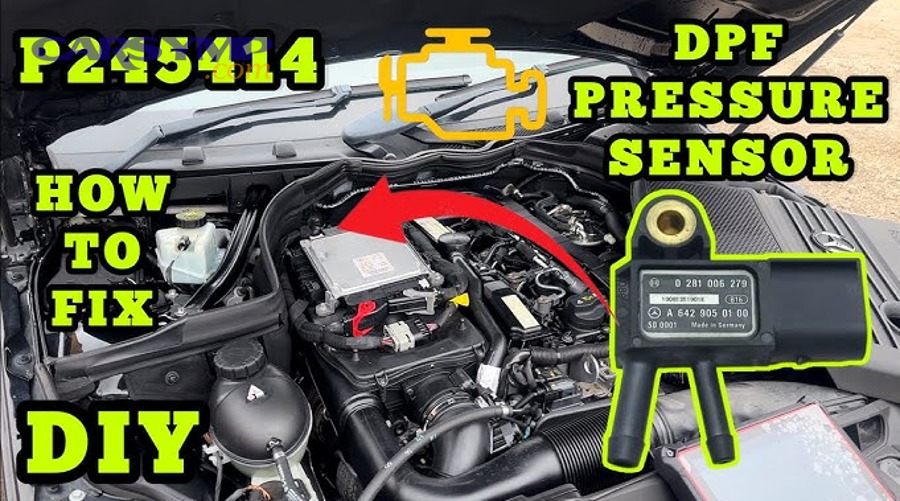
How does OEM vs aftermarket sensor calibration affect readings and repeat codes?
OEM sensors tend to win in scaling consistency, while aftermarket sensors can be fine but sometimes differ in offset or response characteristics, because the ECU expects a signal behavior that matches its internal plausibility thresholds.
However, you can reduce risk by validating immediately after install:
- Compare idle baseline to your prior known-good baseline (if available)
- Confirm smooth response under load
- Confirm no negative or pegged readings
- Watch for “returns after 1–2 drive cycles” (classic plausibility mismatch)
This is especially important when vehicles are sensitive to small errors; even modest drift can trigger performance codes if the ECU’s plausibility windows are tight.
Can cold weather condensation or ice in hoses cause intermittent DPF pressure spikes?
Yes, cold weather condensation or ice can cause intermittent pressure spikes because (1) moisture can collect in low points of hoses, (2) temperature swings can freeze or shift sludge, and (3) the resulting partial blockage creates unstable pressure transmission.
Then, look for the pattern: the issue appears after cold soak, improves with heat, then returns with repeated short trips. Practical prevention includes:
- correcting hose routing to avoid low “traps”
- replacing aged hoses that soften and sag
- ensuring heat shielding is intact
How do altitude and barometric pressure changes influence differential pressure interpretation?
Altitude and barometric pressure mainly influence absolute pressures, but they can indirectly affect delta-pressure interpretation through changes in air density, turbo control behavior, and ECU modeling—so the safe approach is to focus on trend and response rather than expecting the same numeric value everywhere.
To illustrate:
- At higher altitude, the engine may operate at different boost and flow conditions for the same pedal input.
- The ECU may schedule regen differently if exhaust temperatures and load profiles change.
- Delta-pressure still should be smooth, responsive, and repeatable for a given operating condition.
What ECU regen strategy differences (thresholds, plausibility checks) can mimic a “bad sensor”?
There are 3 common ECU strategy differences that can mimic a bad sensor:
- tighter plausibility windows that flag small offsets as faults
- regen inhibition logic that triggers after repeated failed attempts
- correlation checks against soot models that may be inaccurate in transient operation
More specifically, modern diagnostics are not just “sensor reads pressure”; they are “sensor plus model plus logic.” That’s why a university study found meaningful uncertainty in model-based DPF diagnosis performance, emphasizing verification and robust interpretation over assumptions. (pmc.ncbi.nlm.nih.gov)