If you’re searching “DPF cleaning methods compared,” you want a clear, real-world comparison of the main options—what each method removes, what it can’t remove, and which one fits your vehicle, budget, and downtime tolerance. This guide compares thermal, aqueous, and ultrasonic approaches so you can pick the method that restores flow without damaging the filter.
Next, you also need the “why” behind the choice: what actually clogs a diesel particulate filter (soot vs ash vs contamination), and why two vehicles with the same mileage can need totally different cleaning solutions.
Then, it helps to connect cleaning to how the DPF is designed to work in the first place: regeneration. Understanding when the system can burn soot off by itself—and when it can’t—prevents you from paying for the wrong service or chasing the wrong fault.
Introduce a new idea: once you can match symptoms and sensor data to the right cleaning path, you can reduce repeat clogging and avoid the cycle of frequent regens, warning lights, and limp mode.
What is DPF cleaning, and why do methods matter?
DPF cleaning is the process of removing soot and non-combustible ash from a diesel particulate filter to restore exhaust flow, reduce backpressure, and keep regeneration working normally without triggering warnings or power loss.
To better understand why methods matter, you first need to separate what the DPF can “burn off” from what it can only “physically remove”—because that single difference drives most cleaning outcomes.
What clogs a DPF: soot vs ash vs contamination?
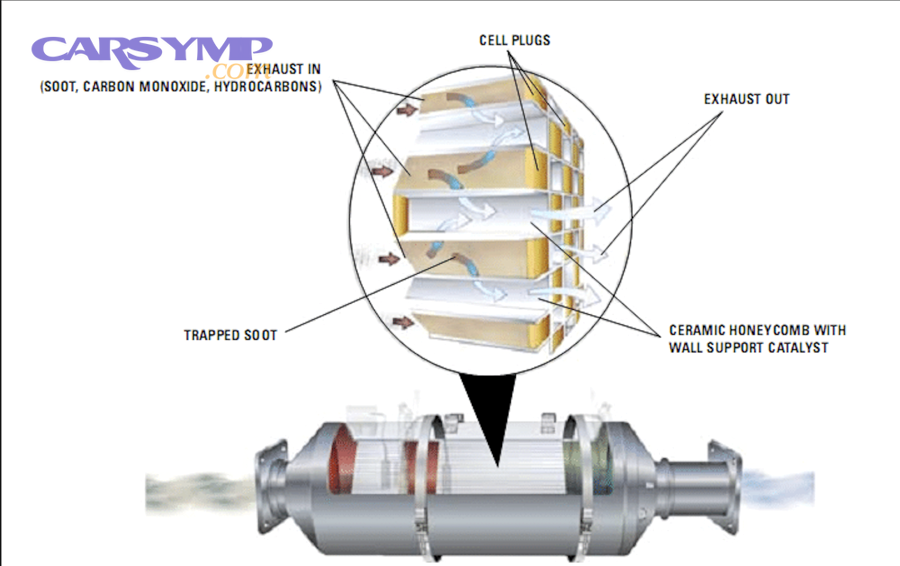
A DPF clogs in three different ways—soot loading, ash accumulation, and contamination—and each responds differently to regeneration and DPF cleaning.
Specifically, soot is carbon-based and (within limits) can be oxidized during regeneration, while ash is the mineral residue from engine oil additives and wear metals, and it does not burn away; it slowly fills the filter’s storage volume over time.
To make the distinction practical:
- Soot (combustible): builds quickly with short trips, cold operation, idling, repeated low-load driving, injector issues, EGR problems, boost leaks, or frequent stop-start use.
- Ash (non-combustible): builds gradually with mileage/hours and oil consumption; even a perfectly running engine will accumulate some.
- Contamination (problematic): coolant, fuel dilution, or oil soaking the substrate can “cement” deposits and permanently damage the filter.
This is why “cleaning method” is not a cosmetic choice. A method that is excellent at loosening soot may do little for ash deep in the cell structure, and a method that is aggressive enough to move ash can be risky if done incorrectly on a fragile substrate.
What are the risks of the wrong cleaning method?
The wrong DPF cleaning method can waste money at best—and at worst it can crack the substrate, melt or detach the washcoat/catalyst layer, or leave enough restriction behind that the DPF quickly plugs again.
More specifically, the risks cluster into three buckets:
- Incomplete cleaning (restriction remains): you pay for service, but backpressure stays high and the ECU keeps requesting regenerations.
- Physical damage: thermal shock, excessive pressure, or improper handling can crack the ceramic monolith or break cell plugs.
- Misdiagnosis: the DPF gets blamed when the real cause is upstream (turbo, injector, EGR, boost leak) or sensor-related, including DPF differential pressure sensor issues.
According to a study by University of Tennessee – Knoxville from the Department of Mechanical Engineering, in 2008, researchers observed soot light-off temperatures around ~600°C and refined active regeneration strategies toward ~700°C—supporting the idea that temperature-driven “burn-off” targets soot, not ash. (trace.tennessee.edu)
Which DPF cleaning methods are commonly used today?
There are three main DPF cleaning methods—thermal, aqueous, and ultrasonic—based on the primary mechanism used to break deposits loose and evacuate them from the honeycomb structure.
Next, let’s break down how each method works in practice (not marketing terms), and what it’s typically best at removing.
What is thermal (bake-and-blow) DPF cleaning?
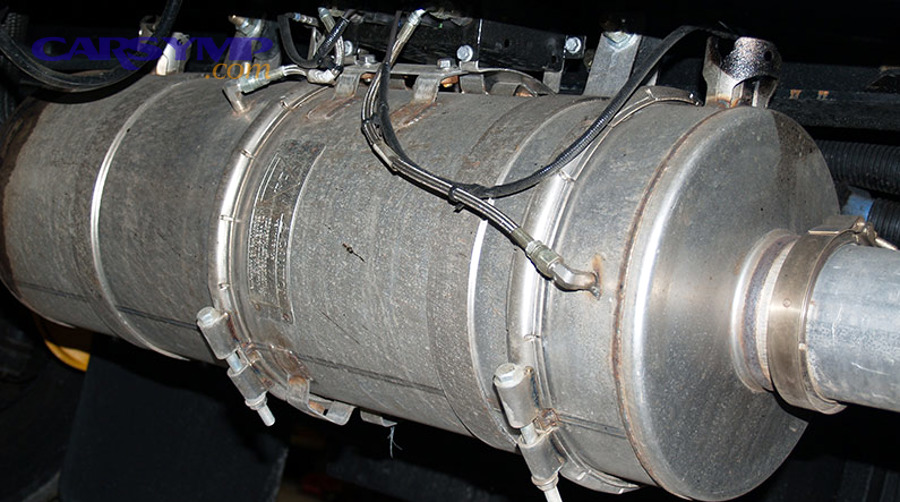
Thermal cleaning is a high-heat process that oxidizes soot in a controlled oven cycle and then uses air pulses (“blow”) or pneumatic cleaning to evacuate loosened material from the channels.
More specifically, a professional thermal setup typically follows a sequence: controlled heating → sustained temperature hold → controlled cool-down → pneumatic/air pulse cleaning → inspection (flow/pressure/weight checks).
Thermal cleaning tends to perform well when:
- The filter has heavy soot loading (especially if the vehicle can’t complete regens reliably).
- Deposits are dry and respond well to oxidation and evacuation.
- You need a repeatable, shop-standard process for common heavy-duty filters.
But thermal cleaning can underperform when ash is deeply packed or “hardened,” because heat doesn’t make ash disappear—it only helps detach some deposits so they can be blown out.
What is aqueous (water + surfactant) DPF cleaning?
Aqueous cleaning uses water (often recirculated) plus surfactants and controlled flow/pressure patterns to flush soot/ash out of the DPF cell structure without relying on high-temperature oxidation as the main step.
For example, many systems use a soak to loosen deposits and then apply a computer-controlled wash pattern designed to push material out without damaging the substrate.
Aqueous cleaning is often favored when:
- Ash removal is a priority (especially for filters that have had many regens and are ash-limited).
- You want faster turnaround and lower thermal stress risk.
- The filter design (some light/medium-duty units) is better suited to wet flushing.
One important caution: “hose-and-go” pressure washing is not the same as a controlled aqueous system. Poor technique can force debris deeper, damage cell plugs, or leave moisture that isn’t fully dried before reinstall.
What is ultrasonic DPF cleaning?
Ultrasonic DPF cleaning uses high-frequency vibration (cavitation) in a liquid medium to dislodge deposits from tight passages and porous wall structures that are difficult to reach with air pulses or directional flushing alone.
Meanwhile, ultrasonic can shine on complex or sensitive substrates where a gentler, more uniform deposit removal method is desired—especially when paired with proper rinsing and drying steps.
However, ultrasonic cleaning is not “magic by default.” Results depend heavily on:
- Frequency/power tuning
- Bath chemistry
- Cycle time
- Pre/post rinsing
- Drying and verification (flow/weight/pressure drop)
In short, the “method” is only half the story; the process control and verification metrics are what make a cleaning outcome reliable.
How do DPF cleaning methods compare on results, cost, and downtime?
Thermal wins in shop-standard throughput and soot oxidation, aqueous is best for fast turnaround and strong ash flushing, and ultrasonic is optimal for deep, uniform deposit removal on certain substrates—but the best choice depends on your restriction type and your downtime constraints.
However, a useful comparison needs measurable criteria, not just “works great” claims—so let’s compare by removal performance, risk, and time.

Here’s a practical comparison table (what it contains: the most common decision criteria owners and fleet managers use when choosing a DPF cleaning service).
| Criterion | Thermal (Bake + Blow) | Aqueous (Flush + Surfactant) | Ultrasonic (Cavitation in Liquid) |
|---|---|---|---|
| Best at removing | Heavy soot loads, dry deposits | Ash + soot flushing, faster restores flow | Deep deposit removal in tight/complex structures |
| Typical risk profile | Thermal stress if poorly controlled | Moisture/drying issues if rushed | Process variability if poorly tuned |
| Downtime tendency | Longer cycles (heat + cool) | Often faster turnaround | Can be moderate (cycle + rinse + dry) |
| Verification must-have | Post-clean flow/ΔP check | Drying + flow/ΔP check | Flow/ΔP + dryness + inspection |
| Good fit for | Many heavy-duty DPFs | Light/medium duty + ash-limited | Sensitive/complex cases, certain substrates |
Which method removes soot vs ash best?
Aqueous and ultrasonic methods tend to outperform thermal-only approaches for ash removal, while thermal excels at oxidizing soot before evacuation.
To illustrate the “why”:
- Soot is mostly carbon and responds to heat and oxidation (regeneration-like conditions).
- Ash is mineral residue and must be physically removed—meaning fluid dynamics (flush patterns) or mechanical agitation (cavitation) can matter more than temperature.
If your DPF is ash-limited (frequent regens, rising backpressure even after regens, higher mileage/hours), a method optimized for ash extraction typically produces better “like-new” flow restoration.
Which method minimizes substrate damage and catalyst loss?
A controlled aqueous or well-tuned ultrasonic process often minimizes thermal shock risk, while a properly managed thermal process minimizes overpressure/liquid handling risk—so the “safest” choice depends on which risk your filter is most vulnerable to.
On the other hand, “cheap” versions of any method can be risky:
- Overheated thermal cycles can crack or weaken ceramics.
- Uncontrolled pressure washing can break cell plugs or force debris deeper.
- Poor ultrasonic tuning can be ineffective or cause edge damage if handling is rough.
What you really want is a shop that verifies outcomes using measurable checks (flow rate, pressure drop, weight change, borescope inspection), not just “it looks cleaner.”
Which method is fastest for turnaround?
Aqueous cleaning is often fastest for same-day service, while thermal cleaning tends to take longer due to heat and cool-down requirements, and ultrasonic varies depending on cycle length and drying.
According to a DPF equipment supplier, thermal oven cycles can involve long high-heat holds and careful cool-down, while aqueous systems are designed for quicker cycles and may take filters from dirty to clean in under a couple of hours—highlighting why downtime differs by method. (dpfpartsdirect.com)
Should you choose on-car vs off-car DPF cleaning?
Yes—choosing on-car vs off-car DPF cleaning is critical, because on-car options can reduce soot through regeneration, while off-car cleaning is the reliable path for ash removal, physical inspection, and verified flow restoration.
Next, let’s make the decision simple by tying each option to what it can realistically accomplish.
When does an on-car forced regeneration make sense?
On-car service (like a forced regen) makes sense when the restriction is mostly soot, the substrate is intact, and the vehicle can safely reach and maintain the required exhaust temperatures.
More specifically, on-car is a good fit when:
- The DPF is moderately loaded (not fully blocked)
- There are no major upstream faults (injector, turbo, EGR) actively generating excessive soot
- Sensor readings are plausible (no obvious sensor failures)
- You can complete the cycle without interruptions (and in a safe environment)
This is where the phrase “Passive vs active regeneration explained” matters: if the vehicle can’t achieve the temperatures needed for passive regen during normal driving, an on-car active/forced regen can catch it up—temporarily.
When is off-car professional cleaning required?
Off-car cleaning is required when ash accumulation is the main limiter, when the DPF is repeatedly failing regens, when there’s suspected substrate damage, or when you need measured proof (flow/ΔP) that restriction is actually removed.
Off-car is the “do it right” route when:
- Regens happen more and more often (or never complete)
- Backpressure remains high even after a regen
- The vehicle enters limp mode or derates repeatedly
- There’s contamination risk (oil/coolant)
- You need inspection (cracks, melted spots, missing plugs)
In addition, off-car service is where method choice (thermal vs aqueous vs ultrasonic) matters most, because the shop can select a process that matches deposit type and then verify the result before reinstalling.
How do passive and active regeneration affect your cleaning choice?
DPF regeneration affects your cleaning choice because regeneration removes soot (to a point), while cleaning is what restores capacity when soot management fails or ash accumulation becomes the limiting factor.

To better understand the decision, connect regeneration to how your driving or duty cycle actually operates—because your daily use pattern determines whether the system can keep up.
What is passive regeneration, and what driving conditions trigger it?
Passive regeneration is the natural burn-off of soot during normal driving when exhaust temperatures and operating conditions are high enough for soot oxidation without extra intervention.
More specifically, passive regen is most likely during sustained highway speeds, steady engine load, and long runs where the DPF stays hot enough long enough to oxidize soot gradually. When that happens regularly, you tend to see fewer warning lights and fewer active regens.
What is active/forced regeneration, and what are the limits?
Active regeneration is ECU-triggered soot burn-off using strategies like post-injection or heat management to raise exhaust temperature, while forced regeneration is a commanded/technician-initiated process when soot load is high or passive conditions aren’t being met.
However, the limit is simple: regen can manage soot, but it does not remove ash, and repeated active regens can become frequent if the underlying cause (low-temp duty cycle or upstream fault) is not fixed.
Below is one helpful explainer video you can use to understand regen behavior and driver-visible signs:
According to a study by Michigan Technological University from the Department of Chemical Engineering, in 2011, modeling work found regeneration performs best when initiated at higher vehicle speeds with no stops, with a modeled regeneration duration around 120 seconds and an inlet temperature near 710 K—supporting why stop-start duty cycles often push vehicles toward more active regens and earlier cleaning needs. (digitalcommons.mtu.edu)
What symptoms and sensor data point to a clogged or failing DPF?
There are three main ways a clogged or failing DPF shows up: driver-visible Car Symptoms, ECU/scan tool indicators (soot load/regen frequency), and pressure/temperature sensor patterns that indicate rising restriction or faulty readings.
Especially with modern aftertreatment, you need to read symptoms and data together—because one bad sensor can imitate a clogged filter, and one clogged filter can create a cascade of secondary faults.
What are the most common Car Symptoms of a restricted DPF?
The most common Car Symptoms of a restricted DPF include loss of power/derate, poor fuel economy, frequent or failed regens, increased fan activity/heat, elevated idle, and warning lights (DPF, check engine, emissions).
To illustrate how this feels behind the wheel:
- The vehicle may hesitate under load because the engine is fighting backpressure.
- It may regen more often, and you might notice hot exhaust smell or higher idle.
- In severe cases, it may enter limp mode to protect the turbo and engine.
These symptoms don’t automatically mean “replace the DPF,” but they do strongly suggest you need to verify restriction and identify whether soot (regen-manageable) or ash (cleaning-required) is driving the problem.
How do DPF differential pressure sensor issues mislead diagnosis?
DPF differential pressure sensor issues can mislead diagnosis by reporting a false high pressure drop (making a healthy DPF look clogged) or a false low pressure drop (making a clogged DPF look normal), which leads to the wrong repair decision.
More specifically, misleading readings can come from:
- Cracked/melted pressure lines
- Soot/water blockage in the hoses
- Sensor drift or electrical faults
- Incorrect reference values after repairs or replacements
If you see contradictory signs—like frequent regens without corresponding pressure rise—or if the pressure signal is erratic, treat the sensor circuit as part of the root cause analysis before paying for repeated cleaning.
What other faults mimic a clogged DPF?
Several faults mimic a clogged DPF: EGR malfunctions, boost leaks, failing injectors, turbo issues, intake restrictions, exhaust leaks near sensors, and even software/adaptation issues after repairs.
Meanwhile, these faults also create extra soot, which means a “false DPF problem” can quickly become a real one. A solid workflow is:
- Verify restriction (pressure drop/flow behavior).
- Check for upstream soot creators.
- Confirm sensor plausibility.
- Then choose the cleaning path (on-car vs off-car; thermal vs aqueous vs ultrasonic).
Introduce a new idea: once your DPF is clean and verified, prevention becomes the highest-ROI strategy—because most repeat clogs come from the same small set of duty-cycle and maintenance patterns.
How can you prevent repeat DPF clogging after cleaning?
You can prevent repeat clogging by aligning your duty cycle with regeneration needs, fixing upstream soot creators, and using maintenance practices that reduce soot formation and slow ash accumulation after DPF cleaning.
Next, focus on the few behaviors that reliably move the needle, rather than chasing additives or quick fixes.
Which driving habits that clog DPF quickly should you change?
Driving habits that clog DPF quickly include frequent short trips, extended idling, low-speed stop-and-go driving, repeated cold starts, and consistently low engine load that never allows exhaust temperature to rise enough for passive regen.
More specifically, the most effective behavior change is to build in periodic sustained driving (where safe/legal) that supports soot oxidation. If your use pattern can’t support that (delivery routes, city-only driving, idling equipment), you should expect more active regens and plan off-car cleaning intervals proactively.
What maintenance and fuel/oil choices reduce soot and ash?
Using the correct oil specification for your engine/aftertreatment system, addressing oil consumption early, maintaining injectors and EGR, and fixing boost leaks reduces soot production and slows ash buildup.
To illustrate the soot/ash link in plain terms:
- Less soot in = fewer regens needed = lower thermal stress + less chance of failed regen.
- Less oil consumption/ash formation = longer time before the DPF becomes ash-limited.
The right maintenance doesn’t just “help emissions”—it directly changes how often you pay for cleaning and how long the DPF can stay in service.
When should you schedule inspections and cleaning intervals?
You should schedule inspections when regen frequency increases, when backpressure trends upward, or when Car Symptoms appear—and schedule cleaning before the DPF reaches the “fully blocked” point that triggers derates and tow events.
As a practical rule: the best interval is not a universal mileage number; it’s driven by duty cycle, oil consumption, and how well passive regeneration is occurring in your real use.
What questions should you ask a DPF cleaning shop?
Ask the shop four questions that force process transparency:
- Which method will you use and why (thermal, aqueous, ultrasonic)?
- How do you verify results (flow test, pressure drop, weight, inspection)?
- How do you dry and protect the filter (especially for aqueous/ultrasonic)?
- What upstream causes do you see most often (so you don’t clean again next month)?
If the shop can’t describe verification, you’re not buying cleaning—you’re buying hope.
Evidence (if any)
According to a study by University of Tennessee – Knoxville from the Department of Mechanical Engineering, in 2008, researchers refined an ash loading protocol and observed soot light-off temperatures near ~600°C with active regeneration strategies approaching ~700°C—supporting the practical distinction that regeneration targets soot while ash requires physical removal via cleaning. (trace.tennessee.edu)