


EGR vs intake carbon buildup diagnosis comes down to what is failing (exhaust recirculation flow control vs airflow delivery) and how the engine reacts (combustion dilution problems vs breathing restriction). If you treat them as the same “carbon issue,” you can waste time cleaning the wrong part and the complaint returns.
Next, you’ll learn how symptoms separate the two: EGR faults often create rough idle, stumble, and specific “EGR flow” behaviors, while intake carbon buildup more often feels like the engine can’t inhale—especially under load—because airflow and cylinder filling are physically restricted.
Then, you’ll use scan data and codes to sort the “look-alike” cases. Some DTCs strongly suggest an EGR flow problem, but misfire and fuel-trim patterns can overlap, so you’ll also rely on live PIDs (MAP, MAF, EGR command/position, fuel trims) to confirm which path makes sense.
Introduce a new idea: once you identify which failure mode you have, you can choose the right confirmation tests and fix strategy—cleaning, component replacement, or deeper mechanical service—without guessing.
What is the difference between an EGR fault and intake manifold carbon deposits?
An EGR fault is a control/flow problem in the exhaust-gas-recirculation system, while intake manifold carbon deposits are a physical blockage that reduces airflow and distribution; the difference matters because the first changes combustion dilution and temperature, and the second limits how much air the engine can actually ingest.
To better understand why diagnosis diverges, start by separating what each system is supposed to do, where it fails, and why both get mislabeled as “carbon buildup.”
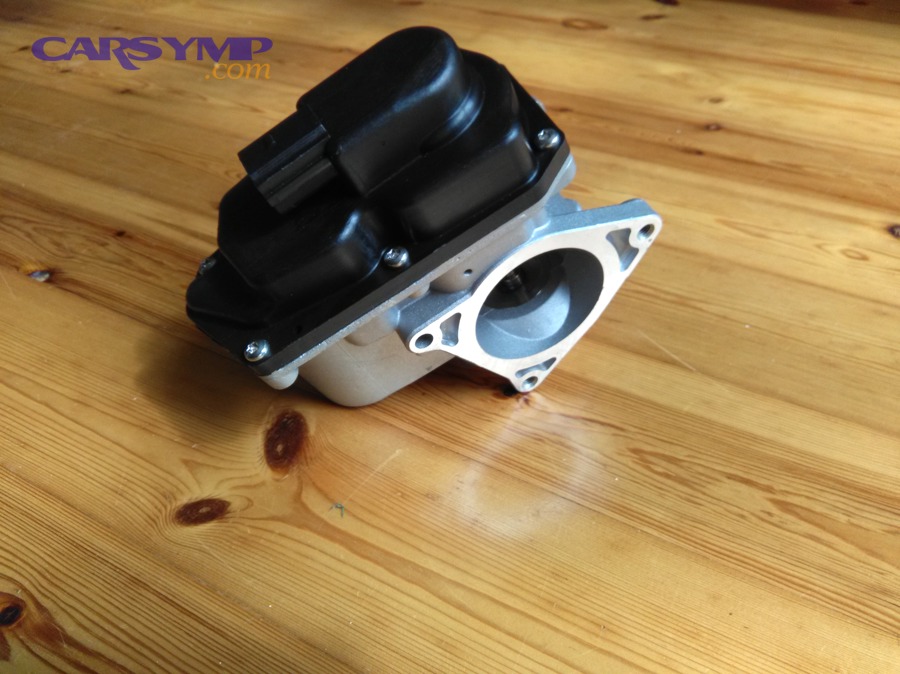
What does the EGR system do, and what fails?
EGR is an emissions-and-combustion strategy that recirculates a controlled amount of exhaust back into the intake stream to lower peak combustion temperatures and reduce NOx—so it fails when that flow is wrong (too little, too much, or at the wrong time).
Next, connect that purpose to what goes wrong in real vehicles:
- Common EGR system parts that fail
- EGR valve (sticking open/closed, slow response)
- EGR cooler (leaks, restriction, coolant loss on some engines)
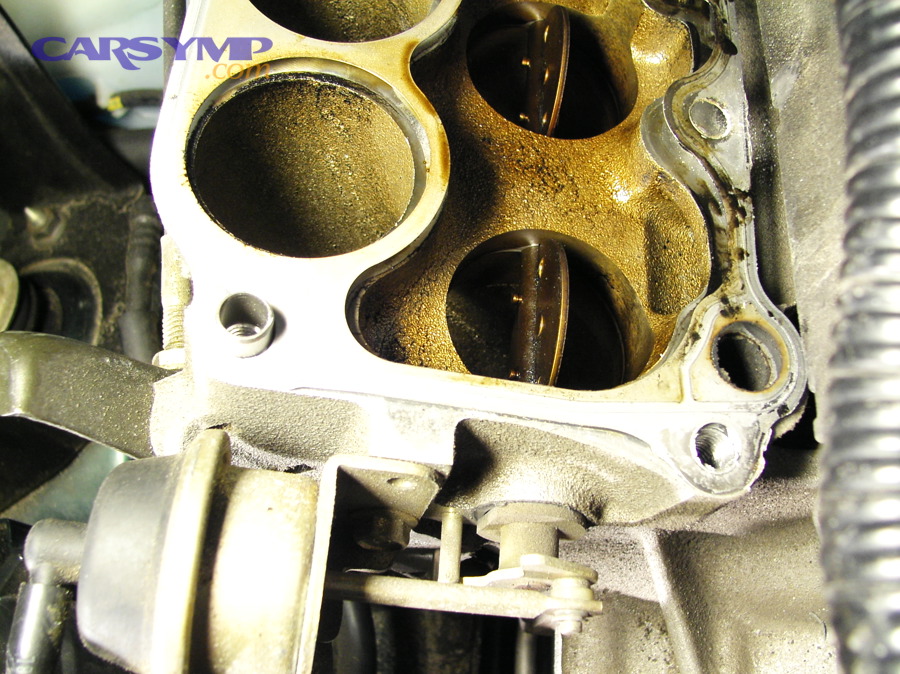
- EGR passages (plugged ports in intake/throttle body/manifold)
- Control solenoid/vacuum plumbing (older vacuum-operated systems)
- Position/temperature/DPFE-style sensors (platform dependent)
- How the failure shows up mechanically
- EGR stuck open at idle: exhaust dilutes the mixture too much at low airflow → rough idle, stalling, “acts like a vacuum leak”
- EGR insufficient flow: higher combustion temperatures under conditions where EGR is commanded → NOx rises; ECM may flag “insufficient flow”
- EGR erratic flow: intermittent stumble, surging, or drivability complaints that come and go with command changes
According to a study by Ain Shams University from the Department of Automotive Engineering, in 2013, a tested spark-ignition engine using about 25% EGR achieved roughly 71% NOx reduction, illustrating how strongly EGR flow affects combustion outcomes.
What causes intake carbon buildup, and where does it form?
Intake carbon buildup is the accumulation of oily soot and hardened deposits on airflow surfaces—so it fails by reducing cross-sectional area and disturbing airflow patterns, not by mis-commanded EGR flow.
Then, focus on the three practical causes that matter for diagnosis:
- Oil vapor and PCV/blow-by contamination
- Oil mist enters the intake tract and bakes onto hot surfaces.
- EGR soot contribution (especially on diesels, and some GDI setups)
- Soot-laden exhaust mixes with oil vapor → “tar-like” deposits.
- Direct injection effect (gasoline DI)
- Fuel no longer washes intake valves the way port injection does, so deposits can accumulate faster on valves and nearby runners.
Where it forms depends on the engine design:
- Throttle body and throttle plate edge (sticky ring deposit)
- Intake manifold plenum and runners (layer buildup that reduces area)
- Intake valves (GDI) (the “classic” DI carbon problem)
- Swirl/tumble flaps and EGR mixing zones (hot spots for deposits)
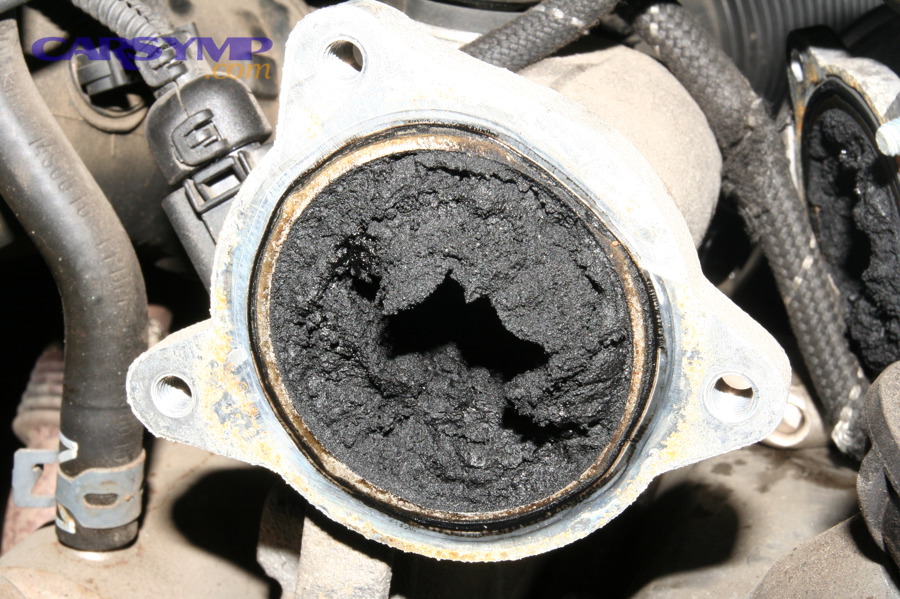
Why these two problems get confused
They get confused because both can cause airflow/mixture abnormalities that feel similar from the driver’s seat—hesitation, poor acceleration, roughness—and both often involve “dirty” parts.
More specifically, they overlap in three diagnostic traps:
- Both can create misfires
- EGR stuck open → dilution misfire at idle/low speed
- Intake restriction/uneven runner distribution → lean cylinders/misfire under load
- Both can distort fuel trims
- EGR flow errors can shift O2 readings and trims depending on strategy
- Intake deposits can reduce effective airflow and alter MAF/MAP relationships
- Both get “temporarily better” after cleaning something
- Cleaning a throttle body can change idle airflow enough to mask an EGR issue briefly
- Clearing codes or resetting adaptations can hide a restriction until the ECU relearns
Do your symptoms point more to EGR or to intake restriction?
Yes—most of the time your symptoms do point more to EGR or intake restriction because (1) EGR faults create timing-specific dilution problems, (2) intake carbon creates load-related breathing limits, and (3) the “when it happens” pattern is usually different.
Next, you’ll map what you feel to what the engine is physically doing, so you stop guessing.
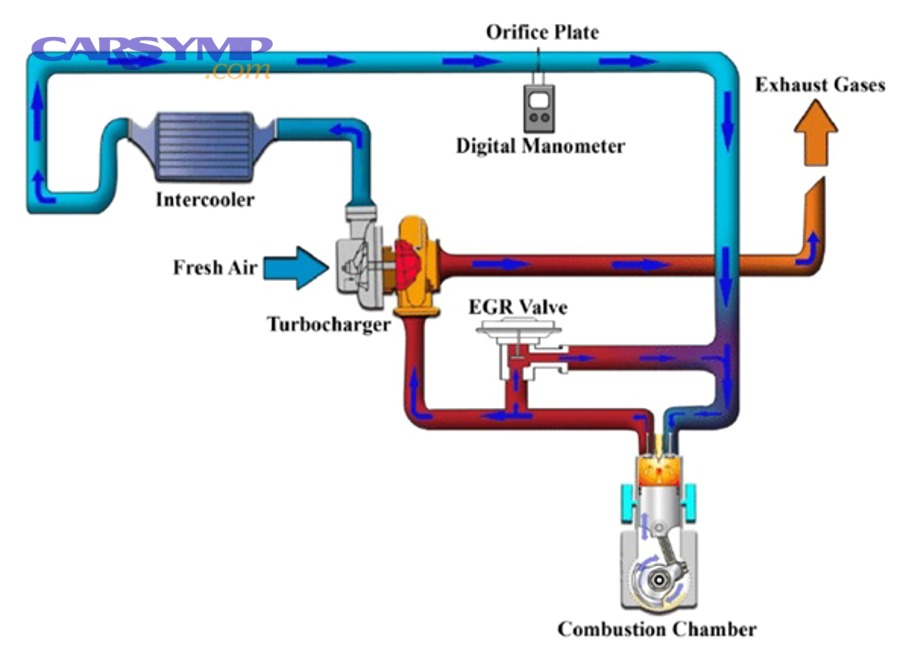
Which driveability symptoms are most common with EGR failure?
EGR failure symptoms most commonly include rough idle, stalling, low-speed stumble, and hesitation that changes abruptly when the ECU commands EGR—because exhaust dilution is most disruptive at low airflow and during transitions.
Then, use this symptom cluster to “lean EGR” before you even plug in a scan tool:
- Rough idle / near-stall at stoplights
- Stumble right after cold start or during warm idle transitions (varies by strategy)
- Surging or hesitation at light cruise when EGR command ramps
- Ping/knock under load if EGR is not flowing when commanded (platform dependent)
- Random “almost like a vacuum leak” behavior (especially stuck-open valve)
If your situation includes the question “Can you drive with an EGR fault,” the practical answer is: you might be able to limp short distances, but drivability can degrade quickly (stalling in traffic is a safety risk), and prolonged operation can raise combustion temperatures or clog components further—so treat it as a “diagnose now” issue, not a “ignore for months” issue.
Which symptoms more often suggest intake carbon buildup?
Intake carbon buildup more often feels like chronic breathing limitation: reduced power, sluggish throttle response, and load-related hesitation—because the engine is fighting a physical airflow bottleneck that gets worse as demand increases.
Next, look for these intake-restriction leaning signs:
- Noticeable power loss at higher RPM or sustained acceleration
- Delayed throttle response (engine “takes a second” to catch up)
- Load sensitivity: worse going uphill, towing, or with passengers
- Higher-than-normal throttle opening for the same performance
- Sometimes improved behavior at higher speeds (depending on runner dynamics) but worse during midrange torque demand
A helpful mindset: EGR problems are often “control-event” problems (bad at specific moments), while intake deposits are “capacity” problems (bad whenever the engine needs more air).
How to use “when it happens” clues (cold start, hot soak, heavy load, idle)
You can use “when it happens” clues to separate EGR vs intake carbon because EGR is commanded in specific operating windows, while restriction follows airflow demand.
Then, apply this quick pattern guide:
- Mostly at idle / coming to a stop → points to EGR stuck open (dilution at low airflow)
- Mostly at steady cruise / light throttle transitions → often EGR control/feedback issues
- Mostly under heavy load / higher RPM pull → more consistent with intake restriction (or fueling/ignition—verify with data)
- After hot soak restart (short stop, restart) → can amplify either:
- EGR valve sticking when hot
- Deposits affecting hot airflow and adaptation
- Cold start only → can be strategy-related; verify whether the ECU commands EGR during warm-up on your platform
Which OBD-II codes and scan-tool clues help separate EGR issues from intake carbon buildup?
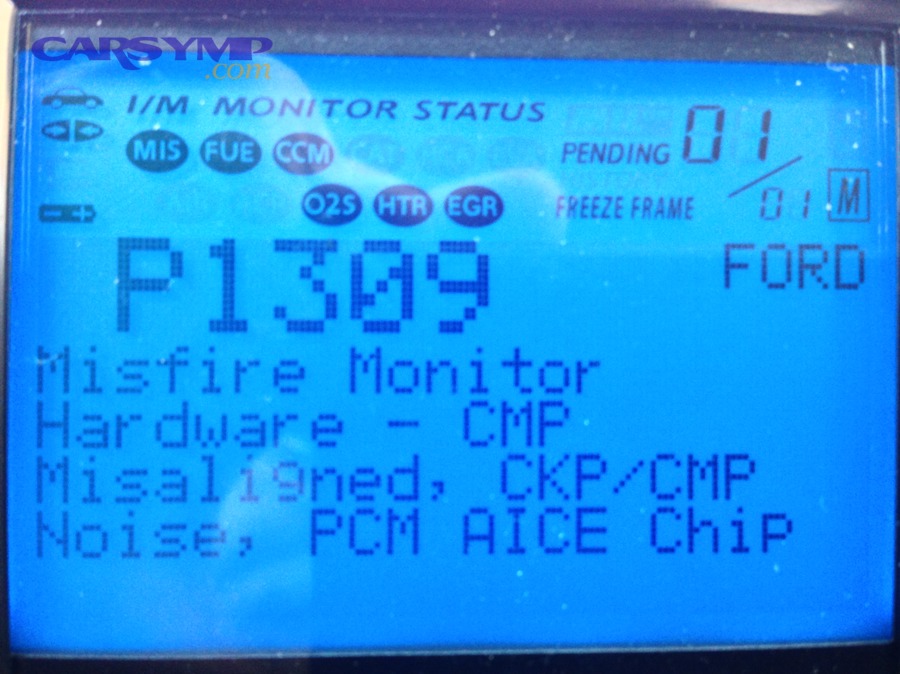
EGR wins in “code specificity,” intake restriction wins in “pattern recognition”: EGR problems often trigger dedicated EGR flow codes, while intake carbon buildup more often shows up as airflow, fuel-trim, or cylinder-balance patterns rather than one perfect “intake deposits” DTC.
To illustrate the difference, start with the codes that strongly tilt the diagnosis.
Before the table, here’s what it contains: the table lists common OBD-II code families that tend to correlate with EGR flow faults versus restriction/metering issues, plus what each cluster usually means in plain English.
| Code / Data clue | More likely direction | What it usually means in practice |
|---|---|---|
| P0400–P0409 family (platform dependent) | EGR | EGR flow, control, or position feedback not matching expectation |
| P0401 “insufficient EGR flow” | EGR | EGR commanded but expected change (often MAP/DPFE/temp) didn’t occur |
| P0402 “excessive EGR flow” | EGR | EGR flowing when it shouldn’t (stuck open, control fault) |
| Fuel trims (LTFT/STFT) high positive at load | Intake restriction / airflow metering | Engine is adding fuel because measured/estimated air doesn’t match reality |
| Misfire codes (P030X) pattern by cylinders | Intake deposits (sometimes) | Runner/valve deposit imbalance can make certain cylinders leaner |
| MAP/MAF mismatch, low MAF at WOT | Intake restriction / intake leak / sensor | Airflow entering is limited or measurement is wrong |
What codes typically point to an EGR flow problem?
Codes that typically point to an EGR flow problem are the EGR-specific families (commonly P0400–P0409), because they’re set when the ECU commands EGR and doesn’t see the expected response.
Next, interpret them like a control-systems problem:
- “Insufficient flow” style codes (often P0401):
- Valve not opening, passage plugged, cooler restricted, solenoid/vacuum issue, feedback sensor drift
- “Excessive flow” style codes (often P0402):
- Valve stuck open, incorrect control, leaking vacuum supply, carbon preventing full closure
- Position/feedback mismatch codes (platform dependent):
- Commanded position vs actual position doesn’t track (electronic EGR valves)
Practical tip: if you have a clear EGR flow code and your symptom is worst at idle or light cruise transitions, EGR moves to the top of the list.
What data PIDs help you confirm EGR vs intake restriction?
The most useful PIDs are the ones that reflect airflow and dilution directly: MAF, MAP, EGR command/position, short- and long-term fuel trims, and sometimes intake air temperature and calculated load.
Then, use them in simple “if/then” checks instead of staring at numbers:
- EGR confirmation-style PID logic
- If EGR command increases and MAP changes in the expected direction (often MAP rises slightly because exhaust displaces oxygen and changes pumping) and the engine behavior changes predictably, EGR is doing something.
- If EGR command increases but EGR position/feedback doesn’t move, suspect actuator/feedback.
- If position moves but MAP/combustion response doesn’t, suspect plugged passages/cooler.
- Intake restriction confirmation-style PID logic
- Compare MAF vs RPM vs throttle angle: a restricted intake often shows lower-than-expected MAF for a given throttle and RPM under load.
- Compare MAP under load: restriction can reduce manifold pressure rise toward atmospheric at high throttle (especially naturally aspirated engines).
- Look at calculated load: restriction tends to cap load even when the ECU “asks” for more.
According to a study by University of Warmia and Mazury from the Faculty of Technical Sciences, in 2024, a strong intake airflow restriction reduced maximum engine power by 63.22% and maximum airflow rate by 59.7%, showing how dramatically airflow limitation can cap performance under load.
Can misfire and fuel-trim codes be caused by either?
Yes—misfire and fuel-trim codes can be caused by either EGR faults or intake carbon buildup for at least three reasons: (1) both can push the mixture outside stable combustion limits, (2) both can create cylinder-to-cylinder imbalance, and (3) both can trigger adaptive fuel corrections that eventually hit limits.
However, the pattern is what separates them:
- EGR-leaning patterns
- Misfire worst at idle or light cruise
- Misfire improves when EGR is disabled/blocked (testing only)
- Fuel trims swing with EGR command events
- Intake-carbon-leaning patterns
- Misfire shows up under load or higher airflow demand
- Specific cylinders repeat (runner/valve deposit imbalance)
- MAF/MAP/load values look “capped” during strong acceleration
What step-by-step tests confirm EGR vs intake manifold carbon deposits?
A reliable confirmation approach is a 3-part method: (1) verify command vs response (scan tool), (2) verify mechanical function (vacuum/electrical checks), and (3) visually or physically confirm restriction (borescope/inspection)—because either problem can fake symptoms, but it can’t fake test outcomes consistently.
Next, follow the least-invasive tests first so you don’t jump to disassembly.
How to test EGR function (command test, vacuum test, temp delta)
You can test EGR function by commanding it and verifying at least three independent responses: the valve moves, the engine reacts, and the temperature/pressure behavior changes—because true EGR flow affects combustion and manifold conditions.
Then, pick the test that matches your system type:
1) Bi-directional scan tool “command” test (best if supported)
- Warm engine to stable idle.
- Command EGR open in small steps.
- Watch for:
- Idle quality change (should stumble or change if EGR truly flows at idle on that platform)
- EGR position feedback follows command (electronic valves)
- MAP change or calculated load shift
2) Vacuum pump test (vacuum-operated EGR valves)
- Apply vacuum directly to the diaphragm.
- A healthy valve should:
- Hold vacuum (no diaphragm leak)
- Change idle/engine behavior when opened (if passages aren’t blocked)
3) Temperature delta test (common on EGR coolers and passages)
- Use an infrared thermometer or temperature sensors if accessible.
- Under conditions where EGR is commanded (often cruise), look for a meaningful temperature difference across the cooler or at inlet/outlet points.
If you’re deciding whether to attempt EGR repair, treat the above as your “proof step”: you want to know whether you’re fixing an actuator problem, a clogged passage problem, or a feedback problem—because each requires a different repair plan.
According to a study by Ain Shams University from the Department of Automotive Engineering, in 2013, higher EGR rates produced large NOx reductions (about 71% at ~25% EGR), reinforcing why correct EGR flow (not just a clean-looking valve) matters for stable operation and emissions.
How to test for intake restriction (MAP/MAF, smoke test, borescope)
You can test for intake restriction by confirming at least three signals: reduced measured airflow under demand, capped manifold pressure response, and visible deposits/obstruction—because restriction is physical and should be measurable and often visible.
Then, use this sequence:
1) Wide-open-throttle (or high-load) airflow plausibility
- Safely test under load (road test or dyno) while logging:
- RPM, throttle angle, MAF (g/s), MAP (kPa), calculated load
- Red flags:
- Throttle high but MAF unusually low for the engine size and RPM
- MAP not rising as expected on a naturally aspirated engine at high throttle
- Load remains capped even when the ECU “asks” for more
2) Smoke test for air leaks and unintended restrictions
- Smoke test is usually thought of for leaks, but it also helps you confirm the intake tract is unobstructed and not collapsing:
- Check for collapsed hoses, damaged couplers, clogged PCV passages, stuck intake flaps.
- Important: a smoke test won’t “show” carbon deposits inside runners, but it can rule out easier faults that mimic restriction.
3) Borescope inspection (best confirmation without full teardown)
- On many engines you can borescope:
- Past the throttle body into the manifold
- Through service ports or by removing a sensor
- Through intake runners (depending on layout)
- Look for:
- Thick, textured deposits
- Reduced runner area
- Sticky flaps or uneven buildup patterns
4) Visual throttle body inspection
- A heavy deposit ring around the throttle plate can indicate the same contamination source that builds deeper in the intake.
What “quick checks” can you do before disassembly?
Before you disassemble anything, you can do quick checks that catch a large share of cases: (1) inspect hoses and PCV routing, (2) check for obvious throttle body deposits, and (3) do a simple “command and response” scan test—because many “carbon” complaints are actually basic airflow or control faults.
Then, run this fast checklist:
- Air filter and intake ducting (collapsed, clogged, loose clamps)
- PCV valve/function (stuck PCV can drive oil vapor into intake)
- Vacuum leaks (especially around intake manifold gaskets)
- Throttle body deposit ring
- EGR electrical connector and harness (wiggle test if safe)
- Clear evidence of coolant loss (possible EGR cooler leak on some platforms)
If you identify the cause, should you clean, repair, or replace parts?
Yes—once you identify the cause, you should choose between cleaning, repair, or replacement based on (1) whether the failure is deposit-related vs component failure, (2) how repeatable the symptom is after cleaning, and (3) the risk of collateral damage if you delay.
Next, match the fix to the failure mode so you don’t pay twice.
When cleaning is enough (EGR passages, throttle body, intake)
Cleaning is often enough when the system is mechanically healthy but flow is reduced by deposits—especially clogged EGR passages, a dirty throttle body, or moderate manifold deposits.
Then, apply the “cleaning is enough” rule set:
- Cleaning is usually enough when:
- EGR valve moves and responds correctly in tests
- EGR command vs response mismatch suggests restricted passages
- Intake restriction is mild-to-moderate and borescope confirms deposits without damage
- Common cleaning targets
- EGR ports in throttle body/intake manifold
- EGR valve pintle/seat (careful with electronic valves)
- Throttle body and idle air control pathways (where applicable)
- Intake manifold runners (off-car cleaning if severe)
- Cleaning cautions
- Avoid pushing chunks downstream.
- Protect sensors (MAF especially).
- Follow chemical safety and manufacturer guidance.
When repair/replacement is smarter (EGR valve, cooler, sensors)
Repair or replacement is smarter when the component can’t reliably control flow anymore—because no amount of cleaning fixes a failing actuator, leaking cooler, or drifting feedback sensor.
Next, use these “replace vs clean” decision triggers:
- Replace/repair triggers for EGR
- Valve doesn’t track command or sticks repeatedly after cleaning
- Vacuum diaphragm won’t hold vacuum (vacuum EGR)
- EGR cooler leak symptoms (coolant loss, white exhaust, pressure issues—platform dependent)
- Sensor feedback is implausible (position sensor/DPFE-style sensor drift)
- Replace/repair triggers for intake hardware
- Broken swirl/tumble flap mechanisms
- Manifold runner actuator faults
- Severe deposit-induced damage or repeated clogging despite PCV fixes
This is where “EGR repair” should be framed as system repair (valve + control + passages), not just swapping a part and hoping.
What to expect for time, cost, and risk
Expect time, cost, and risk to scale with how deep the deposits are and how integrated the EGR system is—because external-access cleaning is quick, but manifold removal or cooler service is labor-heavy.
Then, use this realistic planning guide:
- Low time/cost: throttle body cleaning, basic EGR passage cleaning (if accessible), vacuum hose fixes
- Medium: EGR valve replacement, cooler cleaning on accessible setups
- High: intake manifold removal and deep cleaning, GDI intake valve cleaning (e.g., walnut blasting), EGR cooler replacement on tight packaging
Risk increases if you ignore it:
- EGR stuck open: stalling/rough idle can become unsafe in traffic
- Severe intake restriction: can cause persistent misfires, poor performance, and higher stress on related systems
Contextual border: at this point you’ve diagnosed and chosen a fix path; the next section focuses on preventing recurrence and improving long-term reliability rather than solving the immediate fault.
How can you prevent EGR and intake carbon buildup from coming back?
You can prevent recurrence by reducing the oil/soot sources, keeping airflow pathways stable, and validating results with follow-up checks—because deposits form from contamination plus heat plus time, and you can influence all three.
Next, apply prevention tactics that match your engine type and driving pattern.
What driving habits and maintenance reduce carbon buildup?
The best habits are the ones that keep temperatures stable and reduce prolonged low-load operation—because short trips and low-load driving can increase condensation and deposit formation.
Then, implement these practical habits:
- Avoid endless short trips when possible (combine errands)
- Give the engine periodic full warm-up runs
- Follow air filter and oil change intervals appropriate for your use case
- Fix vacuum leaks and PCV issues early (they accelerate contamination)
Do catch cans, fuel additives, or “Italian tune-ups” help?
Catch cans can help in specific cases, fuel additives help mainly for fuel-system deposits (not intake valves on DI), and “Italian tune-ups” can help reduce soft soot but won’t remove hardened deposits—because prevention is easier than removal once deposits bake on.
Then, set realistic expectations:
- Catch cans: most relevant for oil vapor control (PCV routing); results vary by engine and climate
- Fuel additives: can help injectors/combustion chamber, but DI intake valves don’t get washed by fuel
- Hard driving: can reduce some soft soot and improve EGR/DPF behavior on some diesels, but it’s not a substitute for cleaning when deposits are thick
What oil and PCV choices matter most?
Oil volatility and PCV system health matter most because oil vapor is the “glue” that helps deposits stick and grow—especially when mixed with soot.
Then, prioritize:
- Correct oil spec for your engine (OEM spec matters more than brand hype)
- PCV valve function and routing integrity
- No “unmetered” air paths that confuse fueling and accelerate deposits
When should you plan a follow-up inspection?
Plan a follow-up inspection when you’ve cleaned or repaired the system and want to confirm the fix is stable—because adaptations and deposits can make a problem appear solved until conditions repeat.
Then, use a simple schedule:
- Within 1–2 weeks: rescan for pending codes and review fuel trims
- After a few full drive cycles: repeat the operating condition that used to trigger symptoms
- If deposits were severe: borescope recheck at a reasonable interval (engine/use dependent)
If you want, paste your vehicle year/make/engine and your exact codes + a short symptom timeline (“when it happens”), and I’ll map them to the most likely branch of this EGR vs intake carbon buildup diagnosis flow.