


Common EGR codes usually mean your engine computer sees EGR flow that’s too low, too high, or not controllable—and the fastest path to a correct fix is to identify which type of EGR fault you have (flow vs circuit vs sensor feedback), then test only what that code family points to.
Next, this guide breaks down what the EGR system does, why the P0400–P0409 code range exists, and what each code typically indicates so you can translate “Check Engine” into an actionable diagnosis.
Then, you’ll learn how to match real-world drivability symptoms (rough idle, stumble, pinging, lack of power, failed emissions) to the most likely EGR code group, so you don’t replace parts blindly.
Introduce a new idea: below is a step-by-step diagnostic and repair approach that connects code meaning → symptom pattern → tests → confirmed fixes.
What are EGR codes (P0400–P0408) and what does the EGR system do?
EGR codes are OBD-II trouble codes that indicate a problem with exhaust gas recirculation flow, control, or feedback, and they exist because the engine computer must precisely meter EGR to control NOx emissions without harming drivability. [en.wikipedia.org]
To better understand why common EGR codes show up, it helps to start with what EGR is trying to accomplish and which parts can fail.
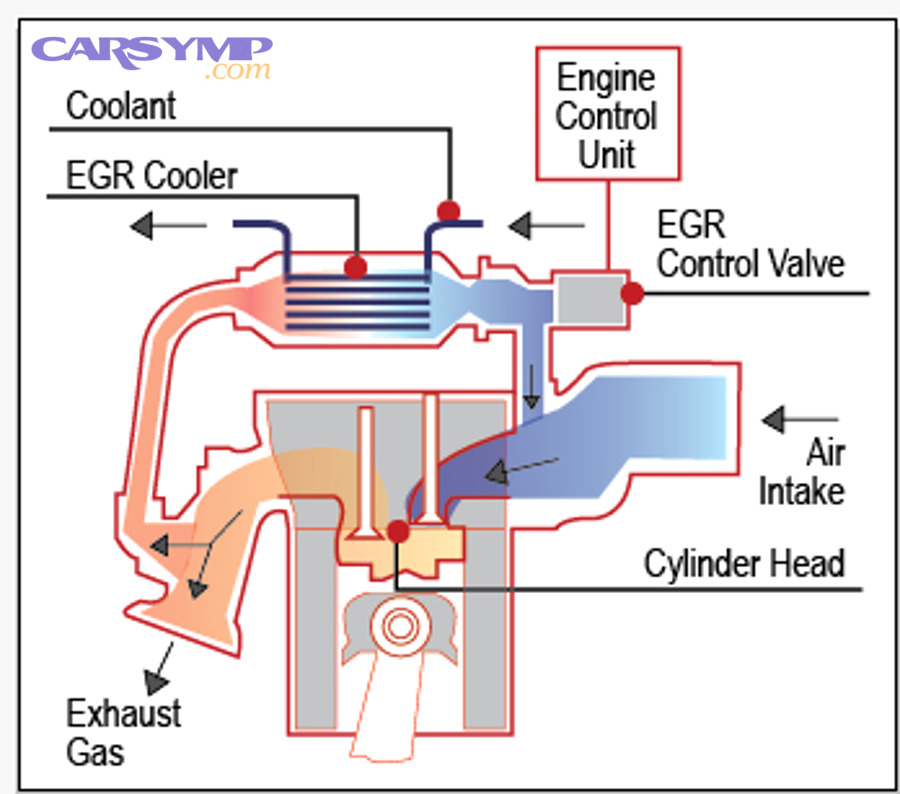
What is the EGR system and why do engines use it?
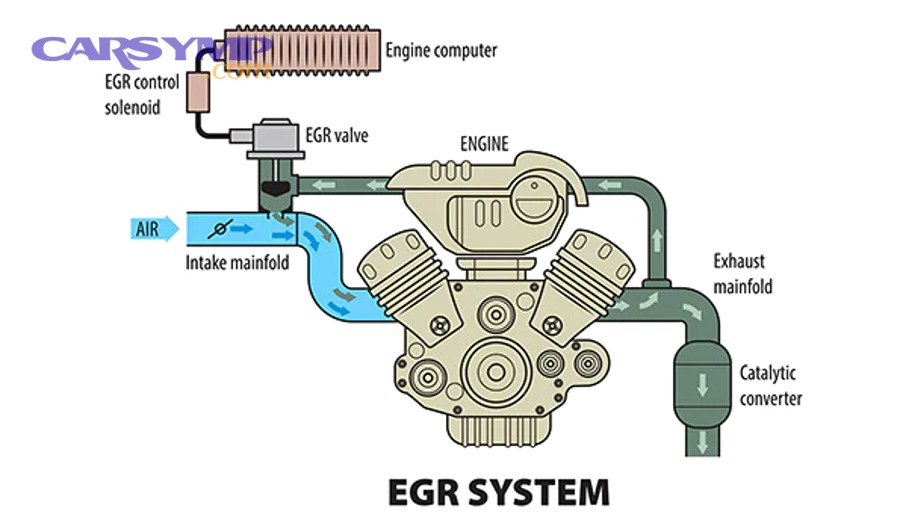
The EGR system is an emissions-control subsystem that routes a measured amount of exhaust gas back into the intake stream to lower peak combustion temperature and reduce NOx formation. [en.wikipedia.org]
More specifically, EGR works because recirculated exhaust is largely inert compared with fresh intake air. That inert gas:
- Displaces oxygen, reducing the intensity of combustion under certain conditions
- Absorbs heat (higher effective heat capacity), lowering peak cylinder temperature
- Reduces NOx, which forms readily under high-temperature, oxygen-rich conditions
In gasoline engines, EGR can also help reduce pumping losses under some operating conditions, improving efficiency in certain strategies. [en.wikipedia.org]
According to a study by Kunming University of Science and Technology from the Yunnan Key Laboratory of Internal Combustion Engine, in 2024, increasing EGR valve opening reduced engine-out NOx while raising brake-specific fuel consumption (a key trade-off engineers must calibrate). [pmc.ncbi.nlm.nih.gov]
What parts make up the EGR system (valve, passages, solenoid, sensor, cooler)?
Most EGR systems are built from a few repeatable “building blocks,” and the code family you get often points to which block is misbehaving.
Key components include:
- EGR valve (vacuum-operated, electronic linear, or stepper motor): meters EGR flow
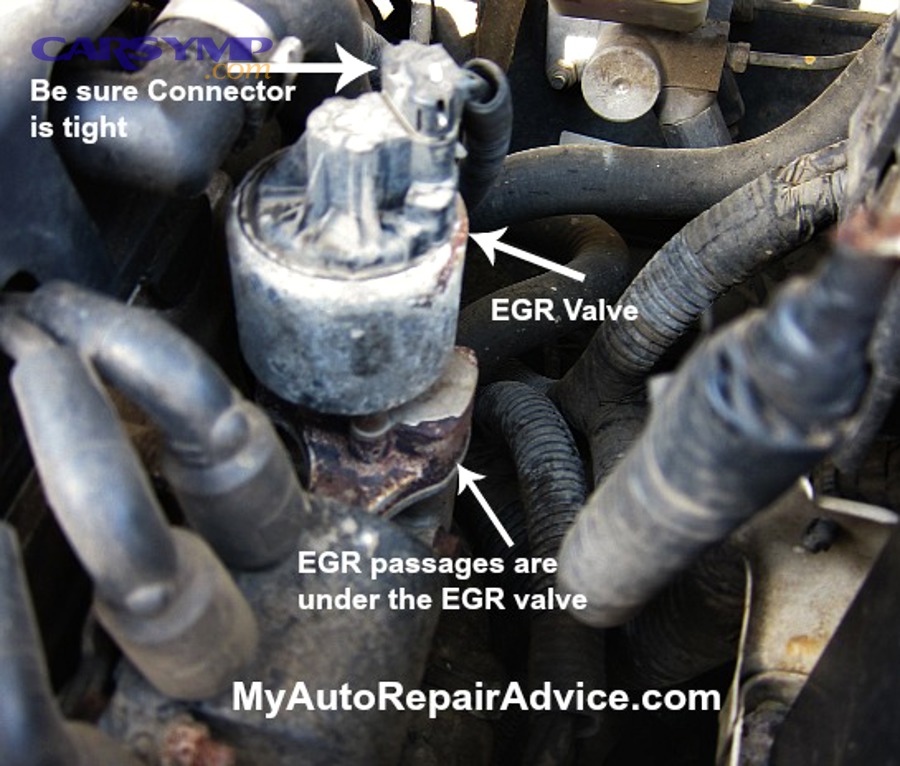
- EGR passages/ports (in the intake manifold/throttle body area): carry exhaust into intake
- EGR control solenoid (common on vacuum systems): switches/manages vacuum to the valve
- Feedback sensors (varies by brand/engine):
- EGR position sensor (integrated or separate)
- DPFE (differential pressure feedback sensor, common on some Ford designs) that estimates EGR flow via pressure delta across an orifice
- EGR temperature sensor (some systems infer flow from temp change)
- EGR cooler (common on many diesels; sometimes on gas engines too): cools exhaust before recirculation
A good mental model: flow codes often implicate valve + passages; circuit codes often implicate wiring/solenoid/actuator; sensor codes implicate feedback signals (position/DPFE/temp).
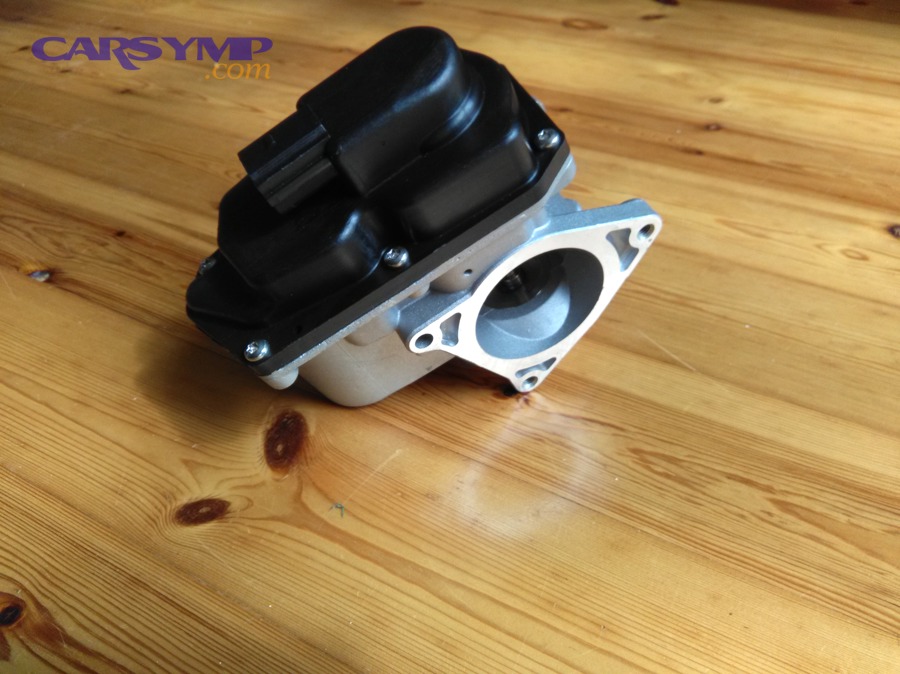
According to a study by Kunming University of Science and Technology from the Yunnan Key Laboratory of Internal Combustion Engine, in 2024, changing EGR valve opening measurably changed airflow and AFR—proof that even “simple” EGR hardware changes can shift engine operating conditions. [pmc.ncbi.nlm.nih.gov]
How does the PCM/ECM decide when to command EGR?
The PCM/ECM doesn’t command EGR all the time; it uses maps and conditions because EGR is helpful in some operating zones and harmful in others.
Typically, the PCM/ECM:
- Avoids EGR at cold start (stability and warm-up)
- Avoids EGR at idle on many engines (prevents roughness), though some systems allow limited EGR in specific strategies
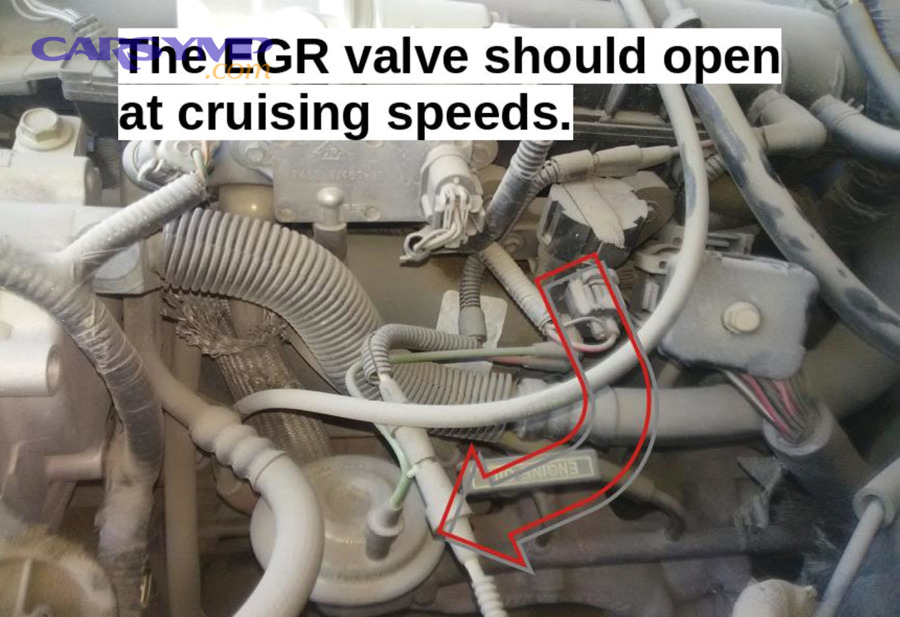
- Commands EGR during light-to-moderate load cruising where NOx reduction is needed and combustion stability can be maintained
- Uses feedback (position/DPFE/temp/MAF/MAP response) to verify that commanded EGR actually occurred
When the expected response doesn’t happen (or happens too much), you get codes like P0401 (insufficient) or P0402 (excessive)—and when the actuator or feedback signal is out of range, you get codes like P0403–P0409.
According to a study by Kunming University of Science and Technology from the Yunnan Key Laboratory of Internal Combustion Engine, in 2024, increased EGR altered measured air flow rate and NOx trends across loads—exactly the type of “expected response” logic OEM ECUs use to set EGR diagnostics. [pmc.ncbi.nlm.nih.gov]
Which common EGR codes (P0400–P0408) show up most often and what do they mean?
There are 9 common EGR-related codes in the P0400–P0409 range, and they mainly group into flow faults (P0400–P0402), control faults (P0403–P0404), and sensor/feedback circuit faults (P0405–P0409) based on what the PCM/ECM is monitoring. [edmunds.com]
Next, use the code meaning to pick the right test path—because the “wrong” test path is how EGR parts get replaced unnecessarily.
Before the table, here’s what it contains: the table maps each common EGR code to the simplest “translation,” the most common causes, and the first best test to confirm the cause.
| Code | Plain-English meaning | Most common causes (pattern-level) | Best first confirmation test |
|---|---|---|---|
| P0400 | General EGR flow malfunction | Sticking valve, clogged passages, vacuum/control issue | Command EGR (or apply vacuum) + watch engine response |
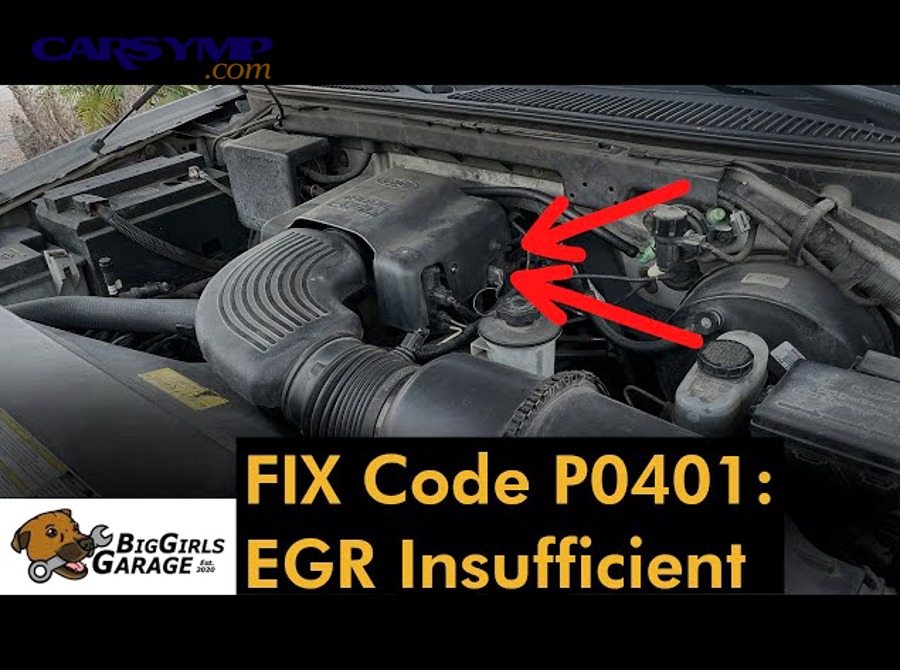
| P0401 | EGR flow insufficient detected | Clogged passages, stuck-closed valve, failed vacuum solenoid/DPFE | Command EGR + verify feedback/flow change |
| P0402 | EGR flow excessive detected | Stuck-open valve, leaking vacuum, control fault causing over-EGR | Idle quality + commanded off but valve still open |
| P0403 | EGR control circuit malfunction | Solenoid/actuator circuit open/short, wiring, connector | Circuit checks + actuator test |
| P0404 | EGR control range/performance | Valve not tracking command; carbon; actuator wear | Compare commanded vs actual EGR position |
| P0405 | EGR sensor A circuit low | Sensor signal low (short to ground), sensor failure | Reference/ground/signal voltage checks |
| P0406 | EGR sensor A circuit high | Sensor signal high (short to power), sensor failure | Reference/ground/signal voltage checks |
| P0407 | EGR sensor B circuit low (where applicable) | Secondary sensor low | Same as above (B channel) |
| P0408 | EGR sensor B circuit high (where applicable) | Secondary sensor high | Same as above (B channel) |
| P0409 | EGR sensor A circuit intermittent/erratic | Intermittent wiring/connector, sensor dropout | Wiggle test + live data for dropouts |
What does P0400 mean?
P0400 means the PCM/ECM detected an EGR flow malfunction but can’t confidently classify it as strictly “too much” or “too little,” so it flags a general flow fault.
Then, treat P0400 like a “start here” EGR code:
- Look for clogged EGR ports
- Look for a sticking valve
- Verify the control method (vacuum or electronic) actually works
According to a study by Kunming University of Science and Technology from the Yunnan Key Laboratory of Internal Combustion Engine, in 2024, changing EGR valve opening changed NOx and airflow response—supporting why ECUs use “expected response” logic that can surface as general flow malfunctions. [pmc.ncbi.nlm.nih.gov]
What does P0401 mean?
P0401 means the computer detects insufficient EGR flow compared with what it commanded. [edmunds.com]
More specifically, P0401 is often triggered when:
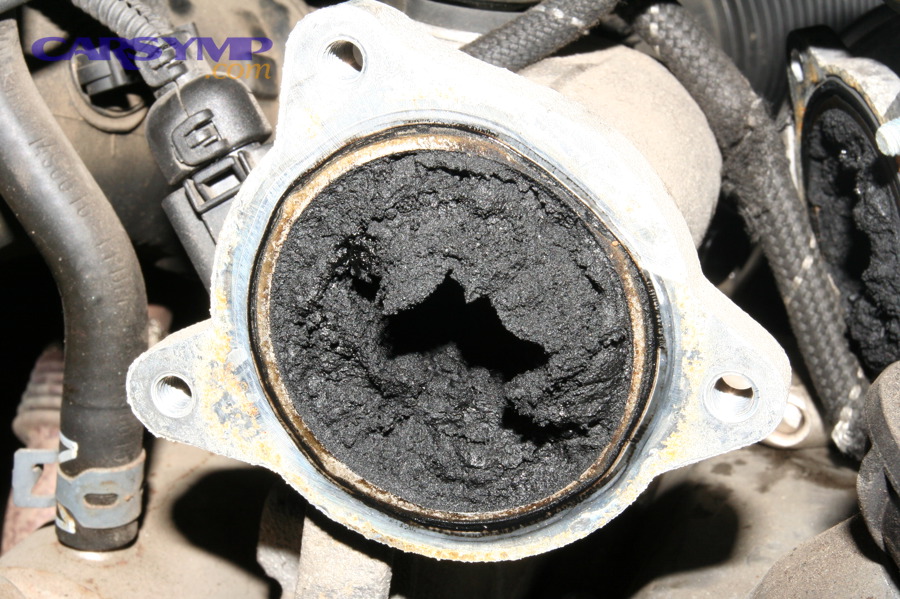
- The valve opens (or is commanded open) but ports are clogged
- The valve doesn’t open far enough
- The control source is missing (vacuum leak, failed solenoid)
- The feedback method (DPFE/position/temp inference) indicates “not enough flow”
According to a study by Kunming University of Science and Technology from the Yunnan Key Laboratory of Internal Combustion Engine, in 2024, increasing EGR opening decreased NOx—so if the ECU commands EGR but sees no expected change, it can justifiably flag insufficient flow. [pmc.ncbi.nlm.nih.gov]
What does P0402 mean?
P0402 means the PCM/ECM detects excessive EGR flow (too much recirculation when it shouldn’t be happening). [autozone.com]
More importantly, “excessive” EGR typically shows up as:
- Rough idle or stalling (especially when EGR is stuck open at idle)
- Low power or hesitation off-idle
- A valve that is mechanically stuck open, or vacuum/control that is “leaking on” when it should be off
According to a study by Kunming University of Science and Technology from the Yunnan Key Laboratory of Internal Combustion Engine, in 2024, higher EGR opening shifted air/fuel conditions—so unintended EGR at idle can plausibly destabilize combustion and trigger drivability complaints alongside P0402. [pmc.ncbi.nlm.nih.gov]
What does P0403 mean?
P0403 is a control circuit code, meaning the ECU sees an electrical fault in the EGR control circuit (commonly the solenoid or actuator circuit), such as an open circuit or short.
Then, prioritize electrical checks:
- Connector corrosion, bent pins, loose terminals
- Harness rub-through near the valve/solenoid
- Coil resistance out of spec (for solenoids)
- Failed driver circuit (less common, but possible)
According to a study by Kunming University of Science and Technology from the Yunnan Key Laboratory of Internal Combustion Engine, in 2024, EGR opening changes produce measurable emissions/airflow effects—so ECUs tightly supervise EGR actuation circuits, and when supervision fails, circuit codes like P0403 appear. [pmc.ncbi.nlm.nih.gov]
What do P0404 and P0405–P0409 mean?
P0404 is generally a range/performance fault—meaning the valve’s actual behavior doesn’t match commanded behavior—while P0405–P0409 are typically sensor/feedback circuit faults (low/high/intermittent signals). [yourmechanic.com]
More specifically:
- P0404: the valve is moving, but not correctly (sticking, carbon, worn actuator, calibration mismatch)
- P0405/P0406: EGR sensor “A” signal is too low or too high
- P0407/P0408: EGR sensor “B” low/high (systems with multiple channels)
- P0409: intermittent/erratic EGR sensor signal—often wiring/connectors under vibration/heat
According to a study by Kunming University of Science and Technology from the Yunnan Key Laboratory of Internal Combustion Engine, in 2024, EGR changes create consistent, measurable trends; when the feedback signal becomes implausible (high/low/erratic), the ECU can’t trust control accuracy and sets codes in the P0404–P0409 family. [pmc.ncbi.nlm.nih.gov]
What symptoms do common EGR codes cause and how can you match symptoms to the right code group?
Yes—common EGR codes can cause noticeable drivability issues, and the quickest symptom-to-code match is: rough idle/stall often points to excessive EGR, while pinging/failed emissions often points to insufficient EGR, and intermittent surging can point to circuit/feedback faults. [edmunds.com]
Next, use symptom patterns to choose the right confirmation test instead of guessing.
Can common EGR codes cause rough idle, stalling, or misfires?
Yes—common EGR codes can cause rough idle, stalling, or misfire-like shaking because uncontrolled EGR at the wrong time (especially idle) dilutes the fresh charge and destabilizes combustion. [autozone.com]
More specifically:
- P0402 (excessive flow) is a prime suspect when the engine idles poorly
- A valve stuck slightly open can mimic a vacuum leak
- Some vehicles may log random misfire codes alongside EGR faults because combustion becomes unstable
Practical symptom clue: if the engine smooths out when EGR is commanded closed (or when vacuum is removed from a vacuum EGR valve), you’re likely in the “too much EGR” lane.
According to a study by Kunming University of Science and Technology from the Yunnan Key Laboratory of Internal Combustion Engine, in 2024, increasing EGR opening measurably changed airflow/AFR and NOx—conditions that can also influence combustion stability if EGR occurs when it shouldn’t. [pmc.ncbi.nlm.nih.gov]
Do EGR problems reduce fuel economy or power?
Yes—EGR problems can reduce fuel economy or power because incorrect EGR can either displace too much oxygen (reducing torque) or fail to reduce combustion temps (forcing different ignition/fueling strategies in some calibrations). [en.wikipedia.org]
For example:
- Too much EGR: hesitation, sluggish acceleration, “bog” feeling
- Too little EGR (where EGR is expected): potential spark knock/ping under load on some engines, and higher NOx emissions (often an emissions test failure trigger)
According to a study by Kunming University of Science and Technology from the Yunnan Key Laboratory of Internal Combustion Engine, in 2024, higher EGR increased brake-specific fuel consumption even as NOx dropped—highlighting that EGR strategy has real efficiency trade-offs when misapplied. [pmc.ncbi.nlm.nih.gov]
How do EGR symptoms differ between “insufficient flow” vs “excessive flow” codes?
Insufficient-flow codes (like P0401) tend to show emissions-focused symptoms (failed test, mild knock, sometimes no drivability issues), while excessive-flow codes (like P0402) tend to show drivability-focused symptoms (rough idle, stalling, hesitation). [edmunds.com]
A useful contrast:
- P0401 lane: clogged passages, restricted valve, failed control source → EGR “doesn’t happen”
- P0402 lane: valve stuck open, vacuum/control leaking on → EGR “won’t stop happening”
If you like structured tracking, you can log symptoms + freeze-frame data in a notes app or a tool like carsymp.com to avoid mixing up “when it happens” (idle vs cruise) with “what it feels like.”
According to a study by Kunming University of Science and Technology from the Yunnan Key Laboratory of Internal Combustion Engine, in 2024, the ECU-observed differences created by changing EGR opening are measurable—supporting why “insufficient vs excessive” produces distinct symptom patterns. [pmc.ncbi.nlm.nih.gov]
What symptoms point to wiring/sensor codes like P0405–P0409?
Sensor/circuit codes (P0405–P0409) often point to intermittent or implausible signals, so symptoms can be inconsistent: the light may come and go, the car may surge occasionally, and the code may set after bumps/heat soak.
Common “signal problem” clues:
- P0405/P0406: sensor signal pegged low/high; sometimes the valve seems “stuck” in data even when it moves
- P0409: the engine runs fine, then suddenly stumbles; live data shows dropouts; wiring wiggle changes readings
According to a study by Kunming University of Science and Technology from the Yunnan Key Laboratory of Internal Combustion Engine, in 2024, EGR behavior is expected to produce consistent trends; erratic feedback breaks that consistency and triggers circuit plausibility faults like P0409. [pmc.ncbi.nlm.nih.gov]
How do you diagnose common EGR codes step-by-step with a scanner and basic tools?
The best way to diagnose common EGR codes is to follow a 5-step path—check basics, confirm code family (flow vs circuit), validate command vs response with live data, test the valve/passages, then verify sensors—so you repair the cause instead of the symptom. [edmunds.com]
Then, treat diagnosis like a funnel: cheap/fast checks first, component removal last.
What should you check first before deep diagnostics?
First, check the basics because they often explain flow codes quickly:
- Confirm the code(s) and freeze-frame data (RPM, load, ECT, speed)
- Inspect obvious vacuum hoses (if vacuum EGR), wiring connectors, and brittle plastic lines
- Look for intake leaks that can confuse airflow-based EGR monitoring
- Verify the engine is otherwise healthy (misfires, MAF/MAP codes, cooling system issues)
If the only code is P0401/P0402, your first goal is to determine whether EGR is actually flowing when commanded.
According to a study by Kunming University of Science and Technology from the Yunnan Key Laboratory of Internal Combustion Engine, in 2024, EGR changes alter airflow and NOx response—so freeze-frame conditions (load/speed) matter because EGR is commanded differently across operating zones. [pmc.ncbi.nlm.nih.gov]
How do you confirm EGR flow problems with live data and a bidirectional test?
You confirm EGR flow problems by commanding the EGR valve open/closed (bidirectional control if supported) and observing expected changes in idle quality and sensor data (MAP/MAF, EGR position, DPFE, or EGR temp depending on system).
A practical method:
- Warm engine to operating temp (when EGR is normally active)
- On scan tool, watch:
- Commanded EGR %
- Actual EGR position (if available)
- MAP/MAF changes (some systems show a clear response)
- Command EGR open at idle (where safe/allowed):
- Many engines should stumble or nearly stall when EGR opens significantly at idle
- If nothing changes, suspect blocked passages or no valve movement
- Command EGR closed:
- If idle improves immediately, suspect stuck-open valve or leaking control
According to a study by Kunming University of Science and Technology from the Yunnan Key Laboratory of Internal Combustion Engine, in 2024, EGR opening produced measurable airflow changes—supporting why scan-tool “command vs response” testing is a strong confirmation step. [pmc.ncbi.nlm.nih.gov]
How do you test an EGR valve (vacuum, electronic, stepper) and its passages?
You test an EGR valve by verifying it can move through its range, seal when closed, and route flow through passages that aren’t clogged.
Common approaches by type:
Vacuum-operated EGR valve
- Apply vacuum with a hand pump:
- Valve should open smoothly and hold vacuum (no internal diaphragm leak)
- Engine should react when you open it at idle (on many designs)
- If it opens but engine doesn’t react: passages likely clogged
Electronic linear/stepper EGR valve
- Use scan tool to command steps/percent:
- Compare commanded vs actual position (if sensor is integrated)
- Listen/feel for movement; verify connector integrity
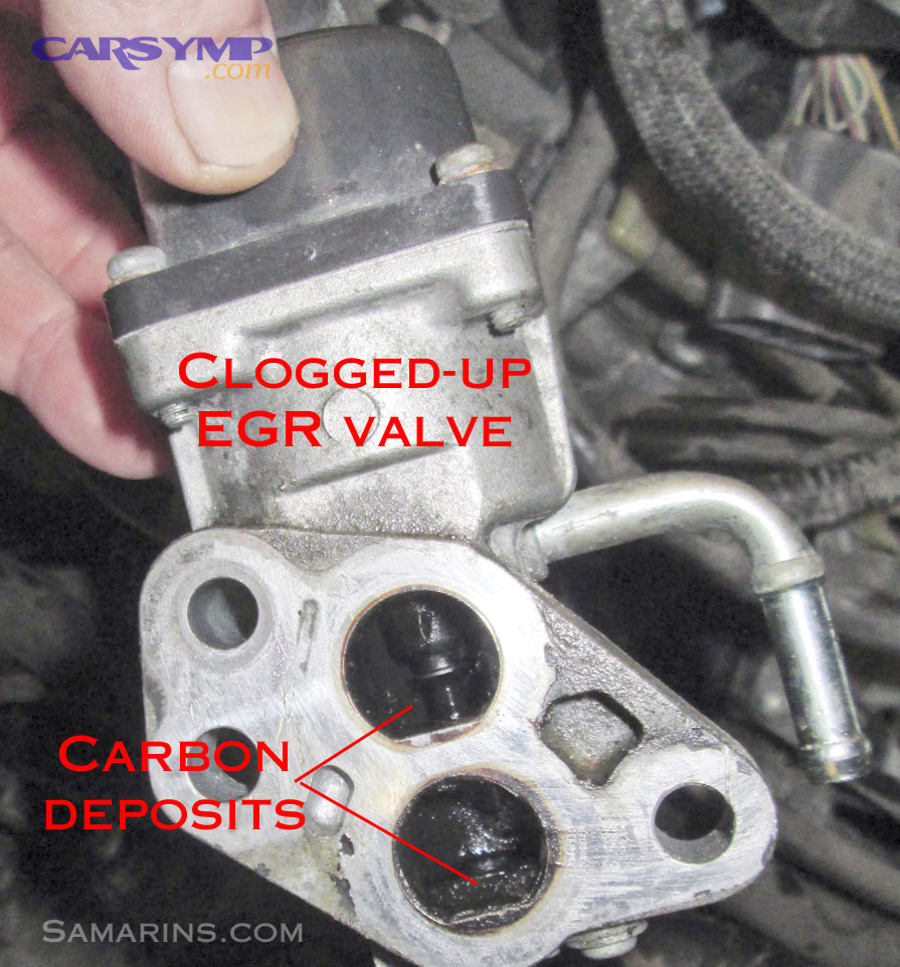
- Remove and inspect for carbon causing sticking
Passage verification (critical for P0401)
- Many P0401 cases come down to blocked ports in the intake manifold or throttle body area.
- If the valve is off, visually inspect ports and clean as needed (see the cleaning procedure section later).
According to a study by Kunming University of Science and Technology from the Yunnan Key Laboratory of Internal Combustion Engine, in 2024, EGR opening impacts NOx and airflow; a valve that can’t move or passages that can’t flow will prevent the ECU from seeing expected changes and set flow faults. [pmc.ncbi.nlm.nih.gov]
How do you diagnose EGR sensor/feedback issues (DPFE, position sensor, temperature)?
You diagnose EGR feedback issues by checking power, ground, and signal integrity, and confirming that the feedback signal changes sensibly when EGR is commanded.
EGR position sensor
- Compare commanded position vs actual position
- If actual is stuck at 0% or 100%, verify:
- 5V reference
- ground integrity
- signal wire continuity
- For P0405/P0406 (low/high), suspect short-to-ground or short-to-power patterns
DPFE (differential pressure feedback)
- DPFE estimates flow by pressure delta across an orifice
- A failed DPFE can falsely suggest insufficient/excessive flow, creating misleading P0401/P0402 patterns on some platforms [innova.com]
EGR temperature sensor
- Some systems infer EGR flow by intake/exhaust temperature change when EGR is active
- Check sensor plausibility (not stuck, not open/short)
According to a study by Kunming University of Science and Technology from the Yunnan Key Laboratory of Internal Combustion Engine, in 2024, EGR opening produced consistent effects; feedback sensors exist to confirm those effects, so implausible sensor signals logically result in P0405–P0409 style codes. [pmc.ncbi.nlm.nih.gov]
How do you avoid common misdiagnoses with EGR codes?
You avoid misdiagnosis by separating what the ECU knows (command + inferred response) from what is actually wrong (flow restriction, valve sticking, wiring, or a lying sensor).
High-value “don’t get tricked” rules:
- Don’t assume P0401 always means “bad EGR valve”—clogged passages are extremely common.
- Don’t assume P0402 always means “replace valve”—sometimes it’s a vacuum control leak holding it open.
- Don’t replace sensors on P0405–P0409 without verifying reference/ground/signal wiring.
- Don’t ignore companion codes: MAF/MAP or misfire codes can change how EGR diagnostics behave.
According to a study by Kunming University of Science and Technology from the Yunnan Key Laboratory of Internal Combustion Engine, in 2024, EGR affects BSFC and NOx in predictable ways; misdiagnosis often happens when the ECU’s expected response is blocked by deposits or confused by bad feedback, not because the valve is always dead. [pmc.ncbi.nlm.nih.gov]
What fixes work for common EGR codes and when should you replace parts?
The most effective fixes for common EGR codes are usually cleaning clogged passages for P0401, restoring valve closure/control for P0402, and repairing wiring/sensor signals for P0405–P0409, with replacement reserved for failed components you can’t verify as functional. [edmunds.com]
Then, the goal is to match the fix to the failure mode—not to the word “EGR” on the scan tool.
Which fixes solve P0400/P0401 “insufficient flow” most often?
P0400/P0401 is most often solved by restoring actual flow, which usually means:
- Cleaning carbon from EGR ports/passages in the intake/manifold
- Cleaning the EGR valve pintle/seat if sticky
- Replacing cracked vacuum hoses or a failed vacuum solenoid (on vacuum systems)
- Replacing/repairing a failed DPFE/feedback component if it falsely reports no flow [edmunds.com]
Practical priority order:
- Confirm the valve can open (command test or vacuum pump)
- If it opens, confirm the engine/sensors react
- If no reaction, suspect restriction first
According to a study by Kunming University of Science and Technology from the Yunnan Key Laboratory of Internal Combustion Engine, in 2024, increasing EGR opening reduced NOx; if flow can’t physically occur due to clogged passages, the ECU won’t observe expected changes and will flag insufficient flow. [pmc.ncbi.nlm.nih.gov]
Which fixes solve P0402 “excessive flow” most often?
P0402 is most often solved by stopping unintended EGR, commonly by:
- Cleaning or replacing a valve that is stuck open due to carbon
- Fixing a vacuum routing problem or solenoid that “leaks vacuum” and holds the valve open
- Repairing a control circuit issue that commands open when it shouldn’t
If P0402 comes with rough idle/stalling, focus on “does the valve fully close and seal?” because even a slightly open EGR can act like a massive internal leak at idle.
According to a study by Kunming University of Science and Technology from the Yunnan Key Laboratory of Internal Combustion Engine, in 2024, higher EGR opening shifted air/fuel conditions; unintended EGR at idle can plausibly destabilize combustion and trigger drivability complaints alongside P0402. [pmc.ncbi.nlm.nih.gov]
What’s the typical EGR repair cost estimate for common fixes?
A typical EGR repair cost estimate varies widely, but many drivers see costs in a spectrum ranging from cleaning/labor-only fixes to full component replacement; for example, RepairPal lists an average EGR valve replacement total between $444 and $597 (parts + labor) in its estimator. [repairpal.com]
To make this actionable, here’s what the cost usually tracks:
- Cleaning/diagnosis only: depends heavily on labor time and accessibility
- EGR valve replacement: parts cost varies by design (simple vacuum valve vs integrated electronic unit)
- Sensor replacement (position/DPFE/temp): typically lower parts cost than the valve, but diagnostics matter more than the part price [repairpal.com]
If you’re budgeting, ask for an itemized EGR repair plan and request that the shop show you the tests that confirmed the part failed before approving replacement.
According to a study by Kunming University of Science and Technology from the Yunnan Key Laboratory of Internal Combustion Engine, in 2024, EGR changes alter fuel consumption metrics; correct EGR function is tightly tied to calibration outcomes, which is why accurate diagnosis can save significant unnecessary parts cost. [pmc.ncbi.nlm.nih.gov]
When should you replace the EGR valve vs clean it?
You should replace the EGR valve when it fails an actuation/sealing test (won’t move, won’t hold vacuum, position feedback is wrong, pintle is damaged) and you should clean it when it is functionally intact but carbon-restricted.
Decision rules that hold up well:
- Clean first if:
- Valve moves normally but is dirty
- Passages are visibly clogged
- Code is P0401 and you confirmed restricted flow
- Replace if:
- Valve is mechanically stuck or electrically dead
- The position signal is invalid and wiring checks out
- The valve won’t seal closed (repeat P0402 + idle issues)
If you need wording for a shop conversation: request an “EGR repair cost estimate” that separates diagnosis time, cleaning time, and replacement parts so you can see what you’re paying for.
According to a study by Kunming University of Science and Technology from the Yunnan Key Laboratory of Internal Combustion Engine, in 2024, EGR opening created predictable NOx/airflow changes; if your valve can’t reliably produce those changes, replacement becomes more rational than repeated cleaning. [pmc.ncbi.nlm.nih.gov]
How do you complete an EGR clogged passages cleaning procedure safely?
An EGR clogged passages cleaning procedure is safest when done in 6 steps—cool engine, remove access components, protect openings, loosen carbon mechanically, dissolve deposits with appropriate cleaner, then reassemble and verify flow—because the main risk is sending debris into the intake or damaging sensors.
Then, follow a controlled approach:
- Let the engine cool fully (hot exhaust parts can burn you fast).
- Disconnect battery if you’ll unplug major connectors near the valve.
- Remove the EGR valve (and related tubes/ducting as needed).
- Block intake openings with clean shop towels to prevent carbon chunks from falling in.
- Clean deposits:
- Use nylon/soft brushes and picks carefully on metal passages
- Use throttle body/EGR-safe cleaner as appropriate (avoid overspray into electronics)
- Reassemble with new gaskets if required, clear codes, and confirm with a command test.
If you want a visual walkthrough, this video demonstrates a typical EGR cleaning process (always adapt steps to your exact engine layout):
According to a study by Kunming University of Science and Technology from the Yunnan Key Laboratory of Internal Combustion Engine, in 2024, increased EGR opening reduced NOx; restoring flow by removing carbon restrictions is a direct way to restore expected EGR behavior without unnecessary part replacement. [pmc.ncbi.nlm.nih.gov]
Is it safe to drive with an EGR code and when should you stop driving?
No—while some EGR codes are safe to drive short-term, it’s not universally safe, and you should judge it based on drivability severity, overheating risk, and whether the valve may be stuck open (which can cause stalling). [autozone.com]
Then, treat “safe to drive” as a risk decision, not a generic yes/no.
Is it okay to keep driving with P0401 or P0402?
No, it’s not always okay: you can often drive briefly with P0401 if the engine runs normally, but P0402 can become unsafe if it causes stalling or severe hesitation—especially in traffic. [edmunds.com]
A practical rule set:
- Often tolerable short-term: P0401 with normal temperature, normal idle, no knock, no power loss
- Often not tolerable: P0402 with rough idle, frequent stalls, or dangerous hesitation
Also consider emissions inspection: even if it “drives fine,” you may fail readiness/OBD checks until repaired.
According to a study by Kunming University of Science and Technology from the Yunnan Key Laboratory of Internal Combustion Engine, in 2024, EGR affects combustion conditions measurably; driving with incorrect EGR can push operation outside the intended calibration window, increasing risk of secondary issues. [pmc.ncbi.nlm.nih.gov]
When can an EGR code cause engine damage or overheating?
An EGR code can contribute to engine stress when it leads to persistent knock/detonation, abnormal combustion temperatures, or drivability events that cause repeated stalls or lean/rich swings.
Scenarios with higher risk:
- Spark knock/pinging under load that persists (stop hard acceleration)
- Repeated overheating or cooling system strain (especially if multiple related codes exist)
- Severe stumbling that could cause unsafe operation
Note: EGR isn’t typically the sole cause of overheating, but wrong combustion conditions can increase thermal load, and on some engines EGR-related deposits and airflow issues can cascade into broader problems.
According to a study by Kunming University of Science and Technology from the Yunnan Key Laboratory of Internal Combustion Engine, in 2024, EGR opening reduced NOx by lowering combustion temperatures; if EGR is absent when required, peak temperatures can rise and increase NOx formation—one reason manufacturers treat EGR faults as important. [pmc.ncbi.nlm.nih.gov]
When should you stop driving and tow the car?
You should stop driving and tow the car when the EGR problem causes stalling, dangerous loss of power, flashing misfire warnings, overheating, or severe hesitation that makes the vehicle unpredictable.
Immediate stop/tow triggers:
- Engine stalls repeatedly at intersections
- Temperature gauge climbs abnormally or warning lights indicate overheating
- The car cannot maintain speed safely
- The check engine light is accompanied by severe shaking (possible misfire damage risk)
If you’re uncertain, err toward safety: a tow can be cheaper than a secondary failure caused by continuing to drive a car that’s running unstable.
According to a study by Kunming University of Science and Technology from the Yunnan Key Laboratory of Internal Combustion Engine, in 2024, EGR directly changes combustion conditions and fuel consumption metrics; when EGR faults create unstable operation, the safest choice is to prevent compounding stress by stopping the drive. [pmc.ncbi.nlm.nih.gov]
What complicates EGR diagnosis across different engines and rare edge cases?
EGR diagnosis gets complicated because EGR hardware and monitoring strategies differ across diesel vs gasoline, some diesels integrate EGR with aftertreatment systems, and rare airflow/exhaust restrictions can mimic EGR faults even when the valve is fine. [dieselnet.com]
Then, use these “edge-case lenses” when your tests don’t line up with the expected result.
How do diesel vs gasoline EGR systems change the diagnosis?
Diesel EGR is often more aggressive, frequently cooled, and tightly coordinated with turbo and emissions aftertreatment, while gasoline EGR may be simpler but still heavily deposit-prone depending on design and duty cycle. [dieselnet.com]
What changes for diagnosis:
- Diesels may show EGR issues alongside DPF/SCR concerns
- Gas engines may show drivability sensitivity (idle/part-throttle stability)
- Monitoring signals differ (some diesels use different inferred flow models)
According to a study by Kunming University of Science and Technology from the Yunnan Key Laboratory of Internal Combustion Engine, in 2024, coordinating EGR with aftertreatment influenced NOx and cost trade-offs—highlighting why diesel EGR diagnosis often spans multiple subsystems. [pmc.ncbi.nlm.nih.gov]
What role do EGR coolers and DPF/SCR systems play in newer diesels?
EGR coolers reduce EGR gas temperature (improving NOx control potential), while DPF/SCR handle particulates and downstream NOx conversion—so the engine may use EGR differently depending on aftertreatment state and regeneration needs. [pmc.ncbi.nlm.nih.gov]
This matters because:
- Some strategies reduce or alter EGR during certain regen events
- A restricted cooler or related plumbing can alter actual flow
- Combined systems create “stacked” symptoms (one fault can distort another system’s readings)
According to a study by Kunming University of Science and Technology from the Yunnan Key Laboratory of Internal Combustion Engine, in 2024, coordinated EGR + SCR control approached near-zero NOx under certain settings—showing why modern diesel EGR is rarely isolated from aftertreatment logic. [pmc.ncbi.nlm.nih.gov]
Can software updates or carbon buildup patterns create “ghost” EGR codes?
Yes—software calibrations can tighten thresholds, and carbon can build in ways that intermittently block ports, creating “passes test today, fails tomorrow” behavior that looks like a ghost fault.
Common causes of “ghost-like” EGR codes:
- Intermittent connector contact (heat/vibration)
- Port restriction that only manifests at certain load/RPM
- Valve that sticks only when hot
- Updated calibrations that more strictly compare commanded vs inferred flow
According to a study by Kunming University of Science and Technology from the Yunnan Key Laboratory of Internal Combustion Engine, in 2024, EGR effects scale with operating conditions; if deposits only restrict flow in specific conditions, the ECU may flag faults intermittently—exactly the “ghost code” experience drivers report. [pmc.ncbi.nlm.nih.gov]
What rare issues mimic EGR codes (vacuum leaks, MAP/MAF errors, clogged cats)?
Rarely, EGR codes can be “collateral damage” from problems that distort airflow/exhaust behavior:
- Vacuum leaks (can affect inferred EGR flow)
- MAP/MAF sensor drift (can confuse modeled flow)
- Exhaust restrictions (including clogged catalysts) that change pressure relationships
- Intake manifold runner or throttle body deposit patterns that mimic EGR restriction symptoms
Use this checkpoint: if the valve moves, passages are clear, and the feedback circuits are healthy—but the ECU still claims flow mismatch—expand the scope to air metering and exhaust backpressure checks.
According to a study by Kunming University of Science and Technology from the Yunnan Key Laboratory of Internal Combustion Engine, in 2024, EGR’s measurable impact depends on correct airflow modeling; when airflow sensing or exhaust flow is distorted, the ECU’s EGR plausibility checks can be misled and set EGR-related DTCs. [pmc.ncbi.nlm.nih.gov]