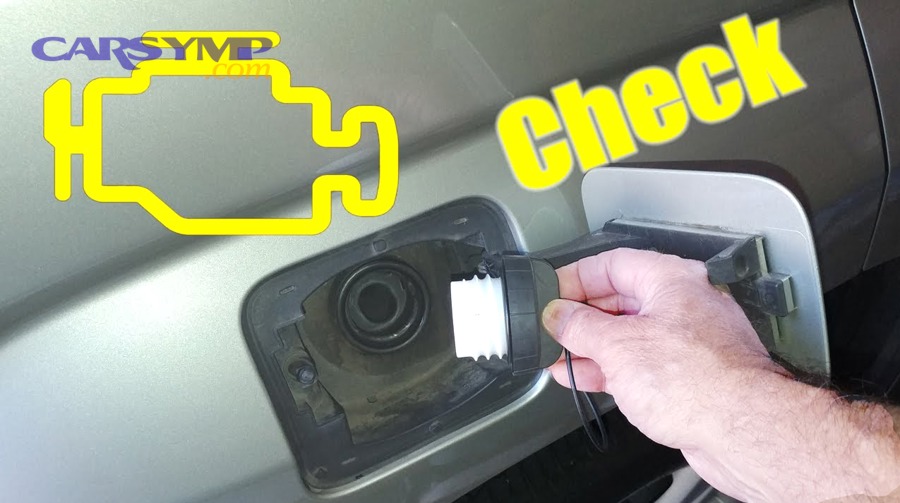
A gas cap (fuel cap) fix is often the fastest way to stop an EVAP leak and clear a check-engine light—because the cap is the EVAP system’s first sealing point and a loose or failing seal can trigger leak detection. The goal of this guide is simple: test the cap correctly, replace it only when the evidence supports it, and confirm the repair without guessing.
Next, you’ll learn what the gas cap actually does inside the EVAP system, what symptoms truly point to the cap (and which ones don’t), and how to avoid the common trap of replacing caps repeatedly when the real leak is elsewhere.
Then, you’ll get practical, home-friendly testing steps—from the “click test” to seal inspection to what a proper pressure/vac test proves—plus a clear “replace vs continue diagnosing” checklist that saves time and money.
Introduce a new idea: once the cap is confirmed good (or replaced), the fastest path to a lasting fix is knowing how EVAP monitors validate repairs and what to inspect next if the code returns—so you can treat this like a repeatable process, not a gamble.
What does a gas cap (fuel cap) actually do in the EVAP system?
A gas cap is a sealing closure that locks fuel vapors inside the tank/filler neck so the EVAP system can store and purge vapors instead of venting them to the atmosphere. More importantly, the “gas cap seal” is the starting point of EVAP integrity—so a small weakness here can look like a system-wide leak; therefore, understanding its role prevents misdiagnosis.
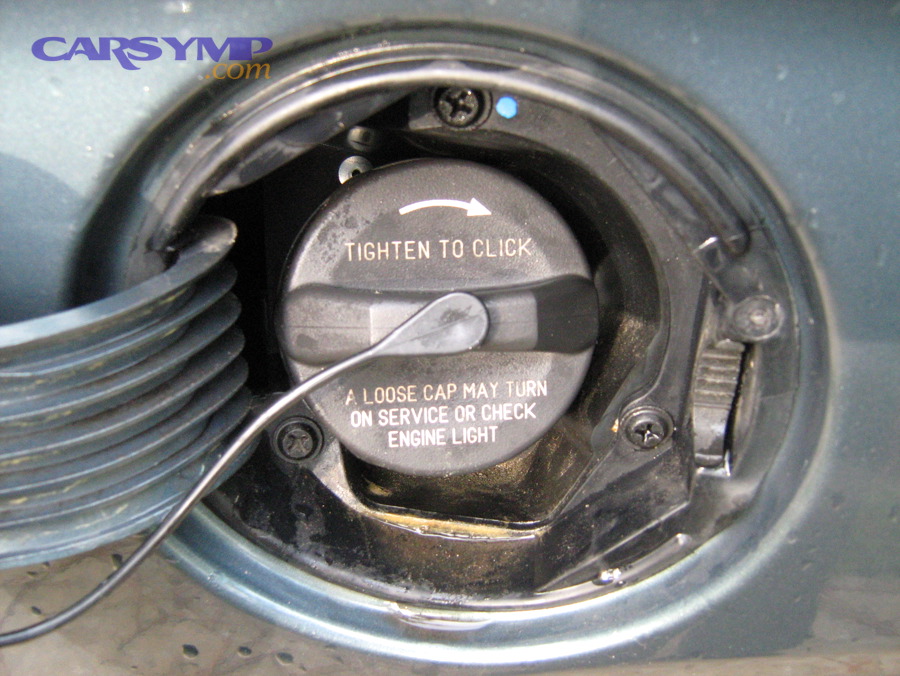
How the gas cap fits into EVAP, in plain English
Gasoline constantly produces vapor. Without EVAP controls, that vapor would escape from the tank and fuel system connections. The EVAP system is designed to capture those vapors (typically in a charcoal canister) and later burn them in the engine under controlled conditions.
The gas cap (fuel cap) supports that mission in three practical ways:
- It seals the filler neck opening. The rubber gasket (or molded seal) is the barrier that must hold pressure or vacuum during EVAP leak checks.
- It provides repeatable tightening. Many caps use a ratcheting mechanism so “tight enough” is consistent.
- It prevents false leak detection. EVAP self-tests assume the filler opening is sealed; if it’s not, the system can’t hold vacuum/pressure and the ECU flags a leak.
Why a “loose cap” can trigger a check-engine light
Many vehicles run EVAP leak checks by creating a small vacuum (or pressure) in the tank and watching whether it holds. If the cap is loose or the seal is compromised, the system won’t hold that vacuum—so the ECU reports a leak code and turns on the light.
This isn’t just theoretical. In a large field measurement study led by the University of Michigan School of Public Health, researchers measured fuel-cap hydrocarbon emissions across hundreds of tests and found that emissions rise substantially with loose caps, high temperature, and vehicle age/mileage. (researchgate.net)
Is your check-engine light or EVAP leak code likely caused by the gas cap?
Yes—your check-engine light or EVAP leak code is likely caused by the gas cap if (1) the issue started right after refueling, (2) the cap does not tighten/ratchet correctly, and (3) the seal or filler neck surface shows obvious sealing problems. To connect symptoms to a real diagnosis, start with timing and sealing behavior before you chase hoses and valves.
Did the problem start right after refueling or after leaving the cap loose?
If the check-engine light appears within a day or two after refueling, the gas cap becomes the top suspect because refueling is the most common moment the cap is left loose or cross-threaded. Then, the EVAP monitor runs later (not instantly at the pump), detects that the system won’t hold a vacuum/pressure target, and logs a leak fault.
What makes this “yes” more convincing:
- You remember hearing fewer “clicks” than normal or rushing the cap.
- The cap feels tight but spins oddly (stripped threads or broken ratchet).
- You see a “tighten fuel cap” message (on vehicles that support it).
What makes this “no” more likely:
- The code appeared without any recent refueling event.
- The light returns even after you carefully tighten until it clicks.
- You have drivability symptoms (hard starting after fueling, rough idle) that point beyond the cap.
Does the cap “click” and ratchet correctly when tightened?
If the cap does not click/ratchet consistently, treat it as a strong replacement candidate because the ratchet is there to ensure repeatable sealing torque. However, the click test is a screening test, not a final verdict; it confirms tightening behavior, not the gasket’s ability to seal under vacuum.
Quick interpretation guide:
- Clicks clearly and stops tightening → likely normal torque-limiting function.
- Never clicks / keeps spinning → ratchet may be broken; sealing torque is unreliable.
- Clicks but feels “gritty” → contamination or damaged threads can prevent full seating.
Are there visible signs the seal is failing (cracks, flattening, dirt, swelling)?
If the gasket is cracked, flattened, hardened, or contaminated, the cap is likely the cause because EVAP leak checks are sensitive to tiny seal gaps. Besides, a small defect at the gasket edge behaves like a “pin leak” that can repeatedly fail EVAP integrity tests.
Look for these red flags:
- Radial cracks on the rubber seal
- Flat spots where the seal no longer springs back
- Swollen rubber (can happen with chemical exposure)
- Dirt or grit embedded in the sealing lip
- Rust or dents on the filler neck’s sealing surface
How do you test a gas cap at home before replacing it?
Test your gas cap at home using 4 steps—tighten-and-click check, seal/filler inspection, seating/fit verification, and (if available) a pressure/vac tester—so you can confirm sealing problems before buying parts. To keep the process efficient, start with the fastest test that can eliminate the simplest failure mode, then escalate only if needed.
What is the “tighten + click test,” and what does it confirm?
The tighten-and-click test confirms the cap’s torque-limiting mechanism works and that you are reaching the intended seating force. Specifically, it tells you whether the cap can be tightened repeatably; however, it does not guarantee the gasket can seal under EVAP test conditions.
How to do it (reliable version):
- Remove the cap and inspect threads quickly (no debris, no damage).
- Reinstall squarely (avoid cross-threading), turn until snug.
- Continue turning until you hear/feel multiple distinct clicks.
- Attempt one more click sequence—if it never clicks or never stops tightening, note it.
Common mistake: stopping at “snug” without reaching the click point, especially on caps designed to require it.
How do you do a visual + surface inspection of the cap and filler neck?
A visual inspection works when you know exactly what to evaluate: seal elasticity, sealing surface cleanliness, threads, and filler neck damage. For example, a cap can be mechanically “fine” but still leak because the filler neck’s sealing lip has corrosion or a nick that prevents uniform contact.
Use this checklist (cap + neck):
- Seal condition: cracks, hardening, flattening, swelling
- Seal cleanliness: wipe the gasket and the mating surface with a clean cloth
- Thread integrity: look for stripped plastic, metal burrs, or misaligned starts
- Filler neck lip: check for rust flakes, dents, or uneven seating edge
- Cap housing: look for fuel residue in the cap cavity (can affect sealing)
A practical tip: If you wipe the sealing surface and the cap suddenly tightens more smoothly and clicks normally, you may have removed the problem—at least temporarily.
Can you test for vapor leaks without special tools (smell test, smoke clues, symptoms)?
You can do a basic no-tool screening by using symptom clues—fuel smell near the filler area, repeated small-leak codes after refueling, and cap tightness behavior—but you cannot conclusively prove an EVAP seal without a controlled pressure/vac or smoke test. More specifically, “smell” suggests vapor loss but does not identify whether the leak is the cap, filler neck, or another EVAP connection.
No-tool signs that support a cap problem:
- Fuel vapor smell strongest at the filler neck after parking
- Light appears shortly after refueling and then disappears later
- Tightening the cap changes the symptom pattern (light goes off after a few drive cycles)
No-tool signs that point away from the cap:
- Rough idle or hard start after fueling (often purge-related)
- No change after replacing/tightening the cap
- Codes that return under the same conditions even with a new cap
When is a dedicated gas-cap pressure tester worth using (DIY or parts store)?
A dedicated gas-cap tester is worth using when you have recurring EVAP leak codes and the cap visually looks “okay,” because the tester can reveal leaks you can’t see and prevent unnecessary parts swapping. To turn suspicion into certainty, a pass/fail tester result is far stronger than guesswork.
What the tester actually proves:
- Whether the cap holds a specified vacuum/pressure for a short period
- Whether the relief mechanism or gasket leaks under load
Why this matters: In the University of Michigan-led study on fuel-cap emissions, the researchers note that even properly tightened caps can emit hydrocarbons due to diffusion/permeation or seal defects—so a functional check can catch the subset of caps that “look fine” but don’t seal well. (researchgate.net)
When should you replace the gas cap instead of continuing diagnosis?
Yes—you should replace the gas cap instead of continuing diagnosis if (1) the seal is damaged or hardened, (2) the cap won’t click/ratchet reliably, and (3) it fails a cap tester or repeatedly triggers EVAP leak symptoms right after refueling. Then, replacing it becomes the highest-leverage move because it’s fast, cheap compared with deeper EVAP testing, and removes a frequent failure point.
Replace-now checklist (practical and strict)
Replace the cap immediately if any of these are true:
- The gasket is cracked, torn, flattened, or no longer elastic
- The cap never clicks, free-spins, or won’t seat smoothly
- The filler neck lip is fine, but the cap still won’t seal (fails a tester)
- The cap does not match the vehicle application (wrong depth/threads)
- You see fuel residue in the cap’s sealing cavity repeatedly after fueling
Is replacing the cap the correct first fix for “small leak” vs “large leak” EVAP symptoms?
Small leak symptoms are more consistent with a marginal cap seal, while large leak symptoms more often involve an obvious sealing failure (cap left off, cross-threaded, broken seal) or a disconnected hose/vent path. However, a cap can still cause either pattern, so the best approach is to pair the leak type with what you observe physically.
Practical comparison (what usually wins first):
- Small leak pattern: cap gasket aging + slight sealing imperfection + temperature swings
- Large leak pattern: cap missing/very loose + seal torn + filler neck damage + major hose disconnection
Cost logic matters too. As an Emissions repair cost estimate, RepairPal lists an average gas cap replacement range in the low hundreds when done as a shop service (parts/labor can vary by vehicle and pricing). That doesn’t mean you must spend that—DIY often costs far less for the part—but it highlights why confirming the cap early can be a smart decision. (repairpal.com)
How do you choose the correct replacement fuel cap (OEM vs aftermarket)?
OEM wins in fit certainty, aftermarket can be best for budget, and a high-quality aftermarket cap is often optimal when it matches exact application and sealing design—because EVAP systems punish even small fitment errors. To keep the fix durable, prioritize correct fit and sealing performance over branding alone.

Which matters more: exact fitment or brand—what should DIY drivers prioritize?
Exact fitment matters more than brand because the EVAP seal is geometry-sensitive: the cap must seat at the correct depth, compress the gasket correctly, and engage threads without rocking. More specifically, a “close enough” cap can click and still leak if the gasket doesn’t land on the filler neck’s sealing surface evenly.
Fitment-first checklist:
- Match by year/make/model/engine (and sometimes emissions family)
- Confirm cap type: screw-on vs quarter-turn vs capless (no cap)
- Confirm tether style if your vehicle uses it (tether length/location)
- Avoid “universal caps” unless the application explicitly supports them
Are locking caps a good idea, or can they create new problems?
Locking caps can be good for theft deterrence, but they can create new problems if the locking design changes sealing pressure, sits differently, or uses a lower-quality gasket. On the other hand, if the locking cap is application-correct and seals properly, it can work fine—just don’t trade sealing reliability for security.
When locking caps make sense:
- You’ve experienced fuel theft/vandalism
- You can source an application-specific locking cap with a proven seal
When to skip:
- Your vehicle is sensitive to EVAP leak checks
- The cap design looks different from OEM in sealing surface/gasket profile
After replacement, how do you confirm the fix and prevent the code from returning?
Confirm the fix using 3 factors—proper cap seating, code/monitor verification, and repeat-condition testing—so you know the EVAP system can pass its self-test and the leak won’t reappear. Then, prevention is about repeating the same sealing habit every refuel and recognizing when the issue is not the cap.
Should you clear the check-engine light, or wait for it to reset naturally?
Clearing the light is best when you need a clean verification run, waiting is best when you want the ECU to confirm stability over time, and scanning is optimal when you need to confirm readiness for an emissions retest. However, clearing codes can reset monitors, which matters if you’re aiming for an emissions test failure fix right before inspection.
Comparison (what to choose and why):
- Clear now (best for diagnosis): you can see if the code returns quickly under the same conditions.
- Wait (best for “real world proof”): you avoid resetting readiness and let the system re-check normally.
- Scan readiness (best for emissions planning): you confirm monitors are set before showing up for a test.
How long does it take for EVAP to run again and confirm the repair?
EVAP readiness often takes a few days of mixed driving to complete, and some vehicles need specific conditions like fuel level range and steady cruising before the monitor runs. To avoid confusion, remember: “no check-engine light” does not always mean “EVAP monitor ready.”
A practical guideline from OBD readiness education sources is that normal mixed city/highway driving over several days often sets monitors, but manufacturer-specific cycles can vary. (obdautodoctor.com)
What do you do if the code returns after a “new” gas cap?
If the code returns after replacing the cap, treat it as a system diagnosis problem rather than buying another cap, because repeating the same part swap rarely fixes leaks in hoses, valves, or the canister. More importantly, this is the moment to separate “cap seal failure” from “EVAP flow/control failure.”
A fast re-check sequence:
- Confirm the new cap is the correct part (application match).
- Confirm the filler neck sealing lip is clean and undamaged.
- Confirm the cap clicks and seats consistently.
- Read the exact code and freeze-frame info if available.
- Move to EVAP component checks (next section) if the basics pass.
If the gas cap is fine, what should you check next in the EVAP system?
There are 6 common EVAP leak causes beyond the gas cap: purge valve, vent valve, charcoal canister, EVAP hoses/lines, filler neck leaks, and electrical/command issues—so you can troubleshoot systematically instead of chasing random parts. Then, the fastest diagnostic wins come from matching symptoms to the most likely component.
Which EVAP parts fail most often after the gas cap, and what are the telltale signs?
The most common next suspects are the purge valve and vent valve because they directly control vapor flow and sealing during leak tests, and failures can mimic a cap leak. Specifically, a stuck purge valve can pull vapors at the wrong time (causing drivability issues), while a vent valve problem can prevent the system from sealing or venting correctly during tests.
Grouping: common failures and what you’ll notice
- Purge valve stuck open: rough idle, hard start after refueling, fuel smell, recurring EVAP codes
- Vent valve stuck open/closed: repeated leak codes, trouble completing EVAP monitor, sometimes no drivability symptoms
- Cracked EVAP hose/line: intermittent codes, worse with temperature changes, sometimes audible hiss near lines
- Charcoal canister saturation/damage: fuel smell, refueling issues, recurring EVAP problems
- Filler neck leak/rust: persistent vapor smell near filler area, cap replacements don’t help
If you need a cost reality check, KBB lists purge valve replacement as a few hundred dollars on average, depending on the vehicle and labor access. That’s why confirming the cap first is smart—it’s the cheapest, quickest elimination step. (kbb.com)
What’s the difference between a purge valve problem and a vent valve problem?
Purge valve problems tend to create drivability symptoms, vent valve problems tend to create readiness and leak-test failures, and hose/canister issues often create persistent leak codes without a clear “after fueling” pattern. Meanwhile, this difference becomes your shortcut: if the car runs poorly after refueling, look purge-first; if it runs fine but won’t set EVAP readiness, look vent/leak-path next.
Comparison table (what typically separates them)
Below is a quick diagnostic table that helps you map symptoms to the likely fault path.
| Symptom pattern | Purge valve more likely | Vent valve/leak path more likely |
|---|---|---|
| Rough idle / stalling after fueling | ✅ | ❌ |
| Hard start after fueling | ✅ | ❌ |
| EVAP monitor won’t complete | Sometimes | ✅ |
| No drivability issues, recurring leak code | Possible | ✅ |
| Strong fuel smell near canister area | Possible | ✅ |
Where “tune-up” fits: When a tune-up helps pass emissions is usually when the failure is not EVAP but combustion quality—like worn plugs causing incomplete burn, elevated hydrocarbons, or unstable fuel trims. That’s different from a cap leak, but it becomes relevant if your emissions test failure fix includes HC/CO issues rather than EVAP readiness.
How does a gas cap issue affect emissions testing and readiness monitors ?
A gas cap issue can fail emissions testing by keeping the EVAP monitor “not ready” or by triggering a stored EVAP code, while “no EVAP problem” means the system seals, the monitor completes, and the ECU reports readiness without pending faults. More importantly, passing emissions is about two outcomes—no faults and readiness complete—not just “the light is off.”
Why can the check-engine light be off but the EVAP monitor still not be “ready”?
The check-engine light can be off while EVAP is not ready because readiness depends on the monitor running and passing under the right conditions, which may not happen immediately after repairs or code clearing. Specifically, EVAP tests often require a certain fuel level range, steady driving, and temperature conditions before the vehicle attempts the self-test.
What fuel level and driving conditions help EVAP complete after replacing the cap?
There are 4 practical conditions that usually help EVAP complete—moderate fuel level, mixed driving, steady cruise time, and a cool-down period—because EVAP tests need stable operating windows. To better understand the pattern, think of EVAP as a “scheduled exam” your car takes only when the conditions are right.
Grouping: common helpful conditions
- Fuel level not near empty and not completely full (many vehicles prefer mid-range)
- Several steady-cruise segments (highway speed, stable throttle)
- Some city driving (stop/start and idle periods)
- An overnight cool-down (some tests run after a cold start)
What rare situations make a new cap fail again (damaged filler neck lip, wrong cap type, capless systems)?
A new cap can “fail” again when the real sealing surface is damaged, when the cap is the wrong design for the vehicle, or when the vehicle uses a capless system where the issue is the internal door/seal—not the cap. However, these rare situations are exactly why repeated cap replacements are a warning sign: the system is telling you the leak is elsewhere.
Rare but real pitfalls
- Filler neck corrosion where the gasket lands (seal can’t seat evenly)
- Wrong venting/pressure behavior for a specific EVAP strategy
- Capless filler door seal contamination (dirt prevents full closure)
- Temperature-driven seal behavior (marginal gasket in cold weather)
When should you stop DIY and request a smoke test or professional EVAP diagnosis?
Yes—you should stop DIY and request a smoke test if (1) a correct cap doesn’t change the problem, (2) the same EVAP code returns repeatedly, and (3) the vehicle cannot complete EVAP readiness after several days of normal driving. In addition, professional diagnosis is the fastest path when you’re balancing time, inspection deadlines, and uncertainty.
A final emissions reality check: combustion issues can also derail testing. Michigan State University’s Automotive Research Experiment Station notes that when engines are mistuned, measurements can show very large increases in unburned hydrocarbons—highlighting why Misfire and fuel trim causes of emissions failure can matter as much as EVAP integrity in some cases. (egr.msu.edu)
Evidence
According to a study by University of Michigan from the School of Public Health, in 2005, fuel-cap hydrocarbon emissions averaged 2.0 mg/hour (median 0.5 mg/hour) across extensive in-use testing, and the highest emitters reached 62.7 mg/hour, with emissions increasing substantially when caps were loose, in hot weather, and with vehicle age/mileage. (researchgate.net)