


If you failed a smog test, the fastest way to pass the emissions retest legally is to treat the failure like a compliance checklist: confirm the failure type, fix the underlying cause, verify readiness monitors, keep the right paperwork, then retest with zero “last-minute resets” that trigger rejection.
Next, you’ll learn what an emissions retest (re-inspection) actually checks—OBD-II readiness, tailpipe numbers, or both—so you can stop guessing and start preparing for the exact standard your vehicle must meet.
Then, you’ll follow a legal, step-by-step “after a failed test” path that covers diagnosis, repairs, readiness monitor completion, and retest-day prep, including practical items like Gas cap test and replacement guidance and common failure patterns such as Misfire and fuel trim causes of emissions failure.
Introduce a new idea: once the core compliance checklist is handled, you can reduce repeat failures by understanding waiver/exception paths, referee inspections, and how aftermarket parts or ECU tunes can change what “legal” looks like in your state program.
What is an “emissions retest” (re-inspection) and when do you need one?
An emissions retest is a repeat emissions inspection required after a failed or incomplete test, typically triggered by OBD-II faults, incomplete readiness monitors, or out-of-spec tailpipe results, so the program can verify your vehicle meets the same emissions standard again.
To better understand how to prepare for the retest, you first need to know what your station measures and why the prior result failed, because the “fix” depends on whether you had an OBD-based failure, a tailpipe failure, or a test rejection.

What does an emissions retest verify—tailpipe, OBD-II readiness, or both?
Most emissions retests verify the same things as the original test, which usually means one of three setups:
- OBD-II only (common for many 1996+ gasoline vehicles): the station checks the check-engine light status, stored/pending diagnostic trouble codes, and readiness monitors.
- Tailpipe/opacity test (common in some regions or for certain vehicle classes): the station measures exhaust pollutants directly.
- Hybrid (OBD + visual/tailpipe in some programs): the station checks both the onboard system and exhaust results.
The key practical takeaway is simple: a retest is not a “different test” you can outsmart. It’s a re-measurement under the same rules—so legal preparation always means making the vehicle genuinely compliant, not “temporarily quiet.”
Do you legally have to repair the vehicle before retesting?
No, you don’t legally have to repair before you retest—but you do have to pass the emissions retest, and repairs are the lawful way to make that happen for three reasons: (1) the same failure condition usually persists, (2) clearing codes without fixing resets readiness and can trigger rejection, and (3) repeat failures waste time and fees.
Specifically, retesting immediately can only work if the original failure was caused by a fixable non-repair issue (for example, a loose fuel cap that you tighten correctly, or monitors that were simply not ready). Otherwise, a true emissions test failure fix means diagnosis + repair + verification.
Which failure results typically require a retest (fail, rejected, not ready, aborted)?
There are 4 common retest-triggering results based on the criterion “did the station obtain valid compliance data?”
- Fail — Valid test completed, vehicle did not meet criteria (codes present, emissions high, or monitors not acceptable).
- Rejected / Not Ready — Test could not be completed because readiness monitors weren’t set (often after code clearing or battery disconnect). (dmv.ny.gov)
- Aborted / Incomplete — Equipment/communication issue, safety interruption, or test procedure could not finish.
- Tamper/Visual fail (where applicable) — Missing/modified emissions equipment or non-compliant parts can block a pass even if codes are clear.
Once you identify which bucket you’re in, your next steps become obvious: repair and verify for “Fail,” drive-cycle and verify readiness for “Rejected/Not Ready,” or resolve the equipment/procedure issue for “Aborted.”
What does “prepare legally” mean for a smog retest?
“Prepare legally” means you use real compliance actions—diagnosis, correct repair, readiness verification, and truthful documentation—while avoiding actions that manipulate the test outcome without fixing the underlying emissions issue (like last-minute code clearing that resets readiness).
Next, it helps to separate “legal but unhelpful” actions from “illegal” actions, because many retest headaches come from a gray-area misunderstanding: drivers clear codes thinking it’s a fix, then get rejected for not-ready monitors.
Is it legal to clear the check-engine light before a retest?
Yes, it’s legal to clear the check-engine light, but it’s usually a bad retest strategy for three reasons: (1) clearing codes often resets readiness monitors to “not ready,” (2) many programs reject tests when monitors are unset, and (3) it can hide the clue you need to perform the correct repair. (dmv.ny.gov)
More importantly, legality isn’t the goal—passing legally is. If you clear codes as part of a verified repair, you still must drive enough for monitors to complete and confirm there are no returning pending codes.
What actions cross the line into illegal “cheating” on an emissions retest?
There are 6 common categories of illegal or non-compliant behavior, grouped by the criterion “does it misrepresent emissions compliance?”
- Defeat devices/tampering: deleting emissions systems in software, removing catalysts, disabling monitoring.
- Falsified documentation: fake receipts or “paper repairs.”
- Proxy testing: testing a different vehicle under your registration.
- Clean-scan/illegal certification: paying for a pass without a real test outcome.
- Non-compliant aftermarket parts: installing parts that are not allowed in your jurisdiction where approvals are required.
- Last-minute manipulation: repeated code clearing to temporarily suppress a light without repair (often ends in “not ready”).
If you’re unsure whether something is compliant, the safest legal heuristic is: If it reduces emissions or restores factory compliance, it’s likely legal; if it only reduces the chance of detection, it isn’t.
How is legal retest preparation different from quick “pass hacks”?
Legal prep wins on durability, while “pass hacks” gamble on timing.
- Legal prep is best for: long-term compliance, registration stability, avoiding repeat fees, and preventing catalyst damage from unresolved misfires.
- Pass hacks are best for: almost nothing—because the retest system is designed to catch short-term tricks through readiness status and ongoing monitoring.
A driver who prepares legally focuses on root cause + verification, not on “getting lucky.”
What’s the legal step-by-step checklist to pass your emissions retest?
The best legal method is a 7-step retest checklist—(1) interpret the failure result, (2) scan codes and freeze-frame data, (3) diagnose the root cause, (4) perform the correct repair, (5) verify no returning codes, (6) complete readiness monitors, and (7) retest with a warm, stable vehicle.
Below, that checklist gets practical, because “do a repair” is not a strategy unless you choose the right repair for the right failure type.
What should you do first after failing—read codes, read the report, or book a shop?
Read the report first, then scan codes, then decide whether to book a shop—because the report tells you whether you failed for codes, readiness, or tailpipe numbers, and that single detail determines your fastest path to a legal pass.
Here’s the practical order that prevents wasted money:
- Read your Vehicle Inspection Report (VIR): identify “Fail” vs “Rejected/Not Ready.”
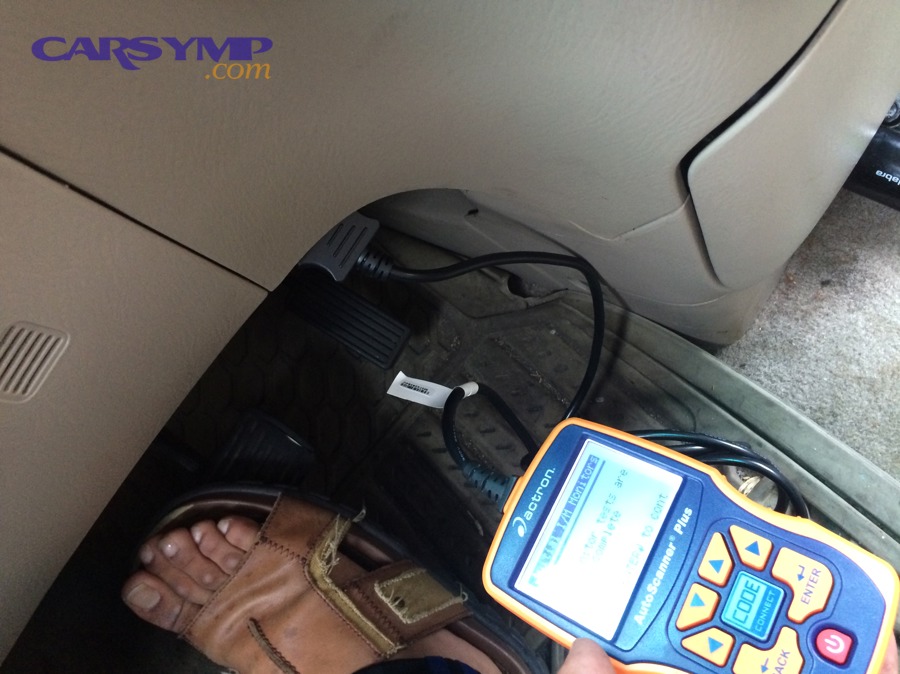
- Scan with an OBD-II tool: capture stored codes, pending codes, and readiness status.
- Match the failure type to the repair approach:
- If Not Ready: your first job is drive-cycle completion, not part replacement.
- If Codes present: your first job is diagnosis to avoid guesswork.
- If Tailpipe high: you need a combustion/control diagnosis (fuel, ignition, catalyst efficiency, leaks).
If you book a shop too early without this clarity, you risk paying for a “general tune-up” when the real issue is an EVAP leak or a catalyst monitor that won’t set.
Which repairs are “high-impact” for common emissions failures?
There are 5 high-impact repair groups based on the criterion “which system directly causes emissions test failures”:
- EVAP leaks (fuel vapor control)
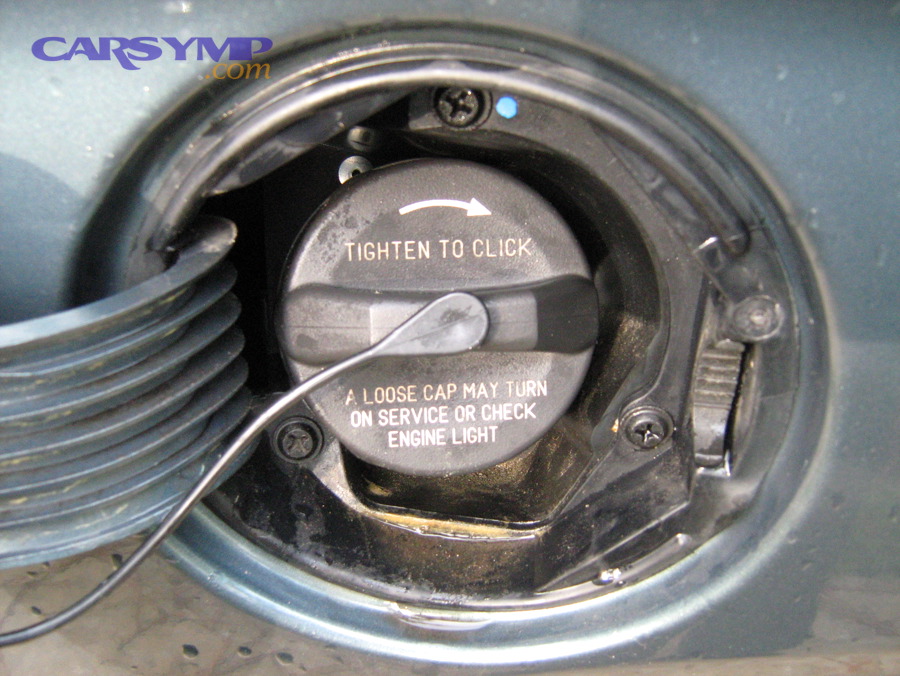
- Loose/damaged gas cap
- Cracked hoses, purge valve issues, vent valve issues
- Charcoal canister problems
This is where Gas cap test and replacement guidance matters most, because a simple cap problem can trigger EVAP codes like small/large leak.
- Ignition/misfire faults
- Worn spark plugs/coils
- Vacuum leaks causing lean misfire
- Injector issues
Misfires can cause high hydrocarbon emissions and can overheat or damage the catalyst if ignored.
- Fuel control and trims (air/fuel balance)
- MAF sensor issues, intake leaks
- Fuel pressure problems
- O2/A/F sensor faults
This is the heart of Misfire and fuel trim causes of emissions failure: wrong mixture drives CO/HC/NOx failures and can also create catalyst efficiency codes downstream.
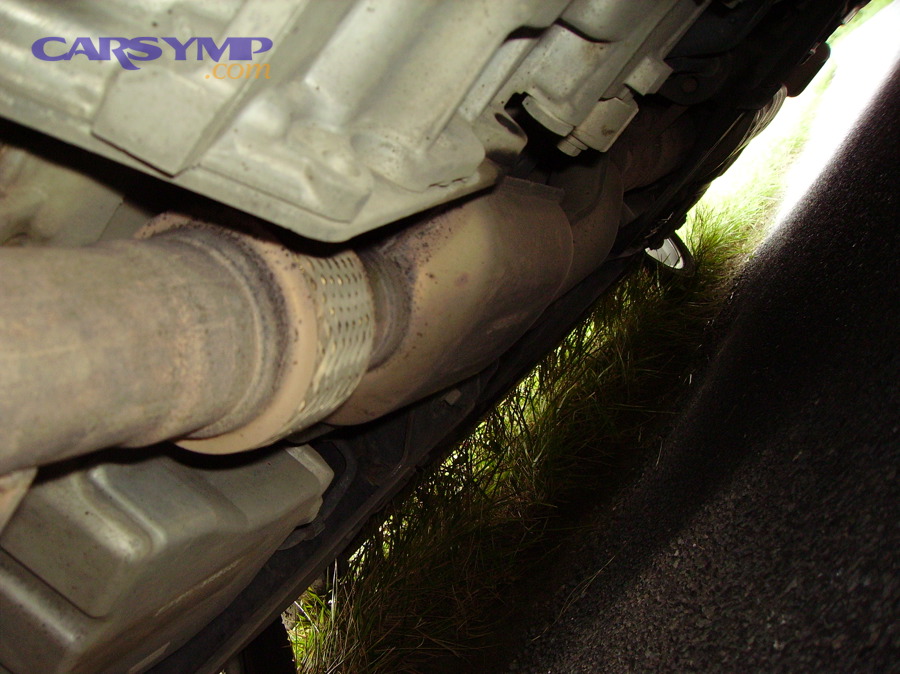
- Catalyst efficiency issues
- Catalyst degraded from age, contamination, or misfire damage
- Exhaust leaks near sensors
- Incorrect upstream sensor data
A real catalyst issue usually requires replacing the converter with a compliant unit; quick fixes rarely hold.
- EGR/secondary air and related emissions subsystems (where equipped)
- EGR flow faults raise NOx
- Secondary air issues affect cold-start emissions control on some vehicles
The core rule: fix the code’s cause, not the code’s label. For example, P0420 (“catalyst efficiency”) can be triggered by exhaust leaks or fuel control issues, not just a “bad converter.”
Should you get a pretest before paying for the official retest?
Yes, a pretest is often worth it, especially if you recently cleared codes or completed repairs, for three reasons: (1) it confirms readiness monitors are set, (2) it checks for pending codes that can flip to stored codes, and (3) it reduces the risk of paying for a retest you’re not ready to pass.
However, a pretest is not a substitute for compliance—it’s a verification step. If your readiness is incomplete, the pretest result tells you “drive more and recheck,” rather than letting you discover that at the official station.
Practical tip: If your scan tool shows all required monitors ready and no pending codes, you can often skip the pretest and go directly to the retest with high confidence.
What documents and proof do you need to stay compliant for a retest?
You typically need 4 categories of documents—your test report, repair proof, parts/diagnostic details, and any program-specific forms—because retest systems are built to verify that a pass is based on real compliance actions.
Next, the goal is to keep paperwork simple and strong: if you ever need a waiver pathway or dispute resolution, good documentation turns a frustrating process into a predictable one.
Which receipts and repair details matter most for a legal retest record?
The most important receipt details are the ones that prove the repair matches the failure, including:
- Vehicle identifiers: VIN (or plate), year/make/model, mileage, date
- Shop identifiers: name, address, license number (if applicable)
- Diagnostic information: codes found, tests performed, findings
- Repair detail: parts replaced, labor performed, system addressed
- Warranty info: parts/labor warranty terms
To make this actionable, here’s a quick “what to bring” table. It lists the typical documents drivers keep so the retest process stays clean and defensible.
| Document | Why it matters | What “good” looks like |
|---|---|---|
| Failed test report (VIR) | Proves the original failure mode | Shows fail reason: codes/readiness/tailpipe |
| Scan tool snapshot | Confirms readiness + codes pre-retest | No pending codes; monitors ready |
| Repair invoice | Shows legal corrective action | Matches system; includes VIN/date/mileage |
| Parts receipts | Supports repair legitimacy | Part numbers; catalyst compliance if relevant |
| Any program forms | Needed for special pathways | Signed/dated, complete, consistent |
A simple rule: If someone else could read your documents and understand the story of the fix, you’re documented correctly.
Do repairs have to be performed by a certified shop to qualify ?
It depends on your local program, but choosing a qualified shop is still smart for three reasons: (1) some waiver pathways require repairs at approved facilities, (2) professional diagnostics reduce repeat failures, and (3) invoices from reputable shops are clearer and more defensible if paperwork is reviewed.
To verify without overthinking:
- Check whether your program publishes an approved/recognized repair facility list (where applicable).
- Ask the shop to print the license number and diagnostic notes on the invoice.
- Confirm that the invoice references the same codes or system that failed.
What’s the difference between “repair documentation” and “waiver documentation”?
Repair documentation proves you performed corrective action to pass; waiver documentation proves you followed the program’s alternative compliance pathway when passing is not achievable within reasonable repair limits.
- Repair documentation focuses on: cause → fix → verification.
- Waiver documentation focuses on: eligibility → qualifying repairs/spend thresholds → retest attempt results.
Even if you never plan to seek a waiver, strong repair documentation helps you avoid getting stuck when a retest fails for a different-but-related reason.
How do you set readiness monitors properly before a retest?
You set readiness monitors properly by completing a mixed drive cycle after repairs or code clearing, then verifying monitor status with a scan tool before the retest, because monitors only switch to “ready” after the vehicle’s self-tests run under specific operating conditions.

Next, think of readiness as the system that prevents “quick resets” from passing: if you cleared codes, the vehicle must prove the fix worked over real driving conditions. (dmv.ny.gov)
What are readiness monitors and why do they cause “not ready” rejections?
Readiness monitors are built-in self-tests for emissions-related systems (like catalyst and EVAP) that must complete successfully; when they are “not ready,” the inspection system may reject the test because it cannot confirm the vehicle’s emissions controls have been validated. (dmv.ny.gov)
In practice, this happens most often after:
- Battery disconnects
- Clearing codes to turn off the check-engine light
- Recent repairs that reset learned values
If you failed due to not-ready monitors, your goal is not “more parts”—it’s more correct driving conditions and verification.
How long does it usually take to set monitors after repairs or clearing codes?
Monitor completion time varies by vehicle and conditions, but a practical expectation is:
- Some monitors can set in a short drive once the engine reaches operating temperature.
- EVAP often requires specific conditions (fuel level range, soak time, steady cruising), so it can take longer.
The most reliable strategy is:
- Drive normally across city + highway conditions.
- Avoid repeatedly turning the car off mid-cycle.
- Re-scan readiness after a day or two of normal driving.
Evidence: According to a study by Weber State University’s National Center for Automotive Science and Technology (NCAST), in 2017, cold-start emissions behavior and catalyst effectiveness changed rapidly in the first minutes of operation, reinforcing that correct warm-up and real driving conditions matter more than extended idling. (apps.weber.edu)
Should you disconnect the battery or clear codes right before the retest?
No, you should not disconnect the battery or clear codes right before the retest for three reasons: (1) it can reset readiness monitors to “not ready,” (2) it can erase diagnostic evidence needed for a correct repair if you fail again, and (3) it increases the chance of a rejection instead of a pass. (dmv.ny.gov)
If you already cleared codes, the lawful fix is not to clear again—it’s to complete the monitors and confirm the check-engine light stays off because the fault is truly resolved.
What should you do the day of the retest to avoid preventable failures?
On retest day, you should show up with a warm, stable vehicle, verified readiness monitors, and essential paperwork, because many preventable retest failures come from last-minute resets, cold operation, or basic EVAP mistakes like an improperly sealed gas cap.
Next, focus on controllables: your goal is to remove every avoidable variable so the retest reflects the true condition of your repairs.
Should the engine be fully warmed up before the test?
Yes, the engine should be warmed up before the test for three reasons: (1) emissions controls like the catalytic converter work best at operating temperature, (2) fuel control is more stable in closed-loop operation, and (3) a warm engine reduces the chance of borderline tailpipe readings where tailpipe testing applies.
If your region uses OBD-only testing, warming up still helps because it stabilizes idle and sensor behavior, which supports consistent readiness and fewer “random” pending codes.
Evidence: According to a study by Weber State University’s NCAST, in 2017, cold-start emissions peaked quickly and were optimized within minutes, indicating that “quick warm-up via driving” is more effective than long idling for emissions control performance. (apps.weber.edu)
What quick checks can you do in 10 minutes to reduce retest risk?
There are 6 quick checks you can complete in about 10 minutes, based on the criterion “does it prevent a predictable retest failure?”
- Scan for pending codes (pending can become stored after a short drive)
- Confirm readiness monitor status (avoid “Rejected/Not Ready” outcomes)
- Check the gas cap seal (tighten until it clicks; inspect gasket)
- Verify check-engine light behavior (on at key-on, then off after start if no active faults)
- Listen for obvious vacuum leaks (hissing, unstable idle)
- Avoid last-minute battery disconnects (don’t reset the system right before a compliance test)
If your failure involved EVAP, treat the cap as a first-class component, not an afterthought: it’s one of the simplest items that can cause a frustrating retest cycle.
Is it better to retest immediately or wait after repairs?
Retesting after verification beats retesting immediately.
- Retest immediately is best when: the failure was clearly due to a simple issue you corrected without resetting readiness (for example, tightening a loose cap and then completing the EVAP criteria).
- Wait and verify is best when: you cleared codes, replaced sensors, repaired fuel control problems, or fixed misfires—because these repairs need confirmation that no pending codes return and that monitors complete.
A safe rule is: If your scan shows monitors ready and no pending codes, you’re ready to retest; if not, you’re still preparing.
What legal exceptions, waiver paths, and edge cases can affect an emissions retest?
There are 3 major edge-case pathways—waivers, referee/special inspection, and modification-related compliance—because some vehicles can’t pass through ordinary repairs alone, and some program rules change when equipment or software has been modified.
Next, this section expands beyond the “core retest checklist” so you can recognize when the normal playbook isn’t enough—and what legal route is available instead.
Can you qualify for a repair cost waiver instead of repairing again?
Yes, you may qualify for a repair cost waiver in some programs, but only if you meet eligibility rules for three reasons: (1) waivers usually require documented qualifying repairs, (2) programs often require at least one retest attempt after repairs, and (3) thresholds and vehicle eligibility vary by location and vehicle class.
In practice, waivers exist to prevent endless spending on diminishing returns, not to replace reasonable repairs. If your vehicle is close to compliance but not quite there after proper repairs, waiver pathways can be the legal pressure valve.
What counts as “qualifying repairs” for waiver eligibility (parts, labor, approved shops)?
Qualifying repairs typically fall into 4 categories, based on the criterion “did the work directly address the emissions failure?”
- Emissions-related parts and labor tied to the failed system (EVAP, catalyst, fuel control, ignition, EGR)
- Documented diagnostic time that identifies the root cause (not generic “inspection”)
- Program-approved repair sources (where required)
- Proof of attempt (test report + post-repair retest attempt)
Non-qualifying repairs often include unrelated maintenance that doesn’t connect to the failure mode or work with missing documentation fields (no VIN, no dates, no system description).
What is a “referee” or special inspection station, and when is it required?
A referee or special inspection station is a program-authorized inspection pathway used when standard stations can’t resolve the compliance question—often due to disputes, unusual failures, or vehicle modifications that require an expert-level determination.
You might be directed to a referee when:
- You have an engine swap or significant modification
- You have repeated failures with conflicting diagnostic evidence
- Your vehicle needs a special compliance label or verification procedure
The legal advantage is clarity: a referee outcome often defines exactly what must be changed for the vehicle to be considered compliant.
How do aftermarket parts or ECU tunes affect the legality of passing a retest?
Compliance parts and calibrations win in legality and stability, non-compliant modifications are best at creating repeated failure loops, and “stock-like” reversible setups can be optimal only when they truly meet program requirements.
In real terms:
- A non-compliant ECU tune can disable monitors or change emissions behavior, which can turn a repairable retest into a compliance dead-end.
- Aftermarket parts may be fine mechanically but still fail a legal inspection if they aren’t allowed in your jurisdiction.
- If you suspect your vehicle’s software or hardware is altered, resolve that early—because it changes what “prepare legally” means.
Evidence (if any)
According to a study by Weber State University’s National Center for Automotive Science and Technology (NCAST), in 2017, cold-start emissions behavior peaked quickly and stabilized within minutes, supporting the recommendation to warm the vehicle through normal driving rather than relying on extended idling before emissions-related evaluation. (apps.weber.edu)

According to a peer-reviewed study published in 2009, a large portion of engine-out emissions can occur during the early cold-start window of standardized driving cycles, reinforcing why “warm, stable operation” and correct readiness completion matter for repeatable emissions performance. (sciencedirect.com)