


If you need an emissions repair cost estimate, the fastest way to get a realistic number is to separate the job into diagnosis + parts + labor and then map your likely fault (O2 sensor, EVAP leak, catalytic converter, etc.) to real-world price ranges.
Next, you’ll learn what shops are actually charging for the steps that create the estimate—especially diagnostic time, parts choice, and labor variability—so you can predict where your quote will land before you approve work.
Then, you’ll see typical cost ranges for the most common emissions-related repairs, including quick-fix items and big-ticket repairs, so you can prioritize the highest-probability solution without overspending.
Introduce a new idea: once you understand why emissions quotes vary, you can walk into a shop with the right info, ask the right questions, and avoid paying for the wrong repair.
What does an emissions repair cost estimate include (diagnosis, parts, and labor)?
An emissions repair cost estimate is a structured quote that combines diagnostic testing, required parts, and labor time to restore emissions readiness and eliminate the fault that caused a failure or a check-engine trigger.
In addition, the “estimate” is not just one number—it’s a chain of assumptions, and each assumption changes the final total.
What diagnostic steps affect the estimate?
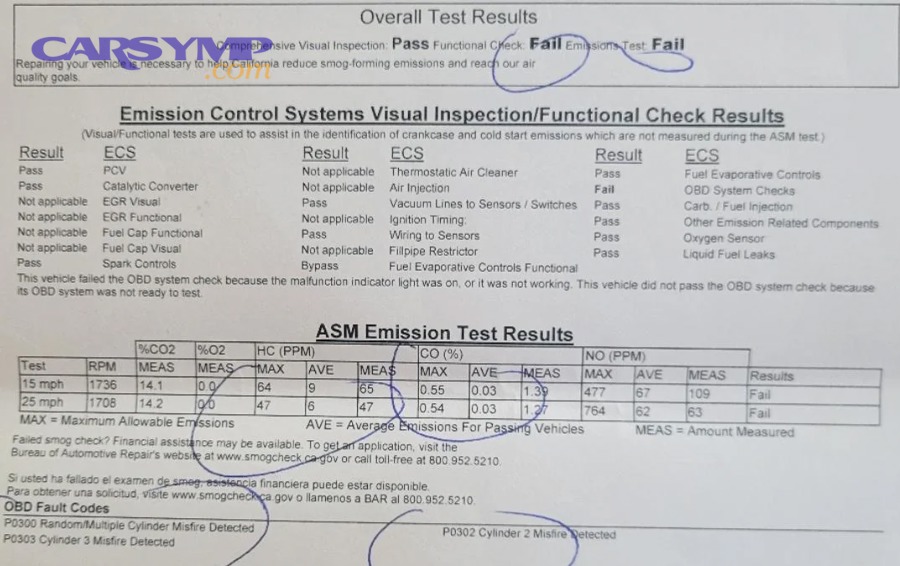
Diagnosis affects the estimate because it determines whether you’re fixing a symptom (like a code) or a root cause (like an exhaust leak, wiring issue, or sensor heater failure). When a shop quotes you, they’re pricing the time and equipment needed to prove which component is truly at fault.
Common diagnostic steps that change price include:
- OBD-II scan + freeze-frame review: Pulls codes and operating conditions at the moment the fault set. This helps distinguish intermittent glitches from repeatable failures.
- Live data testing: Looks at sensor signals under real operating conditions. For example, upstream vs downstream oxygen sensor behavior can hint whether you have a mixture issue, a sensor issue, or a catalyst efficiency issue.
- Smoke testing (for EVAP): EVAP leaks can be tiny and invisible, so smoke testing can be the difference between “replace the gas cap” and “chase a leak for 2 hours.”
- Visual/physical inspection: Exhaust leaks, broken vacuum hoses, cracked canisters, and damaged wiring can be found quickly—or missed completely—depending on inspection quality.
A practical way to think about diagnosis: you’re paying to reduce uncertainty. If you skip it, you often pay later with wrong parts.
How do parts quality and emissions compliance change price?
Parts cost isn’t just “cheap vs expensive”—it’s compatibility + durability + emissions compliance.
Key price drivers:
- OEM vs aftermarket: OEM parts often cost more but reduce fitment and calibration risk. Aftermarket can be fine, but ultra-cheap sensors and converters can cause repeat codes.
- Emissions-certified catalytic converters: In some states and for some vehicles, you may need a specific certified converter type. This is a major reason converter quotes swing wildly.
- “Related parts” bundled into the job: Gaskets, hardware, clamps, heat shields, and sensor adapters can add meaningful cost, especially for exhaust work.
Shops also price in risk: if a low-quality part is likely to fail early and create a comeback, it may be cheaper for them (and you) to install a better part once.
How is labor time calculated and why do shops quote different totals?
Labor is calculated using a combination of book time (labor guides) and real-world access difficulty. Two shops can quote different totals because:
- One shop quotes book time strictly, while another adds time for corrosion, stuck bolts, or tight engine bay access.
- One shop includes post-repair validation (drive cycle, readiness monitor checks), while another does not.
- One shop replaces one component, while another replaces multiple “likely” components to avoid diagnostic time.
A reliable estimate will clearly show:
- Labor hours (or flat fee)
- Labor rate
- Parts list (brand/type)
- Shop supplies/taxes/fees
- What “done” means (no codes? monitors set? retest-ready?)
What are the typical price ranges for the most common emissions repairs?
There are four common emissions-related repair buckets—diagnosis, oxygen sensors, EVAP components, and catalytic converters—each with typical price ranges based on the repair category and vehicle variation.
More specifically, when you line these costs up side-by-side, you can often spot whether your quote is normal or inflated.
To make the ranges easy to compare, the table below summarizes typical averages (parts + labor) for common emissions work:
| Repair category | Typical “average range” (parts + labor) | What the number usually represents |
|---|---|---|
| Emissions system diagnosis & testing | $62–$90 | Targeted emissions diagnosis fee (not always full CEL diagnosis) |
| Oxygen (O2) sensor replacement | $434–$537 | Typical overall average across vehicles |
| EVAP purge valve replacement | $201–$240 | Common EVAP failure item |
| EVAP charcoal canister replacement | $530–$616 | Parts-heavy EVAP repair |
| Catalytic converter replacement | $2,164–$2,483 | Big-ticket exhaust/emissions repair |
(These ranges are broad averages; your exact vehicle and location can move the final number.) (repairpal.com)
How much does emissions system diagnosis & testing usually cost?
Emissions system diagnosis & testing is typically under $100 as an average category estimate, because it’s often a defined workflow: scan, verify, and test the specific subsystem tied to an emissions fault. (repairpal.com)
However, real-world shops may charge more when:
- The fault is intermittent (requires time to reproduce)
- EVAP leak detection is needed (smoke test time/equipment)
- Electrical troubleshooting is required (pin testing, harness tracing)
If a shop quotes a much higher diagnostic number, ask what tests are included (smoke test? live data drive? backpressure test?).
What is the average cost to replace an oxygen (O2) sensor?
O2 sensor replacement commonly lands in the mid-hundreds on average. (repairpal.com)
Price swings happen because:
- Some vehicles have multiple sensors (upstream/downstream, bank 1/bank 2).
- Sensor access varies (easy on some cars, buried on others).
- Wiring repairs can be required if a heater circuit or connector is damaged.
A smart check before approving replacement: confirm whether the code is truly a sensor failure versus a mixture problem (vacuum leak, fuel trim issue) that makes the sensor look guilty.
What is the typical cost to fix EVAP leaks (gas cap, purge valve, charcoal canister)?
EVAP repairs range from cheap quick fixes to parts-heavy replacements.
Typical patterns:
- Gas cap: Often inexpensive, but only correct if the cap seal or cap-related leak is truly the problem.
- Purge valve: Often a moderate-cost repair and a frequent failure point. (repairpal.com)
- Charcoal canister: More expensive because the part can be costly and access can involve underbody work. (repairpal.com)
This is where “EVAP leak codes and quick fixes” matters most: a small leak code might be a loose cap—or it might be a cracked line that only shows up under smoke testing.
How much does catalytic converter replacement usually cost?
Catalytic converter replacement is often the most expensive common emissions repair, with average category costs in the low thousands. (repairpal.com)
Why it gets expensive:
- Converter assemblies can be pricey.
- Some vehicles integrate converters with other exhaust components.
- Rusted hardware increases labor time.
- Some regions require specific compliant converter types.
If your shop jumps straight to “replace the converter,” you’ll want to ensure they’ve done a basic Catalytic converter efficiency code diagnosis (especially for P0420/P0430) to avoid replacing an expensive part unnecessarily.
O2 sensor vs EVAP leak vs catalytic converter: which repair is most likely to be cheap or expensive?
An O2 sensor fix usually wins on affordability, EVAP repairs range from cheap to moderate, and catalytic converter work is most often the expensive outlier—because the underlying failure modes and parts pricing are radically different.
However, the real cost depends on whether you’re fixing the actual root cause or just chasing the code that showed up.
When is an O2 sensor fix a low-cost win—and when is it not?
An O2 sensor replacement is a low-cost win when:
- The sensor heater circuit fails (common electrical failure)
- The sensor signal is clearly stuck or lazy on confirmed testing
- Wiring/connectors are intact and the sensor is accessible
It’s not a win when:
- A vacuum leak or exhaust leak is skewing readings
- Fuel trim problems exist (misfire, injector issue, fuel pressure issue)
- The sensor is “reporting the problem” correctly
A clean approach:
- Confirm whether fuel trims are abnormal.
- Check for upstream exhaust leaks.
- Validate sensor response under controlled conditions.
That’s how you avoid replacing a sensor only to watch the code return.
Which EVAP leak codes are quick fixes vs deep diagnostics?
EVAP can be the most frustrating category because it’s often a tiny leak in a large sealed system.
Quick-fix patterns:
- Loose or failing gas cap
- Cracked, obvious EVAP hose near the engine bay
- Failed purge valve with clear symptoms
Deep-diagnostic patterns:
- Small leak codes that require smoke testing
- Leaks near the tank/canister area (hard to see, underbody)
- Intermittent leaks that appear only under certain temperatures/fuel levels
If you want one practical takeaway: EVAP becomes expensive when the system requires time to prove where vapor is escaping, not necessarily because the part itself is costly.
Evidence: According to a study by University of California, Berkeley from the Department of Civil and Environmental Engineering, in 2009, researchers reported that gasoline-related VOC emissions from evaporation can represent a substantial share (roughly 19–44%) of gasoline-related VOC emissions in their analysis—highlighting why EVAP faults matter and why accurate leak location is crucial before replacing parts. (gentnerlab.yale.edu)
Why catalytic converter repairs can be the most expensive (and when they aren’t)
Catalytic converter work is expensive because:
- The part is expensive (often the majority of the quote). (repairpal.com)
- Replacement can involve difficult exhaust disassembly.
- The converter can be damaged by other problems, meaning you might need upstream repairs too.
When it isn’t expensive:
- The true issue is an exhaust leak or sensor issue misread as a converter problem.
- The converter is part of a modular system with easier replacement.
- The vehicle uses a less costly converter design (varies widely).
A reliable “Catalytic converter efficiency code diagnosis” for P0420/P0430 typically checks:
- Upstream/downstream O2 data trends
- Exhaust leaks
- Misfires, fuel trim issues, and oil burning/coolant burning (which can poison the catalyst)
That’s also why an “emissions test failure fix” plan shouldn’t start with replacing the most expensive component first.
How can you get an accurate emissions repair estimate and avoid overpaying?
You can get an accurate emissions repair estimate by bringing the right fault data, asking the shop to confirm the root cause with targeted tests, and comparing quotes using the same parts/labor scope—then choosing legal cost reducers like verified diagnosis and staged repairs.
To better understand why this works, focus on reducing uncertainty before authorizing parts.

What information should you bring to the shop to tighten the estimate?
Bring information that turns guesswork into a testable plan:
- OBD-II codes (all of them, not just one)
- Freeze-frame data (if available)
- Symptoms (fuel smell, rough idle, poor MPG, hard start after refuel)
- Recent repairs (especially exhaust, sensors, battery disconnects)
- Whether the vehicle recently failed an inspection and what the report said
Even a basic scan tool printout can prevent the shop from spending billable time discovering what you already know.
What questions should you ask to confirm the root cause?
Use questions that force clarity:
- “What test confirms this part is bad?”
- “If we replace this part and it doesn’t fix it, what’s next—and who pays?”
- “Are there upstream causes that could trigger the same code?”
- “Will you verify readiness monitors are set after repair?”
For converter-related codes:
- “Did you check for exhaust leaks and misfires before recommending replacement?”
For EVAP:
- “Will you smoke-test the system, or are you guessing based on the code?”
How do you compare quotes fairly (apples-to-apples)?
Two quotes only compare if they match on:
- Same repair scope (diagnosis included or not)
- Same parts type (OEM vs aftermarket, certified vs non-certified)
- Same warranty terms
- Same “done definition” (no codes + retest-ready vs “part replaced only”)
A good habit: ask each shop to write the estimate with line items. Then you can see if one shop padded labor, used pricier parts, or included extra steps.
What are legit ways to reduce cost without cheating the emissions test?
Legit cost reducers:
- Pay for diagnosis first, then authorize parts (prevents wrong-part spending).
- Fix the upstream cause (misfire/fuel trim/oil consumption) before replacing a converter.
- Bundle labor when multiple sensors/components are in the same access area.
- Use reputable parts that won’t trigger repeat codes (cheapest part can be the most expensive outcome).
- Confirm retest rules so you don’t pay twice for “not ready” monitors.
Avoid anything that implies bypassing compliance—if your goal is to pass, the cheapest strategy is a correct repair done once.
What should you do after failing an emissions test to minimize total cost?
After failing an emissions test, the best way to minimize total cost is to identify the failure type (OBD readiness vs active fault vs tailpipe), repair only what’s proven, and retest only when monitors are properly set and the car is legally ready.
Next, treat the post-fail period like a short project with checkpoints—because random parts-swapping is where budgets die.
What’s the fastest path to set readiness monitors and retest legally?
Fastest legal path:
- Repair the confirmed fault (or address the not-ready cause).
- Drive the vehicle through an appropriate drive cycle (varies by make/model).
- Re-scan to confirm:
- No active emissions-related codes
- Readiness monitors are set appropriately for your jurisdiction’s rules
This reduces the risk of failing again for “not ready,” which is a common, avoidable cost.
How to prepare for a retest legally without wasting money
“How to prepare for a retest legally” comes down to verification, not tricks:
- Verify no pending codes.
- Verify monitors meet your area’s readiness allowance.
- Ensure basics are correct (proper fuel cap seal, no fuel smell, stable idle).
If a shop offers a retest strategy without verification, you’re gambling your retest fee.
When does it make sense to repair first vs retest first?
Repair first when:
- There’s an active check engine light or stored emissions code.
- The failure report indicates a clear fault area (EVAP, catalyst, O2, misfire).
Retest first only when:
- The “fail” was due to monitors not set after a battery disconnect or recent repair, and you can confirm monitors are now ready.
What if your state offers a repair waiver or assistance program?
Some jurisdictions offer repair assistance or waivers under specific conditions (income eligibility, minimum spend at certified shops, documented repair attempts, etc.). Rules vary widely, so treat this as a “check your local program” step—but don’t rely on it as the plan.
A good shop will document diagnosis, parts replaced, and results in a way that supports any required paperwork if assistance is available.
Evidence (if any)
- Cost ranges referenced for common repairs (diagnosis/testing, O2 sensor replacement, EVAP purge valve replacement, EVAP canister replacement, catalytic converter replacement) are based on category estimates published by RepairPal. (repairpal.com)
- The EVAP significance evidence statement is supported by a UC Berkeley Department of Civil and Environmental Engineering publication hosted by the Gentner Lab, discussing the contribution of gasoline evaporation to VOC emissions in their analysis. (gentnerlab.yale.edu)