


A misfire and abnormal fuel trims can absolutely cause an emissions failure because they directly increase tailpipe pollutants, prevent OBD readiness from setting, or trigger monitor failures that the inspector’s scan tool reads as “not ready” or “failed.”
Next, if you’re trying to figure out why the misfire or fuel trim problem happened, the fastest path is to read the pattern: when it misfires (idle vs load), which bank/cylinder is affected, and whether trims go strongly positive (lean correction) or negative (rich correction).
Then, once you know the pattern, you can test the few systems that create most “real-world” failures—ignition (spark), unmetered air (vacuum/MAF), fuel delivery, and exhaust/O2 feedback—without buying parts blindly.
Introduce a new idea: the goal isn’t just to clear a code; it’s to correct combustion and feedback control so the catalyst can work properly and the monitors can pass on the next test.
Is a misfire or abnormal fuel trim enough to fail an emissions test?
Yes—misfire and abnormal fuel trims are enough to fail an emissions test because they (1) raise HC/CO/NOx, (2) prevent readiness monitors from setting, and (3) trigger OBD failures even when the car still “drives okay.” In addition, the way your state tests emissions determines how you fail: some programs rely mainly on OBD status, while others still use tailpipe measurements that show the pollution spike immediately.
Which parts of an emissions test are most sensitive to misfire and fuel-trim problems?
Most modern programs are sensitive in three places:
- OBD trouble codes and MIL status (Check Engine Light): A stored misfire code (often P0300–P0308) or fuel-trim-related codes can fail you instantly. Even if the light is off, stored/pending issues can still matter depending on local rules.
- Readiness monitors: Misfires and incorrect fuel control commonly keep catalyst, O2, and fuel-system monitors from completing because the ECM won’t “trust” the data under unstable combustion.
- Tailpipe pollutants (where applicable): Misfire pushes unburned fuel and oxygen into the exhaust, and bad trims push the mixture away from the catalyst’s sweet spot—both show up quickly as high HC/CO and sometimes NOx.
A practical rule: if the engine isn’t combusting consistently, the test can’t “see” clean emissions consistently.
Can you fail even if the check engine light is off?
Yes, you can fail even with the check engine light off for three common reasons:
- Readiness isn’t set (especially after clearing codes or disconnecting the battery).
- Pending codes exist (a misfire or fuel-trim fault is developing but hasn’t matured into a confirmed code yet).
- Tailpipe testing detects a problem that hasn’t crossed the ECM’s threshold for turning the light on.
This is why a “quick clear and retest” often backfires: you may erase the evidence, but you also erase the monitor history that proves the car is clean.
What “borderline” misfire and fuel-trim issues pass OBD but fail tailpipe?
Borderline cases usually share one trait: they’re not severe enough to trigger a code under the ECM’s rules, but they’re severe enough to raise pollutants under test conditions. Typical examples include:
- Small vacuum leaks that only show up at idle (high manifold vacuum) and disappear at cruise.
- Weak ignition components that misfire only under load (acceleration) but look “fine” when the inspector is idling the car.
- Slow fuel control response (lazy O2/AFR feedback or biased MAF) that keeps trims near the edge—no code, but the mixture drifts too lean or too rich for the catalyst to clean up efficiently.
What does “misfire” mean in emissions diagnostics?
A misfire is a missing or incomplete combustion event in one or more cylinders, typically caused by ignition, fuel, air, or mechanical faults, and it becomes an emissions problem because it sends unburned fuel and oxygen into the exhaust. More importantly, misfire isn’t just a “rough idle” symptom—it’s a combustion stability failure that breaks the emissions control system’s assumptions.
What are the main types of misfire: ignition, fuel, air, and mechanical?
You can group misfires into four practical buckets:
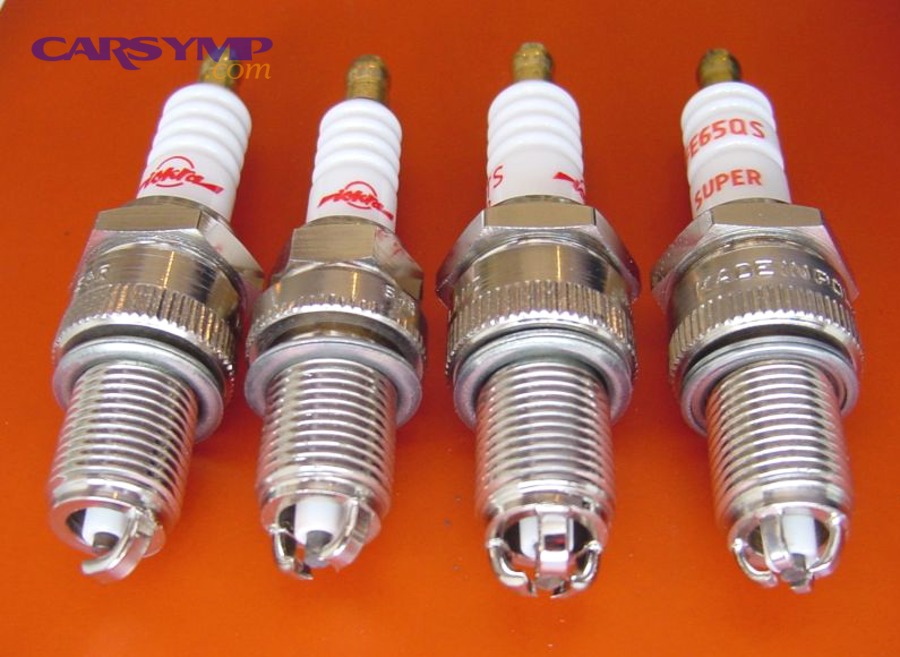
- Ignition misfire (spark-related): worn plugs, weak coils, damaged wires/boots, incorrect plug gap, moisture/oil contamination in plug wells.
- Fuel misfire (delivery-related): clogged injector, leaking injector, low fuel pressure, weak pump, restricted filter, faulty regulator.
- Air/mixture misfire (metering-related): vacuum leak, PCV leak, intake gasket leak, biased MAF/MAP, EGR stuck open, incorrect airflow calculation.
- Mechanical misfire (compression/valvetrain-related): low compression, burned valve, timing chain/belt issues, head gasket leakage, cam phaser problems.
The category matters because each one leaves a different fuel-trim and O2 pattern—and that pattern is what you use to avoid guessing.
How does a misfire raise HC/CO and overheat the catalytic converter?
A misfire creates two emissions problems at once:
- Unburned fuel and oxygen exit the cylinder because combustion didn’t finish (or didn’t happen). That raises hydrocarbons (HC) and often carbon monoxide (CO) because the combustion process is incomplete.
- The catalytic converter gets “fed” fuel it wasn’t meant to burn. The converter then tries to oxidize that fuel in the catalyst bed, which can drive catalyst temperatures dangerously high and permanently damage it.
According to a master’s thesis by Chalmers University of Technology from Applied Mechanics, in 2011, continuous operation around 900–1000°C can irreversibly damage the catalyst, and a significant increase in HC and CO was observed at about a 2% misfire rate. (publications.lib.chalmers.se)
Which OBD-II misfire codes and data tell you it’s emissions-relevant?
For emissions troubleshooting, don’t stop at “P0300 is random misfire.” Look for:
- P0300 (random/multiple misfire) vs P0301–P0308 (specific cylinder)
- Freeze-frame data: RPM, load, coolant temp—this tells you when it misfired.
- Misfire counters (if your scan tool shows them): some vehicles show per-cylinder misfire counts in live data.
- Fuel trim at the same time: trims often explain whether the misfire is caused by lean/rich, or whether the misfire is causing the trims to swing.
- Mode $06 (advanced): some tools show misfire monitor test results even without a set code, which helps in borderline failures.
A key emissions clue is repeatability: if misfire counters climb steadily at a certain load/RPM band, it’s likely to reappear during the drive cycle that sets readiness—meaning it can keep you from passing again.
What does “fuel trim” mean and how does it point to lean vs rich causes?
Fuel trim is the ECM’s correction to the commanded fuel amount based on oxygen-sensor feedback, and it points to lean vs rich causes because positive trim means the ECM is adding fuel (lean condition) while negative trim means it’s subtracting fuel (rich condition). Besides, trims become your map: they tell you whether to chase air leaks, fuel pressure, injector balance, or sensor bias first.
What are STFT and LTFT, and what ranges are “normal”?
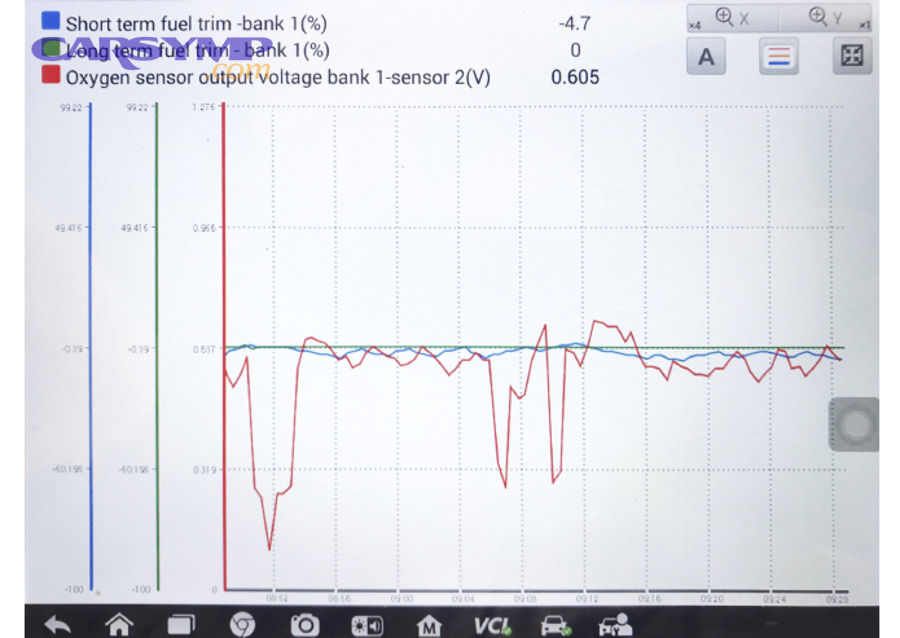
- STFT (Short-Term Fuel Trim): fast, moment-to-moment correction reacting to O2/AFR feedback.
- LTFT (Long-Term Fuel Trim): slower learned correction that represents a persistent bias.
Typical “healthy” ranges (general guideline, varies by vehicle):
- STFT: usually hovering near 0, often within ±5% in stable conditions
- LTFT: often within ±5%, sometimes ±8% without being “wrong”
When you see totals like +15% to +25% (especially combined STFT + LTFT), you’re usually hunting a real lean cause (unmetered air, low fuel pressure, under-reporting MAF). When you see -10% to -25%, you’re usually dealing with a rich condition (leaking injector, excessive fuel pressure, over-reporting airflow, restricted air).
How do positive vs negative fuel trims map to lean or rich conditions?
Use this simple translation:
- Positive trims (+): ECM believes mixture is lean → adds fuel → suspect vacuum leaks, MAF under-reporting, low fuel pressure, exhaust leak upstream of O2, or unmetered air.
- Negative trims (–): ECM believes mixture is rich → removes fuel → suspect leaking injectors, high fuel pressure, EVAP purge stuck open, restricted intake, MAF over-reporting, or contaminated sensors causing bias.
The trap is that a misfire can trick the sensors. A cylinder that misfires may leave extra oxygen in the exhaust, which can look “lean” to the O2 sensor even though the real problem is spark. That’s why you always cross-check trims with misfire data and engine behavior.
How do fuel trims differ at idle vs cruise, and why that matters?
Fuel trim behavior at idle vs cruise is one of the fastest diagnostic shortcuts:
- Lean at idle, improves at cruise: classic vacuum leak or PCV/intake gasket leak (high vacuum at idle pulls in extra air).
- Normal at idle, lean at cruise/load: often fuel supply limitation (pump/pressure/volume) or MAF scaling issues.
- Rich at idle, improves at cruise: leaking injector, EVAP purge flow, or excessive fuel pressure can show strongest at idle because airflow is low and the extra fuel is a big percentage of total.
- One bank different than the other: points toward a localized leak (intake gasket on one side), injector issue on one bank, or exhaust leak affecting one O2 sensor.
This is why “read trims at idle only” is incomplete—you need at least idle + 2500 rpm no-load + a short road test snapshot.
Which root causes most often connect misfire + fuel trims to an emissions failure?
There are four main root-cause groups that connect misfire and fuel trims to emissions failure: ignition weakness, unmetered air/airflow errors, fuel delivery faults, and feedback/aftertreatment problems (exhaust leaks, O2 sensors, catalytic converter). More importantly, these are also the Common reasons emissions tests fail because they either raise raw pollutants or prevent the catalyst from working correctly long enough to pass.
What ignition problems cause misfire and skew fuel trims?
Ignition issues cause misfire directly and can indirectly push trims around because the O2 sensor sees leftover oxygen:
- Worn or incorrect spark plugs (wrong heat range, wrong gap, worn electrodes)
- Weak coil packs (heat-related failures are common)
- Damaged plug wires/boots (arcing under load)
- Oil or coolant contamination in plug wells
- Poor grounds or low battery voltage affecting coil saturation
Emission impact: intermittent ignition misfire can be “invisible” during a short idle test but appear during the drive cycle needed to set monitors—meaning you fail for readiness or a returning misfire.
What unmetered air (vacuum leaks) and MAF/MAP faults create lean misfire patterns?
Lean misfire patterns often show:
- High positive trims at idle, sometimes smoothing out as RPM rises
- Misfire primarily on one bank/cylinder near a leak point
- Rough idle that improves with throttle
Common culprits:
- Cracked vacuum hoses, brake booster hose leaks
- PCV stuck open or torn diaphragm
- Intake manifold gasket leaks
- Throttle body gasket leaks
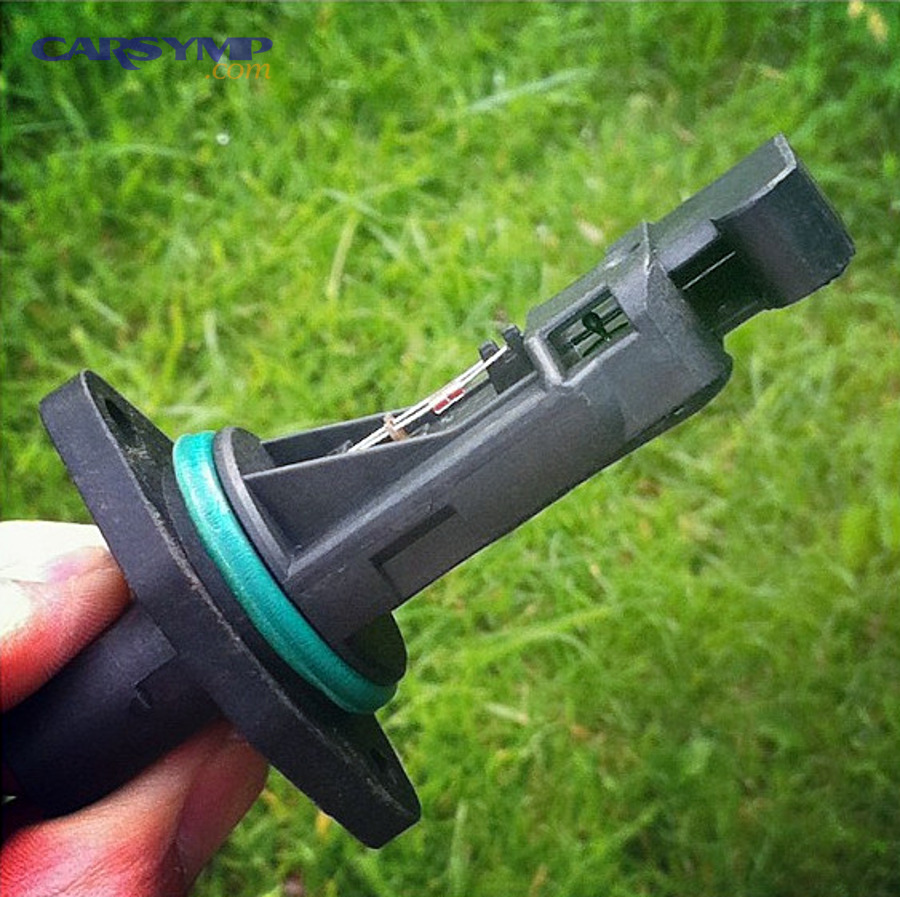
- MAF sensor contamination (under-reporting airflow makes the engine lean)
- MAP sensor issues (on speed-density systems)
A useful physical test is smoke testing the intake, but even without a smoke machine, careful listening, propane/carb-cleaner testing (with safety precautions), and scan-tool observation can narrow it fast.
What fuel delivery issues create rich/lean misfire patterns?
Fuel delivery faults can create both lean and rich outcomes:
Lean misfire causes (fuel starvation):
- Low fuel pressure (weak pump, clogged filter, failing regulator)
- Low fuel volume (pump can make pressure at idle but fails under load)
- Clogged injector(s)
Rich misfire causes (overfueling):
- Leaking injector (dripping fuel after shutoff)
- Excess fuel pressure (regulator fault, return restriction)
- EVAP purge valve stuck open (fuel vapor flooding, often at idle/start)
Rich misfires are especially nasty for emissions because they can overload the catalyst with fuel, raising CO/HC and risking catalyst damage.
What exhaust leaks, O2 sensor problems, and catalytic converter issues can mimic misfire/fuel-trim faults?
This is where many people waste money, because symptoms overlap:
- Exhaust leak upstream of the O2 sensor can pull in outside air → sensor reads lean → trims go positive → you chase vacuum leaks that don’t exist.
- O2 sensor bias or slow response can cause trims to “hunt” and can mimic fueling errors.
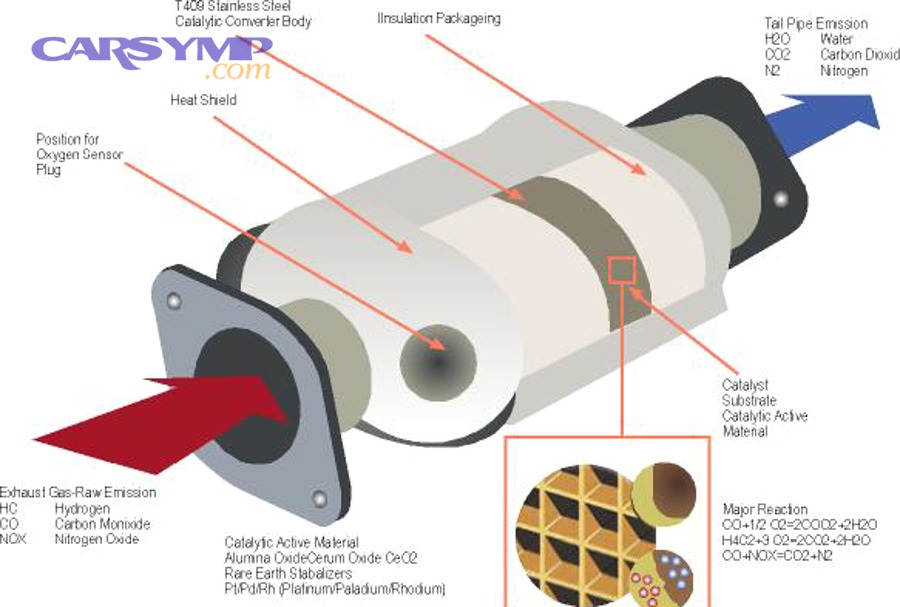
- Catalytic converter efficiency loss doesn’t always cause misfire, but misfire can cause converter damage, which then creates new codes and emissions failure afterward.
This is why the sequence matters: fix the misfire and fuel control first, then evaluate catalyst performance. Otherwise you may replace a converter that was only reacting to upstream problems.
How do you diagnose misfire and fuel-trim causes step-by-step to pass the retest?
A reliable diagnosis uses a short sequence—baseline scan, pattern recognition, targeted tests, confirmation drive, and readiness completion—so you fix the root cause in the fewest steps and maximize your chance to pass on the retest. To better understand the failure, treat the process like a funnel: wide scan first, then narrow tests only where the data points.
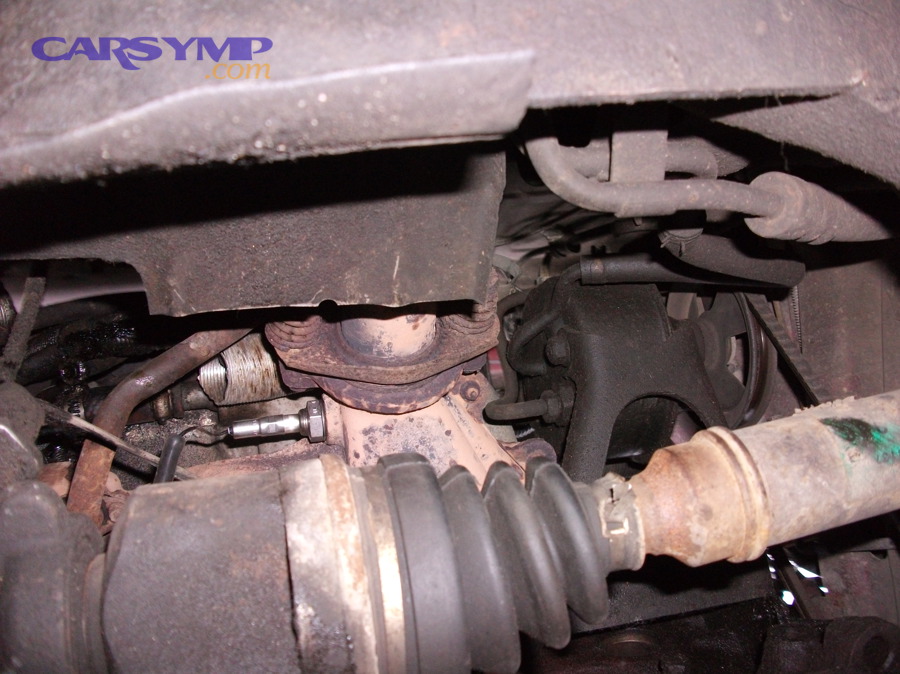
What quick checks should you do before buying parts?
Do these first because they cost little and prevent wrong turns:
- Check for codes (stored + pending) and record freeze-frame.
- Look at fuel trims at idle and at 2500 rpm (no-load), plus a short road snapshot if possible.
- Look for obvious air leaks: disconnected hoses, cracked intake tube after the MAF, loose clamps.
- Inspect ignition basics: plug condition, coil boots for carbon tracking, oil in plug wells.
- Verify engine temperature: a stuck-open thermostat can keep the engine cool and affect fuel control and readiness.
These quick checks often reveal the “easy” emissions test failure fix before you spend money on sensors or converters.
How do you use scan-tool data (Mode $06, misfire counters, O2/AFR, trims) to narrow the cause?
Use the scan tool to answer four questions:
- When does it misfire? idle, tip-in, steady cruise, heavy load, hot restart
- Where does it misfire? random vs cylinder-specific vs one bank pattern
- What do trims do at the same moment? spike positive, go negative, or oscillate abnormally
- What does O2/AFR feedback do? slow switching, stuck rich/lean, unstable
A fast narrowing method:
- Misfire + trims strongly positive at idle: suspect vacuum leak/PCV/intake gasket.
- Misfire under load + trims go positive at higher RPM: suspect low fuel volume/pressure or weak ignition under load.
- Misfire + trims strongly negative: suspect overfueling (injector leak, EVAP purge, pressure).
- Misfire counters climb but trims look “normal”: suspect mechanical (compression) or localized ignition issue that doesn’t shift overall feedback much.
Mode $06 can be especially helpful for borderline failures because it may show misfire monitor results that haven’t triggered a code yet.
How do you test ignition, air leaks, and fuel pressure safely?
Targeted tests that map well to emissions failures:
Ignition
- Swap coil with another cylinder (if coil-on-plug) and see if the misfire follows.
- Inspect plugs for fouling, wear, and gap; replace if overdue.
- Check for spark blowout under load (often shows as misfire only during acceleration).
Air leaks
- Smoke test intake (best) or carefully test around suspected leak points.
- Watch trims live: if trims drop toward zero when you isolate a leak path, you found a major contributor.
Fuel
- Measure fuel pressure at idle and under load (if possible).
- If pressure is “okay” but misfire occurs at load, you may still have a volume problem—some pumps hold pressure but can’t deliver enough flow.
Safety note: avoid spraying flammables around hot engines; use proper tools and ventilation.
How do you confirm the fix and set readiness monitors?
Confirmation is what gets you past the station:
- Clear codes only after repair (or keep records if you must clear).
- Verify fuel trims stabilize (closer to 0) at idle and cruise.
- Verify misfire counters stop climbing in the conditions that used to trigger them.
- Complete a proper drive cycle so readiness monitors set.
Many failed retests happen because the repair was correct but readiness wasn’t completed—this is where “Readiness monitors not set troubleshooting” becomes the difference between passing and wasting another fee.
What fixes most reliably help you pass after a misfire/fuel-trim emissions failure?
The most reliable fixes are the ones that restore stable combustion and accurate air/fuel feedback: ignition service, fixing unmetered air, correcting fuel pressure/injector faults, and only then addressing O2 sensors or catalytic converter issues when data proves they’re bad. Especially with “hard” failures, the best strategy is to fix what the trims and misfire pattern prove—then retest.
When does a tune-up help pass emissions?
A tune-up helps pass emissions when the root cause is combustion instability or weak ignition, such as:
- Worn plugs causing intermittent misfire
- Coil boots arcing under load
- Air filter so restricted it skews airflow
- Poor maintenance causing unstable idle and incomplete burn
This is the practical answer to “When a tune-up helps pass emissions”: when it directly improves combustion completeness and stabilizes O2 feedback so trims return toward normal.
Which air-intake and vacuum repairs give the biggest emissions improvement?
High-impact repairs include:
- Replacing cracked intake tubes after the MAF
- Repairing PCV system leaks
- Replacing intake manifold gaskets (when confirmed)
- Fixing brake booster hose leaks
- Cleaning or replacing a biased MAF (only after verifying it’s the cause)
Why these matter: unmetered air doesn’t just cause a lean code—it makes combustion hot and unstable, which can raise NOx and cause lean misfire that spikes HC.
Which fuel-system repairs actually fix trims (and which are placebo)?
Repairs that truly fix trims (when diagnosed):
- Replacing a weak fuel pump or clogged filter
- Fixing a faulty regulator or pressure control
- Replacing or cleaning a proven clogged injector (with verified imbalance)
- Fixing an EVAP purge valve stuck open (common rich-at-idle cause)
Common placebo moves (unless proven):
- Pouring random “miracle” fuel additives for a severe trim problem
- Replacing injectors without verifying pressure/volume and misfire location
- Replacing the MAF just because trims are positive (vacuum leaks often do that)
If you want a dependable emissions test failure fix, prioritize tests that show cause-and-effect on trims.
When do you need O2 sensors or a catalytic converter, and how do you avoid unnecessary replacements?
This is where many people get trapped in “parts roulette,” so use a decision rule:
Replace or service O2/AFR sensors when:
- The sensor is demonstrably slow or biased compared to expected behavior
- Fuel control is unstable even after fixing misfire, air leaks, and fuel pressure
- Upstream sensor data is clearly irrational (stuck, flatlined, or contradicts engine behavior)
Replace the catalytic converter when:
- The engine is no longer misfiring
- Fuel trims are stable and reasonable
- There are no exhaust leaks upstream
- Catalyst efficiency or temperature behavior still fails (confirmed by data, not guesses)
This is the heart of “O2 sensor issues vs converter diagnosis”: you diagnose the feedback loop first, then the aftertreatment, because aftertreatment depends on correct upstream control.
Contextual Border: At this point, you have the full path to diagnose and fix the main causes of an emissions failure tied to misfire and fuel trims. Next, we’ll expand into edge cases and “hard patterns” that can still fail you even after the obvious repair.
What advanced clues explain “hard cases” where misfire and fuel trims don’t match the obvious fix?
Hard cases usually come from intermittency, bank-specific patterns, or measurement artifacts—so the solution is to use when/where patterns plus targeted data to separate real faults from sensor illusions. Moreover, these cases are where people most often misdiagnose and end up chasing a converter or O2 sensor unnecessarily.
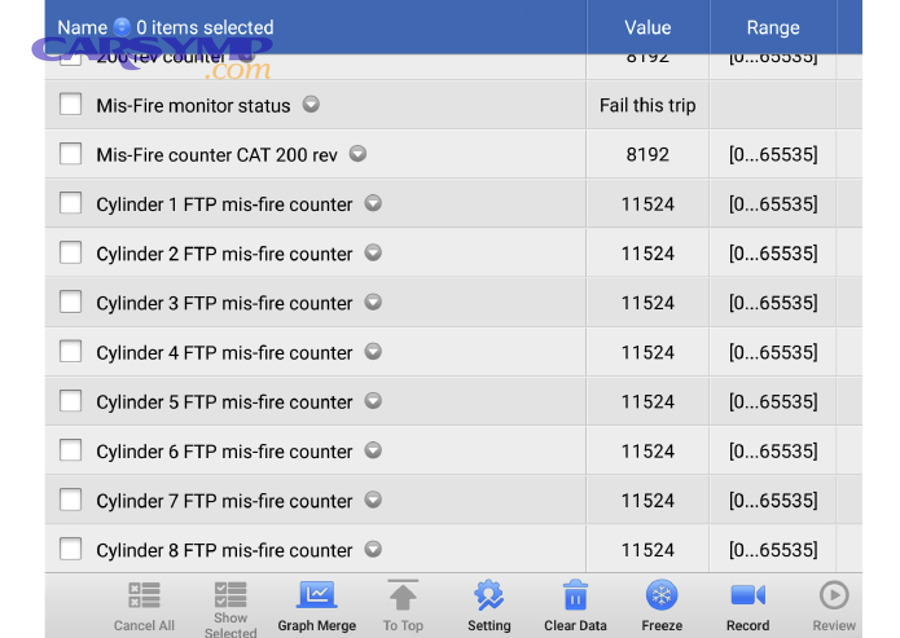
How do intermittent misfires, heat soak, and load-only misfires hide from idle tests?
Intermittent misfires often “hide” because:
- They occur only hot (coil breakdown when heat-soaked)
- They occur only under load (spark blowout, weak coil output, marginal fuel volume)
- They occur only during transitions (tip-in lean spike from throttle/airflow modeling)
To catch them:
- Recreate the condition: hot restart, uphill pull, steady-load cruise.
- Watch misfire counters and trims during that condition, not just at idle.
- If your state uses OBD-only testing, remember that repeated misfire during monitor runs can block readiness even if it never lights the MIL long-term.
What does a split-bank fuel-trim pattern mean on V engines?
A split-bank pattern is one of the best localization clues:
- Bank 1 trims high positive, Bank 2 normal: unmetered air or injector issue localized to Bank 1 side, or an exhaust leak ahead of Bank 1 O2.
- Bank 1 negative, Bank 2 normal: leaking injector(s) or purge distribution affecting one side.
- Both banks equally positive: global airflow under-reporting (MAF), low fuel pressure/volume, or a large system-wide vacuum leak.
Split-bank logic helps you avoid replacing global parts when the problem is localized.
How do you separate O2 sensor issues vs converter diagnosis without guessing?
Use a simple separation strategy:
- Verify no upstream leaks and stable trims.
- Confirm the upstream O2/AFR sensor behaves plausibly (responds to controlled changes like slight throttle or commanded enrichment if supported).
- Only then evaluate downstream behavior and efficiency.
Why: a converter can’t look “efficient” if the upstream mixture control is unstable or if misfires are feeding it raw fuel/oxygen.
What data supports catalytic converter efficiency code diagnosis after misfire repairs?
A converter efficiency diagnosis should be data-driven, not assumed:
- Misfire is solved (misfire counters stay low).
- Fuel trims stabilize close to normal.
- No upstream exhaust leaks.
- The catalyst monitor still fails or an efficiency code persists.
According to measurements reported by Michigan State University’s Automotive Research Experiment Station in 1993, mistuned engines can exhaust very large amounts of unburned hydrocarbons, illustrating why prolonged misfire/poor tuning can overload aftertreatment and contribute to lasting emissions problems. (egr.msu.edu)
This is also where you should be careful with “Catalytic converter efficiency code diagnosis”: a converter code that appeared after weeks of misfire may reflect real damage, while a converter code that appears during misfire may simply be the converter reacting to upstream chaos.
Evidence (if any)
According to a master’s thesis by Chalmers University of Technology from Applied Mechanics, in 2011, catalyst temperatures around 900–1000°C can cause irreversible damage, and a significant increase in HC and CO emissions was observed at approximately a 2% misfire rate. (publications.lib.chalmers.se)
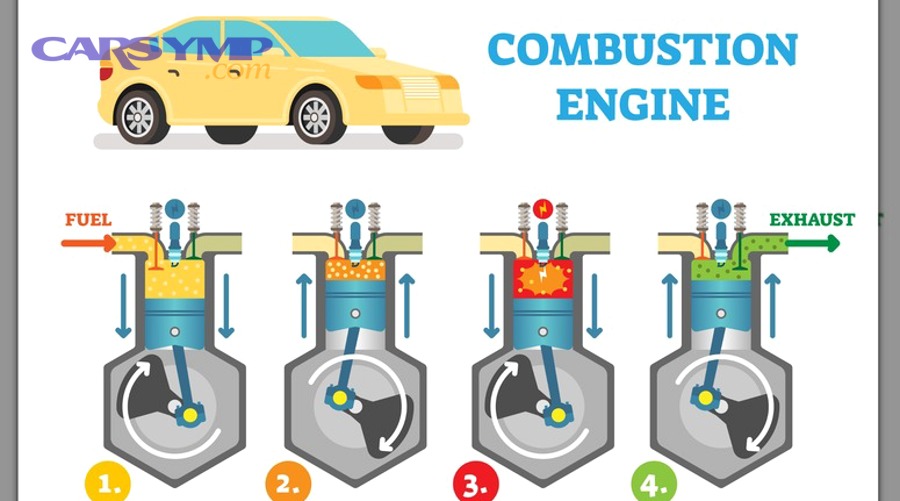
According to measurements reported by Michigan State University’s Automotive Research Experiment Station, in 1993, mistuned engines were measured with as much as 50% of fuel exhausted as unburned hydrocarbons, highlighting how unstable combustion can dramatically increase HC emissions. (egr.msu.edu)