


Blue smoke from the exhaust almost always means the engine is burning oil, and PCV and valve stem seals are two of the most common “where is the oil getting in?” answers you’ll see in real-world diagnosis.
If your smoke shows up at specific moments—cold start, idle, long decel, or hard acceleration—you can usually narrow it down without tearing the engine apart by pairing the timing of the smoke with a few quick checks on crankcase vacuum, intake oil residue, and plug condition.
You’ll also want to separate true oil smoke from lookalikes, because the “wrong fix” can waste money fast—especially when rich fueling, turbo issues, or coolant leaks mimic similar exhaust behavior.
Introduce a new idea: once you understand when blue smoke appears and why PCV and valve seals create different smoke patterns, you can follow a cheap-to-expensive path that leads to a confident repair—not guesswork.
What does blue smoke from the exhaust mean, and why is it often linked to PCV or valve stem seals?
Blue smoke from the exhaust is oil burning smoke—engine oil is entering the combustion process (or hot exhaust stream) and partially burning, which creates the blue/gray haze and sharp oil smell. Next, the key is how the oil gets there: PCV faults pull oil mist/vapor into the intake, while valve stem seal wear lets oil drip past the valve guides into the cylinder, often during specific engine states.
What is blue smoke in engine terms, and when does it appear?
Blue smoke in engine terms is the visible result of engine oil atomizing and burning in the combustion chamber (or sometimes in the turbo/exhaust path), and it typically appears during start-up, deceleration, idle, or acceleration depending on the failure path.
To make the timing useful, treat smoke like a “when/where” clue:
- Cold start puff that clears quickly → commonly valve stem seals (oil drips into cylinders while parked).
- Idle smoke after extended idling → can be PCV pull-through or valve seals (depends on crankcase vacuum behavior).
- Smoke after long downhill decel, then throttle tip-in → classic valve seal or guide leakage pattern.
- Smoke under boost / heavy acceleration → can be PCV (oil mist ingestion increases with blow-by) or turbo seal issues.
Even in modern engines, blow-by gases can carry oil mist from the crankcase; if that mist gets routed into the intake and burned, it becomes visible blue smoke under the right conditions.
Why do PCV and valve stem seals cause blue smoke specifically?
PCV and valve stem seals cause blue smoke because both faults increase the amount of engine oil that reaches the combustion air path—just through different routes. Specifically, PCV faults can increase oil carryover into the intake stream, while valve stem seal wear allows oil to seep down the guide into the port/cylinder, especially when the engine sits or vacuum pulls oil past the guide clearance.
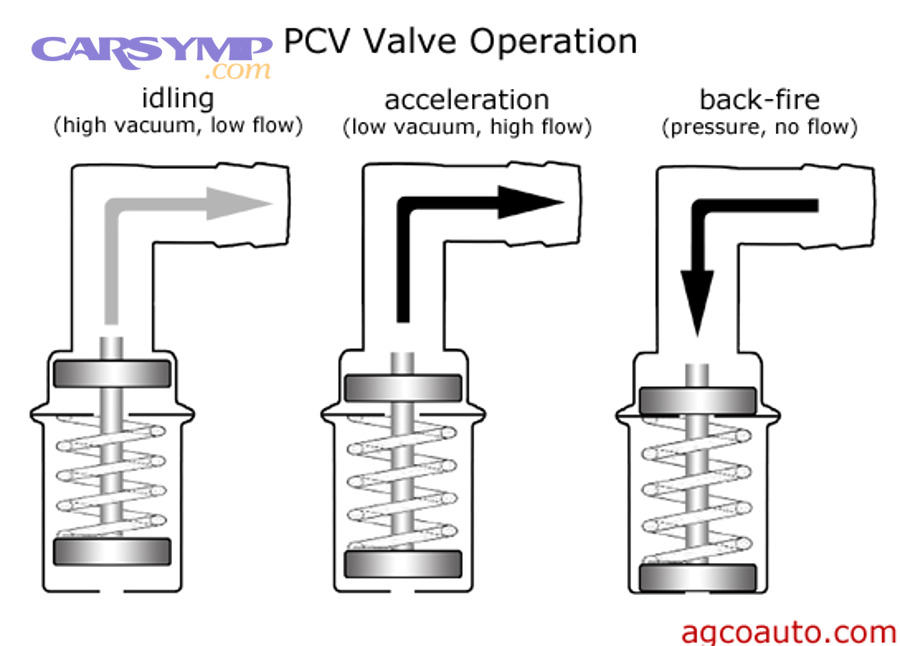
- PCV route (intake-side ingestion): Blow-by gases in the crankcase naturally include vapor and suspended droplets; a PCV restriction, failed metering, or torn diaphragm can increase oil carryover into the intake stream.
- Valve stem seal route (top-end drip/leak): Valve stem seals meter oil on the valve stem while preventing oil from freely entering the intake/exhaust ports. When hardened or worn, they allow oil to seep into the port/cylinder, especially after sitting or during high-vacuum events.
The difference matters because an intake-fed oil source tends to show oil residue in the intake tract/throttle body/PCV plumbing, while a valve-guide-fed source tends to show smoke patterns tied to parking time and vacuum events.
Are there quick “Car Symptoms” clues that separate oil smoke from other smoke colors?
Yes—there are at least 3 fast Car Symptoms clues that help separate oil smoke from other smoke colors: smell/feel, timing, and residue pattern. Then, use them together to avoid confusing oil smoke with coolant or fuel issues.
- Smell: Oil smoke has a burnt-oil odor; coolant smoke often smells sweet; rich fuel smoke often smells like raw fuel.
- When it happens: Oil smoke often correlates with start-up, decel, idle, or boost transitions; coolant smoke often persists once hot; rich fuel smoke often shows under load or cold enrichment.
- Residue: Oil burning often leaves oily soot at the tailpipe and can foul plugs; fuel-rich tends to leave dry, sooty deposits.
If you treat these as a “Car Symptoms triad,” you’ll make better choices before you spend money on parts.
How can you tell if your blue smoke is caused by a bad PCV system?
Yes, a bad PCV system can cause blue smoke, and the top reasons are excess oil mist ingestion, abnormal crankcase vacuum/pressure, and oil leaks pulled into intake pathways—especially on engines with integrated PCV diaphragms in the valve cover. To begin, focus on the smoke pattern and intake-side evidence, because PCV-caused oil burning often leaves a trail you can see and measure.

Can a clogged or stuck PCV valve actually cause blue smoke?
Yes—a clogged or stuck PCV valve can cause blue smoke for at least 3 reasons: it can raise crankcase pressure, disrupt oil separation, and pull oil through unintended paths (like seals, breather lines, or a failed diaphragm). More specifically, PCV is not just “a hose”—it’s a calibrated metering path designed to maintain stable crankcase conditions.
What stable looks like is “slightly below atmospheric,” which helps control leakage and flow behavior. According to a study by the University of Windsor from the Department of Mechanical, Automotive & Materials Engineering, in 2014, a common target crankcase pressure is about 20–30 hPa below atmospheric and PCV is used to keep crankcase pressure as constant as possible.
- If the PCV path is restricted, pressure can rise and push oil mist toward vents/seals.
- If the PCV metering fails open or a diaphragm tears, intake vacuum can pull too much from the crankcase and drag oil mist into the manifold.
What are the most common PCV-related smoke patterns and engine behaviors?
The most common PCV-related smoke patterns cluster into 3 recognizable “behaviors”: idle/low-load smoke, smoke after long idle or stop-and-go, and smoke tied to intake vacuum changes (decel/return-to-throttle). However, you should confirm them with intake and crankcase clues, not smoke timing alone.
- Oil in the intake tract: oily film near throttle body, intercooler plumbing (turbo engines), or intake runners.
- Unstable idle / lean codes: some PCV faults act like vacuum leaks (especially torn diaphragms).
- Whistling from valve cover area: common on integrated PCV diaphragm failures.
- Dipstick behavior: dipstick pushed out, oil seepage, or excessive crankcase pressure symptoms if ventilation is restricted.
Why oil mist matters: blow-by gases can entrain a significant amount of oil mist from the crankcase, which can contribute to emissions and oil consumption if not controlled.
How do you test the PCV system at home before paying for diagnostics?
A practical PCV check is a 3-step test (visual + vacuum behavior + flow sanity check) that can reveal most PCV-related smoke issues without special tools. Below, start with the easiest checks and only escalate if you see evidence.
Step 1: Visual inspection (5 minutes)
- Check PCV hoses for cracks, soft spots, collapse, or oil saturation.
- Inspect the valve cover PCV port/diaphragm area for oil wetness or whistling.
- Look inside the intake tube/throttle body area for heavy oil film.
Step 2: Crankcase vacuum quick check
- With the engine idling, remove the oil cap slightly:
- A mild change is normal.
- A strong suction or severe idle stumble can hint at a stuck-open path or failed diaphragm.
- Pressure “puffing” can suggest restriction and blow-by.
- If available, use a simple vacuum/pressure gauge on the dipstick tube with an adapter (more precise).
Step 3: PCV valve/port function check
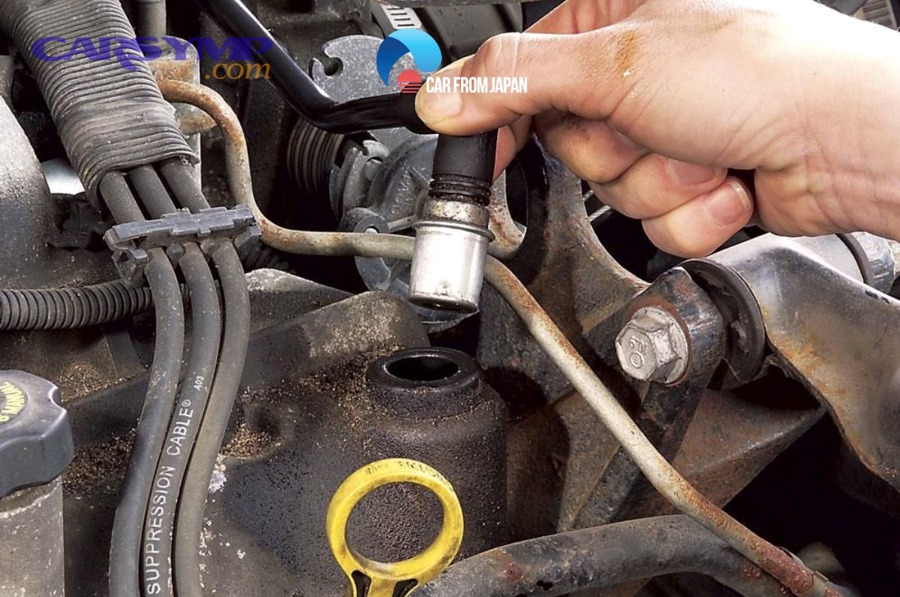
- If your engine has a removable PCV valve: check for blockage, sticking, or broken internal spring.
- If it’s an integrated system: smoke-test the valve cover assembly or check the diaphragm function by service procedure.
How can you tell if valve stem seals are the real cause of blue smoke?
Valve stem seals are the likely cause when blue smoke happens in a start-up puff or after high-vacuum events, because worn seals let oil seep down the valve guides into the ports/cylinders when the engine sits or vacuum pulls oil past the guide clearance. Then, you confirm by matching the smoke timing to top-end leakage logic and checking for oil-fouling patterns that point to specific cylinders.
What does valve stem seal smoke look like at startup vs during acceleration?
Valve stem seal smoke usually looks like a brief blue puff at startup, while acceleration-only smoke is less “pure valve seal” and more likely mixed with other sources (PCV/turbo/rings) unless the seals are severely worn. Specifically, the classic patterns are:
- Start-up after overnight sit: oil drips past seals into the cylinder; you see a puff, then it clears as the oil burns off.
- After long decel (high vacuum), then throttle: vacuum pulls oil down guides; smoke appears when you get back on the gas and burn the pooled oil.
- Consistent smoke under heavy load: not the hallmark pattern for seals alone—often rings, PCV oil mist ingestion, or turbo issues are involved.
Which engine conditions make valve seal leakage worse?
Valve seal leakage worsens under at least 3 conditions: high manifold vacuum, long sit time, and hot-soak/hardened elastomer behavior (age/heat cycles). Moreover, modern operating profiles can amplify the symptoms even if the engine still “runs fine.”
- High-vacuum decel: long downhill coasting in gear, then throttle reapplication.
- Extended idling: creates stable vacuum and low oil splash variation; leakage accumulates.
- Cold start after sitting: gravity drip is the simplest path—oil sneaks past seals and pools.
What simple DIY checks point to valve seals (without removing the head)?
You can point to valve seals with 3 practical DIY checks: a smoke timing test, a plug/cylinder pattern check, and an intake vs cylinder evidence check. Next, use them together so you don’t misdiagnose rings or PCV.
- Timing test: start cold after an overnight sit and observe puff duration; then warm it fully and perform a long in-gear decel followed by throttle tip-in and watch for a puff.
- Spark plug pattern check: remove plugs and compare for oil-fouling; cylinder-specific oiling can point to top-end leakage more than global PCV carryover.
- Intake tract check: heavy oil pooling in intake plumbing suggests PCV/turbo ingestion, while a relatively clean intake with timing-specific puffs points back toward valve seals.
PCV vs valve stem seals: what’s the difference in smoke symptoms, costs, and risks?
PCV wins in low-cost/fast fixes, valve stem seals are often the timing-specific smoke culprit, and long-term risk is highest when either fault causes sustained oil burning that damages catalysts, plugs, and (on turbo engines) the intercooler/intake path. However, you should compare them across smoke timing, evidence location, repair complexity, and what happens if ignored.
Here’s a quick comparison table (this table summarizes the most common diagnostic differences drivers can observe before disassembly):
| Factor | PCV-related smoke | Valve stem seal smoke |
|---|---|---|
| Most typical timing | Idle/stop-go, vacuum transitions, sometimes decel | Cold start puff, post-decel then throttle |
| Where evidence shows up | Oily intake tract, PCV hoses, throttle body | Cylinder-specific plugs, timing-specific puffs |
| Common companion symptoms | Rough idle/whistle/lean codes (some cases) | Often runs “normal,” just smokes at specific times |
| Typical first action | Inspect/replace PCV valve or valve cover PCV | Confirm pattern; consider seal replacement plan |
Which “Turbocharger smoke symptoms” can confuse the diagnosis?
Turbocharger smoke symptoms that confuse diagnosis usually overlap in timing under boost, oil in charge piping, and smoke after extended idle, which can look like PCV pull-through or severe valve seal leakage. Meanwhile, turbo engines also have more plumbing where oil residue can collect, so you need a cleaner logic chain.
- Oil film in intercooler piping: can be normal trace oil mist from PCV, or abnormal turbo seal leakage.
- Smoke on boost: can be turbo, rings (blow-by), or PCV ingestion rising with load.
- Smoke after long idle: turbo oil drain issues or PCV issues can show here.
A practical differentiator: if the intake side is wet with oil and the smoke correlates strongly with boost/load, turbo/PCV becomes more likely than valve seals alone.
How do repair difficulty and cost differ between PCV and valve seals?
PCV repair is usually simpler and cheaper, while valve stem seals range from moderate to expensive because access and method vary—some engines allow on-car seal replacement with an air/rope method, others require significant disassembly. However, “cost” should follow diagnosis, not the other way around.
- PCV valve (serviceable type): minutes to an hour.
- Integrated PCV in valve cover: medium cost; common replacement path.
- Valve stem seals: labor-heavy; may require cam removal, spring compression, and careful reassembly.
A smart strategy is to treat PCV service as an early “exhaust smoke fix” step only if the evidence supports it, not as a random parts swap.
What happens if you ignore each problem for too long?
Ignoring either problem risks increased oil consumption, spark plug fouling/misfires, and catalyst/oxygen sensor contamination, but the mechanism differs: PCV faults can destabilize crankcase conditions and oil carryover, while valve seals steadily feed oil into cylinders at specific times. More importantly, oil burning tends to snowball into more deposits, worse combustion stability, and harder future diagnosis.
According to a study by the University of Wisconsin–Madison from the Engine Research Center, in 2016, researchers varied oil consumption by modifying valve stem seals and ring components, demonstrating that seals and rings are distinct oil-entry paths with measurable exhaust impacts.
What should you fix first, and when is it safe to drive?
The best fix order is cheap-to-expensive: verify oil level/grade and intake evidence, test the PCV system, then confirm valve seal patterns, because that sequence reduces misdiagnosis and prevents unnecessary labor. Below, you’ll also see when driving becomes unsafe—not because of “smoke” itself, but because of what it implies about oil level, misfires, and emissions damage.
What’s the best “exhaust smoke fix” order (cheap-to-expensive)?
A reliable exhaust smoke fix order has 5 steps: baseline checks → pattern capture → PCV verification → cylinder evidence → targeted repair. Then, you stop as soon as the evidence clearly points to one path.
- Baseline checks (free): confirm correct oil level and oil grade; record a short smoke video under repeatable conditions.
- Pattern capture (high value): note cold-start puffs, long-decel puffs, and boost/load correlation.
- PCV verification (low cost): inspect hoses/ports, test crankcase behavior, and check intake oil film; repair confirmed PCV faults first.
- Cylinder evidence (moderate effort): pull and compare plugs; use borescope if available to identify oil wetness patterns.
- Targeted repair: replace PCV valve/valve cover PCV if confirmed; plan valve seal replacement if timing and cylinder evidence align; escalate to rings/turbo only if patterns fit.
When should you stop driving immediately?
You should stop driving immediately if at least 3 red flags appear: rapid oil level drop, misfire/flashing check engine light, or dense continuous smoke that doesn’t clear, because those can indicate engine damage risk or catalyst overheating. In addition, stop if any of these occur:
- Oil pressure warning light
- Loud new mechanical noise combined with smoke
- Coolant loss plus white smoke (different diagnosis path)
- Smoke so heavy it reduces visibility for other drivers
If smoke is mild and occasional (like a short cold-start puff) and oil level is stable, many drivers can continue short-term while planning repair—but only with monitoring.
How do you prevent repeat smoke issues after the repair?
You prevent repeat smoke issues by controlling oil quality/intervals, crankcase ventilation health, and deposit formation—and by rechecking your original smoke trigger conditions after the fix. Especially, prevention is not “one thing”; it’s a routine.
- Use the correct oil specification and reasonable change intervals (shorten if the engine is oil-sensitive).
- Inspect and service PCV components regularly to keep flow stable.
- Replace clogged breather hoses/oil separators where applicable.
- Repeat your trigger test (cold start + long decel + throttle) to confirm the symptom is gone.
According to a study by Lund University from the Department of Automatic Control, in 2003, a cold engine produced considerably less oil aerosol than a warm engine, linking oil aerosol behavior to oil viscosity and vaporization.
What other “oil-burning lookalikes” can mimic PCV or valve seal smoke, and how do you prevent recurrence?
There are 4 common lookalikes—rich fueling, piston rings, turbo seals, and coolant leaks—and the only reliable way to separate them is by matching smoke color + timing + supporting evidence (fuel trims, oil/coolant levels, compression/leak-down results). Next, use this section as your “don’t get tricked” checklist before committing to big repairs.
How can a “Rich fuel mixture smoke diagnosis” fool you into thinking it’s oil?
A Rich fuel mixture smoke diagnosis can fool you because dark smoke and strong odor can look “blue-ish” in certain light, but fuel-rich smoke is primarily soot and unburned hydrocarbons, not oil. Specifically, rich conditions often come with:
- Fuel smell (not burnt oil smell)
- Sooty, dry tailpipe deposits
- Fuel trim codes, rough running under load, poor MPG
If you’re unsure, prioritize scan data and odor: fuel problems usually show their fingerprints in trims and drivability.
How do piston rings, turbo seals, or head gaskets show different smoke timing?
Rings, turbo seals, and head gaskets each create different smoke timing signatures. In addition, timing patterns help you avoid mislabeling these as valve seals or PCV.
- Piston rings/blow-by: more consistent smoke under load, higher crankcase pressure, and broader oil consumption behavior.
- Turbo seals: smoke tied to boost/load or after long idle; more oil in charge piping than expected.
- Head gasket/coolant: persistent white smoke once hot plus coolant loss (not typical “blue smoke only” behavior).
If your smoke is mainly a start-up puff or post-decel puff, rings/head gasket are less likely than seals/PCV.
What maintenance habits reduce future “Oil burning smoke diagnosis” events?
Maintenance habits that reduce future Oil burning smoke diagnosis events include keeping PCV flow healthy, avoiding long oil intervals, and preventing deposits that stick rings or block oil drainage paths. More specifically:
- Inspect PCV hoses and separator paths during oil changes.
- Avoid chronic overfilling, which increases oil carryover risk.
- Fix small vacuum leaks early, because they can distort PCV metering behavior.
- Use the correct oil specification and a quality filter to reduce volatility and deposits.
When does professional testing (compression/leak-down/borescope) become necessary?
Professional testing becomes necessary when at least 3 conditions apply: you can’t match smoke timing to a clear path, oil consumption is high or worsening, and basic PCV/plug/visual checks don’t align. Then, compression and leak-down help separate rings vs valves, while borescope confirms oil wetness patterns.
- If PCV tests clean and the smoke pattern isn’t strongly valve-seal-like, get compression + leak-down before any major teardown.
- If one cylinder stands out, a borescope can confirm oil wetness and save you from replacing parts blindly.