Fix Exhaust Smoke Fast: Blue vs White vs Black Causes & DIY Diagnosis for Car Owners
Exhaust smoke fix starts with one core rule: treat visible tailpipe smoke as a symptom, not the problem, then use color, smell, and timing to narrow the cause so you repair the right system the first time.
Next, this guide breaks down Blue vs white vs black smoke causes so you can match what you see to the most likely failure path—oil burning, coolant/water vapor, or too-rich fueling—without guessing.
Then, you’ll get DIY checks before major repairs (simple inspections, basic OBD2 data, and a few safe tests) that help you decide whether the issue is urgent, driveable, or shop-only.
Introduce a new idea: once you can classify the smoke correctly, you can plan the Repair cost estimate by smoke type with fewer surprises—and avoid wasting money on “quick fixes” that don’t address the root cause.
Is exhaust smoke always a problem—or can it be normal?
No—exhaust smoke is not always a problem, because (1) cold-start condensation can look like smoke, (2) short bursts can come from temporary conditions, and (3) true “problem smoke” usually has persistent color, odor, or driveability changes that repeat.
To better understand what you’re seeing, separate “steam-like” normal vapor from persistent smoke before you start replacing parts.
Can you drive with exhaust smoke
You can sometimes drive with exhaust smoke, but whether you should depends on smoke type, severity, and symptoms—because the same “smoke” can range from harmless condensation to a coolant breach that can overheat the engine.
Then, use this practical decision tree:
- Likely OK for a short drive (monitor closely):
- Thin white “steam” only for the first few minutes in cold weather
- No coolant loss, no overheating, no misfires, no sweet odor
- No warning lights flashing (a flashing check-engine light usually means active misfire risk)
- Drive only to a shop (minimize load and distance):
- Light blue smoke after long idle or startup that clears quickly
- Mild black puff on hard acceleration but normal fuel trims and no strong fuel smell
- You need a controlled diagnosis for oil consumption or fueling corrections
- Do not drive (tow recommended):
- Dense white smoke with coolant loss or overheating symptoms
- Blue smoke that’s heavy and constant (oil burning can damage catalysts and trigger runaway consumption)
- Black smoke that’s continuous with rough running (risk of catalyst damage and fuel dilution)
A simple “safety lens” helps: white smoke + rising temperature is a much bigger immediate threat than a small blue puff that happens only on startup.
What smells, sounds, or dash lights make smoke urgent
Smell and sound are “fast clues” because they point to what’s being burned:
- Sweet odor + thick white smoke → often coolant vapor (possible head gasket, intake gasket, or cooler leak)
- Sharp fuel odor + sooty black smoke → rich fueling (injector leak, sensor error, airflow restriction, or boost leak on turbo engines)
- Burnt-oil odor + blue haze → oil burning (rings, valve seals, turbo seals, or PCV-related pull-through)
Besides that, these urgency flags matter more than the smoke itself:
- Overheating or coolant warning
- Flashing check-engine light (active misfire can overheat the catalytic converter)
- Knocking, loss of oil pressure, or rapid oil drop
- Milky oil (coolant in oil) or fuel smell in oil (fuel dilution)
If you want one action that reduces risk immediately: check oil level and coolant level before you drive again.
What does exhaust smoke color mean: blue vs white vs black?
Blue smoke most often points to oil burning, white smoke usually indicates water vapor or coolant, and black smoke signals excess fuel, so color is the fastest way to choose the correct diagnostic path.
Next, use color as your “macro filter,” then use timing and smell to confirm the specific failure.
Blue smoke: what it usually indicates
Blue smoke is typically oil being burned in the combustion process, which happens when oil enters the cylinder through:
- Piston rings/cylinder wear (oil pulled past rings under load)
- Valve stem seals/guides (oil drips into cylinders after sitting, common “startup puff” pattern)
- Turbocharger oil seal leakage (oil pushed into intake or exhaust side on turbo engines)
- PCV system faults (excess crankcase vacuum or poor separation pulls oil mist into intake)
More specifically, blue smoke often correlates with Oil burning smoke diagnosis patterns:
- Smoke under load → rings/cylinders or turbo
- Smoke on startup after sitting → valve seals/guides
- Smoke after long idle then acceleration → valve seals or PCV pull-through
White smoke: what it usually indicates
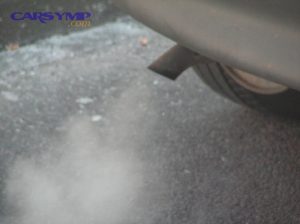
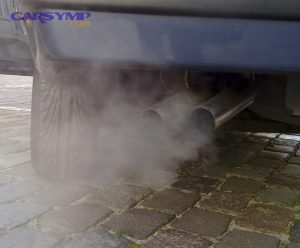
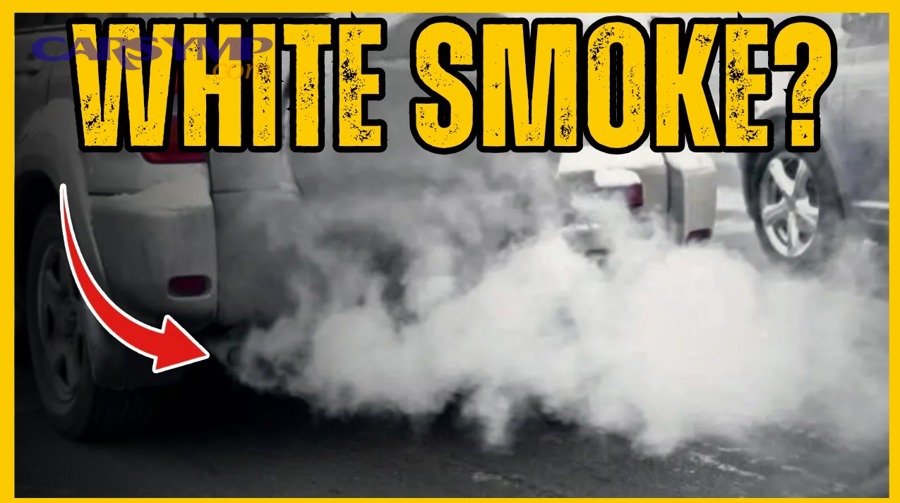
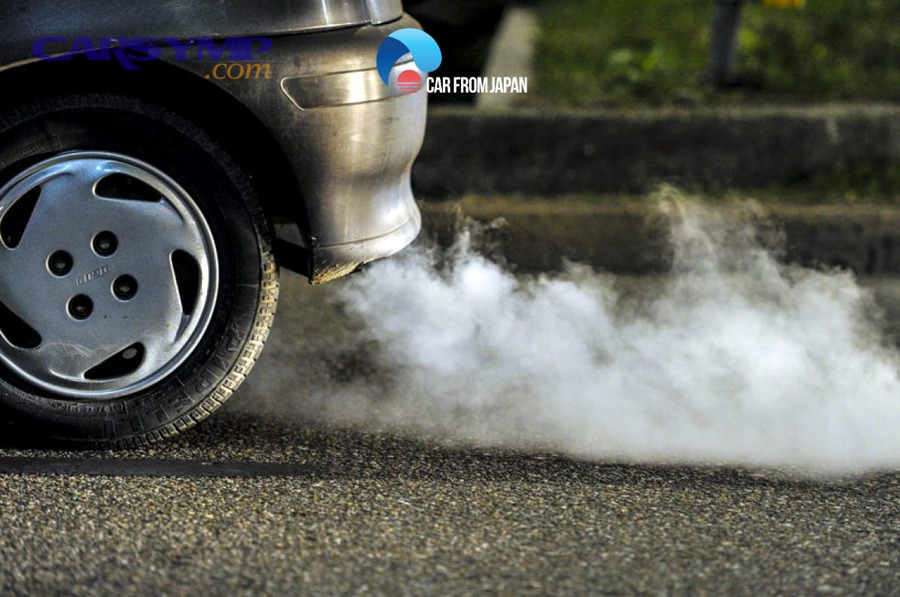
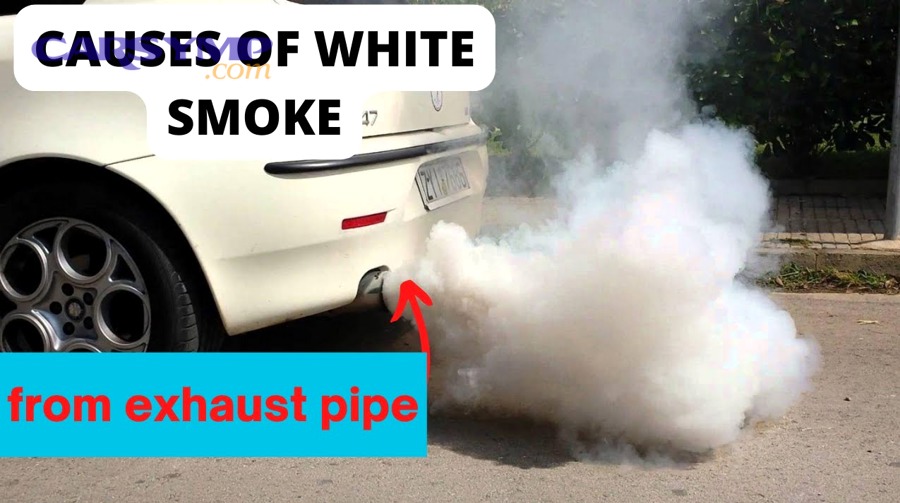
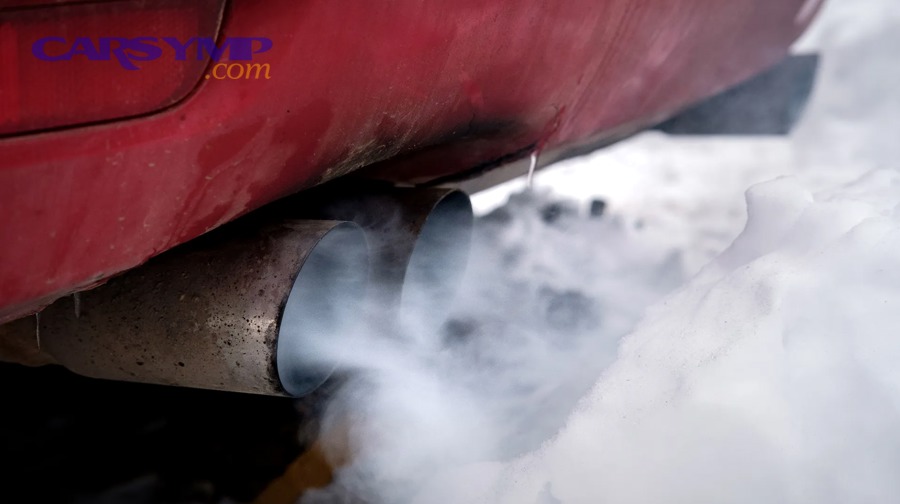
White smoke can mean harmless condensation or coolant being burned—and the difference is huge.
- Normal: thin, steamy vapor that disappears quickly, usually only at cold start
- Concerning: thick, lingering white smoke with a sweet odor and coolant loss
When you suspect coolant, treat it as Coolant burning smoke diagnosis, not “mystery smoke,” because the engine is telling you that a sealing boundary may be failing.
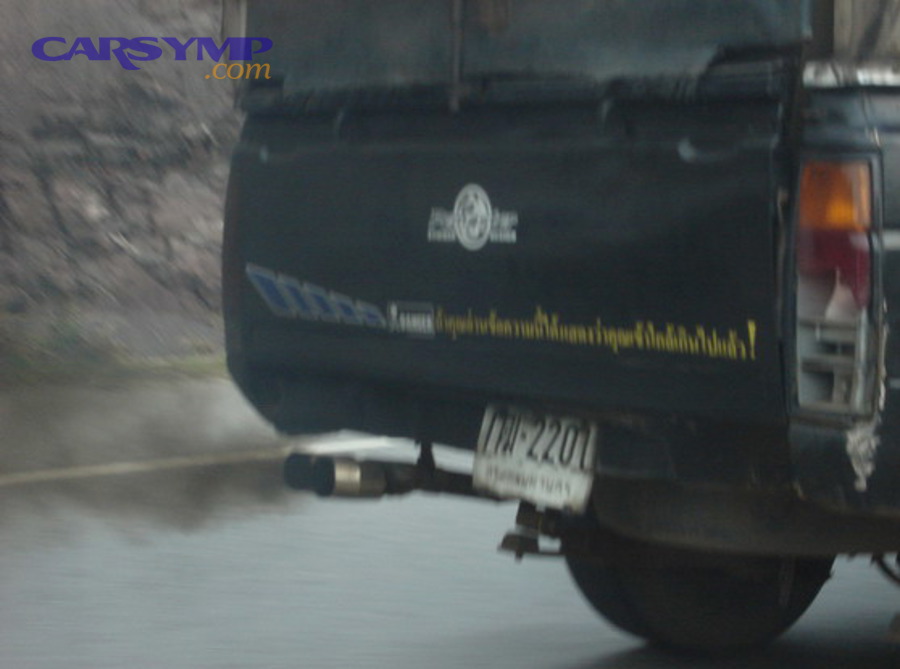
Black smoke: what it usually indicates
Black smoke is soot from too much fuel (or not enough air)—a classic Rich fuel mixture smoke diagnosis situation. Common triggers include:
- Leaking or stuck injectors
- Incorrect sensor inputs (MAF/MAP, coolant temp, O2/AFR sensors)
- Restricted air intake or clogged filter
- Boost/airflow issues on turbo engines (e.g., charge pipe leak, stuck wastegate, control faults)
- Excessive EGR or poor combustion quality in some setups
Black smoke is also the smoke type most likely to leave a visible clue: dark soot inside the tailpipe.
How can you diagnose exhaust smoke at home before major repairs?
A reliable at-home diagnosis uses 5 steps—observe color, note timing, check fluids, inspect air/PCV paths, and verify with basic OBD2 data—to identify the most likely cause before you pay for major work.
Then, you’ll use the “timing + evidence” approach to avoid swapping parts blindly.
Smoke on startup vs under load: what the timing reveals
Timing is the fastest “micro” signal because it shows when the engine condition allows oil/coolant/fuel to enter combustion.
- Smoke mainly on startup (after sitting):
- Blue puff: valve seals/guides or oil pooling
- White vapor: condensation (normal) or coolant seep into a cylinder overnight (concerning if persistent)
- Smoke mainly under load (acceleration, hills):
- Blue: rings/cylinders or turbo seal issue; boost can worsen it
- Black: fueling enrichment, airflow restriction, or sensor/boost leak problems
- White: can occur if combustion pressure forces coolant through a compromised gasket
- Smoke on decel (off-throttle):
- Often points to valve stem seals (high vacuum draws oil past guides)
This is why “Smoke on startup vs under load clues” is so valuable: it narrows the likely entry path for the contaminant.
DIY checks before major repairs: 10-minute tests
Below, focus on quick checks that change your probability of a cause:
- Check coolant level and mark it
- If level drops over days and smoke stays white, suspect coolant entry
- Check oil level and look for contamination
- Milky/foamy oil suggests coolant contamination
- Look inside the tailpipe
- Dry black soot supports rich fueling; oily residue supports oil burning
- Inspect PCV and intake tract
- Oil pooling in intake piping suggests PCV pull-through or turbo compressor-side leakage
- Cold-start observation
- Does the “white smoke” disappear quickly or linger and hang in the air?
- Paper test (safe distance)
- Hold a white paper briefly near the tailpipe (not touching): oily specks suggest oil; wet sweet-smelling mist suggests coolant; dry soot suggests rich fueling
- Spark plug read (if accessible)
- Oil-fouled plugs point to oil entry; steam-cleaned plug can suggest coolant in that cylinder
- Compression/leak-down planning
- You may not do it at home, but knowing you need it prevents random part swaps
These checks don’t replace professional testing, but they often tell you which test is worth paying for.
What OBD2 codes and live data help confirm a cause?
OBD2 can’t “see smoke,” but it can confirm misfire, fueling, and sensor plausibility:
- For black smoke (rich):
- Fuel trims: large negative trims suggest rich correction
- O2/AFR sensor switching anomalies
- Coolant temp reading that’s implausible (cold reading can command excess fuel)
- For white smoke (coolant-related):
- Misfire codes on cold start (coolant seep can foul a cylinder overnight)
- Overheat or thermostat-related codes may appear in related failures
- For blue smoke (oil):
- OBD2 rarely flags oil burning directly, but misfires from oil-fouled plugs can appear
- Catalyst efficiency codes can occur after prolonged oil burning
If you don’t have a scan tool, a basic Bluetooth reader is enough to view trims and coolant temp—which is often the difference between guessing and diagnosing.
How do you fix white exhaust smoke (coolant or water vapor)?
Fixing white exhaust smoke means confirming whether it’s harmless condensation or coolant entry, then repairing the leaking boundary (gasket, cooler, or crack) and verifying the cooling system holds pressure afterward.
Next, you’ll focus on “proof first” checks because white smoke can be the most expensive type to misdiagnose.
Coolant burning smoke diagnosis: head gasket vs intake gasket vs EGR cooler
Start by matching symptoms to the most likely leak path:
- Head gasket (or cracked head/block):
- Persistent white smoke, coolant loss, possible overheating
- Misfire on startup, bubbles in expansion tank, pressurized hoses early
- Sometimes “steam-cleaned” spark plug in one cylinder
- Intake manifold gasket (some engines):
- Coolant can enter intake runners and feed one or more cylinders
- Often worse right after startup
- EGR cooler (common on some turbo/diesel applications):
- Coolant can enter exhaust stream through a failing cooler
- May show white smoke without classic “coolant in oil” signs
A key point: if your coolant loss is real, white smoke is the result, not the root cause, so the repair must target the leaking component.
Evidence matters here because coolant-related failures can produce distinctive exhaust chemistry. According to a study by University of California, Berkeley from environmental engineering research groups, in 2015, on-road measurements of ethylene glycol (a coolant marker) showed infrequent concentration spikes exceeding 10× the average, consistent with emissions from malfunctioning cooling systems.
Simple white-smoke checks you should do before paying for teardown
Before you authorize a head-gasket job, do the highest-value confirmation steps:
- Cooling system pressure test
- If the system won’t hold pressure, the leak is real
- Block test (combustion gas test)
- Detects combustion gases in coolant; helpful but not perfect
- Borescope look
- A cylinder with coolant intrusion can look “clean” compared to others
- Monitor coolant loss
- Mark the reservoir, log miles, and re-check at the same temperature state
Also, remember that condensation steam usually:
- appears only when cold,
- dissipates quickly,
- does not reduce coolant level.
White smoke repair cost estimate: what you’re really paying for
White-smoke repairs often cost more because they involve labor and verification, not just parts:
- Low to moderate: cooling system leak repair (hose, radiator, thermostat housing), pressure test, coolant service
- Moderate to high: intake gasket replacement, EGR cooler replacement, system flush
- High: head gasket replacement, cylinder head machining, or engine replacement if overheated severely
In other words, the cost comes from the question: “Is the engine sealing surface still healthy?”—and the answer depends on how long it was driven overheating.
How do you fix blue exhaust smoke (oil burning)?
Fixing blue exhaust smoke requires identifying the oil entry route (PCV, valve seals, rings, or turbo seals), then repairing the specific component and confirming oil consumption drops over multiple drive cycles.
Then, you’ll use pattern-based confirmation so you don’t replace a turbo when the real issue is crankcase ventilation.
Oil burning smoke diagnosis: rings vs valve seals vs turbo
Use a “pattern + inspection” approach:
- Valve seals/guides (classic):
- Blue puff on startup after sitting
- Blue puff after long idle, then clears during steady cruise
- Piston rings/cylinder wear:
- Blue smoke under load and sustained acceleration
- Higher crankcase blow-by, oil consumption increases with speed/load
- Turbocharger smoke symptoms:
- Blue smoke after boost events, or smoke that worsens during hard acceleration
- Oil in charge pipes/intercooler, or oil at turbo outlet
- Sometimes accompanied by reduced boost performance or unusual turbo noises
This is why “turbocharger smoke symptoms” belongs in the same checklist as rings and valve seals: all three can look similar until you inspect the intake/exhaust paths.
PCV and valve seal related smoke issues
PCV problems are one of the most missed causes because they can imitate bigger failures.
- A stuck PCV valve (or poor separator design) can pull oil mist into the intake, especially at idle or decel.
- Excess crankcase pressure from blow-by can push oil past seals, worsening smoke.
- A restricted breather can create unstable crankcase pressure swings that make smoke intermittent.
Practical checks:
- Inspect PCV valve function (rattle test is not enough on all designs)
- Look for oil film inside intake tubing and throttle body
- Check for excessive crankcase pressure (shop method is best, but even abnormal dipstick behavior can hint at it)
If smoke decreases after correcting PCV flow, you may avoid major mechanical work.
Blue smoke repair cost estimate: what changes the number most
Blue smoke cost varies mostly with labor depth:
- Low: PCV valve/separator service, intake cleaning (when appropriate), fixing oil overfill
- Moderate: valve stem seals (can be moderate to high depending on engine design)
- High: turbo replacement/rebuild, engine rebuild for rings/cylinders
The key budget saver is diagnosis: rings vs valve seals vs turbo is not a guessing game—timing, load sensitivity, and intake inspection usually reveal the correct path.
How do you fix black exhaust smoke (too much fuel)?
Fixing black exhaust smoke means correcting a rich condition by restoring the right air-to-fuel ratio—usually by addressing airflow restriction, sensor errors, fuel delivery faults, or boost/charge leaks on turbo engines.
Next, you’ll prioritize checks that can cause rich fueling without opening the engine.
Rich fuel mixture smoke diagnosis: common causes
Black smoke is soot, and soot forms when fuel is not fully burned due to excess fuel or insufficient air.
Common causes include:
- Airflow problems
- Dirty air filter, collapsed intake duct, obstructed snorkel
- Fuel delivery faults
- Leaking injector, high fuel pressure, stuck regulator (where applicable)
- Sensor and control issues
- MAF contamination, MAP issues, coolant temp sensor reading cold, oxygen sensor faults
- Boost/charge system leaks (turbo engines)
- Air escapes after the turbo, ECU adds fuel for air it thinks is present → rich condition
If you see black smoke plus poor fuel economy, you’re likely looking at a control error or leak, not a mechanical sealing failure.
Quick fuel-related checks you can do right away
Before replacing sensors, do the “free” checks:
- Inspect intake filter and ducting for blockage
- Look for vacuum/boost leaks (loose clamps, split couplers)
- Review fuel trims at idle and at 2,500 rpm
- Check coolant temperature reading (does it match reality after warm-up?)
- Watch O2/AFR behavior (is it stuck rich or slow to respond?)
If trims are strongly negative and smell is fuel-heavy, prioritize injector/fuel pressure verification.
Black smoke repair cost estimate: what’s cheap vs what’s not
Black smoke is often cheaper than white/blue because many fixes are external:
- Low: air filter, intake hose repair, MAF cleaning (when appropriate), vacuum/boost leak fix
- Moderate: sensor replacement (MAF, O2/AFR), injector service
- Higher: fuel pump/pressure control repairs, turbo control system repairs when diagnosis confirms it
The fastest way to overspend is to replace parts without confirming the rich condition in data.
What repairs actually stop exhaust smoke for good?
There are 4 repair categories that actually stop exhaust smoke for good—fluid control (PCV/cooling), sealing (gaskets/seals), airflow/fueling control (sensors/leaks), and verification (tests and monitoring)—and you need the right category for your smoke color.
More importantly, real fixes follow a sequence: diagnose → repair → verify, instead of “repair → hope.”
When a quick fix works—and when it wastes money
Quick fixes only work when they address the actual pathway:
- Works sometimes:
- PCV replacement when oil mist ingestion is the true cause
- Fixing a boost leak that caused rich fueling and black smoke
- Replacing a failed coolant hose that caused overheating and steam from overflow
- Usually wastes money:
- “Stop smoke” additives for persistent blue smoke from mechanical wear
- Random sensor replacement without confirming trims or plausibility
- Exhaust patching for smoke (smoke is combustion-related, not an exhaust pipe leak issue)
A practical mindset: smoke is about what’s burned, while exhaust leaks are about where exhaust escapes.
Exhaust & emissions repair items that don’t cure smoke but matter
Some exhaust & emissions repair work won’t eliminate smoke by itself, but it can still be necessary:
- Fixing a damaged catalytic converter after prolonged oil burning
- Repairing exhaust leaks that affect O2 readings and fuel trims
- Addressing broken hangers or flex joints that create secondary noises and vibration
These repairs protect drivability and compliance, but they don’t replace root-cause diagnosis.
Post-repair verification: how you know you fixed the right thing
Verification prevents “it came back” scenarios:
- For white smoke: pressure test, stable coolant level, no overheating
- For blue smoke: oil consumption tracking over 500–1,000 miles, re-check plugs if accessible
- For black smoke: normalized fuel trims, no soot growth, improved fuel economy
If you’re documenting your process (or writing for an audience like Car Symp readers), include a simple before/after log: smoke type, conditions, fluid levels, codes, trims, and results.
Repair cost estimate by smoke type (quick planning table)
This table summarizes typical cost drivers so you can budget based on smoke color and likely repair depth.
| Smoke type | Most common root cause category | Typical “lower-cost” fixes | Typical “higher-cost” fixes |
|---|---|---|---|
| White | Cooling system leak / sealing boundary | hose, radiator cap, pressure test, thermostat housing | head gasket, cracked head/block, EGR cooler |
| Blue | Oil entry (PCV/seals/rings/turbo) | PCV service, correcting oil level, minor gasket leaks | valve seals, turbo rebuild, engine rebuild |
| Black | Rich fueling / airflow control | intake repair, boost leak, MAF cleaning, filter | injectors, fuel pressure control, deeper turbo control faults |
What can look like exhaust smoke but isn’t ?
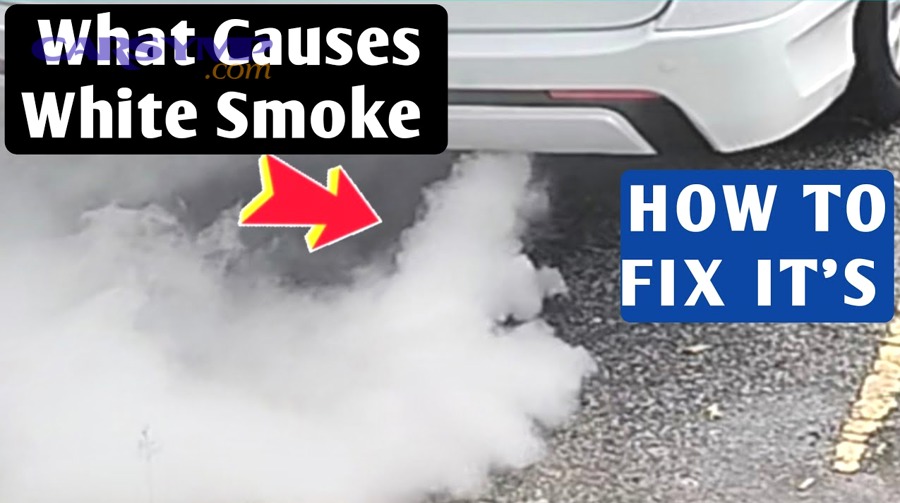
Many “smoke” complaints are actually look-alikes—condensation steam, oil burning off the exhaust exterior, or diesel regeneration—so the fix is correct identification, not parts replacement.
Next, use these quick differentiators to avoid chasing the wrong system.
Condensation steam vs true white smoke
- Condensation steam: thin, disappears quickly, no coolant loss
- True coolant smoke: lingers, smells sweet, coolant drops over time, may misfire on startup
If the “smoke” is only present on cold mornings and vanishes in minutes, it’s often normal.
Oil drips onto hot exhaust vs engine oil burning
Oil dripping onto a hot exhaust component can smoke outside the tailpipe:
- You may see smoke from under the hood or from beneath the car
- The tailpipe may look normal
- The smell is often sharp/burnt and localized near the leak
Engine Oil burning smoke diagnosis, by contrast, shows consistent tailpipe smoke patterns and often correlates with oil consumption.
Diesel DPF regen vs persistent black smoke
Some diesel systems produce temporary changes during regeneration, but persistent black smoke usually indicates a fault:
- Regen-related: time-limited event, often with different idle behavior
- Persistent black smoke: soot under normal driving, poor economy, power loss, or codes
If black smoke is continuous, return to Rich fuel mixture smoke diagnosis and airflow checks.
Additives, cleaners, and “smoke” myths
Additives can mask symptoms briefly, but they rarely fix the actual pathway:
- They may change viscosity or sealing temporarily
- They won’t repair cracked surfaces, worn rings, failed turbo seals, or coolant leaks
- They can delay diagnosis until damage worsens
If you want the fastest “true fix,” prioritize evidence-based classification (color + timing + fluids + data) over miracle solutions.
Evidence sentence (emissions skew & high emitters): According to a study by University of Denver from Chemistry & Biochemistry, in 2001, roadside measurements of 22,986 vehicles showed a skewed distribution where the “dirtiest” vehicles contributed disproportionately to fleet emissions—supporting the idea that persistent smoke often signals a high-emitting condition worth addressing early.