


Major repairs often feel inevitable when a car starts acting up, but a disciplined set of DIY checks can reveal whether you’re facing a true mechanical failure or a fixable, smaller cause. This checklist helps you collect objective clues before spending on big parts or labor.
Next, you’ll learn what a “pre-repair inspection checklist” really is, why it prevents misdiagnosis, and which findings are truly urgent versus merely annoying.
Then, you’ll follow a priority order—starting with the fastest checks that catch the most expensive mistakes—so you don’t waste time chasing symptoms while missing the obvious.
Introduce a new idea: once you can measure what’s happening (fluids, tires, brakes, codes, and patterns), you can decide confidently whether to DIY, book a shop visit, or stop driving immediately.
What is a DIY pre-repair inspection checklist, and why does it prevent major repair surprises?
A DIY pre-repair inspection checklist is a structured set of quick, low-cost checks that verifies the basics—fluids, air, power, traction, braking, and fault codes—so you can separate “simple causes” from “major repairs” before you authorize expensive work.
Next, the reason it prevents surprises is simple: most major repair quotes are built on symptoms, but symptoms can be shared by many small failures. A checklist forces you to confirm conditions (levels, leaks, wear, codes, repeatable patterns) instead of guessing.
What problems does this checklist catch early (before you replace expensive parts)?
A good checklist catches “cheap causes” that mimic expensive failures—like a loose intake clamp that looks like a sensor issue, a low coolant level that looks like overheating hardware failure, or worn tires that feel like suspension problems.
- Electrical basics that trigger chaos: weak battery connections, corroded terminals, loose grounds, blown fuses.
- Air/fuel issues that imitate major engine trouble: dirty air filter, vacuum leaks, failing PCV valve, bad MAF readings.
- Cooling and lubrication issues that turn small problems into big ones: low oil, contaminated oil, low coolant, leaks.
- Brake and tire issues that get misread as “alignment” or “suspension”: uneven wear, underinflation, warped rotors.
What tools do you actually need to do it safely?
You can do most checks with a few basics, and you should treat safety gear as part of the “tool list,” not optional.
- Must-have: flashlight, gloves, paper towels, tire pressure gauge, tread depth gauge (or coin test), basic OBD-II reader, small mirror, notepad/phone camera.
- Nice-to-have: multimeter, jack + stands (never rely on a jack alone), torque wrench, brake inspection mirror.
- Safety baseline: wheel chocks, eye protection, and a “no loose clothing” rule near belts/fans.
When is a checklist not enough (and a shop diagnosis is smarter)?
If you have a flashing check engine light, loss of oil pressure, overheating, brake failure symptoms, or fuel smell/leak, the checklist becomes a triage tool—you stop and escalate, rather than “keep testing.”
What should you check first to avoid wasting time and money?
Start with a fast triage: warning lights + obvious leaks + fluid levels + tire condition + brake feel, because these checks catch the highest-risk and highest-misdiagnosis issues in minutes.
Then, prioritize by two rules: (1) safety-critical first (tires/brakes/leaks), (2) damage-prevention second (oil/coolant/overheating/misfire), and only then chase comfort or performance issues.
What are the “stop driving” red flags you should never ignore?
These are the findings that can turn a small issue into an engine, transmission, or safety disaster quickly.
- Flashing check engine light (active misfire risk and potential exhaust damage pathway).
- Oil pressure warning light or oil pressure reading dropping unexpectedly.
- Temperature gauge spiking / overheating smell / steam (cooling system failure risk).
- Brake pedal sinking, grinding, or loss of braking.
- Fuel leak smell or visible dripping.
- Severe vibration + steering pull + bulge in tire sidewall.
Which quick checks catch the most common misdiagnoses?
If you only do five checks before authorizing major repairs, do these:
- Oil level + oil condition (low/dirty/metallic changes the whole diagnosis).
- Coolant level + signs of mixing/contamination.
- Battery terminals + voltage behavior (bad power causes fake sensor issues).
- Tire pressure + tread wear pattern (traction problems mimic suspension).
- OBD-II scan + freeze frame (codes + conditions at failure time).
How do you document findings so a mechanic can act on them?
Documentation turns your checklist into leverage: it reduces “exploratory labor” and speeds accurate diagnosis.
- Take photos of leaks, fluid levels/condition, tire wear, and warning lights.
- Write down when it happens: cold start, hot idle, under load, at highway speed.
- Note patterns like Smoke on startup vs under load clues—that timing detail can change the probable root cause dramatically.
- Save OBD data: codes, pending codes, freeze frame, readiness monitors.
How do you check fluids and spot early signs of expensive failure?
Check fluids using a repeatable routine—level first, then condition, then leaks—because fluids tell you whether the engine is being protected (oil), cooled (coolant), controlled (brake fluid), and shifted (transmission fluid where applicable).
To begin, fluid checks work best when you treat them as “evidence collection,” not just topping off: the color, smell, residue, and rate of loss matter more than the number on the dipstick.
How do you check engine oil correctly (level + condition)?
Do it when the car is on level ground, engine off, and oil has had a few minutes to drain back.
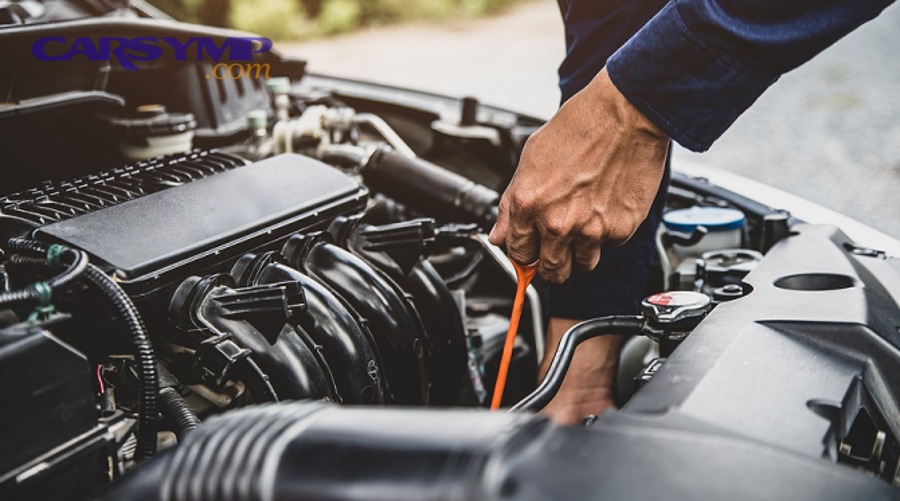
- Level: wipe dipstick, reinsert fully, pull and read between min/max.
- Condition: look for:
- Normal: amber to brown, slick, no grit.
- Concerning: metallic sparkle, burnt smell, thick sludge, milky/tan foam (possible coolant contamination).
- Leak check: inspect under engine, around valve cover, oil pan, filter, and drain plug.
Practical interpretation:
- Low oil + fresh wet leaks suggests sealing or drain/filter issues.
- Low oil with no visible leak may suggest burning—pair this with tailpipe evidence and driving pattern.
How do you check coolant and detect mixing, leaks, or overheating risk?
Only open the coolant cap when fully cool. Use the reservoir markings as the safer first read.
- Level: cold level should sit between min/max.
- Condition:
- Normal: bright color (varies by type), clean, no oil sheen.
- Concerning: oily film, brown sludge, floating debris, strong exhaust smell in reservoir.
- Leak points: radiator seams, hose clamps, water pump area, thermostat housing, heater core smell inside cabin.
Tie-in to symptoms:
Coolant loss plus white steam can mimic “head gasket” talk, but small hose leaks can create the same panic—so verify with visible evidence before assuming worst-case.
How do you check transmission fluid (if applicable) without causing damage?
Some cars have no dipstick and require a specific procedure—follow the owner manual. If you do have a dipstick:
- Warm check (often required): cycle through gears, park, engine running (depends on vehicle).
- Condition:
- Normal: pink/red or light brown (varies), mild smell.
- Concerning: dark brown/black, burnt smell, visible debris.
- Do not overfill: overfill can aerate fluid and create shifting problems.
How do you check brake fluid and why does it matter before “big repairs”?
Brake fluid condition impacts safety and pedal feel, and it’s often neglected until it becomes expensive.
- Level: should be near max; sudden drop suggests pad wear or a leak.
- Condition: clear to light amber is typical; very dark fluid indicates age/contamination.
- Moisture risk: brake fluid absorbs moisture over time, lowering boiling point under repeated braking.
Evidence: According to a study by University of Žilina from the Department of Road and Urban Transport, in 2025, brake fluid samples from real vehicles showed reservoir fluid could have a higher boiling point than fluid at the brake caliper, with differences up to 20°C, and 28% of sampled vehicles were unsatisfactory at some sampling point—supporting the need for proper, location-aware brake fluid checks. (reference-global.com)
How do you inspect tires and steering clues like a pro in 10 minutes?
Inspect tires by checking pressure, tread depth, and wear patterns—then confirm steering behavior—because tires are the only contact with the road, and tire faults often feel like suspension, alignment, or drivetrain failures.
Below, the key is to treat tire wear as a “map” of what’s wrong: the pattern often tells you whether the cause is inflation, alignment, balance, or worn components.
How do you check tire pressure and interpret what it means?
- Check when tires are cold (or adjust for heat).
- Use the door-jamb placard as your target PSI, not the sidewall max.
- Watch for:
- Consistently low pressure in one tire: slow leak, puncture, bead issue.
- All tires low: neglect or seasonal temperature drop.
- One tire high: incorrect fill, can reduce grip and create harsh ride.
Why it matters:
Underinflation increases heat and wear and can trigger handling complaints that get misdiagnosed as steering or suspension faults.
How do you measure tread depth and identify “replace now” situations?
- Measure in multiple spots across each tire (inner/middle/outer).
- Look for:
- Even wear: generally healthy alignment and inflation.
- Center wear: overinflation.
- Edge wear: underinflation or aggressive cornering.
- Inner/outer wear: alignment or worn suspension components.
Also check:
- Cupping/scalloping: often balance or suspension damping issues.
- Cracks/dry rot: age-related replacement signal even with decent tread.
What steering feel clues point to tire vs alignment vs mechanical issues?
Use repeatable tests on a safe road:
- Pulls to one side: swap front tires left-right (if safe/allowed) to see if pull changes—tire conicity can mimic alignment.
- Vibration at 55–75 mph: often balance or tire defect; vibration under braking points more to rotors.
- Clunk on turns: could be CV joint or suspension—note it, don’t guess.
Data point to keep in mind: NHTSA analysis of tire-related pre-crash factors discusses how underinflation and inadequate tread depth contribute to tire problems in the pre-crash phase. (crashstats.nhtsa.dot.gov)
How do you check brakes for safety and avoid “parts cannon” repairs?
Check brakes by confirming pedal feel, listening for noise patterns, and visually inspecting pads/rotors and fluid, because brake issues escalate from annoyance to danger quickly and are often mis-sold as unnecessary “full brake jobs.”
More importantly, a clean brake check prevents the two classic money traps: replacing parts without measuring wear, and ignoring the actual cause (caliper slide, fluid contamination, or hardware corrosion).
How do you test brake pedal feel and what does each symptom mean?
Do a low-speed test in a safe area.
- Firm pedal, normal stop: baseline healthy.
- Spongy pedal: air/moisture in fluid, flexible hose issue, or improper bleeding history.
- Pedal sinks while holding pressure: possible master cylinder or leak—urgent.
- Hard pedal with poor stopping: booster/vacuum issue or glazed pads.
How do you visually check pads and rotors without removing wheels?
You can often see pad thickness through the wheel spokes.
- Pads: look for remaining friction material (not the backing plate).
- Rotors: look for deep grooves, heavy rust ridges, cracks, or blue heat spots.
- Hardware: uneven pad wear often signals stuck caliper slides or piston issues.
How do you separate normal brake noise from “repair now” noise?
- Light squeak in damp conditions: can be normal.
- Consistent squeal: wear indicators or pad compound behavior—inspect soon.
- Grinding: likely pad material gone—stop and repair.
- Thump under braking: possible rotor issues or suspension play—investigate.
Evidence tie-in: real-world brake inspection guidance emphasizes replacing severely worn pads promptly and inspecting rotors for cracks, grooves, and heat damage patterns.
What can an OBD-II scan tell you before you approve major repairs?
An OBD-II scan can tell you what system is reporting a fault, what conditions triggered it (freeze frame), and whether the issue is active or intermittent—so you can avoid replacing expensive parts based on guesses.
Then, the best way to use scanning is to treat codes as starting points, not verdicts: you confirm likely causes with basic checks (air leaks, wiring, sensor readings, fuel trims) before buying parts.
How do you scan, save codes, and read freeze frame correctly?
- Plug scanner into OBD-II port (usually under dash).
- Key on (engine off) unless tool instructs otherwise.
- Read stored and pending codes.
- Open freeze frame: note RPM, coolant temp, speed, load, fuel trims.
- Check readiness monitors (useful after clearing codes).
A practical note: even modern DIY scanners vary in features; reviews and testing can help you choose a tool that reads live data and freeze frame reliably.
What do common code families mean (P0xxx, lean/rich, misfire)?
- P0xxx: generic powertrain codes (common across makes).
- Misfire codes (P0300–P030x): cylinder misfire; can damage emissions hardware if driven hard.
- Fuel trim / mixture codes: often point to air leaks, MAF issues, fuel pressure/injectors, or exhaust leaks upstream.
This is where Rich fuel mixture smoke diagnosis becomes relevant: if your scan shows rich-running clues (negative trims, rich codes, fuel smell), and you also see darker exhaust, you’re not just “seeing smoke”—you’re seeing unburned fuel symptoms that should change your plan.
How do you use live data to avoid replacing the wrong part?
Use a small set of “high-signal” PIDs:
- STFT/LTFT (fuel trims): confirm lean vs rich direction.
- MAF readings: sanity-check air measurement (especially after air filter/intake work).
- Coolant temp: confirm warm-up behavior and thermostat function.
- O2 / AFR sensor behavior: check responsiveness and plausibility.
Connect symptoms to conditions:
If you only see issues under load, your “feel-based diagnosis” is weak—log trims and misfire counts if available.
Evidence: According to a study by Korea Advanced Institute of Science and Technology from the Department of Mechanical Engineering, in 2002, testing found that misfire and ignition retard can drive catalytic converter thermal aging and deactivation, and catalyst temperature can exceed 1050°C under certain malfunction conditions—supporting why persistent misfire-related warnings should not be ignored. (pure.kaist.ac.kr)
How do you use your findings to decide DIY repair, shop diagnosis, or “stop driving”?
Use a simple decision framework: if the finding is safety-critical, damage-accelerating, or unknown but severe, you stop driving or book diagnosis; if it’s stable and measurable, you can DIY with confidence and avoid major repair overreach.

In addition, decision-making gets dramatically easier when you separate three categories: (1) Immediate stop, (2) Drive short-distance to diagnose, (3) Safe to DIY and monitor.
What findings justify a tow instead of driving?
These are “tow it” triggers because driving risks rapid damage or unsafe control.
- Flashing check engine light + shaking/rough running
- Oil pressure warning
- Overheating/steam
- Brake pedal sinking or grinding
- Fuel leak smell or visible fuel drip
This is also where the real question shows up: Can you drive with exhaust smoke? Sometimes you can, but sometimes you absolutely shouldn’t—so you decide based on the smoke type, severity, and whether you have supporting red flags (misfire, overheating, oil pressure, coolant loss).
How do you decide if exhaust smoke is “monitor” vs “repair now”?
Use a symptom matrix based on timing + smell + engine behavior:
- Smoke on startup vs under load clues:
- Startup puff that clears may point toward oil seeping past seals overnight.
- Smoke that worsens under load can point toward richer fueling, turbo/PCV issues, or heavy oil burning.
- If smoke is paired with misfire codes or flashing CEL: stop driving and diagnose immediately (risk to catalytic converter/emissions system).
- If smoke is light, no warning lights, fluids stable: monitor briefly while you test the likely systems (PCV, air intake, oil level, coolant level).
If you’re aiming for an exhaust smoke fix, treat it like evidence collection: confirm whether the smoke correlates with load, temperature, and fuel trims before replacing parts.
What’s the simplest “decision table” you can use at home?
Below is a practical triage table showing what your checklist results usually imply and what to do next.
| Finding (what you observed) | What it usually means | Best next step |
|---|---|---|
| Flashing CEL + shaking/rough running | Active misfire, risk of catalyst overheating | Stop driving, scan, diagnose ignition/fuel/air |
| Oil pressure warning or very low oil | Lubrication risk, possible engine damage | Shut off, check oil, tow if warning persists |
| Overheating / coolant loss | Cooling system fault or leak | Stop, cool down, inspect leaks, pressure test |
| One tire repeatedly low | Slow leak/puncture | Repair/replace tire, verify TPMS/valve |
| Spongy pedal / sinking pedal | Air/leak/master cylinder issue | Do not drive; inspect fluid/leaks; shop |
| Codes suggest rich + fuel smell | Fueling issue; possible rich mixture smoke | Check air filter/intake, MAF, trims, leaks |
How do you communicate your DIY results to a shop to reduce diagnosis cost?
Bring:
- Photos of leaks and warning lights
- Code list + freeze frame
- Your “when it happens” notes (cold start, hot idle, highway, under load)
- Fluid top-off history
A good shop can start with your evidence rather than repeating basic checks on the clock.
Contextual Border: At this point, you’ve fully answered the core “DIY checks before major repairs” intent; the next section expands into more specialized checks that deepen accuracy when basic results aren’t conclusive.
What advanced DIY checks help confirm a diagnosis before a big repair estimate?
Advanced DIY checks help you confirm root cause (not just symptoms) by testing pressure, leakage, electrical integrity, and system response—so you can validate or challenge a big repair estimate with stronger evidence.
Especially, these checks are best used when your basic checklist points to one of a few likely causes, but you need proof before paying for major work.
When is a compression or leak-down test worth doing?
It’s worth it when you suspect internal engine sealing issues (persistent misfire on one cylinder, low power, oil consumption with other causes ruled out).
- Compression test: quick “is this cylinder healthy?” check.
- Leak-down test: more precise—shows where pressure escapes (rings, valves, head gasket).
Use it to confirm whether “needs engine” is real—or whether you’re dealing with ignition, fueling, or airflow instead.
How do you use a vacuum test or smoke test for intake leaks?
- Vacuum gauge: identifies unstable vacuum patterns linked to leaks or valve timing issues.
- Smoke test (intake/EVAP): reveals leaks you can’t see (cracked hoses, intake gasket seep, EVAP leaks).
These tests are powerful because tiny leaks can cause big driveability symptoms and misleading codes.
What electrical checks prevent sensor misdiagnosis?
- Voltage drop testing across grounds and power feeds (more meaningful than just “battery voltage”).
- Connector inspection for corrosion, bent pins, oil intrusion.
- Wiggle test while watching live data to catch intermittent faults.
A surprising number of “bad sensor” diagnoses are actually wiring or power/ground integrity problems.
What “advanced” exhaust clues matter for smoke and mixture problems?
If you’re chasing smoke and drivability:
- Confirm whether rich-running data supports your Rich fuel mixture smoke diagnosis (fuel trims, O2/AFR behavior, fuel smell).
- Check for upstream exhaust leaks that skew O2 readings and trims.
- Consider backpressure tests if you suspect restriction after prolonged misfire/rich conditions.
This is where you decide whether you’re doing a targeted repair—or paying for a guess.
Evidence (sources used in this article)
- Brake fluid boiling point field sampling and findings from University of Žilina / Department of Road and Urban Transport (2025). (reference-global.com)
- Catalytic converter temperature and misfire-related thermal aging research from KAIST / Department of Mechanical Engineering (2002). (pure.kaist.ac.kr)
- Tire-related pre-crash factors and underinflation/tread depth context (NHTSA PDF). (crashstats.nhtsa.dot.gov)
- OBD-II scanner usefulness and DIY-oriented tool context (Car and Driver). (caranddriver.com)