


Exhaust smoke timing is one of the fastest ways to diagnose what’s going wrong: a brief puff on cold start most often points to oil that seeped in while the car sat, while smoke that grows under load usually tracks oil being pushed past worn seals or rings under pressure and heat.
Next, you’ll learn how to read the “startup pattern” like a mechanic—what a one-time morning puff suggests, what a warm restart means, and which symptoms separate valve stem seals from other look-alikes without guessing.
Then, you’ll see how “under-load smoke” behaves differently on turbo and non-turbo engines, why boost and crankcase pressure change the clues, and which checks narrow the diagnosis before you commit to big repairs.
Introduce a new idea: once you can label the timing pattern correctly, the rest becomes a simple decision tree—confirm the source, choose the safest next step, and plan the most realistic repair path.
What does exhaust smoke timing mean for diagnosis (cold-start vs under-load)?
Exhaust smoke timing is a diagnostic pattern that links when smoke appears (cold start vs under load) to how oil, fuel, or coolant enters the exhaust, letting drivers narrow likely causes quickly without tearing the engine apart.
Then, because timing can mislead when smoke color is misread, it helps to lock down what smoke color can—and cannot—tell you.

Is blue/blue-gray smoke always oil burning?
Yes—blue or blue-gray smoke is usually oil burning, and that matters because oil gets into the combustion stream through only a few common pathways: valve area leakage, piston ring/cylinder wear, turbo seals, or crankcase ventilation.
More specifically, three reasons make blue smoke a reliable oil clue:
- Oil’s burn characteristics create a bluish haze and lingering smell compared with normal water vapor.
- Oil smoke often follows load, idle, or startup patterns that match specific mechanical conditions (vacuum vs boost).
- Oil smoke commonly coincides with oil loss over time, even if it’s slow enough to miss day-to-day.
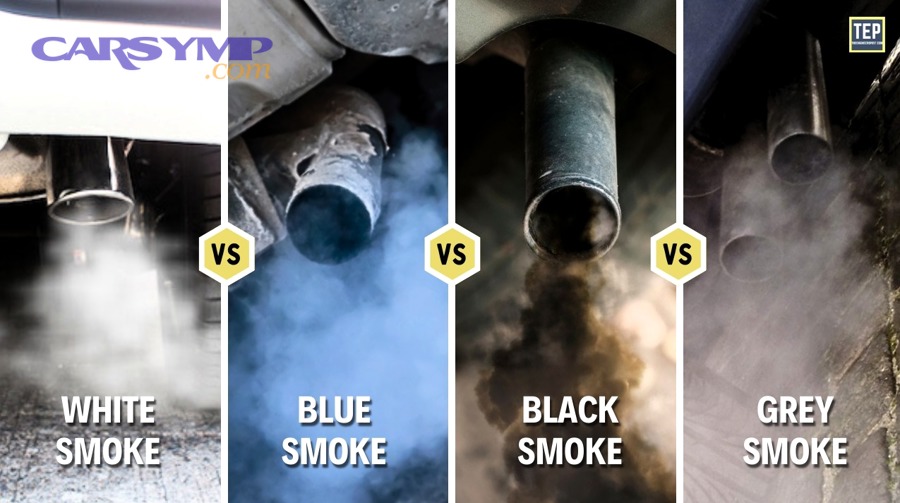
That said, drivers still confuse smoke colors. Thin white vapor that disappears quickly on a cold morning is often condensation, not a failure. Dense white smoke that lingers and sweet smell can point to coolant burning. Black smoke usually indicates an overly rich mixture or incomplete combustion. Those distinctions become important later when you’re deciding whether you’re chasing Blue vs white vs black smoke causes or strictly an oil-timing issue.
How is “cold-start smoke” different from “under-load smoke”?
Cold-start smoke is typically a stored-oil burn-off event, while under-load smoke is usually a pressure-driven leak event.
However, the key difference is the mechanism:
- Cold start (startup): After sitting, oil can slowly seep past worn valve stem seals/guides, pool in intake runners (via PCV), or collect in the turbo housing. On the next start, that oil burns off quickly—often as a single puff or short haze.
- Under load (acceleration/boost): Cylinder pressure and heat rise, boost (if turbocharged) increases, and crankcase pressure can spike. Those forces can push oil past worn rings, through turbo seals, or overwhelm a PCV system—so smoke increases as you step on it.
So if your smoke is “one puff then clean,” that suggests a stored-oil event. If it “gets worse the harder you accelerate,” that suggests a pressure-driven leak.
What are the fastest clues to log before you diagnose anything?
There are 7 main clues to log before diagnosis: smoke color, timing window, duration, engine temperature, driving trigger, fluid trends, and misfire/odor—because those criteria separate valve seals from rings and turbo issues more reliably than any single symptom.
To illustrate, capture these notes (even on your phone) for the next 2–3 drive cycles:
- Color and density: faint haze vs thick cloud
- When it happens: first start of the day, warm restart, idle then rev, hard acceleration, decel
- Duration: one puff, 10–30 seconds, continuous
- Temperature dependence: only cold, only hot, or both
- Trigger: boost, long idle, downhill engine braking, stop-and-go
- Fluid trend: oil level dropping, coolant level dropping, fuel smell
- Engine behavior: misfire, rough idle, oil smell in cabin, check engine light
Once you have those, the next sections become a clean match: startup pattern → most likely causes → simplest confirmation checks.
Which faults most commonly cause smoke only on startup?
There are 4 main types of startup-only smoke causes—valve stem seal leakage, valve guide wear, PCV oil pull, and turbo oil seepage—based on the criterion of oil being available to burn after the engine has been sitting.
Next, you’ll see why valve seals are often the first suspect—and how to avoid misdiagnosing a PCV or turbo problem as “bad seals.”
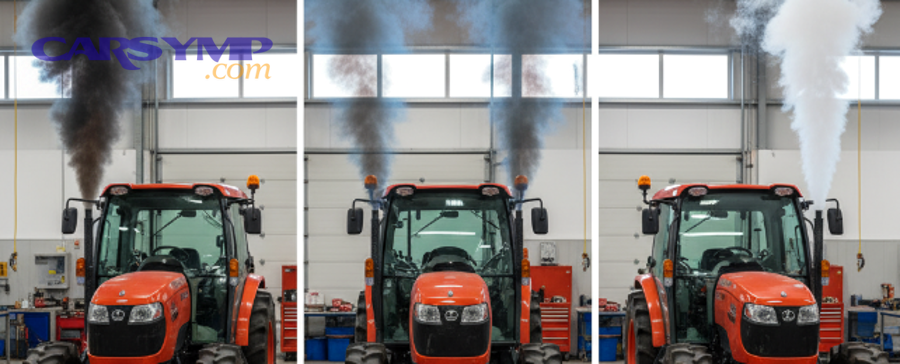
Are valve stem seals the #1 cause of a brief startup puff?
Yes—valve stem seals are the most common reason for a brief puff on startup, and three reasons explain why this timing is so specific:
- Gravity and time: When the engine sits, oil can slowly migrate down the valve stem area if seals are hardened or shrunken.
- Cold clearances: Cold parts can have slightly different clearances that let more oil slip past worn sealing surfaces.
- Instant burn-off: Once the engine fires, that stored oil burns quickly, so the smoke often fades fast.
Specifically, the “classic” valve seal symptom is: first start after an overnight sit → a puff of blue smoke → clears within seconds to a minute → mostly clean driving afterward. If that’s your pattern, you’re not “certain,” but you’re in the right neighborhood.
What other startup-only causes can mimic valve seal smoke?
There are 5 common mimic patterns—PCV ingestion, oil overfill, intake pooling after long idle, turbo seepage (turbo engines), and restricted oil drain-back—based on where oil can collect while the engine is off.
More specifically:
- PCV oil pull (common on high-mileage engines): A stuck PCV valve or saturated separator can let oil mist accumulate in the intake. After sitting, the next start burns it.
- Overfilled oil: Too much oil increases windage and mist, feeding the PCV system more oil to ingest.
- Long idle then start-like puff: After idling, oil can pool in the intake path and burn when you rev—this looks like startup smoke even though it happens at a stoplight.
- Turbo oil seepage: Oil can seep into the compressor/turbine housings after shutdown, then burn on the next start.
- Drain-back restriction: If oil returns slowly from the head area, it can collect and leak past guides/seals more readily after shutdown.
The practical takeaway is simple: startup smoke is “stored oil,” but stored oil doesn’t only come from valve seals.
How do you confirm startup smoke without tearing the engine apart?
Startup smoke confirmation is a 3-step check sequence—observe repeatability, run a targeted idle-to-rev test, and inspect the intake/PCV path—aimed at identifying the oil’s most likely storage location.
Below is the quick workflow:
- Step 1: Repeatability test
- Start the engine cold after sitting overnight: note puff duration.
- Shut it off warm for 10–20 minutes: restart and compare.
- If overnight is worse than warm restart, stored-oil seepage is likely.
- Step 2: Idle-then-rev “puff test” (safe, stationary)
- Let the engine idle 60–90 seconds.
- Give one smooth rev (don’t bounce off the limiter).
- A puff after idle can indicate valve guide/seal draw or PCV intake pooling.
- Step 3: Intake and PCV inspection
- Check PCV valve function and hoses for heavy oil residue.
- Inspect intake tract for wet oil pooling (light film is normal; pooling is not).
- Pull and read spark plugs if practical: oil-fouling on specific cylinders can hint at localized valve area issues.
If these checks point to stored oil in the intake rather than the valve area, your “valve seals” diagnosis changes—before you spend money.
Which faults most commonly cause smoke under load or hard acceleration?
There are 3 main types of under-load smoke causes—piston ring/cylinder wear, turbocharger oil seal failure, and PCV/crankcase pressure problems—based on the criterion of pressure and heat increasing oil entry during acceleration.
Next, we’ll separate these three because they often look identical from the driver’s seat, even though the fix is very different.
Does smoke under load usually point to piston rings or cylinder wear?
Yes—smoke that consistently worsens under load often points to oil control ring failure or ring/cylinder wear, and three reasons explain the pattern:
- Higher cylinder pressure increases blow-by and pushes oil past worn sealing surfaces.
- Higher temperature thins oil, making it easier to move past ring lands and cylinder walls.
- Sustained acceleration maintains the conditions, so smoke becomes repeatable on hills, merges, or boost events.
More specifically, ring-related smoke typically looks like: clean idle → smoke appears under hard acceleration → may stay present at higher RPM/load → oil consumption slowly increases over weeks/months.
How do turbocharger oil seal problems show up under boost?
Turbocharger oil seal problems are a boost-linked oil leak behavior where oil enters either the compressor side (intake/charge piping) or turbine side (exhaust) more as boost and shaft speed rise.
To better understand it, separate the two paths:
- Compressor-side oiling (intake side)
- Oily residue in charge pipes/intercooler
- Smoke may happen after a boost pull, then linger at idle
- Can be confused with heavy PCV oil mist
- Turbine-side oiling (exhaust side)
- Blue smoke more directly tied to boost/load
- Often stronger after long highway pulls
- Sometimes accompanied by turbo noise or reduced boost (not always)
The critical point: turbo smoke is not just “oil burning.” It’s oil burning because turbo shaft speed and pressure ratios change, which is why timing under load matters so much.
What’s the difference between under-load smoke from rings vs turbo vs PCV?
Rings win for consistency under load, turbo is best explained by boost correlation, and PCV is most often identified by inconsistent behavior plus oily intake evidence.
Specifically, use these decision cues:
- Rings/cylinder wear
- Smoke is repeatable on hills and hard acceleration
- Often paired with noticeable crankcase pressure/blow-by
- Oil consumption usually trends upward steadily
- Turbocharger
- Smoke appears with boost events and high shaft speed
- Oily charge pipes/intercooler can be a supporting clue
- Sometimes smoke appears after a boost pull when you lift off
- PCV system
- Smoke can appear at idle, startup, and sometimes under load
- Oil residue is strongest near PCV routing points
- Fix can be relatively simple compared with rings/turbo
If you want an exhaust smoke fix plan that doesn’t waste money, this comparison is where you start: match timing → choose the cheapest confirmation → only then consider heavy repairs.
How can deceleration/engine braking smoke change the diagnosis?
Deceleration smoke is a comparison clue where valve-area leaks usually dominate under high intake vacuum, while ring-related oil entry is more tied to load—so decel behavior helps break ties when startup vs under-load symptoms overlap.
However, because many drivers only notice “smoke after I get back on the gas,” you need to isolate the sequence.
Is smoke on deceleration more consistent with valve seals/guides than rings?
Yes—smoke during long deceleration or engine braking is more consistent with valve seals/guides, and three reasons explain the link:
- High manifold vacuum on decel can pull oil down the valve stem area if seals/guides are worn.
- Closed throttle reduces airflow while vacuum increases oil draw, making a puff more visible.
- Oil collects during the coast, then burns when you tip back into throttle.
In practice, this often appears as: long downhill coast → no smoke while coasting (hard to see) → puff when you reapply throttle.
How do you separate “after decel then throttle” puff from true under-load smoke?
The separation method is a 2-condition test: change only the deceleration event, then change only the acceleration intensity, and compare outcomes.
Try this simple approach:
- Test A: Decel emphasis
- Find a safe downhill stretch.
- Coast in gear for 8–12 seconds (engine braking).
- Lightly reapply throttle.
- If you see a puff right after the coast, valve-area draw is more likely.
- Test B: Load emphasis
- On a flat road, accelerate firmly from mid-RPM.
- Hold steady load for several seconds.
- If smoke builds with sustained load, rings/turbo/PCV move up the list.
This is where timing becomes a “tiebreaker.” Startup clues point to stored oil. Under-load clues point to pressure-driven leaks. Decel clues point to vacuum-driven draw.
What DIY checks narrow the cause before major repairs?
There are 6 high-value DIY checks—oil level/condition, PCV inspection, intake/charge pipe oil, spark plug reading, coolant trend, and scan data—based on the criterion of confirming the pathway oil (or other fluid) uses to reach combustion/exhaust.
Next, you’ll use these checks to avoid the classic mistake: replacing parts because “it seemed likely,” then discovering the real culprit later.
Can a faulty PCV system cause both startup and under-load smoke?
Yes—a faulty PCV system can cause both startup and under-load smoke, and three reasons make it a frequent “hidden driver”:
- PCV controls crankcase pressure, so failure changes how much oil mist gets pulled into the intake.
- Oil separators can saturate, storing oil that burns on the next start.
- Under load, crankcase pressure rises, and a weak PCV path can push/pull oil in unpredictable ways.
Practical checks you can do:
- Inspect PCV hoses for collapse, splits, or heavy wet oil.
- Check the PCV valve (if serviceable) for sticking/rattle/function.
- Look for oil pooling near the throttle body or intake manifold entry.
If PCV evidence is strong, it can shift your plan from “engine rebuild” fear to a targeted repair.
What should you check first: oil level, PCV, or turbo piping?
Oil level wins for speed and safety, PCV is best for root-cause narrowing, and turbo piping is optimal for boost-related confirmation.
Here’s the priority order most drivers should follow:
- Oil level and condition
- Overfill and contaminated oil can amplify smoke patterns quickly.
- Confirm the correct oil spec and that the level is not above the max mark.
- PCV system
- Often inexpensive to fix, and it can mimic both startup and under-load smoke.
- A clogged separator can store oil that burns at startup.
- Turbo/charge piping (if turbocharged)
- Check for abnormal oil pooling vs normal light film.
- Excess oil plus boost-timed smoke supports a turbo/PCV pathway.
This order creates a clean hook chain: the faster checks prevent you from misreading the slower, more expensive ones.
What patterns in spark plugs and tailpipe residue actually matter?
Spark plug and tailpipe patterns matter when they show directional evidence, not just “dirty parts,” because normal combustion still produces some soot.
Use these practical rules:
- Oil-fouled plug (meaningful)
- Wet/oily appearance
- Heavy deposits that don’t match the other cylinders
- Misfire codes that follow a specific cylinder
- Dry, light tan/gray (often normal)
- Typical combustion deposits over time
- Tailpipe residue
- Light black soot can be normal on many engines
- Wet oily residue plus blue smoke timing is more diagnostic
Below is a quick-reference table that ties timing patterns to likely causes and the best next checks. It’s designed to stop “parts swapping” and keep your diagnosis consistent.
| Smoke timing pattern | Most likely cause group | Best DIY check | Best confirmatory test |
|---|---|---|---|
| Puff only on first cold start | Valve seals/guides, PCV oil storage | PCV hoses/intake residue, idle-then-rev puff | Borescope for oil traces; cylinder leak-down if needed |
| Builds with hard acceleration/load | Rings/cylinder wear, turbo seals, PCV overwhelmed | Oil consumption trend, charge pipe oil (turbo) | Compression + leak-down; turbo shaft/boost system inspection |
| Puff after long decel then throttle | Valve seals/guides (vacuum draw) | Decel emphasis test (engine braking) | Leak-down + valve sealing evaluation |
If you’re also worried about budgeting, this is where Repair cost estimate by smoke type becomes practical: the same smoke cloud can represent anything from a low-cost PCV repair to major ring work—so confirm before pricing.
Which tests confirm the diagnosis (and when do you need them)?
Confirmation tests are targeted diagnostics—compression, leak-down, borescope, crankcase pressure checks, and turbo inspection—that translate timing clues into measurable evidence so you can commit to the correct repair path.

Besides, because smoke timing can point to more than one cause, confirmation tests protect you from the most expensive mistake: fixing the wrong system.
Is a compression test enough to diagnose rings vs valve seals?
No—a compression test alone is not enough to separate rings from valve seals reliably, and three reasons explain the limitation:
- Oil control rings can fail without collapsing compression, so you can burn oil with “okay” compression numbers.
- Valve stem seals don’t usually affect compression directly, so compression can look normal even with visible startup smoke.
- Cranking conditions differ from running conditions, especially under heat and load where your smoke shows up.
Compression is still useful, but it should be treated as a screening test—not a final verdict.
What does a leak-down test tell you that smoke timing cannot?
A leak-down test is a controlled measurement that shows where pressure escapes—rings into the crankcase, intake valve into the intake, exhaust valve into the exhaust—so it identifies the leakage path that smoke timing only suggests.
For example:
- Air heard from the oil fill/dipstick tube supports ring/cylinder sealing problems.
- Air heard at the intake/throttle body suggests intake valve sealing.
- Air heard at the tailpipe suggests exhaust valve sealing.
A leak-down test doesn’t “diagnose turbo seals” directly, but it can rule rings/valves in or out—shrinking the problem space fast.
When should you stop driving and get professional diagnostics?
Yes—you should stop driving and get professional diagnostics if smoke timing is paired with any of these high-risk signals, because they raise the odds of catalytic damage, misfire damage, or rapid oil loss:
- Oil level drops quickly (you’re adding oil frequently to stay safe)
- Misfire under load (flashing check engine light)
- Thick continuous smoke that doesn’t clear when warm
- Coolant loss or overheating signs (especially if white smoke is dense and persistent)
- Oil smell in cabin or symptoms of exhaust intrusion
According to a study by The University of Jordan from the Department of Industrial Engineering, in 2019, testing on a piston-cylinder system found the wear rate could be reduced to about half under certain conditions—highlighting how quickly ring/liner wear dynamics can change performance and emissions-related outcomes when sealing degrades.
That evidence matters for drivers because ring/liner wear is one of the most common roots behind under-load smoke: once sealing and oil control degrade, symptoms can escalate from “occasional haze” to “persistent smoke” faster than expected.
What are the less-obvious causes and decision factors behind smoke timing (turbo/PCV edge cases, oil choice, and special engines)?
Less-obvious smoke timing causes are edge cases—turbo oil drain restrictions, viscosity masking, injection system differences, and rare ring conditions—that explain why two engines can show similar smoke timing while needing completely different repairs.

Moreover, these micro clues are often what separates a confident diagnosis from an expensive guess.
How does a turbo oil drain restriction create smoke mainly under load?
A turbo oil drain restriction creates under-load smoke by backing up oil in the turbo center housing when shaft speed and oil flow increase, which can push oil past sealing surfaces and into the exhaust stream.
Common real-world triggers include:
- Kinked or partially blocked oil return line
- Sludge/coking that reduces drain flow
- Incorrect turbo installation angle (drain not gravity-friendly)
If your smoke is load-linked and you also see evidence of heat stress (burnt oil smell after a pull), a drain issue becomes a realistic branch—especially when boost behavior changes the symptom timing.
Can oil viscosity or overfilling mask or worsen startup vs under-load smoke?
Yes—oil choice and oil level can change smoke timing behavior, and three reasons explain why:
- Thicker oil can reduce seepage at startup, temporarily reducing a puff without fixing the worn seal.
- Overfilling increases windage, which raises oil mist and PCV ingestion risk.
- Wrong viscosity can worsen hot behavior, because oil thins more than expected at operating temperature.
So while thicker oil might reduce visible smoke, it can also delay a real diagnosis. Treat oil spec as a baseline, not a band-aid.
How do direct-injection engines change the smoke story compared with port injection?
Direct injection wins in fuel delivery efficiency, port injection is best for intake valve cleanliness, and both are similar in oil-burning mechanics—so smoke timing logic still applies, but intake/PCV clues can show up differently.
Specifically:
- DI engines often route PCV vapors in ways that make intake deposits more common, which can complicate idle quality and misfire symptoms alongside oil ingestion.
- Port injection can keep valves cleaner, but it doesn’t prevent oil entry from rings, turbo seals, or valve stem seals.
So the macro rule remains: startup smoke suggests stored oil; under-load smoke suggests pressure-driven entry; decel puffs suggest vacuum draw.
What rare ring conditions (stuck oil control rings, cylinder glazing) produce “only under load” smoke?
There are 2 rare ring-condition types—stuck oil control rings and cylinder glazing—based on the criterion of oil not being scraped properly under heat and pressure, which can present as load-linked smoke even when basic compression looks acceptable.
More specifically:
- Stuck oil control rings can occur from deposit buildup, short-trip driving, or long oil intervals, reducing oil scraping and increasing burn under load.
- Cylinder glazing can reduce ring seating effectiveness, changing oil film behavior and allowing oil to burn more when the engine is worked.
In short, if your timing points to rings but your first-pass tests look “not terrible,” these rare conditions are why a borescope and proper leak-down interpretation can still be decisive.