


A rich fuel mixture (running rich) means the engine is receiving more fuel than the available air can burn efficiently, and that imbalance can show up as black smoke from the tailpipe, strong fuel odor, poor mileage, and fouled plugs. The fastest way to diagnose it is to confirm the engine is truly over-fueling (not another smoke type), then use fuel trims and a few targeted tests to locate why the ECU or fuel system is adding too much fuel.
Next, you’ll learn how to separate “normal rich” moments (like cold start or heavy load) from a real problem, because diagnosing rich exhaust smoke is mostly about context: when it happens, what it smells like, what the scan tool shows, and what parts have the power to skew fueling.
Then, we’ll break down the most common root causes—sensor errors, fuel pressure and injector leaks, EVAP purge faults, restricted airflow, and exhaust issues—and show you the exact diagnostic path that prevents random parts swapping.
Introduce a new idea: once you follow a structured test flow, the “mystery black smoke” becomes a set of measurable clues you can confirm and fix.
What does “running rich” mean, and why can it create black exhaust smoke?
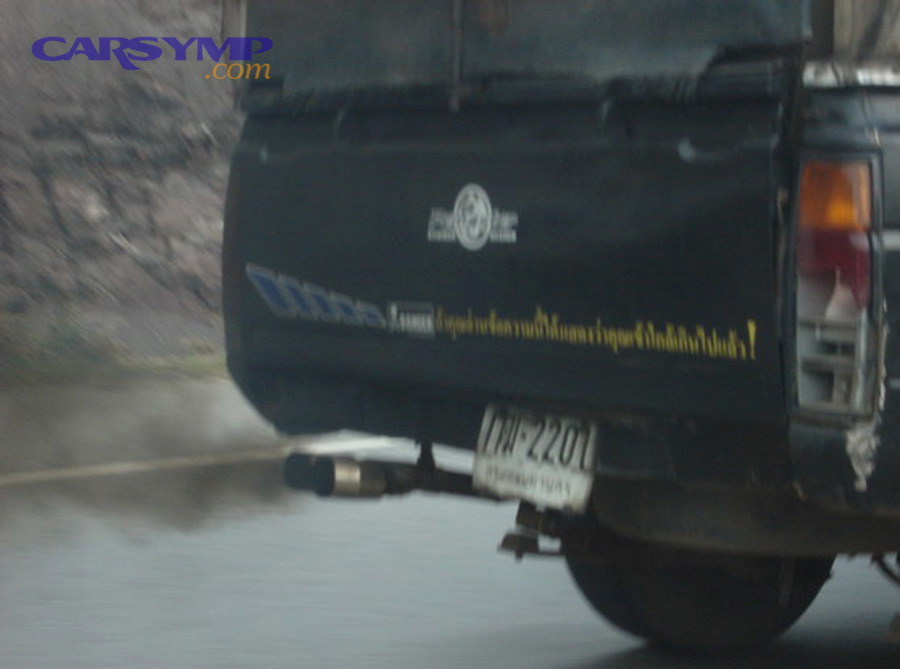
Running rich means the engine is operating with too much fuel relative to air (a low air-to-fuel ratio vs what combustion needs), and it can create black exhaust smoke when unburned fuel and carbon-rich byproducts leave the cylinder as soot. To better understand why rich mixture smoke happens, start by separating the definition from the mechanism and then the normal vs abnormal scenarios.
Is a rich mixture the same thing as “too much fuel” (over-fueling)?
Yes—in diagnostics language, “running rich” usually means over-fueling compared with the air actually entering the engine. Specifically:
- The ECU may be commanding extra fuel because it believes more air is present or the engine is cold.
- Or the fuel system may be delivering extra fuel mechanically (leaking injector, excessive fuel pressure), even if the ECU isn’t requesting it.
The important nuance is control vs failure:
- Commanded rich = the ECU is intentionally adding fuel.
- Uncommanded rich = fuel is entering when it shouldn’t.
This distinction matters because the first group points you toward sensor inputs and ECU logic, while the second group points you toward hardware (injectors, regulator, purge system).
How does a rich mixture turn into soot and black smoke?
A rich mixture turns into black smoke when there isn’t enough oxygen in the chamber to fully oxidize the fuel into CO₂ and H₂O. Instead, combustion can leave:
- CO (carbon monoxide) and unburned hydrocarbons (fuel vapor),
- and, under richer pockets and poor mixing, soot (carbon particles) that can appear as black smoke.
Black smoke is most likely when richness combines with one or more amplifiers:
- Poor atomization (injector dribble, low fuel quality, deposits)
- Reduced airflow (clogged filter, restricted intake)
- Misfires (fuel exits unburned)
- Cold combustion (cold start enrichment, low cylinder temp)
When is a rich mixture “normal” (cold start, heavy load) vs a problem?
A brief rich condition can be normal when the engine or catalytic converter needs protection or stability:
- Cold start: extra fuel helps keep the engine running and can speed catalyst warm-up.
- Heavy load / boost: many engines enrich slightly to reduce combustion temperatures and prevent knock.
- Transient throttle changes: short spikes can happen while the ECU stabilizes fueling.
It becomes a problem when you see any of these patterns:
- Black smoke continues after warm-up
- Fuel trims are consistently correcting rich (negative corrections)
- Strong fuel smell, poor mpg, rough idle, plug fouling, or catalytic converter overheating symptoms
Is your car truly running rich, or is it another smoke type?
No diagnostic path is reliable until you confirm the smoke is actually from a rich mixture and not oil or coolant. Next, compare smoke color, smell, and the conditions under which it appears, because “black smoke” as a symptom can overlap with misfire, oil control issues, and even sensor reporting errors.
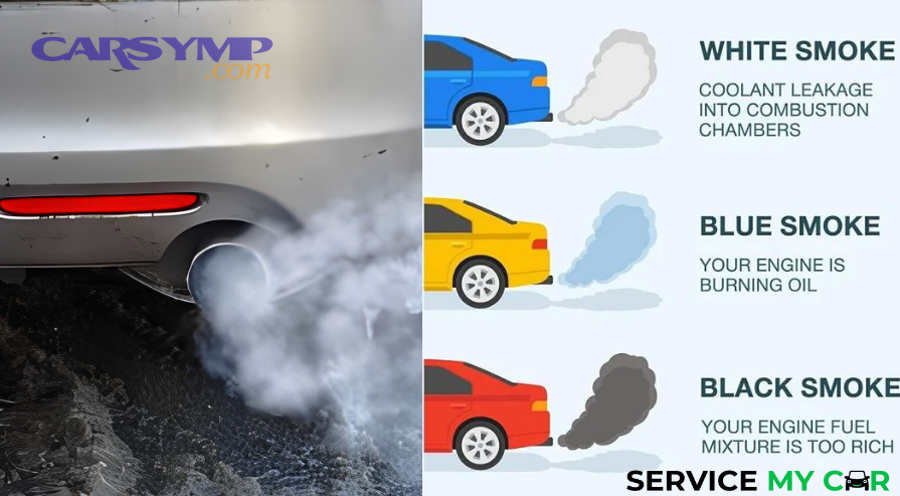
What’s the quickest way to tell blue vs white vs black smoke causes?
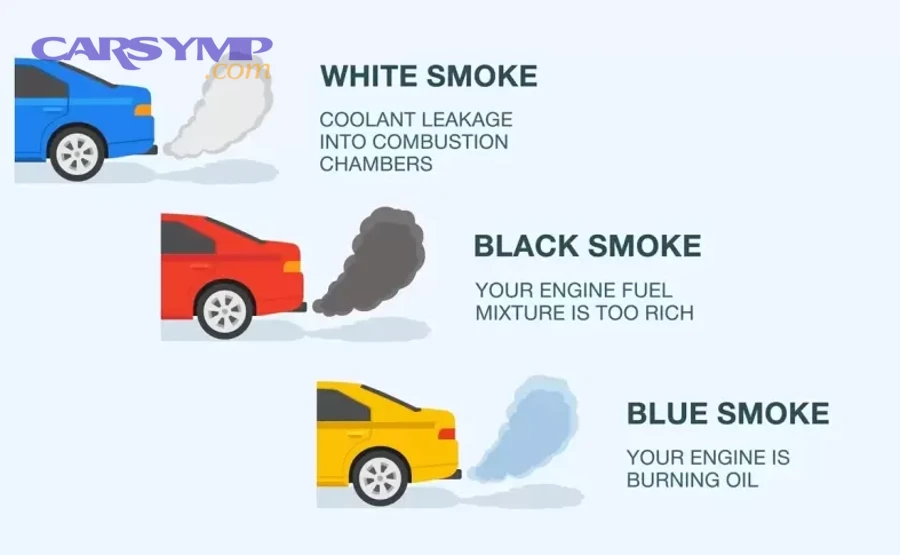
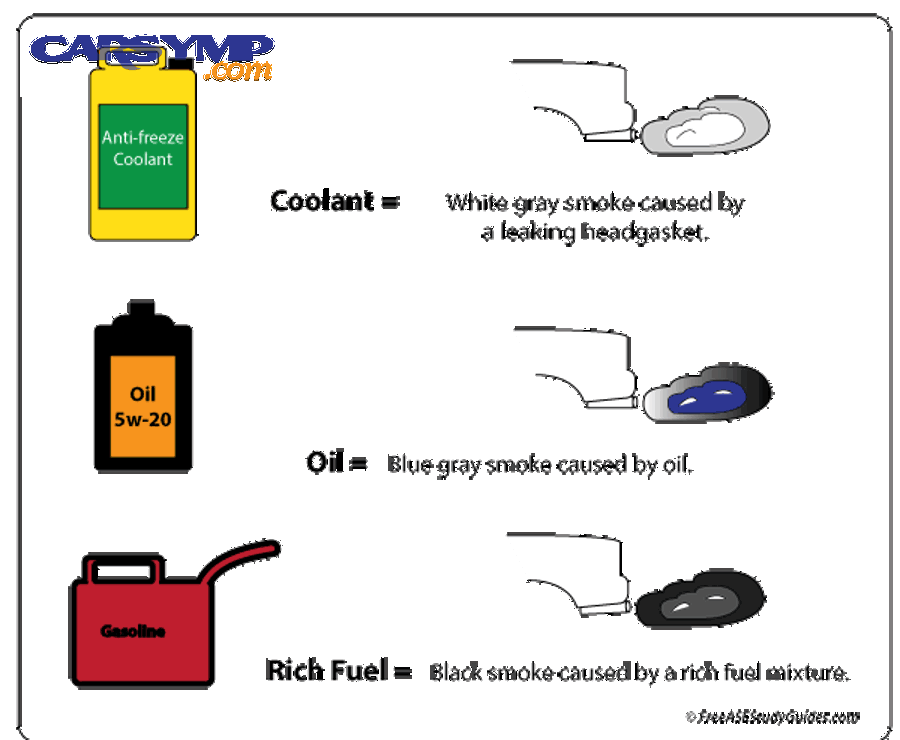
Use a fast triage rule:
- Black smoke: usually too much fuel (rich mixture), often smells like gasoline, may sting your eyes.
- Blue smoke: typically oil burning (oil entering combustion), smells acrid/“burnt,” may linger and haze.
- White smoke: often coolant burning (sweet smell) or just condensation/steam if it disappears quickly.
This is your quick reference for Blue vs white vs black smoke causes:
- Black = fueling/combustion balance
- Blue = oil control (rings/valve seals/turbo seals on boosted engines)
- White = coolant intrusion or water vapor
What smells, symptoms, and driving conditions point to a rich mixture?
A rich mixture usually brings a cluster of signs:
- Fuel odor at the tailpipe or around the engine bay
- Poor fuel economy
- Rough idle, hesitation, or stumble
- Sooty tailpipe, black deposits, or black smoke on acceleration
- Spark plug fouling (dry black soot)
- DTCs like P0172/P0175 (system too rich), sometimes P030x misfire codes
Driving-condition clues:
- If black smoke appears on tip-in acceleration, suspect enrichment + airflow measurement errors or injector issues.
- If it happens at idle, suspect leaking injectors, EVAP purge stuck open, incorrect coolant temp reading, or MAF/MAP skew at low airflow.
Can a misfire or oil consumption mimic a rich condition on scan data?
Yes—both can confuse you if you rely on one signal:
- Misfire mimic: A cylinder misfire can push oxygen into the exhaust (unburned O₂), which can make upstream sensors report lean, causing the ECU to add fuel—creating a feedback loop that looks like fueling trouble.
- Oil mimic: Oil burning can contaminate O₂/AFR sensors and catalytic converters, leading to inaccurate readings and bad trim behavior.
That’s why a correct workflow uses:
1) smoke color + odor + timing,
2) fuel trims + sensor plausibility,
3) confirmation tests (pressure, injector leak-down, purge control).
What are the most common causes of a rich fuel mixture?
The most common causes of a rich fuel mixture fall into three buckets: bad inputs (sensors), too much delivered fuel (fuel/EVAP), or too little air (airflow restriction/measurement errors). More importantly, each bucket has a predictable “signature” in fuel trims, drivability, and when the smoke appears.
Which sensors commonly cause over-fueling? (MAF/MAP, O2/AFR, coolant temp, IAT)
Key sensors that can bias fueling rich:
- MAF (Mass Airflow): If it over-reports airflow, ECU injects too much fuel. Dirty MAF elements or improper oiled filters are common triggers.
- MAP (Manifold Absolute Pressure): If MAP is skewed, the ECU may miscalculate load and fueling, especially on speed-density systems.
- Upstream O₂ / AFR sensor: If it reports lean falsely, ECU adds fuel. If it’s slow, it can cause oscillation and rich spikes.
- ECT (Engine Coolant Temp): If ECT reads colder than reality, ECU enriches like it’s still warming up.
- IAT (Intake Air Temp): Can shift air-density assumptions; usually smaller impact than MAF/MAP but still relevant.
Practical clue: Sensor-caused richness is often consistent and “logical” (the ECU thinks it’s doing the right thing), and fuel trims often show strong corrections while pressure and injectors test okay.
How do fuel system faults create a rich condition? (leaking injector, high fuel pressure, EVAP purge)
Fuel system issues create uncommanded extra fuel, which can produce heavy black smoke, misfires, and plug wetting:
- Leaking injector(s): Dribbles fuel after shutdown or at idle. Often causes hard starts, fuel smell, and one cylinder fouling more than others.
- High fuel pressure: Faulty regulator, restricted return (return-style), or command issues (returnless) can increase injector flow at the same pulse width.
- EVAP purge valve stuck open: Pulls fuel vapors into intake at idle/cruise when it shouldn’t—commonly creates rich idle, rough running, and long-term trim shifts.
Can intake/exhaust faults cause rich codes? (restricted air filter, exhaust leaks before O2)
Yes—because “rich” can come from less air than expected or bad exhaust sampling:
- Restricted intake / clogged air filter: Less air enters, mixture goes rich under load.
- Collapsed intake duct / stuck throttle issues: Can reduce airflow.
- Exhaust leaks ahead of upstream sensor: Can draw in outside air and distort readings, causing the ECU to “chase” the mixture.
- Restricted exhaust/catalyst: Can alter airflow dynamics and cause driveability that looks like fueling errors (though the underlying failure may be exhaust restriction).
What diagnostic tests confirm a rich mixture and pinpoint the root cause?
A rich-mixture diagnosis is fastest when you combine fuel trims (STFT/LTFT) with sensor plausibility checks and a small set of mechanical tests (fuel pressure, injector leak-down, purge control). To begin, treat your scan tool like a measurement device, then use “DIY checks before major repairs” to confirm what the numbers mean in real hardware.
What do STFT/LTFT fuel trims tell you about richness?
Fuel trims show how hard the ECU is working to correct the mixture:
- STFT (Short-Term Fuel Trim): immediate correction
- LTFT (Long-Term Fuel Trim): learned correction over time
General interpretation (rule-of-thumb, varies by platform):
- Negative trims = ECU is subtracting fuel → tends to indicate rich conditions
- Positive trims = ECU is adding fuel → tends to indicate lean conditions
How to use trims to isolate the cause:
- Rich at idle but improves at higher RPM/load: suspect injector leak, EVAP purge, or sensor skew at low airflow (MAF/ECT).
- Rich across the range: suspect MAF over-reporting, fuel pressure high, or biased upstream sensor.
- One bank rich: suspect bank-specific injector(s), exhaust leak effects, intake distribution issues, or a bank-specific sensor issue.
Which scan tool checks and live data PIDs matter most?
Prioritize PIDs that answer: “Is the ECU commanding it, or is fuel getting in anyway?”
- Fuel trims (STFT/LTFT)
- MAF g/s (compare to expected at idle and at known RPM/load)
- ECT and IAT (plausibility: do they match reality?)
- Upstream O₂/AFR behavior (switching, response, equivalence ratio if available)
- Commanded equivalence ratio / lambda (where supported)
- Misfire counters
- Fuel rail pressure (if direct injection or sensor-equipped systems)
- EVAP purge command vs actual (if available)
Optional but powerful:
- Mode $06 results for O₂ sensor and catalyst monitors
- Freeze frame for when rich code set (RPM, load, ECT)
What DIY checks before major repairs should you do under the hood?
Do these quick checks before you buy parts:
- Air intake basics
- Inspect air filter, ducting, clamps, and vacuum lines
- Ensure no collapsed hose or blocked snorkel
- MAF sanity check
- Look for contamination on the sensor element
- Verify the connector pins are clean and tight
- If cleaning, use proper MAF cleaner and let it dry fully
- Spark plug read
- Pull plugs and compare cylinders
- Dry sooty black plugs often point to rich combustion; one cylinder worse than others can point to a leaking injector
- EVAP purge quick test
- If idle is rough and trims are negative, pinch/temporarily block the purge hose (where safe/appropriate) and see if trims improve (vehicle-specific—use caution)
- Vacuum and PCV routing check
- Incorrect hose routing after repairs can create false sensor readings and odd trim behavior
When do you need advanced tests (smoke test, fuel pressure, injector balance)?
Use advanced tests when scan data suggests uncommanded fuel or airflow measurement uncertainty:
- Fuel pressure test: Required if you suspect regulator/return issues or pressure out of spec.
- Injector leak-down / balance test: Best when one cylinder shows heavy fouling, hard starts, or fuel smell after shutdown.
- Smoke test: Great for intake leaks (usually lean), but still useful to confirm system integrity and prevent chasing the wrong issue.
- Exhaust backpressure test: If power loss suggests restriction contributing to abnormal fueling behavior.
Evidence: According to a study by Columbia University from the Fu Foundation School of Engineering and Applied Science, in 2010, at a fuel-rich condition (relative air–fuel ratio 0.98), CO emissions increased from 1.5% to 2.5% and total hydrocarbon emissions increased from 500 ppm to 680 ppm as CO₂ fraction rose in the fuel mixture. (columbia.edu)
What is the best exhaust smoke fix for a rich mixture, and what should you repair first?
The best exhaust smoke fix for a rich mixture is to repair the root cause of over-fueling (commanded or uncommanded), then verify the correction using fuel trims and a complete drive cycle. More importantly, you should repair in a “cheap-to-prove, expensive-to-replace” order so you don’t waste time and money.
Which repairs are low-cost wins? (air filter, MAF cleaning, vacuum leaks, spark plugs)
Start with repairs that are inexpensive and commonly effective:
- Replace a clogged air filter and correct intake restrictions
- Clean the MAF (if appropriate) and ensure proper airbox sealing
- Repair obvious vacuum/PCV routing issues (even though vacuum leaks tend to go lean, incorrect routing can distort load calculations)
- Replace fouled spark plugs (and correct the cause—new plugs alone won’t fix rich fueling)
- Fix obvious exhaust leaks that may corrupt sensor sampling
If black smoke and richness are mild, these steps can restore normal fuel trims quickly.
When do you replace sensors vs fix wiring/grounds?
Replace sensors when:
- You’ve confirmed plausibility failures (e.g., ECT reads 20°F colder than ambient after sitting overnight)
- The sensor response is slow or stuck (O₂/AFR response tests fail)
- Data is inconsistent with reality and persists after connector inspection
Fix wiring/grounds when:
- PIDs drop out, spike, or change when you wiggle the harness
- You see corrosion in connectors
- A known shared ground shows voltage drop under load
A practical rule: prove the sensor is lying before replacing it. For example, validate ECT with an infrared thermometer at the thermostat housing (vehicle-safe procedure) and compare.
How do you address fuel pressure and injector problems safely?
For fuel-pressure and injector problems, safety and confirmation matter:
- Fuel pressure high: verify regulator operation (vacuum reference on return-style) or command behavior (returnless). Fix the regulator, pump control, or restriction as identified.
- Leaking injector: confirm with pressure decay or plug/cylinder evidence, then replace or service the injector(s) as needed.
- EVAP purge stuck open: replace the purge valve and confirm purge duty/behavior returns to normal.
After repairs, always:
- Clear codes
- Reset trims (if appropriate for the platform)
- Verify no fuel smell and no smoke under the original triggering condition
How do you verify the fix (drive cycle, trims, emissions readiness)?
Verification is where most DIY repairs fail—because the symptom “seems better,” but trims still tell the truth.
Use this checklist:
- Warm engine fully; confirm ECT and closed loop operation
- Observe STFT/LTFT at idle, steady cruise, and moderate acceleration
- Confirm trims stay in a normal band and don’t trend steadily negative
- Complete an OBD readiness drive cycle (vehicle-specific) and ensure monitors set
- Recheck tailpipe: no black smoke on the same throttle input that previously produced smoke
If trims normalize but smoke persists, revisit section 2—smoke type confusion is common.
Contextual Border: At this point, you have everything needed to diagnose and repair a rich mixture causing black smoke. Next, we expand into misdiagnosis traps, collateral damage risks, and how rich-running overlaps with other smoke diagnoses.
How do you avoid misdiagnosing rich-mixture smoke and causing extra damage?
Yes—you can misdiagnose rich-mixture smoke easily if you treat “black smoke” as a single-cause symptom, and that mistake can cost you a catalytic converter, sensors, and time. More importantly, correct diagnosis protects expensive components while keeping you from confusing fuel smoke with oil or coolant problems.
What happens to the catalytic converter and O2 sensors when you drive rich?
Driving rich can:
- Overheat the catalytic converter because unburned fuel burns in the catalyst
- Coat O₂/AFR sensors and reduce response speed/accuracy
- Increase soot and deposits that worsen combustion quality (a self-reinforcing loop)
If you notice sulfur smell, glowing converter, severe misfires, or rapid mpg drop, treat it as urgent.
How does rich running relate to Oil burning smoke diagnosis and Coolant burning smoke diagnosis?
Rich running can overlap with other smoke diagnoses in two main ways:
- Oil burning smoke diagnosis overlap: Oil consumption can foul O₂ sensors and create unstable feedback fueling, sometimes leading you to blame fuel control when the base issue is oil control (rings/valve seals/turbo seals). Blue smoke can also look dark in low light, so confirm by smell and plug deposits (oil tends to be wet/ashy, rich soot tends to be dry/black).
- Coolant burning smoke diagnosis overlap: Coolant intrusion can cause misfire and abnormal exhaust oxygen readings, which can distort fuel trims and lead you to chase a rich code that is actually secondary to combustion disruption.
The safest approach is to confirm:
- smoke color + odor + persistence,
- then verify with trims and one mechanical confirmation test (pressure, leak-down, cooling system test) if the symptoms don’t match cleanly.
When should you stop driving and get professional help?
Stop driving (or drive only to a shop) if:
- Black smoke is heavy and continuous
- Misfires are severe (flashing CEL)
- Fuel smell is strong (possible fuel leak risk)
- The engine runs rough enough to risk catalyst damage
- Fuel pressure readings are far out of spec or you suspect injector dumping fuel
A professional can perform injector balance testing, scope pattern analysis, and advanced smoke/pressure testing quickly.
How can you prevent rich conditions long-term? (maintenance checklist)
Prevention is mostly “clean air + correct sensing + stable fuel delivery”:
- Replace air filter on schedule; avoid over-oiling aftermarket filters
- Keep intake tract sealed (no unmetered air paths or loose clamps)
- Use quality fuel and keep injectors clean (periodic maintenance where appropriate)
- Address misfires immediately (coils/plugs) so the ECU doesn’t chase fueling errors
- Fix small EVAP issues early (purge valves and cracked lines)
Evidence: According to a study by the University of Washington from the Department of Mechanical Engineering (Ph.D. thesis research), in 2019, soot exposed repeatedly in fuel-rich and fuel-lean regions produced primary particles 2–3 times the size of soot from a non-recirculating flame, highlighting how fuel-rich exposure can accelerate soot growth mechanisms. (digital.lib.washington.edu)