


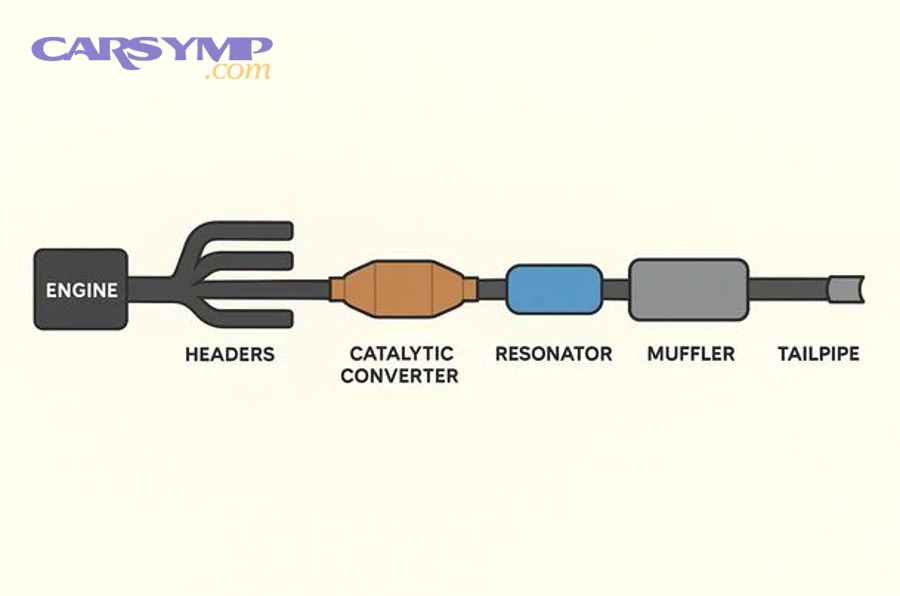
If you’re trying to understand your exhaust system, the simplest way to get it right is to separate the jobs: the muffler acts as a silencer that reduces overall loudness, the resonator acts as a tone tuner that targets specific frequencies (often the annoying “drone”), and the catalytic converter acts as an emissions cleaner that reduces harmful pollutants before they leave the tailpipe.
Next, sound confusion is common because a resonator can look like a small muffler and both can change how the car sounds. Still, they’re built for different outcomes: mufflers focus on volume control, while resonators focus on tone shaping and frequency cancellation, especially at cruising speeds.
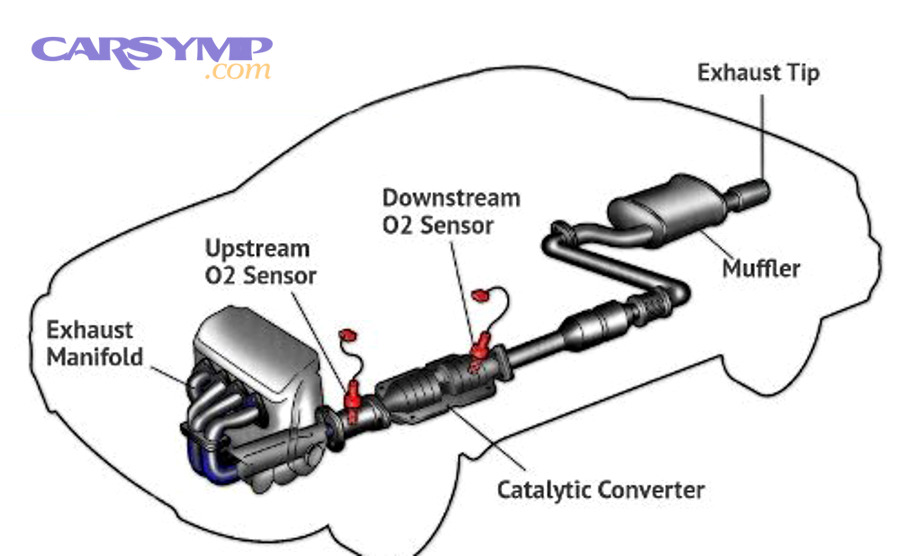
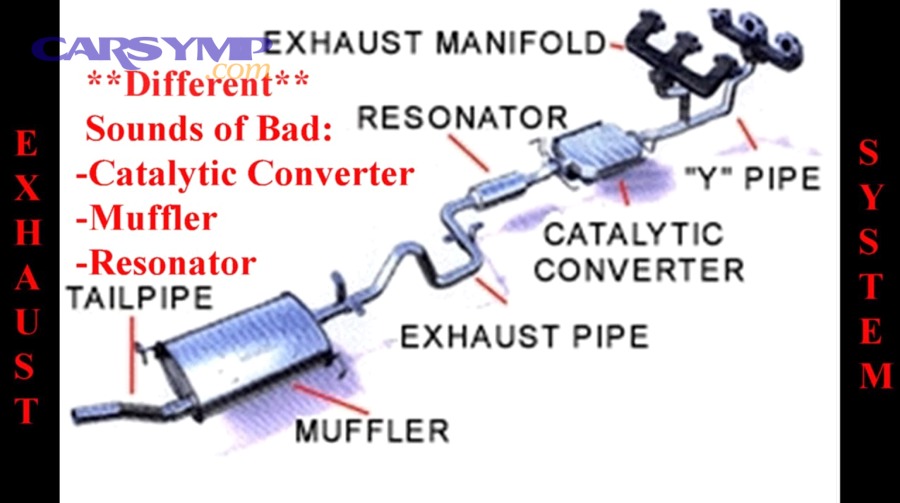
Then, placement matters because where each part sits explains what it can do. The catalytic converter is usually closer to the engine because it needs heat to work well, while the resonator and muffler are typically farther downstream where packaging and sound tuning are easier.
Introduce a new idea: once you see how silencing, tone tuning, and emissions cleaning work as a chain, it becomes much easier to diagnose noise changes, understand muffler replacement quotes, and decide whether you’re looking at a simple clamp fix or a more involved exhaust repair.
What does each exhaust part do: muffler, resonator, and catalytic converter?
A muffler reduces overall exhaust loudness, a resonator reshapes exhaust tone by canceling specific frequencies, and a catalytic converter reduces pollutants by converting harmful gases into less harmful byproducts as exhaust flows through it.
To better understand why these parts are often confused, it helps to treat them like three specialists working on the same “signal”: exhaust gas flow creates noise, vibration, and emissions, and each component targets a different piece of that output.
What is a muffler and what is it designed to reduce?
A muffler is a noise-control chamber at the rear portion of the exhaust that reduces the overall volume of exhaust sound by dissipating acoustic energy through internal passages, baffles, and/or sound-absorbing packing.
More specifically, the muffler is designed to address the broad “whoosh” and “pulse” energy produced when exhaust valves open and close thousands of times per minute. That pulsing creates pressure waves, and those waves are what your ears experience as exhaust noise.
A practical way to think about a muffler is “global volume control.” It doesn’t try to surgically remove one single tone; it aims to make the entire exhaust output quieter and more civil.
What a muffler typically changes
- Loudness: mufflers reduce the overall decibel level you hear outside the car.
- Harshness: the right design can soften sharp edges in the sound (less “bark”).
- Character: muffler design can also influence tone, but tone is usually not its primary job.
Where mufflers fail in real life
When the muffler is rusted through, cracked, or internally damaged, the car often gets noticeably louder. That’s why quotes for muffler replacement commonly follow an owner complaint like “it suddenly sounds like a truck.”
Common Muffler failure symptoms include:
- A sudden increase in exhaust noise
- A new rattling sound (loose internal baffles)
- Visible rust holes or sooty stains around seams
- Exhaust smell that seems worse near the rear of the vehicle
Because mufflers are heavy and hang at the rear, a muffler problem is also where Exhaust hanger and mount replacement needs show up. A broken hanger can let the muffler sag, causing a banging noise over bumps, stress cracks, or leaks at the joints.
To keep the hook chain moving: once you know the muffler is mostly a silencer, the next question becomes what the “tone tuner” does that a muffler often can’t.
What is a resonator and what sound problem is it meant to solve?
A resonator is a tone-tuning chamber that reduces or reshapes specific sound frequencies, often targeting the booming “drone” you hear inside the cabin at steady highway speed.
Specifically, resonators are often tuned to cancel or weaken a narrow band of frequencies that are most annoying in real driving. That’s why two cars can have similar mufflers but sound different at cruise: the resonator design is shaping what remains after the muffler’s general quieting work.
What resonators are best at
- Drone control: that low-frequency booming at 1,500–2,500 RPM ranges (varies by car)
- Tone shaping: smoothing rasp, reducing “buzz,” or changing pitch character
- Cabin comfort: you may not notice big outside volume changes, but you feel the difference inside
Here’s the key hook: if a muffler is global loudness control, the resonator is “selective editing.” Many resonators use principles related to Helmholtz resonance (a tuned cavity that can cancel specific frequencies), which is why changes in resonator size and geometry can materially change what frequencies get attenuated.
According to a study by the University of Michigan (automotive acoustics research published as an SAE technical paper), in 1994, changing Helmholtz resonator cavity dimensions measurably affected transmission loss behavior and shifted resonance frequency compared to classical predictions. (mae.osu.edu)
That evidence matters for everyday drivers because it explains why a “universal resonator” sometimes helps and sometimes doesn’t: tuning is real, and geometry matters.
Now that tone control is clear, the next piece is the emissions cleaner—the one that’s less about sound and more about what comes out of the tailpipe.
What is a catalytic converter and what pollutants does it reduce?
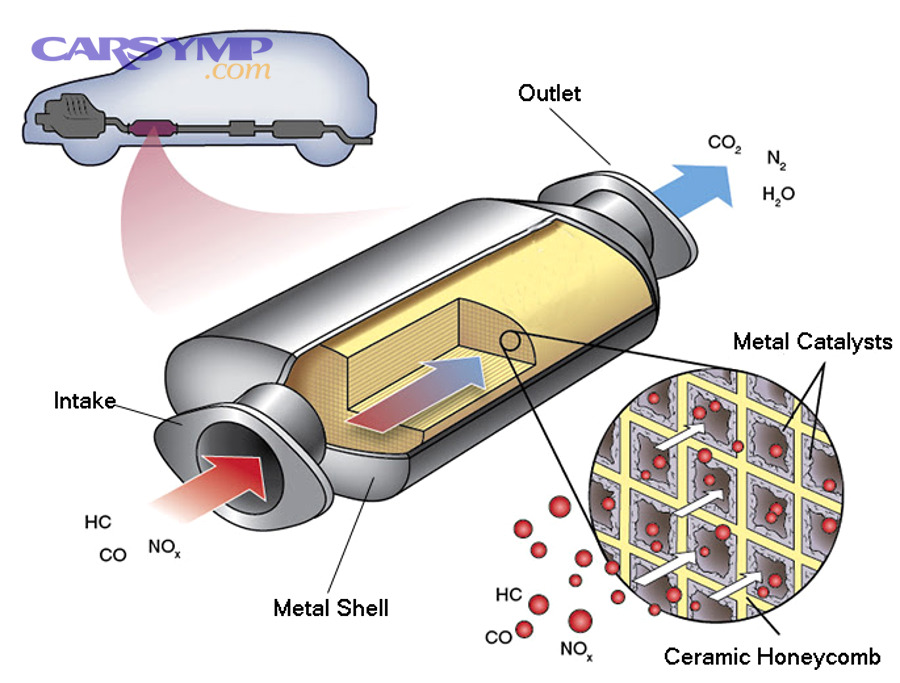
A catalytic converter is an emissions-control device that converts harmful exhaust gases into less harmful gases by using catalyst-coated substrates to promote chemical reactions as hot exhaust passes through.
More importantly, a catalytic converter’s job is emissions cleaning—not tone tuning. It targets pollutants such as carbon monoxide (CO), hydrocarbons (HC), and nitrogen oxides (NOx) depending on the converter type and engine control strategy.
Why the catalytic converter is different
- It’s governed by emissions regulations rather than comfort or sound preferences.
- It relies heavily on temperature and proper engine operation (fuel mixture, no misfires).
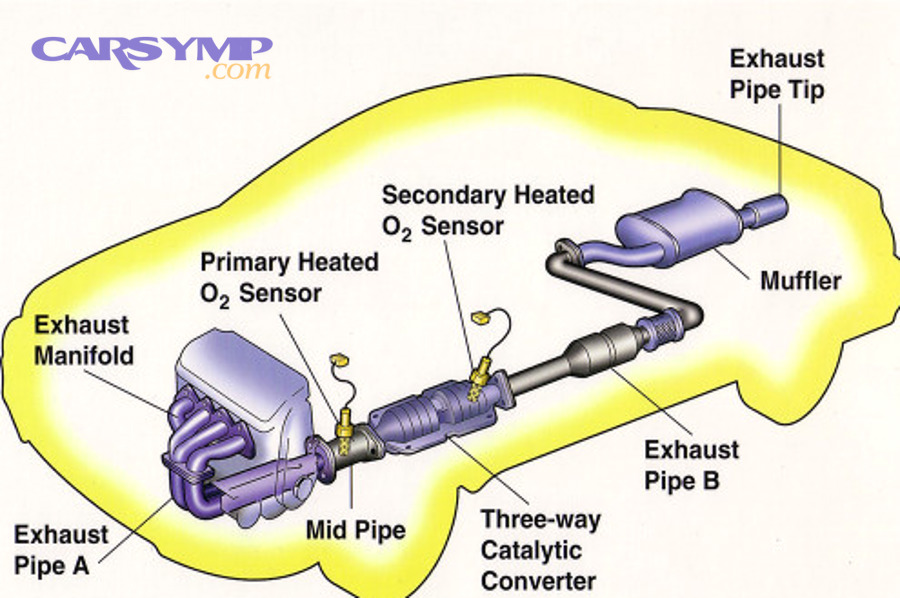
- It often works as a system with oxygen sensors (upstream and downstream) that help the vehicle monitor efficiency.
According to a report from Harvard University’s Department of Chemistry (2020), catalytic conversion can remove up to 98% of pollutants from exhaust gases when catalysts are functioning effectively. (chemistry.harvard.edu)
That’s why, in most real-world cases, the catalytic converter is treated as essential equipment: it’s the primary “cleaner” in the silencer–tone tuner–emissions cleaner trio.
Is a resonator the same thing as a muffler?
No—a resonator is not the same thing as a muffler, because the muffler primarily reduces overall exhaust loudness, while the resonator targets specific frequencies to tune tone, reduce drone, and shape the sound character.
However, the confusion is understandable because both are metal canisters in the exhaust path and both can make the vehicle “sound different” after a repair. The easiest way to stay accurate is to compare them by goal, method, and driver experience.
Does a resonator reduce exhaust volume as much as a muffler?
No, a resonator usually does not reduce overall volume as much as a muffler, because its design focuses on canceling narrow frequency bands rather than broadly attenuating the entire sound spectrum.
Specifically, a resonator can make a car feel quieter in the cabin at certain speeds while the outside volume doesn’t change dramatically. That’s why owners sometimes say “it’s still loud, but the annoying hum is gone.”
What you’ll notice if the resonator changes
- The highway boom disappears or is reduced
- The exhaust note becomes smoother or less “raspy”
- The pitch character shifts, especially in the mid-range RPM band
For example, if your car is unpleasant at 65–75 mph but tolerable everywhere else, that pattern strongly points toward a frequency problem (resonator territory) rather than a global loudness problem (muffler territory).
Does a muffler change exhaust tone as well as loudness?
Yes, a muffler can change tone as well as loudness, because the internal path and packing influence which frequencies get damped more strongly—but its primary purpose is still broad loudness reduction.
On the other hand, a muffler’s tone changes are often a byproduct of the design rather than a “tuned target” the way resonators are.
This distinction matters during muffler replacement decisions. Two mufflers can both be “quiet,” yet one sounds deeper and the other sounds flatter because:
- One uses more absorption packing (often smoother tone)
- One uses more chambers/baffles (often different resonance behavior)
- The internal flow path differs (straight-through vs more complex routing)
To keep the hook chain tight: once you know they’re not the same, the next practical question is where each part sits—because location is how drivers and shops identify what’s what.
Where are the muffler, resonator, and catalytic converter located in the exhaust system?
The catalytic converter is typically placed closer to the engine, while the resonator is commonly in the mid-pipe area, and the muffler is usually the rear-most large chamber near the tailpipe.
Then, because exhaust layouts vary, you should think in “zones” rather than exact inches. Manufacturers package these parts based on heat, ground clearance, crash structure, and noise targets.
Is the catalytic converter usually closer to the engine than the muffler?
Yes—the catalytic converter is usually closer to the engine for at least three reasons: it needs heat to operate effectively, it reduces cold-start emissions faster when mounted upstream, and it integrates with oxygen sensor feedback that works best with stable temperature and flow.
More importantly, this upstream placement also explains why catalytic converters often have heat shields and why problems there can smell hotter or create underbody heat issues.
In modern designs, you may see:
- A close-coupled converter near the manifold (fast warm-up)
- A second underfloor converter (additional cleanup)
- Sensors before and after the converter to monitor performance
How can you tell a resonator from a muffler by location and size?
A resonator is often a smaller mid-pipe canister, while a muffler is often a larger rear canister, but you should rely on the combination of placement, inlet/outlet routing, and shop labeling rather than size alone.
Specifically, a resonator often sits closer to the middle of the vehicle and may look like a slimmer cylinder, while mufflers are commonly broader “suitcase” shapes near the back. Still, some vehicles have compact rear mufflers and large resonators, so the best method is:
- Identify which can is closest to the tailpipe exit (often the muffler)
- Look at part names on an estimate
- Ask whether the part is meant to reduce drone or reduce loudness
This is also where hangers matter. A sagging rear canister may be less about the muffler itself and more about Exhaust hanger and mount replacement needs, especially if the pipe alignment is off and leaks appear at clamped joints.
What are the key differences between a muffler, resonator, and catalytic converter?
The muffler wins in overall loudness reduction, the resonator is best for tone tuning and drone control, and the catalytic converter is optimal for emissions cleaning and regulatory compliance.
However, a simple “which is better” framing can be misleading because these parts serve different jobs. A more useful comparison is to line them up across clear criteria: purpose, mechanism, symptoms, and replacement urgency.
To illustrate the differences without jargon, the table below compares the silencer, tone tuner, and emissions cleaner roles side by side.
| Component | Primary role | What it changes most | Typical location | Common “driver complaint” |
|---|---|---|---|---|
| Muffler (Silencer) | Reduce overall noise | Loudness / harshness | Rear | “It’s way louder than before.” |
| Resonator (Tone Tuner) | Cancel targeted frequencies | Drone / tone quality | Mid-pipe | “It booms on the highway.” |
| Catalytic Converter (Emissions Cleaner) | Convert pollutants | Emissions / sometimes restriction when failing | Upstream | “Check engine light / emissions test fail.” |
How do they differ in purpose: volume reduction vs tone tuning vs emissions cleaning?
A muffler is built to quiet the exhaust overall, a resonator is built to shape the sound, and a catalytic converter is built to clean the exhaust chemically before it exits the vehicle.
More specifically:
- Muffler: reduces the amplitude of pressure waves you hear as noise.
- Resonator: targets frequency spikes that cause drone, rasp, or specific unpleasant tones.
- Catalytic converter: reduces harmful gases by catalyzing reactions on a coated substrate.
This is why the catalytic converter is not a “sound mod,” even though replacing it can change sound slightly due to flow changes or leak fixes.
How do they differ in how they work: baffles vs resonance tuning vs catalytic reactions?
A muffler reduces noise using chambers, baffles, perforated tubes, and packing, a resonator reduces targeted noise using tuned volumes and frequency cancellation, and a catalytic converter reduces pollution using catalyst-coated surfaces that promote oxidation and reduction reactions.
More importantly, the “how” determines what goes wrong:
- Mufflers fail from corrosion, internal breakage, and seam fatigue.
- Resonators fail from rust, cracking, and internal perforation issues that reduce tuning effectiveness.
- Catalytic converters fail from overheating, contamination, substrate breakdown, or clogging.
Which one is most likely to trigger a check engine light?
The catalytic converter system is most likely to trigger a check engine light, because the engine computer monitors catalyst efficiency using oxygen sensor behavior and sets codes when efficiency drops below threshold.
Meanwhile, mufflers and resonators can be damaged without directly triggering a code because they’re not typically monitored by sensors. That said, an exhaust leak upstream can create fuel-trim changes and indirectly contribute to codes, especially if it affects oxygen sensor readings.
This is a key diagnostic reality: a loud exhaust doesn’t automatically equal a catalytic converter problem, and a check engine light doesn’t automatically equal a muffler or resonator problem.
Which component should you replace for your symptom: loud exhaust, drone, or emissions codes?
You should replace the muffler for loudness complaints, the resonator for drone or tone problems, and the catalytic converter (or related sensors/leaks) for emissions codes, because each symptom maps to the part designed to solve that specific problem.
Next, the goal is to avoid “parts guessing.” Many repair bills get inflated when the root cause is a cracked flange, a failed hanger, or a leaking joint that was never addressed.
If your exhaust is louder than normal, is the muffler the most likely culprit?
Yes—the muffler is often the most likely culprit for a sudden loud exhaust, for at least three reasons: mufflers rust through more often than upstream parts, internal baffles can break and rattle, and rear hangers fail and stress the muffler shell and joints.
More specifically, loudness complaints often follow this chain:
- A rear hanger weakens → the muffler sags
- The joint starts leaking or the muffler shell cracks
- The sound gets dramatically louder, especially on acceleration
This is also where repair method matters. A shop may offer Weld vs clamp repair options depending on the failure:
- Clamp repair: works well for slip joints and some mid-pipe sections when the metal is still solid.
- Weld repair: can be stronger and cleaner when the joint alignment is tricky or leaks keep returning.
- Full muffler replacement: best when the muffler shell is rotted, seams are failing, or internal components are loose.
A solid diagnosis also includes checking Exhaust hanger and mount replacement needs, because new parts won’t last if the system is hanging wrong and vibrating against the body.
If you have highway drone, is the resonator the part that usually helps most?
Yes—the resonator is usually the part that helps most with steady-speed drone, because it targets narrow frequency bands that dominate cabin resonance at specific RPM and load conditions.
Specifically, drone is not just “loud.” It is a sustained, low-frequency boom that:
- Appears at predictable speeds (often 55–75 mph)
- Gets worse under light throttle load
- Fades when you change gear or RPM
That symptom pattern is exactly what tone tuning is meant to solve. This is why a driver can feel “more comfortable” after a resonator fix even when the outside volume seems similar.
If you have P0420/P0430, is the catalytic converter always the fix?
No—a catalytic converter is not always the fix for P0420/P0430, because those codes indicate catalyst efficiency below threshold and can also be triggered by exhaust leaks, failing oxygen sensors, misfires, or fuel-control problems that either mimic or cause catalyst inefficiency.
More importantly, replacing the catalytic converter without addressing the reason efficiency dropped can lead to repeat failures. For example:
- A long-term misfire can overheat and damage the converter substrate.
- An exhaust leak near sensors can skew readings.
- Aging sensors can respond slowly and create confusing patterns.
A careful shop will often:
- Check for exhaust leaks first
- Verify sensor behavior and heater circuit operation
- Confirm the engine is running correctly (no misfire or rich condition)
This is also where reputable information sources matter. When your estimate mentions “catalyst efficiency,” it often reflects a monitored performance problem rather than a visible “broken can.”
Does removing or changing these parts affect performance, fuel economy, or legality?
Yes—changing or removing exhaust components can affect sound, drivability, emissions compliance, and sometimes performance, because the exhaust system is engineered as a balance of flow, noise control, sensor feedback, and legal requirements.
Moreover, the effects are not always what people expect. Many drivers assume “less restriction = more power,” but modern systems are optimized for real-world torque, emissions, and cabin comfort, not just maximum flow.

Will deleting the muffler or resonator increase horsepower?
No—deleting the muffler or resonator usually does not meaningfully increase horsepower for at least three reasons: most stock exhaust systems are not the primary bottleneck, modern engines rely on calibrated exhaust dynamics for torque and drivability, and noise increases are far more noticeable than any small power change.
However, changes can still feel different because sound changes driver perception. A louder exhaust can feel “faster” even if measured acceleration is unchanged.
If someone’s goal is comfort and reliability rather than loudness, it’s smarter to focus on fixing leaks, restoring hangers, and choosing a correct-fit part rather than deleting components.
Is removing a catalytic converter legal for street driving?
No—removing a catalytic converter is generally not legal for street driving, for at least three reasons: emissions regulations typically require functioning emissions equipment, inspections often check readiness and/or visual compliance, and removal increases pollution output and can trigger persistent warning lights.
More importantly, cat removal can create long-term headaches:
- Check engine lights and readiness monitor issues
- Failed inspections
- Increased exhaust smell and harshness
If a converter is stolen or failed, the practical path is usually proper replacement using compliant parts—then ensuring the engine is healthy so the new converter survives.
Can a failing catalytic converter cause power loss or overheating?
Yes—a failing catalytic converter can cause power loss and overheating for at least three reasons: a damaged substrate can partially block exhaust flow, excessive backpressure can reduce engine breathing under load, and overheating can occur when unburned fuel burns inside the converter.
On the other hand, not every converter code means the converter is clogged. Some converters are chemically inefficient without being physically restrictive, which is why symptom-based diagnosis matters.
If you suspect restriction, a shop may check:
- Temperature differences across the converter
- Exhaust backpressure under load
- Misfire history or fuel-trim issues that could be overheating the converter
This brings the hook chain back to real-world repair decisions: the best outcomes come when you repair the root cause and use the right repair method—whether that’s clamp, weld, or full component replacement.
What exhaust sound “problems” (drone, rasp, boom) do mufflers and resonators target—and which is better for each?
Mufflers are better for overall loudness and harshness, while resonators are better for drone and specific tone problems like rasp or boom, because mufflers broadly reduce sound energy and resonators selectively cancel problematic frequency bands.
Next, using the right vocabulary helps you communicate with a shop and avoid paying for the wrong fix. When a shop understands whether you mean “loud” or “boomy,” they can recommend a solution that matches the sound problem you actually have.
What is exhaust drone, and why does it happen at certain speeds or RPM?
Exhaust drone is a steady, low-frequency booming inside the cabin that happens when exhaust pulse frequencies align with the vehicle’s natural resonances at certain RPM and load conditions.
More specifically, drone often shows up:
- At steady throttle on the highway
- In higher gears where RPM sits in a narrow band
- When the exhaust system’s frequency peaks are not being canceled
A resonator helps because it’s designed to target those narrow-band peaks. A muffler helps when the problem is simply “too loud everywhere.”
What is exhaust rasp, and is a resonator more effective than a muffler for reducing it?
Exhaust rasp is a buzzy, sharp, metallic sound character, and a resonator is often more effective than a muffler at reducing it when rasp is caused by specific high-frequency content that can be targeted by tuning.
However, mufflers can reduce rasp too—especially absorption-style mufflers—because they damp broad energy. The practical difference is:
- If rasp is the main problem at certain RPM, a resonator is often the cleaner fix.
- If the car is loud and harsh in all conditions, start with muffler condition and exhaust leaks.
Is a “resonator delete” the same as a “muffler delete” in sound outcome?
No—a resonator delete is not the same as a muffler delete, because deleting the resonator usually increases drone and changes tone more than overall loudness, while deleting the muffler typically increases loudness dramatically and can introduce harshness.
This is why you can’t rely on the word “delete” alone when predicting outcomes. The component role determines the result.
Which terms in exhaust shop quotes mean muffler vs resonator (mid-muffler, rear muffler, suitcase, glasspack)?
Shops may use “mid-muffler” or “resonator” interchangeably on some vehicles, while “rear muffler,” “suitcase,” or “rear silencer” usually refers to the main muffler; the safest approach is to match the term with the part’s position and function described on the estimate.
In addition, quotes often include the repair method. If your estimate lists Weld vs clamp repair options, it’s usually because the shop is deciding whether:
- A joint can be sealed and supported with clamps and sleeves, or
- A welded section is needed due to corrosion, misalignment, or repeated leaks
Finally, if the quote includes hangers or isolators, that’s not upsell by default. It often reflects real Exhaust hanger and mount replacement needs, especially when a sagging exhaust caused leaks or rattles.
And if you want a sanity check for symptoms and terminology before authorizing work, you can cross-reference a symptom list and repair explanation on a site like carsymp.com to confirm that your complaint (loudness vs drone vs emissions code) matches the part being recommended.
Evidence (if any)
According to a study by the University of Michigan, in 1994, Helmholtz resonator geometry changes measurably altered transmission loss characteristics and shifted resonance behavior, supporting the idea that resonator “tuning” is not one-size-fits-all. (mae.osu.edu)
According to a report from Harvard University’s Department of Chemistry, in 2020, catalytic conversion can remove up to 98% of pollutants from exhaust gases when catalysts function effectively. (chemistry.harvard.edu)