


Exhaust rust and corrosion are preventable if you control three things: salt exposure, trapped moisture, and protective barriers—because these are the main forces that thin your muffler seams, weaken pipe joints, and eventually create leaks and loud noise.
Next, you also need to understand where exhaust rust starts and how to spot it early, because surface discoloration is normal, but flaking metal, soot marks, and loud changes are often the first “Muffler failure symptoms” that predict a coming perforation.
Then, you can make smarter decisions about coatings, cleaning routines, and when a repair is false economy, because delaying the wrong fix can turn a small joint leak into a full muffler replacement.
Introduce a new idea: the most effective plan is not one magic product—it’s a simple, repeatable system that matches how winter salt actually behaves under your car.
Does road salt actually cause exhaust rust and corrosion?
Yes—road salt causes exhaust rust and corrosion because it increases electrical conductivity for corrosion reactions, holds moisture against metal longer, and creeps into seams and joints where heat cycles crack protective layers. More importantly, once salt dries into crust, it reactivates every time it gets wet again, so the corrosion pressure returns after each thaw.
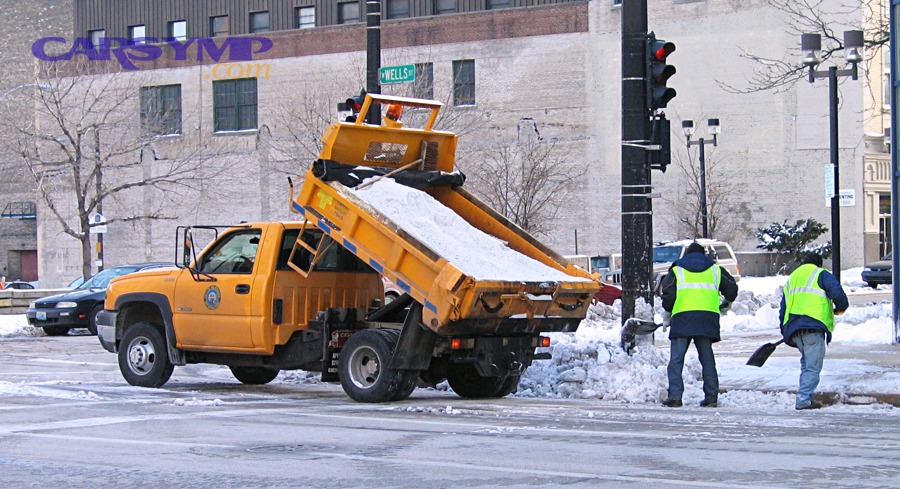
Road salt isn’t “acid,” but it behaves like a corrosion accelerator. Steel rusts when iron reacts with oxygen and water. Salt doesn’t replace those ingredients—it makes the water a better electrolyte, so the reaction runs faster and deeper. That matters most on the underside of a vehicle, where road spray hits the exhaust, bakes on, then gets rewetted by slush.
In wet/snowy climates, the exhaust is also in the worst possible position: it sits low, gets sandblasted by debris, and sees temperature extremes. The pipes heat up enough to drive off water while driving, then cool rapidly at idle or after parking. That repeated expansion and contraction breaks weak coatings and opens micro-gaps at clamps and flanges, creating small “salt traps.”
Is winter driving worse than rain-only climates for exhaust corrosion?
Winter driving wins as the fastest rust-maker, rain-only climates are moderate, and coastal salt air is a slow-but-steady corrosive—because chloride exposure in winter gets physically sprayed onto hot metal and repeatedly reactivated by thaw cycles. However, the biggest winter multiplier is not the snow itself—it’s the brine.
Rain tends to rinse and move on. Winter brine sticks, dries, and returns. It also reaches areas rain doesn’t, because tires throw brine upward like a pressure washer. That’s why muffler seams, rear resonators, and tailpipe connections often rust first: they live in the backwash zone behind the rear wheels.
Practical takeaway: if you live where roads are treated, your prevention routine must be winter-first, even if the rest of the year is mild.
Can parking in a heated garage make exhaust rust faster?
Yes—parking in a heated garage can accelerate exhaust rust and corrosion because warm air melts packed snow, re-wets salt deposits, and keeps the metal wet longer before it can fully dry. Besides, the garage becomes a “reactivation chamber” for salt.
A cold, dry overnight can pause corrosion. A warm, humid overnight can extend it. This doesn’t mean you should avoid your garage—it means you should remove salt before the thaw cycle does the damage for you.
- Rinse the underside after heavy brine exposure, then drive long enough to warm the exhaust and evaporate residual water.
- If you can’t wash immediately, at least knock off heavy slush buildup around the rear underbody and muffler area.
- Avoid parking over puddles or snow piles that keep humidity high under the car.
Evidence: According to an expert Q&A from Penn State College of Engineering, road salt contributes to corrosion on the undersides of vehicles and accelerates corrosion reactions as water becomes more saline. (psu.edu)
What is exhaust rust vs exhaust corrosion—and why does the difference matter?
Exhaust rust is iron-oxide damage on steel surfaces, while exhaust corrosion is the broader process of metal breakdown caused by chemical and electrochemical reactions; the difference matters because it affects how you choose materials, coatings, and whether a part can be saved. Specifically, “rust” is what you see, but “corrosion” is what’s silently reducing thickness at seams, welds, and joints.
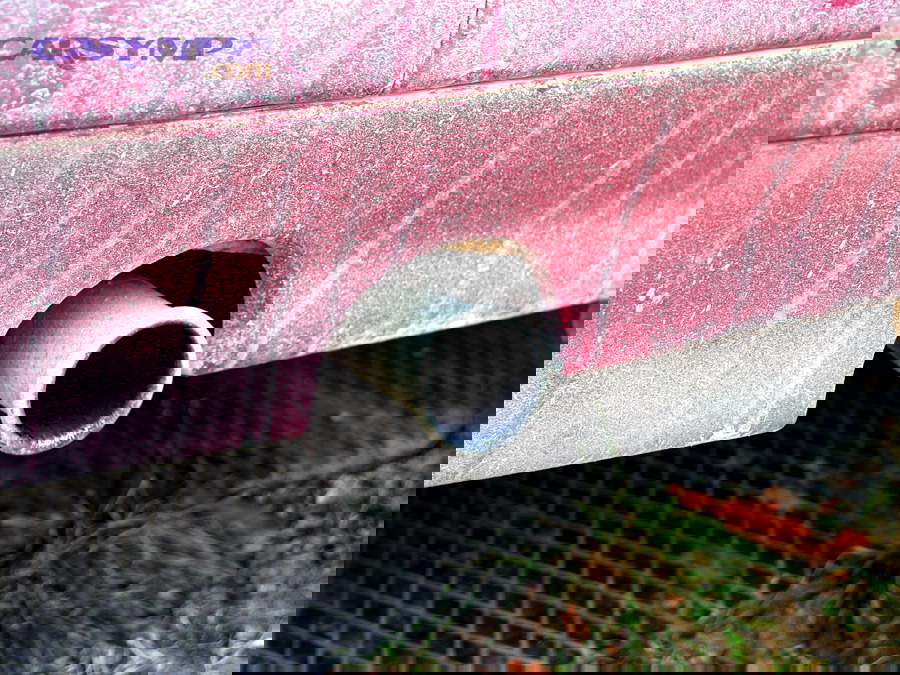
Most exhaust components are made of mild steel, aluminized steel, or stainless steel. Mild steel rusts quickly when its surface protection fails. Aluminized steel resists corrosion better at first because its aluminum-silicon coating acts like a shield—but once the coating is scratched through, the underlying steel can corrode fast at that break. Stainless steel resists rust because its chromium content forms a passive oxide layer that protects the base metal.
This distinction matters because it changes your strategy:
- If you only have surface rust, your best move is often clean + protect and keep driving.
- If you have active corrosion at a seam or joint, a cosmetic coating may hide the problem while the metal continues thinning underneath.
What are the most common places rust starts on mufflers and pipes?
There are 6 main places rust starts on mufflers and pipes: seams, welds, clamps, flanges, hanger mounts, and low-point bends—based on where water and salt collect and where heat cycling stresses the metal. To better understand prevention, you need to target these zones on purpose.
- Muffler seams and end caps
Seams are thin edges, often spot-welded or crimped. Salt water sits there and starts pitting. - Welds and heat-affected zones
Welded areas can have different microstructure and can crack coatings. - Clamps and slip joints
Slip joints trap moisture. Clamps create crevices—perfect corrosion incubators. - Flanges and gasket faces
Flanges rust because the gasket area holds moisture and because bolts seize and loosen. - Hanger mounts and brackets
Hangers vibrate, flex, and crack protective coatings. When a hanger breaks, the exhaust sags and stresses joints. - Low-point bends and “water pockets”
Any low spot can hold condensed water inside the pipe and salty water outside.
How can you tell surface rust from structural rust that’s close to a leak?
Surface rust is mostly cosmetic, structural rust is dangerous, and “near-leak” rust is urgent—because the criteria are thickness loss, flaking scale, and soot or moisture evidence at joints and seams. Meanwhile, your ears often detect the change earlier than your eyes.
Surface rust (usually OK to monitor)
- Brown/orange discoloration without heavy scaling
- Metal still feels solid when tapped
- No exhaust smell changes and no sound change
Structural rust (plan a repair)
- Flaking layers (“rust scale”) that you can peel with a screwdriver
- Dents that crumble, thin edges, or soft spots at seams
- Visible cracking at welds, especially near hangers
Near-leak rust (act now)
- Black soot around a joint, seam, or flange (exhaust gas leaves carbon trace)
- “Ticking” under load, louder exhaust tone, or buzzing/rattle
- Moisture drips at a seam even when it hasn’t rained (condensation escaping)
If you notice these Muffler failure symptoms, assume corrosion has already reduced thickness. Your goal switches from “prevention” to “contain and restore.”
Why do exhaust systems rust from the inside out?
Exhaust systems rust from the inside out because combustion produces water vapor, the exhaust cools and condenses that moisture into liquid, and short trips often don’t heat the muffler long enough to evaporate it—so acidic condensate sits inside and pits the metal. In addition, the muffler’s internal chambers are designed to slow flow, which also slows drying.
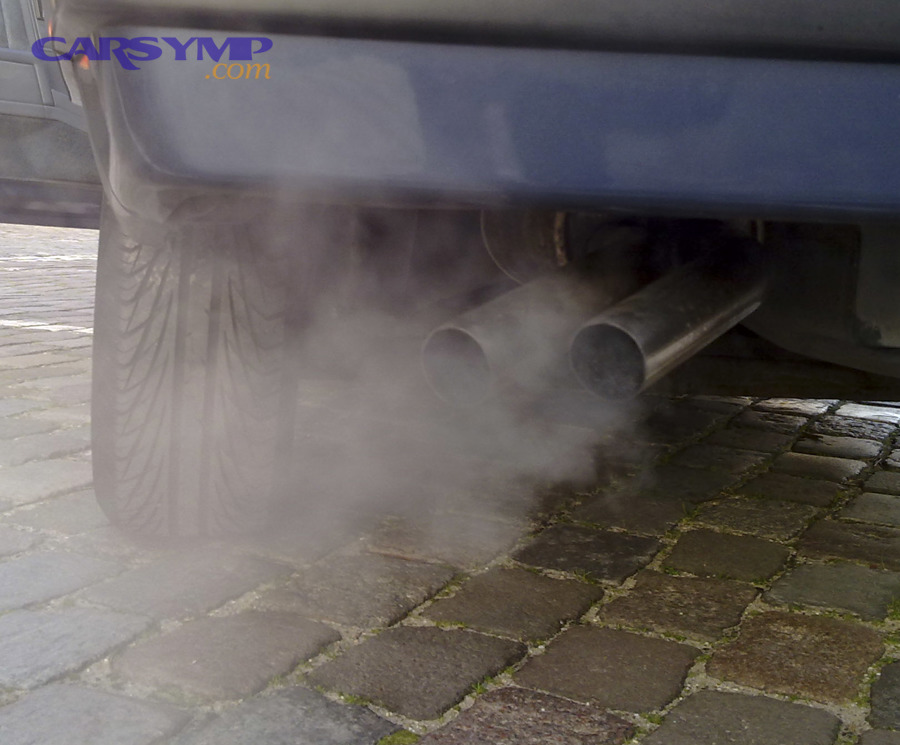
Inside-out corrosion surprises people because the outside of the muffler can look “fine” while the inside is thinning. The chemistry is simple: water + combustion byproducts can form mildly acidic condensate. The physics is worse in winter because cold metal encourages condensation, and the tail-end section cools fastest.
That’s why rear mufflers often fail first in salted climates: they face outside salt spray and inside condensate at the same time.
Do short trips and idling increase muffler rust risk?
Yes—short trips and idling increase muffler rust risk because they create more condensation than evaporation, keep exhaust temperatures low at the rear section, and extend “wet time” inside the muffler where pitting corrosion starts. Especially, repeated cold starts are the fastest route to inside-out rust.
A 5–10 minute drive may warm the engine, but the muffler at the back can still remain cool enough for water to condense. Idling can be even worse because airflow and load are low, so the exhaust heat reaching the rear is limited.
- Build in at least one longer drive weekly (even 20–30 minutes at steady speed helps).
- Avoid letting the car idle for long periods as a substitute for driving “to warm it up.”
What driving habits help dry out the exhaust and slow corrosion?
There are 5 driving habits that help dry out the exhaust and slow corrosion: take a weekly longer drive, avoid repeated cold starts, finish trips with a steady-speed segment, reduce long idle warmups, and address misfires promptly—based on maximizing exhaust heat at the tail section. Thus, your driving pattern becomes part of your rust prevention plan.
- Weekly heat cycle: A consistent longer drive raises the entire exhaust system temperature long enough to evaporate internal moisture.
- Consolidate errands: One longer trip is better than three short ones.
- End with steady speed: The last 5–10 minutes at steady speed helps “steam out” the muffler.
- Limit idle warmups: Modern engines don’t need long idles; driving gently warms faster and dries better.
- Fix engine issues: Rich running, misfires, or coolant burning can increase moisture and corrosive byproducts.
Evidence: According to a 2016 research study hosted by Bournemouth University, pitting corrosion on internal walls of mufflers is linked to exhaust gas condensation, especially when muffler temperature does not rise during short-distance runs or winter driving. (eprints.bournemouth.ac.uk)
What are the best ways to prevent exhaust rust and corrosion in wet/snowy climates?
The best way to prevent exhaust rust and corrosion is a 4-part method—(1) remove salt regularly, (2) reduce trapped moisture, (3) protect vulnerable joints and surfaces, and (4) catch early damage fast—so your muffler and pipes keep their thickness and seals. Below, each part becomes a practical routine you can actually follow.
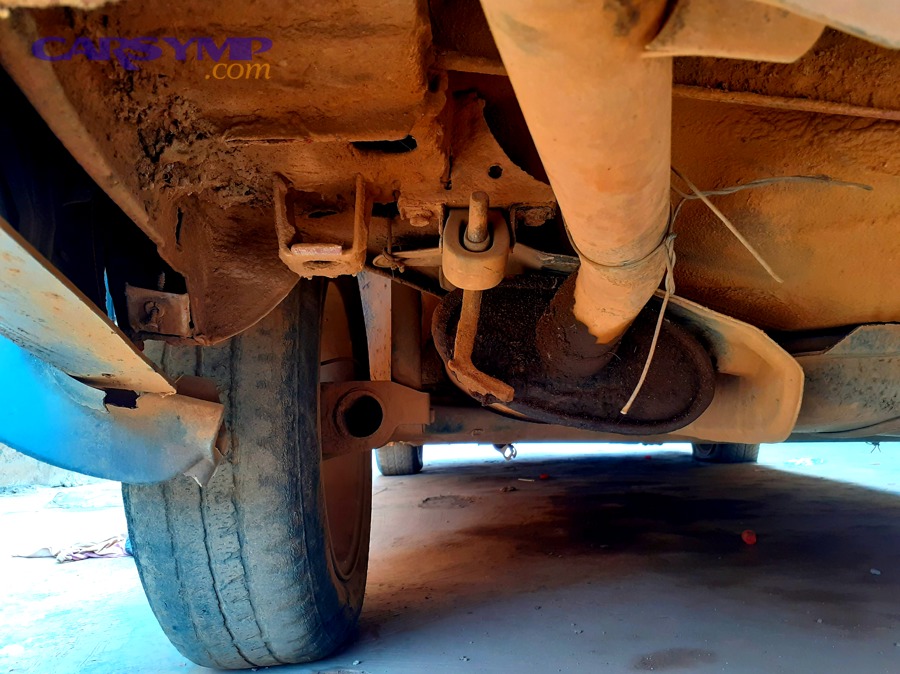
Think of prevention as “layers” rather than a single fix. Washing alone helps, but washing plus inspection is better. Coating alone helps, but coating without cleaning often fails. The winning approach is the one you can repeat.
What’s the most effective cleaning routine to remove salt from the underside?
The most effective routine is a targeted undercarriage rinse after heavy brine exposure plus a deeper wash every 1–2 weeks in winter, with special focus on the rear underbody and exhaust joints—because that’s where salt accumulates and reactivates. Then, consistency does more than intensity.
After major storms or heavy brine days
- Rinse the underside, especially behind the rear wheels and around the muffler area.
- Don’t obsess over perfection; aim to remove the thick crust.
Every 1–2 weeks (or more if roads stay white with salt)
- Use a touchless wash with undercarriage spray, or a driveway rinse with an undercarriage attachment.
- Focus on seams, hangers, and clamps—areas where salt hides.
Key technique tip: rinse from multiple angles. Salt collects in ledges and brackets. A single pass often misses the pockets.
You don’t need to blast sensors or connectors; you just need to remove the conductive film that keeps corrosion running.
Which preventive coatings work on mufflers and pipes, and when should you avoid them?
High-temp paint wins for budget touch-ups, ceramic coating is best for long-term exterior protection, and wraps are optimal for heat management—not corrosion—because wraps can trap moisture in wet climates and accelerate rust if installed over imperfect metal. However, coatings only work when prep is honest.
High-temp paint (good for many daily drivers)
- Works best on cleaned, lightly rusted surfaces after proper wire-brushing.
- Helps reduce new surface oxidation on exposed areas.
- Fails quickly if applied over flaky scale.
Ceramic coating (best durability, higher cost)
- Offers a more durable barrier and better heat resistance.
- Often makes more sense during a new exhaust install.
Exhaust wrap (use carefully)
- Can reduce underbody heat and improve spool response on turbo setups.
- Can also hold moisture and salt against the pipe, especially in slushy climates.
- Avoid wrapping mild steel in winter regions unless you accept shorter lifespan.
Prep that matters:
- Remove loose rust completely.
- Degrease thoroughly (oil film ruins adhesion).
- Respect cure times—heat cycling too early can blister coatings.
Should you spray undercoating or rustproofing near the exhaust?
Yes, you can use undercoating near (not on) the exhaust system if you control heat clearance, avoid flammable overspray on hot sections, and focus on adjacent chassis areas that drip salt onto the pipes—because the exhaust runs hot and can burn or smoke many coatings. More importantly, “near” is the keyword.
- Apply rustproofing to the frame, subframe, and brackets that surround the exhaust, not to the hottest sections of the pipes or muffler body.
- Keep clear of catalytic converters and other high-heat zones.
- Apply when the vehicle is cold, and follow product safety guidance.
If you do want to protect exhaust components directly, stick to products meant for high temperature exhaust use rather than general undercoatings.
Should you replace the muffler/pipes or repair rusted sections?
Repair wins when damage is localized and the metal is still thick, replacement is best when seams/joints are thinning across multiple points, and full-system replacement is optimal when repeated repairs keep failing—because corrosion usually spreads beyond the first visible hole. Meanwhile, the “right” answer depends on safety and your time horizon.
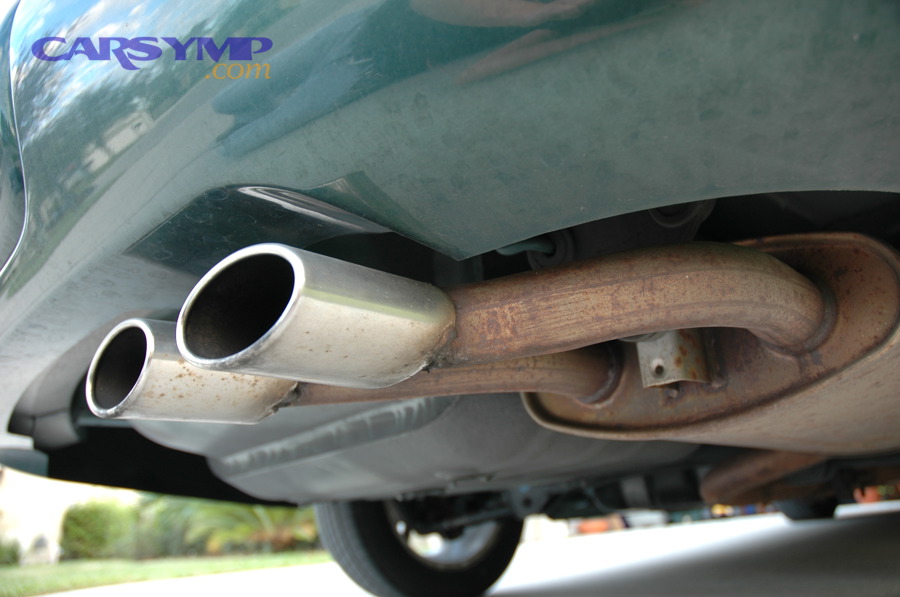
Many drivers wait until the exhaust gets loud, then chase fixes. In reality, rusted exhaust failures often happen in stages: first a small leak, then a broken hanger, then a stressed joint, then a bigger leak. If you patch the wrong stage, you pay twice.
This is also where muffler replacement becomes a strategic decision rather than a panic reaction. A properly chosen replacement (material + fit) can reset the clock, while repeated band-aids can keep you stuck in a loop.
When is a rusted exhaust leak a safety issue you shouldn’t ignore?
Yes—an exhaust leak can be a safety issue you shouldn’t ignore because it can allow fumes to enter the cabin, increase noise that masks other driving cues, and worsen quickly when hangers fail and pipes shift. Especially, cabin symptoms should override “it still drives fine.”
- Exhaust smell in the cabin (especially with windows up)
- Headache, nausea, or dizziness during drives (don’t “tough it out”)
- Loud sudden change in exhaust tone after hitting a bump (possible break)
- Visible soot under the floor area or near a joint that faces forward
Even if the leak is “small,” the direction of flow matters. A leak ahead of the cabin can be pulled into low-pressure zones while driving.
Is stainless steel worth it compared to aluminized steel for replacement parts?
Stainless steel wins for corrosion resistance and long-term ownership, aluminized steel is best for lower upfront cost and short-to-mid ownership, and mild steel is rarely optimal in salted climates—because chloride exposure punishes unprotected steel and exhaust heat cycles stress coatings. However, the best value depends on how long you’ll keep the vehicle.
- Choose stainless if
- You plan to keep the car 4–8+ years in a salted region
- You want fewer repeat repairs at joints and seams
- You do highway driving (heat cycles are consistent, which stainless tolerates well)
- Choose aluminized if
- You want a cost-effective fix with reasonable durability
- You might sell the car in a few years
- You can commit to winter washing
Also consider labor. If access is difficult (tight packaging, rusted hardware), the labor cost can dominate. Paying labor twice because a cheap part fails early is often the most expensive option.
Evidence: According to a 2022 SAE technical paper, higher chromium content in ferritic stainless steels improved performance in exhaust corrosion conditions, supporting the advantage of stainless grades for corrosion resistance. (sae.org)
What maintenance checklist keeps exhaust rust from coming back?
A maintenance checklist prevents repeat exhaust rust and corrosion by combining monthly inspection, winter washing cadence, and early fixes for hangers and joints—because corrosion becomes expensive only when you ignore the first loosened bracket or pinhole leak. In short, you need a plan you will actually use.
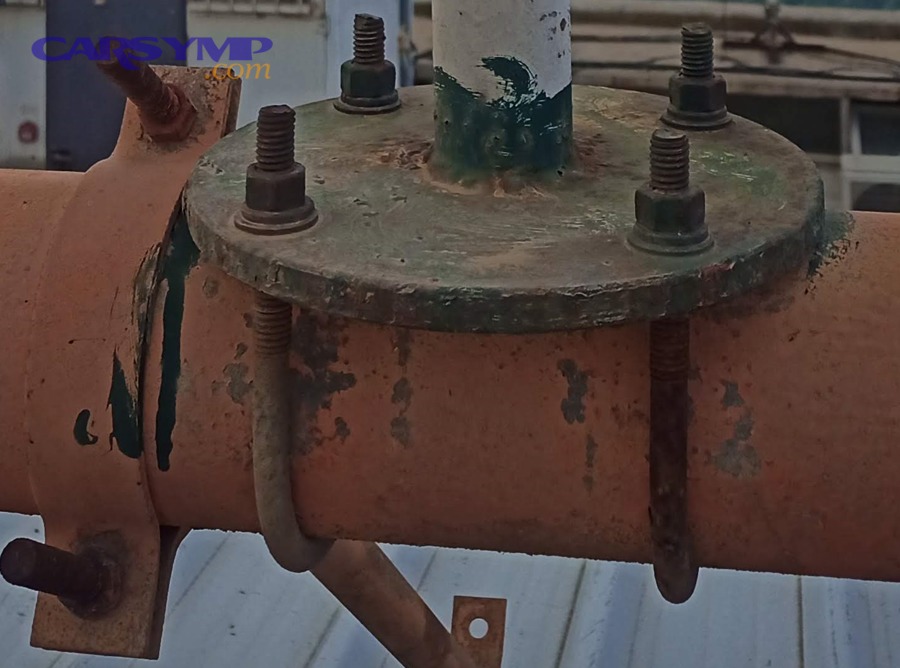
Rust prevention isn’t just cleaning. The fastest way to “lose” an exhaust is to let a hanger fail and allow the system to sag. That sag adds stress to the flex section and joints, opening leaks and cracking seals.
This is also where people underestimate time: a simple clamp repair can become a bolt-extraction job once corrosion has seized fasteners. That’s why early attention reduces both risk and cost.
What should you inspect after winter to catch rust early?
There are 7 things you should inspect after winter: muffler seams, pipe bends, clamps, flanges, hanger mounts, heat shields, and soot marks—based on where salt and vibration concentrate stress and corrosion. Then, you can prioritize fixes instead of guessing.
- Look at the muffler seam line for flaking rust.
- Check pipe bends and low points for scaling.
- Inspect clamps for rust trails and looseness.
- Look at flange bolts for heavy corrosion and missing hardware.
- Push the tailpipe gently: excessive movement can signal broken hangers.
- Tap heat shields lightly: rattles can mimic exhaust failure.
- Scan for black soot at joints (leak indicator).
If you hear a new rattle or buzzing, don’t assume it’s “just age.” It could be a hanger, which is cheap—until it causes a break.
Which small fixes extend exhaust life the most?
The small fixes that extend exhaust life the most are replacing worn hangers, tightening or replacing failing clamps, correcting misalignment before stress cracks form, and addressing small leaks early—because they stop vibration-driven failures that turn minor corrosion into major breaks. Moreover, they protect the whole system, not just one spot.
- New rubber hangers: reduce movement, stop metal-on-metal wear.
- Fresh clamps/hardware: replace seized or thinning fasteners before they snap.
- Heat shield re-secure: prevents rattles that mask true leak noises.
- Seal small joints early: a minor leak can accelerate corrosion at the seam.
If you do end up needing muffler replacement, ask about Muffler replacement labor time up front. Labor can vary widely depending on rust severity, whether hardware snaps, and whether the shop needs to cut and fabricate. Knowing the labor variable helps you decide whether to replace only the muffler or a larger section to avoid repeat labor later.
Which coatings and materials resist exhaust corrosion best (and what are the trade-offs)?
Ceramic coatings win for long-term exterior protection, high-temperature paint is best for affordable maintenance, wraps are best for heat control (not wet-climate corrosion), and stainless steel is the most corrosion-resistant material choice—because barrier durability and chloride exposure determine real-world lifespan. However, every option has a “failure mode,” so trade-offs decide the best fit.
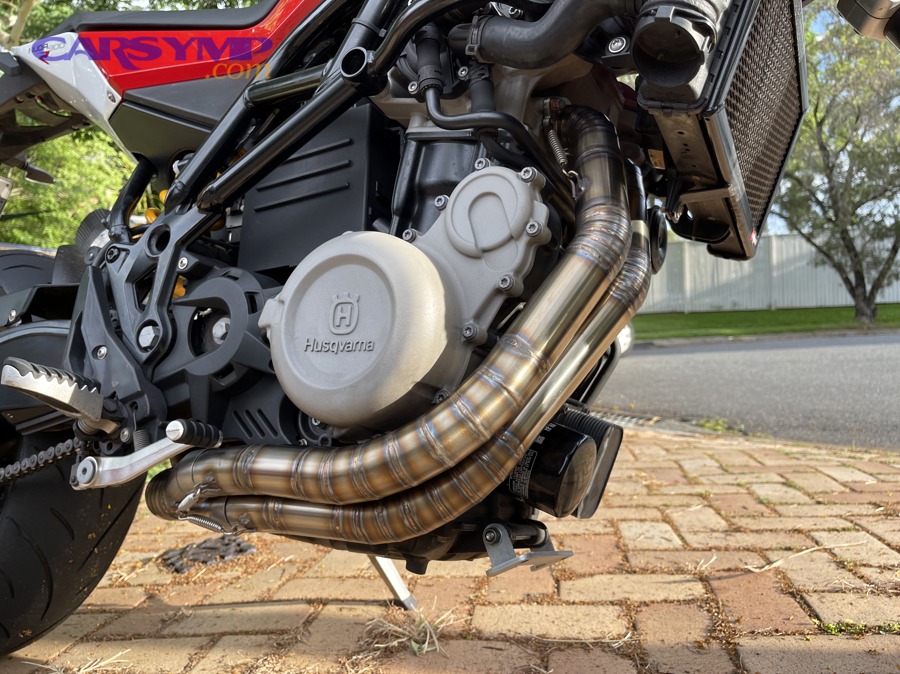
A smart strategy separates material choice from surface protection:
- Material choice determines your baseline resistance.
- Surface protection reduces the rate of attack and protects weak points like seams.
Is ceramic coating better than high-temperature paint for exhaust parts?
Ceramic coating is better for durability and heat stability, high-temperature paint is better for cost and easy touch-ups, and bare metal is only acceptable for stainless setups—because ceramic coatings generally resist burn-off and abrasion longer when properly applied. On the other hand, paint can still be the right tool for maintenance.
- Choose ceramic when
- You are installing new parts and want a long service interval.
- You can afford professional prep/application or high-quality DIY kits.
- Choose high-temp paint when
- You’re managing surface rust on an older exhaust.
- You need quick seasonal refresh after winter.
Remember: ceramic isn’t magic if applied over poor prep. Rust underneath continues, and the coating can delaminate under heat cycling.
Can exhaust wraps trap moisture and make corrosion worse?
Yes—exhaust wraps can trap moisture and make corrosion worse because they hold salty water against the metal, reduce oxygen drying at the surface, and keep the pipe in a temperature cycle that can accelerate breakdown of marginal coatings. Especially in wet/snowy climates, wraps are a corrosion risk multiplier.
Wraps can be useful for heat management in performance builds, but for daily drivers in salted regions, they often shorten the life of mild or aluminized steel sections. If you must use wrap, pair it with:
- Stainless material where possible
- A corrosion-resistant coating under the wrap
- Regular inspection and replacement expectations
What is galvanic corrosion at exhaust joints, and how do you prevent it?
Galvanic corrosion is metal damage caused when dissimilar metals (like stainless and mild steel hardware) contact each other in the presence of an electrolyte (salt water), creating a small battery effect that accelerates corrosion of the less noble metal. To illustrate, a stainless clamp on a mild steel pipe can shift corrosion to the pipe edge.
- Use compatible hardware (stainless-on-stainless when possible).
- Apply high-temp anti-seize on fasteners to reduce seizure and moisture entry.
- Reduce salt exposure with washing and avoid crevice traps at joints.
- Replace clamps that deform and create pockets where brine sits.
Are stainless exhaust systems truly “rust-proof,” or just rust-resistant?
Stainless exhaust systems are rust-resistant, not rust-proof—because they can discolor, pit, or corrode at welds and joints in aggressive chloride environments, even though they resist perforation far longer than mild steel. Thus, stainless buys time, not immunity.
- Surface staining (“tea staining”)
- Corrosion at welds if the weld zone isn’t ideal
- Fastener seizure if hardware choices are poor
But the key outcome is lifespan: stainless typically delays the stage where holes form and leaks become unavoidable, which is exactly what most drivers want.
Evidence: According to a corrosion cost review produced by the Adirondack Watershed Institute at Paul Smith’s College (2010), vehicle corrosion protection costs tied to road salt were estimated at roughly $2.1–$4.2 billion per year when scaled to annual vehicle sales and inflation-adjusted per-vehicle protection cost. (lakegeorgeassociation.org)