


If you’re trying to estimate what it will cost to replace a muffler, the most reliable approach is to treat the price as a range built from three pieces: parts + labor + “condition risk” (rust, broken hardware, extra exhaust work). For example, RepairPal lists an overall average range for an exhaust muffler replacement of $1,077–$1,143, while also showing that the same job can be hundreds on some vehicles and thousands on others depending on model and configuration. (repairpal.com)
To make that range useful for your car, you’ll want to understand what a quote usually includes, what it leaves out, and which factors push the estimate up or down (vehicle layout, muffler type, corrosion level, and local labor rates). Once you can see the “why” behind the number, it becomes much easier to judge whether a shop quote is fair.
Then, you’ll get the most value by separating parts vs labor and by identifying the common “add-ons” that inflate the final bill—like exhaust hangers, clamps, flanges, or extra pipe sections. Those extras are often legitimate, but they should be spelled out clearly on a written estimate.
Introduce a new idea: after you understand the estimate math, you can compare your best choices—OEM vs aftermarket, muffler-only vs a larger exhaust section, and shop work vs DIY—so your final decision balances cost, noise, and long-term durability.
What is a muffler replacement cost estimate and what does it usually include?
A muffler replacement cost estimate is a priced scope of work that combines the muffler-related parts, expected labor time, and shop fees into a projected total, usually before any surprises like seized bolts or hidden corrosion are discovered.
Next, because estimates can vary wildly, the key is knowing what’s “standard” versus what should be listed separately.
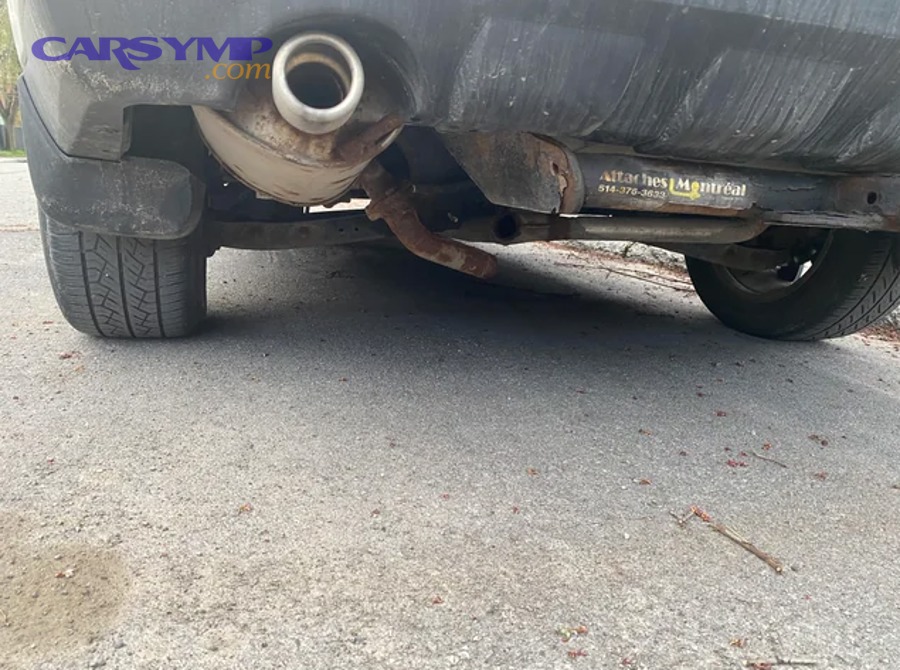
In practical terms, a typical estimate for replacing a muffler (or a muffler section) often includes:
- Core part: the muffler itself (OEM or aftermarket)
- Basic installation materials: clamps, gaskets, hardware (sometimes included, sometimes separate)
- Labor time: removal + install + leak check (and sometimes a quick road test)
- Shop fees: shop supplies, disposal/environmental fees, and taxes (varies)
A good estimate also describes what problem it solves (exhaust leak, internal baffle rattle, rust-through, cracked weld, failed flange) so you’re not paying for the wrong fix—especially when multiple exhaust parts can cause similar symptoms.
Does a muffler replacement estimate include parts, labor, and taxes by default?
No, a muffler replacement cost estimate does not always include parts, labor, and taxes by default, for three common reasons: (1) shops price “before tax/fees,” (2) hardware and add-ons are sometimes excluded until inspection, and (3) labor can change if rusted fasteners snap during removal.
Then, if you want the number you can actually budget for, you should ask for the out-the-door price.
Here’s what “default” often means in real-world quoting:
- Parts + labor: commonly included as line items
- Taxes: sometimes included, sometimes calculated at the end
- Fees: often added separately (shop supplies, disposal)
- Condition risk: often noted as “may require additional repairs” if rust is present (RepairPal explicitly warns that ranges don’t include taxes/fees and may not cover related repairs). (repairpal.com)
A fast way to sanity-check any estimate is to ask: “Is this the total if nothing breaks, or the total you expect me to pay?”
What line items should you expect on a written muffler replacement quote?
There are 6 common line items you should expect on a written quote: muffler, installation hardware, gaskets/seals, labor hours, shop fees, and taxes (sometimes grouped).
More specifically, seeing these items helps you compare quotes apples-to-apples instead of guessing what each shop “bundled.”
Below is what those line items often look like (wording varies by shop):
- Muffler (part): brand + part number + warranty term
- Hardware: clamps, bolts, nuts, springs, flange kit
- Seals: gasket(s) or exhaust seal ring (if flange-based)
- Hangers/mounts: rubber hangers or hanger kit (if worn or broken)
- Labor: hours and rate (or flat labor charge)
- Shop supplies/fees: shop materials, disposal/environmental fee
- Taxes: applied to parts (and sometimes labor, depending on location)
If the estimate includes “repair exhaust” with no detail, that’s a sign to request clarification—because “repair” could mean anything from a clamp to a full section replacement.
How much does muffler replacement cost on average for car owners?
Muffler replacement typically costs a few hundred dollars on many everyday vehicles, but it can climb to four figures when the muffler is part of a larger assembly, when premium parts are used, or when corrosion forces additional exhaust work.
To better understand this range, it helps to compare broad “typical” guidance with vehicle-specific estimators.
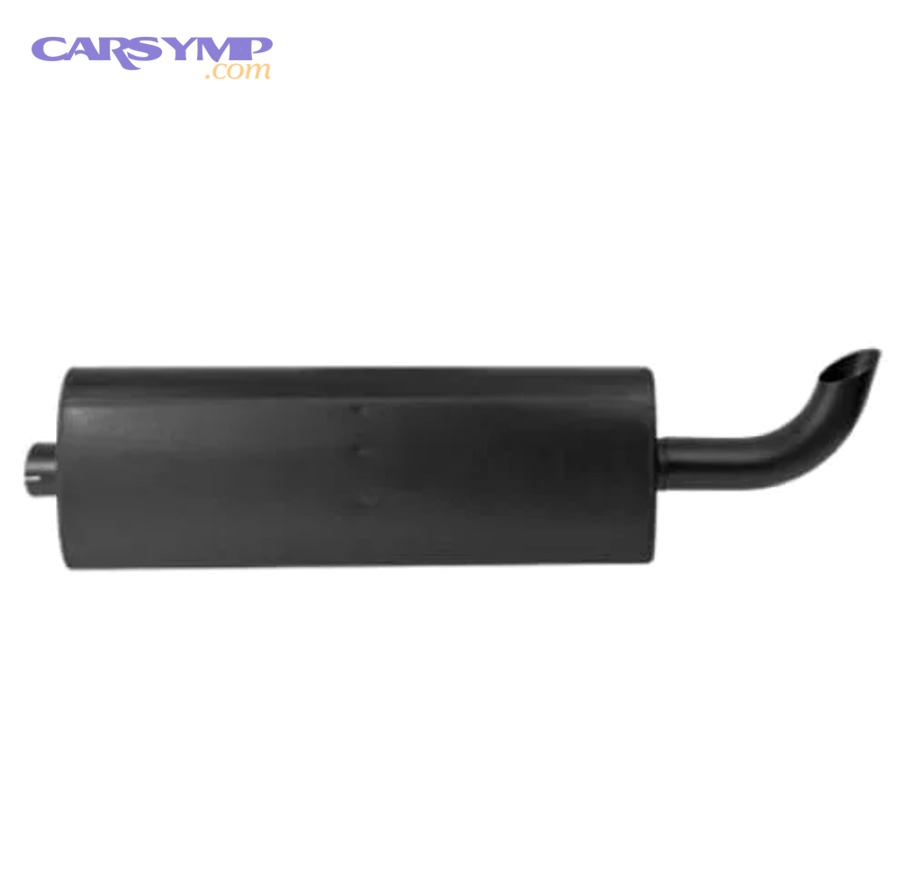
AutoZone’s overview states that parts + labor often land around $175–$450 on most vehicles, while also noting the make/model effect and fitment variability. (autozone.com)
RepairPal’s estimator can show both modest and very high examples depending on vehicle: a Geo Prizm estimate appears in the $272–$371 range, while a Range Rover Sport example is far higher, reflecting the reality that “average” depends heavily on what you drive. (repairpal.com)
Is muffler replacement usually under $300, yes or no?
No, muffler replacement is not usually under $300, because (1) labor rates and minimum shop charges often consume a big part of the bill, (2) many replacements need hardware/hangers and leak sealing, and (3) corrosion or integrated assemblies can quickly push costs above basic “muffler-only” scenarios.
However, the number can be under $300 when the vehicle has a simple clamp-on layout, low rust, and a readily available aftermarket muffler—especially if the job is straightforward and short.
A realistic way to think about “under $300” is: it’s possible, but it is not a safe budgeting assumption unless you already know your exhaust layout and corrosion level.
What are typical price ranges for economy cars, sedans/SUVs, and trucks?
There are 3 practical price bands for muffler-related replacement work—economy cars, mainstream sedans/SUVs, and trucks/large SUVs—based on part size/complexity and labor access.
More specifically, these bands help you estimate before you get a vehicle-specific quote.
Here’s a planning range approach (not a promise, but a realistic budgeting frame):
- Economy cars (older/simpler layouts): often low hundreds if the muffler is separate and rust is limited (RepairPal’s Geo Prizm example illustrates this lower band). (repairpal.com)
- Mainstream sedans and compact/mid-size SUVs: commonly a few hundred when parts are standard and access is reasonable (AutoZone’s $175–$450 “most vehicles” guidance often overlaps here). (autozone.com)
- Trucks/large SUVs/luxury models: can range from mid hundreds to thousands if assemblies are larger, less accessible, or use premium parts . (repairpal.com)
The point is not to memorize a single “average,” but to anchor your expectation based on what you drive and what the exhaust system looks like underneath.
What factors change your muffler replacement cost estimate the most?
There are 8 major factors that change a muffler replacement cost estimate: vehicle fitment/layout, muffler type (OEM/aftermarket), material (stainless vs aluminized), corrosion severity, assembly integration (muffler-only vs section), shop method (weld vs clamp), local labor rates, and add-on repairs (hangers/pipe/flanges).
In addition, these factors tend to compound: a high-cost vehicle plus rust plus an integrated assembly is where estimates jump fastest.
To make the “why” behind your estimate visible, here is a quick table of the common cost drivers and how they influence price. This table helps you map what you see on your car (and on a quote) to the most likely cost impact.
| Cost driver | Why it changes the estimate | Typical impact direction |
|---|---|---|
| Rust/corrosion | Seized bolts, broken studs, cutting needed, extra hardware | Up |
| Integrated assembly | Muffler sold with resonator/mid-pipe as a unit | Up |
| OEM vs aftermarket | OEM often higher; premium aftermarket can also be high | Up/Down |
| Material choice | Stainless usually costs more, lasts longer | Up |
| Labor access | Tight packaging increases labor time | Up |
| Shop method | Welding vs clamping affects time and future serviceability | Up/Down |
| Local labor rates | Regional rate differences | Up/Down |
| Add-on repairs | Hangers, flanges, pipe sections, gaskets | Up |
Does rust and corrosion increase the estimate significantly?
Yes, rust and corrosion increase a muffler replacement cost estimate significantly, because (1) fasteners seize and snap, (2) flanges and pipes may crumble when disturbed, and (3) extra parts—hangers, clamps, gaskets, even pipe sections—often become mandatory once the system is opened.
Besides, rust is the main reason a “quick muffler job” turns into “replace this whole section so it seals.”
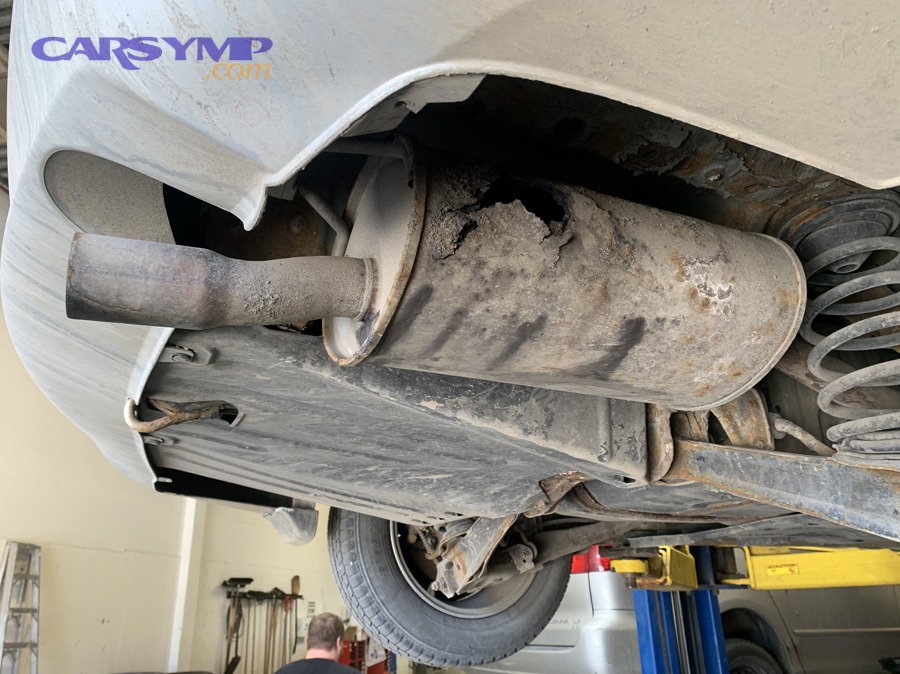
Rust also creates a time problem. The work shifts from remove and replace to remove, cut, extract, rebuild, and seal. When labor time grows, the estimate grows.
Which vehicle and exhaust layout variables most affect labor time?
There are 6 layout variables that most affect labor time: (1) clamp/flange vs welded joints, (2) one-piece assemblies vs modular sections, (3) shielding and underbody panels, (4) AWD/4WD packaging, (5) clearance to slide the muffler out, and (6) access to hangers and fasteners.
More importantly, these variables determine whether labor is “simple hand tools” or “lift + heat + cutting + fabrication.”
A simple way to classify your vehicle’s labor complexity is to look for:
- Visible clamps or flanges near the muffler (often easier)
- Long welded sections with no break points (often harder and more expensive)
- Hanger locations that require disassembly of shields or panels
If a shop tells you “the muffler is part of the mid-pipe assembly,” that’s a big flag that labor and parts will both rise.
What add-on repairs commonly appear with muffler replacement?
There are 7 common add-on repairs that appear on muffler-related estimates: exhaust hangers/mounts, clamps/hardware, gaskets/seals, flange repair kits, small pipe sections, heat shield hardware, and leak re-sealing or alignment adjustments.
Especially on older cars, these add-ons are not “upsells”—they’re often the minimum needed to make the new muffler seal and sit correctly.
Here’s what those add-ons usually solve:
- Hangers/mounts: stop sagging and rattling; keep clearance from the body
- Clamps/hardware: ensure joints don’t leak or loosen after heat cycles
- Gaskets/seals: prevent hissing leaks at flanges
- Flange repair: replace rotted mating surfaces so new parts can seal
- Pipe sections: remove rusted tube so the new muffler has solid material to connect to
- Heat shield hardware: prevents vibration noises and protects nearby components
- Alignment adjustments: prevents stress that can crack welds or loosen clamps
If an estimate includes add-ons, the best question is: “Which of these are required for sealing vs recommended for durability?”
How do parts and labor costs break down for muffler replacement?
Parts and labor break down into (1) the muffler and related hardware you install and (2) the time and expertise needed to remove old components, fit the new parts, and seal the system without leaks.
Then, because quotes vary, it helps to treat the estimate as a simple math equation you can audit.

RepairPal’s estimator format illustrates the classic split: it lists labor and parts separately and notes that totals don’t include taxes/fees and may not include related repairs. (repairpal.com)
Is labor usually the biggest part of the muffler replacement bill?
Yes, labor is usually the biggest part of the muffler replacement bill, because (1) removal is unpredictable when hardware is rusted, (2) fitment and sealing require time to prevent leaks, and (3) shops price expertise and equipment (lifts, cutting tools, welding) into labor—not just minutes on a clock.
However, labor stops being the biggest component when you choose premium OEM parts, stainless systems, or large integrated assemblies where the parts themselves dominate.
A helpful mental model is:
- Low rust + modular system: labor stays modest
- High rust + welded/integrated system: labor can balloon
- Premium parts: parts cost can take over
How can you calculate a rough muffler replacement cost estimate from a quote?
A rough muffler replacement cost estimate is parts + (labor hours × labor rate) + fees + tax, and you can validate it in 3 steps to spot missing items or inflated line charges.
To better understand, walk through the estimate like a checklist.
Step 1: Confirm parts scope
- Muffler brand/part number matches your vehicle
- Hardware (clamps/gaskets/hangers) is listed or explicitly included
Step 2: Confirm labor scope
- Hours or flat labor charge is stated
- Method is clear (clamp, flange, weld, fabrication)
Step 3: Confirm final add-ons
- Shop fees and disposal
- Taxes
- Rust contingency language (what happens if bolts snap?)
For example, if a quote shows a muffler at $220, hardware at $40, labor at 1.5 hours, and a shop rate of $140/hr, your base is:
$220 + $40 + (1.5 × $140) = $470, plus fees/tax.
If the estimate is far above this, the explanation should be visible in the scope (integrated assembly, fabrication, heavy corrosion, or additional exhaust section work).
Should you choose OEM or aftermarket for the best price-to-longevity value?
OEM wins in fitment consistency, aftermarket is best for budget flexibility, and premium aftermarket is optimal for material upgrades and tailored sound, so the “best value” depends on whether you’re optimizing for lowest upfront cost, longest lifespan, or the quietest/most controlled tone.
However, because your title goal is a cost estimate and price range, the key is understanding how each option affects both the estimate and future repairs.
This is where the phrase muffler replacement belongs in your decision: you’re not only buying a part—you’re buying the combination of fit, sealing, and durability that determines whether you’ll pay again soon.
Is an aftermarket muffler always cheaper than OEM, yes or no?
No, an aftermarket muffler is not always cheaper than OEM, because (1) premium aftermarket systems can cost more than factory parts, (2) some vehicles use integrated assemblies where aftermarket options are limited, and (3) “cheaper” universal parts can require added fabrication that increases labor.
Meanwhile, aftermarket can be cheaper when a direct-fit replacement is widely available and installation is straightforward.
A practical rule: compare total installed cost, not just the part price. A cheap part with expensive labor is not cheap.
How do aluminized steel and stainless mufflers compare for cost and lifespan?
Aluminized steel wins on upfront affordability, stainless is best for corrosion resistance, and coated performance systems are optimal for specific sound and longevity targets, so your best pick depends on climate and how long you plan to keep the car.
On the other hand, material choice is one of the cleanest ways to trade money now for fewer repairs later.
If you live in a road-salt region, corrosion is not theoretical. Public health and environmental agencies regularly discuss road salt’s corrosive impact on infrastructure and vehicles, and estimates of corrosion-related costs can be substantial at a national scale. (news.climate.columbia.edu)
In plain terms: stainless tends to cost more, but it tends to “win” when rust is the main failure mode.
Is it cheaper to replace only the muffler or a larger exhaust section?
Muffler-only replacement wins in lowest parts cost, a larger exhaust section is best for restoring solid sealing surfaces, and a full section swap is optimal for speed and reliability when rust has spread, so the cheapest option depends on whether your system is modular or rotted into a single fragile unit.
Next, you’ll want to identify whether your muffler is a standalone component or part of a combined assembly.
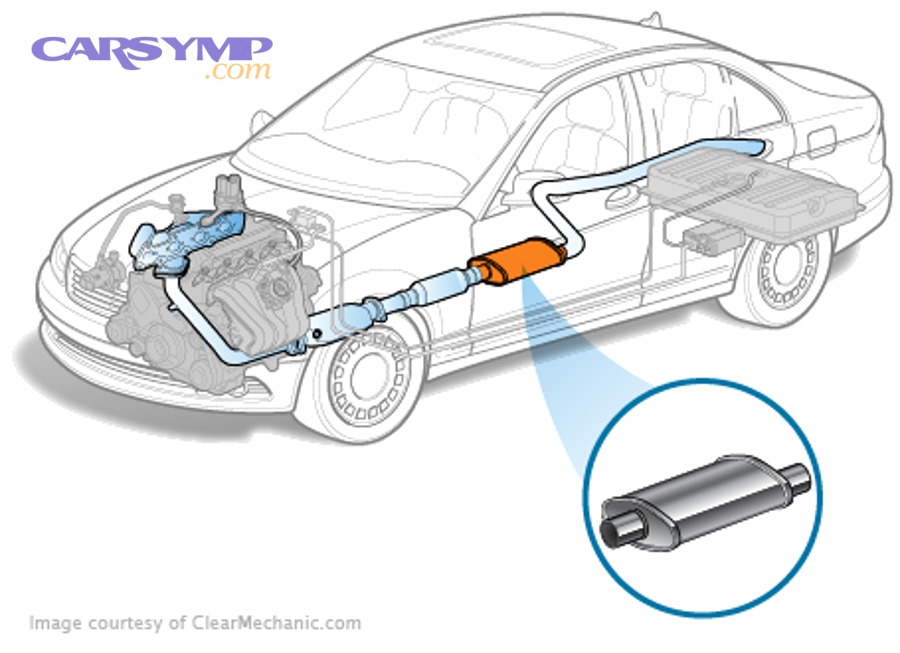
This also ties into Muffler vs resonator vs catalytic converter roles: a muffler primarily reduces exhaust noise, a resonator typically tunes/targets certain frequencies for tone control, and the catalytic converter focuses on emissions chemistry—not noise reduction. Confusing these roles can cause you to replace the wrong part and still have the same symptom afterward. (If your issue is noise only, the muffler/resonator area is likely; if your issue is emissions/engine light, that’s a different diagnostic path.) (en.wikipedia.org)
Can a muffler be replaced by itself on your vehicle, yes or no?
Yes, a muffler can be replaced by itself on many vehicles, because (1) many exhaust systems use clamps or flanges that separate sections, (2) mufflers are often mounted on hangers as a distinct component, and (3) direct-fit aftermarket parts exist for common models.
However, the answer becomes “no” when the muffler is welded into a larger assembly or when corrosion makes the adjacent pipe too weak to reuse.
A quick under-car check (or shop inspection) usually reveals which case you have:
- Clamps/flange joints near the muffler: often muffler-only is feasible
- Long welded pipe into the muffler: often requires cutting or replacing a larger section
- Paper-thin rust around the joint: often forces a larger section replacement for a durable seal
How do “muffler-only” and “muffler + pipe/resonator assembly” estimates compare?
Muffler-only estimates are usually lower because they minimize parts, muffler + pipe/resonator assemblies are best for eliminating weak joints, and full assemblies are optimal when corrosion has migrated beyond the muffler shell.
To illustrate, the estimate difference often comes down to whether you’re paying to reuse old sealing surfaces or paying to replace them.
Expect these common trade-offs:
- Muffler-only: lower parts cost, but higher risk of needing extra pipe work if the connection is weak
- Assembly swap: higher parts cost, often smoother labor, and typically fewer “surprise leaks” afterward
If your quote jumps sharply when a shop recommends an assembly, ask them to show you the rust line or the failed joint that makes muffler-only risky.
What can you do to get an accurate muffler replacement estimate and avoid overpaying?
You can get an accurate muffler replacement estimate and avoid overpaying by using 3 controls: (1) demand a written scope with line items, (2) compare at least two estimates using the same scope, and (3) ask for a rust contingency plan in writing.
More importantly, these controls protect you from paying for “unknowns” that should be clarified before work starts.
This is where DIY muffler replacement considerations can help—even if you’re not doing the job yourself. Understanding the basic install steps makes you a better buyer because you can ask sharper questions and spot vague quoting.
Here is a simple “estimate accuracy” checklist:
- Vehicle year/make/model/engine confirmed
- Part type specified (OEM, direct-fit aftermarket, universal)
- Installation method specified (clamp, flange, weld)
- Hardware included (yes/no)
- Add-ons justified (what’s required vs optional)
- Warranty terms stated (parts and labor)
- Final total stated (including fees/tax) or clearly explained
Should you get more than one estimate before approving muffler replacement?
Yes, you should get more than one estimate before approving muffler replacement, because (1) exhaust scope varies by shop (muffler-only vs assembly), (2) labor pricing and rust assumptions differ, and (3) parts quality choices (OEM vs aftermarket) can change the true value of the quote.
However, if your car is loud enough to suggest an exhaust leak near the cabin, or you smell exhaust fumes inside, treat it as a safety priority and reduce delays.
A clean approach is two estimates: one from a general repair shop and one from an exhaust specialist. If both scopes match, your confidence skyrockets.
What questions should you ask the shop to lock down the final price?
There are 10 questions that lock down price clarity and prevent surprise add-ons.
Especially, these questions force the estimate to become specific, which is the whole point of requesting it.
- Is this muffler-only or a larger exhaust section?
- Is the part OEM, direct-fit aftermarket, or universal?
- Are clamps, gaskets, and hangers included?
- What is the labor time (hours) or flat labor charge?
- What is the rust contingency—what happens if bolts snap?
- Will you show me the failed part (rust-through, crack, baffle rattle)?
- Will the new setup be quieter, same, or louder than stock?
- Is there any reason the resonator or pipe needs replacement too?
- What warranties apply to parts and labor?
- What is the out-the-door total including fees and taxes?
If a shop can’t answer these clearly, the estimate isn’t ready to approve.
How can you reduce total muffler replacement cost long-term without choosing the cheapest option?
You can reduce total muffler replacement cost long-term by choosing durability levers—materials, corrosion prevention, and serviceable installation methods—so you avoid paying repeatedly for the same failure mode.
Besides, this section matters because the cheapest upfront estimate is often the most expensive over time if it fails early or creates rework.
This is also where “quiet vs loud” becomes more than preference. Excessive exhaust noise affects comfort and, in some contexts, health and stress exposure. Harvard T.H. Chan School of Public Health reports on research linking transportation noise exposure with cardiovascular risk, including findings described as about a 4% increased risk per roughly four decibels in the cited cohort analysis. (hsph.harvard.edu)
So durability and proper noise control can be both a cost decision and a quality-of-life decision.
What are the best practices for preventing exhaust rust and corrosion after replacement?
There are 6 best practices for preventing exhaust rust and corrosion: wash the undercarriage in winter, address small leaks early, replace weak hangers that stress joints, choose corrosion-resistant materials when possible, avoid trapping moisture (short trips), and use quality hardware/clamps.
More specifically, these habits reduce the conditions that accelerate rust: moisture, salt, and vibration stress.
Practical tips that actually help:
- Undercarriage rinsing in salt season: reduces salt residue that drives corrosion
- Fix small leaks early: leaking exhaust can change condensation patterns and accelerate rust at joints
- Replace bad hangers: sagging exhaust loads joints and cracks welds
- Prefer stainless in heavy-salt regions: higher upfront, often longer life
- Avoid constant “only short trips” if possible: short runs can leave more condensation in the system
- Use quality clamps and sealing surfaces: cheap clamps can loosen after heat cycles
How do weld vs clamp repairs compare for upfront cost versus future repair risk?
Clamps win for serviceability and future removal, welding is best for custom fit and sealing when surfaces are compromised, and a hybrid approach is optimal when you want both a tight seal and future replaceability.
However, the better choice depends on what you’re attaching to: solid pipe and clean flanges are clamp-friendly; thin, rotted, or mismatched surfaces may require welding or replacement sections.
Typical trade-offs:
- Clamp-based install: often faster and easier to service later; may need re-tightening after heat cycles
- Welded install: can be robust when done well; can increase future labor if another section fails
- Fabricated replacement section: higher initial labor, but can restore solid geometry and reduce repeat failures
If you plan to keep the car for years, ask the shop how the chosen method affects the next repair. The cheapest method today can become the most expensive method later if it makes future work difficult.
When do broken studs/bolts or hanger failures make the “cheap” estimate unrealistic?
Yes, broken studs/bolts or hanger failures make a “cheap” estimate unrealistic, because (1) extraction and drilling add labor quickly, (2) new hardware and flanges may be required to seal, and (3) a sagging exhaust can damage adjacent joints and force a larger scope.
Especially on older vehicles, this is the hidden reason estimates vary so much even for “the same” muffler job.
Signs your estimate is likely to escalate:
- Visible heavy rust around flanges and joints
- Exhaust hanging low or moving excessively (bad hangers)
- Loud rattling that suggests loose internals and loose mounting
- Evidence of previous patchwork repairs (multiple clamps, crushed pipe ends)
The safest approach is to treat heavy corrosion as a scope risk and require the shop to explain their contingency pricing.
How can aftermarket muffler sound level and legality affect your final cost?
Aftermarket muffler sound level and legality can affect your final cost by forcing rework—either to pass local inspections, meet noise expectations, or reduce cabin drone—so the “cheaper” part can become expensive once you pay for a second fix.
On the other hand, a properly selected aftermarket part can balance price and sound without drama.
If you’re considering an aftermarket option, protect your budget by clarifying:
- “Will this be louder than stock?”
- “Will it create drone at highway speeds?”
- “What is the return policy if sound is unacceptable?”
- “Can we choose a quieter direct-fit alternative?”
And if you want a visual overview of how a typical replacement is done, here’s a practical DIY walkthrough video that helps you understand scope—even if you hire the job out:
According to a study led by Harvard T.H. Chan School of Public Health’s environmental health research team, in 2023, higher transportation noise exposure was linked with increased cardiovascular disease risk in a long-term cohort analysis, reinforcing why keeping exhaust noise properly controlled can matter beyond comfort. (hsph.harvard.edu)