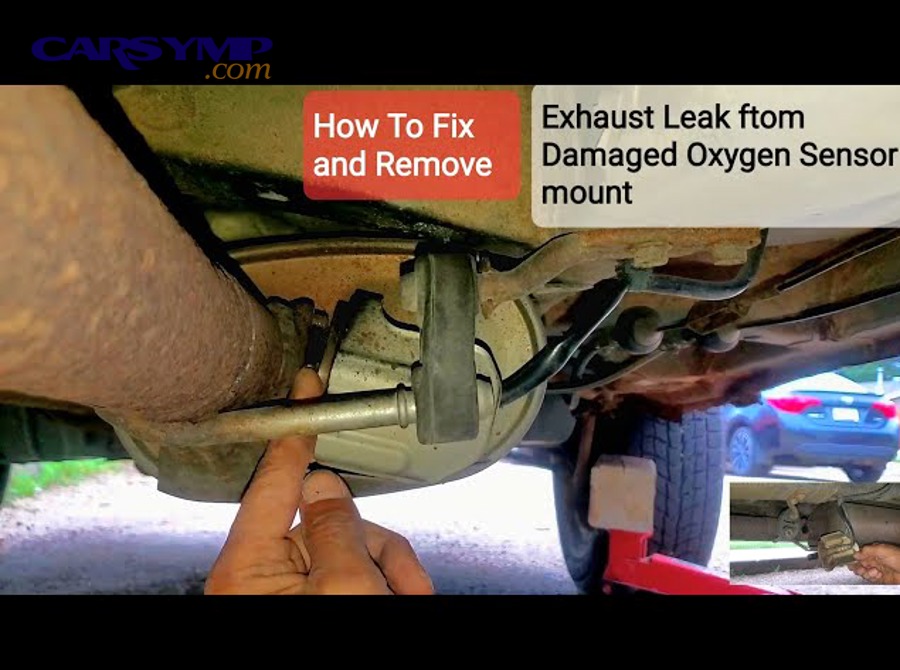
An upstream exhaust leak can mimic an O2 (lambda) sensor fault because it lets outside oxygen enter the exhaust stream near the sensor, which can push the ECU to “correct” a problem that isn’t actually a bad sensor—often showing up as false-lean behavior and recurring codes.
Next, the most important differentiator is where the leak sits relative to the sensor and catalyst, because leaks upstream of the front O2 sensor are far more likely to skew readings than leaks further downstream.
Besides location, you also need to interpret codes and scan-tool patterns (especially fuel trims and O2 activity) so you can separate “sensor reporting accurately” from “sensor being fooled.”
Introduce a new idea: once you can connect symptoms, location, codes, and live data, you can follow a step-by-step home workflow to confirm the leak, repair it correctly, and verify the fix without guessing.
What does it mean when an exhaust leak “mimics” an O2 (Lambda) sensor fault?
An exhaust leak “mimics” an O2 (lambda) sensor fault when it creates a false oxygen signal that makes the ECU behave as if the sensor or fueling is wrong, even though the sensor may be healthy and the real problem is unmetered air entering the exhaust upstream.
To better understand why this happens, it helps to connect how the sensor measures oxygen to how exhaust pulses can pull fresh air into a small opening.
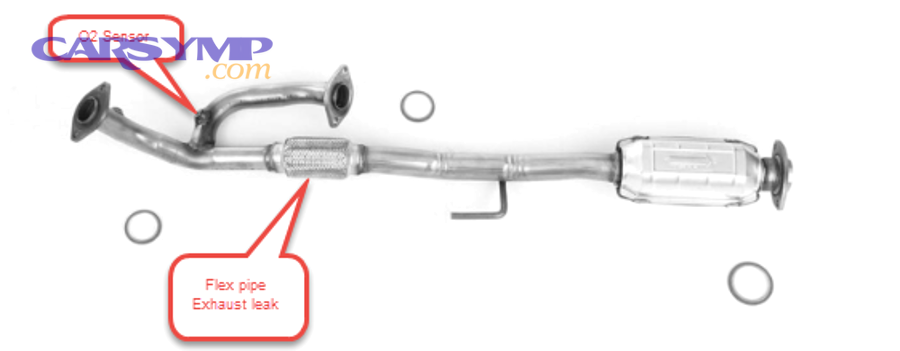
In closed-loop operation, the ECU uses the upstream O2 (lambda) sensor to keep the air-fuel ratio near its target. If fresh air enters the exhaust near the sensor, the sensor can “see” more oxygen than it should and the ECU may add fuel, chasing a lean condition that the engine didn’t actually create. This is why many people end up doing an oxygen sensor replacement and still see the same lean behavior afterward—because the exhaust leak is still feeding the same misleading signal.
In practice, “mimic” does not mean the sensor is lying on purpose; it means the sensor is reporting what it detects at its tip, but the sample is contaminated by outside air. The result can look like:
- A lean code after a cold start
- Fuel trims that climb positive over time
- A rough idle or hesitation that improves with throttle
- A code that returns quickly after clearing
The “hook” to remember is simple: when the upstream O2 sensor reads oxygen, it cannot tell whether that oxygen came from combustion, misfire, or a leak that pulled in outside air—it only reports oxygen presence.
A key macro-semantics detail is that this effect is most common with leaks upstream of the first (front) sensor because that sensor directly controls fueling. Modern ECUs can adapt quickly, so a small leak can snowball into noticeable drivability changes as the ECU keeps compensating.
According to a study by Linköping University from the Department of Electrical Engineering (Vehicular Systems), in 2002, standing waves can allow air to leak into the exhaust and disturb the air/fuel ratio controller, which is why detecting leaks before the catalyst and upstream sensor matters for control accuracy.
Is the leak upstream of the O2 sensor—and does that location matter?
Yes—an upstream leak location matters because (1) it can pull outside oxygen into the exhaust near the upstream sensor, (2) it can distort the sensor’s sample and fuel-control decisions, and (3) it can trigger recurring “lean” or “O2 performance” behavior even with a good sensor.
More importantly, once you anchor the leak’s position, the rest of your diagnosis becomes faster and more precise.
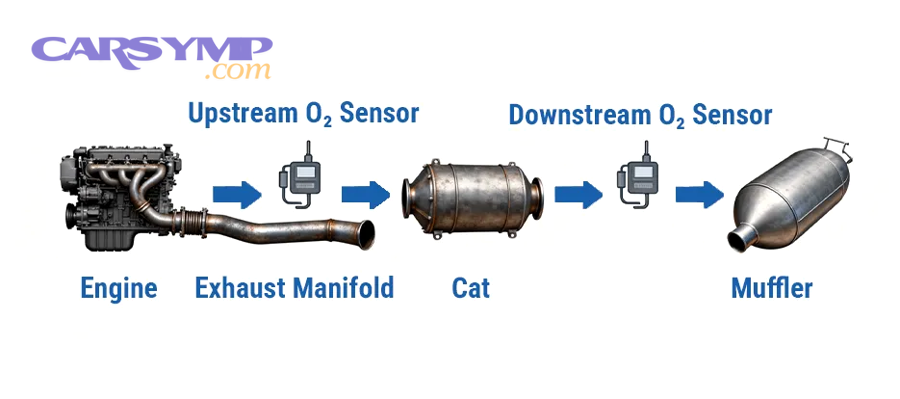
Upstream vs downstream O2 sensor differences
The simplest mental model is this:
- Upstream (front) O2 / A/F / lambda sensor: primary feedback for fueling in closed loop. If its sample is compromised, the ECU’s fueling decisions are compromised.
- Downstream (rear) O2 sensor: primarily monitors catalyst efficiency and trend stability. It usually does not drive fueling the same way the upstream sensor does in most applications.
This is why the phrase “Upstream vs downstream O2 sensor differences” is not just terminology—it changes what a leak can realistically cause. A leak before the front sensor can “create” a fuel-control problem; a leak after the catalyst is more likely to create noise/odor issues and, depending on design and severity, sometimes catalyst-monitor anomalies rather than classic fuel-trim lean behavior.
Why upstream leaks fool sensors more often
Exhaust flow is not a smooth stream; it’s pulses. At certain pulses and pressure waves, a small gap at a manifold gasket, flex joint, or flange can act like a tiny pump that draws in ambient air. When that happens close to the sensor, the sensor’s reading skews lean even if combustion is fine. That false-lean effect is commonly discussed in performance and diagnostic contexts because it can make the ECU add fuel unnecessarily.
Which locations are most suspicious first
If your symptom set looks like “sensor fault,” but you also have classic leak clues (ticking, soot, smell), prioritize these points:
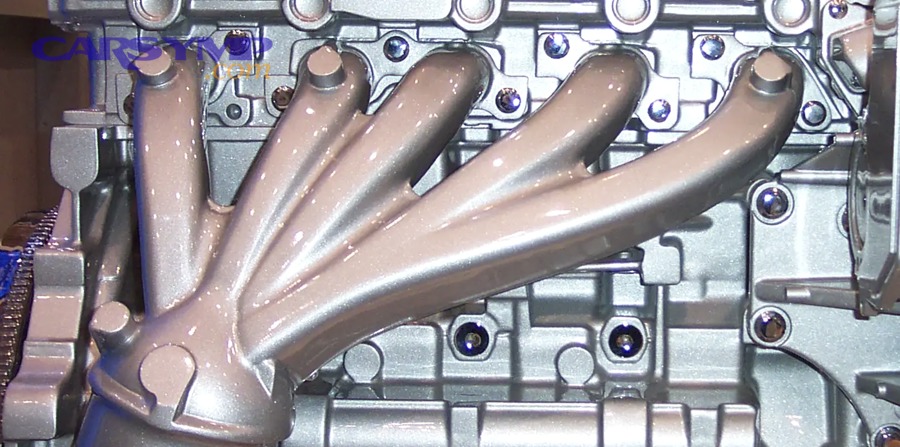
- Exhaust manifold gasket / manifold-to-head sealing surface
- Cracked manifold / cracked header tube
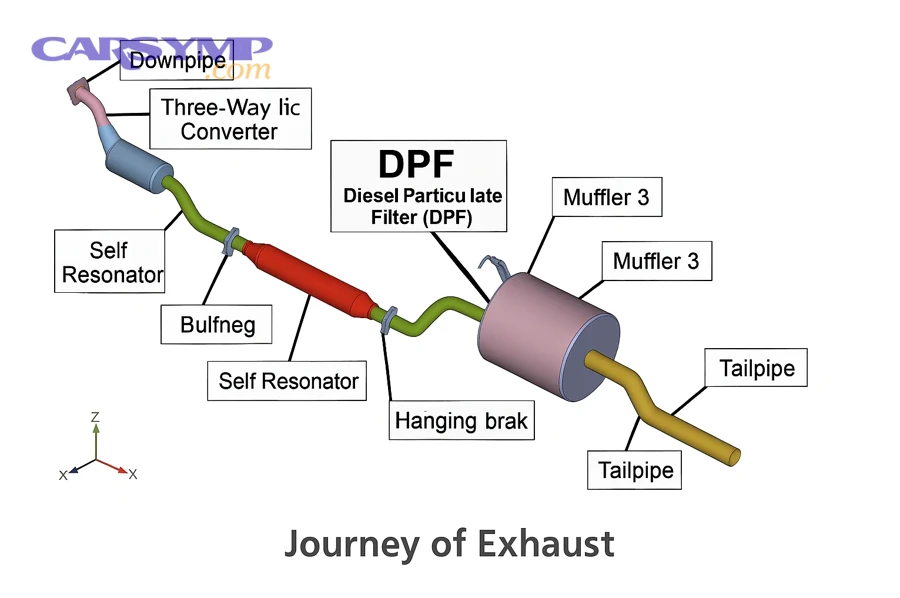
- Collector and flange joints (manifold-to-downpipe, downpipe-to-cat)
- Flex section near the front sensor bung
- Sensor bung welds (micro-cracks around the bung can be surprisingly deceptive)
If you’re diagnosing Bank 1 vs Bank 2 codes, match the leak search to the bank that owns the upstream sensor for that bank—especially on V engines.
What codes and scan-tool patterns suggest an exhaust leak is the real problem?
There are three main categories of clues that point to an exhaust leak mimicking O2 sensor faults: (A) fuel-trim patterns that skew lean, (B) O2 sensor activity that looks “wrong” but stabilizes with RPM, and (C) codes that return quickly after parts replacement because the upstream sample is still contaminated.
Then, once you recognize these patterns, you can validate the diagnosis with live data instead of swapping parts.
Codes that often appear in “false O2 fault” situations
You can see many combinations depending on vehicle strategy, but the most common themes are:
- Lean mixture codes: P0171 / P0174 (system too lean)
- O2 sensor circuit/performance codes: like P0130/P0150 “circuit” families and “slow response”/“insufficient switching” style behavior (varies by make)
- Catalyst monitor confusion (sometimes): if the mixture control goes rich due to false lean correction, catalyst efficiency testing can get noisy
Lean codes are not “proof” of a leak by themselves, but they become highly suggestive when combined with ticking/soot and a trim pattern that changes with RPM.
Using live data to confirm O2 sensor health
A strong diagnostic move is Using live data to confirm O2 sensor health before replacing anything:
- Watch STFT and LTFT at idle, then at ~2,500 RPM steady.
- If trims are very positive at idle but improve as RPM increases, you’re often looking at an air-entry problem that matters more at low flow (many intake leaks behave this way, and some exhaust leaks do too).
- If O2 switching looks erratic at idle but becomes more stable with slightly raised RPM, that can align with a leak-induced sampling issue (and/or other engine conditions).
This approach saves money because it separates “sensor dead” from “sensor reacting to a bad sample.”
A quick pattern table (what it tends to mean)
The table below summarizes common scan patterns and what they typically point toward, so you can quickly decide what to test next.
| Scan-tool observation | What it often suggests | What to do next |
|---|---|---|
| STFT/LTFT climb positive and stay there; exhaust tick present | Upstream leak pulling in oxygen | Smoke test or soapy-water bubble check at manifold/flange |
| O2 appears “lazy” but wiring and heater look OK; soot marks near manifold | Leak near sensor bung/manifold | Inspect for soot trails, cracked welds, loose fasteners |
| Codes return after oxygen sensor replacement | Root cause not sensor | Re-check leak points, verify trims and exhaust sealing |
| Trims are positive + misfire counters present | Misfire adding oxygen to exhaust (can mimic lean) | Fix misfire first; re-check trims afterward |
Misfires are especially tricky because they also push oxygen into the exhaust stream and can be interpreted as lean by the O2 sensor, pushing the ECU to add fuel and making non-misfiring cylinders run rich.
How do you diagnose an upstream exhaust leak step-by-step at home?
A reliable home diagnosis uses a step-by-step workflow—inspection, confirmation test, and live-data validation—so you can pinpoint an upstream leak without guessing and avoid repeating oxygen sensor replacement.
Below, the goal is to move from the easiest proof to the strongest proof, while staying safe.
Step 1: Do the cold-start “tick and trace” inspection
Start with a cold engine because leaks are often loudest before metal expands.
- Listen for a sharp ticking/puffing near the manifold area during the first 30–90 seconds.
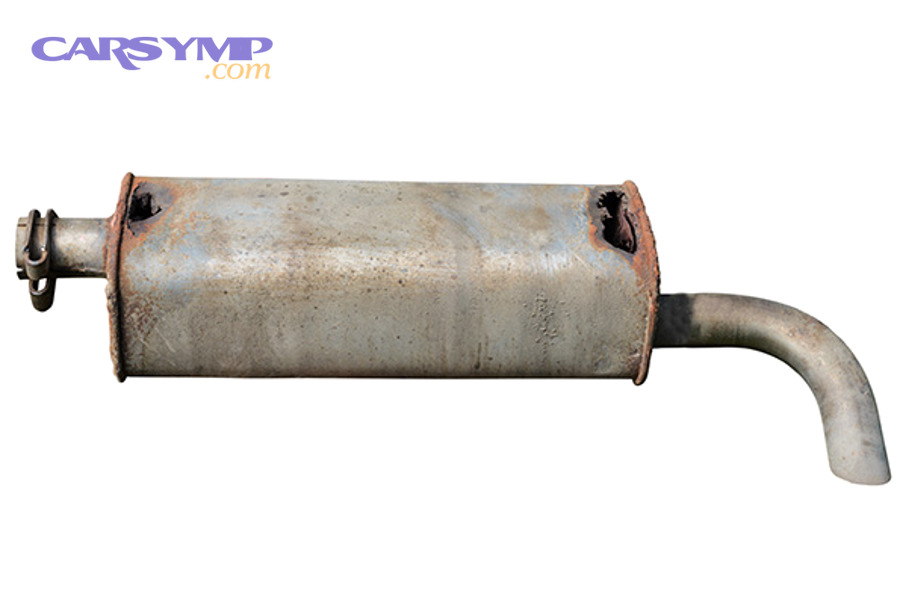
- Look for soot trails (black/gray streaks) on the manifold, heat shield edges, or near flange joints.
- Check fasteners visually (missing nuts/studs, obvious gaps, crooked flanges).
- Smell cautiously: exhaust smell under hood can reinforce the suspicion (avoid breathing fumes).
If the leak is small, you might only catch it under specific conditions—cold start, gentle throttle blip, or when the engine torques slightly.
Step 2: Use a confirmation test (smoke is the cleanest)
If you have access to a smoke machine, it’s one of the most decisive tests for small leaks: introduce smoke into the exhaust (often via tailpipe with the engine off) and look for smoke escaping at the manifold, flange, or flex section.
If you don’t have smoke, you still have workable DIY options:
- Soapy-water bubbles (best on accessible joints): spray on suspected joints while the engine runs; bubbles can form where pulses exit.
- Tailpipe block + listen (brief and cautious): gently restrict tailpipe flow with a rag for a moment to increase backpressure and make the leak more audible. Do not fully seal the exhaust, and avoid prolonged restriction.
- Shop-vac reverse flow (engine off): some DIYers use low-pressure airflow into the tailpipe and check for hiss around joints (varies by setup).
Step 3: Validate with scan data while you “change the condition”
The trick is to see if the ECU reaction changes when the leak effect changes.
- Compare trims at idle vs 2,500 RPM steady.
- If you can temporarily reduce leak influence (for example, by lightly pressing a heat shield back into place or changing load/angle safely), watch whether STFT reacts quickly. Fast STFT movement suggests the ECU is reacting to changing oxygen feedback, not a dead sensor.
This is where “sensor health” and “system truth” diverge: a sensor can be responsive and still misleading if the sample is wrong.
Step 4: Confirm the leak location before ordering parts
Before you buy gaskets or manifolds, confirm where it leaks:
- Manifold gasket leak: soot line at head flange, tick near ports, sometimes a visible gap.
- Crack: hairline line, often near collectors or bends; soot may outline the crack.
- Flex joint: loud hiss/tick, visible fraying or soot near braid.
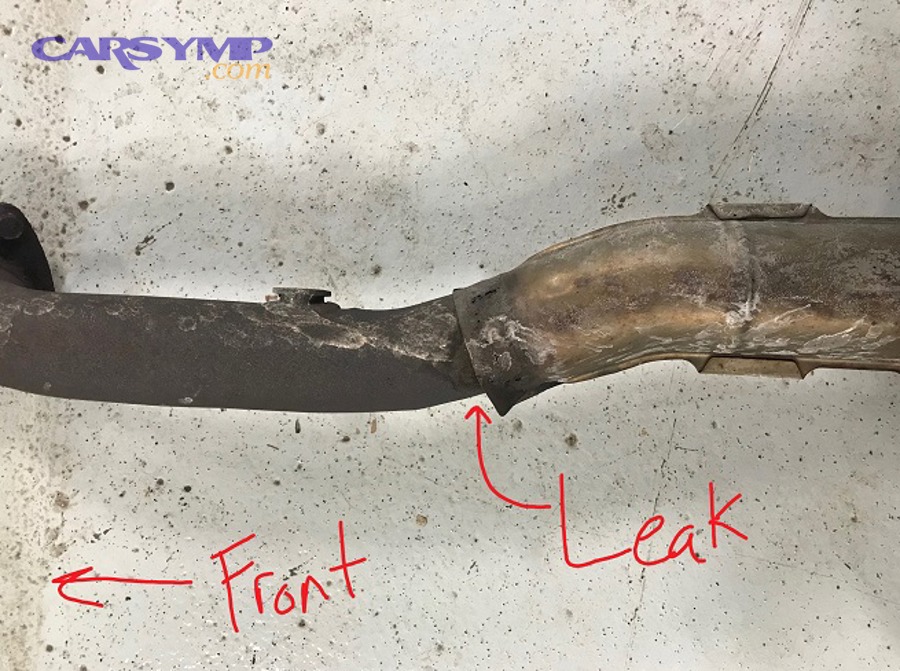
- Flange leak: soot at flange edge, often worsens with engine movement.
This “proof first” approach dramatically reduces the chance of doing repairs twice.
How do you fix exhaust leaks that trigger O2-sensor-like faults—and which repair is best?
A durable fix depends on the leak type: gaskets and hardware fix sealing failures, welding fixes cracks, and component replacement fixes warped or structurally compromised parts—and the best choice is the one that restores a sealed exhaust path upstream of the sensor and stays sealed after heat cycles.
More specifically, you should choose the repair method that matches why the leak started in the first place.
Repair decision: gasket vs crack repair vs replacement
Use this comparison logic:
- Gasket replacement wins when the manifold is structurally sound and the sealing surface isn’t warped.
- Crack repair (weld/braze) wins when the crack is localized, access is reasonable, and the manifold material supports a lasting repair.
- Full replacement wins when the manifold is warped, heavily corroded, repeatedly cracking, or stud extraction turns the job into a reliability gamble.
If you’re already planning oxygen sensor replacement, do not treat it as the default fix for lean codes until the exhaust sealing is confirmed—because a perfectly good sensor can be forced to “tell the truth” about a contaminated sample.
Anti-seize and torque best practices (especially near sensors)
When working near sensors and hot exhaust threads, Anti-seize and torque best practices protect you from seized threads, damaged bungs, and repeat leaks.
- Many new sensors come with thread treatment; follow the sensor maker’s instructions rather than automatically adding more compound.
- Avoid contaminating the sensor tip with any compound.
- Use an O2 sensor socket and avoid twisting the harness.
Common mistakes that cause the leak (and the codes) to come back
The most common “it came back” causes are mechanical, not electronic:
- Reusing crushed gaskets or damaged donut seals
- Skipping surface prep (carbon deposits prevent sealing)
- Improper torque sequence on manifold fasteners (uneven clamping can open a gap)
- Not addressing broken/missing studs (you can’t seal what you can’t clamp)
- Ignoring flange alignment (forcing bolts can warp or stress joints)
If you fix the leak but the ECU has learned extreme fuel trims, it may take a bit of driving for LTFT to normalize. Clear codes if appropriate, then re-check trims after a proper drive cycle.
Verify the repair the right way (don’t trust “no noise” alone)
A correct verification uses both “physical” and “data” confirmation:
- Physical: no tick on cold start, no soot trails forming, no smoke escaping in a follow-up test.
- Data: trims trend back toward normal, upstream O2 activity looks consistent, and codes do not return.
This is where your earlier “live data” work pays off—you’ll recognize normal behavior because you watched the abnormal behavior first.
What edge cases can look like exhaust leaks—or make leaks harder to diagnose?
Edge cases matter because misfires, intake leaks, MAF errors, fuel delivery issues, and even sensor type differences can produce similar “lean” symptoms and confusing O2 behavior, so you need a short method to rule them out without derailing the main diagnosis.
In addition, this is where micro-semantics expands: leak vs no-leak causes, narrowband vs wideband behavior, and special layouts (like turbo engines).
What problems mimic an exhaust leak’s “false lean” pattern?
Start with the antonym of your main hypothesis: what if there is no exhaust leak? The most common alternatives are:
- Intake/vacuum leak (unmetered air into the engine)
- Dirty or misreporting MAF
- Low fuel pressure / delivery issues
- Misfires (especially subtle ones that don’t always set a misfire code quickly)
Misfires deserve special emphasis: oxygen that should have been consumed during combustion can pass into the exhaust and be interpreted as lean feedback, pushing trims and confusing diagnosis.
A fast differentiator is condition timing:
- If trims are worst at idle and improve with RPM, intake leaks often rise on the suspect list.
- If trims change with exhaust noise intensity and you find soot trails, exhaust leaks rise quickly on the list.
How do wideband sensors react differently than narrowband O2 sensors when a leak exists?
Wideband (A/F) sensors and narrowband O2 sensors both respond to oxygen presence, but wideband systems can present the error differently in scan data. The key is to avoid assuming “wideband means immune.”
In real terms, you may see:
- A/F equivalence ratio values that look consistently leaner than expected
- Corrections that swing more clearly in fuel trims as the ECU compensates
- A problem that seems “electronic” because the displayed parameter looks precise
Do turbo engines or post-cat leaks change the diagnosis rules?
Turbo layouts can change what’s easy to access and what becomes urgent. A pre-turbo leak can affect spool, noise, and under-hood heat patterns, while still creating oxygen-ingress issues depending on sensor placement. On the other hand, many post-cat leaks are more likely to be a noise/odor problem than a fuel-control problem, unless the leak is close enough to the sensor location or interacts with monitoring strategy.
When should you stop DIY and get a shop diagnosis?
Stop DIY and get professional help when:
- You have broken studs in the head/manifold and don’t have extraction tools
- The leak is near wiring, steering components, or tight spaces where burns are likely
- You repeatedly fail to seal the joint after correct gasket/hardware work
- You need emissions compliance confirmation and monitor completion
A shop can run a controlled smoke test, verify monitor readiness, and confirm that the correction strategy has normalized—especially valuable if you’re stuck in a loop of recurring codes.
Evidence (if any)
According to a study by Linköping University from the Department of Electrical Engineering (Vehicular Systems), in 2002, leakage detection before the catalyst is important because air can leak into the exhaust system due to standing waves and disturb the air/fuel ratio controller, which can lead to incorrect control behavior and increased emissions risk.