


Choosing the right oxygen (O2) sensor socket tool comes down to two things: getting full hex contact and protecting the sensor wire, so you can loosen and tighten the sensor without rounding it or twisting the harness. The correct tool—slotted/deep socket, crowfoot, or offset—lets you apply straight force, keep the wire safe, and finish the job cleanly.
Next, the fastest way to avoid frustration is to match the socket style to the space you’re working in. A slotted deep socket often wins when you can approach the sensor straight-on, while a crowfoot or offset socket can be the difference between success and a rounded sensor when space and angles get tight.
Then, proper technique matters as much as the tool itself. The same socket can either remove a sensor in seconds or destroy it in minutes depending on how you route the wire, how fully you seat the socket, and how you manage leverage—especially when the sensor is heat-cycled and seized in the bung.
Introduce a new idea: once you’ve removed and installed the sensor, you’ll also want to think about oxygen sensor replacement steps that happen after the wrenching—like dealing with Common O2 sensor codes, verifying Bad O2 sensor symptoms are gone, and making sure readiness monitors complete.
What are oxygen (O2) sensor socket tools, and why do you need one instead of a regular socket?
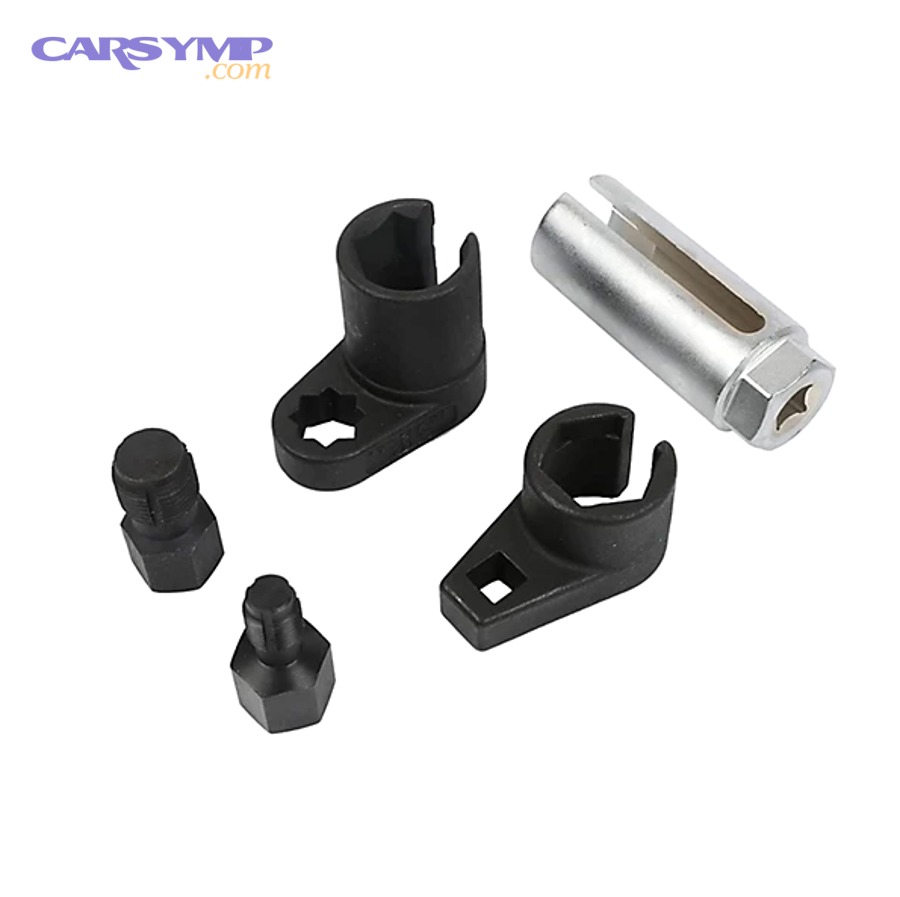
Oxygen (O2) sensor socket tools are specialty sockets and wrenches designed to grip the sensor’s hex while clearing the attached wire, so you can remove and install an O2 sensor without rounding the hex or twisting the harness.
Specifically, the “why” matters because exhaust heat cycles seize threads and make a regular socket slip or force you to cut the connector, which creates more work and more risk.
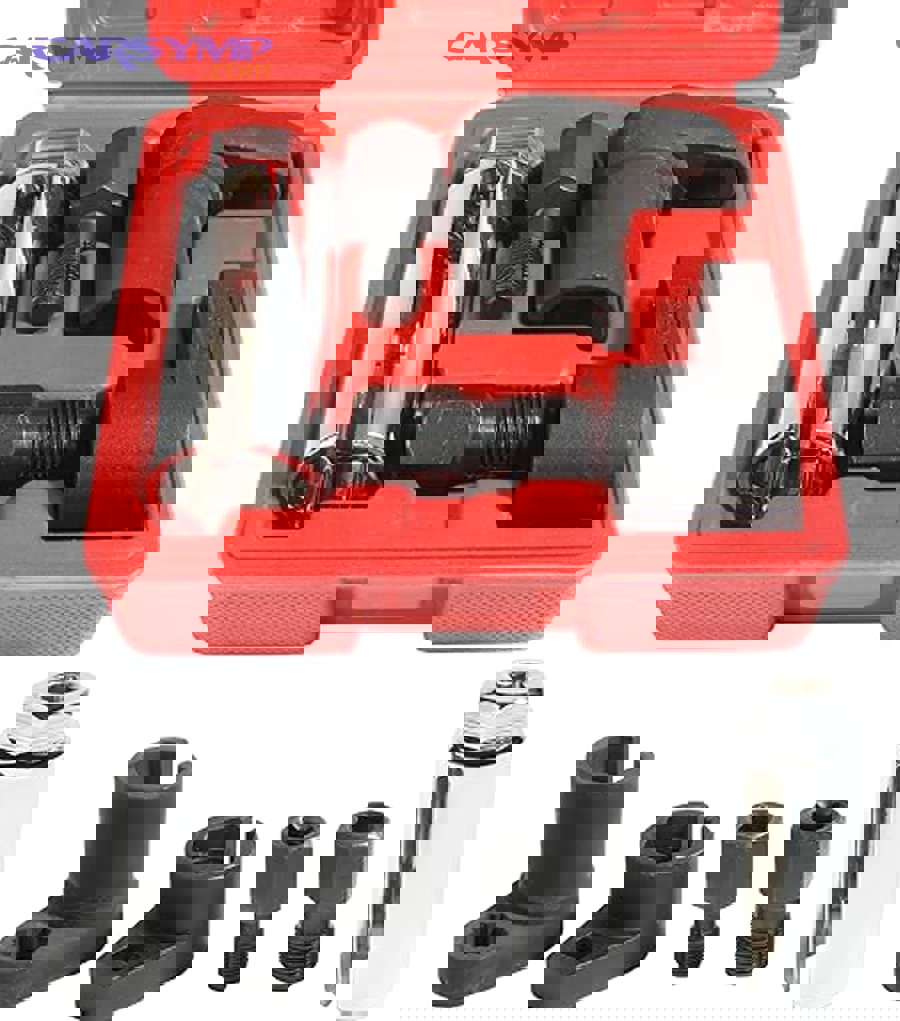
A regular deep socket is a closed cylinder. It can’t pass the O2 sensor wire through, so you can’t slide it over the sensor body unless you disconnect the harness and feed the wire through the drive end (which usually isn’t possible). Even if you manage to fit something, you often end up using an open-end wrench or an adjustable wrench at an awkward angle, and that’s where rounding happens.
An O2 sensor socket tool solves three problems at once:
- Wire clearance: A side slot lets the wire exit the socket without pinching.
- Full engagement: A deep 6-point interior seats fully on the hex.
- Controlled torque application: The tool accepts a ratchet/breaker bar so you can apply steady force instead of jerky, angled pulls.
Finally, this is the core connection to your goal: the right socket turns “stuck sensor drama” into a predictable procedure by maximizing contact and minimizing wire/harness stress. O’Reilly’s loaner-tool guide emphasizes using the dedicated oxygen sensor wrench/socket kit as a straightforward way to complete oxygen sensor replacement with step-by-step handling for the harness and removal. According to O’Reilly Auto Parts, using an oxygen sensor wrench and socket set is a practical method to complete O2 sensor replacement with guided steps and proper tool fit. (oreillyauto.com)
What does “slotted” mean on an O2 sensor socket, and how does the wire fit through it?
A “slotted” O2 sensor socket has a long, open channel cut down the side so the sensor’s wire can sit in that slot while the socket fully wraps the hex.
To begin, the correct wire routing is what keeps you from tearing insulation or twisting the harness.
Here’s how the wire fits safely through the slot:
- Disconnect the sensor connector first (when possible). This gives the wire slack and prevents twisting the harness as you turn the sensor.
- Position the slot toward the wire so the wire sits naturally in the opening without bending sharply.
- Slide the socket down until it bottoms out on the sensor hex. The socket must seat fully—partial seating is the #1 cause of rounding.
- Keep the wire centered in the slot while you apply force, so the socket doesn’t pinch the wire against the sensor body.
A simple technique that prevents damage: if the wire is stiff from heat, use your free hand to guide the wire into the slot while you slide the socket down. You are not “forcing” the wire; you are giving it a path that avoids the socket wall.
Practical tip: if grime or rust is packed around the sensor hex, scrub it quickly with a small wire brush so the socket can seat all the way. Full seating is your grip advantage.
Is a 6-point O2 socket better than a 12-point for removing sensors?
Yes—a 6-point O2 socket is usually better than a 12-point for removing sensors because it (1) spreads force across the flat faces, (2) reduces corner rounding under high torque, and (3) stays engaged more reliably when the sensor is seized in the bung.
However, the real risk comes from partial seating and angled loads, so you still need correct positioning.
Here’s why 6-point wins in the real world:
- Reason 1: Higher resistance to rounding. Seized sensors require high breakaway torque. A 6-point design grips the flats instead of loading corners.
- Reason 2: More consistent contact under heat-scale corrosion. Exhaust parts often have scale that reduces perfect fit; 6-point engagement tolerates that better.
- Reason 3: Better leverage control. When you pair it with a breaker bar, the tool stays planted and you can apply smooth, gradual force.
On the other hand, a 12-point can make sense only in rare situations where packaging is so tight you need a smaller swing angle and the tool you have is 12-point. Even then, you should treat it as a last option—because a rounded oxygen sensor quickly becomes a cut-and-extract job.
Evidence connects to function: oxygen sensors directly support air-fuel control and emissions performance; when they degrade or fail, they can contribute to control issues and emissions impact. According to an EPA report on oxygen sensor durability, oxygen sensors play a role in maintaining the air-fuel control range that supports both emissions conversion efficiency and fuel economy. (nepis.epa.gov)
Which O2 sensor socket type should you choose: slotted/deep, crowfoot, or offset?
A slotted deep socket wins for straight-on access, a crowfoot is best for awkward angles, and an offset socket is optimal for tight-clearance approach where the tool body must “step aside” from obstructions.
To better understand this choice, you should match the tool to the single biggest constraint: access angle and clearance.
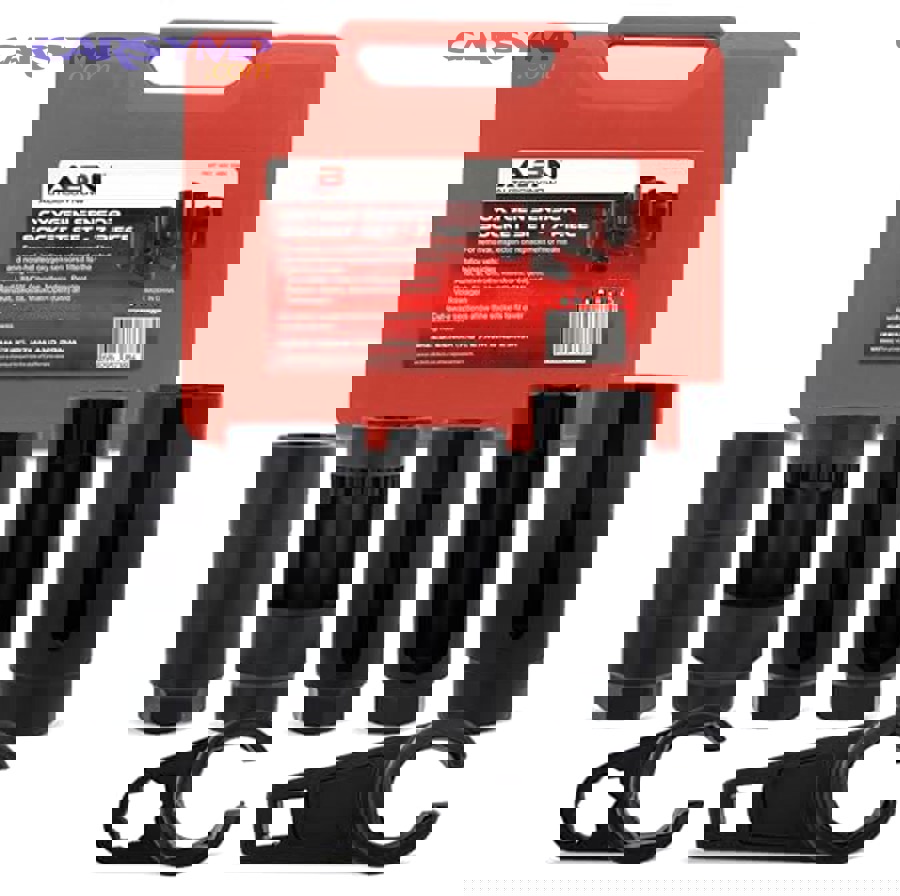
Most DIYers run into one of these three setups:
- Straight shot (under-car or open engine bay): Use a slotted deep socket with a ratchet or breaker bar.
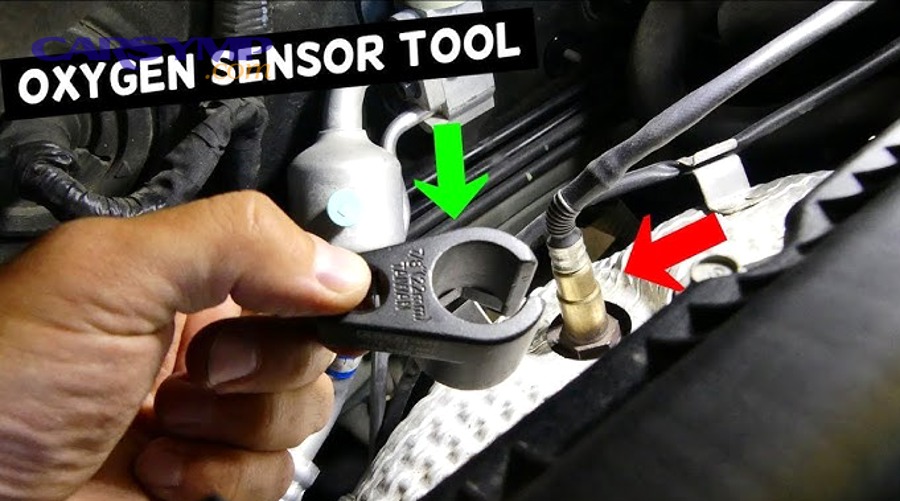
- Angled approach (firewall side, manifold crowding): Use a crowfoot oxygen sensor wrench on an extension.
- Blocked clearance (heat shields, brackets, limited radius): Use an offset O2 sensor socket that shifts the drive point away from the sensor centerline.
A quick decision rule that works:
- If you can keep the tool aligned with the sensor axis, use the slotted deep socket.
- If you cannot align straight-on but can still reach the hex, use a crowfoot.
- If you can reach but the ratchet head or extension hits something, use an offset socket.
Which tool works best in tight spaces: offset socket or crowfoot?
Offset sockets win in tight-clearance straight-ish approaches, crowfoots win in tight-angle approaches.
However, the correct choice depends on what’s actually “tight”: is it the tool body hitting something, or is it the approach angle being blocked?
Here’s the comparison that matters:
- Offset socket advantages:
- Moves the drive point away from obstructions like shields and brackets.
- Keeps more “socket-like” engagement, which can be more stable under torque.
- Works well when you’re near-straight but can’t fit the ratchet head where it needs to be.
- Crowfoot advantages:
- Fits when you must approach from the side.
- Lets you use extensions to reach around obstacles.
- Works well when the sensor is positioned so a deep socket simply can’t slide over it.
A practical test: place your extension/ratchet in position without turning anything. If the ratchet head can’t fit or can’t swing, you need offset. If the extension can fit but you can’t line up with the sensor axis, you need crowfoot.
When should you use a crowfoot O2 sensor wrench instead of a slotted socket?
You should use a crowfoot O2 sensor wrench when you cannot seat a deep socket straight-on, and you need (1) side access, (2) reach around obstructions, and (3) controlled turning without twisting the harness.
Moreover, the crowfoot becomes the safest tool when “almost straight” is not straight enough—because angled loading on a deep socket causes slip.
Use a crowfoot in these common scenarios:
- Firewall-side upstream sensor where the engine bay blocks a straight approach
- Sensor above a crossmember where the socket body can’t align with the hex
- Manifold heat shield crowding where you can only reach the hex from the side
- Limited swing where you must use extensions and small movements
One key habit: keep the crowfoot as close to 90 degrees to the torque wrench handle when tightening to spec (more on torque nuance later). For removal, focus on steady pressure and alignment.
What size O2 sensor socket do most DIYers need (7/8" vs 22mm), and when are others used?
There are two main “common” O2 sensor socket sizes—7/8 inch and 22mm—because many oxygen sensors use that hex size, while other sizes appear on specific applications based on sensor design and packaging.
Next, you should verify by checking the sensor hex or looking up the part—because “close” sizes create rounding.
Here’s the grouping that helps most DIYers:
- Most common: 7/8" (often equivalent to 22mm in practice for many O2 sensor sockets)
- Common alternates: 21mm, 24mm, and occasionally 27mm on certain designs or regions
- Practical note: Some specialty sockets are labeled “7/8 (22mm)” because manufacturers treat them as the standard O2 socket size.
When you’re unsure, your best move is simple: clean the sensor hex, test-fit the socket by hand, and confirm full seating before applying torque.
Evidence for torque-adapter nuance: tool geometry can change delivered torque, especially when using adapters like crowfoots. According to TEKTON’s guide on using a torque wrench with a crowfoot wrench, you may need to adjust or account for crowfoot angle/length to maintain accurate torque application.
How do you use an O2 sensor socket correctly to remove a sensor without damaging the wire?
Using an O2 sensor socket correctly means seating it fully, routing the wire through the slot, and applying smooth breakaway force in a straight line, which typically takes 6 key steps and prevents wire damage and rounding.
Then, the biggest improvement you can make is to treat removal as a controlled process rather than a “yank it loose” moment.
Step-by-step removal flow (DIY-safe and repeatable):
- Let the exhaust cool enough to work safely. Warm can help breakaway, but safety comes first.
- Unplug the sensor connector to prevent harness twist and to gain slack.
- Clean the hex and area around it. Dirt blocks full seating.
- Route the wire into the slot and seat the socket fully on the hex.
- Use a breaker bar for stuck sensors and apply steady force.
- Once it breaks loose, switch to a ratchet and remove it smoothly, finishing by hand when possible.
A major technique for seized sensors: apply penetrating oil to the threads area (not the sensor tip) and let it work. If the sensor is upstream on a manifold, short heat cycles can also help—covered in the “stuck” section.
What’s the correct setup for leverage and access (ratchet vs breaker bar, extensions, swivels)?
The correct setup is breaker bar for breakaway torque, ratchet for faster turning, and extensions/swivels only as needed to maintain straight alignment, because alignment protects the sensor hex and your knuckles.
Specifically, you want the simplest stack that achieves straight force.
A practical setup list (from most stable to most flexible):
- Most stable: slotted deep socket + breaker bar (for breakaway)
- Stable with reach: slotted deep socket + extension + breaker bar
- Flexible for obstacles: slotted socket + wobble extension + breaker bar (use carefully)
- Angled access: crowfoot + extension + ratchet/breaker bar (depends on access)
Key caution: swivels and wobble extensions help you fit around obstacles, but they also encourage side loading. Side loading reduces socket engagement, which increases rounding risk. If you need wobble, keep the wobble angle minimal and prioritize full seating.
Should you disconnect the O2 sensor connector before loosening the sensor?
Yes—you should disconnect the O2 sensor connector before loosening the sensor because (1) it prevents twisting the harness, (2) it gives wire slack for the slot and tool movement, and (3) it reduces the chance of ripping insulation on sharp edges or hot shields.
However, some connectors are hard to reach, so you may need to loosen the sensor slightly first just to gain access—then unplug it before spinning the sensor out.
Here’s a safe compromise when access is tight:
- Break the sensor loose 1/8 to 1/4 turn with the socket while the harness still has minimal twist.
- Stop, unplug the connector, and free the wire from clips.
- Then continue removing the sensor normally.
This keeps you from “corkscrewing” the harness as you turn the sensor multiple rotations.
How do you avoid rounding the sensor hex when it’s tight?
You avoid rounding the hex by (1) using a 6-point tool, (2) seating it fully, and (3) pulling in a controlled, straight direction—plus cleaning the hex and limiting side load.
Moreover, rounding usually happens before you realize it, so you must treat seating and alignment as non-negotiable.
A “no-rounding” checklist that works:
- Clean rust/scale so the socket bottoms out on the hex
- Confirm the socket is not sitting on the sensor body instead of the hex
- Keep your extension aligned so the socket does not rock
- Apply steady pressure rather than short, sharp jerks
- If it slips once, stop and reset—don’t “try again” with a partially seated socket
If the sensor is extremely stubborn, move to the seized-sensor plan instead of increasing force blindly. That plan protects both the bung threads and the sensor hex.
Evidence connecting to why replacement matters: sluggish or failed oxygen sensors can affect drivability and fuel economy symptoms that push DIYers into oxygen sensor replacement. According to Counterman, aging O2 sensors can become slow to respond and may contribute to symptoms such as reduced fuel economy. (counterman.com)
How do you install an O2 sensor correctly after removal?
Correct O2 sensor installation means hand-starting the threads, tightening to specification without overtightening, and routing the wire away from heat and moving parts, which protects the bung threads and prevents future seizure.
In addition, installation is where many DIY errors happen because the job “feels done,” so the details matter.
A clean installation flow:
- Compare old and new sensors (connector style, wire length, sensor type).
- Inspect the bung threads in the exhaust for damage or heavy corrosion.
- Hand-thread the sensor first to avoid cross-threading.
- Tighten with the correct tool (socket or crowfoot) in a controlled manner.
- Route and clip the harness exactly as intended to avoid heat melt or rubbing.
- Reconnect the connector firmly until it clicks, and verify it’s not near hot metal.
If your vehicle uses upstream and downstream sensors, keep them straight—mixing connectors or routing can create new problems and new fault codes.
Should you use anti-seize on O2 sensor threads?
Yes, you should use anti-seize on O2 sensor threads only when the sensor manufacturer or service procedure specifies it, because (1) it helps prevent future seizure, (2) it reduces thread galling in the bung, and (3) it supports consistent tightening—while avoiding contamination of the sensing tip.
However, many new sensors come pre-coated, and applying extra anti-seize can be unnecessary or harmful if it migrates.
A practical, safe rule:
- If the new sensor comes with pre-applied compound or a packet, follow that exact guidance.
- Apply only to the threads, not the tip or vents.
- Use a small amount—more is not better.
O’Reilly’s DIY guide notes that some sensors include anti-seize and stresses careful application to threads while avoiding the sensing area.
How tight should an O2 sensor be, and can overtightening cause problems?
An O2 sensor should be tightened to the specified torque (or snug plus controlled tightening if a torque spec isn’t available), and yes—overtightening can cause problems because it (1) damages threads, (2) risks cracking the bung/weld area, and (3) makes the next removal much harder.
Meanwhile, undertightening can allow exhaust leaks and false readings, so you want “right-tight,” not “gorilla-tight.”
What “right-tight” looks like in practice:
- Hand-thread fully until seated
- Tighten with a torque wrench if possible
- If you can’t torque it, tighten firmly with a short ratchet rather than a long breaker bar
- Stop once the crush/seal behavior feels complete (varies by design)
If you install using a crowfoot on a torque wrench, remember that adapter position can affect effective torque depending on angle and added length. A service-style torque adapter approach is documented in manufacturer tooling references; for example, Ford’s torque wrench adapter formulas illustrate how crowfoot geometry can influence torque settings. (fordservicecontent.com)
What should you do if the O2 sensor is stuck or seized?
If an O2 sensor is stuck, you should follow an escalation ladder—penetrating oil, controlled heat, better leverage, then extraction options—because each step increases capability while reducing the risk of rounding the hex or damaging the bung threads.
More importantly, you should stop after the first slip, because repeated slipping turns a removable sensor into an extraction job.
Here is a safe escalation ladder you can actually follow:
- Soak and wait: Apply penetrating oil at the threads area and let it work (often 10–30 minutes or longer).
- Improve engagement: Switch to a high-quality 6-point O2 socket, confirm full seating, and reduce side load.
- Increase leverage: Use a breaker bar with controlled pressure rather than impacts.
- Heat cycle strategy: Warm the exhaust (short run), shut down, then attempt removal carefully while it’s warm—not glowing-hot.
- Last resort: If the hex rounds, move to extraction tactics rather than continuing to slip.
One strong reason to respect this ladder: oxygen sensor replacement is common, but bung repair is not. Bung repair can turn a simple job into welding or exhaust component replacement.
Does penetrating oil or heat work better for a seized O2 sensor?
Heat works better for breaking the “bond” in many seized cases, penetrating oil works better for creeping into threads over time, and the best outcome usually comes from using both in sequence.
However, safety and control decide which you use first.
A practical comparison:
- Penetrating oil is best when:
- You have time to wait
- The threads are accessible for application
- You want the lowest-risk first step
- Heat is best when:
- The sensor is seized from heat cycling and corrosion
- The oil alone did not change breakaway force
- You can safely work around hot components
A safe sequence many DIYers use: apply penetrating oil, wait, attempt removal; if it still won’t budge, warm the exhaust briefly, shut down, then attempt removal with full seating and steady pressure.
What are the safest last-resort options if the hex is rounding?
The safest last-resort options are (1) resetting with a better-seating tool, (2) using extraction methods designed for damaged fasteners, and (3) accepting sensor sacrifice to protect the bung, because the bung threads are the part you truly cannot afford to destroy.
Besides, once the hex rounds, the goal shifts from “save the sensor” to “save the exhaust threads.”
A practical list (least aggressive to most aggressive):
- Re-seat a quality 6-point O2 socket and try again with better alignment
- Use an offset socket if the straight socket is side-loading
- If the sensor must be sacrificed, consider methods that grip the body securely (professional extraction tools)
- As a final step, professional help may be cheaper than damaging the bung and needing exhaust repair
If your vehicle is throwing Common O2 sensor codes like P0130 and you suspect the sensor is failing, you still want to remove it cleanly rather than force it and create a second repair. For reference, YourMechanic describes P0130 as an OBD-II code indicating improper activity from the bank 1 sensor 1 oxygen sensor circuit, which can trigger strategy changes that affect fuel economy. (yourmechanic.com)
Here’s one visual walkthrough that focuses on stuck-sensor tips (watch for method order and tool seating):
What else should you know beyond the socket—kits, torque nuance, and after-install checks?
Beyond the socket itself, you should think in three categories—support tools, torque accuracy, and post-replacement verification—because these details prevent repeat failures, avoid false fault codes, and confirm your oxygen sensor replacement actually fixed the problem.
Next, this is where you connect the wrenching to outcomes: a correct install should reduce Bad O2 sensor symptoms and prevent the same code from returning.
What supporting tools pair best with O2 sensor sockets (wobble extensions, swivel, penetrant, wire-safe routing tools)?
The best supporting tools are wobble extensions, a compact breaker bar, a swivel (used sparingly), penetrating oil, and basic harness tools, because each one solves a specific access or control problem without compromising socket engagement.
To illustrate, an O2 sensor socket is only “good” if you can align it and control torque.
A simple, high-value kit list (and what each solves):
- Wobble extension: Reaches around obstacles while maintaining near-straight alignment
- Short breaker bar: Adds controlled leverage in tight areas without huge swings
- Swivel joint: Last-resort for geometry; use minimal angle to avoid side loading
- Penetrating oil: Reduces breakaway torque over time
- Pick tool / small screwdriver: Helps release connector tabs without breaking them
- Wire brush: Ensures full seating on the hex
- Gloves and eye protection: Exhaust grit and rust fall directly downward on under-car sensors
If you only buy one add-on beyond the socket, choose a breaker bar. Controlled leverage is what keeps your tool from slipping.
How does crowfoot use affect torque readings, and when should you care?
Crowfoot use can change torque readings when it adds effective length to the torque wrench, and you should care most during installation when you are trying to hit a specified torque rather than just “tight enough.”
However, if you position the crowfoot at a right angle (90 degrees) to the torque wrench handle in many setups, the length effect can be minimized.
Here’s the real-world guidance that keeps DIYers safe:
- If you are torquing a sensor precisely, use the crowfoot the way the torque tool maker recommends and account for geometry when needed.
- If you are not using a torque wrench, use a short-handled ratchet and stop at firm seating rather than chasing extra tightness.
TEKTON provides a practical explanation and tools for adjusting torque settings when using a crowfoot wrench at various angles, which highlights why geometry matters when you’re aiming for accuracy.
After replacement: clearing codes and readiness—what should you do next?
After replacement, you should scan for codes, clear them if appropriate, confirm live data behavior, and complete a drive cycle to restore readiness, because a repaired car still needs verification before you trust the fix.
More importantly, you should verify the original complaint is gone, not just the light.
A straightforward post-repair checklist:
- Read codes before clearing. Confirm whether you had heater, circuit, or response codes.
- Clear codes only after you’ve completed the mechanical repair.
- Check live data (if you have a scan tool). Upstream sensors typically switch; downstream sensors look steadier when the catalyst is healthy.
- Complete readiness. Drive normally through cold start, steady cruise, and decel conditions so monitors can run.
- Re-check for pending codes. Pending codes can reveal unresolved wiring or connector issues.
When DIYers skip this step, they often mislabel the problem as “bad new sensor” when the real issue is a connector not fully seated or a wire touching the exhaust.
What are the most common mistakes DIYers make with O2 sensor sockets—and what should you do instead?
The most common mistakes are (1) using the wrong size or 12-point tool, (2) failing to seat the socket fully, and (3) twisting the harness during removal—and you should replace those habits with measured seating, correct tool selection, and connector-first workflow.
In short, small process errors create big repair costs.
A “don’t vs do” list that prevents repeat problems:
- Don’t: force a partially seated socket
Do: clean the hex and confirm full engagement before torque - Don’t: yank with a long handle at an angle
Do: align your extension and apply steady, straight pressure - Don’t: spin the sensor out with the harness still connected
Do: disconnect first so the harness stays neutral - Don’t: smear anti-seize everywhere
Do: apply only to threads if specified and keep it off the sensor tip - Don’t: assume the code means “sensor only”
Do: consider wiring, exhaust leaks, and connector damage—especially if the same Common O2 sensor codes return
Finally, tie it back to symptoms: many people start this job because they notice Bad O2 sensor symptoms like reduced fuel economy, a rough idle, or persistent check-engine codes. Your best result happens when the tool choice, removal technique, installation discipline, and post-check verification all support the same goal: a clean oxygen sensor replacement that stays fixed.
Evidence (why oxygen sensing matters): According to an EPA report on oxygen sensor durability, oxygen sensors support air-fuel control that is linked to both emissions conversion efficiency and fuel economy performance, reinforcing why proper replacement and verification matters after installation. (nepis.epa.gov)