


If you’re dealing with Leak at caliper vs line vs master cylinder diagnosis, the fastest win is to treat it like a location problem first, and a parts problem second: find where pressure is escaping, then match that spot to the component that can fail there.
Beyond pinpointing the source, you also need to decide how urgent it is, because a hydraulic leak can turn a normal stop into a long, soft pedal with reduced deceleration—sometimes with little warning if the leak worsens suddenly.
Next, you’ll learn a repeatable inspection flow that separates “wheel-end” leaks (caliper area) from “chassis” leaks (hose/line) and “under-hood” leaks (master cylinder), using simple clues like wetness patterns, reservoir drop speed, and pedal behavior.
To tie it all together, Giới thiệu ý mới: you’ll also get rare-but-important leak paths that mimic other failures, plus practical next steps after repairs so the same leak doesn’t come back.
What are the quickest clues that narrow the leak to wheel-end, chassis, or under-hood?
The quickest clues are where the fluid first appears, how fast the reservoir level drops, and how the pedal changes; together they usually separate caliper-area leaks, hose/line leaks, and master-cylinder-area leaks in minutes. Next, use a clean-and-check routine to stop guessing.
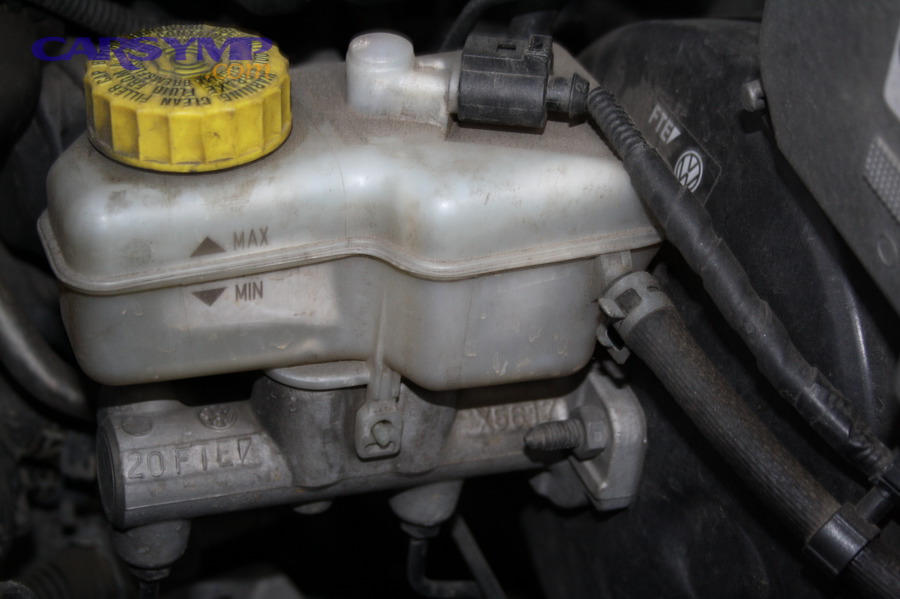
Location mapping that works in real driveways
Start with gravity: fluid runs downward and backward with airflow. If the inside of a wheel is wet, the splash pattern often points back to the wheel-end hardware. If the wet trail starts mid-car and runs along a frame rail, that’s usually a hose/line or fitting. If the wetness is high on the firewall or under the reservoir area, under-hood components become the primary suspects.
To make the pattern visible, wipe everything you can reach, then press the brake pedal firmly for 10–15 seconds while someone watches with a light. This “pressure reveal” matters because many leaks only show under pressure.
Reservoir drop speed is a diagnostic signal
A fast drop (minutes) often suggests an active external leak at a hose rupture, line crack, or a caliper/wheel cylinder seal that has opened up. A slow drop (days to weeks) can point to seepage at fittings, banjo washers, or a master cylinder rear seal that only weeps occasionally.
According to research of the National Highway Traffic Safety Administration from the Office of Defects Investigation, in June 2025, a safety recall risk description notes that a leak can increase pedal travel and reduce deceleration—rapid depletion can extend stopping distance and raise crash risk.
Pedal feel helps you separate “external leak” vs “internal bypass”
A suddenly soft pedal that sinks quickly often aligns with air entering the system from an external leak. A pedal that feels firm at first but slowly sinks while holding steady pressure can indicate internal bypass inside the master cylinder, even when no external puddle is obvious.
To connect the dots, keep the leak-location work primary, but let pedal behavior guide which component you inspect first when multiple areas look dirty.
Where does a caliper-area leak usually show up, and what confirms it?
A caliper-area leak usually shows as wetness on the inside of the wheel, around the caliper body, or on the backing plate, and it’s confirmed by fresh fluid appearing at the piston seal, bleeder screw, or hose-to-caliper connection during a press-and-hold test. Next, isolate which caliper feature is actually leaking.
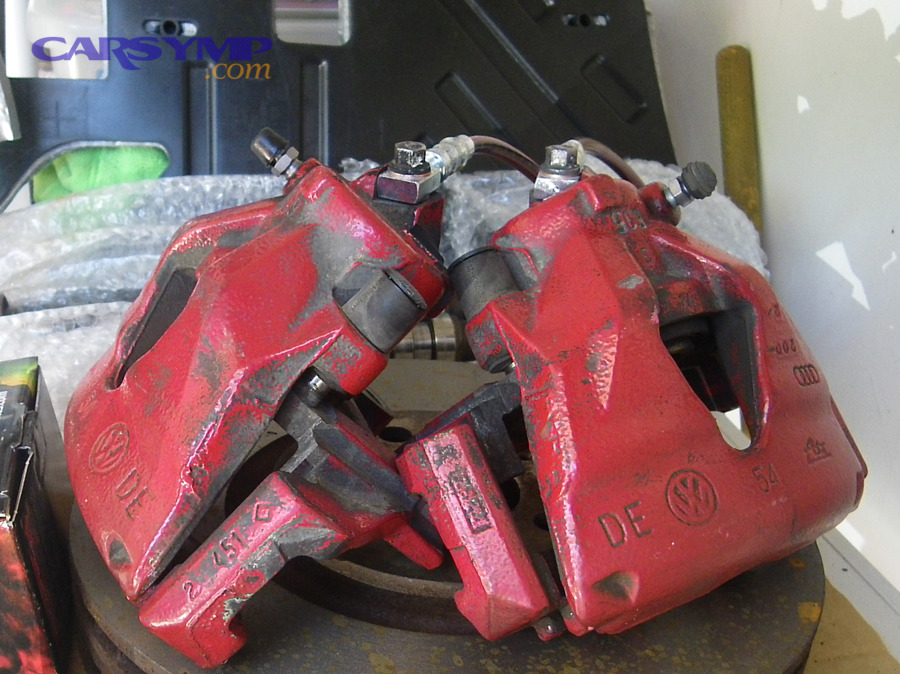
Piston seal vs bleeder screw vs banjo bolt: three common sources
Piston seal seepage often leaves the caliper body wet near the dust boot and can sling fluid onto the inside barrel of the wheel. Bleeder screw seepage typically wets the bleeder area and runs down a predictable drip line. Banjo bolt or sealing washer seepage (where the flex hose meets the caliper) often wets the fitting first, then migrates around the caliper casting.
To confirm, clean the caliper thoroughly, then apply pedal pressure and watch each suspect point. Fresh fluid that beads at a specific edge is your “origin.” If the caliper is covered everywhere, trace upward: the highest wet point is usually the source.
Pad and rotor clues that support a caliper leak
Brake fluid can contaminate pads, leading to reduced friction and pulling to one side. You may also see uneven pad wear if a seal issue is paired with sticking hardware, but don’t assume sticking equals leaking—confirm wetness under pressure.
As a practical rule, if the wheel-end is wet and the hose/line upstream is dry, the caliper-area is the lead suspect. However, if the caliper is wet only on top near the hose fitting, shift attention to the connection and hose integrity.
Safety note when the leak is at the wheel-end
A wheel-end leak can progress quickly because it’s exposed to heat, vibration, and steering movement. If you see active dripping, treat it as an immediate stop-driving situation and plan for towing or on-site repair, not “one more trip.”
How do you tell a hose/line leak from a caliper leak without guesswork?
You tell a hose/line leak from a caliper leak by finding the highest wet point on the hydraulic path and checking whether fluid appears at the flexible hose, hard line, or fitting before it reaches the caliper. Next, use controlled steering and suspension movement to expose hose failures.
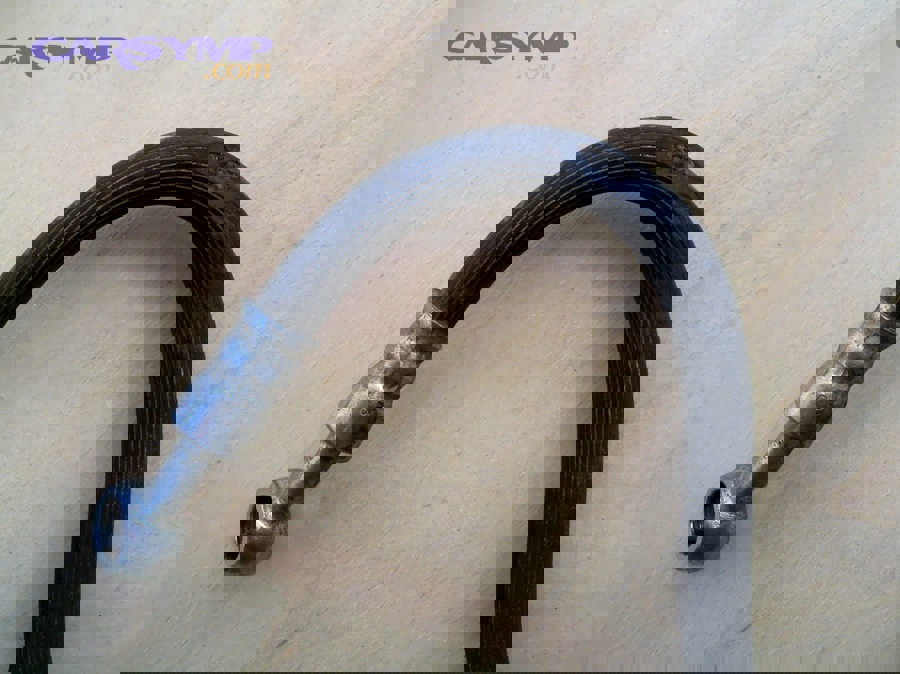
Flexible hoses fail differently than hard lines
Flexible hoses tend to fail from rubbing, cracking, or rupture where they bend with steering and suspension. These leaks often appear only when the wheel is turned lock-to-lock or when the suspension is loaded. Hard lines more often leak at corrosion points, clips, or flare fittings, leaving a wet trail along the chassis.
Turn the steering fully left and right (engine off is fine), then re-check for new wetness around the hose curve, the bracket, and the fitting ends. If wetness appears or grows with steering change, the flex hose moves up your suspect list.
Fitting logic: flare nuts, unions, and brackets
When a flare fitting leaks, it often wets the nut and the line just below it, then runs down the line. Look for a “clean stripe” where fluid washed dirt away. Brackets can also cause chafing: if the line is shiny, flattened, or rub-polished near a clip, a pinhole leak can be close.
According to research of the U.S. Government from the Federal Register publication on brake hoses, in December 2004, definitions within FMVSS No. 106 treat rupture as a failure that results in leakage or separation—meaning small leaks and big bursts are handled as the same safety class.
Two fast isolation tricks
Chalk-and-tissue method: after cleaning, dust suspected areas with light chalk or baby powder, then pressurize the pedal; the first dark “wet bloom” usually marks the origin. Cardboard mapping: park over clean cardboard overnight; the drip location relative to each wheel and the firewall can quickly separate wheel-end versus under-hood sources.
In your notes, you can literally write: How to find the leak location quickly—then list “highest wet point,” “pressure reveal,” and “movement reveal,” because those three rules beat intuition.
What signs point to master cylinder trouble versus an external under-hood leak?
Master cylinder trouble is suggested by fluid loss near the reservoir/master area, wetness at the firewall or brake booster interface, or a pedal that sinks under steady pressure even when no external drip is visible. Next, separate external seepage from internal bypass.
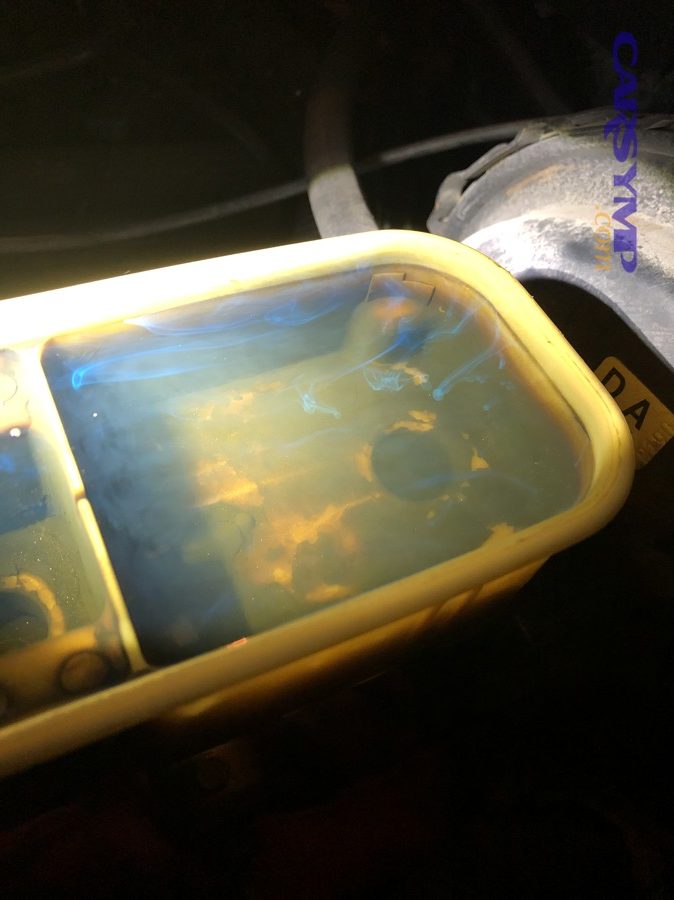
External under-hood leak patterns
Check the reservoir seam, cap area, and grommets where the reservoir meets the master cylinder body. Then check the brake line ports on the master cylinder for fresh wetness. If these areas are dry but the fluid level drops, expand the search to the ABS hydraulic unit and line junctions—fluid can migrate along lines and drip elsewhere.
For safe handling, follow a clean-first habit: AAA recommends cleaning dirt around the reservoir cap before opening it so debris doesn’t enter the master cylinder.
Internal bypass feels like “pressure won’t hold”
Internal bypass happens when the master cylinder’s internal seals allow pressure to leak past inside the bore, so the pedal slowly sinks while you’re holding steady force. This can happen with little to no visible external fluid. Because it mimics air in the system, the key differentiator is: does the pedal sink even when there’s no active external leak and the fluid level is stable?
Use a steady, firm press for 20–30 seconds with the engine running and then off; compare behavior. If it sinks similarly both ways and no external leak is found, the master cylinder becomes a high-probability cause.
Firewall/booster area: the “hidden leak” zone
If fluid is leaking from the rear seal of the master cylinder, it can run into the brake booster. You may not see a puddle under the car at first; instead you’ll find dampness at the mounting face or evidence inside the booster opening when the master cylinder is removed.
According to research of the National Highway Traffic Safety Administration from safety risk documentation, in June 2025, the agency language emphasizes that reduced deceleration and extended stopping distance can occur as fluid is depleted—this is especially relevant when a leak is not obvious to the driver until pedal travel changes.
How do you do a leak at caliper vs line vs master cylinder diagnosis step-by-step?
You do it by following a 7-step pressure-and-path workflow: verify the symptom, set a clean baseline, pressurize, trace the highest wet point, add movement tests, re-check reservoir change, and then confirm with a second pressure hold. Next, apply the workflow exactly once—then stop and repair, not “keep testing” on a failing system.
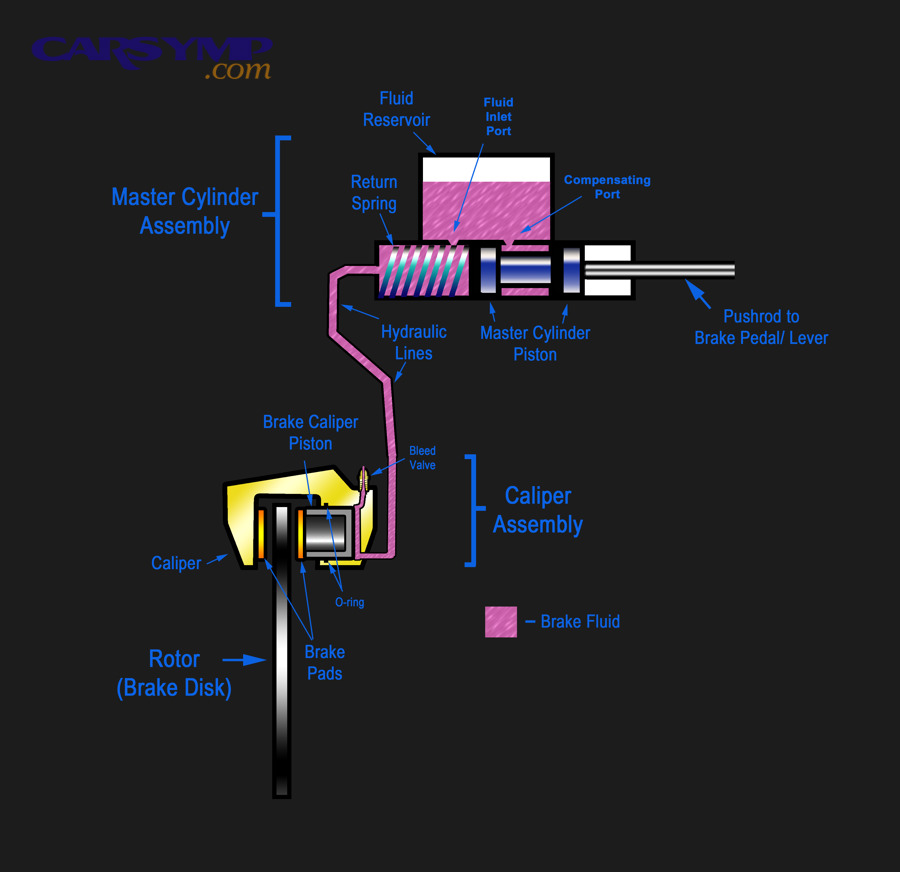
Step 1: Verify what’s changing
Note the warning light status, pedal travel, and any pulling. Then check the reservoir level (without topping off yet) so you can later measure whether level changes fast or slow.
Step 2: Create a clean baseline
Wipe suspected areas: calipers, hose ends, line fittings, master cylinder ports, and the firewall area. If everything is grimy, you can’t find the origin—cleanliness is a diagnostic tool, not just cosmetic.
Step 3: Pressure reveal (engine off)
With the engine off, press the pedal firmly and hold. Have a helper watch with a light. The moment fresh fluid appears, stop pressing harder—your goal is to reveal, not to worsen a rupture.
Step 4: Trace the highest wet point on the path
Start at the wheel that looks wettest, then move upstream: caliper body → hose-to-caliper fitting → flex hose length → body bracket → hard line → junctions → master cylinder. The leak origin is usually the highest point where new wetness starts.
Step 5: Movement reveal (steering and suspension)
Turn lock-to-lock and re-check hose arcs and bracket zones. If safe and stationary, gently bounce the vehicle corner to simulate suspension movement; some hose leaks only open when flexed.
Step 6: Reservoir drop check and pattern match
Re-check the reservoir after the pressure test. If it dropped visibly, you likely have an active external leak. If it didn’t drop but the pedal behavior is poor, internal bypass or trapped air becomes more plausible—yet you still must rule out hidden leaks (like into the booster).
Step 7: Confirm once, then stop and repair
Repeat the pressure hold one time after wiping again. If the wet spot returns in the same location, you’ve confirmed the source. At this point, the right move is repair and bleeding, not “one more drive to see if it gets worse.”
In the middle of this workflow, it’s okay to name what you’re dealing with: brake fluid leak is not a “monitor it later” issue; it is a “locate it now” issue.
Is it ever safe to drive when you suspect hydraulic fluid loss?
In most cases, the safe answer is No: you can lose braking ability, you may not stop within expected distance, and the leak can worsen suddenly—especially with flexible hose failures or wheel-end seal failures. Next, decide between towing, controlled short movement, or immediate stop based on risk signals.
Risk signals that mean “tow it”
If the pedal is going near the floor, if the red brake warning indicator is on, if you see active dripping, or if the reservoir is near empty, treat it as tow-only. A recall risk summary for a leak scenario notes increased pedal travel and reduced deceleration rate, with stopping distance extension when fluid is depleted.
If you absolutely must move the vehicle a very short distance
This is not preferred, but if you’re blocking traffic and must move to safety, do it at walking speed, in a straight line, with a clear path, and with the parking brake ready as a backup—then stop and tow. AAA’s leak guidance emphasizes the importance of immediate service and that loss of stopping ability is the core danger; towing is the best option when available.
Answering the exact question drivers ask
You might type it into search as: Can you drive with a brake fluid leak. The practical interpretation is: only if you are moving a short distance to eliminate immediate danger, and even then you should assume stopping performance is compromised and worsening.
What should you do right away to reduce risk before the repair happens?
Right away, you should secure the vehicle, prevent further fluid loss, avoid introducing contamination, and plan towing or repair—because temporary actions can help you reach safety, but the wrong “quick fix” can create sudden brake failure. Next, use only low-risk measures and avoid false cures.
Low-risk immediate actions
Park on a level surface, set the parking brake, and place wheel chocks if available. Identify the leaking corner and avoid pressing the brake pedal repeatedly—each press can force more fluid out and pull more air in.
If you must check the reservoir, clean around the cap first to keep debris out, then visually confirm level.
What topping off can and cannot do
Topping off can sometimes allow a short, controlled move if the leak is slow, but it does not “solve” the problem—air may already be entering, and the leak can accelerate under pressure. If you top off, do it only with the correct fluid type for the vehicle and treat it as a bridge to towing or immediate repair.
Temporary measures: the safe framing
Drivers often ask for Emergency temporary measures and what not to do. The safest framing is: do what reduces risk (stop driving, tow, keep it clean), and avoid anything that creates a false sense of security.
- Do: tow the vehicle if pedal travel is increased, warning light is on, or active dripping is present.
- Do: replace the failed part (hose/line/caliper/master cylinder) before bleeding; bleeding without fixing the leak wastes time and can worsen air ingestion.
- Don’t: clamp rubber hoses with makeshift tools as a “repair”—it can damage the hose and create unpredictable failure.
- Don’t: use seal-swelling additives or mystery fluids; they can damage seals and ABS components.
After the leak is fixed, how do you verify the system is truly safe again?
You verify safety by ensuring the repaired area stays dry under pressure, the pedal is firm and consistent, the reservoir level remains stable, and the vehicle stops straight with predictable deceleration—then you re-check for seepage after a short test. Next, confirm with a structured post-repair checklist.
Bleeding and air removal: do it only after leak repair
Any time a hydraulic circuit has been opened or depleted, you must remove air. Air compresses, so even a small amount can cause long pedal travel. Follow the manufacturer’s bleed sequence (often farthest caliper first), and keep the reservoir from running low during the process.
ABS-equipped vehicles: what changes in practice
ABS vehicles can trap air in the hydraulic control unit. Some cars require a scan-tool bleed procedure to cycle valves and purge air. If the pedal remains spongy after standard bleeding and you’re confident there are no external leaks, this is a prime next step.
Pressure hold and re-check: the final confirmation
With the engine running, press and hold the pedal; it should remain stable. Then inspect the repaired location and nearby fittings for fresh wetness. After a short, low-speed test in a safe area, re-check again—some seepage only appears after vibration and heat cycles.
One helpful table to avoid repeat diagnosis
This table contains quick symptom-to-location matches so you can re-check the most likely source first, instead of redoing the entire inspection from scratch.
| Observation | Most likely area | Best confirmation |
|---|---|---|
| Wet inside wheel, sling marks on rim | Caliper-area | Clean + pressure reveal at piston seal/bleeder/banjo |
| Wet trail along frame rail, drip mid-car | Hard line or junction | Highest wet point at flare nut/union after wipe |
| Leak appears when steering is turned | Flexible hose | Lock-to-lock movement reveal + check hose arc |
| Pedal sinks while holding steady pressure, no obvious drip | Master cylinder internal bypass | Compare hold test engine on/off + rule out hidden leaks |
| Fluid level drops, wet at firewall/booster area | Master cylinder rear seal | Inspect mounting face; check for fluid inside booster |
To close the loop, watch for the classic post-fix warning signs (new wetness, level drop, renewed pedal travel). If any return, treat it as a fresh leak until proven otherwise.
Contextual Border: The main diagnosis is complete. Next, the content expands into rare leak paths, edge cases, and short Q&A that prevent misdiagnosis when the obvious spots are dry.
Less-obvious leak paths and rare failure modes that mimic other problems
There are 4 rare-but-real leak patterns that can mislead diagnosis: hidden under-hood leaks, ABS-unit seepage, rear drum wheel cylinder leaks, and connection-point seepage that only appears under certain movements. Next, use these as “tie-breakers” when your primary checks are inconclusive.
Leak into the brake booster: “missing fluid, no puddle”
This is a classic meronymy-style trap: the master cylinder and booster work as a pair, so a rear seal leak can hide inside the booster. If the reservoir drops and the firewall area looks damp, consider this path—especially when the ground under the car stays dry.
ABS hydraulic unit seepage: the under-hood decoy
Some vehicles develop seepage at ABS unit ports or lines near the unit. Because multiple lines converge there, a small leak can spread across nearby surfaces and look like a master cylinder leak. Clean, pressure reveal, and trace the highest wet point at each port to avoid replacing the wrong component.
Rear drum wheel cylinder leaks: the “inside the drum” hiding spot
On drum-brake setups, a wheel cylinder leak can soak shoes inside the drum, leaving minimal external evidence until the leak grows. If rear braking is weak, the reservoir drops, and the wheel-end looks dry outside, inspect inside the drum for wetness and contamination.
FAQ: Short answers that prevent expensive wrong turns
Q: What single rule finds the source fastest?
A: Clean, pressurize, and identify the highest wet point—fluid runs down, but it starts at the top.
Q: If I see wetness at the caliper, is it always the caliper?
A: No—banjo fittings and flex hoses can wet the caliper from above; confirm with a pressure reveal at the fitting first.
Q: Can a safety recall description help me understand the danger level?
A: Yes—risk language often highlights increased pedal travel, reduced deceleration, and longer stopping distance as the core hazards of hydraulic leaks.
Q: When should I choose towing without debate?
A: If warning light is on, pedal travel increases, or fluid is rapidly depleting—treat it as tow-only.