


A compression test and a leak-down test are the two fastest ways to check cylinder sealing—and cylinder sealing is the foundation of power, smooth idle, and reliable starts. In this guide, you’ll learn what each test measures, how to run both correctly, and how to read the numbers so you can make a confident “healthy vs not healthy” call.
Then, you’ll see compression vs leak-down side by side: what they do well, what they miss, and when one is the better choice. That matters because a low compression number can be caused by multiple conditions, while a leak-down test can help you narrow down the likely leak path.
Next, you’ll learn how to interpret results the way experienced techs do: focusing on cylinder-to-cylinder consistency, spotting patterns, and avoiding the common mistakes that create false low readings. You’ll also get simple decision rules for what to do next after the tests.
Introduce a new idea: once you understand the basics, you can go one level deeper—advanced variations and edge cases that change readings (wet testing, VVT/cam timing effects, tester differences, diesel specifics) so your diagnosis stays accurate when the situation isn’t “textbook.”
What are compression and leak-down tests, and what do they measure?
Compression and leak-down tests are engine diagnostic tests that evaluate cylinder sealing—compression measures the cylinder’s peak cranking pressure, while leak-down measures how much air escapes from a cylinder at top dead center (TDC) under regulated pressure. More importantly, both tests answer the same question from different angles: “Can this cylinder hold pressure like it should?”—and that’s why they belong together in a solid DIY diagnostic routine.
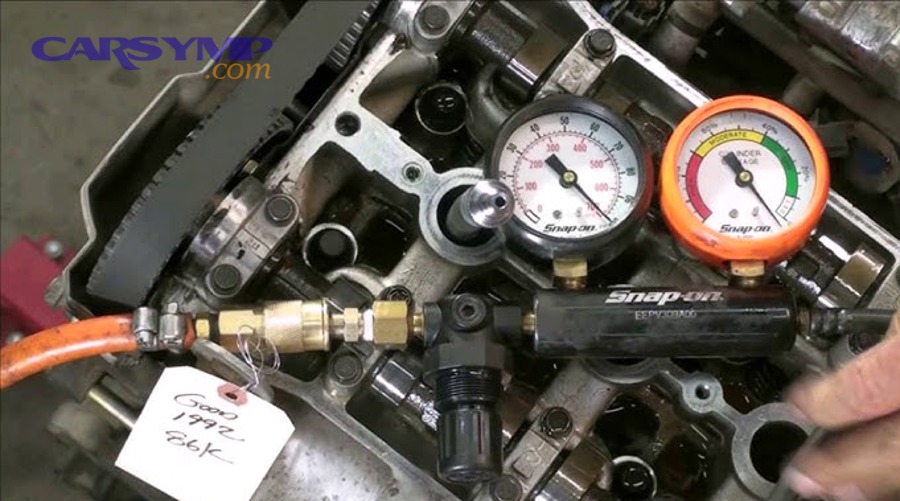
Is a compression test a measure of engine health or just cylinder pressure?
Yes—compression test results can reflect engine health, because cylinder pressure depends on sealing quality, valve timing, and cranking conditions; however, it’s still “just pressure,” so you must interpret it with context (temperature, throttle, battery speed) to avoid wrong conclusions. To better understand why this matters, it helps to separate what compression directly measures from what it indirectly suggests.
Compression is a snapshot of how efficiently a cylinder builds pressure during cranking. That pressure is influenced by:
- Sealing quality: piston rings, cylinder wall condition, and valve sealing.
- Valve timing and breathing: cam timing, VVT position, and whether the throttle is open.
- Cranking speed: battery charge and starter health.
- Engine temperature: metal expansion affects clearances.
So yes, compression can signal problems like worn rings, burned valves, or head gasket issues—but a compression test can also look “bad” if you test with a weak battery or closed throttle. That’s why the best compression testing is consistent and controlled.
A practical rule: treat compression as a screening tool. It tells you “something’s off” and helps you identify which cylinder is the outlier. Then leak-down helps you learn why.
What does a leak-down test actually measure, and why is it called “compression in reverse”?
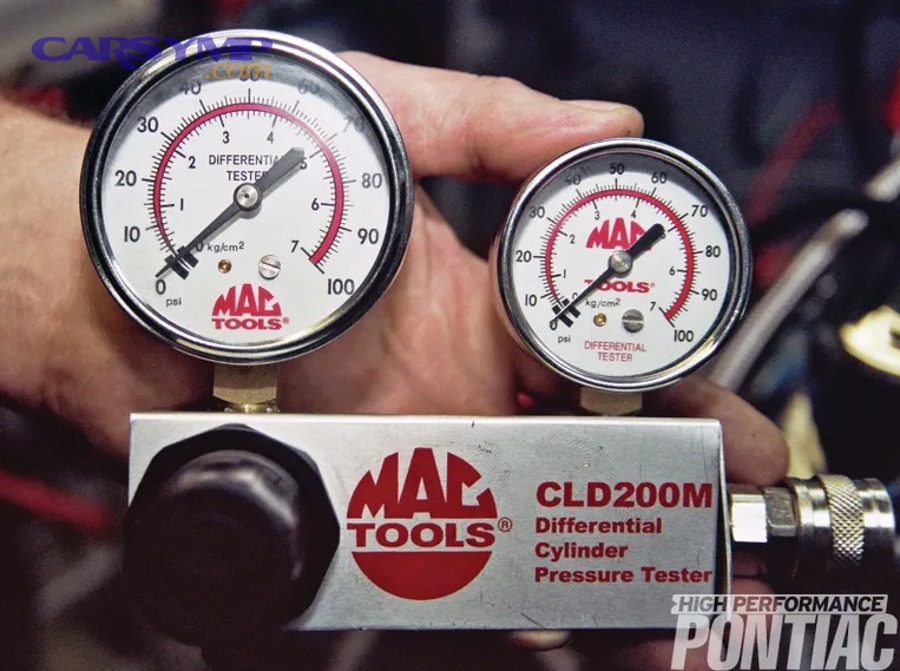
A leak-down test measures cylinder leakage percentage by feeding regulated compressed air into a cylinder at TDC on the compression stroke and comparing input pressure to retained pressure, making it “compression in reverse” because the cylinder is being pressurized from the outside. Next, the key advantage becomes clear: leak-down doesn’t just show that sealing is weak—it helps reveal where air is escaping.
Unlike compression, leak-down is not dependent on cranking speed or a starter motor. You set a stable pressure (commonly 100 psi on many testers, though procedures vary), then observe the leakage reading and listen for where the air goes. That makes leak-down especially helpful for:
- Pinpointing valve leaks (air escaping through intake or exhaust)
- Identifying ring leakage (air heard in crankcase/oil fill)
- Suspecting head gasket/cooling system leaks (bubbles or air in coolant)
If compression is your “quick triage,” leak-down is your “targeted investigation.”
When should you use a compression test vs a leak-down test?
Compression wins for fast screening, leak-down wins for precision diagnosis, and using both is optimal when you need to confirm cylinder sealing issues and identify the likely leak path. However, choosing the right test first can save time—especially when the engine barely runs or the symptom points strongly toward a specific failure mode.
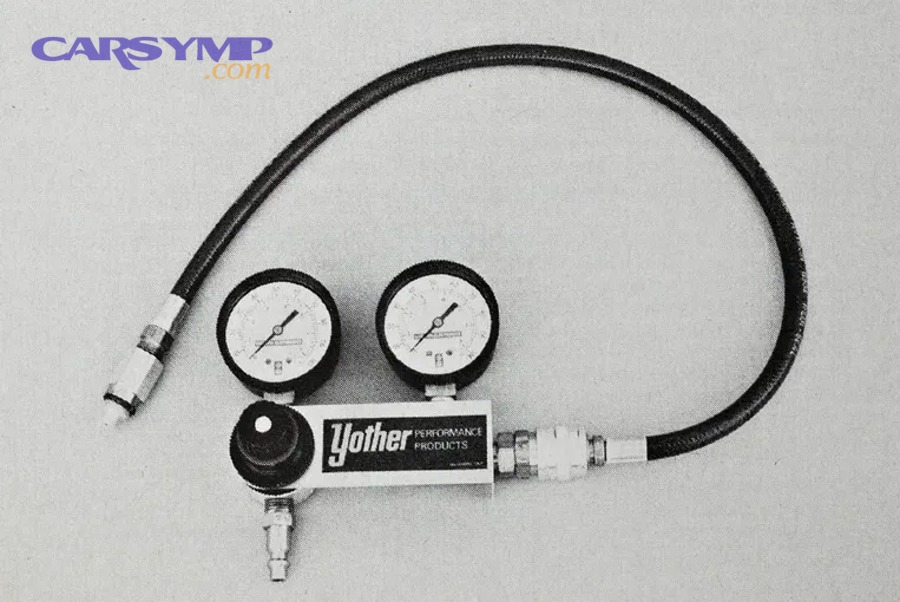
If you can only do one test, should you choose compression or leak-down?
Yes—you should choose one based on your constraints, because (1) compression is faster and needs fewer tools, (2) leak-down is more diagnostic and isolates leak paths, and (3) your symptoms determine which test gives the clearest next step. Then, once you pick the test, you can run it with fewer variables and get a result you can trust.
Use this quick decision rule:
- Choose compression if:
- You don’t have an air compressor or leak-down tester.
- You need to identify which cylinder is weak quickly.
- The engine runs poorly and you want a baseline before deeper work.
- Choose leak-down if:
- You already suspect a sealing issue and need the cause.
- You want to differentiate rings vs valves vs head gasket.
- The engine cranks but doesn’t build enough compression to run.
If the vehicle shows oil loss, pairing tests becomes even more valuable because worn rings can show up as both low compression and high crankcase leakage, which helps your oil consumption diagnosis later in the process.
How do compression and leak-down results complement each other?
Compression wins in speed and simplicity, leak-down is best for leak location, and using both is optimal for high-confidence diagnosis because the combination clarifies whether a low compression number is caused by sealing loss, timing/breathing issues, or testing variables. Meanwhile, interpreting patterns across both tests turns raw numbers into a real action plan.
Here’s how to think about common combinations:
- Low compression + high leak-down
- Strong sign of sealing loss (rings, valves, head gasket).
- Leak-down listening usually points you to the primary suspect.
- Low compression + normal-ish leak-down
- Often points to test conditions or timing effects (closed throttle, slow cranking, cam timing/VVT, incorrect stroke selection for leak-down).
- Recheck procedure and confirm true TDC on compression stroke.
- Normal compression + high leak-down
- Possible if compression is “good enough” under cranking but leakage is present at static pressure.
- Could also be a tester/setup issue or a cylinder not exactly at TDC.
- Both normal
- Cylinder sealing is likely acceptable; look elsewhere (fuel, spark, air, sensors) for drivability issues.
To make this practical, record values in a simple worksheet and focus on outliers. One weak cylinder can cause a misfire even if all other cylinders look great.
What tools and prep steps do you need before testing?
You need the right tools and consistent prep because (1) compression readings depend on cranking conditions, (2) leak-down readings depend on true TDC and stable regulated pressure, and (3) safety steps prevent fuel ignition and protect the engine and you. To begin, treat prep as part of the test—not optional—because most “bad readings” are actually “bad setup.”
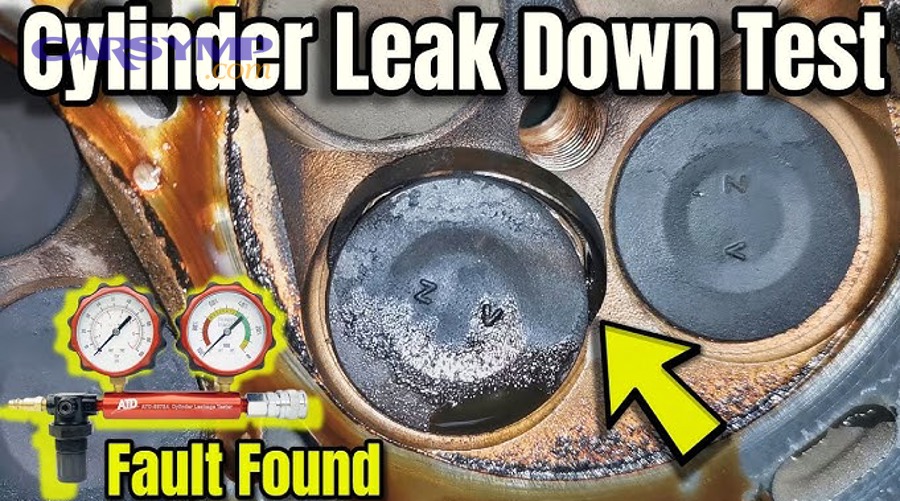
What tools do DIY mechanics need for a correct compression test?
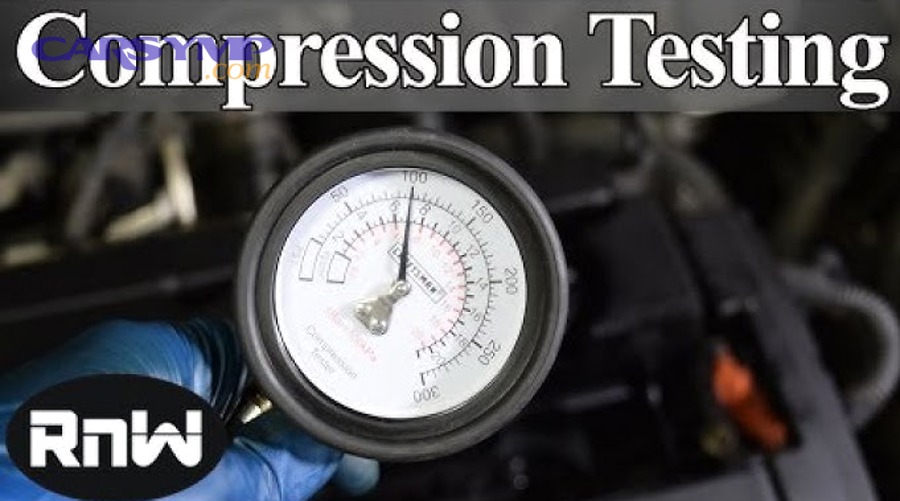
There are six core items for reliable compression testing: a thread-in compression gauge, spark plug socket, ratchet extensions, a battery charger, a way to disable fuel/ignition, and a notepad (or app) to record results per cylinder. Specifically, accuracy improves when the gauge seals consistently and the engine cranks at a steady speed.
Recommended basics:
- Thread-in compression gauge (preferred over push-in for sealing consistency)
- Spark plug socket + extensions + torque wrench (for reinstalling plugs correctly)
- Battery charger/maintainer to stabilize cranking speed
- Basic hand tools to pull fuses/relays or disconnect ignition coils/injectors
- Remote starter switch (optional) or helper
- Paper or phone notes to record each cylinder’s number
Prep checklist:
- Warm engine if possible (unless unsafe or impossible due to condition).
- Disable fuel and ignition to prevent firing.
- Remove all spark plugs (reduces load and evens cranking speed).
- Fully charge the battery or connect a charger.
- Hold throttle open (most procedures) to reduce intake restriction.
What tools do you need for a leak-down test, and what compressor specs matter?
A leak-down test requires a leak-down tester, an air compressor capable of stable output, correct spark plug hole adapters, and a reliable method to set the cylinder at TDC—because leak-down accuracy depends on stable regulated pressure and correct cylinder positioning. Next, the compressor matters less for “max psi” and more for “steady supply” so your readings don’t wander.
Core tools:
- Leak-down tester (dual gauge is common: supply vs cylinder)
- Air compressor (stable delivery; many DIY compressors are fine if regulated properly)
- Adapter hose matching your spark plug thread size
- Breaker bar/socket to rotate the engine by hand
- TDC verification method (timing marks, piston stop tool, or careful observation)
Safety and control tips:
- Put the vehicle in Park/Neutral and set the parking brake.
- Be ready for crank rotation—pressurized air can push the piston down if not at true TDC.
- Use a breaker bar to hold the crank if needed (carefully).
How do you do a compression test step-by-step?
A correct compression test follows a repeatable step sequence—prep the engine, test one cylinder at a time with consistent cranking, record results, and compare cylinders—so you can identify weak cylinders and decide whether to follow up with a wet test or leak-down. Then, once the process is consistent, interpretation becomes much easier because you’re comparing apples to apples.
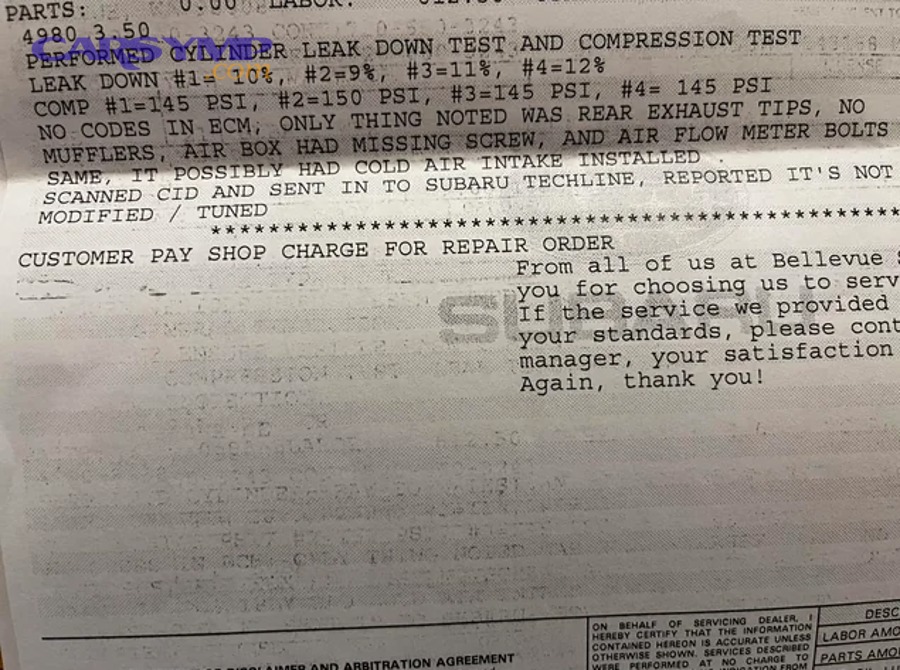
Should the engine be warm, and should the throttle be open during a compression test?
Yes—generally test warm with the throttle open, because (1) warm metal clearances better represent operating conditions, (2) an open throttle reduces intake restriction and helps the cylinder fill, and (3) consistent airflow improves repeatability across cylinders. However, when the engine won’t run or warming is unsafe, you can still test cold—as long as you keep conditions consistent across all cylinders.
Warm engine benefits:
- Rings seal closer to real-world conditions.
- Oil viscosity is closer to operating state.
- Cylinder wall expansion is more representative.
Throttle-open benefits:
- Reduces vacuum restriction.
- Helps the cylinder draw in more air during cranking.
- Improves cylinder-to-cylinder comparability.
If you can’t open the throttle easily (drive-by-wire), you can often use a scan tool’s throttle command (if available) or ensure the pedal is fully depressed with ignition on per the vehicle’s procedure. If that’s not feasible, note it in your results because a closed throttle can lower numbers.
How many cranks (or “puffs”) should you use, and how do you record results correctly?
You should use a consistent number of compression strokes—typically cranking until the gauge peaks and stops rising (often 4–8 compression strokes)—and record each cylinder’s peak value in psi/kPa plus test conditions, because consistency is what makes the data meaningful. More specifically, the goal is not “the perfect number of puffs,” but “the same method for every cylinder.”
Step-by-step process:
- Disable fuel and ignition
- Remove fuel pump fuse/relay and disable ignition coils/injectors as appropriate.
- Remove all spark plugs
- Keeps cranking speed consistent across cylinders.
- Install the compression gauge
- Thread in snugly by hand; don’t cross-thread.
- Crank the engine
- Hold throttle open.
- Crank for the same time each cylinder, or until gauge stops rising.
- Record the reading
- Note cylinder number and psi/kPa.
- Repeat for all cylinders
- Compare results
- Focus on cylinder-to-cylinder variation.
Recording tips that prevent confusion:
- Write values in firing order or cylinder order.
- Note whether the test was warm/cold.
- Note battery support (charger used or not).
Include a simple table so you can see patterns quickly. Below is an example format you can copy:
| Cylinder | Dry Compression (psi) | Wet Compression (psi) | Notes |
|---|---|---|---|
| 1 | |||
| 2 | |||
| 3 | |||
| 4 |
This table helps you connect raw readings to the next diagnostic move, especially when one cylinder is an outlier.
What is a wet compression test, and when should you do it?
A wet compression test is a variation of compression testing where you add a small amount of oil to the cylinder to temporarily improve ring sealing, helping you distinguish ring-related compression loss from valve or head gasket issues. Next, the key is interpreting the change—not just doing the test.
How to do it (carefully):
- After dry testing a low cylinder, add a small measured amount of oil (often ~1 teaspoon / a few ml).
- Crank briefly with the gauge removed to distribute (optional, follow safety).
- Reinstall gauge and retest the same cylinder using the same cranking method.
How to interpret it:
- Compression rises noticeably → rings/cylinder wall sealing is likely a big contributor.
- Compression barely changes → suspect valves, valve seats, head gasket, or timing-related issues.
Avoid over-oiling. Too much oil can:
- Skew results.
- Risk hydro-lock in extreme cases.
- Increase smoke on startup afterward.
Wet testing also ties directly into oil consumption diagnosis: if wet compression jumps significantly, ring sealing is often part of the story—especially when the driver reports increasing oil use.
How do you do a leak-down test step-by-step?
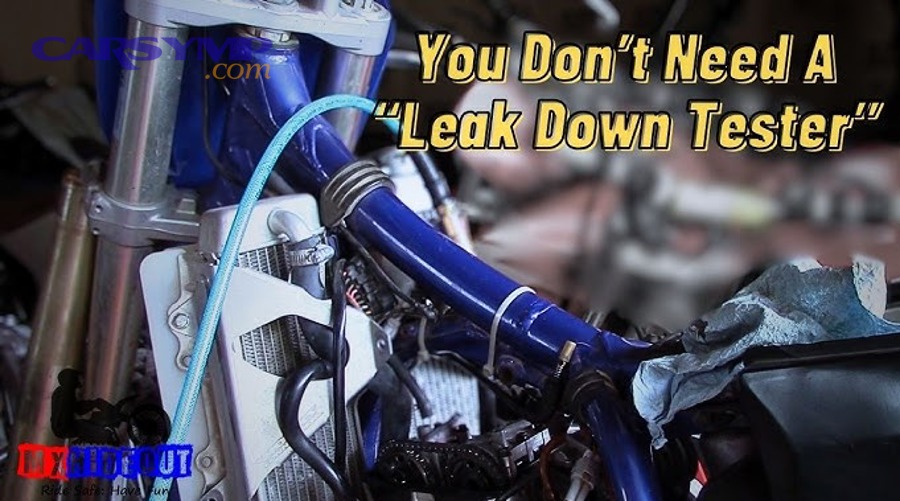
A leak-down test is a how-to procedure with four critical steps—set the cylinder to true TDC on compression, connect the tester, regulate pressure, and identify the leak path by reading leakage percentage and listening—so you can pinpoint the sealing failure location. However, the entire test hinges on TDC accuracy, so that’s where DIYers should slow down and be precise.
How do you find TDC on the compression stroke accurately?
You find TDC on the compression stroke by aligning timing marks and confirming the cylinder is on the compression stroke (both valves closed) using pressure feel or observation, because TDC occurs twice in a four-stroke cycle and only one position is correct for leak-down. Then, once you’re confident in the stroke, you can lock the crank so the air pressure doesn’t rotate the engine.
Reliable DIY methods:
- Timing marks + compression confirmation
- Rotate engine to TDC mark.
- Confirm it’s compression stroke by feeling air pushing out of the plug hole as you approach TDC (use a finger carefully).
- Valve cover observation (when practical)
- On compression stroke, both intake and exhaust valves are closed near TDC.
- “Engine wants to roll” check
- If you apply air and the crank immediately rotates, you’re likely not at true TDC, or you’re on overlap.
Practical safety note:
- Use a breaker bar on the crank bolt to hold the crank steady.
- Keep hands and tools clear of belts/fans.
What leak-down percentage is “good,” “acceptable,” or “bad” for a street engine?
Leak-down percentage is best judged by consistency and context, but a common interpretation is: low single digits is excellent, under ~10–15% is often serviceable for many street engines, and higher leakage becomes concerning—especially if one cylinder is much worse than the rest. However, because testers and procedures vary, your most reliable metric is the spread between cylinders and the leak path you identify.
General guidance (use as a starting point, not a universal law):
- 0–5%: excellent sealing
- 6–10%: very good / typical healthy range
- 11–20%: worn but may still run fine (depends on symptoms)
- >20%: likely sealing issue worth addressing, especially if accompanied by misfire, low power, or oil use
Important nuance:
- Two different testers can produce different percentages on the same engine due to orifice size, regulator behavior, and calibration. That’s why “your baseline” and “cylinder comparison” matter more than a single universal number.
Where should you listen for air to identify the leak source?
There are four primary leak listening points—intake, exhaust, crankcase, and cooling system—because each path maps to a specific sealing component (intake valve, exhaust valve, rings/cylinder wall, or head gasket/crack). More importantly, this “where the air goes” step is what transforms leak-down from a number into a diagnosis.
Use these listening checks:
- Intake leak (intake valve/seat)
- Listen at throttle body or intake snorkel.
- Hissing here often indicates intake valve sealing issues.
- Exhaust leak (exhaust valve/seat)
- Listen at tailpipe.
- Hissing at exhaust points toward exhaust valve sealing.
- Crankcase leak (rings/cylinder wall)
- Listen at oil filler cap or PCV opening.
- Strong airflow here often indicates ring leakage/blow-by.
- Cooling system leak (head gasket/crack)
- Look for bubbles in coolant (only if safe and appropriate).
- Air in cooling system suggests combustion-to-coolant pathway.
This is also where oil consumption diagnosis becomes more concrete: strong crankcase leakage often correlates with blow-by conditions that can contribute to oil being drawn into combustion, especially under load or sustained high vacuum/boost transitions.
How do you interpret results and decide what to do next?
You interpret compression and leak-down results by prioritizing cylinder-to-cylinder consistency, matching patterns across both tests, and using leak path clues to choose the next diagnostic step—because the goal isn’t just to collect numbers, but to decide what to fix (or what to test next). In addition, interpreting results correctly helps you avoid unnecessary parts replacement and gives you a rational plan for follow-up checks.
Is cylinder-to-cylinder variation more important than the absolute number?
Yes—cylinder-to-cylinder variation is usually more important than the absolute number, because (1) engines vary by design and test conditions, (2) consistent readings indicate balanced sealing even if numbers are slightly lower, and (3) an outlier cylinder is what typically causes misfires, rough idle, and uneven power. However, absolute numbers still matter when they’re extremely low or when all cylinders are uniformly weak.
Why variation matters:
- A single weak cylinder often signals a localized sealing issue (valve, ring, gasket).
- Uniformly low results can point to a global factor (closed throttle, low cranking speed, incorrect procedure) or engine-wide wear.
A practical threshold:
- Many techs become concerned when one cylinder is significantly lower than the rest. The exact percentage varies by engine, but the “outlier” principle is universal: if one cylinder is clearly different, treat it as your diagnostic center.
What do common result patterns mean (low compression, high leak-down, mixed results)?
There are four common result patterns—and each pattern suggests a different next step—because compression and leak-down measure different parts of the sealing story and their combination narrows the likely root cause. Specifically, you can use the pattern to decide whether to re-test, inspect valve sealing, check timing, or pursue deeper mechanical checks.
Pattern guide:
- Low compression + high leak-down
- Likely mechanical sealing loss.
- Next steps:
- Identify leak path (intake/exhaust/crankcase/coolant).
- Consider borescope inspection for valve damage or cylinder scoring.
- Low compression + low/normal leak-down
- Possible test condition issue or valve timing/VVT influence.
- Next steps:
- Re-run compression with throttle open and stable battery.
- Confirm leak-down was at true TDC on compression stroke.
- Consider timing verification if symptoms fit.
- Normal compression + high leak-down
- Possible near-TDC error, tester/setup issues, or a leakage condition that shows more under static pressure.
- Next steps:
- Repeat leak-down with improved TDC locking.
- Confirm tester calibration (see advanced section).
- Normal compression + normal leak-down
- Cylinder sealing likely OK.
- Next steps:
- Shift focus to ignition, fueling, air leaks, or sensor-related drivability issues.
Where this connects to oil usage:
- If you see ring-indicating patterns (wet compression increases, crankcase hiss on leak-down), you should move into Monitoring oil use accurately so you can confirm whether consumption is stable or worsening over time.
- That’s the backbone of a Normal vs excessive oil consumption guide: stable, small oil usage is often manageable; rising oil usage combined with ring leakage patterns signals a mechanical path that’s likely to progress.
Evidence sentence (oil-related sealing impact): According to a study by Lublin University of Technology from the Department of Internal Combustion Engines, in 2003, increasing top ring axial clearance in a diesel engine was associated with oil consumption increases of up to 29%, showing how ring-pack sealing details can materially change oil use.
What are the most common mistakes that give false results, and how do you prevent them?
There are seven common mistakes that create false results—weak battery, closed throttle, inconsistent cranking, wrong TDC, poor gauge sealing, air leaks in hoses, and testing a cold engine inconsistently—because both tests are extremely sensitive to setup and repeatability. More importantly, preventing these mistakes is the easiest way to turn “confusing readings” into “actionable diagnosis.”
Top mistakes and fixes:
- Weak battery / slow cranking
- Fix: use a charger/maintainer; remove all plugs; keep cranking consistent.
- Throttle closed during compression test
- Fix: hold throttle open; follow vehicle-specific drive-by-wire procedure.
- Not disabling fuel/ignition
- Fix: remove fuel pump fuse/relay; disable ignition to avoid fire risk.
- Different cranking time per cylinder
- Fix: use the same number of compression strokes or same time window.
- Leak-down not at true TDC on compression
- Fix: confirm stroke; lock crank; repeat if crank wants to rotate.
- Air leaks in leak-down setup
- Fix: check quick couplers, hose fittings, and adapter o-rings; listen for hissing at the tool itself.
- Comparing numbers from different conditions
- Fix: record test temperature, throttle position, and battery support.
When you repeat the test after correcting the mistake, you’ll often see “bad” cylinders look better—or you’ll confirm a real problem with higher confidence.
What advanced variations and edge cases can change compression and leak-down readings?
Advanced variations matter because false low compression and inconsistent leak-down readings are common when engines have VVT, unusual valve timing behavior, tester differences, or diesel-specific constraints—and recognizing these edge cases keeps your diagnosis accurate. Besides, this is where DIY mechanics often get stuck: the engine “doesn’t match the chart,” but the chart never accounted for your exact setup.
How do wet vs dry compression results isolate rings vs valves more precisely?
Wet vs dry compression comparison wins in ring isolation, dry testing is best for baseline screening, and combining both is optimal for pinpointing whether sealing loss is ring-dominant or valve-dominant because the added oil temporarily changes ring sealing but does not fix valve leakage. However, interpretation improves when you treat wet testing as “directional,” not “absolute proof.”
More precise interpretation:
- Big increase on wet test
- Rings/cylinder wall sealing is a major contributor.
- If paired with crankcase hiss on leak-down, ring leakage becomes the primary suspect.
- Small or no increase
- Valves, valve seats, head gasket, or timing issues remain high on the list.
- Use leak-down listening points to confirm.
This is a strong bridge to oil consumption diagnosis: ring-related sealing loss can increase blow-by and can contribute to oil entering the combustion process, especially under load. If you suspect this, don’t guess—start Monitoring oil use accurately over a known distance and driving style.
How can cam timing, VVT behavior, or altitude create “false low” compression results?
Cam timing/VVT and altitude can cause false low compression because they change how the cylinder fills during cranking and how valves overlap, while the compression gauge only reports the peak pressure achieved under those specific conditions. Next, the fix is not “assume the engine is bad,” but “control variables and retest.”
Common causes of false low:
- Throttle not fully open → restricted airflow during cranking.
- VVT parked position at rest may not match running position, affecting effective compression.
- Valve overlap effects during cranking on certain cam profiles.
- High altitude reduces ambient pressure; compression readings can be lower.
How to respond:
- Ensure throttle is open and battery cranks strongly.
- Repeat the test warm if possible.
- Compare cylinders, not just the absolute number.
- If all cylinders are uniformly low but consistent, consider timing verification before condemning the engine.
Why can leak-down percentages differ between testers, and how do you sanity-check the tool setup?
Leak-down percentages can differ between testers because orifice size, regulator design, gauge calibration, hose volume, and coupling leaks vary—so you must sanity-check setup by verifying stable supply pressure, leak-free connections, and repeatable readings on the same cylinder. More specifically, treat your leak-down tester as a measurement system, not a magic truth machine.
Sanity-check steps:
- Check supply stability
- Confirm compressor regulation is steady.
- Inspect fittings
- Quick couplers are common leak points.
- Repeat a single cylinder
- If results swing widely, your setup is inconsistent or you’re not at true TDC.
- Use cylinder-to-cylinder comparison
- Your best insight is still “which cylinder is worst,” not chasing a universal percentage.
If you’re building a long-term tracking routine (for example, monitoring a high-mileage engine), use the same tester and method each time. That gives you trend reliability—similar to how Monitoring oil use accurately requires consistent fill level checks and consistent mileage tracking.
What changes for diesel engines (and other special cases) when doing compression or leak-down testing?
Diesel compression testing wins in pressure relevance, leak-down is best for leak localization, and using the right diesel-specific adapters is optimal because diesels have higher compression pressures and different access points (glow plugs or injectors) than gasoline engines. Meanwhile, safety and tooling requirements become more important because mistakes are more expensive and can be dangerous.
Key diesel differences:
- Much higher compression pressures
- Requires a diesel-rated compression gauge and correct adapters.
- Access points
- Testing often happens through glow plug holes or injector ports.
- Cranking and battery demands
- Diesels may crank slower and require stronger batteries for consistent testing.
- Leak-down practicality
- Still useful, but ensure correct TDC verification and secure crank holding—compression forces can be substantial.
Other special cases:
- Two-stroke engines
- Leak-down procedures can differ because port timing and sealing design differ.
- Engines with decompression mechanisms
- Can change cranking compression readings; follow manufacturer procedure.
- Performance cams
- More overlap can reduce cranking compression without meaning the engine is “bad.”
Contextual Border (shift to micro semantics)
At this point, you’ve learned what compression and leak-down tests measure, how to run them step-by-step, and how to interpret the numbers using consistent terminology and repeatable setup. From here, your best next step is to apply the same discipline to related symptoms—especially oil usage—by logging consumption over time and comparing it to a Normal vs excessive oil consumption guide so your diagnosis stays evidence-driven instead of guess-driven.