


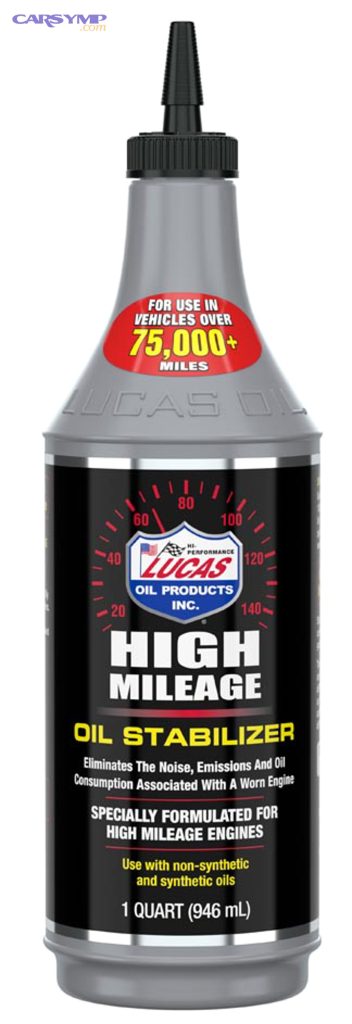
If you’re wondering when to use high-mileage oil or additives, the most reliable answer is: switch to high-mileage oil when your car has higher mileage and you’re seeing early wear/aging signals (minor seepage, rising oil use, or new noise), and reserve additives for specific, narrow problems after you’ve confirmed the basics (correct oil spec, no major leaks, no urgent mechanical faults). Many experts use 75,000+ miles as a practical starting point, but condition matters as much as the odometer.
Next, you’ll also want a clear comparison: high-mileage oil is a “daily driver” solution designed to be safe as your normal fill, while aftermarket additives are “spot tools” that can help (or harm) depending on the engine, the symptom, and the additive chemistry.
Then, you need to understand the risk side: modern engines and emissions systems are sensitive to oil chemistry—especially when an engine is burning oil—so “more additive” is not automatically better, and the safest path is often “spec-correct oil first, diagnose second, experiment last.”
Introduce a new idea: the easiest way to make the right call is to treat your decision like a quick diagnostic—what symptom do you have, how severe is it, and what is the lowest-risk step that gives you information and protection at the same time? Let’s walk through that decision in a simple, repeatable order.
Do you actually need high-mileage oil or an additive for your car?
Yes—sometimes you need high-mileage oil or an additive, and the best reasons are (1) your car is past ~75,000 miles, (2) you’re seeing mild leaks or rising oil use, and (3) you want a low-risk way to stabilize seals and reduce consumption without changing your engine’s required specification.
Next, the key is to avoid treating this like a trend or a “magic fix.” Your goal is to protect the engine without introducing new risks, which means you start with the simplest decision rules and only escalate if the symptom demands it.
Is mileage alone (75,000+ miles) a good reason to switch?
Mileage alone is a decent rule of thumb, but it’s not the whole story: 75,000 miles is a common “switch point” because seals age, tolerances loosen, and small leaks become more likely, yet some engines stay tight far beyond that while others show symptoms earlier.
- Mileage is a proxy for aging, not a diagnosis. Heat cycles harden seals, and deposits form gradually.
- Driving conditions matter: short trips (more moisture/fuel dilution), high heat, towing, and long idling can age oil and seals faster than highway cruising.
- Maintenance history matters: consistent oil changes often reduce sludge and help seals survive longer.
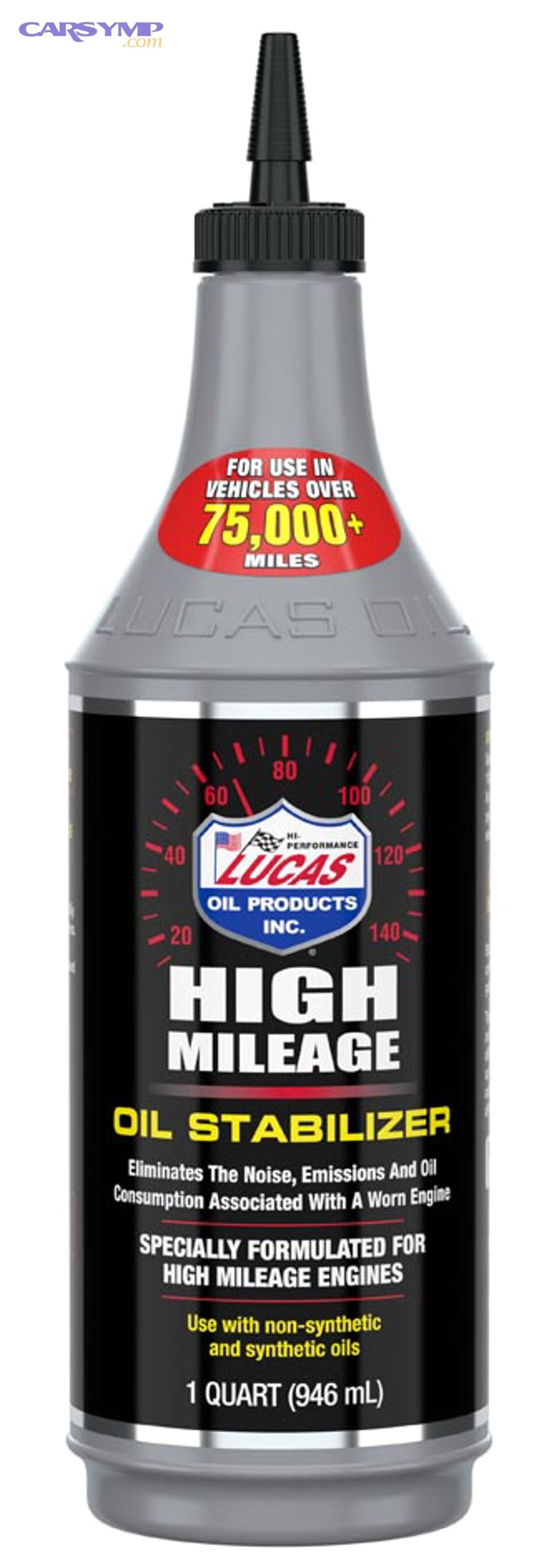
So yes: if you’re at 75,000+ miles and you want a conservative move, high-mileage oil is usually a reasonable “default upgrade.” It is formulated to be used continuously, unlike many aftermarket additives that are designed for temporary or targeted use.
H3 transition (hook chain): If mileage is only a starting clue, then symptoms are the real signal—especially the ones that point to oil leaving the engine.
Are leaks, oil burning, or smoke the clearest signs you should change approach?
Yes—leaks, rising oil consumption, or smoke are the clearest signs because they indicate your engine is either losing oil externally (seep/drip) or consuming it internally (burning). That’s where high-mileage oil can be a low-risk first step while you start an oil consumption diagnosis that targets the root cause.
Separate symptoms into two buckets:
- External leak clues (oil escapes the engine)
- Spots on the driveway
- Wetness around valve cover, timing cover, oil pan, or filter housing
- Burning oil smell after a drive (oil dripping onto hot exhaust)
- Internal consumption clues (engine burns oil)
- Oil level drops with no visible leak
- Blue-tinted exhaust smoke
- Spark plug fouling or increased deposits
This is where the phrase “Blue smoke patterns and what they indicate” becomes useful, because the timing of smoke often points to the likely path oil is taking:
- Blue smoke at startup after sitting often suggests oil pooling near the top end and getting burned on start (commonly associated with valve seal seepage).
- Blue smoke during long deceleration can also hint at top-end oil control issues.
- Blue smoke under acceleration or boost can point toward higher blow-by, ring sealing issues, or turbo-related oil control problems.
Those are not absolute rules, but they give you a direction. In practice, if you’re seeing any of these, high-mileage oil is commonly the first step because it’s low disruption and can reduce seepage or marginal consumption while you gather evidence.
H3 transition (hook chain): If symptoms are present, the next question is whether you should reach for an additive immediately—or avoid them until you’ve stabilized the basics.
Should you avoid additives if the engine is running normally?
Yes—you should usually avoid additives if the engine is running normally for three reasons: (1) modern oils already contain balanced additive packages, (2) extra chemistry can create side effects, and (3) additives can mask a problem long enough for it to become expensive.
- If you have no leak, no smoke, and stable oil level, your best improvement is usually using the correct oil spec and maintaining reasonable intervals, not adding more chemicals.
- If you’re curious because you hit 75,000+ miles, high-mileage oil is the lower-risk choice because it’s designed as a complete engine oil, not a supplement.
- If you’re chasing a specific symptom, additives can help, but only after you’ve confirmed you’re not dealing with a serious mechanical fault.
A quick self-check before you buy anything: take a baseline reading (oil level + mileage), then re-check after 500–1,000 miles. That single habit often answers the real question: is this normal drift or a real change?
What is high-mileage oil, and how is it different from regular oil?
High-mileage oil is a fully formulated engine oil designed for older/high-mileage engines, typically featuring seal-conditioning components and an additive balance intended to help reduce minor leaks and support oil control—while still meeting modern performance standards when properly certified.
Next, the useful shift is to stop thinking of high-mileage oil as “thicker oil” and start thinking of it as oil designed for aging engines—which may or may not involve a viscosity change.
What problems is high-mileage oil designed to solve (leaks, consumption, wear)?
High-mileage oil is designed to help with minor seepage, early oil consumption, and general aging wear signals—not to “repair” broken parts.
- Seal aging and minor leaks: Many high-mileage oils include seal conditioners intended to help older seals remain flexible, which can reduce seepage in some cases.
- Oil control and cleanliness: A different additive balance can help manage deposits that contribute to stuck rings or poor oil control (when the problem is mild).
- Wear management: High-mileage oils still must protect under heat, load, and shear, but the win is often stability and consistency rather than a dramatic change.
This matters because a lot of “Oil burning causes: rings vs valve seals” content gets misread as an oil brand problem. If rings or valve seals are physically worn or damaged, oil can’t reverse that. What oil can do is reduce how quickly the symptom worsens and improve consistency while you decide whether repair is worth it.
Evidence: According to a study by Islamic Azad University from the Department of Chemistry, in 2012, used-oil monitoring found additive element concentrations tended to decrease while wear elements increased with operation distance, supporting oil analysis as a way to track wear trends over time.
Does high-mileage oil change viscosity, or should you keep the same grade?
Yes—you should keep the same viscosity grade unless your owner’s manual (or a trusted professional) supports a change, because viscosity is an engineering choice tied to oil pressure, flow at startup, and engine design.
- Start by keeping the exact grade listed in the manual (for example, 5W-20 or 0W-20) and choose a high-mileage oil in that grade.
- If you’re trying to reduce consumption, resist the impulse to jump to a heavier grade immediately. Heavier oil can reduce burn-off in some engines, but it can also reduce cold-start flow or cause issues in modern designs.
- If you have a turbocharged gasoline direct injection engine, spec and performance category matter because newer standards were developed to address issues like LSPI.
The takeaway: high-mileage oil is not a license to ignore the manual. It’s a version of the correct oil, tuned for older engines.
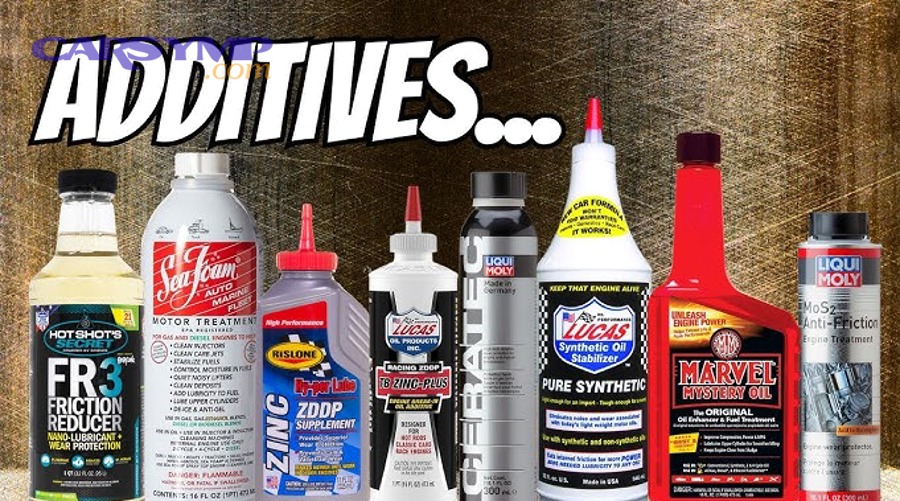
What types of oil additives exist, and what does each one do?
There are 5 main types of oil additives—(1) seal conditioners/stop-leak, (2) viscosity modifiers/thickeners, (3) detergents/cleaners, (4) anti-wear boosters, and (5) friction modifiers—based on what problem they claim to target.
Next, treat additives as tools with tradeoffs, because each category can help in one scenario and be counterproductive in another.
Which additives target leaks (stop-leak/seal conditioners), and when do they make sense?
Stop-leak additives make the most sense when the leak is minor seepage, you’ve confirmed it’s engine oil (not coolant or transmission fluid), and you are using them as a temporary measure while you decide on repair timing.
- Minor seepage: dampness, light film, occasional drop
- Active leak: wet trail, steady drip, burning smell on exhaust, oil level dropping quickly
For minor seepage, high-mileage oil is typically the safer first step because it’s designed as a complete oil with seal-conditioning intent. For an active leak, stop-leak is not a plan—it’s a delay tactic, and sometimes it fails.
- Clean the suspected area, drive 1–2 days, then inspect again.
- If the leak source is accessible (valve cover gasket, filter housing), repair often beats chemistry.
Which additives target oil burning and smoke, and what are the tradeoffs?
Oil-burning additives usually fall into thickener or smoke reducer claims. They may reduce visible smoke by increasing viscosity, but the tradeoffs can include reduced cold-flow at startup, potential deposit issues if overused, and masking a worsening mechanical issue.
This is where a Normal vs excessive oil consumption guide mindset helps. Some engines burn a small amount of oil, and some manufacturers consider that acceptable. The question is trend and rate, not panic.
If you’re seeing smoke, do an oil consumption diagnosis before adding a thickener:
- Confirm the oil level, record miles, re-check consistently
- Inspect for external leaks
- Consider PCV system function (a common contributor to consumption in many engines)
- Use Blue smoke patterns and what they indicate timing clues to guide the next checks
Which additives are for cleaning (detergent/flush products), and when are they risky?
Cleaning additives and engine flush products can help when an engine has deposit-related sticking (like mild ring sticking), but they become risky when the engine has heavy sludge because aggressive cleaning can loosen material faster than the filter can manage.
A safer staged approach is often:
- Use a quality oil that meets the correct spec
- Run a shorter interval
- Re-check consumption and engine behavior
- Repeat if improvement is seen
If the engine is heavily sludged, consider professional evaluation rather than aggressive DIY chemistry.
Which additives claim wear protection or quieter operation, and when are claims misleading?
Wear-protection additives often market “extra zinc” or “extreme pressure” protection. The problem is that modern oils are engineered as balanced systems, and adding a booster can push chemistry out of balance—especially in engines with emissions controls.
Also, “quieting” an engine can be misleading:
- A tick may be lifter-related or oil-drainback related.
- A knock can be serious and should not be “treated” with additives.
If your goal is quieter operation, your first step should be verifying correct oil grade and spec and checking oil level, not stacking additives.
High-mileage oil vs additives: which should you try first for common symptoms?
High-mileage oil wins for first-step safety, additives are best for targeted short-term experiments, and repairs are optimal when symptoms are severe or rapidly worsening.
Next, use a symptom-to-action decision sequence that prioritizes low risk and high information.
The table below summarizes a “try this first” approach by symptom severity.
| Symptom | Try First (Lowest Risk) | If It Improves | If It Doesn’t |
|---|---|---|---|
| Mild seepage | High-mileage oil (same grade) | Keep monitoring | Inspect leak source; consider repair |
| Rising oil use, no smoke | High-mileage oil + tracking | Keep tracking rate | Diagnose PCV, leaks, compression |
| Blue smoke at startup | High-mileage oil + diagnosis | Continue + monitor | Investigate valve seals / guides |
| Blue smoke under load | Diagnosis first (don’t guess) | N/A | Consider rings/turbo issues |
| New noise/tick | Verify level + correct spec | Maintain & monitor | Mechanical inspection |
For minor leaks, is high-mileage oil a safer first step than stop-leak additives?
High-mileage oil is usually safer first because it’s designed to be the oil you run every day, and many high-mileage oils include seal enhancers aimed at minimizing minor leaks.
A practical two-step test:
- Clean the area
- Switch to high-mileage oil, drive 1–2 weeks, and re-check seepage and oil level change
If seepage reduces, you’ve gained stability without introducing an extra chemical variable.
For oil consumption, should you use high-mileage oil, a thicker oil, or an additive?
High-mileage oil is usually the best first choice for mild consumption because it keeps you within a normal, certified oil system while you track whether the rate changes.
Then, only consider a thicker grade if your manual allows it for your climate/conditions, consumption is mild-to-moderate, and you are not in a modern engine where spec compliance and LSPI protection are critical.
On modern TGDI engines, newer oil standards address concerns like LSPI, so the safer move is often staying within the correct category rather than improvising viscosity changes.
For noisy engines, does switching oil help more than additives?
Switching to a spec-correct high-mileage oil can help more than additives if the noise is related to oil control or marginal lubrication (like light ticking), but if the noise is a knock or is getting worse quickly, additives are not the answer.
- Low oil level: fix immediately, check for leak/consumption cause
- Tick that comes and goes: confirm correct spec and interval
- Knock, oil pressure light, or loud persistent noise: stop driving and get diagnosis
How do you choose the right product without causing harm?
You choose safely by (1) matching your owner’s manual spec and viscosity, (2) prioritizing certified oils over mystery additives, and (3) avoiding chemistry stacking—especially if your engine burns oil or uses modern emissions hardware.
Next, apply “do no harm” rules before you optimize anything.

Which specs on the bottle matter most (API/ILSAC/ACEA, OEM approvals)?
The most important specs are the ones your engine was designed around:
- Viscosity grade (e.g., 0W-20, 5W-30)
- API service category (e.g., API SP) and related standards like ILSAC GF-6 for many gasoline vehicles
- OEM approvals when required (some manufacturers specify their own approval)
API SP and ILSAC GF-6 were developed to address modern engine challenges (including LSPI protection for certain TGDI engines), which is why meeting spec is more than a label—it’s a performance promise.
When should you avoid additives entirely (turbo/DI, warranty, DPF/catalyst concerns)?
You should avoid additives entirely when (1) you have a modern turbo/DI engine where oil category compliance matters, (2) you have warranty/extended coverage that excludes additives, (3) you suspect your engine is burning oil (because what burns can reach the catalyst/DPF), and (4) you can’t confirm what’s in the additive or how it interacts with your oil’s chemistry.
Phosphorus derived from engine oil has been studied for its potential to harm catalyst performance, which is why modern oil categories evolved and why adding extra chemistry can be risky—especially if your engine is consuming oil.
How can you test if the change worked (monitoring oil use and leak checks)?
Testing is simple, and it’s what separates a smart switch from guesswork.
Oil use tracking (repeatable method):
- Park level, wait 5–15 minutes after shutdown
- Check dipstick and record the level and odometer
- Re-check every 300–500 miles (or weekly)
- Calculate rate: quarts per 1,000 miles
Leak checks:
- Place clean cardboard under the engine overnight
- Inspect for fresh spots and locate the highest wet point in the engine bay
When is high-mileage oil or an additive not enough—and you need a repair?
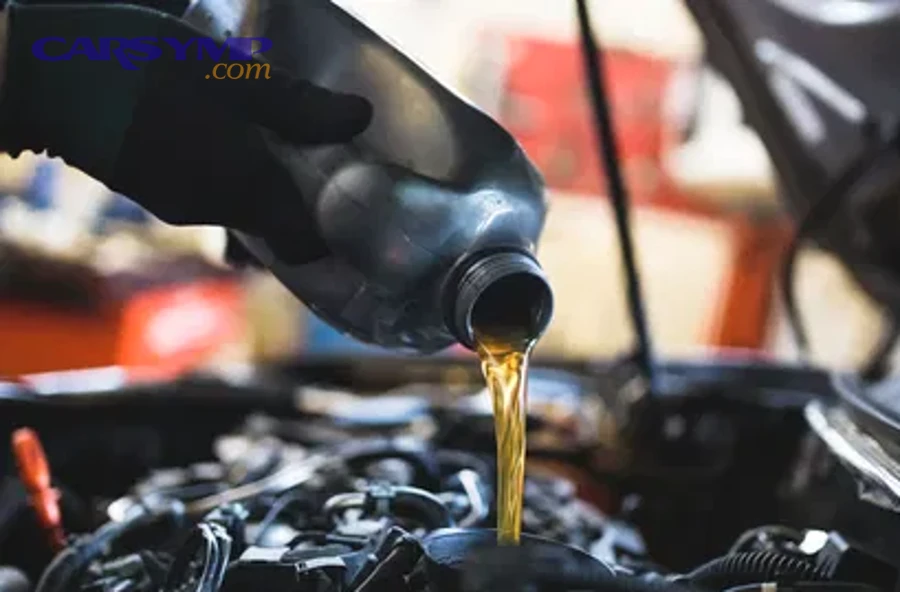
Yes—high-mileage oil or additives are not enough when (1) the oil loss is fast, (2) smoke is heavy or persistent, or (3) you have warning signs like low oil pressure, misfires, overheating, or coolant contamination, because those point to mechanical failures that chemistry can’t reverse.
Next, treat the switch-to-repair boundary as a safety rule, not a budget argument.
Are these “stop now” warning signs that mean you should see a mechanic?
Yes—stop and seek diagnosis if you notice any of the following:
- Oil pressure warning light or oil pressure reading dropping
- Knocking sounds (not a mild tick)
- Rapid oil loss (needing to add oil frequently within a short mileage)
- Heavy blue smoke that persists, especially under load
- Milky oil (possible coolant contamination)
- Fuel smell in oil (possible fuel dilution or injector issues)
This is where “Blue smoke patterns and what they indicate” becomes a safety tool. If smoke shifts from occasional to persistent, you’re likely past the “try oil” stage and into “find the failing part” territory.
At this point, a mechanic may recommend tests like compression/leak-down testing, PCV system inspection, turbo oil control inspection (if applicable), and bore scope checks. That deeper oil consumption diagnosis is what prevents you from treating a worn part like a fluid problem.
What myths and edge cases can change your decision about high-mileage oil and additives?
Myths and edge cases matter because they flip the risk profile: what’s safe for a simple older engine can be risky for a modern TGDI engine, and what looks like a “leak caused by oil” is often a leak that the new oil simply made easier to notice.
Next, you can use these edge cases to avoid two mistakes: blaming the wrong cause and choosing the wrong tool.
Is “high-mileage oil causes leaks” a myth or a real risk?
High-mileage oil causing leaks is mostly a myth, but the confusion has a real explanation: switching oils can change cleaning behavior or seal behavior slightly, and that can reveal leaks that were already developing. In other words, the leak was often there—it just wasn’t obvious yet.
- Fix vs reveal: the oil didn’t create a cracked gasket; it may have changed how the leak presents.
- If you switch and see a leak, treat that as information: you now know where the system is weak.
Can oil additives damage catalytic converters or DPFs, and how do you reduce the risk?
Yes—additives can increase risk to emissions components especially when oil is consumed, because oil-derived elements (like phosphorus) can reach the exhaust after combustion and contribute to catalyst degradation over time.
- Avoid “extra zinc/phosphorus” boosters unless you have a specific reason and compatible emissions setup.
- If your engine is burning oil, prioritize fixing the cause over adding chemistry.
- Use oils that meet the proper API/ILSAC category rather than stacking unknown additives.
Should you use used oil analysis (UOA) to decide, and who benefits most from it?
There are 3 main groups who benefit most from UOA: (1) owners tracking oil consumption or suspected wear, (2) high-mileage vehicles where trend data is valuable, and (3) performance/turbo owners who want evidence-based interval decisions—based on whether you need trend information to avoid expensive surprises.
UOA works because it measures wear metals, contamination, and oil condition so you can spot abnormal trends early.
Evidence: According to a study by Islamic Azad University from the Department of Chemistry, in 2012, periodic oil sampling and analysis tracked changes in viscosity and elemental concentrations across increasing operation distance, supporting oil analysis as a tool for monitoring wear and oil degradation trends.
What should you do for niche cases like turbo direct-injection engines or LSPI-prone cars?
There are 3 priority moves for TGDI/LSPI-prone cars: (1) use the exact specified oil category (API SP / ILSAC GF-6 where applicable), (2) avoid additive stacking, and (3) keep intervals appropriate for your driving pattern—because LSPI mitigation is partly an oil formulation problem as well as an engine/fuel problem.
This is also where “just thicken it” becomes risky. If you’re driving something modern and boosted, spec compliance is your protection layer, and high-mileage oil (if used) should still be in the correct category and grade.
Finally, if you want a structured, symptom-first way to keep learning, you can build your reading path like this: start with a Normal vs excessive oil consumption guide, then connect it to Blue smoke patterns and what they indicate, and finally narrow down Oil burning causes: rings vs valve seals. If you publish or organize those resources, keep a consistent internal link hub (for example, on carsymp.com) so readers can move through diagnosis in the same order you just did here.