


If you want to identify a leak fast, the most reliable first clue is where the wet spot forms under the car—front, middle, or rear—because each zone sits beneath different systems and typical failure points. This guide gives you a front-to-rear under-car location map so you can narrow likely sources in minutes, even before you pop the hood.
Next, once you’ve mapped the spot to a zone, you still need to confirm what fluid it is, because the same location can drip different fluids depending on the vehicle layout. We’ll use simple sensory checks—color, thickness, and smell—plus safe “wipe tests” to tell oil from coolant, transmission fluid, brake fluid, and plain water.
Then, not all leaks carry the same risk. We’ll break down when it’s safe to drive and when it’s not, including the question many drivers ask: Can you drive with oil leaking under car—and what conditions change the answer from “maybe” to “stop now.”
Introduce a new idea: after you can identify the zone, the fluid, and the urgency, you’ll want quick confirmation steps to pinpoint the most likely part—without guessing—so you can describe the problem clearly to a shop or decide what to check yourself.
What does the location of a puddle under your car tell you (front vs middle vs rear)?
The location of a puddle under your car is a diagnostic map clue that points to the most likely system leaking because front, middle, and rear zones align with the engine/cooling system, drivetrain/transmission, and rear driveline/fuel/brakes respectively.
Next, to make the location clue actionable, you need to map the puddle accurately and understand why the drip point can shift away from the real leak.
Can the drip location be misleading because fluid travels on panels and undertrays?
Yes—the drip location can be misleading because (1) fluid follows gravity along seams and bolts, (2) airflow pushes liquid rearward while driving, and (3) undertrays and skid plates can collect fluid and release it elsewhere later.
More specifically, you can still use location reliably if you treat the puddle as a “downstream clue” and trace upstream to the first wet point.
Reason 1: Gravity and capillary paths redirect fluid.
Fluids don’t fall straight down the moment a seal seeps. They often run along:
- Bolt heads and flanges (oil pan bolts, transmission pan rails)
- Frame rails and crossmembers
- Heat shields and brackets
- Plastic splash shields that guide drips to edges
That’s why an oil leak under car can appear “in the middle” even when the origin is closer to the front of the engine—oil rides the pan lip or a brace, then drops at the lowest edge.
Reason 2: Airflow and motion change where drops form.
When you drive, underbody airflow can smear fluid backward. After you park, the fluid can finally drip in a different spot than where it leaked while moving. If the leak is small, you may only see it after shutdown because heat soak thins oils and expands materials, changing seep rate.
Reason 3: Undertrays and skid plates hide and relocate drips.
Modern cars often have large plastic undercovers. A slow leak can pool on top of the tray and then exit through a drain hole or corner, producing a puddle that looks “unrelated.” This is why a single puddle location should be treated as a starting point, not a verdict.
Practical rule: treat the puddle as Zone A, then inspect one zone forward (upstream) and the same zone for wetness. That simple habit prevents the most common misdiagnosis: “rear leak” that’s actually from the engine area traveling backward.
How do you quickly map your puddle to a front-to-rear “zone” under the car?
To map your puddle to a front-to-rear zone, use three markers—(1) front bumper line, (2) wheel positions, and (3) centerline left/right—so your notes match what a technician sees under the lift.
Then, once the zone is mapped, you can match it to the most common leak points and fluid types.
Step-by-step quick mapping (no tools needed):
- Park on level ground and let the car sit 5–15 minutes after driving.
- Place a piece of cardboard under the car aligned with the front bumper and wheels (more on this in the quick-checks section).
- Mark wheel locations on the cardboard: front-left, front-right, rear-left, rear-right.
- Measure the puddle relative to the nearest wheel and the centerline:
- Front zone: from the front bumper to just behind the front axle
- Middle zone: between the axles
- Rear zone: from just ahead of the rear axle to the rear bumper
- Note left/right bias: driver side, passenger side, or centered.
Why this matters: shops diagnose faster when you say, “It drips front passenger side behind the front wheel,” rather than “somewhere under the car.”
Which common leak points match each under-car zone (front, middle, rear)?
There are three main zone groupings for common leak points—front, middle, and rear—based on under-car location relative to the axles; each grouping has a predictable set of high-frequency culprits you can check first.
Below, we’ll map each zone to the parts that commonly leak and explain what makes each one show up where it does.

What are the most common front-of-car leak sources (radiator to engine bay)?
There are six common front-zone leak sources—cooling system, engine oil from upper seals, power steering, washer fluid, AC condensate routing, and (less common) fuel system components—based on how front-mounted systems cluster near the radiator and accessory drive.
Next, use fluid ID (color/feel) to separate coolant from oil or steering fluid.
1) Cooling system leaks (most frequent front-zone “colored puddles”).
Front-zone coolant usually comes from:
- Radiator end tanks and seams
- Upper/lower radiator hoses and clamps
- Water pump seep hole (often slings coolant onto nearby surfaces)
- Thermostat housing and gasket
- Coolant reservoir cracks or cap issues
Coolant tends to drip near the front center or front passenger side depending on layout. A small drip can become a rapid leak under pressure.
2) Engine oil leaks that “present” at the front.
Even when oil starts higher up, it can run forward and down:
- Valve cover gasket seepage dripping onto timing cover area
- Timing cover or front crank seal
- Oil filter housing or oil cooler (often front/side of engine)
- Loose filter after service (common after oil changes)
If you see oil near the front, don’t assume “oil pan” immediately—check above for fresh wetness.
3) Power steering (hydraulic systems).
If your car uses hydraulic power steering, look for:
- Pump and pressure hose seepage (front engine bay)
- Rack-and-pinion boots wet with fluid (often front-middle, but can drip front)
- Return line leaks
Power steering fluid can look similar to ATF on some cars, so location plus reservoir level helps.
4) Washer fluid.
Washer fluid leaks can look like clear water but often have:
- A mild detergent smell
- Blue or green tint
- A puddle near a front corner where the washer reservoir sits
5) AC condensate drain (normal water).
Water dripping near the front passenger side can be normal if the AC was running—more on that in the fluid ID section.
6) Front fuel leaks (rare but urgent).
Fuel line leaks near the front are less common on modern cars, but if you smell gasoline strongly, treat it as urgent and avoid driving.
What are the most common middle-of-car leak sources (engine centerline to transmission)?
There are five common middle-zone leak sources—engine oil pan area, oil filter/cooler plumbing, transmission pan and lines, steering rack region, and exhaust-adjacent drips—based on how the engine’s lower sealing surfaces and the transmission sit between the axles.
Then, once you identify the fluid, you can decide if it’s a seep you can monitor or a loss that needs immediate attention.
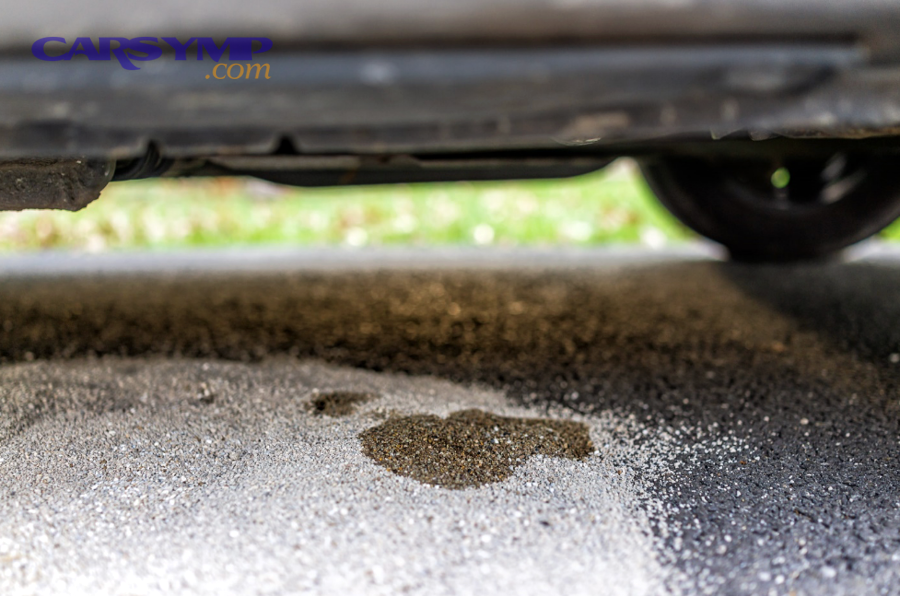
1) Oil pan gasket and drain plug area.
This is the classic “middle puddle,” especially when the car sits overnight. Typical points:
- Oil pan gasket seep
- Drain plug washer damage
- Over-torqued drain plug threads
- Impact damage to the pan
Oil from the pan is often centered, but it can also appear slightly left/right depending on engine tilt.
2) Oil filter, oil cooler, and housing seals.
Many engines place the filter or cooler on the side of the block. Leaks can drip and travel to the middle zone:
- Filter not tightened or gasket doubled
- Oil cooler lines or O-rings
- Filter housing gasket seep
This is a high-probability cause when the leak starts after service.
3) Transmission pan gasket and cooler lines.
Transmission fluid can leak from:
- Pan gasket and drain plug
- Cooler lines running forward to the radiator
- Axle seals (these may present nearer a wheel)
Transmission fluid can be reddish, amber, or brown depending on age and type.
4) Steering rack and lines.
On hydraulic systems, the rack sits forward-middle. A rack leak can drip near the middle but closer to the front axle line.
5) Exhaust-adjacent “burn-off” leaks.
A small oil leak can hit the exhaust and burn, leaving odor and smoke but little puddle. When it does drip, it may show as dark residue rather than a clean puddle.
What are the most common rear-of-car leak sources (rear main area to differential)?
There are five common rear-zone leak sources—rear main seal region, transmission output seal, transfer case (if equipped), rear differential seals, and fuel tank area—based on how the drivetrain and fuel storage sit behind the engine and toward the rear axle.
Next, you’ll want to confirm whether the fluid is engine oil, gear oil, or fuel, because they behave very differently.

1) Rear main seal area (engine-to-transmission junction).
A rear main seal leak often drips near the rear of the engine, which can show as:
- Middle-rear puddle (between axles, but closer to rear of engine)
- Oil at the bellhousing inspection area
Because access is difficult, diagnosis accuracy matters before repair.
2) Transmission output seal / driveshaft area.
If the leak is at the point where the driveshaft exits the transmission, fluid can drip closer to the centerline and rearward.
3) Transfer case (AWD/4WD).
Transfer cases can leak from:
- Output seals
- Case halves
- Drain/fill plugs
These leaks commonly appear in the middle-rear zone.
4) Rear differential.
Gear oil leaks show up around:
- Differential cover gasket (if applicable)
- Pinion seal
- Axle seals (may appear near rear wheels)
Gear oil typically has a strong sulfur odor.
5) Fuel tank region.
A wet spot near the rear can be fuel-related, but many vehicles also route:
- EVAP lines
- Filler neck components
If you smell gasoline, treat it as high urgency.
What does a leak near a wheel usually mean (front wheel vs rear wheel)?
A leak near a wheel usually indicates one of four categories—brake fluid, grease from a torn CV boot, gear oil from an axle seal, or suspension fluid seep—based on which parts live at the hubs.
Then, the fastest way to separate them is to look at the wheel and tire surface and check driving symptoms.

1) Brake fluid (urgent).
Clues:
- Wetness on the inside of the wheel
- Fluid feels slick but not thick like oil
- Brake pedal feels soft or sinks
2) CV joint grease (front wheel, FWD/AWD).
Clues:
- Thick black grease splattered in a circle inside the wheel
- Clicking noise on turns (in advanced cases)
- Torn boot visible
3) Axle seal gear oil (front or rear, depending on drivetrain).
Clues:
- Strong sulfur smell
- Wetness around axle entry point
- Often darker than new oil
4) Shock/strut seep (less common as a puddle).
This usually shows as an oily film on the shock body, not a puddle, unless the failure is severe.
How can you identify the leaking fluid by color, smell, and feel?
Identifying the leaking fluid is a rapid classification process using color, thickness, smell, and evaporation behavior, because each automotive fluid has a typical sensory signature that narrows the leak source dramatically.
To better understand what you’re seeing, start with the safest tests first—visual inspection and a wipe—then confirm with reservoir and dipstick checks.
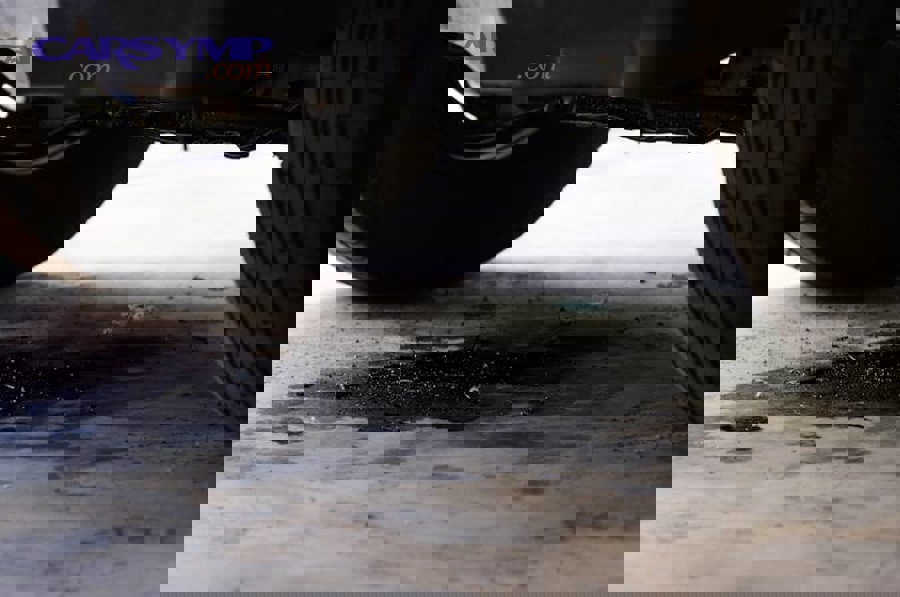
Quick fluid ID table (what it contains): The table below summarizes common fluids by appearance and “tell” so you can cross-check your puddle with the most likely system.
| Fluid | Typical appearance | Typical smell/feel | Common zone clue |
|---|---|---|---|
| Engine oil | Amber → dark brown/black | Slick, oily, can smell “burnt” | Front/middle; can travel |
| Coolant | Green/pink/orange/blue (varies) | Sweet odor; watery but slightly slippery | Front zone often |
| Transmission fluid | Red/amber/brown | Oily; sometimes sharp odor | Middle; can be wheel-adjacent |
| Power steering fluid | Clear/amber/red (varies) | Oily; similar to ATF on some cars | Front/middle |
| Brake fluid | Clear to amber | Slippery, thinner; mild odor | Near wheels/master cylinder area |
| Gear oil | Dark amber/brown | Strong sulfur odor | Rear diff/axle areas |
| Washer fluid | Clear with tint | Detergent smell | Front corners |
| AC water | Clear water | Odorless; evaporates | Passenger side near firewall |
Is clear water under the car always a problem?
No—clear water under the car is not always a problem because (1) AC condensate is normal, (2) exhaust condensation can drip, and (3) rainwater can drain from body cavities; however, water can be a problem if it’s actually diluted coolant or if it appears inside the cabin.
Then, the key is to verify timing, location, and smell.
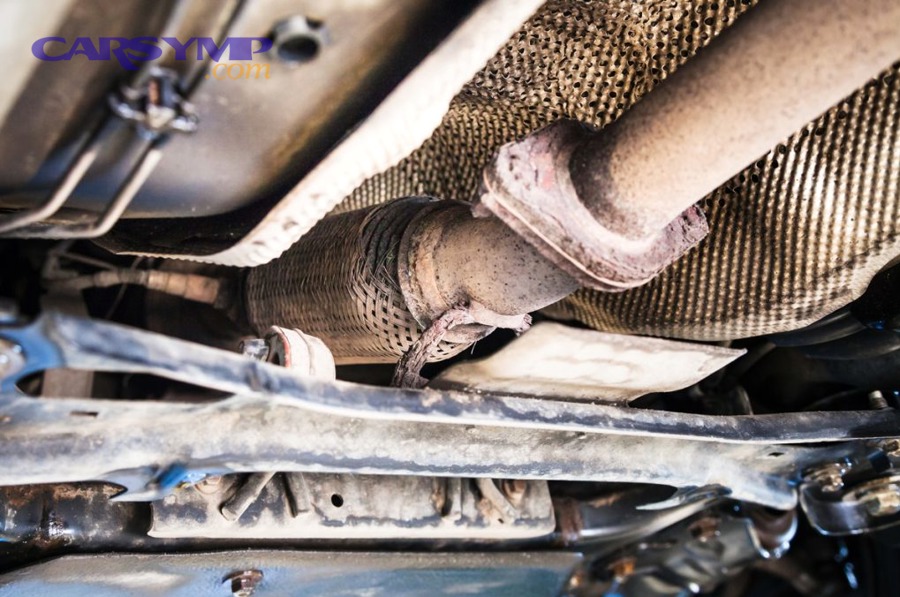
Reason 1: AC condensate often drips near the passenger-side firewall.
If you ran the AC or defrost, the evaporator gets cold and water condenses on it, then drains out through a tube. The puddle often appears:
- After driving with AC on
- On warm, humid days
- Near the passenger side of the engine bay area
Reason 2: Exhaust condensation can drip from the tailpipe.
Short trips can produce more visible water.
Reason 3: Rainwater drains can mimic a “leak.”
Sunroof drains and door drains release water after a storm.
When water is a red flag:
- It smells sweet (coolant)
- It feels slightly oily (coolant residue)
- The engine temperature rises
- The carpet is wet inside the cabin (possible blocked condensate drain)
Evidence: According to an automotive HVAC engineering training text by A. Bhatia, water vapor condenses on cold evaporator fins and drains out through the evaporator case drain as part of normal dehumidification operation. (cedengineering.com) (cedengineering.com)
What are the key differences between engine oil, transmission fluid, and power steering fluid?
Engine oil wins in darkening over time, transmission fluid is best identified by pan/line location and sometimes a sharper odor, and power steering fluid is most reliably confirmed by reservoir level and steering symptoms, because color alone overlaps on modern vehicles.
However, a combined approach—location + feel + level check—prevents the most common mix-up.

Engine oil:
- Often amber when fresh, turns brown/black with use
- Thick, very slick
- Commonly drips from pan, filter area, or upper gaskets that run down
- Level checked via dipstick or electronic level reading
Transmission fluid:
- Can be red, amber, or brown depending on age/spec
- Slick but sometimes slightly thinner than engine oil
- Leaks from pan gasket, cooler lines, axle seals, output seals
- Level check varies by vehicle (some sealed units)
Power steering fluid (hydraulic):
- Can be clear/amber or red (often ATF-based on some models)
- Leaks from pump, pressure line, rack seals
- Symptoms: whining pump, heavier steering, foamy reservoir
Decision shortcut:
If the puddle is front-middle and steering feels different, check the power steering reservoir. If it’s middle and near the transmission pan or cooler line routing, suspect transmission fluid. If it’s centered under the engine and the dipstick drops, it’s engine oil.
How do coolant and brake fluid differ in urgency and identification?
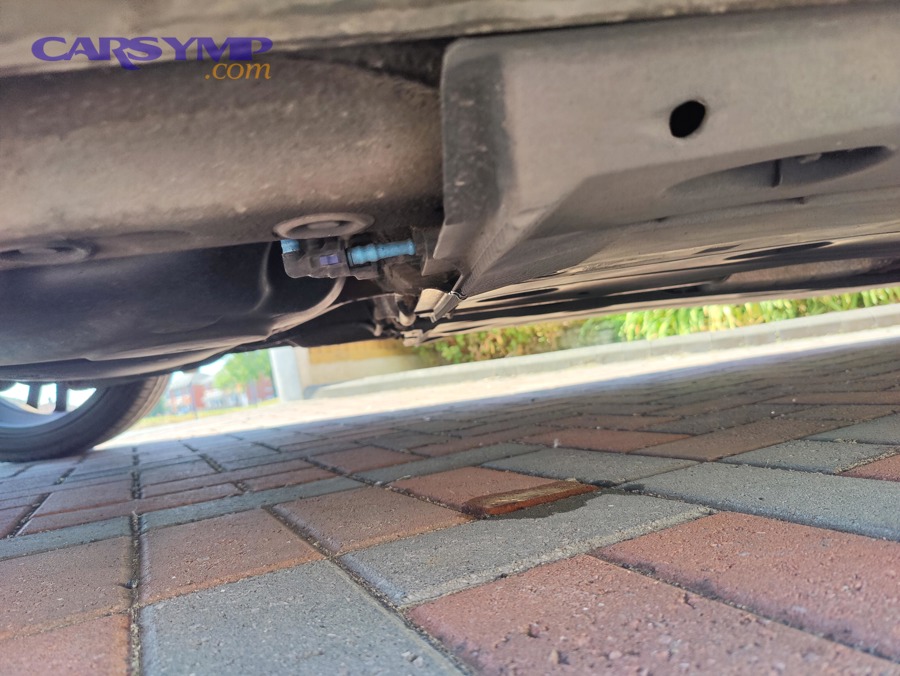
Coolant wins in obvious color and overheating risk, brake fluid is best recognized by wheel-area wetness and braking changes, and washer fluid is a distant third that many people mistake for “nothing,” because different fluids trigger different safety consequences.
More importantly, you should treat brake fluid as urgent even if the puddle is small.
Coolant identification:
- Often brightly colored (but not always)
- Sweet smell is common
- Can dry into a crusty residue
- Urgency rises quickly if temperature climbs
Brake fluid identification:
- Clear to amber
- Thin and very slippery
- Often appears near a wheel, brake line, or master cylinder area
- Symptoms: soft pedal, longer stopping distance
Evidence: According to a 2023 crash-injury study published in Journal of Safety Research (ScienceDirect), brake failure–related crashes were analyzed to assess factors linked to injury severity, underscoring why braking issues must be treated as high-risk. (sciencedirect.com) (sciencedirect.com)
Is it safe to drive with a leak in each zone, and when should you stop driving?
Yes and no—some leaks are safe to drive short distances with if the level stays stable, but others are not safe at all because (1) they reduce braking, (2) they create fire risk, and (3) they can cause sudden mechanical failure like overheating or loss of lubrication.
Next, use these zone-based rules to decide whether to monitor, top up and drive to a shop, or stop and tow.
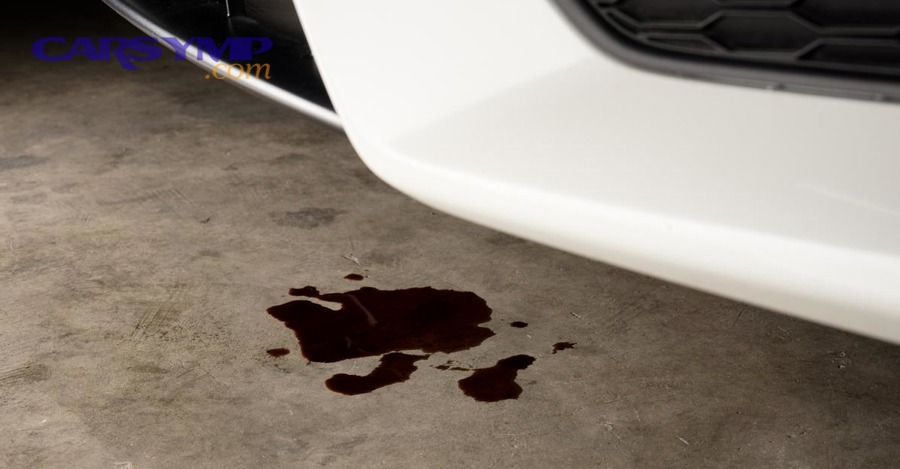
Should you stop driving immediately if the leak is brake fluid or fuel?
Yes—you should stop driving immediately if the leak is brake fluid or fuel because (1) brake fluid loss can reduce braking performance suddenly, (2) fuel leaks raise fire risk, and (3) both can escalate without warning even if the puddle looks small.
To better understand the risk, treat “small puddle” as irrelevant when safety-critical systems are involved.
Brake fluid: why “stop now” is the default.
- Brake hydraulics rely on closed pressure. A leak means pressure can drop.
- The pedal may feel normal at first, then worsen quickly.
- A wheel-area leak can contaminate brake pads, reducing friction.
Fuel: why “stop now” is the default.
- Gasoline vapors ignite easily.
- A drip onto hot exhaust components can create a fire hazard.
- The smell is often stronger than the visible leak.
What to do immediately:
- Park in a safe place away from traffic
- Turn off the engine
- Do not smoke or create sparks
- Call for a tow if fuel odor or braking change is present
Evidence: A 2026 vehicle-safety simulation study published by MDPI analyzed braking system malfunction effects on collision outcomes, reinforcing that braking impairment materially changes safety margins during real driving scenarios. (mdpi.com) (mdpi.com)
Can you drive with an oil leak if the level is okay, and what are the risks?
Yes—you can sometimes drive with an oil leak if the oil level remains safe because (1) some leaks are slow seepage, (2) topping up can maintain lubrication, and (3) short trips to a repair facility can be managed; however, you still risk (a) rapid oil loss, (b) engine damage, and (c) fire if oil hits hot exhaust parts.
Meanwhile, the safest approach is to treat any worsening oil leak under car as a “monitor every drive” situation until repaired.
When driving is sometimes acceptable (short distance):
- The leak is slow (drops, not a stream)
- The dipstick level stays within safe range
- No oil pressure warning light
- No burning oil smell or smoke
When driving is not acceptable:
- Oil pressure light comes on (stop immediately)
- Oil is dripping onto the exhaust (burning smell, smoke)
- The leak rate increases suddenly
- You need to add oil repeatedly over a short time
Practical monitoring routine (simple but effective):
- Check oil level before the next drive
- Place cardboard overnight and measure drip rate
- Re-check after driving and parking
- Keep oil in the trunk for emergency top-ups (correct grade)
This is the core truth behind the question “Can you drive with oil leaking under car”: it depends less on the puddle size and more on oil level stability and warning signs.
What symptoms signal an urgent coolant leak even if the puddle looks small?
Urgent coolant leaks are signaled by overheating symptoms—rising temperature gauge, steam, sweet smell, coolant warning light, or a heater that blows cold—because coolant loss can turn from minor seep to overheating quickly under pressure.
In addition, overheating can damage head gaskets and warp components, so early warning signs matter more than puddle size.
High-urgency coolant leak indicators:
- Temperature gauge climbing above normal
- Steam from the hood or front of the car
- Low coolant warning, frequent “top-up needed”
- Heater suddenly blowing cold (coolant too low to circulate)
- Sweet odor around the front zone
What to do:
- Pull over safely
- Turn off the engine
- Let it cool fully before opening any cap
- Add coolant/water only when safe and only as a temporary measure
- Arrange repair soon, because repeated overheating events are costly
What quick checks can confirm the most likely leak source before you book a repair?
You can confirm the most likely leak source with a two-part method—(1) capture the drip pattern accurately and (2) trace the first wet point upstream—so you can match the leak to a specific component rather than guessing.
Below are the fastest checks that work for most vehicles, including an optional UV dye test for oil leak tracing when the source is hard to see.
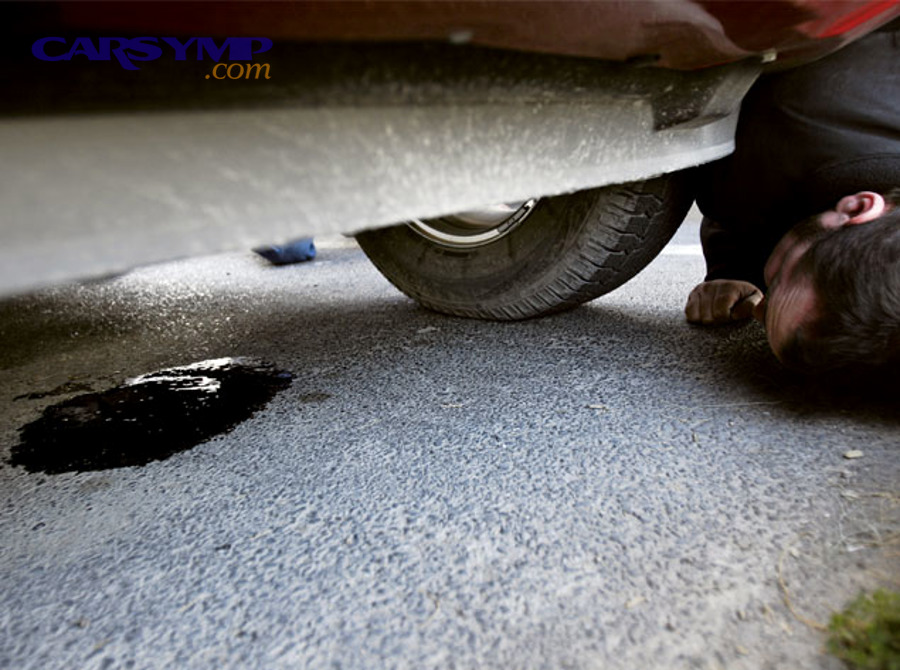
How do you do the cardboard “drip pattern” test to pinpoint left/right and zone?
The cardboard drip pattern test is a how-to confirmation step that uses one overnight capture to reveal (1) exact drip position, (2) drip count/rate, and (3) whether multiple fluids are leaking—so you can map the leak precisely.
Then, you can look directly above the drip marks to find the wet trail.
How to do it (simple and consistent):
- Slide a large cardboard sheet under the car after parking on level ground.
- Align the cardboard with the front bumper and wheels (use the tire positions as references).
- Leave it overnight or at least 4–8 hours.
- In the morning, mark each spot:
- Front/middle/rear zone
- Driver/passenger side
- Approximate size and color
- Take a photo for reference.
How to interpret what you see:
- One spot: likely a single main leak path
- Two spots: could be one fluid migrating and dripping at two edges, or two separate leaks
- Spray pattern: often CV grease or fluid flung by a pulley/fan (front engine bay) or axle rotation
Bonus check: place a white paper towel on the spot to see true color and thickness. This helps separate diluted coolant from clear water.
How can UV dye or powder tracing confirm the leak origin?
UV dye or powder tracing confirms the leak origin because (1) it highlights the active leak path rather than old residue, (2) it reveals tiny seep points that don’t drip constantly, and (3) it shortens diagnosis time when the leak migrates across the underbody.
Next, choose dye when you suspect oil or refrigerant leaks, and choose powder when you want a clean visual trail without adding anything to the system.
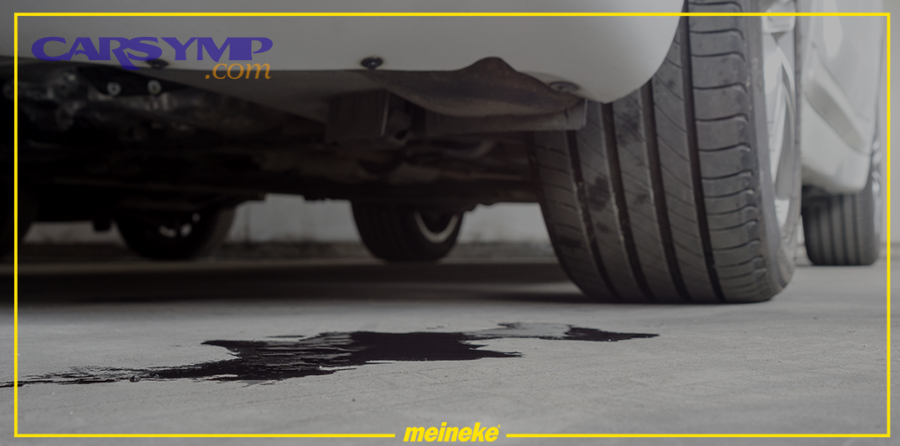
Option A: UV dye (best for active, hard-to-see leaks).
A UV dye test for oil leak tracing typically works like this:
- Add a dye designed for the specific fluid (engine oil dye is not the same as coolant dye)
- Drive briefly to circulate
- Inspect with a UV light in a darker setting
- Look for the brightest “first source” point, not the lowest drip
Option B: Powder/talc tracing (best for slow seepage).
- Clean the suspected area
- Apply powder lightly
- Run the engine or drive briefly
- Watch for a wet line cutting through the powder to the source
Safety notes:
- Use gloves and eye protection
- Avoid touching hot exhaust parts
- Use only dyes compatible with the fluid/system
Evidence: A 2026 peer-reviewed study evaluating leakage detection approaches and sensor behavior highlights how modern leak-detection methods are assessed quantitatively, supporting the principle that enhanced detection techniques improve identification of elusive leaks. (sciencedirect.com) (sciencedirect.com)
Why does the leak spot move, and how can you prevent future under-car leaks?
A leak spot moves because the leak origin and drip point often differ, and you can prevent future under-car leaks by (1) reducing seal stress through correct fluid levels and service practices, (2) catching seepage early before it becomes a flow, and (3) protecting vulnerable hoses and gaskets with routine inspection.
In short, prevention starts with understanding movement—then applying maintenance habits that stop repeat leaks.
Why the spot moves (the “origin vs puddle” reality):
- Fluid runs along edges and bolts before dripping
- Undertrays store fluid and release it later
- Parking slope changes the lowest point
- Heat cycles change viscosity and leak rate
How to prevent future under-car leaks (high-impact habits):
- Don’t overfill fluids. Overfill can increase pressure and push fluid past seals (especially differentials and some transmissions).
- Use correct torque and new crush washers on drain plugs. Many repeat leaks start with a reused washer or stripped threads.
- Inspect after service. A quick look after an oil change can catch a loose filter or a double-gasket mistake before it becomes a driveway puddle.
- Replace aged hoses and clamps proactively. Cooling hoses harden with heat cycles; a small seep often precedes a blowout.
- Clean and recheck. Old grime hides new leaks; a cleaned surface makes diagnosis and prevention easier.
Service-related leak checks (common “why now?” cases):
- Oil filter gasket left behind (double-gasket)
- Drain plug washer reused or plug under/over-torqued
- Hose clamp not seated after coolant service
- Spilled oil that later drips and looks like a new leak
A practical prevention loop (simple, repeatable):
Map the spot → identify the fluid → confirm the source → repair → recheck on cardboard
That loop turns a stressful mystery into a controlled process—and reduces the odds you’ll deal with the same leak again.
Evidence (if any)
- Normal AC condensation drainage is a standard part of automotive HVAC dehumidification: condensed water forms on the evaporator and drains from the evaporator case. (cedengineering.com) (cedengineering.com)
- Brake failure is studied as a crash risk factor, reinforcing that brake-fluid-related leaks require urgent response. (sciencedirect.com) (sciencedirect.com)
- Braking system malfunction impacts vehicle safety outcomes in simulation-based research, supporting conservative “stop driving” guidance when braking is compromised. (mdpi.com) (mdpi.com)
- Leak detection methods are evaluated quantitatively in peer-reviewed literature, supporting the use of enhanced tracing approaches (e.g., dye/pattern methods) to improve diagnosis. (sciencedirect.com) (sciencedirect.com)