


A fresh puddle or oil leak under car right after maintenance is usually traceable—and you can diagnose it quickly by focusing on the two highest-probability leak points: the oil filter seal and the oil drain plug sealing washer. This guide shows how to confirm the true source (not a “false leak”) and identify the most common gasket/washer failures.
Next, you’ll get a practical DIY workflow: where to look first, how to clean and re-check for fresh oil, and what leak patterns mean (slow seep vs sudden dump). That workflow matters because tightening alone isn’t always the cure—seals fail in specific ways and leave predictable clues.
Then, we’ll break down the exact parts that leak (filter gasket/O-ring, drain plug washer, threads, pan surface), rank the likely causes, and explain what’s safe to fix at home versus what should go to a shop—plus a Repair cost estimate by leak source so you can decide fast.
Introduce a new idea: once you can diagnose filter-versus-plug leaks confidently, you’ll also learn how to spot look-alike leaks (like filter housing seepage or tracking from above) so you don’t chase the wrong repair.
Is the oil leak really coming from the oil filter or drain plug?
No—an apparent oil filter or drain plug leak diagnosis is not always correct, because (1) spilled oil can “track” and drip later, (2) airflow spreads oil rearward, and (3) splash shields can hold oil and release it in bursts. Below, you’ll confirm whether you’re seeing a true leak or leftover oil.

A true leak keeps producing new, wet oil after you clean the area, run the engine, and recheck. A false leak looks dramatic at first but stops once residual oil burns off or drains from a shield.
Can spilled oil from an oil change drip for days and look like a “leak”?
Yes, spilled oil can drip for a day or two and mimic a leak for three reasons: it pools on shields, it runs along subframe seams, and it releases slowly after heat cycles. Specifically, this happens when oil spills during filter removal or when the drain stream hits a crossmember.
How to tell spill vs leak (quick test):
- Clean first: Degrease the oil filter area, oil pan edge, and drain plug region.
- Dry fully: Use rags and let it air dry for a few minutes.
- Idle test (5–10 min): Look for fresh wetness forming at a seal edge.
- Short drive (5–10 min): Park on clean cardboard; check for new drops.
- Recheck the same spot: If it reappears at the same seam, it’s a leak.
A spill usually leaves random drips from the lowest plastic panel edge, not from a specific sealing line.
Where do oil filter leaks usually appear compared to drain plug leaks?
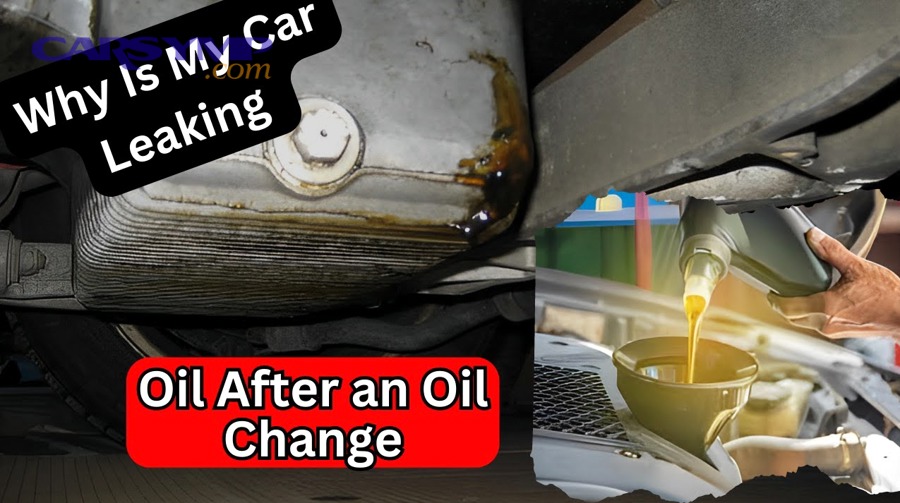
Oil filter leaks usually show wetness around the filter gasket/housing seam, while drain plug leaks show wetness at the plug head/washer line or directly below the plug. However, both can end up dripping from the same lowest point, which is why you must trace the highest wet point.
Filter-area leak pattern (common):
- Wet ring at the filter base or housing cap seam
- Oil runs down the side of the engine block
- Drips often increase with RPM (more oil pressure)
Drain plug leak pattern (common):
- Wetness forms at the plug/washer interface
- Oil beads around the plug head
- Drips can appear even with engine off (gravity seep)
What does “oil filter leak” mean and what exactly is leaking?
An oil filter leak is engine oil escaping at the filter’s sealing interface—usually the rubber gasket (spin-on) or O-ring(s) (cartridge housing)—because the seal isn’t evenly compressed, the mating surface is contaminated/damaged, or the part is incorrect. To better understand, start with how the seal is supposed to work.
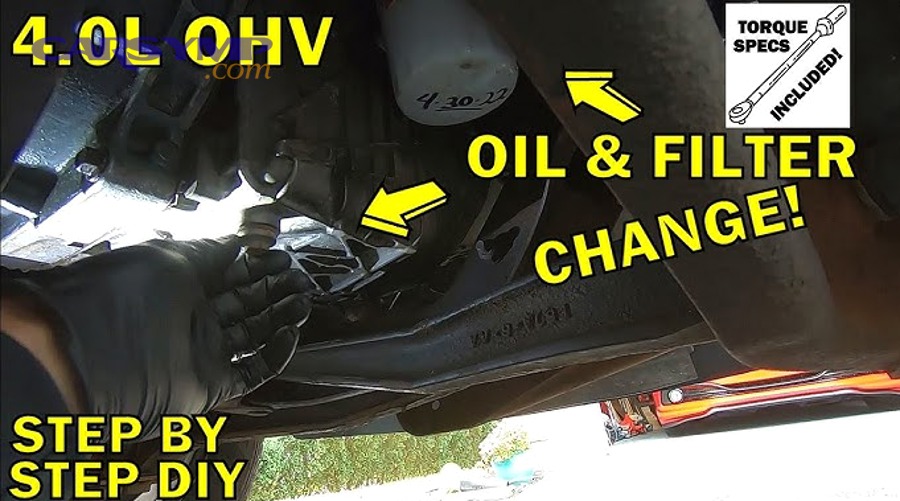
The filter itself rarely “leaks through the can” unless it’s damaged; most leaks are at the edge where sealing happens.
What is the oil filter gasket/O-ring and how does it seal under pressure?
The oil filter gasket/O-ring is a compressible elastomer seal that prevents pressurized oil from escaping between the engine’s filter mount and the filter (or housing). For example, on a spin-on filter, the rubber gasket compresses against a machined pad; on a cartridge system, O-rings seal the cap and sometimes a center tube.
What makes the seal work:
- Even compression: The gasket must be uniformly squeezed—not pinched.
- Clean mating surface: Dirt or old gasket material creates a leak path.
- Correct lubrication: A light oil film helps the gasket seat without tearing.
- Correct part size: Wrong gasket diameter = uneven contact.
When the gasket is over-compressed, it can deform and “weep.” When under-compressed, it can drip quickly.
What is “double-gasketing,” and how can you confirm it?
Double-gasketing is when the old oil filter gasket sticks to the engine, and you install a new filter on top of it—creating two gaskets that cannot clamp evenly. Moreover, it’s one of the most common reasons for a sudden, messy leak right after a change.
How to confirm double-gasketing (fast):
- Shut the engine off and wait a few minutes.
- Remove the filter (or housing cap) carefully.
- Inspect the engine’s filter pad/housing lip.
- Look for a flat rubber ring stuck to the engine.
- Remove it completely, clean the surface, and reinstall correctly.
If you see a heavy leak that starts soon after startup, treat double-gasketing as a top suspect.
What does “drain plug leak” mean and what exactly is leaking?
A drain plug leak is engine oil escaping at the oil pan drain outlet because the washer/gasket didn’t seal, the sealing surface is damaged, or the threads are compromised. Next, you’ll see why most drain leaks are washer problems—not “bad pans.”

The drain plug area is a simple system: plug head clamps a washer against the pan. If that clamp force or surface condition is wrong, oil seeps out.
What is a crush washer/gasket, and why does reusing it cause seepage?
A crush washer is a soft metal sealing ring (often aluminum or copper) designed to deform once and fill microscopic gaps between the plug and pan. Specifically, reusing it can cause seepage because the washer has already “set” and won’t crush evenly a second time.
Signs the washer is the issue:
- Seep appears as a wet halo around the plug head
- Drips are slow and steady, not spraying
- Tightening helps briefly but returns later
If you keep “snugging it up” instead of replacing the washer, you can end up with stripped threads—so this is the classic trap behind DIY tightening vs proper gasket fixes.
Can the drain plug threads leak oil, or is it always the washer?
Yes, drain plug threads can leak, but the washer is the most common cause for three reasons: washers deform, washers get reused, and washers get mismatched. Meanwhile, thread leaks tend to show up after over-tightening, cross-threading, or pan material damage (especially soft aluminum).
Thread-related leak clues:
- Plug feels “tight” suddenly (false tight)
- Plug won’t torque smoothly
- Oil wets along the thread line, not just at the washer
- Leak persists even with a new washer and clean sealing surface
If the threads are damaged, the correct fix is a thread repair insert or pan replacement—not more tightening.
Which common causes should you check first for a filter or plug leak?
There are 8 high-probability causes you should check first—4 for oil filter leaks and 4 for drain plug leaks—based on how often they occur after service and how quickly they create an oil leak under car. Let’s explore them in a priority order that saves time.
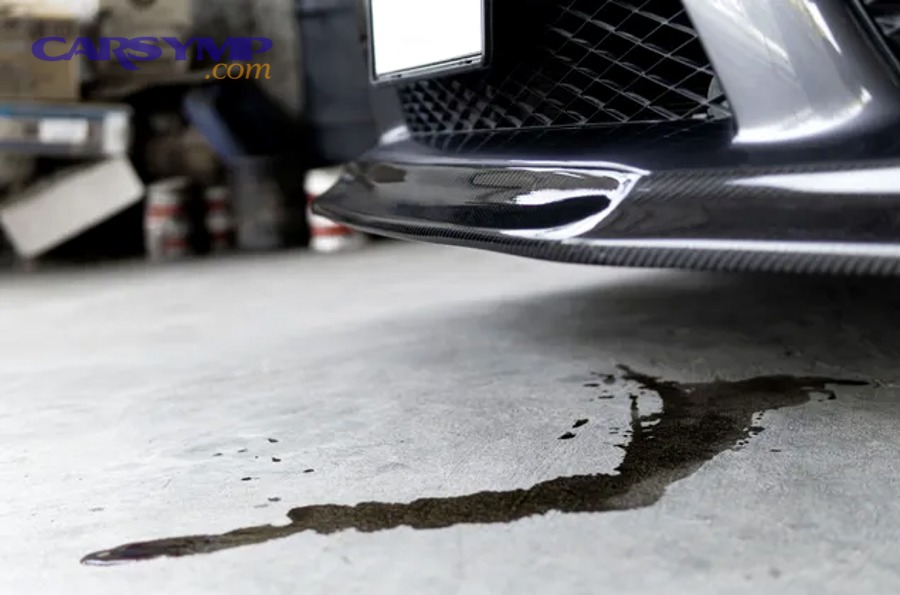
What are the most common oil filter leak causes after service?
There are 4 main oil filter leak causes: double-gasket, wrong filter/O-ring, dirty/damaged mating surface, and incorrect tightening—based on the sealing interface failing to compress evenly.
- Double-gasket (old gasket stuck)
- Often causes a rapid leak after startup
- Fix: remove old gasket, clean pad, reinstall
- Wrong filter or wrong O-ring (especially cartridge systems)
- Gasket diameter mismatch = uneven clamp
- O-ring in wrong groove = immediate seep
- Fix: confirm part number; confirm O-ring placement
- Dirty, scratched, or warped mating surface
- Grit or old gasket fragments create a channel
- Fix: clean with lint-free rag; gently remove residue
- Incorrect tightening
- Too loose: gasket under-compressed
- Too tight: gasket deforms or pinches
- Fix: follow filter instructions; tighten by hand to the specified turns after contact
If you have a cartridge housing, treat the cap O-ring placement and condition as equally important as “tightness.” FRAM notes that improperly installed or reused O-rings on cartridge filters can lead to leaks.
What are the most common drain plug leak causes after service?
There are 4 main drain plug leak causes: reused/missing washer, washer mismatch, sealing surface damage, and thread damage from over/incorrect tightening.
- Reused or missing washer
- Most common on DIY or quick-lube repeat changes
- Fix: replace with correct size/material washer
- Washer mismatch
- Wrong inner diameter doesn’t center; wrong thickness won’t crush right
- Fix: match OEM spec or verified part fitment
- Damaged sealing surface
- Burrs, scratches, or old washer fragments on the pan seat
- Fix: clean; inspect with flashlight; replace plug if damaged
- Thread damage
- Cross-threading or over-tightening in aluminum pans
- Fix: professional insert repair (Time-Sert/Heli-Coil) or pan replacement
Even a washer can be a few dollars at retail depending on type and brand, which is cheaper than chasing leaks with repeated tightening. (autozone.com)
How do you diagnose the exact source step-by-step at home?
The most reliable method is a 4-step confirmatory workflow—clean, run, observe, and re-check—that isolates fresh oil and pinpoints the first wet seam. Then, you can stop guessing and apply the correct fix.

How do you safely clean and re-check for fresh oil to confirm the leak point?
You confirm the leak point by creating a “clean slate,” then watching for new oil at the highest wet point.
Step-by-step:
- Safety first
- Park level, set parking brake, use jack stands if lifting
- Let hot exhaust cool to avoid burns
- Degrease the suspected area
- Filter base/housing seam, oil pan edge, drain plug, nearby block surface
- Wipe until dry
- Idle and observe
- Start engine; use a flashlight
- Watch the filter seam and drain plug line for the first wet bead
- Short drive and re-check
- Drive 5–10 minutes, then re-inspect
- Fresh oil at a seam confirms the source
Pro tip: Place cardboard under the car to see drip rate, but always trace upward to the origin.
This is where people get misled by “oil everywhere.” Oil spreads; the source is where it starts.
When should you use UV dye for oil leak diagnosis, and how does it narrow the source?
UV dye is ideal when the leak is small, the engine is dirty, or oil is tracking across surfaces so you can’t see the origin. More specifically, dye makes fresh oil fluoresce so you can see the first trace line.
Use UV dye when:
- You’ve cleaned twice and oil still appears “everywhere”
- The leak only happens while driving (airflow spreads it)
- You suspect a filter housing seep that’s too slow to see at idle
How it narrows the source:
- Dye highlights the first bright line at the seal edge
- You can differentiate filter seam seep vs oil pan edge seep
- You can confirm whether oil is coming from above and running down
If you’re diagnosing a mystery oil leak under car and the usual suspects look dry, UV dye is the fastest way to stop guessing.
What quick fixes are appropriate, and when should you stop driving and call a shop?
Yes, some filter/plug leaks can be handled quickly, but you should stop driving if the leak rate is high, because (1) oil loss can starve the engine, (2) oil can reach hot exhaust components, and (3) a sudden seal failure can dump oil rapidly. In addition, the right fix is usually seal replacement—not extra tightening.
A 2025 peer-reviewed study describes lubricating oil leaking onto hot surfaces as a major ignition hazard in vehicle systems, reinforcing why active leaks near exhaust heat should be treated urgently. (pmc.ncbi.nlm.nih.gov)
Can you drive with an oil leak from the filter or drain plug?
Yes, you can sometimes drive with a minor seep only if (1) the oil level stays safe on the dipstick, (2) the drip rate is extremely low (no active stream), and (3) oil is not contacting hot exhaust parts. However, you should not drive if the leak is more than a seep.
Do NOT drive if:
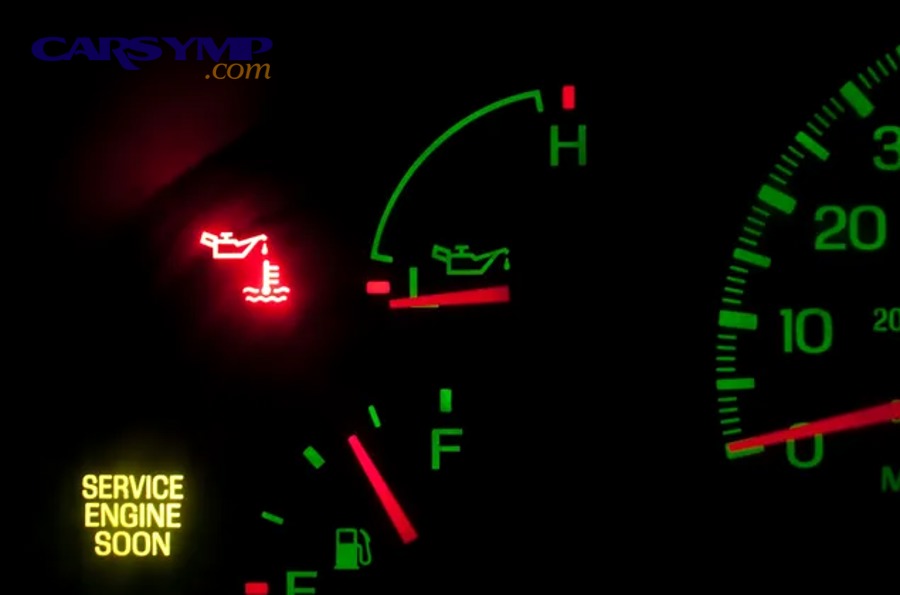
- Oil pressure light flickers or comes on
- You see a growing puddle within minutes
- You smell burning oil or see smoke
- Oil is spraying (common in severe filter seal failures)
If you must move the car short distance:
- Top up oil to correct level
- Keep RPM low
- Recheck level immediately after
Many “it’s just a drip” situations become “it dumped overnight” when the gasket shifts or the washer finally gives up.
Which repairs are DIY-safe vs “shop-only” for filter/plug leaks?
There are 2 main repair groups—DIY-safe sealing fixes and shop-level thread/housing repairs—based on whether the sealing surfaces and threads are intact.
DIY-safe (typical sealing fixes):
- Remove double gasket; reinstall filter correctly
- Replace oil filter with correct part number
- Replace cartridge cap O-ring(s) and seat them in correct groove
- Replace drain plug crush washer/gasket (correct size)
- Replace the drain plug if the head/seat is damaged
Shop-only (structural or thread failures):
- Stripped oil pan threads (insert repair or pan replacement)
- Cracked oil filter housing or adapter
- Warped housing mating surface
- Persistent leak after correct seals + correct installation
This is also where people get stuck in the loop of DIY tightening vs proper gasket fixes—tightening can mask a problem briefly, but it can also create a more expensive thread repair.
How do you prevent oil filter and drain plug leaks next time?
There are 7 prevention habits that stop repeat leaks: use correct parts, replace one-time seals, clean mating surfaces, tighten correctly, verify immediately, re-check after a short drive, and avoid “rescue tightening.” Especially if you do your own changes, these habits eliminate the top causes.
What installation habits prevent repeat filter gasket and drain washer leaks?
Use this checklist as your “no-leak” routine:
- Confirm the old filter gasket is removed (prevents double-gasket)
- Clean the mating surface before installing the new filter/housing cap
- Lightly oil the new gasket/O-ring so it seats smoothly
- Tighten by the correct method
- Spin-on: hand tight plus the specified turn after contact (per filter instructions)
- Cartridge: torque cap to spec; don’t “muscle it”
- Replace crush washer every time
- Inspect the drain plug seat and threads
- Avoid overtightening
- Overtightening deforms seals and risks thread damage
The “feel” of correct tightening is smooth compression—not sudden resistance.
What should you check immediately after an oil change to catch leaks early?
Right after the change, do a short verification loop:
- Idle check (2–5 minutes): inspect filter seam and drain plug line
- Shutdown check: look for fresh beads forming
- Short drive: recheck for seep after a few minutes
- Dipstick confirmation: verify correct oil level
- Next-morning cardboard test: look for new drops
Catching a slight seep early prevents big messes and prevents that anxious moment when you discover an oil leak under car later.
What other less-obvious issues can mimic a filter or drain plug leak?
A filter/plug leak “look-alike” is common because oil travels, and some leaks drip down to the same low points. Besides, not every drip near the pan is a pan leak—some are higher up and only end at the pan edge.

Is it a “true leak” or oil tracking from above onto the filter/plug area?
A true leak starts at a seal seam; tracking starts higher and leaves a wet path downward. To illustrate, a valve cover seep can run down the engine and drip right by the oil filter, making the filter look guilty.
Common tracking sources:
- Valve cover gasket seep
- Oil cooler lines or fittings
- Oil pressure sensor seep
- Front timing cover seep
How to differentiate:
- Find the highest wet point with a flashlight
- Look for a dry filter seam but wet oil above it
- Clean and recheck to see where new oil begins
How do cartridge filter housings and cap O-rings create different leak patterns than spin-on filters?
Spin-on filters usually leak at the gasket ring; cartridge systems often leak at cap O-rings, housing seams, or a cracked plastic/aluminum housing. Meanwhile, cartridge leaks may present as slow seepage that worsens after a drive.
FRAM highlights that cartridge systems rely on O-rings for sealing and that incorrect installation or reuse can cause leaks—so the “right part, right groove” detail matters more than extra tightening.
What happens if the oil pan threads are damaged (aluminum vs steel), and what are the repair options?
Aluminum pan threads are more prone to stripping from overtightening; steel pans tolerate more abuse but still fail if cross-threaded. More importantly, thread damage is not a “tighten harder” problem—it’s a repair-method choice.
Repair options (typical order):
- Thread insert repair (Time-Sert/Heli-Coil style): restores strong threads without replacing pan
- Oversize/self-tapping drain plug: sometimes used as a stopgap
- Oil pan replacement: most expensive, but sometimes required
A thread-insert manufacturer notes that steel insert threads can be stronger than the original pan threads and are commonly used to repair stripped drain plug threads. (timesert.com)
Could oil pressure or a blocked PCV system worsen sealing leaks at the filter area?
Yes, higher pressure conditions can worsen a marginal seal for three reasons: increased flow at the seal edge, more seep through micro-gaps, and more oil mist that masks the true origin. In short, pressure usually doesn’t create the problem—but it can reveal a weak gasket/O-ring installation.
If you only see seepage during cold starts or high RPM driving, treat the filter seal integrity as step one before chasing more complex causes.
Evidence (if any)
Below is a practical table that summarizes Repair cost estimate by leak source so you can prioritize the correct fix first. These are typical ranges because labor time and access vary widely by vehicle.

| Leak source (confirmed) | Typical fix | Parts cost (rough) | Labor/total cost (typical range) |
|---|---|---|---|
| Drain plug washer seep | Replace washer + correct reinstall | Low (a few dollars) (autozone.com) | Low if DIY; shop minimum varies |
| Oil pan gasket leak (not the plug) | Replace oil pan gasket | — | RepairPal estimates $553–$759 on average (repairpal.com) |
| Engine oil pan replacement (cracked pan / severe thread damage) | Replace oil pan | — | RepairPal estimates $836–$1,055 on average (repairpal.com) |
| Oil filter housing leak (housing gasket / housing failure) | Replace housing gasket or housing | — | CarParts notes total costs can range about $20–$750 depending on scope |
If you’re stuck deciding between engine oil and transmission fluid when you see a reddish-brown drip, use the Rear main seal leak vs transmission fluid comparison: rear main seal leaks are engine-oil leaks at the engine-to-transmission joint, while transmission fluid leaks tend to appear from the transmission pan, cooler lines, or axle seals and often have a different odor and color. (Confirm by checking both engine oil and transmission dipsticks and tracing the highest wet point.)