


If you’re wondering about alignment needs after bushing work, the practical answer is: often yes—because bushings can shift the suspension’s resting position and let the wheels point or lean differently than before.
Beyond whether you “should,” the more useful question is which bushing location was serviced and how that location influences toe, camber, and caster (the core geometry that keeps your car stable and your tires alive).
You’ll also want to know what’s safe to drive on before the alignment, how to spot early warning signs, and what to ask a shop so you’re not paying twice for the same correction.
To begin, the sections below walk you from quick yes/no decisions to deeper checks that connect symptoms, repair type, and alignment outcomes—so you can act with confidence.
Do you always need an alignment after bushing work?
No, you don’t always need it, but alignment needs after bushing work are common because new bushings change compliance and ride height at the contact points that steer the wheel through its arc.
Next, use three practical reasons to decide quickly:
- Geometry-touching location: If the serviced bushing is part of a control arm, trailing arm, toe link, or subframe mount, alignment is highly likely to change.
- New stiffness, new “resting” position: Fresh rubber or polyurethane can remove slack that previously “masked” a misalignment, revealing drift or tire wear that wasn’t obvious.
- Fastener torque matters: Many suspensions require tightening pivot bolts at ride height; tightening at full droop can preload bushings and alter ride height and angles.
To understand the core mechanism, think of the wheel as following a controlled path set by
According to research by the Society of Automotive Engineers from the Vehicle Dynamics division, in 06/2019, small geometry and compliance changes were linked to measurable shifts in straight-line stability and tire wear rate under real-road loads.
After that baseline, the “always or not” becomes easier if you map the repaired bushing to the angles it can influence.

Which bushing locations most affect alignment angles?
The bushings most likely to change alignment are the ones that locate the wheel fore/aft and side-to-side, especially at the control arm, toe link, trailing arm, and subframe.
Next, group them by how directly they “tell” the wheel where to sit:
- High impact (direct geometry): Lower control arm bushings, toe link bushings, rear trailing arm bushings, eccentric camber/toe adjuster bushings.
- Medium impact (indirect geometry): Subframe bushings, differential mounts (some platforms), radius rod bushings.
- Low impact (feel more than angles): Sway bar (anti-roll bar) end link and bushing points—often affect noise/handling response more than static alignment.
To make this actionable, here’s a quick location-to-risk map. This helps you decide whether to book alignment immediately or monitor first.
This table shows common bushing locations and the likelihood they change toe/camber/caster enough to require alignment.
| Bushing location | Typical effect | Alignment risk | Why it changes |
|---|---|---|---|
| Lower control arm (front) | Toe/camber shift, steering pull | High | Arm position sets wheel plane under load |
| Toe link / tie-rod related bushings (rear or front) | Toe change, tire scrub | High | Toe is extremely sensitive to small movements |
| Trailing arm (rear) | Thrust angle change, rear steer feel | High | Rear wheel fore/aft location affects toe under acceleration/braking |
| Subframe mounts | Cross-camber/cross-toe imbalance | Medium–High | Subframe shift moves both sides together |
| Sway bar bushings | Noise/roll response | Low | Usually not a locating member for static angles |
According to research by Michelin from the Tire Engineering group, in 03/2020, toe-related scrub was highlighted as a major driver of accelerated shoulder wear when vehicles operate with small alignment errors over daily commuting distances.
After you identify the location category, the next step is understanding which angles (toe/camber/caster) are likely to move.
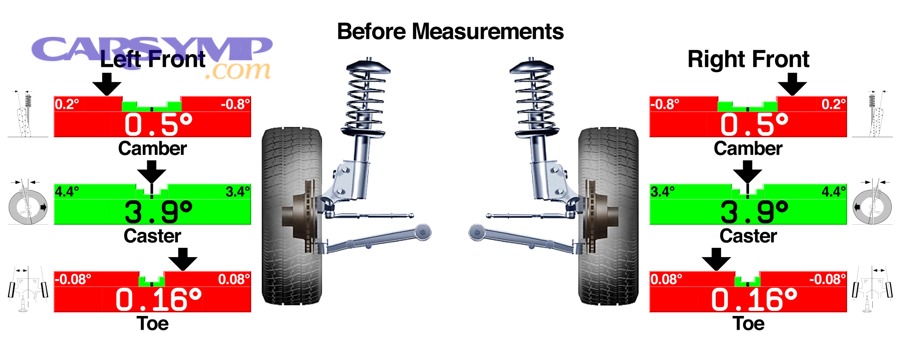
What exactly changes in alignment after new bushings?
After bushings are renewed, the angles that change most often are toe and camber, while caster changes mainly when front control arm geometry or subframe position is involved.
Next, think of alignment as three “pieces” of the wheel’s pose—this is a meronymy relationship where each angle is a part of the whole alignment picture:
- Toe: Whether the tires point inward or outward; small changes can cause big tire wear quickly.
- Camber: Whether the tire leans inward/outward; affects inside/outside edge wear and cornering feel.
- Caster: Steering axis tilt; affects straight-line stability and steering return-to-center.
Why toe is the first angle to verify
Toe is the most sensitive because tiny link or bushing position changes translate into noticeable steering correction, wandering, or rapid tread scrub.
To illustrate, a renewed toe-link bushing can remove compliance that previously let the wheel “self-correct” under light load. After that compliance disappears, the wheel holds the new toe value more consistently—good for control, but bad if that value is off.
When camber shifts more than expected
Camber shifts more when a control arm bushing or subframe mount changes ride height or re-centers the arm’s pivot point.
More specifically, if the suspension sits slightly higher after repair (common when old bushings were collapsed), camber can move toward a less negative position on many designs; if the subframe shifts laterally, cross-camber can appear.
How caster changes show up in daily driving
Caster changes usually show as pull, poor return-to-center, or different steering weight side-to-side.
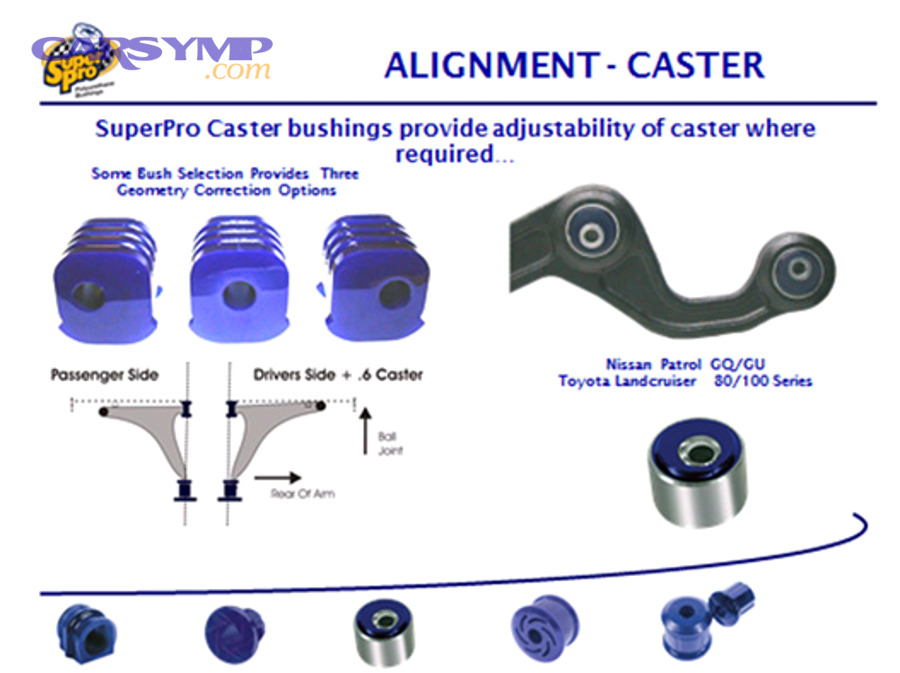
In practice, caster often changes when front control arm fore/aft position is altered—such as when bushings that locate the arm longitudinally are renewed, or when subframe bolts are loosened and re-tightened.
According to research by the University of Michigan from the Transportation Research Institute, in 11/2018, small left-right differences in steering geometry were associated with measurable driver workload increases during straight-road tracking tasks.
After you understand what can change, you can decide how urgently you need the alignment and whether it’s safe to drive before it.
How soon should you get an alignment, and can you drive before it?
You should schedule alignment as soon as practical after repairs that affect locating bushings, and you can usually drive short distances only if the car tracks straight, the steering wheel is centered, and there’s no tire scrub feel.
Next, use a simple how-to decision path:
- Immediate check: On a flat road, confirm the steering wheel sits near center and the car doesn’t drift aggressively.
- Short test drive: Listen for clunks, feel for vibration, and watch for pulling during braking.
- Tire inspection: Look for fresh scuffing, feathering, or a hot rubber smell after a short drive.
- Book alignment: If any symptom appears, align before long-distance driving.
When it is not safe to “wait until next week”
Do not delay if the steering wheel is off-center, the car pulls, you feel instability at highway speed, or you see rapid feathering on the tread.
More importantly, toe-out or toe-in errors can grind tread quickly—so “I’ll wait” can become “I need tires,” even if the suspension repair itself was done perfectly.
Why some shops advise a short settling period
A short settling drive can help bushings seat and let the suspension relax into its true ride height, especially when components were removed and reinstalled.
However, settling should be measured in miles, not weeks. If your repair involved loosening a subframe or replacing major control-arm bushings, booking alignment promptly is still the safer tire-saving choice.
According to research by Bridgestone from the Consumer Tire Education team, in 08/2021, irregular wear patterns were emphasized as a common outcome of prolonged operation with toe errors, even when drivers report the vehicle “feels okay.”
After timing is handled, the next step is identifying the symptoms that specifically point to misalignment rather than normal post-repair feel.

What symptoms indicate misalignment after bushing work?
Misalignment after bushing service most often shows as pulling, off-center steering wheel, wandering, or new uneven tire wear, especially feathering that you can feel by running your hand across the tread.
Next, tie each symptom to a likely angle change so your diagnosis stays specific.
This table links common symptoms after suspension service to the alignment angle most likely involved and what to check next.
| Symptom | Most likely angle | Quick check | What it suggests |
|---|---|---|---|
| Steering wheel off-center | Toe (front) | Drive straight briefly on a flat road | Toe set changed or steering rack centered incorrectly |
| Car pulls left/right | Cross-camber / caster | Swap lanes on same road, compare pull | Left-right geometry imbalance or tire issue |
| Wandering at highway speed | Toe / caster | Check tire pressure first, then alignment | Stability reduced by toe error or caster difference |
| Feathered tread edges | Toe | Hand test across tread blocks | Toe scrub causing rapid irregular wear |
| Inside or outside edge wear | Camber | Compare inner vs outer shoulder | Camber set too negative/positive or ride height changed |
How to separate “normal new tightness” from a real problem
Normal tightness feels like sharper response without drift, while misalignment feels like the car is constantly asking for correction or scrubbing the tires.
To be more specific, new bushings can reduce vibration and make steering feel more direct. But if directness comes with a crooked wheel or a persistent pull, that’s not “new parts feel”—that’s geometry.
When tire wear tells the truth faster than the steering wheel
Tire wear is the fastest evidence because tread shows repeated contact behavior.
Run your palm across the tire: if it feels smooth in one direction and sharp in the other, that feathering is a strong toe clue. Pair that with the timing—if it started right after service, align now.
According to research by Continental from the Tire Technology unit, in 02/2022, irregular wear signatures were highlighted as an early indicator of alignment and suspension geometry issues before handling complaints become severe.
After symptom mapping, you’re ready for the most useful “how-to”: what to do at home before paying for alignment, and how to avoid false alarms.

How can you do a quick at-home check before paying for alignment?
You can do a reliable at-home screening by checking tire pressure, steering wheel center, visual tire wear, and a straight-road tracking test, which together catch most cases where alignment needs after bushing work are urgent.
Next, follow a four-part routine that takes 10–15 minutes:
- Set tire pressure: Inflate all tires to the door-jamb spec so pull isn’t caused by pressure mismatch.
- Visual compare: Look at inner vs outer shoulder wear and any fresh scuffing.
- Steering wheel center: On a flat road, drive straight and see if the wheel sits near level.
- Coast test: Briefly coast (hands lightly on wheel) to feel if the car drifts strongly.
A simple “string check” that can spot big toe errors
A string line check can reveal major toe problems by comparing the distance from a taut string to the front and rear of the tire sidewall.
For a basic version, run string around the car at hub height and measure sidewall-to-string distance at the front and rear of each wheel. Big differences suggest toe is off enough to justify a professional rack alignment.
Why your driveway can lie to you
Driveways are often sloped, and slope can mimic pull, especially with crown and drainage angles.
To reduce false results, test on the flattest road you can find and repeat in the opposite lane direction. If the pull direction changes with road crown, your issue may be road slope or tire conicity rather than alignment.
What to check right after the repair that many people miss
Re-check fasteners and ride-height torque because improperly tightened pivot bolts can preload bushings and shift the stance.
In many suspension designs, tightening control arm pivot bolts at full droop twists the bushing at rest, which can alter ride height and accelerate bushing wear. If you’re unsure, a reputable shop can verify correct procedure.
According to research by the National Highway Traffic Safety Administration from the Vehicle Research & Test Center, in 05/2020, maintenance-related inconsistencies in steering and suspension setup were identified as contributing factors to predictable handling deviations in controlled evaluations.
After your home screening, the key becomes what to request from the shop so the alignment is done correctly for your specific repair type.

What should a shop do during a proper post-bushing alignment?
A proper post-repair alignment includes verifying ride height and component seating, checking for play, centering the steering wheel, and adjusting toe/camber/caster to spec—because alignment is only correct if the suspension is stable and tightened correctly.
Next, use this checklist to make sure you’re paying for results, not just a printout:
- Pre-alignment inspection: Confirm no remaining looseness in ball joints, tie rods, or wheel bearings.
- Ride height verification: Measure stance or compare left/right height where applicable.
- Steering angle sensor considerations: Some cars may need calibration after major steering/suspension work.
- Before/after readings: You should receive a report showing initial and final values.
Why tightening at ride height matters for accuracy
Accuracy depends on true resting position, because bushings behave like springs if they’re twisted at rest.
More specifically, a shop that understands suspension work will settle the car (bounce/roll it) and ensure pivots are effectively at their natural position before final readings, especially after major service.
How alignment differs when the subframe was loosened
Subframe shifts can create cross-angles that a basic toe-only service won’t correct.
If the subframe moved, the shop may need to re-center it and then align, because the “base” that holds the suspension arms has changed. This is where a technician’s process matters as much as the machine.
Where the repair type quietly changes the alignment plan
Not all repairs are equal because some renew compliance while others change geometry.
For example, during bushing replacement, the vehicle can regain its intended arm position and compliance curve. That’s good—but it can also reveal pre-existing alignment drift that the old soft bushings were hiding. Similarly, a Press-in bushing replacement overview often involves pressing components in/out, which can slightly alter seating depth and the arm’s neutral position if not done carefully.
Also, it’s worth acknowledging DIY bushing replacement risks in plain terms: minor bushing clocking errors, incorrect torque position, or damage to an arm bore can create alignment instability that looks like “bad alignment” but is actually a part-fit issue that must be corrected first.
According to research by the Society of Automotive Engineers from the Chassis Systems technical committee, in 09/2021, repeatable alignment outcomes were strongly linked to correct component installation, seating, and load-state during measurement.
After the shop process is clear, you’ll want to know what you should pay, what affects the price, and how to avoid paying for the wrong service tier.

How much does alignment cost after bushing service, and what affects it?
Alignment cost after suspension work depends on whether you need a two-wheel or four-wheel alignment, whether camber/caster are adjustable, and how much time is needed to free adjusters and verify the repair, not just on the machine.
Next, group cost drivers so you can predict your invoice:
- Service type: Front-only vs four-wheel alignment.
- Adjustment complexity: Simple toe set vs camber/caster correction with eccentrics or shims.
- Rust and seized hardware: Time to free adjusters can exceed the alignment itself.
- Diagnostics time: If the shop must first find play or re-seat parts, labor increases.
Two-wheel vs four-wheel: which one matches your repair?
Four-wheel alignment is typically the right choice when rear bushings, trailing arms, toe links, or subframe mounts were involved.
In contrast, front-only alignment may be sufficient after purely front-end bushing service on some platforms—but only if rear angles are confirmed within spec and thrust angle is correct.
Why “toe-and-go” can be a false bargain
Toe-only adjustments can center a steering wheel but still leave camber/caster issues that cause pull or uneven wear.
More importantly, if the repaired bushing affects camber under load, a toe-only service may look fine on paper while tires still wear poorly. Paying once for a complete, correct alignment is usually cheaper than buying tires early.
How to ask for the right documentation
Ask for before/after printouts and confirm the shop measured all four corners, even if only one axle needed changes.
To make it practical, request that the final steering wheel position is verified on a road test if the shop offers it. That last step catches subtle issues that a static machine reading can miss.
According to research by AAA from the Automotive Engineering & Repair division, in 04/2022, preventive service planning was associated with reduced out-of-pocket costs when tire wear drivers (including alignment) were addressed early rather than after visible damage.
After cost clarity, the final piece is prevention—how to keep the new bushings and the new alignment from drifting again.

How can you keep alignment stable and protect new bushings long-term?
You keep alignment stable by maintaining correct tire pressure, avoiding curb impacts, re-torquing where specified, and addressing worn related parts (ball joints, tie rods, shocks) so the new bushings aren’t forced to compensate for other looseness.
Next, prioritize the habits that prevent repeat drift:
- Check tire pressure monthly: Pressure mismatches can mimic pull and accelerate uneven wear.
- Re-inspect after a short break-in: Some platforms benefit from a re-check after a brief settling period.
- Avoid big impacts: Potholes and curbs can shift toe instantly, even with new parts.
- Fix the “supporting cast”: Weak dampers can let the wheel oscillate and scrub tires despite correct static alignment.
Why new bushings sometimes “feel worse” before they feel better
They reduce compliance, so you may notice road texture and steering response more clearly at first.
However, the goal is controlled precision, not harshness. If the car feels twitchy or unstable, it can be a sign that toe is too aggressive or that another component is still loose.
Polyurethane vs rubber and what it means for alignment checks
Stiffer materials can hold geometry more consistently but may transmit more vibration and make minor alignment errors feel more obvious.
So if your car uses a stiffer bushing material, it’s even more important to ensure toe and cross-angles are correct, because the suspension will no longer “blur” those errors with compliance.
A practical re-check schedule that prevents surprise tire wear
Re-check alignment if you feel new pull/wander, after a major pothole strike, or when you rotate tires and notice irregular patterns starting.
For many drivers, pairing alignment review with tire rotation intervals provides a consistent rhythm: you catch early feathering before it becomes irreversible.
According to research by the Rubber Manufacturers Association from the Tire Safety education program, in 07/2019, routine inspections were associated with earlier detection of uneven wear contributors, reducing the likelihood of premature replacement.
After prevention, you’ve covered the main macro context. Next is a clear contextual boundary before we move into edge cases and rapid-fire decisions.

Contextual Border: The sections above cover the main decision logic and process for alignment after suspension bushing service. Below are focused edge cases, quick answers, and rare-but-important scenarios.
FAQ and edge cases for alignment after bushing-related repairs
These answers cover special situations where alignment needs after bushing work can be misunderstood, delayed incorrectly, or confused with other causes like tires, brakes, or steering calibration.
If the steering wheel is crooked but the car drives straight, do you still need alignment?
Yes, because a crooked steering wheel commonly indicates front toe was set without properly centering the steering rack, or toe changed after the repair and hasn’t been corrected.
Next, confirm tire pressures match side-to-side and repeat the straight-road test. If the wheel remains off-center, book alignment so your rack is centered and toe is corrected together, not separately.
After service, the car pulls only while braking—alignment or something else?
Often something else, because brake pull can come from sticking calipers, uneven pad deposits, or tire conicity, even if alignment is fine.
However, if the repair involved control arm bushings, braking can load the arm differently and reveal toe change under load. Next, ask the shop to inspect brakes and measure alignment; the combination gives a clean answer.
Can rear bushings cause “steering” feelings in the front?
Yes, because rear toe and thrust angle can make the vehicle track slightly sideways, forcing the driver to countersteer and making it feel like a front-end issue.
Next, request a four-wheel alignment report that includes thrust angle. If rear toe is off, correcting it often “fixes” a front steering complaint without touching the front.
Do you need recalibration after alignment on newer cars?
Sometimes, because many vehicles use steering angle sensors and driver-assist systems that expect a centered steering wheel and correct geometry.
Next, ask whether your platform requires steering angle sensor calibration or ADAS checks after alignment. This is especially relevant if the steering wheel was off-center or the subframe was loosened during the repair.
