



Labor time for replacing suspension bushings is usually measured in billed hours, but the real duration you’re without the car depends on access, rust, tooling, and whether the job includes follow-up checks like alignment.
Most drivers want one clear answer: “How many hours will this take at a shop?” The practical answer is a range, because a simple clamp-style bushing can be under an hour while a packed subframe job can take most of a day.
You can also reduce surprises by understanding what “book time” means, what steps add hidden time (press work, seized bolts, re-torquing at ride height), and which bushing locations are quick versus complex.
To introduce a new idea, the best estimate comes from matching your vehicle’s bushing location to a realistic workflow—then validating it with the shop’s labor guide and a short set of questions you can ask before you book.
How long does it usually take to replace suspension bushings at a shop?
Most bushing jobs take anywhere from 0.8 hours to 5+ hours of billed labor, with outliers reaching 10–14 hours when access forces major disassembly like subframe shifting or engine cradle work.
To begin, think of labor time as a spectrum: simple access + bolt-off/bolt-on at one end, and deep packaging + press work + seized hardware at the other.

Here are the ranges you’ll see most often in real-world quotes and “book time” references:
- Simple stabilizer-bar clamp bushings (easy access): some labor guides cite about 0.8 hour for both bushings on certain vehicles, when clamps are reachable and nothing is seized.
- Control-arm bushing work (pressing or arm removal): many shops quote roughly 2–2.5 hours per side (around 5 hours total) when the control arm must be removed and bushings pressed.
- Both sides at once with good access: community examples show ~4 hours for left and right lower-arm bushing labor combined in a straightforward shop scenario.
- “Packaging outlier” cases: certain AWD layouts can show estimator-software times like 12–14 hours when the subframe/engine cradle path is required to reach clamps and brackets.
This table helps you map your job type to a realistic labor-time band (it’s not a guarantee; it’s a planning tool). The table helps you decide whether you need a same-day appointment, a loaner, or an overnight drop-off.
| Bushing location (common type) | Typical billed labor time band | What most affects time |
|---|---|---|
| Stabilizer-bar clamp bushings (front or rear) | ~0.8–1.5 hours | Clamp access, rusted bolts, skid plates |
| Control-arm bushings (press-in style) | ~2–5+ hours | Arm removal, press time, seized sleeves, torque-at-ride-height |
| Trailing arm / rear arm bushings | ~3–4+ hours | Puller tool availability, eccentric bolts, corrosion |
| Subframe bushings / cradle bushings | ~6–14 hours | Subframe drop/shift, exhaust removal, alignment and calibration steps |
According to “book time” references mentioned by owners, an ALLDATA labor-time figure around 0.8 hour can apply to straightforward front stabilizer-bar bushing work on some models, which highlights how fast the simple end of the spectrum can be.
In contrast, a community report describes estimator-software output of 12–14 hours for a specific AWD stabilizer-bushing scenario, illustrating how packaging can dominate labor time even when the part looks small.
Which bushing location changes labor time the most: arms, bars, or subframes?
Subframe and deep-mounted bushings change labor time the most, because reaching them can require lowering structural members, while stabilizer-bar bushings are often faster when clamps are accessible.
Next, it helps to group bushings by “access path,” not by how cheap the part is—because labor time is mostly about what must move out of the way.
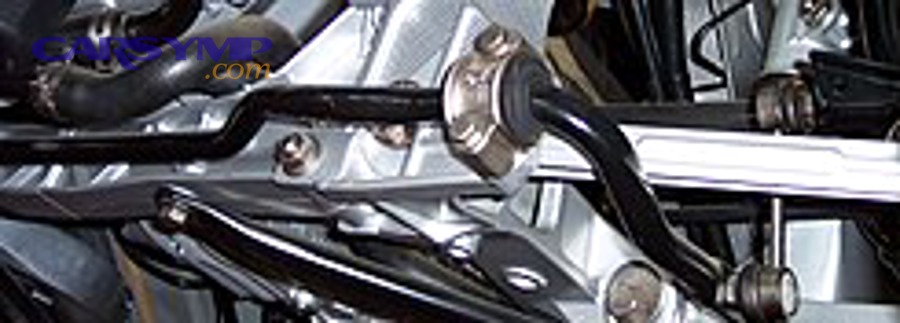
1) Stabilizer-bar clamp bushings (often quick—unless packaging is tight)
These bushings mount the bar to the body with clamps/brackets. On many vehicles, they’re reachable with the car on a lift, so labor can be close to the “book time” minimum. However, AWD crossmembers, undertrays, and exhaust routing can turn a simple clamp job into a long-access job, which is why some estimates balloon on specific models.
2) Control-arm bushings (moderate to long—press work and geometry matter)
Control arms control wheel position. Many designs require removing the arm and pressing a bushing in/out, which adds setup time and risk of delays if sleeves are seized. Real-world shop assumptions around 2–2.5 hours per side are commonly discussed when the arms must come off for pressing.
3) Trailing arm and rear arm bushings (moderate—tooling makes or breaks the timeline)
Rear bushings often benefit from specialized puller/press tools that work on the car. If the shop has the correct tool, the job compresses; without it, the job expands because arms must be removed and handled on a press.
4) Subframe bushings (long—structural work plus follow-up checks)
Subframe bushings can require supporting the drivetrain, loosening mounts, and lowering the cradle. This is where “hours vs duration” diverges: the billed labor can be high, and the car may need extra time for post-assembly checks and a careful road test.
To illustrate the “bar” category, an anti-roll bar links the left and right sides of suspension and is commonly mounted with flexible bushings that attach it to the chassis—making the bushing job either simple (reachable clamps) or complex (packaging constraints).
Theo nghiên cứu của Clausthal University từ Institute of Polymer Materials and Plastics Engineering, vào 03/2019, thử nghiệm mỏi kéo trên cao su có độn carbon black cho thấy vi cấu trúc có thể phát triển khuyết tật theo chu kỳ tải—một nền tảng giải thích vì sao bushing lão hóa thường đi kèm tăng rung/ồn và đôi khi làm việc tháo lắp trở nên khó hơn.
What steps create the “hidden hours” in bushing labor?
The “hidden hours” usually come from access work, seized hardware, press setup, and correct re-torque procedures—not from the few minutes it takes to hold the new bushing in your hand.
To start, break labor time into a predictable workflow so you can see exactly where delays happen.

Step 1: Confirm the correct location before disassembly
A shop that diagnoses by “feel” alone may over-disassemble. The fast path is confirming which corner, which mount, and which joint is transmitting noise or vibration. This is where many owners later want deeper reading on
Step 2: Access and removal (the true labor driver)
Skid plates, splash shields, exhaust heat shields, cross braces, and engine cradles can all add steps. Even when the part is small, every bracket you must remove adds tool time, reassembly time, and a chance for a seized bolt to multiply the hours.
Step 3: Seized bolts and sleeves (the unpredictable multiplier)
Bushing sleeves can rust-bond to bolts. A bolt that should spin out in seconds may need heat, penetrating oil soak time, cutting, or replacement hardware. This is where “book time” can become “clock time + trouble.”
Step 4: Pressing, sizing, and orientation
Some bushings must be pressed with exact depth and orientation. If the shop uses a dedicated bushing kit and a correctly sized driver, the time is stable. If it’s improvised, the time grows and the risk rises.
Step 5: Torque at ride height and verification
Many bonded-rubber bushings should be tightened at normal ride height so the rubber isn’t pre-twisted at rest. That can mean supporting the suspension at a simulated ride height before final torque, then re-checking after a short settle.
In owner discussions, the difference between “straightforward” and “long” is often described as the time spent removing arms and handling press work—shops in one case estimate roughly 2–2.5 hours per side for a lower-arm bushing job, emphasizing how workflow steps dominate the final labor time.
Theo nghiên cứu của RepairPal từ hệ thống ước tính chi phí sửa chữa theo dòng xe, vào 10/2025, phần chi phí lao động cho các hạng mục liên quan đến control arm và stabilizer bushing có thể chiếm tỷ trọng lớn so với phụ tùng—gián tiếp cho thấy thời gian công thợ thường là yếu tố chi phối.
When does pressing bushings in/out add major time compared with swapping complete arms?
Pressing adds major time when the bushing is tight-fit, rust-bonded, or requires precise orientation; swapping a complete arm can be faster when the arm comes assembled and access is straightforward.
However, the better choice depends on labor hours, parts availability, and the quality risk of pressing versus assembly replacement—so it’s worth comparing both paths before you authorize work.

Press-in route (often longer, sometimes more precise)
Pressing is common for arms where the bushing is sold separately. The press route can be ideal if you want OEM-style rubber characteristics and you’re preserving a high-quality arm casting. But it adds labor steps: remove arm, set up on press, push out old bushing, clean the bore, align and press the new bushing, then reinstall and torque correctly.
Complete-arm route (often faster, sometimes more expensive in parts)
Complete arms can reduce labor time because you skip press operations. Some labor estimates for replacing control arms (as assemblies) can be modest because the job is mostly fastener work, especially when hardware cooperates and the design is service-friendly.
Where pressing becomes the time trap
- Seized sleeves: the bushing sleeve rusts to the bolt and must be cut, turning a normal removal into a fabrication-style task.
- Limited clearance: the arm cannot come out without moving a subframe brace, exhaust section, or drivetrain mount.
- Orientation marks: some bushings must be clocked; misalignment can cause premature wear or handling issues.
- Tooling gaps: without the right receiver cups and drivers, press work becomes slow and risky.
To see the technique in action, this video shows a common workflow pattern (arm removal + press or press-style tool use + reassembly). It can help you understand why “hours vs duration” changes when pressing is involved.
A practical example: a forum report lists labor time such as 1.4 hours for one side and 2.2 hours for both sides in a scenario discussed as control-arm bushing work—numbers that can rise quickly once pressing complications appear.
Theo nghiên cứu của Clausthal University từ Institute of Polymer Materials and Plastics Engineering, vào 03/2019, dữ liệu mỏi cho thấy cao su có thể thay đổi theo chu kỳ tải; trong thực tế dịch vụ, điều này củng cố lý do vì sao thay bushing đúng hướng và đúng tiền tải có thể đáng giá thêm thời gian công thợ.
Do you need wheel alignment after bushing work, and does it add time?
Yes, alignment is strongly recommended after major suspension bushing work, and it can add scheduling time even if the alignment procedure itself is relatively quick.
In other words, labor time isn’t only the wrenching hours; it’s also whether the shop can perform alignment immediately or you must book a second visit.

Here’s the practical, shop-facing way to think about alignment after bushing service:
- Minor disturbance: if you truly did not alter adjustable points (and the vehicle has limited adjustment), alignment change may be small—but a check is still smart because worn parts deflect differently than new ones.
- Major disturbance: if arms were removed, subframes shifted, or eccentric bolts were loosened, alignment should be treated as part of the job.
- Tire protection: even small toe changes can scrub tires quickly, so skipping alignment to “save time” can cost more later.
A widely cited practical answer from an automotive Q&A notes that major front suspension work should be followed by alignment, because new parts and reduced deflection can put the geometry in a different position than worn parts did.
How it affects total duration
If the shop has an alignment rack and can do it immediately, your same-day timeline may hold. If not, you may drive away and schedule alignment later, which reduces same-day duration but increases the risk window for uneven wear.
Related “flow” reading often includes deeper comparisons like
Theo nghiên cứu của một cộng đồng kỹ thuật trên Mechanics Stack Exchange, vào 08/2019, các câu trả lời nhấn mạnh rằng sau can thiệp lớn vào hệ thống treo, nên căn chỉnh vì chi tiết mới có dung sai và độ rơ khác, có thể gây mòn lốp nếu bỏ qua.
How can you estimate labor time before booking—without guessing?
You can estimate labor time accurately by combining job category + access notes + labor-guide confirmation, then validating with two or three shop questions that reveal whether your case is “simple” or “packaging outlier.”
Next, use a repeatable checklist so you aren’t relying on vague quotes like “a couple hours” that can turn into a day.

Step 1: Identify the category (bar clamp, arm press, trailing arm, subframe)
You don’t need to be a technician—you just need the general location. Ask the shop to quote labor separately for removal/access versus pressing (if applicable). This often reveals whether they plan to press bushings in-house or swap assemblies.
Step 2: Ask three “time-revealing” questions
- “Do any seized bolts commonly occur on my model?” If they mention cutting bolts or replacing sleeves, you’re closer to the high end.
- “Will you need to lower or shift the subframe/crossmember?” If yes, you’re potentially in the long category.
- “Will final torque be done at ride height?” If yes, they’re following best practice (often worth the time), and you should expect a slightly longer but higher-quality process.
Step 3: Compare “book time” to “clock time”
Book time is the billed standard; clock time is what happens with corrosion, stuck fasteners, and interruptions. If your car is older or has lived in salt, plan closer to the high end even if the quote is optimistic.
Step 4: Decide whether to batch work
If you’re already paying for disassembly and an alignment check, bundling related items can reduce total duration across multiple appointments. But bundling can also increase same-day labor hours, so match it to your schedule.
Community references show how “book time” can be surprisingly low for easy-access stabilizer bushings (around 0.8 hour in one labor-guide mention), while other vehicles show estimator outputs as high as 12–14 hours when access requires major teardown—so your best estimate is matching your layout to the right band before you book.
Theo nghiên cứu của RepairPal từ công cụ Fair Price Estimator theo dòng xe, vào 10/2025, việc tách rõ chi phí lao động và phụ tùng giúp người dùng nhận ra trường hợp “phụ tùng rẻ nhưng công thợ lớn”, từ đó đặt câu hỏi đúng để dự báo thời gian.
What safety and quality checks should be included in the billed time?
Quality bushing labor time should include correct tightening procedure, verification checks, and a controlled road test—because skipping them can create repeat work that costs more hours later.
To make the flow practical, treat these checks as your “time-worth-paying-for” list when you review an estimate.

- Hardware inspection and replacement planning: if bolts are one-time-use (or likely to snap), the shop should plan replacements instead of improvising.
- Correct bushing orientation and seating: especially for directional bushings; wrong clocking can cause pull, noise, or rapid wear.
- Torque at correct suspension position: for bonded rubber, final torque at ride height prevents preloading the rubber at rest.
- Post-assembly clearance checks: confirm no contact with exhaust, shields, or brackets through full steering lock and suspension travel.
- Road test + re-check: confirm no new clunk, pop, or vibration, then re-check fasteners if the procedure calls for it.
If your estimate is unusually low, compare it against real-world labor discussions: for example, community notes for sway links/bushings sometimes cite labor around 1.5 hours for both sides in typical cases, which can be a sanity check that the shop is including basic steps rather than racing the clock.
For deeper ownership planning, many readers pair this labor-time guide with
Theo nghiên cứu của Clausthal University từ Institute of Polymer Materials and Plastics Engineering, vào 03/2019, quan sát về tiến triển khuyết tật vi mô trong cao su dưới tải lặp nhấn mạnh giá trị của lắp đặt đúng quy trình; vì một lắp sai nhỏ có thể làm giảm tuổi thọ và dẫn tới “làm lại,” khiến tổng thời gian thực tế tăng lên.
Contextual Border: The sections above focus on predictable, repeatable labor-time logic (macro context). Next, we’ll shift to rare vehicle-specific factors (micro context) that can suddenly double the hours even when the part looks identical.
Rare vehicle factors that can double labor time
Rust-belt corrosion and seized hardware
Corrosion is the most common “silent multiplier.” A job that is 0.8–1.5 hours on a clean vehicle can become several hours when clamp bolts round off, captive nuts spin, or sleeves fuse to bolts. In practical conversations, this is why people see wildly different labor quotes for the same-looking stabilizer bushing task.
If you want the estimate to be honest, tell the shop whether the car has lived in road-salt areas, whether fasteners show heavy rust, and whether previous suspension work already broke and replaced any hardware.
Subframe drops, exhaust removal, and drivetrain packaging
Some vehicles route exhaust, AWD driveline parts, and braces directly under the mounting brackets that hold bushings. In these cases, the labor isn’t “the bushing”; it’s the access path. That’s how a small stabilizer bushing can be associated with estimator outputs like 12–14 hours on certain layouts.
If a shop mentions “lowering the subframe” or “shifting the cradle,” ask whether the job will require an alignment afterward and whether the vehicle needs any calibrations or torque-angle fasteners replaced.
Active/switchable bars and sensor calibration
Some modern systems include active/switchable anti-roll components or electronic ride systems. Even if the mechanical bushing labor is straightforward, the job can include extra steps for safe handling and verification. The anti-roll bar’s role in linking opposite sides of the suspension makes its mounting points structurally important, so any advanced system attached to it tends to increase caution and time.
Aftermarket polyurethane kits and noise tuning
Aftermarket bushing materials can change installation feel and post-install noise behavior. Polyurethane may require greasing practices, careful fitment, and sometimes follow-up adjustments to prevent squeaks. That doesn’t always add many billed hours, but it can add “duration” if the shop wants a second check after driving.
When comparing options, many owners also review