


Diagnosing a power steering rack leak requires systematic visual inspection of seal points, fluid analysis, and differential testing to confirm the rack as the leak source rather than other steering components. Vehicle owners can perform preliminary diagnostics by checking for fluid puddles beneath the vehicle, examining rack boot conditions, and monitoring steering performance changes, though advanced confirmation may require UV dye tracing or professional pressure testing. The diagnostic process typically takes 30-60 minutes and helps determine whether immediate repair is necessary or if temporary monitoring is acceptable.
To begin, recognizing the primary signs of rack leakage establishes the foundation for accurate diagnosis. Power steering fluid appearing on your garage floor, a declining fluid reservoir level, and steering difficulty during low-speed maneuvers all point toward potential seal failure within the rack assembly. These symptoms differ significantly from pump or hose leaks, which manifest in different locations and under different operating conditions.
Next, understanding where and how to inspect the steering rack physically allows you to pinpoint the exact leak location. The rack housing contains multiple seal points—input shaft seals, tie rod boot seals, and housing gaskets—each producing distinct leak patterns. Accessing these components safely requires proper vehicle lifting, wheel positioning, and sometimes splash shield removal to gain clear visual access.
Moreover, confirming that the rack itself is leaking, rather than the pump, hoses, or reservoir, prevents misdiagnosis and unnecessary repairs. Power steering systems contain multiple fluid-carrying components, and fluid can travel along surfaces, creating misleading evidence. Below, we’ll explore the complete diagnostic methodology, from initial symptom recognition through advanced confirmation techniques, empowering you to accurately identify steering rack leaks and make informed repair decisions.
What Are the Primary Signs Your Power Steering Rack Is Leaking?
The primary signs your power steering rack is leaking include visible fluid accumulation beneath the vehicle’s center front area, power steering fluid level dropping consistently, steering becoming harder especially during parking maneuvers, and grease or fluid visible on the rack boots. These indicators collectively suggest seal degradation within the rack assembly, requiring visual confirmation to distinguish from other steering component failures.
Specifically, identifying these symptoms early prevents progressive damage to the steering system and helps you understand the urgency of repairs. Let’s examine each major sign category in detail.
What Does Power Steering Fluid Look Like Under Your Vehicle?
Power steering fluid appears as a red, amber, or sometimes clear oily liquid with a slick texture, typically pooling in the center-front area of your vehicle directly beneath the engine compartment. Fresh fluid maintains a translucent reddish color similar to automatic transmission fluid, while aged fluid darkens to brown or black and may smell burnt. The fluid’s location provides critical diagnostic information—rack leaks accumulate centrally between the front wheels, while pump leaks appear higher and toward the engine’s accessory drive side.
When inspecting fluid puddles, examine the consistency and color carefully. Power steering fluid feels silky and light-weight compared to the thicker motor oil or the watery consistency of coolant. If you find fluid, place a white paper towel or cardboard beneath the suspected area overnight after cleaning the surface. Fresh accumulation by morning confirms an active leak rather than residual spillage from previous service work.
The fluid’s spread pattern also reveals information about leak severity. Small droplets or minor wetness suggest early seal weepage, while larger puddles indicate advanced seal failure requiring prompt attention. Document the fluid amount over several days to track progression—a leak producing more than a tablespoon of fluid daily warrants immediate inspection and repair consideration.
What Steering Performance Changes Indicate a Rack Leak?
There are four main steering performance changes indicating rack leaks: increased steering effort during low-speed turns, whining or groaning noises when turning the wheel, inconsistent steering response with wandering tendencies, and the steering wheel failing to return to center after turns. These symptoms result from reduced hydraulic pressure as fluid escapes through compromised seals, forcing the pump to work harder while delivering less assistance to the rack mechanism.
Increased steering effort manifests most noticeably during parking lot maneuvers when turning the wheel at low speeds or while stationary. The steering feels heavy and requires more physical force compared to normal operation. This happens because the leaking rack cannot maintain adequate hydraulic pressure within its chambers, diminishing the power assist that normally makes steering effortless. As the leak progresses, the effort required increases proportionally with fluid loss.
Whining or groaning noises accompany rack leaks when the power steering pump cavitates due to low fluid levels. The pump draws air instead of pure fluid, creating distinctive high-pitched whining sounds that intensify when turning. You’ll hear these noises most clearly when executing sharp turns or when the steering is at full lock. The sound indicates the system is operating with insufficient fluid, which can damage the pump if left unaddressed.
Steering wandering and poor return-to-center behavior occur when unequal pressure exists across the rack’s internal chambers due to seal leakage. The vehicle may drift slightly left or right without constant correction, and the steering wheel remains off-center after completing turns. This inconsistent behavior signals that the rack cannot properly control hydraulic flow between its chambers, a direct consequence of internal seal deterioration.
Is Low Power Steering Fluid Always a Sign of Rack Failure?
No, low power steering fluid is not always a sign of rack failure, as fluid loss can originate from the power steering pump, pressure hoses, return hoses, or reservoir connections, making differential diagnosis essential. The rack represents one of several potential leak sources in the hydraulic steering system, and fluid level decline alone doesn’t confirm rack-specific failure without visual inspection of all components.
However, certain patterns suggest rack involvement. If fluid levels drop steadily without visible leaks near the pump or along hose routing, the rack becomes the primary suspect. The rack’s location low and central beneath the vehicle makes leak detection challenging compared to the more accessible pump and hose connections. Additionally, if you observe fluid or wetness specifically on the rack boots or housing while other components remain dry, this directly implicates the rack as the source.
Rate of fluid consumption provides diagnostic clues about leak severity and location. Rapid fluid loss—requiring top-offs every few days—typically indicates hose failure or pump seal damage rather than rack leaks, which usually develop gradually. Rack seal deterioration produces slower, progressive fluid loss, often starting as minor weepage that worsens over weeks or months. Monitor your fluid reservoir weekly, marking the level with a grease pencil to track consumption rate accurately.
The Steering rack failure symptoms extend beyond fluid loss to include the performance changes described previously. When low fluid accompanies hard steering, noise, and handling irregularities, the likelihood of rack involvement increases significantly. Conversely, low fluid with normal steering performance suggests leaks elsewhere in the system, as the rack would exhibit functional symptoms if its seals were compromised.
How Do You Visually Inspect a Power Steering Rack for Leaks?
To visually inspect a power steering rack for leaks, safely raise and support the vehicle, remove any splash shields blocking access, clean the rack assembly with degreaser, then systematically examine the input shaft seal, tie rod boot seals, and rack housing for wetness, fresh fluid, or grease contamination using a bright flashlight. This process requires 45-60 minutes and reveals leak locations through careful observation of seal interfaces and boot conditions.
To better understand the inspection process, we’ll break it down into the specific areas requiring attention, proper access procedures, and the tools necessary for thorough examination.
Where Are the Common Leak Points on a Steering Rack?
The three common leak points on a steering rack are the input shaft seal where the steering column connects, the tie rod boot seals at both ends of the rack housing, and the rack housing body itself including mounting bushings and pressure line connections. Each location exhibits distinct leak characteristics and accessibility challenges during inspection.
The input shaft seal sits at the top of the rack where the steering shaft enters the rack housing, typically located toward the firewall side. This seal prevents fluid from escaping where the input shaft rotates within the rack. Leaks here appear as wetness or fluid accumulation on the upper rack housing, often dripping down the rack body. Input shaft seal leaks may also produce fluid inside the vehicle’s cabin if severe, as fluid can track along the steering column. This leak point requires inspection from above the rack with the wheels straight, as the seal sits in a recessed area.
The tie rod boot seals protect the inner tie rod connections at each end of the rack housing and contain grease that lubricates these pivot points. When rack internal seals fail, hydraulic fluid migrates past the rack piston and contaminates these boots, causing them to swell and eventually tear. Leaking boots appear wet, enlarged, or split, with power steering fluid visibly seeping from the boot edges rather than the thick grease that should be present. Turn the steering wheel fully left and right during inspection, as this extends each side of the rack for better boot visibility. Boot leaks indicate serious internal rack seal failure requiring complete rack replacement or rebuild.
The rack housing body can develop leaks at its pressure and return line connections, where banjo bolts or threaded fittings attach. These connection points use O-rings or copper washers that deteriorate over time, allowing fluid to weep from the fitting interfaces. Housing cracks occasionally occur on high-mileage vehicles, though this is rare. Examine all hard line connections on the rack for wetness, paying particular attention to the underside of fittings where fluid accumulates. Mounting bushing areas should also be checked, as fluid can seep through worn bushings, though this occurs less frequently than seal failures.
What Tools Do You Need to Inspect a Steering Rack?
You need six essential tools to inspect a steering rack: a hydraulic floor jack and jack stands for safe vehicle elevation, a bright LED flashlight or work light for illuminating the rack area, mechanic’s gloves to protect hands, brake cleaner or degreaser for cleaning inspection areas, clean rags or paper towels for wiping surfaces, and optionally a UV dye kit with blacklight for confirming leak sources. These tools enable safe access and clear visibility of the rack assembly’s critical seal points.
The hydraulic floor jack and jack stands provide the working height necessary to examine the rack from below. Never rely on the jack alone—always support the vehicle with properly rated jack stands placed on the vehicle’s designated lift points. For optimal rack access, raise the front of the vehicle until you can comfortably position yourself underneath with adequate headroom. Some vehicles require removal of one or both front wheels to access the rack fully, in which case you’ll also need a lug wrench and wheel chocks for the rear wheels.
A bright LED flashlight or rechargeable work light is critical because steering racks sit in shadowed areas beneath the vehicle, surrounded by other components. The input shaft seal particularly requires strong directional lighting to see clearly. Headlamps work excellently for this task, keeping both hands free for wiping surfaces and manipulating components for better viewing angles. Ensure your light source provides at least 500 lumens for adequate visibility of fluid wetness and seal conditions.
Brake cleaner or automotive degreaser removes accumulated road grime, oil, and dirt that obscure leak evidence. Spray the entire rack assembly, wipe it clean with rags, then allow the vehicle to sit overnight. Re-inspect the cleaned areas the next day—any new wetness or fluid accumulation definitively indicates an active leak rather than old residue. This clean-and-monitor approach eliminates false positives from previous leak evidence or contamination from other sources.
The optional UV dye kit provides definitive leak source confirmation when visual inspection proves inconclusive. Add the fluorescent dye to the power steering reservoir according to package directions, operate the vehicle normally for a day, then use the blacklight in a darkened area to reveal glowing fluid at the exact leak point. This method works exceptionally well when fluid trails from multiple components make source identification difficult.
How Do You Safely Access the Steering Rack for Inspection?
To safely access the steering rack for inspection, park on a level surface, engage the parking brake, chock the rear wheels, raise the front with a floor jack at designated lift points, secure with jack stands rated for your vehicle’s weight, and remove any plastic splash shields or skid plates blocking rack visibility. This procedure takes 15-20 minutes and provides the necessary clearance and stability for thorough underneath examination.
Begin by positioning your vehicle on a flat, paved surface—never attempt inspection on sloped driveways or soft ground where jack stands might shift. Set the parking brake firmly and place wheel chocks behind both rear tires to prevent any rolling motion. Consult your vehicle’s owner manual to locate the proper front jack points, usually reinforced frame sections or pinch weld seams designed to support the vehicle’s weight. Positioning the jack incorrectly can damage the vehicle’s undercarriage or cause dangerous instability.
Raise the vehicle until you achieve approximately 18-24 inches of clearance beneath the front crossmember, providing enough space to slide underneath comfortably. Immediately place jack stands under the vehicle’s designated support points before lowering the jack’s pressure onto the stands. The stands should contact solid frame members, never suspension components, oil pans, or body panels. Give the vehicle a firm shake from the side to verify stand stability before proceeding underneath.
Remove the plastic splash shields or belly pans that often cover the engine compartment underside. These protective panels attach with plastic clips, small bolts, or push-pin fasteners. Keep these fasteners organized for reinstallation, as they prevent road debris from contacting steering components. With shields removed, the steering rack becomes visible running horizontally across the vehicle’s width, typically positioned behind the engine oil pan and forward of the firewall.
For enhanced visibility of the rack boots and tie rod connections, turn the steering wheel fully to one side. This extends the opposite side’s tie rod, pulling that end of the rack outward from the housing for easier boot inspection. Turn the wheel to the opposite lock to examine the other side. Some technicians prefer removing one or both front wheels entirely, which provides superior access but requires additional time and effort. Wheel removal proves particularly valuable when inspecting vehicles with limited rack clearance or extensive undercarriage components crowding the steering area.
How Can You Confirm the Rack Is Leaking vs Other Power Steering Components?
To confirm the rack is leaking versus other power steering components, perform differential diagnosis by cleaning all steering system components, monitoring for fresh fluid accumulation specifically on the rack housing or boots, tracing fluid trails upward to their highest point of origin, and comparing leak locations against the pump, hoses, and reservoir positions. This confirmation process eliminates false attribution and ensures accurate component identification before repair decisions.
More specifically, systematic elimination of other leak sources through location-based analysis provides definitive confirmation. Let’s explore the key differentiation methods.
What’s the Difference Between Rack Leaks and Power Steering Pump Leaks?
Rack leaks occur centrally beneath the vehicle between the front wheels at the steering rack’s location, while power steering pump leaks appear higher in the engine bay near the accessory drive belt area, typically on the driver’s side of the engine. The spatial separation between these components—usually 12-18 inches vertically and 8-12 inches horizontally—creates distinct fluid accumulation zones that rarely overlap when identified correctly.
Power steering pump leaks originate from the pump’s shaft seal, pressure fitting, or reservoir connection, all positioned in the upper engine compartment where the pump attaches to the engine block or mounting bracket. When the pump leaks, fluid drips onto components below it, including the engine block, oil pan, and potentially the rack itself, creating misleading evidence. However, the pump area will show the heaviest fluid concentration, with decreasing wetness as you examine components further below.
In contrast, rack leaks show maximum fluid concentration directly on the rack housing, boots, or seal areas, with minimal or no fluid presence on components above the rack. If you observe wetness on both the pump and rack, trace the fluid pattern carefully. A wet pump with a dry rack indicates pump failure, while a dry pump with wet rack confirms rack leakage. The scenario of both components being equally wet suggests pump leakage dripping onto the rack below.
Steering symptom patterns also differentiate these leak sources. Pump leaks often produce noise earlier in the failure progression because the pump cavitates as it loses fluid and draws air. Rack leaks typically cause steering effort changes and handling issues before noise becomes prominent, as the rack loses hydraulic assist capacity. Monitoring which symptom appeared first provides supporting evidence for location diagnosis.
How Do You Trace Power Steering Fluid to Its Source?
To trace power steering fluid to its source, start from the lowest visible wetness point and work systematically upward, following the fluid trail to the highest wet component, as gravity causes fluid to drip downward from the actual leak origin. This upward tracing method prevents misidentifying contaminated lower components as leak sources when they’re merely catching drips from failures above.
Begin your trace at the lowest point where you observe fluid, typically on the subframe, crossmember, or rack housing itself. Use clean rags to wipe this area completely dry, removing all existing fluid. Wait 15-30 minutes with the vehicle running and the steering wheel turned lock-to-lock several times to pressurize the system and promote leakage. Return to inspect the previously cleaned area for new fluid accumulation.
If new fluid appears, examine the components directly above this wet spot. Clean upward progressively, wiping each component dry and allowing time for fresh leakage to appear. Continue this process until you identify the highest component showing wetness—this represents your leak source. All components below this point show wetness only because fluid dripped onto them from above.
Pay special attention to hose routing and hard line paths. Power steering hoses snake through the engine compartment, sometimes creating complex paths where fluid can travel along the hose exterior before dripping. Follow each hose from end to end, checking for wetness along its entire length. The leak point occurs where wetness first appears as you trace from bottom to top, not necessarily where the most fluid accumulates.
For particularly challenging diagnostics, the clean-and-monitor approach over several days provides conclusive evidence. After thoroughly cleaning all steering components, mark the power steering fluid reservoir level with a permanent marker or piece of tape. Drive the vehicle normally for 2-3 days, checking fluid level daily. When you re-inspect underneath, the leak location will show fresh, clean fluid on an otherwise dirt-free surface, making source identification unmistakable.
Are Leaking Rack Boots Always a Sign of Seal Failure?
No, leaking rack boots are not always a sign of seal failure, though they frequently indicate serious internal rack seal deterioration requiring attention. Rack boots can leak from external physical damage, torn boot material, loose clamps, or contamination from external sources, though the most common cause remains internal rack seal failure allowing pressurized fluid to migrate into boot cavities.
However, distinguishing the cause requires examining the boot contents and leak pattern. Rack boots should contain thick, clean grease that lubricates the inner tie rod ball joint connections. If you squeeze a boot and feel it thin and deflated with power steering fluid visibly seeping from tears or edges, this confirms internal rack seal failure. The rack’s internal piston seals have failed, allowing high-pressure hydraulic fluid to bypass the piston and enter the boot area, displacing the protective grease.
Conversely, if a boot shows external damage—cuts, abrasion from road debris, or age-related cracking—but still contains grease rather than fluid, the boot itself failed mechanically without rack seal involvement. This scenario allows dirt and moisture into the tie rod joint but doesn’t indicate rack internal problems. Boot replacement alone may suffice, though mechanics often recommend rack replacement given the labor overlap and the likelihood of internal seal failure occurring soon.
Boot swelling provides a diagnostic clue about internal seal condition. Boots contaminated with power steering fluid swell noticeably larger than their normal size due to fluid pressure and rubber expansion from fluid contact. Compare both sides of the rack—if one boot appears significantly larger or feels fluid-filled while the other remains normal, internal seal failure on the swollen side is confirmed. Symmetrical boot swelling suggests more advanced bilateral seal failure.
The Clunking and looseness in steering causes often accompanies leaking boots when inner tie rod joints lose lubrication due to grease displacement. If you experience both boot leaks and steering play or clunking over bumps, the tie rod joints may have suffered wear from loss of protective grease, adding another repair dimension beyond the rack seals themselves.
What Advanced Diagnostic Methods Confirm Rack Seal Failure?
Advanced diagnostic methods that confirm rack seal failure include UV fluorescent dye tracing with blacklight inspection, dynamic leak testing while turning the steering through its range, professional pressure testing of the steering system, and component-specific leak isolation using clean-and-monitor protocols over multiple days. These techniques provide definitive confirmation when visual inspection yields ambiguous results or when multiple components show contamination.
Especially when dealing with slow seepage or intermittent leaks, these advanced methods eliminate diagnostic uncertainty. Let’s examine each approach in detail.
How Does UV Dye Help Diagnose Steering Rack Leaks?
UV fluorescent dye helps diagnose steering rack leaks by adding a glowing tracer to the power steering fluid that illuminates under blacklight, revealing the exact leak origin point even when multiple components show fluid contamination. Add the dye to the power steering reservoir, operate the vehicle normally for 24-48 hours, then inspect all steering components with a UV blacklight in a darkened environment to see bright fluorescent fluid at the precise leak source.
The dye application process begins with ensuring the power steering reservoir has adequate fluid capacity to accept the dye additive. Most UV dye bottles contain enough tracer for one steering system, typically 1-2 ounces of concentrate. Pour the dye into the reservoir, then start the engine and turn the steering wheel lock-to-lock ten times to circulate the dyed fluid throughout the system. This circulation ensures the dye reaches all components, including the rack’s internal chambers.
Drive the vehicle normally for at least 50 miles or over two days, allowing the leak to deposit dyed fluid at its source. During this period, the leak continues at its normal rate, accumulating fluorescent fluid that will glow under UV inspection. Avoid adding additional fluid during this time, as dilution reduces dye concentration and visibility. If fluid level drops significantly, note the consumption rate for repair urgency assessment.
Perform the UV inspection in a darkened area such as a garage with doors closed or after sunset. Use a high-quality UV blacklight—LED blacklights work more effectively than older fluorescent types—and scan all steering components systematically. The leak point will show bright yellow-green fluorescence distinctly different from the ambient purple UV glow. Focus on the rack housing, boots, input shaft area, and all hose connections. The brightest, most concentrated fluorescence indicates the primary leak source.
UV dye tracing excels when fluid has contaminated multiple components through dripping or spray dispersion. Instead of guessing which wet component actually leaks, the fluorescent trail leads directly to the origin. This method proves particularly valuable on vehicles with poor rack accessibility where visual inspection is compromised by surrounding components. After identifying the leak with UV confirmation, clean the dye residue with brake cleaner before repairs to prevent false positives during post-repair verification.
Can You Diagnose a Rack Leak While Driving?
Yes, you can diagnose a rack leak while driving by performing dynamic steering tests that reveal symptoms manifesting specifically under load conditions, though visual confirmation with the vehicle stationary and raised remains necessary for definitive diagnosis. Dynamic testing involves executing specific steering maneuvers while monitoring for hard steering, noise, fluid pressure loss indicators, and handling abnormalities that become apparent only when the steering system operates under real-world stress.
To better understand dynamic diagnosis, execute these specific test procedures during safe driving conditions. Choose an empty parking lot or quiet street where you can perform slow-speed maneuvers without traffic concerns. Begin with stationary steering tests—with the vehicle stopped, turn the wheel fully to each lock position. Listen for whining or groaning noises indicating fluid cavitation from low levels. Note any increased steering effort or rough feel through the wheel.
Proceed to slow-speed turning tests by executing tight circles at parking lot speeds in both directions. A leaking rack often shows increased steering effort during these maneuvers because the compromised seals cannot maintain adequate hydraulic pressure. You may feel the steering temporarily stiffen mid-turn, then ease as pressure equalizes. This inconsistent assist indicates internal seal problems allowing pressure loss between rack chambers.
Highway stability testing reveals rack leak effects on handling. Drive at moderate highway speeds (45-55 mph) on a straight road, briefly releasing the steering wheel to observe vehicle tracking. A vehicle with rack seal failure may wander or require constant minor corrections, as unequal pressure distribution affects centered steering geometry. The steering wheel may also sit slightly off-center when driving straight, another indicator of pressure imbalance within the rack.
After completing dynamic tests, immediately perform a stationary inspection while components remain warm and leaks are most active. Pull into a safe area, turn off the engine, and examine the rack area with a flashlight while the system is still pressurized and warm. Leaks often seep more readily when components are at operating temperature, making fresh wetness easier to spot than during cold inspection.
Dynamic diagnosis provides supporting evidence but cannot replace visual confirmation. Symptoms experienced during driving increase suspicion of rack failure and justify thorough inspection, but only physical examination of the rack seals, boots, and housing provides definitive leak source confirmation.
Should You Perform a Pressure Test on the Steering System?
Yes, you should perform a pressure test on the steering system when leak source diagnosis remains unclear after visual inspection and dynamic testing, though this typically requires professional equipment including a pressure gauge set, specialized fittings, and technical knowledge to interpret results safely. Pressure testing measures the steering system’s hydraulic pressure during various operating conditions, revealing internal seal failures, pump performance issues, or restriction problems that aren’t visually apparent.
However, most vehicle owners lack the specialized pressure testing equipment and should consider this a professional diagnostic step. Steering system pressure testers cost $200-800 and include high-pressure gauges rated to 2,000-3,000 PSI, adapter fittings for various vehicle applications, and flow meters for comprehensive system analysis. The test connects in-line with the pump’s pressure hose, allowing real-time pressure monitoring while operating the steering.
Professional technicians use pressure testing to differentiate between rack seal failure and other steering system problems. Normal power steering system pressure ranges from 1,000-1,500 PSI depending on vehicle type, measured at idle with the steering centered. When turning the wheel to full lock, pressure should increase to the relief valve setting, typically 1,200-1,800 PSI. Rack seal failure shows as abnormal pressure drop during turning or inability to reach specified maximum pressure, indicating internal bypass where fluid crosses the rack piston through failed seals.
The testing procedure requires safety precautions due to high hydraulic pressures involved. Improper connection or gauge failure can result in high-pressure fluid injection injuries or burns from hot fluid spray. Additionally, interpreting pressure readings requires understanding of specific vehicle specifications—pressures vary significantly between vehicle makes and rack types. Without manufacturer specifications for comparison, pressure values provide limited diagnostic value.
For DIY diagnostics, visual inspection combined with UV dye tracing provides sufficient confirmation for most rack leak scenarios. Reserve professional pressure testing for situations where the Steering rack repair cost estimate justifies the diagnostic expense, particularly when symptoms suggest problems beyond simple seal leakage, such as internal rack damage, control valve failure, or pump deficiencies that might influence repair approach decisions.
According to data from automotive repair facilities, approximately 85% of rack leak diagnoses are confirmed through visual inspection and symptoms alone, with only 15% requiring advanced pressure testing for definitive confirmation, typically in cases involving multiple steering system issues or warranty claim documentation requirements.
What Should You Do After Confirming a Power Steering Rack Leak?
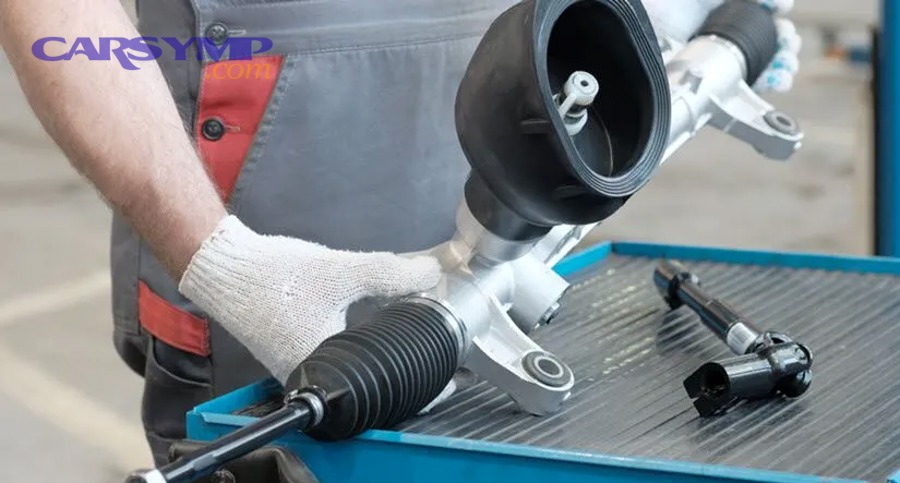
After confirming a power steering rack leak, evaluate repair versus replacement options based on leak severity, vehicle age, and cost-effectiveness, considering that complete rack replacement typically costs $500-1,500 including parts and labor while temporary stop-leak additives provide short-term relief for minor seepage but don’t address underlying seal deterioration. Your decision should weigh the leak’s progression rate, steering safety implications, and whether your vehicle’s value justifies major steering system investment.
Especially important is understanding the realistic expectations and limitations of various repair approaches. Let’s explore the key decision factors.
Should You Repair or Replace a Leaking Power Steering Rack?
Replacement wins for long-term reliability and safety when rack seals show moderate to severe leakage, while repair through seal kits is best for minor input shaft seal weeps on vehicles with simple rack designs and readily available rebuild kits, though rack replacement remains optimal for most situations given labor costs and failure recurrence risks. The decision depends on leak location, vehicle value, rack design complexity, and mechanic skill level.
To illustrate the comparison, consider these key decision criteria. Leak location significantly impacts repair viability—input shaft seal leaks at the rack’s top sometimes allow seal replacement without complete rack removal, reducing labor costs to $200-400. However, tie rod boot leaks indicating internal piston seal failure require complete rack disassembly, making replacement more practical since labor costs approach replacement levels while reliability remains questionable.
Vehicle age and value influence the repair-versus-replace decision through cost-benefit analysis. On vehicles worth less than $3,000-4,000, a rebuilt or remanufactured rack costing $150-300 plus $300-600 labor provides adequate service life without over-investing in aging transportation. Conversely, newer vehicles or those you plan to keep long-term warrant new OEM racks costing $400-800 plus labor, ensuring maximum longevity and maintaining vehicle value.
Rack design complexity affects rebuild feasibility. Older vehicles with simple rack-and-pinion designs using basic seal kits and minimal electronics allow skilled mechanics to rebuild racks successfully. Modern vehicles integrate electronic sensors, variable-ratio steering, and complex valve assemblies into rack housings, making rebuilds impractical or impossible without factory tooling. These racks require replacement rather than repair, with OEM units ensuring proper sensor integration and steering calibration.
The following table compares repair and replacement approaches across critical factors:
| Factor | Rack Seal Repair/Rebuild | Complete Rack Replacement |
|---|---|---|
| Cost Range | $200-600 (parts + labor) | $500-1,500 (parts + labor) |
| Time Required | 3-6 hours | 2-4 hours |
| Long-term Reliability | Moderate (50-70% success rate) | High (95%+ with quality parts) |
| Best For | Minor external seal leaks, older simple racks, budget constraints | Internal seal failure, boot leaks, newer vehicles, long-term ownership |
| Warranty Coverage | Limited (30-90 days typical) | Extended (1-3 years typical) |
| Failure Recurrence Risk | Moderate to high (other seals age similarly) | Low with quality parts |
Steering rack failure symptoms severity also guides this decision. Minor seepage requiring fluid top-off monthly might justify attempting seal repair on a tight budget, accepting potential re-repair within 6-12 months. Severe leaks causing steering difficulty, safety concerns, or weekly fluid consumption demand immediate replacement to restore safe vehicle operation regardless of cost.
Can You Temporarily Stop a Power Steering Rack Leak?
No, you cannot permanently stop a power steering rack leak with temporary measures, though power steering stop-leak additives may slow minor seepage for weeks or months by causing seal swelling, while regularly topping off fluid maintains steering function temporarily until proper repair can be scheduled. These temporary approaches do not address the underlying seal deterioration and should never replace proper repair on safety-critical steering components.
However, understanding when temporary measures prove acceptable versus dangerous is critical. Power steering stop-leak additives contain seal-swelling agents that expand rubber seals slightly, potentially reducing leak rates on minor seeps from aging but not yet failed seals. Add these products only to minor leaks—slight wetness without dripping—and monitor closely for effectiveness over two weeks. If leakage continues unabated or steering symptoms worsen, the additive failed and replacement becomes urgent.
These additives carry risks that limit their usefulness. The seal-swelling chemicals can cause seals to over-expand, creating friction and resistance in the rack mechanism, potentially causing complete seal failure sooner than natural deterioration. They may also damage certain seal materials, particularly in modern racks using synthetic compounds designed for specific hydraulic fluids. Never use stop-leak products in vehicles under warranty, as they typically void steering system coverage.
Topping off fluid represents the most common temporary measure for managing minor rack leaks. Purchase the correct power steering fluid type for your vehicle—specifications vary between manufacturers—and check fluid levels weekly. Maintain the level between the minimum and maximum marks to prevent pump cavitation and steering failure. Track fluid consumption carefully; if consumption exceeds one bottle (12-16 ounces) monthly, the leak severity demands immediate professional attention.
Temporary measures are acceptable only when specific conditions exist: the leak remains minor with no steering performance degradation, you’ve scheduled repair within 2-4 weeks, you check fluid levels every few days to prevent complete loss, and you avoid extended highway driving or situations where sudden steering failure creates danger. Never rely on temporary fixes for severe leaks, leaks accompanied by steering difficulty, or situations where you cannot monitor fluid levels frequently.
The steering rack repair cost estimate for proper replacement averages $800-1,200 for most vehicles, while temporary stop-leak products cost $10-25 and fluid top-offs cost $5-10 weekly. Over 2-3 months of temporary management, you’ll spend $100+ on fluids and additives without addressing the problem, making prompt repair both safer and more economical in most situations.
How Do Rack Leak Severity and Vehicle Type Affect Repair Decisions?
Rack leak severity determines repair urgency with minor seepage allowing scheduled repair within weeks while severe leaks requiring daily fluid top-offs demand immediate attention, and vehicle type affects repair approach with domestic vehicles typically using more affordable aftermarket racks while European luxury vehicles require expensive OEM components with specialized installation procedures. These combined factors create a decision matrix weighing safety, cost, and practicality.
Leak severity classification helps prioritize repair timing. Minor leaks show as occasional dampness on rack boots or housing, requiring fluid addition every few weeks and producing no steering symptoms. These allow repair scheduling around budget and convenience, though you shouldn’t delay beyond 4-6 weeks to prevent progression. Moderate leaks create visible dripping, require weekly fluid top-offs, and may cause intermittent steering effort increases during parking maneuvers. These demand repair within 1-2 weeks to prevent safety issues. Severe leaks produce puddles under the parked vehicle, need daily or every-other-day fluid additions, and cause consistent hard steering or noise. These require immediate attention—driving with severely leaking racks creates steering failure risk if fluid depletes completely.
Vehicle type dramatically impacts parts costs and availability. Domestic vehicles (Ford, GM, Chrysler) and mainstream Asian imports (Toyota, Honda, Nissan) benefit from competitive aftermarket rack markets with remanufactured racks costing $150-400 and new aftermarket units at $300-600. These vehicles also feature simpler rack designs allowing straightforward replacement by independent shops, keeping labor costs reasonable at $200-400.
European luxury vehicles (BMW, Mercedes-Benz, Audi) and high-performance models present cost challenges. Their racks integrate complex electronics, active steering systems, or specialized geometries requiring OEM replacement racks costing $800-2,000. Labor increases due to specialized procedures, programming requirements, and technician training, often reaching $600-1,000. For these vehicles, the total steering rack repair cost estimate of $1,500-3,000 may approach or exceed the practical repair threshold on older models.
Truck and SUV racks fall between these extremes. Full-size pickups and SUVs use robust rack assemblies handling higher loads, with remanufactured racks costing $300-700 and labor at $300-600. Four-wheel-drive systems sometimes require transfer case removal or axle disconnection for rack access, increasing labor complexity and cost. Off-road modified vehicles with lifted suspensions may need steering geometry correction after rack replacement, adding alignment complexity.
The decision tree combines these factors: on a 10-year-old domestic sedan with moderate leak severity, a $450 remanufactured rack plus $300 labor totaling $750 represents reasonable investment. The same leak severity on a 15-year-old luxury European vehicle worth $8,000 facing a $2,500 rack replacement may justify seeking alternatives like qualified used racks or considering vehicle replacement if other systems also need attention.
What’s the Difference Between Hydraulic and Electric Power Steering Rack Issues?
Hydraulic power steering racks use pressurized fluid to provide steering assist and can develop leaks from seal failures, while electric power steering (EPS) systems use electric motors with no hydraulic fluid and cannot leak but may fail from motor or sensor malfunctions. This fundamental design difference means leak diagnosis and repair techniques apply exclusively to hydraulic systems, with EPS systems requiring entirely different troubleshooting focused on electrical components.
The operational principles create distinct failure modes. Hydraulic racks contain a piston within the rack housing, with fluid pressure applied to each side of the piston creating turning force. Seals around this piston and at the input shaft prevent fluid leakage while allowing piston movement. As these seals age, they develop leaks following the patterns described throughout this article. The hydraulic pump, driven by the engine accessory belt, provides the pressure, creating multiple leak points throughout the system including hoses, pump seals, and rack seals.
EPS systems eliminate hydraulic components entirely, using an electric motor mounted either on the steering column (column-assist EPS) or on the rack itself (rack-assist EPS). When you turn the wheel, torque sensors measure input force and a control module commands the electric motor to provide proportional assist. This system contains no fluid except minimal grease in joints, eliminating leak potential. EPS failures manifest as assist loss, excessive assist, or complete system shutdown, typically accompanied by dashboard warning lights rather than fluid puddles.
Diagnostic approaches differ fundamentally between these systems. Hydraulic rack diagnosis follows the visual inspection, symptom analysis, and fluid tracing methods detailed in this guide. EPS diagnosis requires scan tools to read trouble codes, electrical testing of motors and sensors, and software calibration checks. A mechanic equipped for hydraulic steering work may lack the diagnostic equipment and training for EPS systems, and vice versa.
Cost and complexity comparisons favor neither system universally. Hydraulic rack replacement costs $500-1,500 as discussed, while EPS rack/motor assemblies range from $400-2,000 depending on type and vehicle. Hydraulic systems require ongoing maintenance through fluid changes and leak monitoring, while EPS systems operate maintenance-free but fail unpredictably when electronic components deteriorate. Hydraulic systems provide more steering road feel preferred by driving enthusiasts, while EPS systems offer better fuel economy through elimination of the belt-driven pump parasitic loss.
Modern vehicles increasingly adopt EPS for efficiency and integration with driver assistance features like lane keeping and self-parking. If your vehicle exhibits steering assist problems but you find no fluid leaks or power steering reservoir, you likely have EPS requiring electrical diagnosis rather than hydraulic leak repair. Consult your owner’s manual or check for a power steering fluid reservoir—its absence confirms EPS, while its presence indicates hydraulic steering subject to the leak diagnosis methods covered in this guide.
According to automotive industry data, approximately 70% of vehicles manufactured after 2015 utilize electric power steering, while vehicles before 2010 predominantly feature hydraulic systems, creating a transitional period where both technologies coexist in the vehicle population.
This complete guide equips vehicle owners with the knowledge to diagnose power steering rack leaks systematically, from initial symptom recognition through advanced confirmation techniques. By understanding leak patterns, inspection procedures, and the differentiation between rack and other component failures, you can approach steering issues confidently and make informed repair decisions. Whether you choose DIY diagnosis or professional service, this foundation ensures accurate problem identification and appropriate repair scope determination, ultimately maintaining your vehicle’s steering safety and performance.