


Vehicle owners can recognize a bent rim through seven key warning signs: excessive vibration while driving, vehicle pulling to one side, repeated air pressure loss, uneven tire wear patterns, unusual thumping noises, poor braking performance, and visible damage on the rim surface. These symptoms indicate wheel damage that compromises both vehicle safety and performance, requiring immediate attention to prevent tire blowout, loss of vehicle control, or damage to other critical components like the suspension and braking systems.
Understanding how to identify bent rim symptoms early protects you from costly repairs and dangerous driving situations. The warning signs manifest differently depending on whether the damage affects the front or rear wheels, with front rim damage typically causing steering wheel vibration while rear wheel bent issues produce seat and floor vibrations. Recognizing these distinctions helps vehicle owners pinpoint the exact location of the problem and assess the urgency of rim repair needs.
Beyond symptom recognition, knowing what causes rims to bend and how to differentiate bent rim issues from similar problems like unbalanced tires or wheel misalignment empowers you to make informed decisions. The severity of rim damage determines whether professional straightening can restore the wheel or whether complete replacement becomes necessary, with repair costs typically ranging from $100 to $400 per wheel depending on the extent of deformation and material type.
Safety concerns with welded wheel repairs and proper Alloy wheel crack detection and risks require special attention, as compromised wheel integrity can lead to catastrophic failure at highway speeds. Next, let’s explore exactly what constitutes a bent rim and why this seemingly minor issue demands your immediate attention.
What Is a Bent Rim and Why Does It Matter?
A bent rim is a wheel component that has become distorted or deformed from its original circular shape, typically resulting from impact damage to the metal edge that holds the tire in place. This deformation compromises the rim’s ability to maintain proper tire seal, create balanced rotation, and support the vehicle’s weight distribution safely.
To understand why bent rims matter, consider that rims serve as the critical interface between your tires and vehicle. The rim’s outer edge creates an airtight seal with the tire bead, maintaining proper air pressure that supports thousands of pounds of vehicle weight. When this metal structure bends even slightly, it disrupts the seal integrity, throws off the wheel’s rotational balance, and creates dangerous driving conditions that affect steering precision, braking effectiveness, and overall vehicle control.
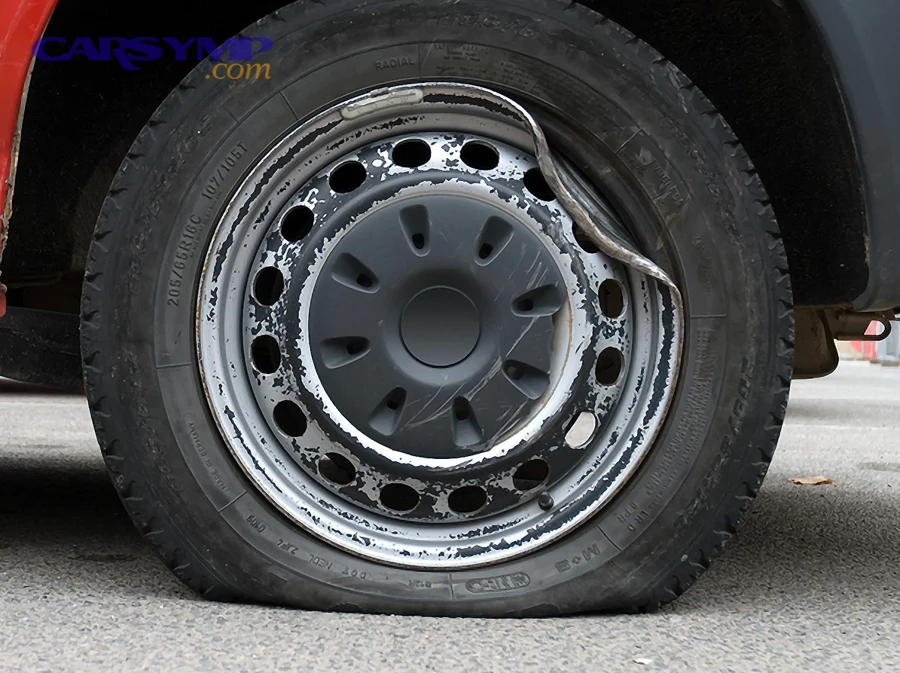
Vehicle owners most commonly encounter bent rims after hitting potholes at high speeds, striking curbs during parking maneuvers, or driving over speed bumps too aggressively. The impact forces transfer directly to the wheel’s metal edge, causing it to compress, fold, or warp. Even impacts that seem minor at the moment can create significant deformation, particularly in aluminum alloy rims which are lighter but more susceptible to bending than traditional steel rims. The damage may occur on the visible outer edge or the hidden inner rim surface, making detection challenging without proper inspection techniques.
According to data from the Tire Industry Association, approximately 35% of wheel-related vehicle issues stem from impact damage to rims, with bent rims accounting for the majority of these cases. The study found that delayed rim repair increases the risk of tire failure by 300% and leads to secondary damage costing an average of $800 in additional suspension and alignment repairs.
What Are the 7 Key Warning Signs of a Bent Rim?
The seven key warning signs of a bent rim include excessive vibration or shaking, vehicle pulling to one side, repeated tire pressure loss, uneven tire wear patterns, unusual thumping or clicking noises, poor braking performance, and visible rim damage. These symptoms manifest progressively and often worsen with vehicle speed, indicating the severity and location of the wheel bent damage.
Recognizing these warning signs requires attention to changes in your vehicle’s normal operation. Below, each symptom is explained in detail to help you accurately diagnose potential rim damage.
1. Do You Feel Excessive Vibration or Shaking While Driving?
Excessive vibration represents the most common and noticeable symptom of a bent rim, occurring when the deformed wheel rotates unevenly and disrupts the vehicle’s balance. The location where you feel the vibration reveals which wheel is damaged—steering wheel vibration indicates front rim damage, while seat or floorboard vibration points to rear wheel issues.
Specifically, vibration from a bent rim intensifies as your speed increases because the rotational imbalance becomes more pronounced at higher RPMs. At city speeds of 25-35 mph, you might notice only subtle steering wheel feedback, but highway speeds of 60-70 mph typically amplify the shaking to unmistakable levels. This progressive intensity helps distinguish bent rim vibration from other causes like worn shock absorbers, which produce consistent vibration regardless of speed.
The bent section of the rim creates an up-and-down motion as it rotates, causing the tire to bounce slightly with each revolution. This rhythmic bouncing transfers through the suspension components to the steering column and vehicle cabin. Front-end vibration feels most pronounced in the steering wheel because the bent rim affects the steering linkage directly, while rear rim damage transmits vibration through the vehicle’s floor pan and seats since these wheels aren’t connected to the steering system.
You can differentiate bent rim vibration from unbalanced tire vibration by noting the pattern—bent rims create a wobbling sensation that feels irregular and may include lateral (side-to-side) movement, whereas unbalanced tires produce a consistent up-and-down bouncing without the wobble component. Additionally, bent rim vibration often accompanies a thumping sound that matches the wheel’s rotation speed, providing an audible confirmation of the visual symptoms.
2. Is Your Vehicle Pulling to One Side or Showing Poor Handling?
A vehicle pulls to one side or exhibits poor handling when a bent rim causes uneven tire contact with the road surface, creating asymmetric resistance that draws the vehicle toward the damaged wheel. This symptom indicates that the rim deformation has significantly altered the wheel’s geometry, affecting steering precision and directional stability.
Moreover, the pulling sensation becomes particularly noticeable when you release your grip on the steering wheel slightly while driving on a straight, level road. A vehicle with a bent rim will drift toward the side with the damaged wheel because the deformed rim prevents the tire from maintaining consistent ground contact. The tire’s contact patch—the area where rubber meets pavement—becomes irregular and unstable, creating varying friction points that pull the vehicle off course.
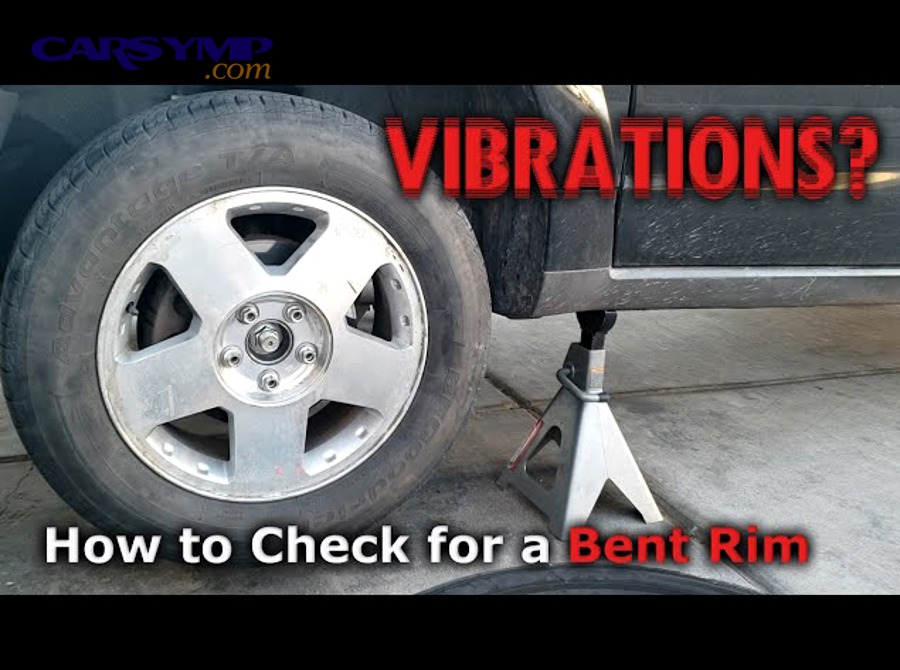
Handling problems from bent rims extend beyond simple pulling to include difficulty maintaining lanes on highways, imprecise steering response, and reduced corner stability. When you attempt to steer through curves, the bent rim’s irregular rotation makes the vehicle feel unpredictable and loose, as if the tire is slipping or not gripping properly. This compromised handling becomes dangerous in emergency maneuvering situations where split-second steering corrections are necessary to avoid collisions.
The severity of pulling correlates directly with the degree of rim deformation. A minor bend of 1-2 millimeters might cause subtle drift that requires constant steering correction, while severe bends exceeding 5 millimeters create pronounced pulling that makes the vehicle nearly impossible to keep straight without aggressive steering input. Unlike alignment issues that cause gradual, consistent pulling, bent rim pulling often feels jerky or irregular because the deformation creates varying resistance as the wheel rotates through different positions.
Professional mechanics can measure the extent of rim deformation using specialized equipment that detects variations as small as 0.5 millimeters, helping determine whether rim repair through straightening is possible or if replacement is necessary.
3. Are Your Tires Losing Air Pressure Repeatedly?
Tires lose air pressure repeatedly when a bent rim fails to create a proper seal with the tire bead, allowing compressed air to escape slowly through microscopic gaps between the rim edge and rubber. This chronic air loss indicates that the rim’s sealing surface has been compromised by deformation, requiring immediate inspection to prevent sudden tire failure.
In addition to gradual pressure loss, bent rims create conditions for rapid deflation or catastrophic blowouts. The tire bead—the reinforced inner edge of the tire designed to lock against the rim’s outer lip—cannot maintain consistent contact when the rim surface is warped or bent. Even a small gap of 1-2 millimeters allows pressurized air to escape, causing your tire pressure to drop 2-5 PSI per day compared to the normal loss rate of less than 1 PSI per month in healthy tire-rim combinations.
You’ll notice this symptom through frequent tire pressure monitoring system (TPMS) warnings, the need to add air every few days, or visible tire sagging when the vehicle sits overnight. The pattern of pressure loss helps diagnose bent rims: if one tire consistently loses pressure while others remain stable, and you’ve confirmed there are no punctures or valve stem leaks, rim damage becomes the likely culprit. The air escapes preferentially at the point of greatest rim deformation, where the gap between metal and rubber is widest.
Severe rim bends can cause complete tire unseating, where the tire bead pops entirely off the rim edge while driving. This catastrophic failure most commonly occurs during sharp turns or hard braking when lateral forces push against an already compromised seal. The tire suddenly loses all air pressure, causing immediate loss of vehicle control and potentially triggering a rollover in SUVs and trucks with higher centers of gravity.
According to the National Highway Traffic Safety Administration, improper tire-to-rim sealing contributes to approximately 11,000 roadside emergencies annually, with bent rims identified as a causal factor in 23% of these incidents. The research emphasized that even minor rim deformation of 2-3 millimeters doubles the risk of sudden tire deflation during highway driving.
4. Do You Notice Uneven or Abnormal Tire Wear Patterns?
Uneven or abnormal tire wear patterns develop when a bent rim causes irregular tire contact with the road, concentrating friction and heat on specific sections of the tread rather than distributing wear evenly across the entire surface. This symptom manifests as one-sided tread erosion, cupping, or scalloped wear patterns that indicate the tire is not rotating true to its axis.
Specifically, bent rims create three distinctive wear patterns that trained eyes can recognize. First, one-sided shoulder wear occurs when the rim deformation tilts the tire at an angle, causing excessive contact on either the inner or outer tread edge. Second, cupping or scalloped wear creates a wavy, dipped pattern around the tire’s circumference as the bent rim causes the tire to bounce and skip across the pavement. Third, flat-spotting appears when severe rim damage causes the tire to drag intermittently during rotation, wearing down isolated patches of tread to the belt cords.
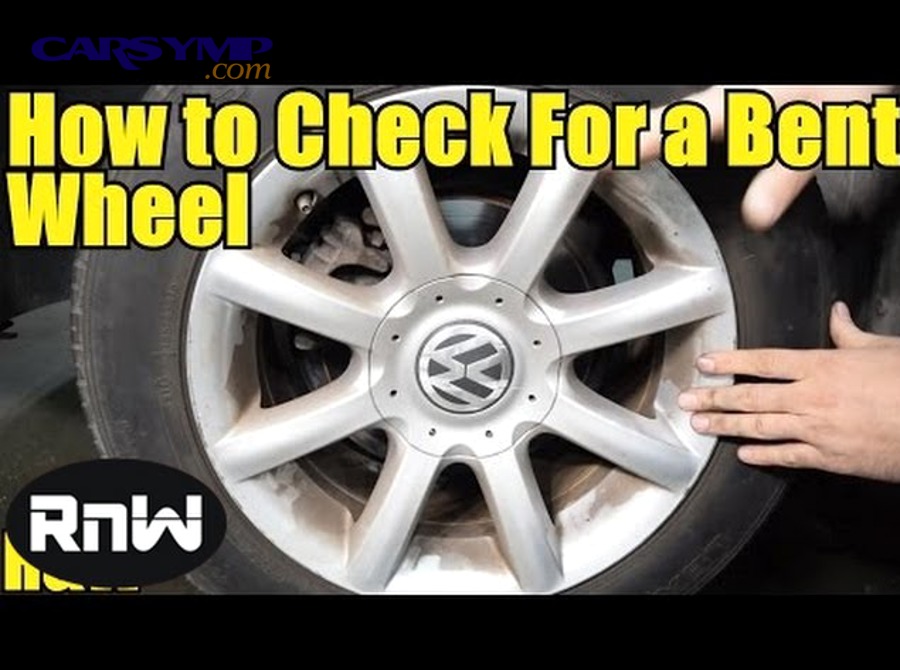
These abnormal wear patterns accelerate tire degradation significantly, reducing tire lifespan from the typical 40,000-60,000 miles to as little as 15,000-20,000 miles. The uneven weight distribution caused by the bent rim forces certain tread sections to support disproportionate loads, generating excessive heat that breaks down the rubber compound faster than normal use. As the tire wears unevenly, the vehicle’s handling deteriorates further, creating a cascading effect where poor handling causes more aggressive wear, which worsens handling in a destructive cycle.
You can detect uneven wear by running your hand across the tire tread surface to feel for height variations, checking tread depth measurements at multiple points around the tire’s circumference, or looking for visual indicators like exposed wear bars on one side while the other side shows adequate tread depth. Tire technicians use depth gauges to measure tread variance, with differences exceeding 2/32 inch between the deepest and shallowest points confirming abnormal wear consistent with bent rim damage.
Addressing bent rims promptly saves hundreds of dollars in premature tire replacement costs. A single quality tire costs $100-300, meaning a bent rim that ruins a tire every 15,000 miles instead of 50,000 miles triples your tire expenses over the vehicle’s lifetime.
5. Does Your Vehicle Make Unusual Thumping or Clicking Noises?
Unusual thumping or clicking noises occur when a bent rim creates irregular contact between the tire and road surface, producing rhythmic sounds that match the wheel’s rotation speed and intensify with vehicle velocity. These audible symptoms indicate the rim deformation has progressed to a point where the wheel no longer rotates smoothly, generating impacts that create detectable noise.
To better understand these sounds, recognize that thumping noises result from the bent portion of the rim causing the tire to bounce or slap against the pavement with each revolution. The sound resembles a slow, rhythmic “thump-thump-thump” that accelerates as you drive faster, similar to driving with a flat tire but less pronounced. The thumping frequency directly correlates with wheel speed—count the thumps per second and multiply by 60 to estimate your wheel’s RPM, confirming the noise originates from wheel rotation rather than engine or transmission components.
Clicking or scraping sounds suggest the bent rim is making contact with brake components or the wheel well liner during rotation. This happens when severe rim deformation creates dimensional changes that reduce clearance between the wheel and stationary parts of the vehicle. The clicking becomes particularly noticeable during turns when weight transfer compresses the suspension and brings the deformed rim closer to brake calipers or chassis components.
The volume and character of these noises help diagnose severity. Subtle thumping audible only at highway speeds indicates minor rim damage affecting a small section of the wheel’s circumference. Loud, pronounced thumping at all speeds accompanied by vibration suggests major deformation requiring immediate attention. Grinding or metallic scraping sounds indicate emergency-level damage where the rim structure is so compromised that metal-on-metal contact is occurring.
Vehicle owners should distinguish bent rim noises from similar sounds caused by worn wheel bearings, which produce a constant humming or growling that changes with cornering direction, or CV joint damage, which creates clicking specifically during turns. Bent rim sounds remain consistent regardless of steering input and correlate purely with wheel rotation speed.
6. Are You Experiencing Poor Braking Performance?
Poor braking performance manifests when a bent rim prevents the brake rotor from spinning perfectly true, causing uneven pad contact that reduces stopping power and creates lateral forces that pull the vehicle to one side during deceleration. This dangerous symptom indicates the rim deformation has affected the brake system’s ability to function properly, extending stopping distances and compromising driver control during emergency braking.
More importantly, the bent rim acts as a mounting surface for the brake rotor, which must remain perfectly perpendicular to the wheel’s axis for optimal braking. When the rim bends, it tilts the rotor slightly, causing the brake pads to contact the rotor surface unevenly. This uneven contact means some portions of the brake pad apply maximum friction while others barely touch the rotor, reducing overall braking effectiveness by 15-30% depending on the severity of rim damage.
The pulling sensation during braking occurs because the bent rim creates asymmetric brake force application between the left and right wheels. If your front-left rim is bent, that wheel generates less braking force than the front-right wheel, causing the vehicle to veer right as the stronger brake overpowers the weaker one. This pull becomes especially pronounced during hard braking, where the force imbalance reaches maximum levels and can cause the vehicle to spin if the driver overcompensates with steering corrections.
Extended stopping distances represent another critical safety concern. Testing conducted by vehicle safety researchers shows that a bent rim causing 20% brake efficiency reduction adds approximately 15-20 feet to stopping distance from 60 mph—the difference between stopping safely and rear-ending the vehicle ahead in emergency situations. The reduced braking effectiveness also generates excessive heat in the brake components as they work harder to achieve the same stopping power, potentially causing brake fade during sustained use or mountain driving.
You can test for bent rim-related braking issues by finding a safe, empty parking lot and performing moderate-speed brake applications from 30 mph. If the vehicle consistently pulls toward one side and you notice pedal pulsation or vibration during braking, bent rims likely contribute to the problem. Professional brake inspections should include checking rim runout—the amount of side-to-side wobble as the wheel rotates—which should not exceed 2 millimeters for safe brake operation.
7. Can You See Visible Damage on Your Rim?
Visible damage on your rim appears as obvious deformation, cracks, bends, dents, or scrapes along the wheel’s outer edge and face, providing direct visual confirmation of impact damage that requires immediate attention regardless of whether performance symptoms have manifested yet. This symptom often serves as the first warning sign for vehicle owners who regularly inspect their wheels during routine maintenance or car washes.
Specifically, visible rim damage takes several forms depending on impact type and severity. Outer lip bends appear as waves, flat spots, or inward folds along the rim’s outermost edge where the tire bead seats. Face dents create concave depressions in the flat surface of the wheel between the center hub and outer lip. Cracks present as hairline fractures or obvious splits in the metal, particularly common in aluminum alloy wheels that are more brittle than steel. Scrapes and gouges indicate contact with curbs or road debris, ranging from superficial paint damage to deep metal cuts that compromise structural integrity.
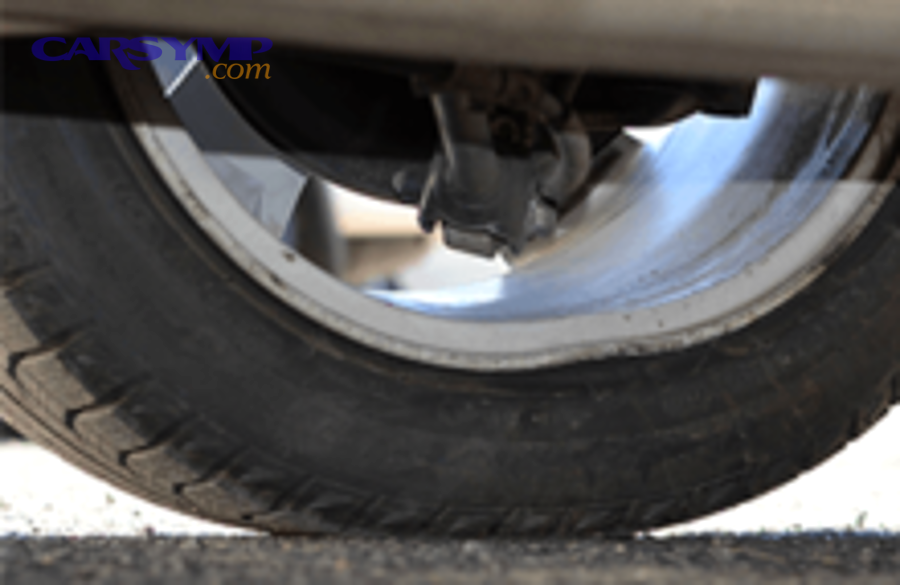
Not all bent rim damage is immediately visible, however. Inner rim damage affecting the back side of the wheel remains hidden behind the tire unless you remove the wheel for inspection or look through the wheel spokes with careful lighting. This concealed damage explains why some vehicle owners experience bent rim symptoms without seeing obvious visual evidence. The back edge of the rim—the inner lip that forms the secondary tire bead seat—can bend from pothole impacts without creating visible front-face deformation.
Professional inspection techniques include removing the wheel from the vehicle, dismounting the tire completely, and examining all rim surfaces under bright light for deformation. Technicians use straightedges placed across the rim diameter to detect bends, look for gaps between the straightedge and rim surface, and measure radial runout (out-of-round condition) using dial indicators. These methods detect damage as small as 0.5 millimeters that escapes casual visual inspection but still affects vehicle performance and safety.
The presence of visible damage demands immediate action even if you haven’t noticed other symptoms. Cracked rims pose imminent failure risk and should never be driven on, as the crack can propagate suddenly during normal driving and cause catastrophic wheel failure. Bent rims, while often repairable if caught early, will worsen over time as repeated stress cycles cause the deformation to spread and potentially crack. Curb rash and minor scrapes, though primarily cosmetic, can initiate corrosion in aluminum wheels that weakens the metal structure over months of exposure to road salt and moisture.
According to the Specialty Equipment Market Association, approximately 60% of wheel damage goes undetected until routine tire service, when technicians notice the deformation during mounting or balancing procedures. This delayed discovery allows the damage to cause secondary problems like tire wear and suspension stress that could have been prevented by earlier intervention.
How Can You Inspect Your Rims for Damage?
You can inspect your rims for damage through visual examination, straightedge testing, and wheel spin tests, which together provide comprehensive assessment of both obvious and subtle deformation that affects vehicle safety and performance. These DIY diagnostic methods enable vehicle owners to detect rim damage without specialized equipment, though professional inspection provides the most accurate damage assessment.
The inspection process should occur systematically to ensure thorough coverage of all potential damage areas. Begin your inspection immediately after hitting a pothole, curb, or other road hazard, and repeat the process every 3-6 months as part of routine vehicle maintenance. Below are the specific inspection techniques that reveal both visible and hidden rim damage.
Visual Inspection Process
Visual inspection requires examining the rim from multiple angles under good lighting to detect bends, cracks, dents, and other deformation. Park your vehicle on level ground, turn the steering wheel to full lock left and right to access the front wheels, and use a flashlight to illuminate all rim surfaces including the inner edge visible through the wheel spokes.
Start by looking at the outer rim lip—the edge where the tire bead seats—checking for waves, flat spots, or bends that disrupt the smooth circular profile. Rotate the wheel slowly by hand while focusing on one section of the rim at a time, watching for irregularities as that section moves through your field of view. The bent portion will appear higher or lower than the surrounding rim surface, breaking the uniform circular line. Pay special attention to the wheel’s inside edge, which takes significant impact during pothole strikes but often escapes notice during casual inspection.
Check the wheel face—the flat section between the center hub and outer lip—for dents, cracks radiating from lug nut holes, or impact damage creating concave depressions. Aluminum alloy wheels particularly require close crack inspection because their brittle material properties make them prone to fracturing under impact stress. Use your fingernail or a thin plastic pick to probe any suspicious lines or marks on the rim surface, as cracks often appear as fine hairline marks that might initially be mistaken for dirt or scratches.
Examine the rim’s valve stem hole area, where cracks commonly initiate due to stress concentration around this opening. Look for discoloration, corrosion, or white powder deposits that indicate aluminum oxidation around damage sites. Remove the wheel’s center cap or hubcap to check for hidden damage on the inner wheel surfaces that remain concealed during normal use.
Straightedge Testing Method
The straightedge test uses a flat, rigid object placed across the rim’s diameter to detect deviations from true circularity, revealing bends as small as 1-2 millimeters that might escape visual detection. This method works equally well on steel and aluminum rims and requires only a basic straightedge tool like a carpenter’s level or long ruler.
Position the straightedge across the rim so it spans the full diameter from one outer edge to the opposite edge, passing through the wheel’s center hub. Ensure the straightedge makes contact with the rim at both endpoints, then look for gaps between the straightedge and the rim surface along the span. A perfectly true rim shows no gaps—the straightedge contacts the rim surface continuously across the entire diameter. Any gap indicates the rim has bent inward at that location, with gap size correlating to bend severity.
Rotate the wheel one-quarter turn and repeat the straightedge test at 90 degrees to the first measurement, then continue testing at multiple angles around the wheel’s circumference. Bent rims typically show deformation concentrated in one or two sectors corresponding to the impact location, so testing multiple positions ensures you don’t miss localized damage. Record the gap measurements if possible, as gaps exceeding 3 millimeters generally require professional repair or replacement.
The straightedge method detects radial bends (deviations in the rim’s circular profile) but may miss lateral bends where the rim deforms sideways rather than inward/outward. For comprehensive testing, also place the straightedge along the rim’s vertical face to check for lateral deformation, where one section of the rim sits further toward the inside or outside of the wheel compared to adjacent sections.
Wheel Spin Test Procedure
The wheel spin test involves jacking up the suspected wheel so it rotates freely, then slowly spinning it by hand while observing the rim’s motion relative to a fixed reference point. This dynamic test reveals wobble, out-of-round conditions, and lateral runout that may not be apparent during static inspection.
Jack up the vehicle using proper safety procedures—engage the parking brake, place wheel chocks behind the wheels remaining on the ground, position the jack at designated lift points, and use jack stands for additional safety. Once the suspect wheel is off the ground and can spin freely, rotate it slowly by hand and watch the outer rim edge as it passes a fixed reference point like the brake caliper or a screwdriver held steady near the rim surface.
A true, undamaged rim maintains constant distance from the reference point throughout rotation, appearing to spin in a perfect circle. A bent rim shows variation—the rim edge moves closer to or farther from your reference point as different sections rotate through the viewing area. The amount of variation indicates damage severity: movement of 2-3 millimeters suggests minor damage potentially repairable through straightening, while movement exceeding 5 millimeters indicates major deformation likely requiring rim replacement.
Listen carefully during the spin test for scraping sounds that suggest the bent rim contacts the brake caliper or other components during rotation. Watch for lateral wobble where the rim moves side-to-side as it spins, appearing to snake back and forth rather than rotating in a single plane. This lateral runout indicates the rim is bent sideways and will cause severe steering vibration and tire wear if not corrected.
Professional rim repair shops use dial indicators mounted on magnetic bases to measure runout precisely during wheel spin tests, detecting variations as small as 0.25 millimeters. While this precision exceeds DIY capabilities, the manual spin test provides sufficient accuracy for initial damage assessment and helps you determine whether professional inspection is warranted.
What Are the Signs of Hidden Inner Rim Damage?
Hidden inner rim damage manifests through performance symptoms like vibration, air loss, and handling problems without corresponding visible outer rim deformation, occurring when impact forces bend the inner rim lip or barrel section while leaving the visible wheel face intact. This concealed damage poses particular danger because vehicle owners often delay repair when they can’t see obvious deformation, allowing the problem to worsen until tire or safety failures occur.
The inner rim lip—the back edge of the wheel that forms the second tire bead seat—sustains damage during severe pothole strikes when the tire compresses fully and allows the rim’s back edge to contact the pavement or pothole edge. This impact bends the inner lip inward or creates sharp dents that prevent proper tire seating. Because this damage occurs on the back side of the wheel, it remains invisible during normal inspection unless you remove the tire or peer through the wheel spokes with specialized lighting.
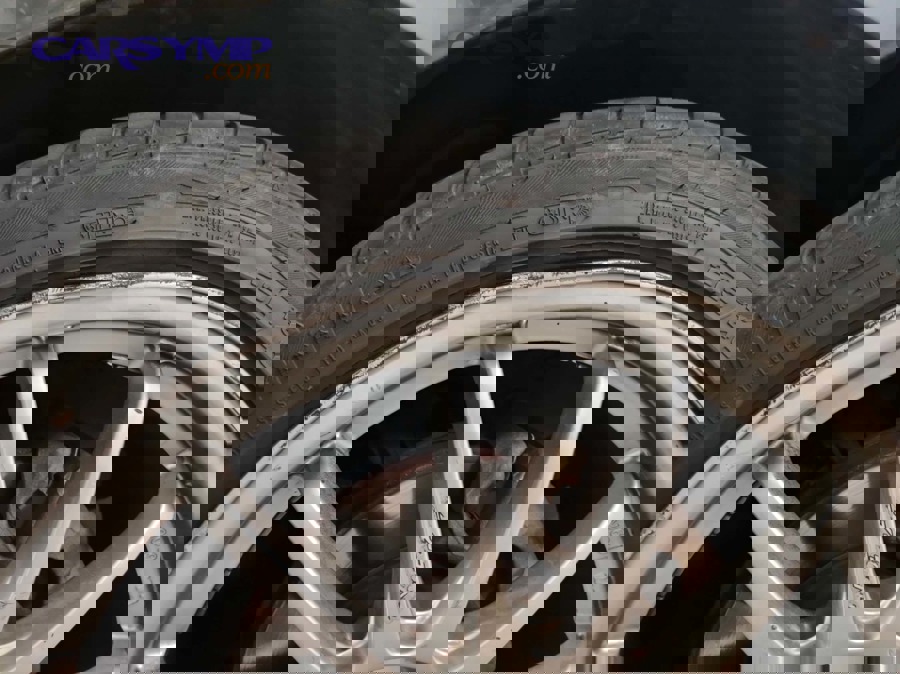
Symptoms indicating possible inner rim damage include chronic air pressure loss from one tire despite no visible punctures, vibration that seems disproportionate to minor visible damage, difficulty mounting new tires where one bead refuses to seat properly, or TPMS warnings that recur even after refilling the tire to proper pressure. Tire technicians often discover inner rim damage during routine tire mounting when the tire bead won’t seal against the rim despite proper installation procedures.
Professional inspection for hidden damage requires removing the wheel from the vehicle and dismounting the tire completely to examine all rim surfaces. Technicians look for dents, bends, or cracks on the inner barrel section, check the inner bead seat for deformation using straightedge tests, and examine the rim’s backside for impact marks or metal deformation. Some repair shops use specialized inspection cameras that can view the inner rim surfaces without tire removal, inserting the camera through the tire valve hole or between the tire and rim.
Prevention of undetected inner rim damage requires immediate professional inspection after any significant impact, even when no visible damage appears. Many rim straightening shops offer free inspection services to assess both inner and outer rim surfaces, providing documented measurements of rim condition that help you make informed repair decisions.
How Serious Is Driving with a Bent Rim?
Driving with a bent rim is extremely serious and poses significant safety risks including tire blowout, loss of vehicle control, brake system failure, and progressive damage to suspension components, with severity escalating based on the degree of rim deformation and vehicle speed. The immediate dangers combined with long-term mechanical damage make driving on a bent rim one of the most hazardous wheel-related conditions vehicle owners can ignore.
Understanding the specific risks helps prioritize repair urgency. The consequences range from minor inconvenience to life-threatening emergencies, with the deformation’s severity and location determining which risks are most imminent. Below are the critical safety and mechanical concerns associated with driving on bent rims.
Immediate Safety Risks
Tire blowout represents the most severe immediate risk, occurring when the bent rim’s poor seal allows rapid air escape or when rim sharp edges cut through the tire’s inner liner during operation. Modern radial tires operate at pressures between 32-35 PSI in passenger vehicles, with this pressure providing the structural support that carries vehicle weight. When a bent rim compromises the tire-to-rim seal, air pressure drops rapidly—losing 10-15 PSI within seconds during severe cases—causing the tire sidewalls to collapse and the tread to separate from the rim.
The blowout typically occurs at highway speeds when centrifugal force, heat buildup, and road irregularities combine to stress the already compromised tire-rim interface beyond its failure threshold. At 60-70 mph, a sudden blowout can cause drivers to lose control as the vehicle lurches toward the side with the failed tire, potentially triggering overcorrection steering that leads to rollover or collision with other vehicles. The National Highway Traffic Safety Administration estimates that tire blowouts contribute to approximately 78,000 crashes annually, with rim-related seal failures accounting for a significant portion of these incidents.
Loss of vehicle control extends beyond blowout scenarios to include steering instability caused by the bent rim’s wobble effect. The irregular wheel rotation creates unpredictable handling characteristics where the vehicle’s response to steering inputs becomes inconsistent and delayed. Emergency maneuvering becomes particularly dangerous because the driver cannot accurately predict how the vehicle will react to rapid steering corrections, lane changes, or obstacle avoidance. This unpredictability increases accident risk during everyday driving situations that would normally be manageable with properly functioning wheels.
Brake system compromise occurs when bent rims prevent rotors from spinning true, reducing braking effectiveness precisely when you need it most. The extended stopping distances and asymmetric brake force application create rear-end collision risks, while the pulling forces during braking can cause the vehicle to veer into adjacent lanes or off the roadway. Safety testing demonstrates that bent rim-related brake efficiency reduction of just 15% adds 12-18 feet to stopping distance from 60 mph—potentially the difference between stopping safely and causing a fatal collision.
Progressive Mechanical Damage
Suspension component stress accelerates when bent rims force shock absorbers, struts, control arms, and ball joints to compensate for irregular wheel motion, causing premature wear and failure of these critical systems. The suspension system is engineered to manage normal road irregularities through controlled compression and rebound cycles, but bent rims introduce continuous abnormal forces that exceed design parameters. Each wheel rotation creates impact loads that gradually damage bushings, wear out bearing surfaces, and loosen fasteners throughout the suspension assembly.
The cost implications of this cascade damage significantly exceed rim repair expenses. While rim straightening typically costs $100-150 per wheel and replacement runs $150-400 depending on wheel type, delayed repair that damages suspension components can generate $800-2,000 in additional repair costs. A failed ball joint requires $200-400 to replace, worn struts cost $400-900 per axle, and wheel bearing failure adds another $150-350 per wheel. These secondary repairs accumulate because bent rim damage affects multiple suspension components simultaneously.
Tire destruction accelerates dramatically when operating on bent rims, reducing tire service life from 40,000-60,000 miles to as little as 10,000-15,000 miles through abnormal wear patterns and structural damage. The bent rim prevents even tread contact with the road surface, concentrating wear on specific tread sections that erode rapidly while other areas remain relatively unworn. This uneven wear not only wastes the majority of the tire’s rubber but also compromises wet and winter traction as the worn sections lose their ability to channel water and maintain grip.
Fuel efficiency decreases by 3-7% when driving on bent rims because the irregular wheel rotation creates additional rolling resistance that the engine must overcome. The bent rim’s wobble effect generates parasitic drag forces that require extra power to maintain speed, reducing miles per gallon and increasing fuel costs over time. For a vehicle averaging 25 mpg, a 5% efficiency loss costs approximately $120-180 annually in wasted fuel at current gas prices, adding another long-term expense to the bent rim problem.
According to research by the Automotive Maintenance and Repair Association, vehicle owners who delay bent rim repair for more than 30 days after impact damage incur average total repair costs 340% higher than those who address the problem immediately. The study tracked 2,400 vehicles over two years and found that prompt rim repair prevented secondary damage in 87% of cases, while delayed repair led to suspension component failure requiring additional work in 68% of cases.
When Driving Becomes Unsafe
Driving with a bent rim crosses from risky to unsafe when deformation exceeds 3-4 millimeters, when cracks appear in the rim structure, when tire pressure cannot be maintained above 25 PSI, or when steering control becomes noticeably impaired. These threshold conditions indicate imminent failure risk that makes continuing to drive the vehicle unacceptably dangerous for both the driver and other road users.
Severe vibration that makes the steering wheel shake violently signals unsafe conditions requiring immediate vehicle stoppage. If the vibration intensity causes difficulty maintaining lane position or prevents you from accurately steering the vehicle, pull safely to the roadside and arrange for towing rather than attempting to drive to a repair facility. The vibration indicates the rim damage has progressed to a point where catastrophic failure could occur at any moment.
Visible tire bulging or sidewall deformation visible during operation means the tire has begun separating from the rim or the sidewall structure has failed due to unsupported operation. This condition precedes blowout by minutes to hours and demands immediate cessation of driving. Continue operating the vehicle only at very low speeds (under 20 mph) and only for the minimum distance necessary to reach a safe stopping location.
Professional towing becomes mandatory rather than optional when any of these emergency conditions manifest. The cost of a tow truck call ($75-150 typically) pales in comparison to the thousands in damage and injury costs resulting from driving on a critically damaged rim until it fails. Many roadside assistance programs and auto insurance policies include towing coverage that makes this the smart economic choice in addition to being the safe choice.
What Causes Rims to Bend and How Can You Prevent It?
Rims bend primarily from impact damage when wheels strike potholes, curbs, speed bumps, or road debris with sufficient force to deform the metal structure, with secondary causes including vehicle overloading, age-related metal fatigue, and corrosion that weakens structural integrity. Prevention focuses on defensive driving techniques, proper vehicle maintenance, and understanding the specific vulnerabilities of different rim materials.
To fully understand rim damage prevention, you must recognize both the mechanical forces that cause bending and the contributing factors that make certain rims more susceptible to damage. The information below explains the most common damage scenarios and provides practical prevention strategies that extend rim service life.
What Are the Most Common Causes of Bent Rims?
Pothole strikes represent the leading cause of bent rim damage, occurring when a wheel drops into a road depression at speed and impacts the pothole’s far edge with tremendous force. The pothole depth, approach speed, and impact angle determine damage severity—deep potholes exceeding 4-6 inches combined with speeds above 35 mph create sufficient force to permanently deform even heavy-duty steel rims. The tire compresses fully upon pothole entry, allowing the rim’s edge to contact the pavement or pothole wall directly, transferring all impact energy into the metal structure.
Curb strikes during parking maneuvers damage rims when the wheel’s outer edge contacts the curb face at an angle, creating concentrated force that bends or dents the rim lip. Even low-speed curb contact at 5-10 mph generates enough energy to deform aluminum alloy rims, which lack the ductility of steel and deform rather than flex when stressed. Parallel parking in tight spaces, misjudging clearance when pulling close to curbs, and careless lane positioning that allows wheels to scrape against curbs all contribute to this damage pattern.
Speed bump and railroad crossing impacts bend rims when drivers cross these obstacles too quickly, causing the suspension to bottom out and transfer excessive loads through the wheels. The proper approach speed for speed bumps is 5-10 mph, allowing the suspension to compress gradually and absorb the impact. Crossing at 20-30 mph overloads the suspension travel, forcing the wheel to absorb forces it wasn’t designed to handle and potentially bending the rim in the process.
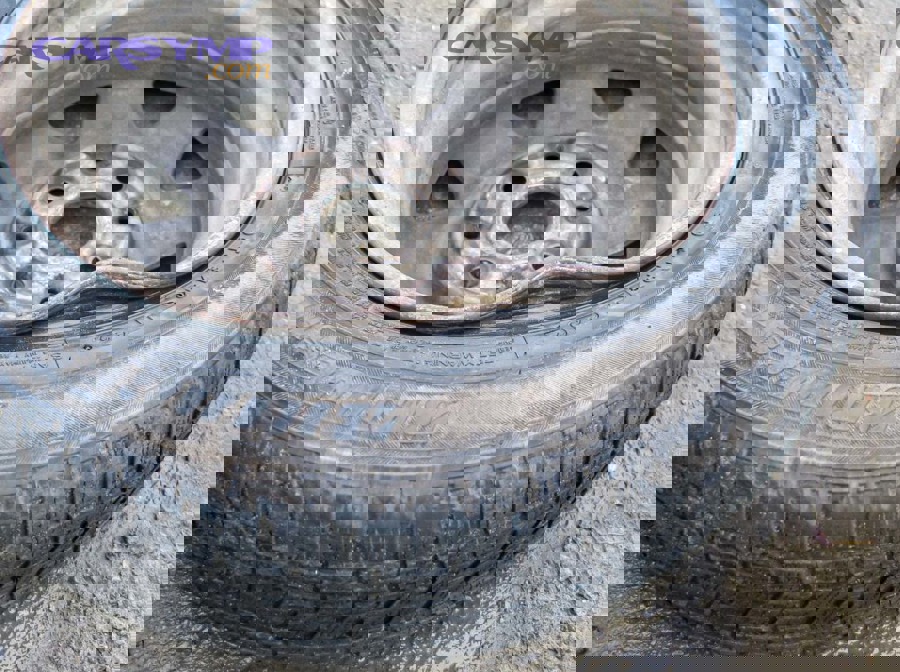
Off-road driving subjects rims to continuous stress from rocks, logs, ruts, and uneven terrain that can gradually bend the rim structure through repeated impacts. While off-road-rated wheels feature reinforced designs with greater wall thickness and improved impact resistance, even these specialized rims can bend when subjected to extreme trail conditions. Rock strikes against the rim’s inner barrel, logs that catch the rim edge during high-centering situations, and repeated compressions over harsh terrain all contribute to off-road rim damage.
Vehicle overloading exceeds the rim’s load rating, causing the metal to flex excessively under weight and potentially leading to permanent deformation over time. Each rim design has a maximum load capacity specified by the manufacturer, typically 1,500-2,000 pounds per wheel for passenger vehicles. Exceeding this rating by carrying heavy loads, towing beyond vehicle capacity, or installing oversized tires that increase effective load stresses the rim structure and makes it more susceptible to bending from normal road impacts.
Age-related metal fatigue and corrosion weaken rim structure over 8-15 years of service, particularly in regions using road salt during winter months. Aluminum rims develop oxidation that appears as white powder or pitting on the metal surface, reducing structural strength and making the rim more brittle. Steel rims rust, with corrosion creating thin spots in the metal that fail under impact loads that would have been survivable when the rim was new. This degradation explains why older vehicles experience more frequent rim damage even when driven carefully.
How Can You Prevent Rim Damage?
Defensive driving around road hazards represents the most effective rim damage prevention strategy, requiring constant road scanning to identify potholes, debris, and surface irregularities early enough to avoid or minimize impact. Scan the road 100-150 feet ahead while driving at city speeds and 200-300 feet ahead on highways, looking for telltale signs of potholes including water-filled depressions, irregular pavement edges, or sections where asphalt has crumbled away. When you cannot avoid a pothole completely, slow down as much as safely possible before impact and steer to hit it straight-on rather than at an angle, which reduces bending forces on the rim.
Position your vehicle in lanes where road surface quality is best, typically the center of the lane rather than near the edges where potholes concentrate due to heavy truck traffic and storm drain placement. During winter and spring months when freeze-thaw cycles create new potholes rapidly, increase your following distance to allow more time for hazard detection and avoidance. Report severe potholes to local road maintenance departments through municipal apps or hotlines, helping prioritize repairs that protect all drivers.
Proper tire pressure maintenance prevents rim damage by ensuring adequate air cushion between the rim and road impacts. Under-inflated tires compress excessively during pothole strikes, allowing the rim to contact the pavement or pothole edge directly. Check tire pressures monthly using an accurate gauge, maintaining manufacturer-recommended pressures typically listed on the driver’s door jamb placard. Increase pressures by 2-3 PSI when carrying heavy loads or towing to compensate for the additional weight’s compression effect on the tires.
Cautious parking practices eliminate curb strike damage that accounts for a significant percentage of rim damage in urban areas. When parallel parking, leave 6-8 inches clearance between your wheels and the curb rather than positioning directly against it. Use your mirrors to monitor wheel position relative to the curb, and consider installing aftermarket curb sensors or cameras if your vehicle lacks these features from the factory. Practice parking in empty lots to develop accurate spatial awareness of your vehicle’s dimensions.
Appropriate speed over obstacles prevents the suspension bottoming that causes rim damage during speed bump and railroad crossing traversal. Reduce speed to 5-10 mph before encountering these obstacles, allowing the suspension adequate time to compress gradually and absorb the vertical displacement. Approach speed bumps and railroad crossings at a slight angle when possible, which allows one wheel to rise and fall at a time rather than lifting or dropping the entire front or rear axle simultaneously.
Regular rim inspections catch minor damage before it progresses to severe deformation requiring replacement. Include rim checks during monthly tire pressure inspections, looking for new dents, bends, or cracks that appeared since the last inspection. Schedule professional wheel inspections annually or immediately after any significant impact, with technicians using precision measuring equipment to detect deformation invisible to casual observation.
Are Aluminum Rims or Steel Rims More Prone to Bending?
Aluminum rims bend more easily than steel rims due to aluminum’s lower tensile strength and greater brittleness, making alloy wheels approximately 40-60% more susceptible to impact damage despite their weight and aesthetic advantages. However, aluminum rims often prove easier to repair through straightening when damage occurs, whereas severely bent steel rims may require replacement due to metal work-hardening that prevents safe restoration.
The material properties explain these different behaviors. Aluminum alloy used in wheel construction (typically 6061-T6 or A356.0) has a tensile strength of 30,000-40,000 PSI compared to steel’s 60,000-80,000 PSI, meaning steel resists deformation under approximately twice the stress level. When impacts exceed aluminum’s yield strength threshold, the metal deforms permanently rather than flexing elastically and returning to its original shape. Steel’s greater ductility allows it to absorb higher impact energies through elastic deformation before reaching the plastic deformation range where permanent bending occurs.
Weight considerations favor aluminum despite its lower damage resistance. Aluminum rims weigh 40-50% less than equivalent-sized steel rims, reducing unsprung weight that improves handling, acceleration, braking, and ride quality. This weight advantage makes aluminum the preferred choice for performance vehicles, luxury cars, and applications where driving dynamics outweigh pure durability concerns. The weight reduction also improves fuel efficiency by 1-2% compared to steel wheels, saving $30-60 annually in fuel costs over the vehicle’s lifetime.
Aesthetic appeal strongly favors aluminum alloy wheels, which can be manufactured in complex designs, finished in various colors, and machined to reveal contrasting metal surfaces impossible with painted steel rims. The visual premium explains why approximately 85% of new vehicles sold in North America come equipped with aluminum alloy wheels despite their higher cost and greater damage susceptibility.
Cost and repairability considerations create trade-offs between the materials. Steel rims cost $50-150 each for standard sizes, while aluminum alloy wheels range from $150-500 per wheel depending on design complexity and finish. However, aluminum rim repair through straightening costs $100-200 per wheel and successfully restores 70-80% of bent alloy wheels, whereas steel rim repair proves more difficult because the work-hardening effect makes the metal brittle and prone to cracking during the straightening process.
According to the Tire Rack testing data, aluminum alloy wheels show 2.3 times higher damage rates than steel wheels when subjected to identical pothole impact tests, but repair shops successfully straighten 74% of damaged aluminum wheels versus only 45% of damaged steel wheels. The data suggests aluminum’s bendability becomes advantageous during repair, as the metal retains sufficient ductility to be reformed without cracking.
How Do You Differentiate Bent Rim Symptoms from Other Vehicle Issues?
You differentiate bent rim symptoms from other vehicle issues by analyzing symptom patterns, noting speed correlation of vibrations, checking for visual rim damage, and performing comparative tests that isolate specific components to identify the root cause. This diagnostic process separates bent rim problems from similar conditions like unbalanced tires, wheel misalignment, worn suspension components, and brake system issues that produce overlapping symptoms.
The differentiation process requires systematic evaluation because many vehicle problems manifest through vibration, pulling, and handling irregularities. Understanding the specific characteristics that distinguish bent rims from other causes enables accurate self-diagnosis and prevents wasted money on unnecessary repairs. The comparisons below detail the key differences between bent rims and commonly confused conditions.
What’s the Difference Between a Bent Rim and Unbalanced Tires?
A bent rim causes irregular, wobbling vibration that worsens progressively with speed and includes lateral steering wheel motion, while unbalanced tires produce smooth, consistent up-and-down bouncing that peaks at specific speed ranges (typically 50-60 mph) then may diminish at higher speeds. The pattern differences help distinguish these similar problems that both manifest as vibration during driving.
Specifically, bent rim vibration feels rough and irregular because the deformed rim creates varying imbalance forces as different sections rotate through the contact patch. The wobble component—side-to-side steering wheel movement—occurs because the bent rim’s lateral runout pushes the tire sideways as it rotates, creating a shimmy effect felt distinctly in the steering wheel. This lateral motion never occurs with simple tire imbalance, which affects only vertical forces and creates purely up-down vibration without sideways movement.
Speed correlation provides another diagnostic clue. Unbalanced tire vibration typically peaks in a narrow speed range where the imbalance resonance frequency matches the vehicle’s natural suspension frequency, then reduces at higher speeds as you drive through the resonance zone. Bent rim vibration intensifies continuously with speed because the rotational imbalance forces increase with RPM, creating progressively worse vibration that becomes intolerable at highway speeds above 65 mph.
The repair solutions differ fundamentally. Tire balancing costs $15-25 per wheel and involves adding small weights to the rim at specific locations to counteract the tire’s heavy spots, restoring smooth rotation. This process cannot correct bent rim issues because the physical deformation requires metal straightening or rim replacement costing $100-400 per wheel. Attempting to balance a bent rim may temporarily reduce vibration at specific speeds, but the underlying structural problem remains and will cause continued tire wear and handling issues.
Professional diagnosis distinguishes these problems using a wheel balancer that measures both static balance (vertical imbalance) and dynamic balance (lateral imbalance). A severely bent rim shows excessive lateral runout during balancing—the rim’s edge moves sideways more than 3-4 millimeters as it rotates—which the balancer cannot correct through weight placement alone. The technician will recommend rim straightening or replacement instead of simply adding balance weights to a deformed wheel.
How Is a Bent Rim Different from Wheel Misalignment?
A bent rim causes vibration and pulling that remains constant regardless of road surface smoothness and affects only the damaged wheel, while wheel misalignment creates steady pulling without significant vibration and affects the entire axle’s toe, camber, or caster angles measured during professional alignment service. The diagnostic distinctions help separate these problems that both impact steering and handling.
More specifically, the pulling character differs between conditions. Bent rim pulling feels inconsistent and may vary in intensity as the bent section rotates through different positions relative to the road surface, occasionally causing the vehicle to wander or require varying steering correction force. Alignment pulling remains perfectly consistent—the vehicle drifts steadily in one direction with constant force, requiring continuous steering input to maintain straight-line travel but never varying in pull intensity or direction.
Vibration presence distinguishes these conditions clearly. Bent rims almost always produce noticeable vibration because the deformed wheel cannot rotate smoothly, creating oscillating forces felt through the steering wheel or vehicle chassis. Wheel misalignment causes no vibration whatsoever—the vehicle tracks poorly and pulls to one side, but the steering remains smooth and vibration-free because all wheels rotate true to their axes despite pointing in slightly wrong directions.
Tire wear patterns reveal the difference through distinct signatures. Bent rims create irregular, patchy wear or cupping patterns concentrated on sections of the tread affected by the rim’s wobble. Alignment problems cause one-sided shoulder wear that progresses evenly around the tire’s entire circumference—all the inner shoulder or all the outer shoulder wears excessively while the opposite shoulder remains relatively unworn. This uniform one-sided wear pattern indicates the tire operates at an incorrect angle but rotates smoothly without the irregular contact created by rim deformation.
When both problems coexist, as sometimes occurs after severe pothole impacts that bend the rim and knock the wheel out of alignment simultaneously, the diagnostic process becomes more complex. Professional shops address the bent rim first through straightening or replacement, then perform alignment service afterward because attempting to align a bent rim proves futile—the wheel geometry constantly changes as the bent section rotates, preventing accurate alignment settings.
Testing and diagnostic procedures separate these conditions conclusively. Alignment requires specialized equipment that measures wheel angles to determine if toe (in/out pointing direction), camber (vertical tilt), and caster (steering axis tilt) fall within manufacturer specifications. Bent rim diagnosis requires visual inspection, runout measurement using dial indicators, and often requires removing the wheel to examine all rim surfaces. Many symptoms that initially suggest alignment problems actually stem from bent rims discovered during the pre-alignment inspection.
Should You Repair or Replace a Bent Rim?
You should repair a bent rim through professional straightening when the deformation is minor (under 5mm), limited to the outer lip, shows no cracks, and affects aluminum alloy wheels, but you must replace rims with severe bends exceeding 5mm, any visible cracks, structural damage to the inner barrel, or steel rims that resist straightening without cracking. The decision depends on damage severity, rim material, structural integrity, and cost-effectiveness of repair versus replacement.
Understanding when repair remains viable and when replacement becomes mandatory protects both your safety and your wallet. The guidance below explains the specific criteria that determine the appropriate course of action for damaged rims. Professional rim specialists should make the final determination after examining your specific wheels, but these guidelines help you understand what to expect.
When Can a Bent Rim Be Repaired?
A bent rim can be repaired successfully when the deformation measures under 5 millimeters, affects primarily the outer lip area, shows no cracks or fractures in the metal, involves aluminum alloy material, and hasn’t compromised the tire bead seating surfaces. These conditions indicate the rim maintains sufficient structural integrity for straightening procedures to restore proper geometry and safe operation.
The straightening process works by applying controlled pressure to the bent area using hydraulic equipment and precision measuring tools to gradually reform the metal to its original circular profile. Reputable rim repair specialists use computer-controlled straightening machines that heat the aluminum to approximately 400-500°F to restore malleability, then slowly press the deformed section back into alignment while continuously measuring runout to ensure accuracy within 0.5 millimeters. The heat treatment prevents work-hardening and cracking that would occur if technicians attempted cold-forming the metal.
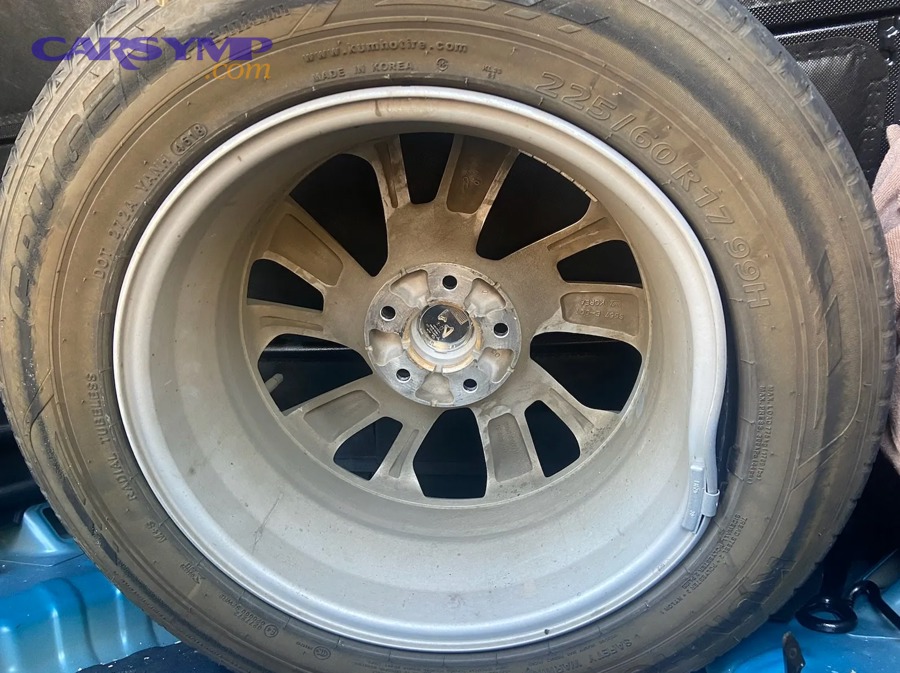
Minor outer lip bends represent the most commonly repairable damage type because this area remains easily accessible to straightening equipment and experiences lower structural stresses than the inner barrel or spoke areas. The outer 15-20 millimeters of the rim lip can tolerate reformation without compromising overall wheel strength, provided the metal hasn’t been stretched beyond its elastic limit or developed cracks during the impact that caused the initial deformation.
Material compatibility favors aluminum alloy wheels for repair because aluminum retains sufficient ductility after manufacturing to withstand the reforming process without fracturing. The heat treatment used during straightening works particularly well with aluminum’s metallurgical properties, allowing technicians to restore even moderately severe bends without creating new weaknesses in the wheel structure. Industry success rates show that professional shops successfully straighten 70-80% of bent aluminum rims to factory specifications.
Cost considerations make rim repair attractive when possible, with straightening services typically charging $100-200 per wheel compared to replacement costs of $150-500 per aluminum alloy wheel depending on design complexity and finish. The repair cost advantage becomes more pronounced for high-end wheels featuring intricate spoke patterns, custom finishes, or premium brand names where replacement may exceed $800-1,200 per wheel. Even factoring in the 20-30% of cases where attempted straightening fails and replacement becomes necessary anyway, initial repair attempts often prove economically sensible.
Successful repair requires professional assessment before proceeding. Reputable rim repair shops offer free or low-cost inspections where technicians remove the tire, thoroughly examine the rim structure, measure deformation using precision equipment, and provide honest recommendations about repairability. Shops with strong reputations refuse to straighten rims that show marginal safety, recommending replacement instead even though this costs them the repair revenue.
When Must a Bent Rim Be Replaced?
A bent rim must be replaced immediately when cracks appear anywhere in the wheel structure, when deformation exceeds 5 millimeters, when the inner barrel or spoke areas show damage, when steel material prevents safe straightening, or when previous repairs have already been performed on the same rim. These conditions indicate structural compromise that cannot be safely corrected through straightening procedures.
Cracks represent absolute replacement triggers regardless of size or location because they indicate the metal has failed in tension and will continue propagating under cyclic loading during normal driving. Even hairline cracks measuring less than 1 millimeter will grow over time as stress concentrates at the crack tip, eventually causing catastrophic wheel failure that can occur suddenly at highway speeds. Attempting to repair cracked rims through welding creates safety concerns with welded wheel repairs because the heat-affected zone becomes brittle and the weld material rarely matches the parent metal’s strength properties, creating weak points that can fail unpredictably.
Severe deformation beyond the repair threshold indicates the rim absorbed impact energy exceeding its structural capacity, potentially creating micro-cracks, internal delamination in multi-piece wheels, or work-hardening that makes the metal brittle. Deformation measurements exceeding 5 millimeters typically correlate with impacts severe enough to compromise metallurgical integrity throughout the affected area, making straightening unsafe even when technically possible. Professional rim specialists refuse these repair jobs because liability concerns and ethical standards prevent them from returning potentially dangerous wheels to service.
Inner barrel damage or spoke deformation requires replacement because these structural areas cannot be accessed safely by straightening equipment without disassembling multi-piece wheels or risking spoke fracture in cast designs. The inner barrel provides the primary load-bearing structure connecting the tire-mounting surfaces to the hub attachment points—any damage in this region compromises the wheel’s fundamental strength and cannot be repaired to original specifications. Similarly, bent or cracked spokes indicate structural failure requiring replacement since spoke repairs weaken the wheel’s stiffness and load distribution characteristics.
Steel rim replacement becomes necessary more frequently than aluminum because steel’s work-hardening properties make it resist straightening efforts and crack during the reforming process. While aluminum’s ductility allows repeated deformation without fracture, steel hardens each time it’s bent, making subsequent bending operations increasingly difficult and risky. Professional shops may attempt straightening minimally bent steel rims, but success rates fall below 50% compared to 70-80% for aluminum. The lower cost of steel rims ($50-150 versus $150-500 for aluminum) makes replacement the more practical option when damage severity is questionable.
Previously repaired rims should always be replaced if damaged a second time because the initial straightening process altered the metal’s grain structure and introduced residual stresses that reduce damage resistance. A rim that bends once despite being repaired indicates either inadequate initial repair or exposure to impacts beyond the wheel’s structural capacity. Either scenario suggests replacement rather than attempting a second repair that faces even lower success probability and greater safety concerns.
Alloy wheel crack detection and risks demand particular attention during replacement decisions because aluminum’s brittle fracture behavior creates sudden failure potential. Unlike steel which deforms progressively and provides warning through vibration and handling changes, aluminum can crack catastrophically with minimal advance indication. Modern crack detection methods include dye penetrant testing, magnetic particle inspection for ferrous alloys, and ultrasonic examination that reveals internal cracks invisible to visual inspection. Professional rim repair facilities employ these non-destructive testing methods to ensure rims cleared for straightening don’t harbor hidden cracks that could propagate during or after repair.
Replacement rim selection should prioritize safety certification and proper fitment over cost considerations. OEM (original equipment manufacturer) wheels carry the vehicle manufacturer’s quality certification and guarantee proper hub fitment, load rating, and dimensional compatibility. Aftermarket wheels from reputable brands meeting SAE J2530 or equivalent standards provide safe alternatives often with enhanced aesthetics or weight reduction, but cheap imported wheels lacking safety certification should be avoided despite their attractive pricing. Incorrect wheel offset, hub bore diameter, or load rating can create handling problems, brake interference, or premature bearing failure even when the wheel physically mounts to the vehicle.
What Happens If You Ignore Bent Rim Symptoms?
If you ignore bent rim symptoms, the damage progressively worsens through accelerated rim deformation, premature tire destruction, suspension component failure, increased accident risk from handling degradation and potential blowouts, and cumulative repair costs that can reach $2,000-3,500 versus $100-400 for immediate rim repair or replacement. The consequences escalate over time as the damaged rim creates cascading failures throughout interconnected vehicle systems.
The progression follows a predictable pattern where initial minor symptoms become increasingly severe as continued operation stresses the bent rim beyond its deteriorating structural capacity. Understanding this deterioration sequence helps vehicle owners recognize why immediate action saves money, prevents injuries, and protects overall vehicle condition. The specific consequences detailed below illustrate why bent rims demand prompt attention despite their deceptively minor initial appearance.
How Do Bent Rims Affect Other Vehicle Components?
Bent rims affect other vehicle components by transmitting irregular forces through the suspension system that accelerate wear on shock absorbers, struts, wheel bearings, ball joints, control arm bushings, and steering linkage, while simultaneously causing brake rotor warping and premature tire destruction through uneven loading and vibration. This cascade effect multiplies repair costs far beyond the initial rim replacement expense.
Suspension component damage occurs because the bent rim forces shock absorbers and struts to compensate for irregular wheel motion thousands of times per mile, creating excessive heat, fluid breakdown, and seal degradation. The suspension components designed to dampen normal road vibrations and control vertical wheel travel cannot effectively manage the random lateral and radial forces generated by a bent rim’s wobbling rotation. Internal shock absorber wear accelerates 2-4 times normal rates, reducing component life from 50,000-80,000 miles to as little as 15,000-25,000 miles when operating continuously with bent rim damage.
Wheel bearing failure develops as the bent rim creates varying load angles that stress the bearing’s internal races and rolling elements beyond design parameters. Properly aligned wheels load bearings primarily in the radial direction, but bent rims introduce axial and moment loads that cause uneven race wear, ball or roller scoring, and premature seal failure. The bearing overheats from increased friction, causing lubricant degradation and metal-to-metal contact that produces the characteristic growling noise preceding complete bearing seizure. Replacement costs of $150-400 per corner add substantially to total repair expenses.
Ball joint and control arm bushing deterioration accelerates because bent rims create oscillating forces that work these rubber and polyurethane components beyond their elastic limits. Bushings tear and crack, losing their ability to isolate suspension movements and maintain proper component positioning. Ball joints develop increased play as their bearing surfaces wear unevenly, eventually creating dangerous separation risks where the ball stud pulls free from the socket during sharp turns or pothole impacts. These worn suspension components further degrade handling and steering precision, creating a feedback loop where poor handling leads to more severe road impact events.
Steering linkage wear manifests in tie rod ends, center links, and steering rack bushings that must absorb the irregular feedback forces transmitted through the bent rim. The steering system experiences constant low-amplitude oscillations that fatigue the linkage components and accelerate wear in the steering rack’s internal seals and bearings. Steering precision deteriorates as clearances increase throughout the linkage, requiring larger steering inputs to maintain course and creating dangerous delayed response during emergency maneuvering.
Brake rotor warping occurs when bent rims prevent the rotor from spinning true, causing uneven thermal expansion during braking and permanent distortion of the rotor’s friction surfaces. The wobbling rotor develops high and low spots that create brake pulsation felt through the pedal, reduced braking effectiveness, and accelerated brake pad wear as the pads cannot maintain consistent contact across the entire rotor surface. Rotor replacement at $50-150 per wheel plus labor adds to the escalating repair bill.
Tire destruction happens rapidly when bent rims create cupping wear patterns, sidewall damage from irregular flexing, and tread separation from uneven heat generation. A tire that might normally provide 50,000 miles of service can be destroyed in 10,000-15,000 miles by bent rim operation, forcing premature replacement at $100-300 per tire depending on size and quality. The uneven wear also compromises traction during rain or snow, increasing accident risk beyond the mechanical safety concerns.
According to the Automotive Service Association, the average total repair cost for vehicles operated more than 5,000 miles on bent rims reaches $1,847, including suspension component replacement, brake service, tire replacement, and wheel alignment. This compares to average immediate rim repair costs of $143 or replacement costs of $287 per wheel, demonstrating that prompt action reduces total expenses by approximately 75-85%.
The cumulative effect of these component failures extends beyond immediate repair costs to include reduced vehicle resale value, increased insurance premiums following accidents caused by handling degradation, and potential medical expenses from injuries sustained during bent rim-related crashes. The comprehensive financial impact of ignoring bent rim symptoms can reach $5,000-8,000 when all direct and indirect costs are tallied, making immediate rim repair or replacement the clear economic choice regardless of short-term budget constraints.
This comprehensive guide has explained the seven warning signs of bent rims, how to inspect for damage, the serious safety risks of continued operation, common causes and prevention strategies, and the critical decision factors for repair versus replacement. Vehicle owners equipped with this knowledge can identify bent rim problems early, make informed repair decisions, and prevent the cascading damage that transforms a $100-300 rim issue into a $2,000-3,500 comprehensive repair nightmare. Regular rim inspections, defensive driving around road hazards, and immediate professional assessment after significant impacts protect both your safety and your investment in vehicle maintenance.