


TPMS sensor replacement is the process of removing a failed or depleted tire pressure sensor from inside a wheel assembly and installing a new one — followed by a mandatory system relearn so the vehicle’s onboard computer can recognize the new unit. Most car owners will need to replace at least one TPMS sensor within the life of their vehicle, because the sealed internal battery that powers each sensor has a finite lifespan of five to ten years. Understanding what this replacement involves — before a warning light catches you off guard — helps you act quickly, budget accurately, and avoid driving on dangerously under-inflated tires without realizing it.
Cost is one of the first concerns for any car owner facing a TPMS repair. Replacement expenses vary widely depending on whether you choose an OEM or aftermarket sensor, and whether you pay a shop for labor and programming or handle the work yourself. A single sensor can cost as little as $25 for an aftermarket unit or as much as $150 for an OEM part, with professional labor adding another $50 to $100 per sensor on top of that. Knowing what drives those numbers helps you make a smarter financial decision rather than simply accepting the first quote you receive.
For drivers who prefer hands-on vehicle maintenance, TPMS sensor replacement is a procedure that most experienced DIYers can complete at home — but it requires more than a basic set of hand tools. Unlike a simple fluid top-off or filter swap, replacing a tire pressure sensor means dismounting the tire, accessing the valve stem assembly, installing the new sensor at the correct torque, and then relearning the sensor to the vehicle’s ECU. Each of those steps carries specific risks if done incorrectly, from air leaks to a TPMS warning light that refuses to turn off.
One aspect that surprises many first-time DIYers is that successfully installing the sensor is only half the job — the relearn and programming step is equally critical and often requires a dedicated TPMS scan tool. Beyond the installation itself, there are important decisions to make around sensor type, service kit components, and when professional intervention is genuinely the smarter call. This guide walks through everything car owners need to know, from the first signs of sensor failure all the way through the final system verification.
What Is a TPMS Sensor and What Does It Do?
A TPMS sensor is a battery-powered electronic device — classified as a component of the Tire Pressure Monitoring System — that measures air pressure inside an individual tire and transmits that data wirelessly to the vehicle’s onboard computer in real time.
To better understand why replacement matters, it helps to see exactly what role the sensor plays within the broader system and how its internal mechanics make it both essential and finite.

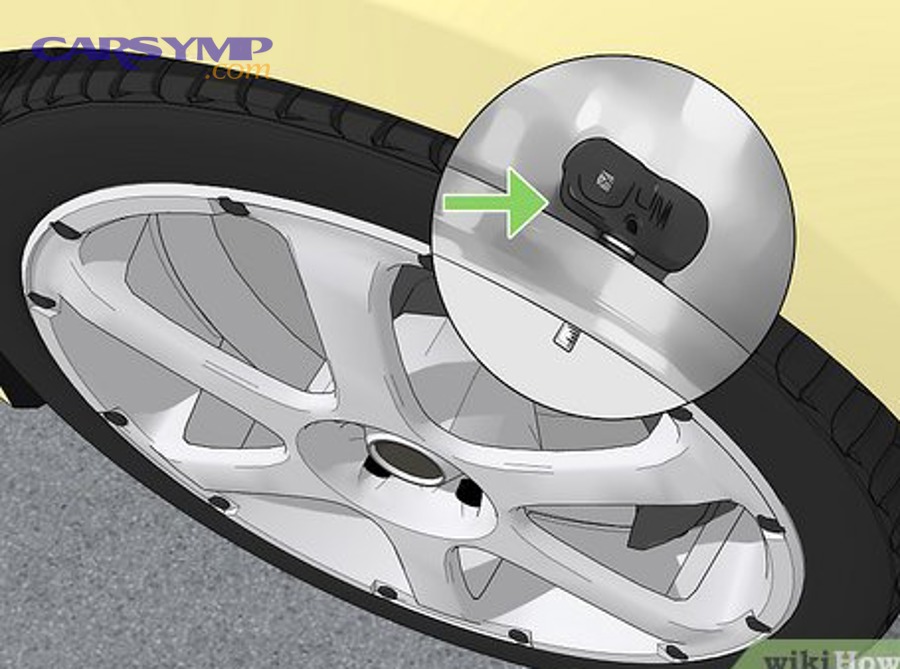
The sensor sits inside the wheel, most commonly mounted on the valve stem, and continuously monitors the air pressure in that specific tire. When pressure drops to at least 25% below the manufacturer’s recommended level, the sensor triggers the TPMS warning light on the dashboard — typically a yellow horseshoe-shaped icon with an exclamation point. It is important to understand the meronymy here: the sensor is just one part of the full Tire Pressure Monitoring System, which also includes a receiver module in the vehicle, the ECU, and the dashboard display. If any single component in that chain fails, the entire system loses its ability to protect the driver.
As part of routine tire pressure monitoring system service, technicians check not only the sensor’s pressure readings but also its battery status and RF transmission integrity — because a sensor that appears physically intact may still be nearing the end of its broadcast life.
How Does a TPMS Sensor Work Inside Your Tire?
A TPMS sensor works by using an internal pressure transducer to convert the physical air pressure inside the tire into a digital value, which is then transmitted via a radio frequency signal to the vehicle’s receiver module.
Specifically, two transmission frequencies are used across different vehicle makes and regions: 315 MHz, which is standard on most North American vehicles, and 433 MHz, which is more common in European-market cars. Using a replacement sensor with the wrong frequency is one of the most common installation mistakes — the new sensor will be physically installed and properly torqued, yet it will never communicate with the ECU, leaving the TPMS warning light on. Inside the sensor housing, a small lithium battery powers the transducer and the RF transmitter continuously throughout the sensor’s life. Because this battery is permanently sealed inside the unit — it cannot be accessed or swapped out separately — once the battery dies, the entire sensor must be replaced.
How Long Do TPMS Sensors Last Before Needing Replacement?
TPMS sensors typically last between five and ten years or approximately 100,000 miles, with the sealed internal battery being the primary factor that determines end-of-life.
However, that lifespan is not guaranteed and can be cut short by several environmental factors. Road salt — especially in northern climates where roads are treated during winter — accelerates corrosion at the base of the valve stem, which can compromise the sensor’s seal and cause it to fail prematurely. Physical damage during tire service is another common culprit: if the tire machine arm contacts the sensor while breaking the bead, the housing can crack and the sensor will stop transmitting. Additionally, using a non-TPMS-safe aerosol tire inflator or sealant can clog the sensor’s pressure port, producing inaccurate readings or total failure. Seasonal temperature changes and TPMS alerts are also closely connected — cold weather causes tire pressure to drop naturally (roughly 1 PSI for every 10°F decrease in temperature), which can trigger the warning light even when the sensor itself is functioning correctly. Car Symptoms like a persistently illuminated TPMS light in cold weather do not always indicate a failed sensor; checking actual tire pressure first is always the right first step.
What Are the Signs That Your TPMS Sensor Needs Replacement?
There are four primary warning signs that a TPMS sensor needs replacement: a TPMS warning light that stays on after tires are properly inflated, a light that blinks for 60 to 90 seconds before going solid, consistently inaccurate pressure readings on the dashboard display, and a sensor that has exceeded its expected service life.
Recognizing these car symptoms early prevents the far more dangerous outcome — driving on a significantly under-inflated tire without any warning at all. The following two sub-sections clarify the two most commonly misread TPMS signals.
Does a Solid TPMS Warning Light Always Mean the Sensor Is Faulty?
No — a solid TPMS warning light does not always mean the sensor is faulty. In most cases, a steady light simply means that one or more tires have dropped below the recommended PSI, which requires inflation rather than sensor replacement.
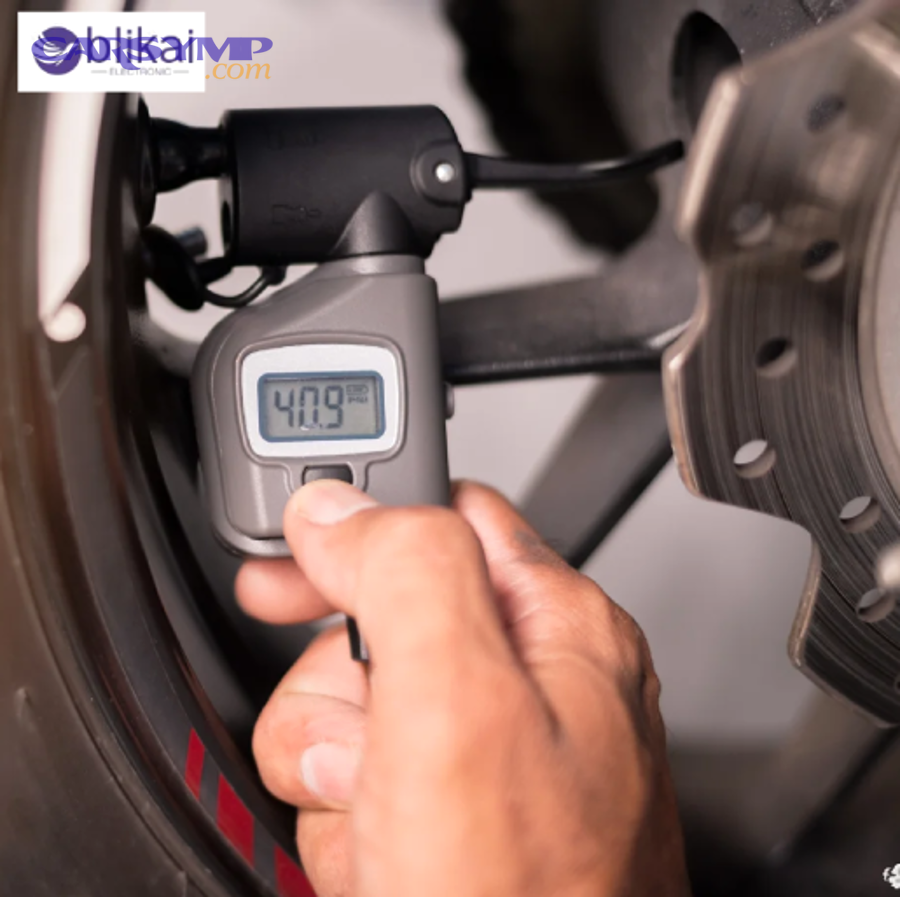
The correct diagnostic sequence is to check all four tires with a quality pressure gauge first. If inflating the tires to the manufacturer’s recommended PSI (found on the driver’s side door jamb sticker) causes the light to turn off within a few minutes of driving, the sensor is working exactly as intended. However, if the light remains on after all tires are properly inflated, a sensor malfunction, a dead battery inside the sensor, or a system communication error is the likely cause. A blinking TPMS light — specifically one that flashes for 60 to 90 seconds before becoming solid — is a clearer indicator of system malfunction and warrants professional diagnostic scanning. This distinction matters because replacing a sensor unnecessarily wastes money, while ignoring a genuine failure leaves the driver without tire pressure protection.
What Are the Most Common Reasons a TPMS Sensor Fails?
There are five main reasons a TPMS sensor fails: dead internal battery, valve stem corrosion, physical damage during tire service, contamination from tire sealant, and loss of communication following tire rotation or wheel swap.
Each failure mode has a different root cause and a different solution. Dead battery failure is inevitable — it is simply the end of the sensor’s designed service life and requires full sensor replacement. Valve stem corrosion is especially common on vehicles driven in regions that use road salt, and it progresses from the outside of the stem inward, eventually causing air leaks and sensor signal loss. Physical damage from tire machines is largely preventable with careful technique. TPMS issues after tire rotation or replacement are frequently misdiagnosed as sensor failure when they are actually relearn failures — the sensor is still functional, but the vehicle’s ECU no longer knows which sensor is in which wheel position. A simple relearn procedure often resolves this without any parts replacement.
How Much Does TPMS Sensor Replacement Cost?
TPMS sensor replacement costs between $75 and $250 per sensor in total, depending on three main variables: the sensor type chosen (OEM or aftermarket), the labor rate of the shop performing the work, and whether a valve service kit and programming tool time are included.
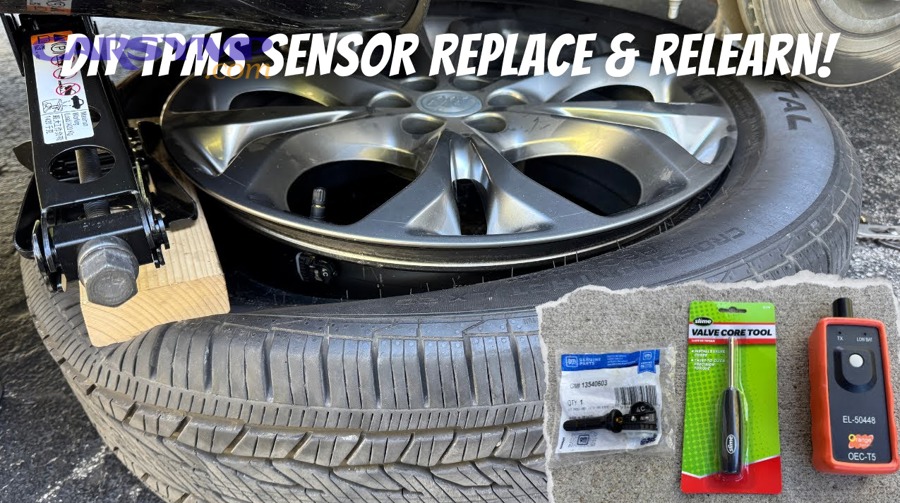
Understanding the cost breakdown in detail helps car owners evaluate quotes and decide when DIY is genuinely cost-effective versus when professional service delivers better value for the money.
The table below summarizes the typical cost ranges for each component of a complete TPMS sensor replacement so car owners can build an accurate total estimate before committing to a repair.
| Cost Component | DIY Cost | Professional Cost |
|---|---|---|
| OEM Sensor (per sensor) | $50 – $150 | $50 – $150 |
| Aftermarket/Universal Sensor | $25 – $75 | $25 – $75 |
| Labor (per sensor) | $0 | $50 – $100 |
| Valve Service Kit (per wheel) | $5 – $10 | $5 – $10 |
| TPMS Programming Tool | $30 – $150 (tool purchase) | Included in labor |
| Total per sensor | $60 – $235 | $100 – $260 |
What Is the Difference in Cost Between OEM and Aftermarket TPMS Sensors?
OEM sensors win on guaranteed compatibility, while aftermarket sensors are best for cost savings — but aftermarket universal sensors require correct programming to the vehicle’s frequency and sensor protocol before they will communicate reliably.
Specifically, OEM (Original Equipment Manufacturer) sensors are produced to the exact specifications of the vehicle manufacturer and are designed as direct plug-and-play replacements that typically require only a relearn procedure to activate. Their cost ranges from $50 to $150 per sensor. Aftermarket sensors — also called universal or programmable sensors — are manufactured by third-party companies and cost between $25 and $75 per unit. The key trade-off is that aftermarket sensors must be cloned or programmed to the correct sensor ID and transmission frequency before installation; without that programming step, they will not transmit to the vehicle’s ECU regardless of how precisely they are installed. For car owners replacing sensors on a common domestic vehicle, quality aftermarket sensors from established brands perform reliably at a lower cost. For luxury vehicles, European imports, or newer models with advanced TPMS protocols, OEM sensors reduce the risk of compatibility issues.
How Much Does Professional TPMS Sensor Replacement Labor Cost?
Professional labor for TPMS sensor replacement typically costs $50 to $100 per sensor, with that rate covering tire dismounting, sensor installation, torquing, and the relearn procedure — but not always the valve service kit, which is usually billed separately at $5 to $10 per wheel.
The total cost for a single sensor replaced professionally — including the part, labor, and service kit — realistically falls between $100 and $260, depending on location, vehicle type, and whether OEM or aftermarket parts are used. Dealerships typically sit at the higher end of that range, while independent tire shops and chains like Firestone, Meineke, or Mavis tend to offer more competitive pricing. It is worth asking any shop upfront whether their quoted price includes the valve service kit and the relearn step, as some shops itemize these separately and the final invoice can be higher than the initial estimate.
How Do You Replace a TPMS Sensor Step by Step?
Replacing a TPMS sensor involves six key steps — gathering tools, safely lifting and removing the wheel, deflating and dismounting the tire, swapping the sensor, remounting and inflating the tire, and completing the system relearn — with each step requiring attention to detail to avoid air leaks or a persistent warning light.
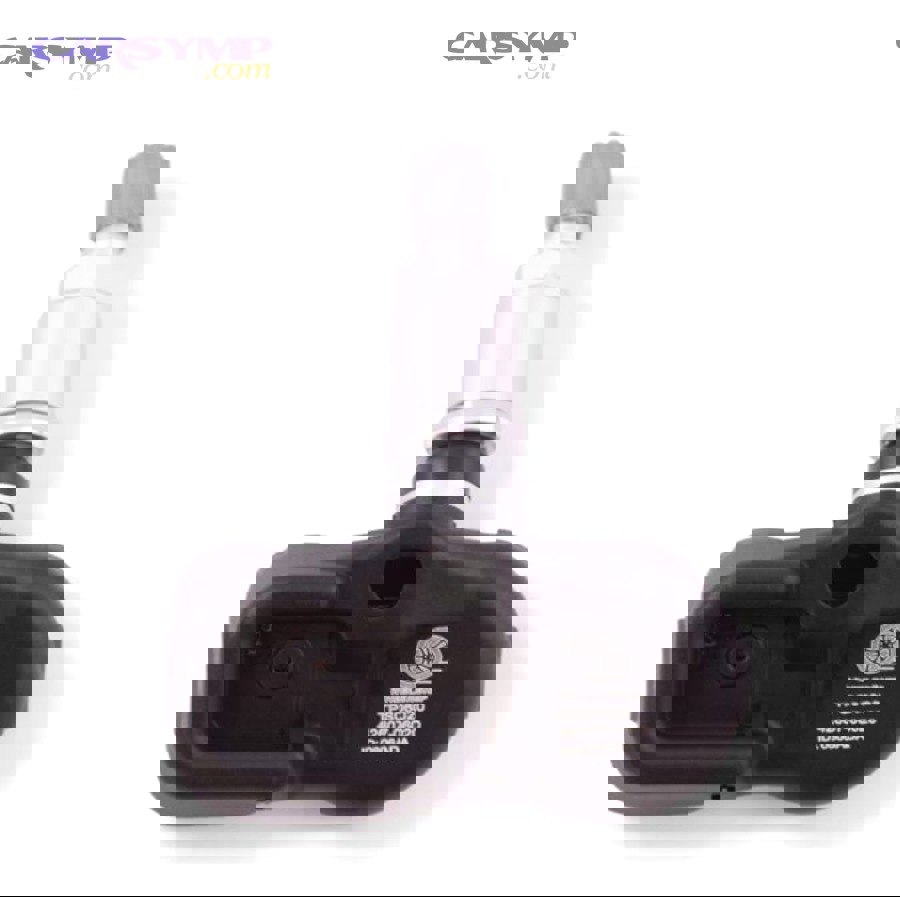
Before beginning, assemble all required tools: a lug wrench, floor jack, jack stands, wheel chocks, a valve core removal tool, a tire bead breaker or tire machine, a torque wrench, and a TPMS scan or relearn tool. Safety equipment — gloves and eye protection — is mandatory, and all work should be performed on a level surface with the parking brake fully engaged.
How Do You Remove the Old TPMS Sensor from the Wheel?
Removing the old TPMS sensor requires deflating the tire, breaking the bead, and unscrewing the sensor from the valve stem — all while ensuring the tire machine arm never contacts the sensor body, which is positioned near the rim edge.
The step-by-step removal process is as follows:
- Loosen lug nuts (with the vehicle still on the ground) using a lug wrench — do not fully remove them yet.
- Lift the vehicle with a floor jack and secure it on jack stands; place wheel chocks on the opposite tires.
- Remove the wheel completely and lay it flat on a clean work surface with the exterior face up.
- Deflate the tire by inserting a valve core removal tool into the valve stem and extracting the core; stand clear as the tire deflates rapidly.
- Break the bead using a tire bead breaker or tire machine. When positioning the machine arm, identify the sensor location (it sits directly at the valve stem base) and keep the arm well away from it to avoid cracking the sensor housing.
- Push the tire off the rim far enough to access the sensor at the valve stem.
- Unscrew the sensor nut from the valve stem using the appropriate wrench and carefully pull the sensor free from the wheel.
At this point, inspect the valve stem hole and the surrounding rim area for corrosion or debris before proceeding with installation.
How Do You Install and Torque a New TPMS Sensor Correctly?
Installing a new TPMS sensor correctly means threading it onto the valve stem, torquing the retaining nut to the manufacturer’s specification — typically 4 to 7 Nm — and replacing all service kit components before remounting the tire.
This step is where many DIY replacements go wrong. Under-torquing the sensor nut can allow air to escape around the valve stem seal; over-torquing it can crack the sensor housing or distort the grommet, causing the same leak. Always check the specific torque specification on the sensor’s packaging rather than applying a generic number. The full installation process:
- Install the new sensor onto the valve stem from the inside of the wheel, threading it through the valve stem hole.
- Replace the full valve service kit — this includes the valve core, valve cap, grommet (stem seal), and retaining nut. These are one-time-use components and should never be reused from the old sensor.
- Torque the retaining nut to the specified value (confirm in the sensor instructions).
- Lubricate both tire beads with approved tire mounting lubricant.
- Remount the tire onto the rim using the tire machine, keeping the machine arm clear of the sensor at all times.
- Inflate the tire to the manufacturer’s recommended PSI; do not exceed the maximum PSI printed on the tire sidewall.
- Check the valve stem for any air leaks using soapy water before reinstalling the wheel on the vehicle.
Metal vs rubber valve stem sensor differences matter here: metal valve stem sensors (common on OEM direct TPMS systems) require the full metal service kit and a specific torque procedure, while rubber snap-in valve stems used on some aftermarket sensors simply press into the valve hole and do not use a threaded nut. Confirm which type your replacement sensor uses before beginning installation.
How Do You Reset and Relearn a TPMS Sensor After Replacement?
Resetting and relearning a TPMS sensor requires one of three methods — automatic drive-cycle relearn, manual button relearn using the vehicle’s built-in reset function, or scan tool relearn — and the correct method depends entirely on the vehicle make and model.
The relearn step is non-negotiable. The vehicle’s ECU stores a unique sensor ID for each wheel position, and a newly installed sensor has a new ID that the ECU does not yet recognize. Until the relearn is completed, the system cannot associate the new sensor with the correct wheel, and the TPMS warning light will remain on. The three methods in detail:
- Auto-relearn (drive cycle): Drive the vehicle above 30 mph for approximately 10 minutes. The ECU detects the new sensor’s transmissions and registers it automatically. This method works on many domestic vehicles but can take multiple drive cycles on some models.
- Manual button relearn: Some vehicles have a dedicated TPMS reset button located beneath the steering column. Pressing and holding it while cycling the ignition through a specific sequence triggers the system to scan for and accept new sensor IDs. Consult the owner’s manual for the exact sequence.
- Scan tool relearn: A TPMS-specific scan tool (such as the Autel TS508 or equivalent) communicates directly with each sensor using a low-frequency activation signal, reads the new sensor’s ID, and sends that ID to the vehicle’s TPMS module. This is the fastest and most reliable method and is the standard used by professional shops.
Importantly, if the replacement sensor was purchased as a universal/programmable unit, it must be pre-programmed to the correct frequency (315 MHz or 433 MHz) before the relearn step begins. A sensor transmitting on the wrong frequency will never be recognized by the ECU regardless of how many relearn attempts are made.
Should You Replace TPMS Sensors Yourself or Hire a Professional?
DIY TPMS sensor replacement wins on cost savings — potentially $50 to $100 per sensor — but professional service is optimal for vehicles requiring OEM programming tools, for drivers without access to a tire bead breaker, and in any situation where the relearn step fails after a DIY attempt.
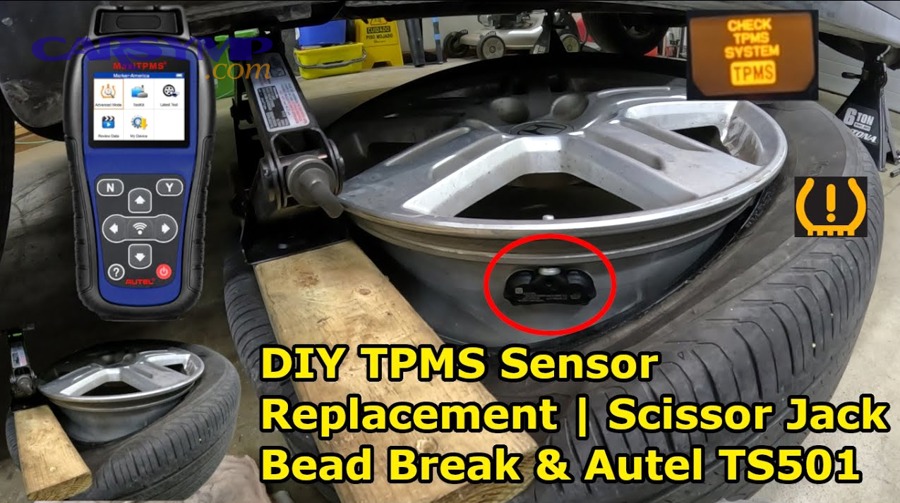
This is not an all-or-nothing decision. For an experienced home mechanic with the right tools and a common domestic vehicle, DIY replacement is entirely practical. For a driver with limited tools, a luxury vehicle, or a multi-sensor replacement across all four wheels, professional service delivers accuracy and peace of mind that often outweighs the cost differential.
What Are the Risks of DIY TPMS Sensor Replacement?
There are five main risks in DIY TPMS sensor replacement: incorrect torque causing air leaks, wrong sensor frequency preventing ECU communication, failure to complete the relearn procedure, sensor damage from tire machine contact, and improper service kit replacement leading to premature failure.
More specifically, the torque risk is the most immediately dangerous — a valve stem that is not sealed correctly will slowly leak air, potentially flattening the tire within hours or days without triggering an immediate warning. The frequency mismatch risk is equally problematic because it produces no air leak or physical symptom: the tire holds pressure normally, but the TPMS system is completely blind to that wheel. Driving in that condition is exactly the scenario the system was designed to prevent. Additionally, skipping the valve service kit replacement — reusing the old grommet, valve core, and nut — saves a few dollars but introduces corrosion and seal degradation that can cause the new sensor to fail within one or two tire service cycles.
When Is It Better to Take Your Car to a Professional for TPMS Replacement?
Yes — there are clear situations where professional TPMS replacement is the better choice: when you lack a tire bead breaker or tire machine, when the TPMS light remains on after a completed DIY relearn, when the new sensor is leaking air at the valve stem, or when the vehicle requires OEM-specific programming equipment.
Professional shops offer three specific advantages that justify the labor cost in these scenarios. First, dealerships and established tire centers — such as Firestone, Meineke, and Mavis — have professional-grade TPMS scan tools that can communicate with OEM sensor protocols, perform forced relearns, and diagnose receiver module faults that a basic consumer tool cannot detect. Second, trained technicians torque and seal sensors using calibrated tools, eliminating the air leak risk. Third, shops carry the correct OEM or equivalent sensors for each vehicle in their inventory, removing the compatibility guesswork that trips up many DIY buyers. TPMS issues after tire rotation or replacement — where the light turns on after service but the sensors themselves are still functional — are also best diagnosed by a professional scan tool, because the fix may be a simple relearn rather than a replacement, saving the car owner unnecessary parts expense.
What Else Should Car Owners Know About TPMS Sensors?
Beyond the standard replacement process, car owners who want to maximize TPMS reliability and avoid repeat failures should understand three additional areas: the fundamental difference between direct and indirect TPMS systems, the functionality of programmable universal sensors, the non-negotiable importance of service kit replacement at every tire service, and the legal framework that governs TPMS in the United States and Europe.
These topics expand the micro semantics of TPMS sensor ownership — they are less frequently discussed but directly affect long-term sensor performance, compatibility decisions, and compliance awareness.
What Is the Difference Between Direct and Indirect TPMS Sensors?
Direct TPMS wins in precision and real-time accuracy, while indirect TPMS is best for low-cost implementation — but only direct TPMS uses a physical sensor inside the wheel that requires replacement when it fails.
Specifically, direct TPMS places a battery-powered pressure sensor inside each wheel that continuously measures actual tire pressure and transmits that value to the ECU via RF signal. This is the system found on the vast majority of vehicles manufactured in the United States since 2008. Indirect TPMS, by contrast, does not use an in-wheel pressure sensor at all — it infers tire pressure loss by comparing the rotational speeds of each wheel using the existing Anti-lock Brake System (ABS) sensors. If one tire is under-inflated, it will have a slightly smaller effective rolling diameter and spin marginally faster, which the ABS module detects as a pressure anomaly. The critical implication for car owners is this: if your vehicle has indirect TPMS and the warning light turns on, there is no physical tire pressure sensor to replace. The resolution is typically a system recalibration performed after inflating all tires to the correct PSI — not a parts replacement.
What Is a Programmable or Universal TPMS Sensor and How Does It Work?
A programmable or universal TPMS sensor is a single aftermarket sensor unit that can be configured to replicate the ID and frequency profile of virtually any OEM sensor, making it compatible across hundreds of vehicle makes and models rather than being limited to one specific application.
Leading examples include the Schrader EZ-sensor and the Autel MX-sensor, both of which support cloning and manual programming via a compatible TPMS tool. The cloning function is particularly useful: before the old sensor is removed from the wheel, its unique sensor ID is read and copied onto the new universal sensor using a handheld programmer. When the new sensor is installed with the same ID as the original, the vehicle’s ECU recognizes it immediately without requiring a separate relearn procedure. For shops that service a wide variety of vehicle brands, carrying a small stock of programmable universal sensors is far more practical than maintaining an inventory of dozens of OEM-specific units. Car owners taking the DIY route should confirm the replacement sensor supports their vehicle’s protocol — not just its frequency — before purchasing.
Why Do TPMS Service Kit Parts Need to Be Replaced Every Tire Service?
Yes — TPMS service kit parts must be replaced at every tire service, because the valve core, grommet, retaining nut, and cap are one-time-use components designed for a single installation cycle and will degrade, corrode, or lose their sealing integrity if reused.
This requirement is a specific recommendation from TPMS sensor manufacturers including Schrader, and it is one of the most commonly skipped steps in both DIY and professional tire service. The consequence of reusing these components is progressive: the grommet (stem seal) takes a permanent compression set after the first installation and will not form a complete seal the second time. The metal nut and valve core are vulnerable to galvanic corrosion when in contact with aluminum wheels, especially in environments where road salt accelerates the bimetallic reaction. Over time, a corroded valve stem can cause a slow air leak that the tire holds for weeks before failing, or it can physically break off during a subsequent tire service, destroying the sensor with it. The service kit costs $5 to $10 per wheel — a negligible expense compared to the cost of a full sensor replacement triggered by avoidable corrosion failure. More than 70,000 accidents per year in the United States are linked to improper tire inflation, making every maintenance step that keeps TPMS functioning correctly a genuine safety measure.
Are There Any Laws or Regulations Requiring TPMS Sensor Maintenance?
Yes — federal law in the United States requires all new passenger vehicles to be equipped with a TPMS system at the point of manufacture, but no current federal law mandates that individual drivers repair or replace a faulty TPMS sensor after the vehicle is sold.
The legal foundation is the TREAD Act (Transportation Recall Enhancement, Accountability, and Documentation Act) of 2000, which directed the National Highway Traffic Safety Administration (NHTSA) to establish TPMS performance standards. As a result, all new passenger vehicles sold in the US from model year 2008 onward must include a functioning TPMS. In practice, however, a vehicle with a non-functioning TPMS sensor is still legal to drive in most states — though some state vehicle inspection programs flag an illuminated TPMS warning light as a failure condition, effectively requiring repair for the vehicle to pass inspection. Car owners in states with annual safety inspections should verify their state’s specific rules. In the European Union, Regulation EC 661/2009 required all new type-approved vehicles to be fitted with TPMS from November 2012, with the requirement extending to all new passenger cars sold from November 2014. European regulations similarly do not mandate ongoing sensor maintenance by the owner, but the broader push toward vehicle safety standards in both markets underscores why keeping the TPMS system in working order remains both a legal-adjacent responsibility and a fundamental road safety practice.