


Your car is telling you it needs attention — and most drivers miss the message. There are 7 distinct warning signs that fluid service is overdue, and recognizing them early is the single most effective way to prevent costly mechanical failures. From a burnt smell rising from your engine bay to sluggish gear shifts that feel nothing like they used to, these signals appear across every major fluid system in your vehicle: engine oil, transmission fluid, brake fluid, coolant, and power steering fluid. Ignoring them doesn’t just affect performance — it puts your safety and your wallet at serious risk.
Understanding what “overdue fluid service” actually means is the first step toward acting on these signs. Each fluid in your vehicle has a defined role — lubricating moving parts, transferring heat, maintaining hydraulic pressure — and when that fluid breaks down chemically or drops below a safe level, its ability to do that job collapses. The degradation process is often invisible to the naked eye until it has already progressed to a dangerous stage, which is why knowing what to look for matters more than most drivers realize.
Not all warning signs carry equal urgency. A contaminated brake fluid signal is a safety emergency; a mildly discolored power steering fluid is a maintenance priority. Knowing how to read the difference between a critical warning and a moderate one allows you to triage properly — acting immediately on the most dangerous signs while scheduling less urgent services before they escalate.
The most overlooked truth about overdue fluid service is that many vehicles show no obvious symptoms at all until internal damage has already begun. That silent degradation — where fluid breaks down chemically long before color or performance changes become visible — is what makes this topic so important for every car owner to understand. Below, this guide walks through each warning sign, what it means, which fluid it points to, and exactly when you need to stop waiting and call a mechanic.
What Does “Fluid Service Overdue” Actually Mean for Your Car?
Fluid service overdue means one or more of your vehicle’s critical fluids has degraded past the point where it can effectively lubricate, cool, or pressurize the systems it serves, based on either elapsed time, accumulated mileage, or measurable fluid condition.
To better understand this, it helps to start with a clear picture of what fluid service actually covers — because most drivers underestimate how many fluid systems their vehicle depends on.

Which Vehicle Fluids Require Periodic Replacement?
There are 5 primary fluids in a standard gasoline-powered vehicle that require scheduled replacement, each serving a distinct and irreplaceable function.
Engine Oil is the most frequently serviced fluid. It lubricates internal engine components, reduces friction-generated heat, and carries microscopic debris away from moving metal surfaces. Most vehicles require an oil change every 5,000 to 10,000 miles depending on whether conventional or synthetic oil is used.
Transmission Fluid protects the gearbox by lubricating its complex internal components and — in automatic transmissions — acting as a hydraulic medium that physically moves gear changes. A transmission fluid change is typically recommended every 30,000 to 60,000 miles for automatic transmissions, though some manufacturers specify longer intervals.
Brake Fluid transfers the physical force of your foot pressing the brake pedal into hydraulic pressure that squeezes the brake calipers. It is hygroscopic, meaning it absorbs moisture from the air over time, which lowers its boiling point and corrodes internal brake components. Most manufacturers recommend replacement every 2 to 3 years regardless of mileage.
Coolant (Antifreeze) regulates engine temperature, prevents freezing in cold climates, and contains corrosion inhibitors that protect aluminum and steel surfaces inside the engine and radiator. Traditional green coolant requires replacement every 2 to 3 years; extended-life formulas can last 5 to 10 years.
Power Steering Fluid maintains the hydraulic pressure that makes steering effort light and responsive. It degrades over time and can absorb contaminants that wear down the pump and rack. A Brake/coolant/power steering fluid service overview is a smart starting point for any vehicle owner who hasn’t reviewed their maintenance schedule recently.
How Long Can You Go Before Fluid Service Becomes Overdue?
The answer depends on the fluid type, your driving conditions, and your vehicle’s age — but the key point is that overdue status begins before symptoms appear.
The table below summarizes general service intervals across all five major fluids. Use it as a baseline reference — always cross-check with your vehicle’s owner manual, as manufacturer specifications take priority.
| Fluid | Typical Replacement Interval | Accelerated by |
|---|---|---|
| Engine Oil | Every 5,000–10,000 miles | Short trips, extreme heat, towing |
| Transmission Fluid | Every 30,000–60,000 miles | Aggressive driving, towing, high heat |
| Brake Fluid | Every 2–3 years | Humid climates, frequent hard braking |
| Coolant | Every 2–10 years (formula-dependent) | Overheating events, older vehicles |
| Power Steering Fluid | Every 50,000–75,000 miles | High steering load, old hoses |
Driving habits dramatically compress these intervals. Vehicles used for frequent short trips, towing, mountain driving, or operation in extreme temperatures — hot or cold — will reach an overdue service threshold significantly faster than the mileage benchmarks above suggest. This is why manufacturers distinguish between “normal” and “severe” driving conditions in their maintenance schedules.
What Are the 7 Warning Signs Your Fluid Service Is Overdue?
There are 7 main warning signs that fluid service is overdue: a dashboard warning light, changed fluid color or consistency, a burnt or unusual smell, unusual noises, performance or handling problems, visible fluid leaks under the vehicle, and exceeding the recommended service interval — each pointing to one or more specific fluid systems.
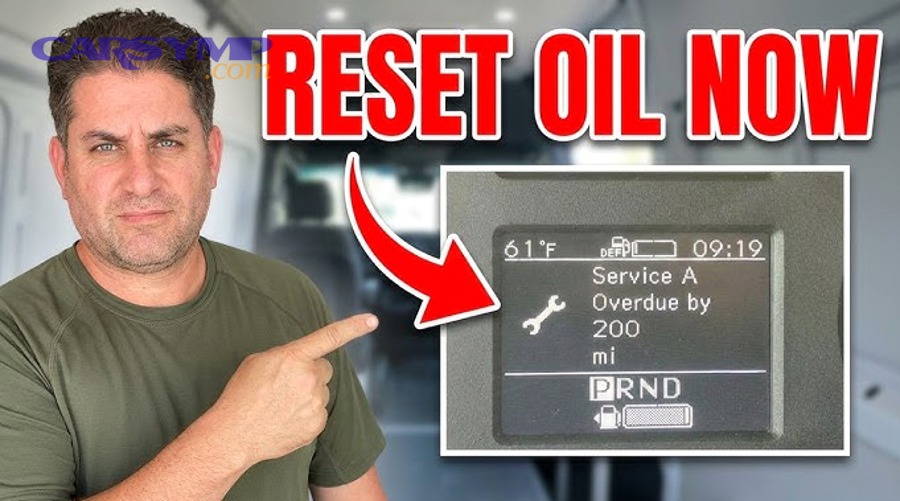
Specifically, these signs range from immediately visible to subtly behavioral, which is why many drivers dismiss them as “the car just getting older” rather than recognizing them as direct maintenance signals. Let’s examine each one in detail.
Sign 1 — Is Your Dashboard Warning Light On?
Yes — a dashboard warning light is one of the clearest indicators that fluid service is overdue, though it is important to understand that most warning lights are late-stage alerts, not early warnings.
By the time a fluid-related warning light activates, the system it monitors has already dropped below a safe operating threshold. The oil pressure warning light, for example, does not illuminate simply because an oil change is due — it activates when oil pressure has fallen to a level that places engine components at immediate risk of damage. Similarly, the transmission temperature light signals that fluid has degraded or dropped low enough to cause overheating inside the gearbox.
- Oil pressure light (red): Indicates critically low oil pressure — stop driving immediately
- Check engine light: Can be triggered by oil quality sensors in modern vehicles
- Brake system warning light: May indicate low brake fluid level or contamination
- Coolant temperature warning: Signals overheating, often linked to low or degraded coolant
- Transmission temperature light: Indicates overheated transmission fluid — pull over safely
The critical takeaway is this: do not wait for a warning light to schedule fluid service. These lights are your car’s last line of communication before damage begins.
Sign 2 — Has Your Fluid Color or Consistency Changed?
Yes — discolored or thickened fluid is a direct indicator that fluid service is overdue, as healthy fluids maintain specific color ranges that degrade predictably as they break down.
Checking fluid condition requires nothing more than a dipstick, a clean rag, and a few minutes under the hood. The following color-to-condition reference covers all five major fluids:
- Engine oil: Healthy oil is golden amber; dark brown or black oil with a gritty texture is overdue
- Transmission fluid: Fresh ATF is bright red or pink; dark brown, nearly black fluid with a burnt smell signals overdue service
- Brake fluid: Clear to light amber is healthy; dark brown or nearly black fluid indicates moisture contamination and overdue replacement
- Coolant: Bright green, orange, or pink (depending on formula) is normal; brown, rusty, or murky coolant needs immediate attention
- Power steering fluid: Should be clear or slightly amber; dark, foamy, or milky fluid indicates degradation or contamination
Consistency matters as much as color. Engine oil that feels gritty between your fingers contains metallic debris from internal wear. Transmission fluid that appears thick, tar-like, or contains visible particles indicates advanced breakdown that has likely already caused internal friction damage.
Sign 3 — Do You Notice a Burnt or Unusual Smell?
Yes — a burnt smell coming from your vehicle is one of the most reliable sensory indicators that fluid service is overdue, as each fluid produces a distinctive odor when it degrades or overheats.
The burnt smell category alone covers multiple fluid systems, and learning to identify the source by scent helps you diagnose the problem before opening the hood.
- Burnt oil smell (acrid, sharp): A hot, almost metallic burning odor from the engine bay signals that engine oil has degraded past its protective capability, or that oil is leaking onto hot engine surfaces
- Burnt transmission fluid smell (sweet-burning): A distinctive sweet, slightly chemical burning smell — often noticeable after aggressive driving or climbing hills — points directly to overheated or overdue transmission fluid
- Overheated coolant smell (syrupy, sweet): A sugary, almost maple-like smell, especially near the radiator or from the vents, indicates coolant is leaking or boiling — both serious conditions
- Brake fluid smell (sharp, chemical): A pungent chemical odor after repeated hard braking, particularly on descents, signals that brake fluid has exceeded its boiling point — a condition called brake fade that directly compromises stopping ability
According to guidance from the National Institute for Automotive Service Excellence (ASE), unusual vehicle odors are among the most underreported early warning signs drivers experience — many attributing them to external sources rather than the vehicle itself.
Sign 4 — Is Your Vehicle Making Unusual Noises?
Yes — unusual noises during normal vehicle operation are a strong indicator that one or more fluid services are overdue, as degraded or insufficient fluid causes metal components to contact each other without adequate lubrication.
Sound is one of the most immediate feedback channels your vehicle uses to communicate mechanical stress. Each fluid system produces a recognizable noise pattern when it fails.
- Engine knocking or ticking: A rhythmic metallic tapping from the engine, especially on cold starts, signals that engine oil is too low or too degraded to maintain a protective film between moving parts. Left unaddressed, this leads to accelerated bearing wear and, ultimately, engine seizure.
- Whining or grinding during gear shifts: A high-pitched whine when shifting, or a grinding sensation as gears engage, points directly to degraded or low transmission fluid. The gearbox relies on fluid both for lubrication and as the hydraulic medium that executes gear changes — when the fluid breaks down, both functions suffer simultaneously.
- Grinding or squealing brakes: While often attributed to worn brake pads, squealing and grinding can also indicate that brake fluid contamination has reduced hydraulic pressure consistency, causing uneven caliper engagement.
- Whining from the steering column: A persistent whine or groan when turning the wheel — particularly at low speeds or when parking — is the signature sound of a power steering pump struggling with low or contaminated fluid.
Sign 5 — Are You Experiencing Performance or Handling Problems?
Yes — degraded driving performance and compromised vehicle handling are direct symptoms of overdue fluid service, affecting acceleration, gear shifting, steering response, and braking distance simultaneously.
Performance changes tend to develop gradually, which makes them easy to rationalize as normal vehicle aging. But each of the following symptoms maps to a specific fluid failure:
- Sluggish acceleration: When engine oil has broken down past its viscosity rating, internal friction increases and the engine must work harder to produce the same output. The result is noticeably slower acceleration from a stop or during highway merging.
- Hard or unresponsive steering: Degraded power steering fluid loses its hydraulic efficiency, requiring significantly more physical effort to turn the steering wheel. This is particularly noticeable during low-speed maneuvers and parking.
- Delayed or rough gear shifts: One of the clearest signs that a transmission fluid change is overdue is a hesitation between gear changes, a harsh “clunk” when the transmission shifts, or slipping — where the engine revs increase but the vehicle doesn’t accelerate proportionally.
- Increased stopping distance: Contaminated brake fluid — particularly fluid that has absorbed enough moisture to lower its boiling point — produces soft, spongy brake pedal feel and longer stopping distances. This is a direct safety risk that demands immediate attention.
Sign 6 — Can You See Fluid Leaks Under Your Vehicle?
Yes — visible fluid pooling or dripping beneath your parked vehicle is a clear sign that one or more fluid systems are losing volume faster than normal service intervals account for, making fluid service effectively overdue regardless of mileage.
Identifying which fluid is leaking requires only a visual inspection of the puddle’s color, location, and texture. The table below provides a practical leak identification reference.
| Fluid | Color | Typical Location Under Vehicle | Urgency |
|---|---|---|---|
| Engine Oil | Brown to black | Under engine center/front | High |
| Transmission Fluid | Bright red to dark red | Front-center under transmission | High |
| Brake Fluid | Clear to light yellow | Near wheels or firewall area | Critical |
| Coolant | Bright green, orange, or pink | Under radiator or front of engine | High |
| Power Steering Fluid | Clear to amber | Under front-center | Moderate-High |
Preventing leaks after fluid service is also a maintenance consideration — improper sealing of drain plugs, worn gaskets, or damaged fluid lines can cause post-service leaks that are mistaken for pre-existing problems. If you notice new drips appearing after a recent fluid change, return to your service provider for inspection.
Any fluid leak accelerates how quickly service becomes critically overdue. A transmission fluid leak that reduces ATF volume by 20% will produce overdue-service symptoms in a fraction of the normal service interval.
Sign 7 — Has It Been Longer Than the Recommended Service Interval?
Yes — exceeding the manufacturer’s recommended fluid service interval makes your vehicle technically overdue for service even if no visible, auditory, or performance symptoms have appeared yet.
This is the most overlooked sign of all, because the vehicle may feel and drive completely normally while fluid degradation has already progressed at the chemical level. Engine oil, for example, loses its viscosity index improvers and antioxidant additives long before it turns noticeably dark or produces any smell. Transmission fluid loses its friction modifiers — the additives that ensure smooth gear engagement — before any shifting symptoms become perceptible.
The practical rule is straightforward: if you cannot recall the date or mileage of your last fluid service for any of the five major systems, treat your vehicle as overdue and schedule a fluid condition check immediately. Fluid service is one of the highest-return maintenance investments available — the cost of a routine oil change, for example, is measured in tens of dollars; the cost of an engine seized from oil starvation can exceed several thousand.
Are All 7 Signs Equally Urgent — or Are Some More Dangerous Than Others?
Brake fluid warning signs are the most critical for immediate safety, engine oil signs carry the fastest risk of irreversible mechanical damage, and transmission fluid signs represent the highest potential repair cost if ignored — making urgency a function of both safety risk and financial consequence.
However, ranking these signs requires understanding that urgency is not fixed — it escalates with time. A mildly discolored power steering fluid today becomes a pump-damaging contamination problem if left unaddressed for six more months. The comparison below is intended to help you prioritize, not to suggest any warning sign is safe to ignore indefinitely.
Which Overdue Fluid Warning Is the Most Dangerous to Ignore?
Brake fluid contamination is the most dangerous overdue fluid warning to ignore, because its consequences are directly safety-critical — degraded brake fluid can cause complete brake failure without any prior warning during normal driving conditions.
The danger mechanism is specific and well-documented. Brake fluid absorbs moisture from the air over time. As moisture content rises, the fluid’s boiling point drops. Under hard braking conditions — an emergency stop, sustained downhill braking, or racing — contaminated brake fluid can vaporize inside the brake lines, creating a vapor bubble that cannot transmit hydraulic pressure. The result is a brake pedal that depresses fully to the floor with zero stopping force. This condition, known as brake fade, can occur in a vehicle that showed no obvious symptoms during normal driving just minutes before.
Engine oil urgency follows closely. A knocking engine running on degraded or low oil can suffer catastrophic bearing failure within minutes of sustained operation. Unlike brake failure — which requires a specific triggering event — oil-starvation engine damage can begin during any drive.
Transmission fluid ranks third by immediate danger but first by repair cost. A transmission rebuild or replacement following complete ATF neglect can cost between $2,500 and $5,000 or more depending on vehicle make and model.
Which Warning Signs Can You Monitor at Home vs. Which Need a Mechanic?
DIY-checkable signs include fluid color and consistency via dipstick, unusual smells, visible leaks, dashboard warning lights, and mileage-based service intervals — while sealed transmission fluid assessment, ABS brake system pressure testing, and internal fluid contamination diagnosis require professional tools and expertise.
Signs you can reliably monitor at home:
- Engine oil level and color (dipstick check)
- Brake fluid color through the reservoir window
- Coolant level and color in the overflow reservoir
- Power steering fluid level via reservoir markings
- Visible leak detection under the vehicle
- Dashboard warning light interpretation
- Mileage tracking against service interval benchmarks
Signs that require a professional:
- Transmission fluid condition on sealed transmissions (no dipstick — requires lift and drain plug access, or OBD-II diagnostic tools)
- Internal brake fluid moisture content testing (requires a refractometer or test strip — basic visual inspection is insufficient for detecting dangerous moisture levels)
- Coolant pH testing to determine whether corrosion inhibitors remain active (visual color check alone cannot confirm inhibitor effectiveness)
- Any situation where a warning light has illuminated and the cause is not immediately identifiable through visual inspection
According to the Car Care Council, approximately 80% of vehicles on the road are in need of some form of service or repair, with fluid-related maintenance being among the most commonly deferred items.
How Do You Accurately Diagnose Fluid Condition Beyond the Basic Warning Signs?
Accurately diagnosing fluid condition beyond visual checks involves 4 methods: a color and smell reference chart, dipstick-based viscosity testing, professional sealed-system inspection, and understanding how symptoms differ in hybrid and electric vehicles — each method building on the previous level of assessment.
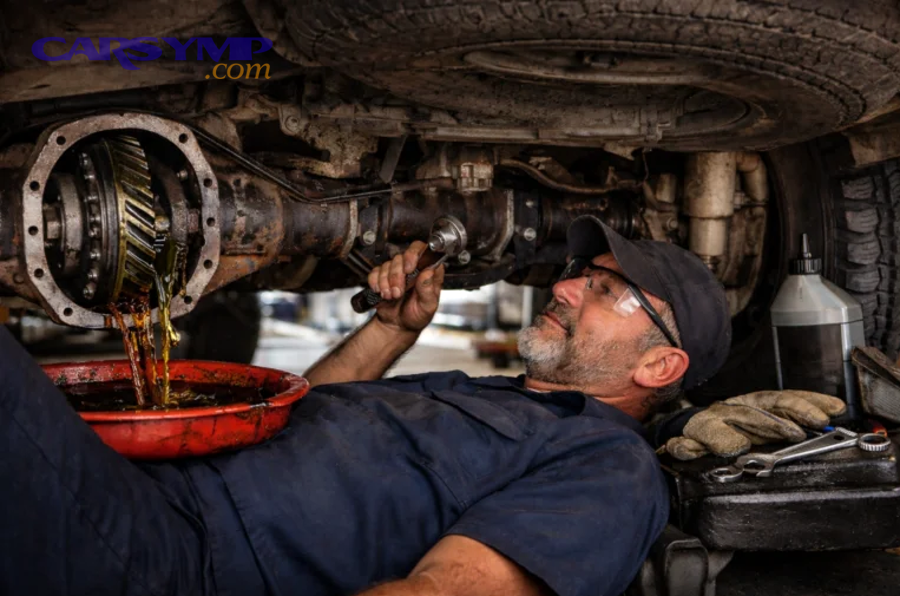
More specifically, moving beyond basic sign recognition into accurate fluid diagnosis is what separates reactive maintenance (fixing what’s already broken) from preventive maintenance (preventing the break from occurring at all). The following tools and knowledge expand your diagnostic capability significantly.
What Does a Fluid Color and Smell Diagnosis Chart Look Like?
A fluid color and smell diagnosis chart maps the observable characteristics of each vehicle fluid — from healthy to critically degraded — giving you a visual and sensory reference that works without any specialized tools.
The table below consolidates the color and smell indicators for all five major vehicle fluids into a single diagnostic reference. Use this chart during any under-hood fluid check.
| Fluid | Healthy Color | Degraded Color | Healthy Smell | Overdue/Problem Smell |
|---|---|---|---|---|
| Engine Oil | Golden amber | Dark brown / black | Neutral, slightly petroleum | Burnt, acrid |
| Transmission Fluid | Bright red / pink | Dark brown / black | Faint petroleum | Sweet-burning, sharp |
| Brake Fluid | Clear / light amber | Dark brown / nearly black | Very faint chemical | Pungent chemical, sharp |
| Coolant | Bright green / orange / pink | Brown / rusty / murky | Sweet, mild | Syrupy-sweet, burning |
| Power Steering Fluid | Clear / light amber | Dark brown / foamy | Neutral | Burning rubber, sharp |
This chart is most useful when combined with a consistency check: rub a small amount of oil or transmission fluid between your thumb and index finger. Gritty texture indicates metallic particle contamination from internal component wear — a sign that the overdue service has already caused damage rather than merely degradation.
How Do You Check Fluid Condition on a Sealed Transmission With No Dipstick?
Checking fluid condition on a sealed transmission requires either lifting the vehicle to access the drain plug for a visual and smell sample, using an OBD-II scan tool to monitor fluid temperature behavior, or visiting a professional with transmission-specific diagnostic equipment.
This is a rare but increasingly common challenge. Many vehicles manufactured after 2010 — including numerous models from BMW, Mercedes-Benz, Volkswagen, and others — use sealed transmission designs with no accessible dipstick. The manufacturer’s rationale is that modern synthetic ATF can last 100,000 miles or more under normal conditions. However, “sealed for life” does not mean the fluid never needs attention — it means the manufacturer has designed the system to require less frequent service, not zero service.
For owners of sealed-transmission vehicles, the practical monitoring approach involves:
- OBD-II temperature monitoring: A transmission fluid that runs consistently hotter than normal operating temperature (typically above 200°F / 93°C) during normal driving indicates degraded fluid with reduced heat-transfer capability
- Behavioral symptom tracking: Any of the 7 warning signs described in this article — particularly shifting hesitation, whining noises, or a burnt smell — should trigger an immediate professional inspection even without dipstick access
- Scheduled drain-and-fill: Even on sealed transmissions, most manufacturers recommend a transmission fluid change at 60,000 to 100,000 miles under severe driving conditions. This requires a lift and specialized drain plug tools.
Can Overdue Fluid Service Affect Hybrid or Electric Vehicles Differently?
Yes — overdue fluid service affects hybrid and electric vehicles differently because while EVs eliminate engine oil and transmission fluid requirements, they introduce unique fluid systems — specifically battery thermal management coolant and specialized reduction gear fluid — that carry their own degradation timelines and warning signs.
The common misconception that electric vehicles require no fluid maintenance is dangerously incomplete. The following fluid systems remain active in hybrid and full-EV platforms:
- Battery thermal management coolant: This fluid regulates battery pack temperature during charging and driving. Degraded coolant reduces the battery’s ability to maintain optimal operating temperature, accelerating cell degradation and reducing range. Warning signs include reduced range, inconsistent charging speeds, and battery temperature warnings on the dashboard.
- Brake fluid: All hybrids and EVs use hydraulic brake systems that require the same brake fluid maintenance schedule as conventional vehicles — and in some cases more frequent service, as regenerative braking reduces the frequency of hydraulic brake activation, meaning the fluid sits longer between uses and absorbs more moisture.
- Reduction gear fluid (EV-specific): Many electric drivetrains use a single-speed reduction gear that operates in its own fluid bath. This fluid requires periodic inspection and replacement — an often-overlooked service item that carries no direct analogue in conventional vehicle maintenance.
What Is Fluid Cross-Contamination and How Does It Mimic Overdue Service Symptoms?
Fluid cross-contamination occurs when the wrong fluid type is introduced into a vehicle system — either through accidental misfilling or internal component failure — and it produces symptoms that are nearly identical to overdue fluid service but are significantly more urgent and damaging.
This is one of the rarest but most misdiagnosed fluid problems in automotive maintenance. The most common cross-contamination scenarios include:
- Coolant in engine oil (head gasket failure): Oil appears milky, creamy, or foam-like on the dipstick — a distinctive appearance caused by coolant and oil mixing. This is not simply overdue service; it indicates internal engine damage requiring immediate professional diagnosis.
- Water in brake fluid: Water infiltration beyond normal hygroscopic absorption — from a damaged reservoir cap, for example — dramatically lowers the fluid’s boiling point. The symptom is identical to standard overdue brake fluid service: spongy pedal, reduced braking force. The difference is urgency — water contamination can cause brake failure faster than normal moisture absorption.
- Wrong ATF type in transmission: Using a universal ATF in a transmission that requires a manufacturer-specific fluid (such as a CVT fluid or a dual-clutch transmission fluid) causes immediate friction modifier incompatibility. The transmission will exhibit harsh shifting, shuddering, and noise from the first drive — symptoms often mistaken for an overdue transmission fluid change when in fact the wrong fluid was just added.
The distinguishing test is straightforward: if symptoms appear suddenly after a recent fluid service rather than developing gradually over time, cross-contamination or incorrect fluid specification is the far more likely cause than natural degradation. In all suspected cross-contamination cases, professional diagnosis and a complete fluid flush are the only appropriate responses.
Fluid maintenance is not a passive process — it demands active attention to the signals your vehicle sends every day. The 7 warning signs covered in this guide form a complete diagnostic framework: from the first dashboard light to the smell of burnt fluid on a morning commute, each signal is your car communicating a specific, actionable need. Acting on these signs early keeps fluid service costs predictable, prevents the compounding damage that turns a $80 fluid change into a $4,000 transmission repair, and — most importantly in the case of brake and steering fluids — keeps you and everyone on the road around you safe.