


A slipping transmission can sometimes be fixed for a few hundred dollars, but it can also climb into rebuild or replacement territory fast when internal wear, heat damage, or hydraulic problems are involved. For most car owners, the real answer is not one number but a cost range tied to the cause, the transmission type, and how long the problem has been ignored.
The first thing most drivers want to know is whether the symptom is minor or severe. That is why this guide starts with cost ranges, then moves into what transmission slipping actually means, the failures that raise or lower the estimate, and how a shop turns symptoms into a quote you can trust.
The second big question is decision-making. A repair, a rebuild, and a replacement do not solve the same problem in the same way, so the cheapest estimate is not always the best value. This article also explains how Scan data and codes for slipping diagnosis affect the quote, which repair path fits different vehicles, and how to compare options without overpaying.
The last concern is risk. Many drivers keep going too long and turn a manageable repair into a much larger bill. Introduce a new idea: below, you will see When to stop driving to prevent damage, how to judge additives for slipping transmission risks, and how to choose a smarter transmission slipping fix.
How much does it cost to fix a slipping transmission?
A slipping transmission can cost anywhere from a few hundred dollars for fluid-related or electrical repairs to several thousand dollars for a rebuild or full replacement.
To better understand that range, you need to connect the symptom to the repair scope, because “slipping” describes behavior, not one single failed part.
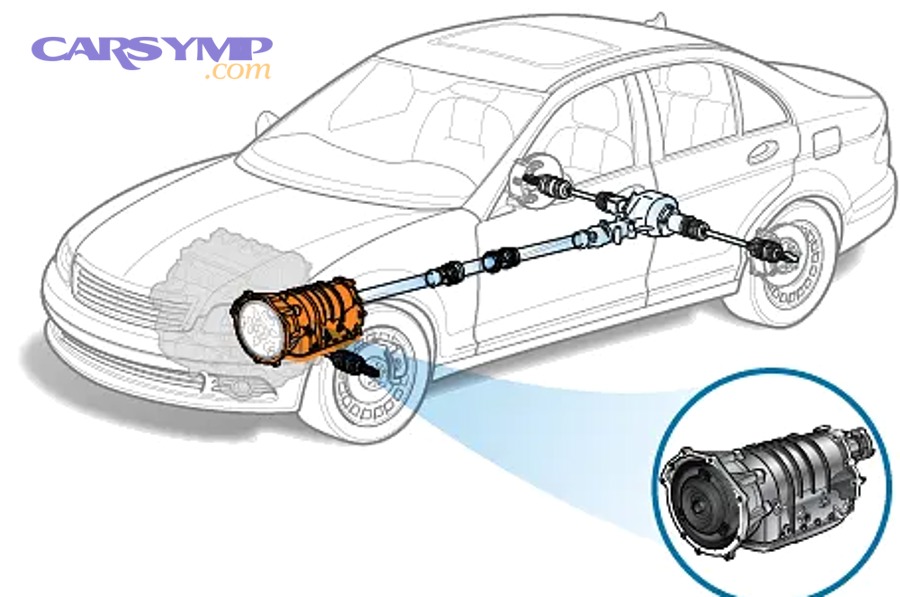
Can a slipping transmission be fixed without a full replacement?
Yes, a slipping transmission can be fixed without a full replacement when the cause is low fluid, contaminated fluid, a leak, a solenoid problem, a wiring fault, or some control issues rather than severe internal wear.
That matters because many estimates sound frightening before the transmission is even diagnosed. A small external leak, for example, may only require resealing, fresh fluid, and labor. A stuck solenoid or a control issue may also be repairable without removing the entire unit. On the other hand, if clutch packs are burnt, line pressure is weak from internal wear, or metal debris is circulating through the unit, the repair path usually shifts toward overhaul or replacement.
The practical way to think about cost is this: if the problem affects fluid level, fluid quality, or command signals, the bill often stays lower. If the problem affects clutch holding power, pump output, hard parts, or internal seals, the bill rises sharply because labor and parts multiply together.
According to AutoZone, fixing a slipping transmission can range from a few hundred dollars for smaller repairs to roughly $1,750 to $4,000 for the assembly alone in severe cases. (autozone.com)
What is the average repair cost range by minor, moderate, and major transmission problems?
There are three main cost tiers for slipping transmission repairs: minor, moderate, and major, based on how deep the fault goes into the hydraulic, electrical, or mechanical parts of the transmission.
More specifically, car owners should not expect a flat estimate. The same slipping symptom can be caused by very different failures.
Below is a simple way to read what a quote usually represents:
| Repair severity | Typical issue examples | Usual cost pattern |
|---|---|---|
| Minor | Low fluid, small external leak, fluid/filter service, some wiring faults, some sensor or solenoid issues | Often a few hundred dollars to around low four figures |
| Moderate | Valve body work, multiple solenoids, deeper diagnostics, pan contamination follow-up, control module-related work | Often mid three figures to low-to-mid four figures |
| Major | Burnt clutches, torque converter failure, severe wear, rebuild, remanufactured unit, full replacement | Often several thousand dollars |
This table shows how slipping transmission estimates usually separate by failure depth rather than by symptom name alone.
Kelley Blue Book says a new transmission commonly lands around $2,900 to $7,100, while RepairPal and other estimator-style resources also note that transmission pricing varies widely by vehicle, labor rate, and repair method. (kbb.com)
What does a slipping transmission mean?
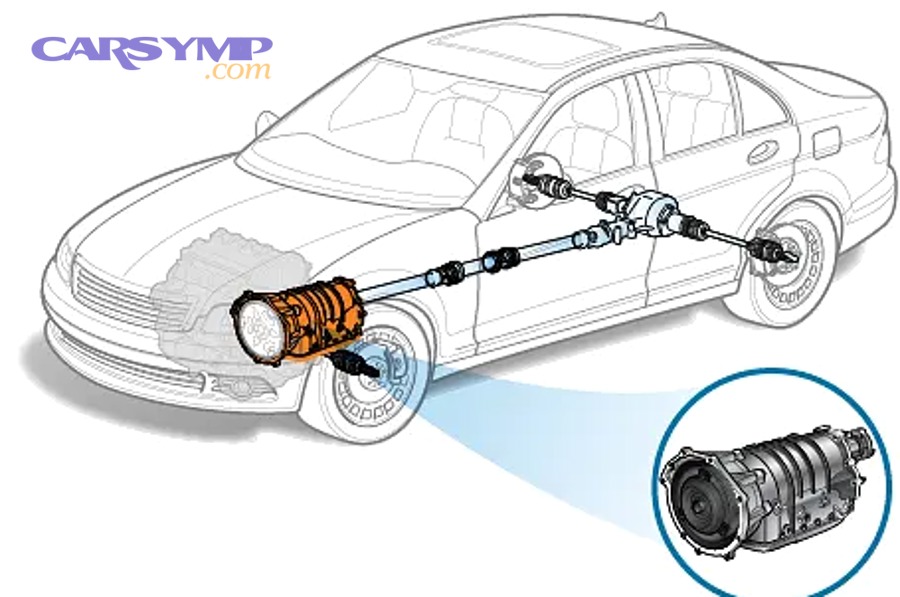
A slipping transmission is a drivetrain condition where engine speed rises but the transmission does not hold the intended gear firmly enough to deliver matching vehicle acceleration.
To better understand the issue, think of slipping as a loss of correct power transfer. The engine may rev, but the transmission fails to apply the right clutch, band, ratio, or hydraulic pressure at the right time. That is why the vehicle can feel delayed, hesitant, or unstable under load.
What symptoms usually confirm that the transmission is slipping?
There are five common signs of transmission slipping: rising RPM without matching speed, delayed engagement, harsh or wandering shifts, a burning smell, and poor acceleration.
Specifically, drivers often notice the tachometer jumping first. You press the throttle, the engine revs climb, and the car either hesitates or feels like it “catches” late. Some vehicles also flare between shifts, refuse to stay in gear, or shift erratically when warm. If the fluid overheats, you may notice a burnt odor. In more advanced cases, the vehicle may enter limp mode and stay in one gear to protect itself.
Manual transmissions can also “slip,” but the feel is usually tied to clutch wear rather than automatic hydraulic control. In an automatic or CVT, slipping is more often linked to fluid condition, pressure control, internal clutch wear, solenoid behavior, or control logic.
AutoZone lists slipping gears, delayed or rough shifting, and unpredictable shift behavior among common signs of transmission trouble, while its TCM guidance also notes warning lights, unusual shifting, and limp mode behavior. (autozone.com)
Is transmission slipping always a sign of internal failure?
No, transmission slipping is not always a sign of internal failure because fluid issues, electronic faults, wiring problems, sensor errors, and control faults can also create slipping behavior.
However, that does not make the symptom harmless. A vehicle that slips because of low fluid can still damage itself if the root cause is ignored. Likewise, a bad shift solenoid or control fault may look “lighter” than burnt clutches, but continued driving can overheat fluid and accelerate wear.
This is why diagnosis matters more than guesswork. The symptom tells you the transmission is not managing torque correctly; it does not tell you whether the fix is a seal, a solenoid, a valve body, or a rebuild.
Kelley Blue Book’s P0730 overview notes that gear-ratio problems can indicate slipping and may stem from anything from a minor issue to a serious transmission fault, which is why the code alone does not prove total failure. (kbb.com)
What causes a slipping transmission and how do the causes change the repair estimate?
A slipping transmission usually comes from fluid problems, hydraulic control faults, electronic failures, or internal wear, and each cause changes the estimate by changing labor depth, parts cost, and repair complexity.

Next, it helps to separate cheap causes from expensive causes. That simple distinction lets car owners understand why one shop quotes hundreds and another quotes thousands.
Which slipping transmission problems are cheapest to fix?
The least expensive slipping transmission problems are usually low fluid, fluid contamination caught early, external leaks, wiring faults, some sensor failures, and some solenoid-related issues.
For example, a leaking cooler line, pan gasket issue, or axle seal can lower fluid enough to create delayed engagement and flare shifts. If the leak is repaired before the unit runs hot for long, the transmission may survive with a reseal and the correct fluid service. A wiring or connector issue can also mimic major failure by interrupting control signals. In some cases, a TCM reset or software/adaptation procedure becomes part of the fix, especially after electrical repairs.
This is also where many drivers get tempted by an additive bottle. That is risky. Additives for slipping transmission: risks include altered friction behavior, wrong viscosity effects, seal over-swelling, and a false sense of security that delays proper diagnosis. Additives rarely reverse worn clutches or damaged hard parts, and they can complicate the shop’s assessment later.
AAMCO notes that slipping can be caused by low or contaminated fluid as well as internal wear, while KBB and AutoZone both note that some transmission-related codes can resolve with fluid or component-level repair rather than an overhaul. (aamco.com)
Which slipping transmission problems are most expensive to fix?
The most expensive slipping transmission problems are usually burnt clutch packs, torque converter damage, valve body wear with internal contamination, pump or pressure loss, major seal failure, and hard-part damage.
More importantly, these failures cost more because they usually require removal, teardown, inspection, parts replacement, reassembly, and sometimes a remanufactured unit instead of in-car repair. Once friction material burns up, debris can spread through the valve body, cooler, and fluid passages. That is when a simple transmission slipping fix stops being realistic and the shop starts discussing rebuild quality, warranty length, and replacement sourcing.
Heat is often the hidden cost multiplier. A transmission that slips under load creates more heat, and heat can damage fluid, clutch material, and seals. The longer the vehicle is driven in that state, the more likely the final estimate shifts upward from targeted repair to complete overhaul.
Kelley Blue Book says transmission gear-ratio and control faults can escalate quickly because the transmission is critical to vehicle operation, while its cost guidance shows full replacement commonly reaches several thousand dollars. (kbb.com)
How do mechanics diagnose a slipping transmission before giving a cost estimate?
Mechanics diagnose a slipping transmission through a sequence of scan-tool checks, road testing, fluid inspection, leak checks, and sometimes pressure or pan inspection before they can produce a reliable estimate.
Then, once the diagnosis begins, the estimate becomes less about symptom stories and more about evidence. That is why a shop that starts with “you probably need a transmission” is less trustworthy than a shop that starts with data.

What tests are usually included in a slipping transmission diagnosis?
There are six common diagnostic steps for slipping transmission complaints: code scanning, live data review, road test, fluid inspection, external leak inspection, and deeper hydraulic or pan checks when needed.
Specifically, scan data and codes for slipping diagnosis give the technician a starting point, not the final verdict. P0700, P0701, P0702, and related P07xx codes point toward transmission-control problems. A P0730 incorrect gear ratio code can support a slipping complaint because the module sees a mismatch between expected and actual ratio behavior. Live data helps the technician compare commanded gear, input speed, output speed, slip values, temperature, and solenoid activity. From there, a road test confirms whether the slip occurs cold, hot, uphill, under throttle, or only during specific shifts.
Fluid inspection is just as important. The technician checks level, color, odor, and contamination. If the fluid is dark, burnt, foamy, or metallic, the estimate often changes immediately. External inspection then looks for cooler line leaks, pan seepage, seal leaks, damaged wiring, and connector corrosion. If the symptoms and fluid condition suggest internal damage, the shop may inspect the pan, filter, or line pressure before quoting final work.
AutoZone recommends scanning for DTCs as the first step in TCM-related diagnosis, while RepairPal and KBB both describe P07xx and P0730 families as transmission-related clues rather than stand-alone answers. (autozone.com)
Can you get an accurate estimate before the transmission is opened?
Yes, you can get a preliminary transmission estimate before opening the unit, but the final accurate estimate sometimes requires pan inspection, pressure testing, or teardown confirmation.
In other words, the first quote is often conditional. A shop can often estimate leak repair, fluid service, external solenoid replacement, or control-system work without opening the transmission. But when the evidence points toward internal wear, the shop may need to remove the unit or inspect further before quoting parts, labor, and warranty with confidence.
This is where car owners should read the wording closely. “Estimate subject to internal inspection” is normal. “Needs replacement, no diagnosis necessary” is a red flag unless the transmission is already dead, full of metal, or unable to move the vehicle.
According to Kelley Blue Book and AutoZone diagnostic guidance, transmission-related codes can point to issues ranging from fluid and wiring faults to full internal overhaul, which is why pre-teardown estimates are often approximate rather than final. (kbb.com)
Is it better to repair, rebuild, or replace a slipping transmission?
Repair wins for smaller external or electrical faults, rebuild is best when the original unit is worth restoring, and replacement is optimal when damage is widespread or downtime certainty matters most.
To better understand that choice, separate “cheapest today” from “best value over ownership.” A lower invoice can still be the wrong answer if it leaves worn internal parts in service.
What is the difference between transmission repair, rebuild, replacement, and remanufactured replacement?
Transmission repair fixes a specific fault, rebuild restores the original unit internally, replacement swaps in another unit, and remanufactured replacement uses a factory-reconditioned transmission built to a defined standard.
Specifically, a repair is the narrowest intervention. It may involve a seal, solenoid, valve body, sensor, wiring repair, or control module issue. A rebuild removes the transmission, disassembles it, replaces worn internal parts, inspects hard parts, and reassembles the original case. A used replacement swaps in a salvage-yard unit with more uncertainty about wear history. A remanufactured unit usually has a more standardized process and often carries stronger warranty terms.
Each path suits a different situation. If the slip comes from one known external or hydraulic-control issue, repair is attractive. If the vehicle is valuable, the original transmission is rebuildable, and a quality local specialist is available, rebuilding can be the strongest long-term answer. If the transmission is badly damaged and you want predictable turnaround, remanufactured replacement often becomes the cleanest route.
Kelley Blue Book says replacement pricing varies by whether the vehicle needs a rebuild done locally or a remanufactured transmission, and that distinction is one of the biggest drivers of the final bill. (kbb.com)
Which option gives the best value for older cars, newer cars, and high-mileage vehicles?
Repair is usually best value for vehicles with limited, proven faults, rebuild often suits solid vehicles you plan to keep, and replacement is often best for newer or higher-value vehicles needing predictable reliability.
Meanwhile, older high-mileage vehicles need a harsher financial filter. If the car’s market value is low, a $4,000 to $7,000 transmission job may not make sense unless the vehicle is otherwise excellent or replacing it would cost even more. Newer vehicles with good bodies, clean interiors, and no major engine issues can justify a remanufactured unit because the rest of the vehicle still has useful life. High-mileage work trucks or family vehicles sometimes justify a rebuild when the owner knows the vehicle history and wants to avoid the uncertainty of a used unit.
The better question is not “Which option is cheapest?” but “Which option preserves the most useful life per dollar?” That keeps the decision aligned with your budget and the vehicle’s role.
What factors make the repair quote go up or down?
Transmission quotes rise or fall mainly because of vehicle design, transmission type, labor time, parts source, contamination level, and whether the repair stays external or becomes internal.
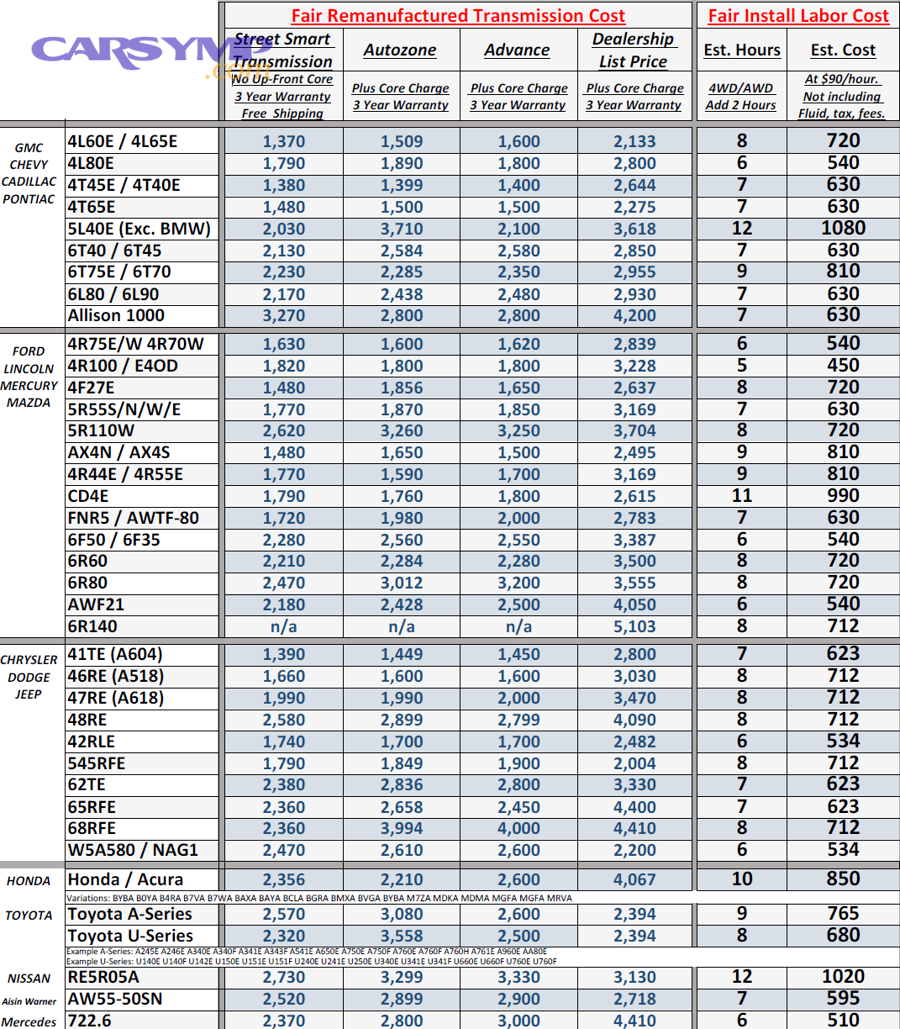
Besides the fault itself, two vehicles with the same symptom can have very different bills. Packaging, parts pricing, software procedures, and cooler-line flushing requirements all change the quote.
How do vehicle type, transmission type, and labor rate affect the estimate?
Vehicle type, transmission type, and local labor rate affect the estimate by changing access difficulty, parts prices, fluid specification, and the number of hours the shop must charge.
For example, a compact front-wheel-drive sedan often has different access and parts costs than a large SUV, turbocharged crossover, luxury model, or heavy-duty truck. CVTs can behave differently from traditional automatics and may have different replacement economics. Dual-clutch units, hybrid drivetrains, and some late-model electronically integrated units also add complexity. Local labor rate matters too. An estimate in a high-cost metro area can differ sharply from one in a smaller market even when the repair scope is similar.
Kelley Blue Book repeatedly notes that the style of car, damage extent, transmission type, shop type, and location all materially affect transmission repair and replacement pricing. (kbb.com)
What extra charges should car owners expect on a transmission repair quote?
Car owners should expect possible extra charges for diagnostics, fluid, seals, programming, cooler flushing, shop supplies, towing, taxes, and upgraded warranty coverage.
More specifically, many quotes look low until the extras appear. A transmission may require a significant amount of vehicle-specific fluid, and the correct fluid matters. Cooler flushing or replacement can also be necessary if debris contamination is present. Some vehicles need reprogramming, adaptation resets, relearn procedures, or module work after repairs. If the vehicle cannot move safely, towing becomes part of the real cost even if it is not listed on the first estimate.
This is also where “cheap” quotes can become expensive. A lower labor line may hide weaker warranty terms, used parts of unknown history, or exclusions for the cooler, converter, or module work that the vehicle actually needs.
According to Kelley Blue Book, estimates often exclude taxes and fees and vary by shop type and location, while fluid and component choices can materially change the total transmission bill. (kbb.com)
Should you keep driving a car with a slipping transmission?
No, you should not keep driving a car with a slipping transmission for long because slipping creates heat, reduces control, and can turn a repairable issue into a rebuild or replacement.
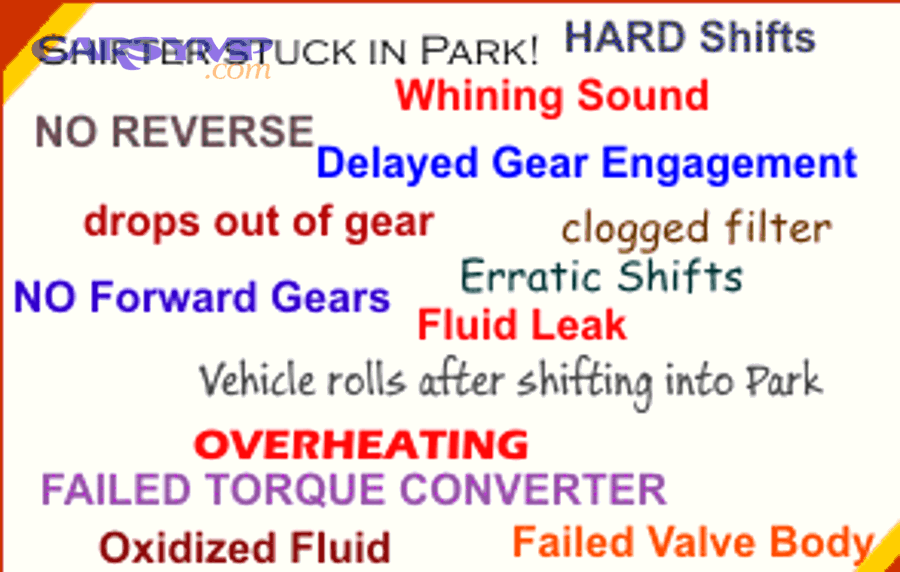
More importantly, the risk is not only financial. A vehicle that flares, hesitates, or loses gear unexpectedly can become unsafe in traffic, on hills, during merging, or while crossing intersections.
When is it still safe to drive short distances, and when should you stop immediately?
Short distances may be possible only when the symptom is mild and stable, but you should stop immediately if the vehicle loses drive, smells burnt, flashes warnings, bangs into gear, or shows rapidly worsening slip.
To better understand when to stop driving to prevent damage, use severity rather than hope. If the vehicle only shows a slight delay once in a while and fluid is known to be low from an obvious leak you are addressing immediately, a very short, careful trip to a shop may be possible. If the engine revs freely without movement, if the car drops out of gear, if limp mode appears, or if the fluid smells burnt, continuing to drive can multiply the damage. That is especially true during hot weather, heavy traffic, towing, or hill driving.
Kelley Blue Book’s P0730 guidance says transmission-related gear-ratio problems can quickly become serious, and AutoZone warns that severe transmission symptoms such as slipping and rough shifting can indicate major internal damage. (kbb.com)
Can driving with a slipping transmission turn a smaller repair into a full replacement?
Yes, driving with a slipping transmission can turn a smaller repair into a full replacement because continued slip builds heat, contaminates fluid, and wears clutches, seals, and hard parts faster.
That is why early diagnosis has a real financial return. A car that starts with a leak or solenoid problem may still need only targeted repair. The same car driven for weeks while flaring on every shift may arrive with burnt fluid, pan debris, converter damage, and an overhaul-level estimate. That pattern is common because the driver adapts to the symptom while the transmission continues to destroy friction material internally.
A transmission slipping fix is cheapest when the repair happens before the symptom becomes a habit.
According to AutoZone and KBB code guidance, transmission-related drivability problems should not be ignored because they can worsen quickly and create more serious damage over time. (autozone.com)
How can car owners lower slipping transmission costs and choose a better repair quote?
Car owners lower slipping transmission costs by getting an early diagnosis, comparing estimate scope instead of price alone, avoiding risky shortcuts, and choosing the repair path that matches the vehicle’s real value.

In short, the smartest savings strategy is not bargaining at the end. It is preserving options early, before the transmission locks you into the most expensive path.
What should you compare between two transmission repair estimates?
You should compare diagnosis depth, parts source, labor scope, fluid specification, warranty terms, exclusions, and whether the estimate is conditional on further inspection.
For example, one quote may say “replace transmission,” while another identifies line-pressure testing, valve body evaluation, converter replacement, cooler service, and warranty coverage in writing. The second quote may look higher at first but still be the better buy because it defines what the money actually covers. Ask whether the estimate includes the torque converter, cooler flush or replacement, reprogramming, fluid, shop supplies, and post-repair relearn steps. Also ask whether the unit is used, rebuilt locally, or remanufactured.
This is the section where car owners protect themselves from vague language. A quote is only useful when the scope is visible.
Is a used transmission cheaper than a rebuild in the long run?
A used transmission is often cheaper upfront, a rebuild is often better for known quality, and a remanufactured unit is often best for predictable long-term confidence.
However, the long-run answer depends on what risk you are buying. A used unit can save money on day one, but its wear history is mostly hidden. A rebuild lets a specialist inspect and replace worn parts in your original transmission, but rebuild quality varies by shop. A remanufactured unit can cost more, yet it may offer better standardization and warranty support.
The best comparison is not invoice against invoice. It is invoice, warranty, downtime, and probability of repeat failure against the car’s expected remaining life.
Can a warranty, service contract, or recall reduce out-of-pocket cost?
Yes, a warranty, service contract, or model-specific campaign can reduce out-of-pocket cost if the transmission problem falls within the plan’s covered failures and conditions.
Specifically, factory powertrain coverage, extended service contracts, and some known model-specific transmission campaigns can change the economics dramatically. That is why owners should check VIN-based coverage before approving major work. A shop may still charge diagnostics, teardown, or non-covered items, but checking coverage early can prevent unnecessary spending.
This is also where fluid choice matters. If the vehicle calls for a specific transmission fluid, using the wrong fluid or undocumented additives can create claim disputes later.
How can maintenance or early diagnosis prevent a higher slipping transmission bill?
Maintenance and early diagnosis reduce the bill by catching leaks, fluid problems, overheating, and control faults before they damage internal clutches and hard parts.
More specifically, prevention is not glamorous, but it is effective. Fix leaks early. Use the correct fluid specification. Address delayed engagement, flare shifts, or warning lights quickly. Do not assume a bottle additive is maintenance. When drivers ask about additives for slipping transmission: risks outweigh the benefit when the product masks friction loss, changes fluid chemistry, or delays the real repair. If scan data shows transmission codes, treat that as a diagnostic lead, not as something to clear and forget.
According to Afton Chemical’s industry technical paper on ATF formulation, top-treating fluid to mimic a new specification can be detrimental to shifting performance, wear control, and transmission life, reinforcing why owner-manual fluid requirements matter more than quick additive promises. (aftonchemical.com)
If you are trying to estimate your own next step, use this rule: a mild, confirmed external or electrical problem usually supports a smaller repair budget; repeated slipping under load, burnt fluid, or gear-ratio codes usually push the vehicle into deeper diagnosis and a much larger estimate. That is the difference between a manageable repair and a transmission decision.